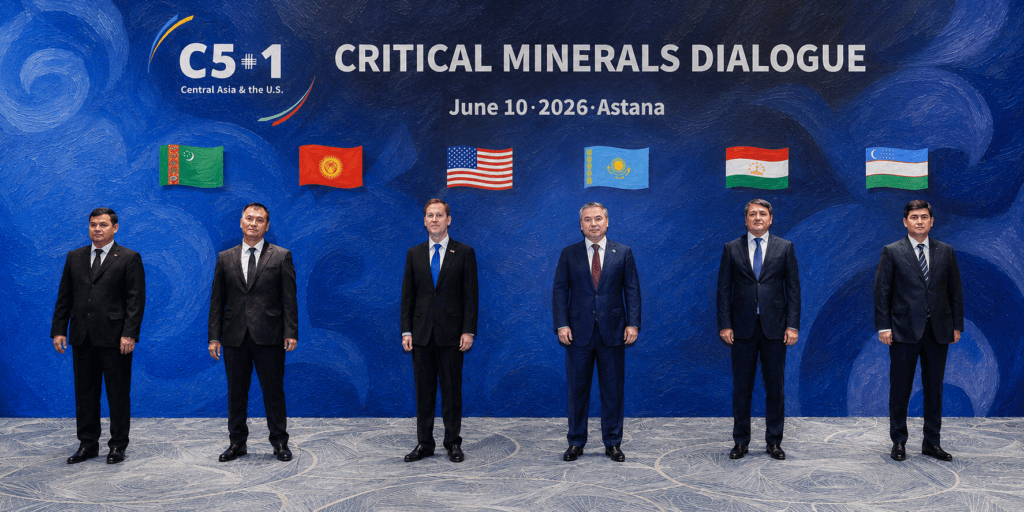
The United States and Central Asia moved another part of the C5+1 agenda into a working-level form on June 5, when culture officials from the five Central Asian states and Washington met in Tashkent. The meeting came just days before a separate C5+1 critical minerals session in Astana, giving the week a wider agenda: cultural heritage, public diplomacy, mining, investment, and supply chains are now moving forward in the same regional format.
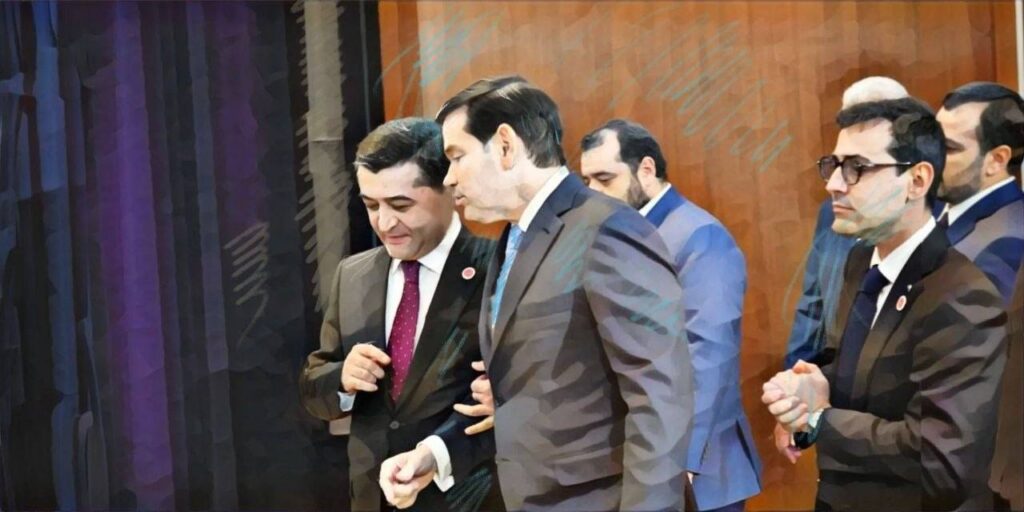
The Tashkent meeting brought together Uzbekistan’s Minister of Culture Ozodbek Nazarbekov, Kazakhstan’s Minister of Culture and Information Aida Balayeva, Kyrgyzstan’s Minister of Culture, Information and Youth Policy Mirbek Mambetaliev, Tajikistan’s Minister of Culture Matluba Sattoriyon, Turkmenistan’s Deputy Minister of Culture Gurbanmurad Miradaliev, and Sarah Rogers, the U.S. Under Secretary of State for Public Diplomacy and Public Affairs. The agenda covered cultural and humanitarian cooperation, joint cultural projects, creative exchanges, and the protection and promotion of cultural heritage.
Participants discussed a permanent C5+1 Working Group on Culture, a C5+1 Culture and Innovation Forum, closer cooperation in the creative industries, and more places for Central Asian cultural professionals in U.S. education and exchange programs. Uzbekistan also proposed joint English for Culture centers with U.S. partners at cultural education institutions.
In practical terms, that could mean joint training for museum staff, touring exhibitions, film and music exchanges, English-language programs for curators and cultural managers, and U.S.-backed workshops for people working in heritage, tourism, and the creative industries. For Uzbekistan, the proposed centers would give the agenda a physical base inside cultural education institutions rather than leaving it at the level of declarations.
The meeting ended with a protocol, which reaffirmed the parties’ commitment to the cultural heritage agenda adopted after the Washington summit in November 2025. The International Institute for Central Asia said it covered cooperation through joint events and festivals in art, literature, theater, cinema, and music. Kazakhstan’s side also tied the discussion to museum partnerships, digitization of heritage, professional exchanges, tourism routes, and digital projects.
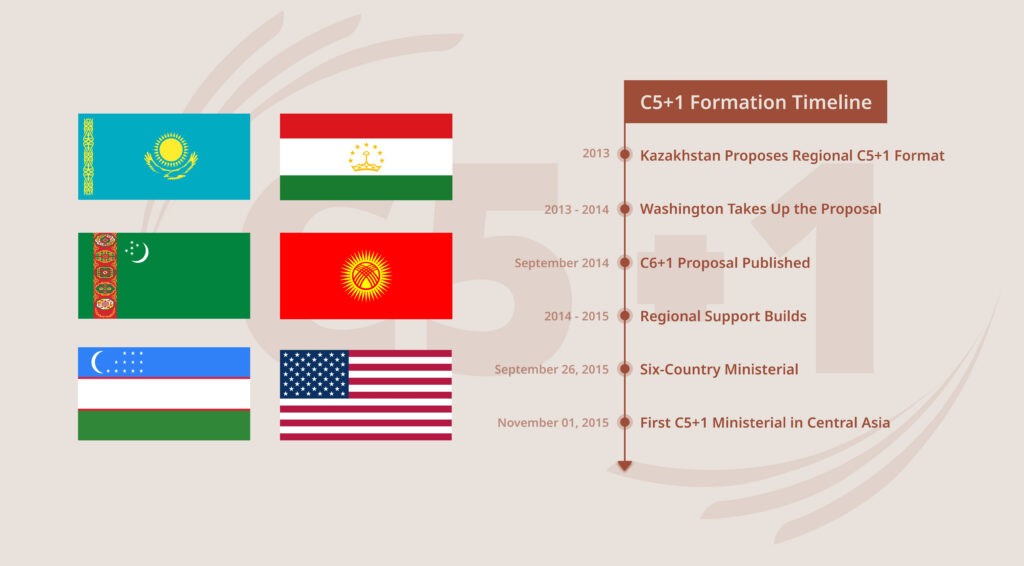
The Tashkent talks grew out of the C5+1 leaders’ meeting in Washington, where culture joined a wider list of priorities. That summit marked ten years of U.S. engagement with the region through the format, which began in 2015 and has since expanded from foreign-minister meetings to expert groups and presidential-level summits. The Times of Central Asia previously reported that the November 2025 summit shifted the format from broad diplomacy toward deliverable agreements, with critical minerals, aviation, supply chains, and business ties among the main areas of focus.
Culture fits into that agenda, as Central Asian governments see heritage, tourism, film, music, museums, and the creative industries as economic sectors as well as identity markers. For the United States, public diplomacy gives Washington a way to stay active in the region outside security and energy talks. It also gives the C5+1 a soft-power layer, using language programs, museum links, heritage projects, and creative exchanges to build influence without framing the relationship only around security or resources.
Heritage protection has a security side as well. Trafficking in cultural property often overlaps with border management, customs work, and law enforcement. Digital records, shared museum practices, and professional training can help countries document sites and objects before they are damaged, stolen, or moved abroad. Turkmenistan’s coverage of the meeting noted attention to museums, research centers, digitization, and the U.S. Ambassador’s Fund for Cultural Preservation, which has supported restoration and preservation projects in the region.
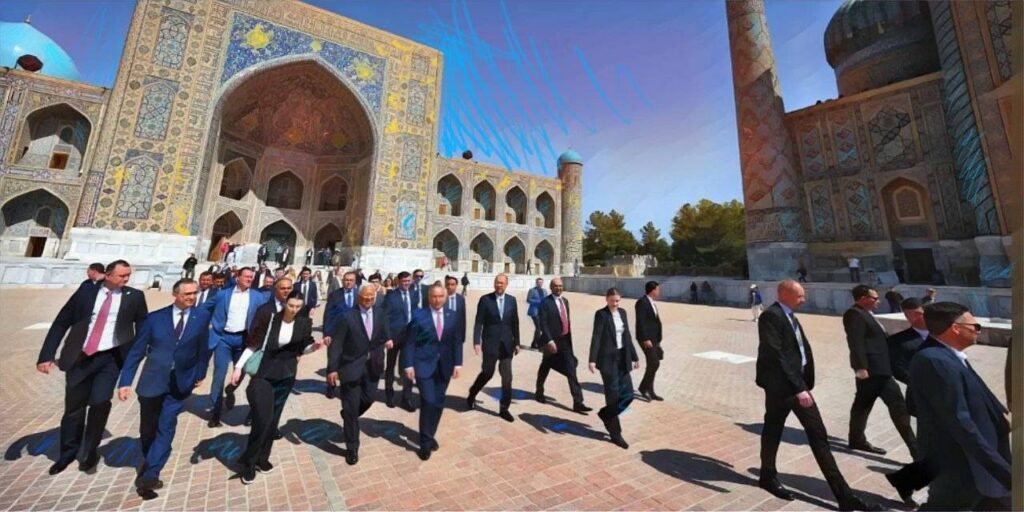
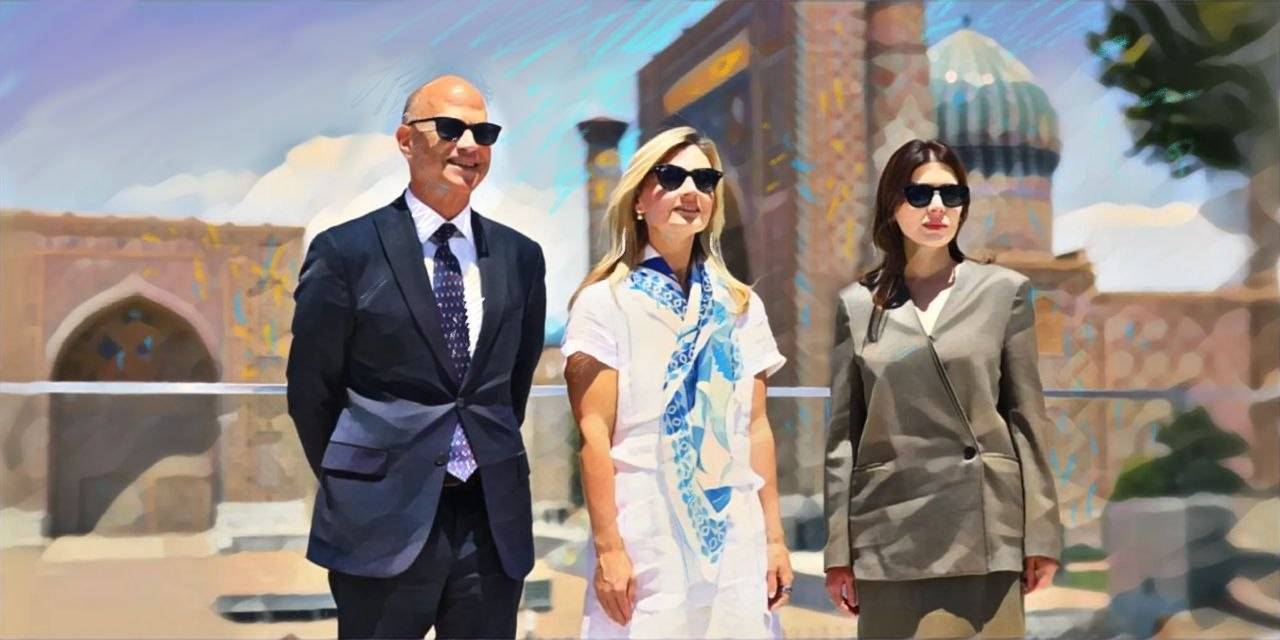
A current example is the Sher-Dor Madrasah in Samarkand, where Rogers, Uzbekistan Art and Culture Development Foundation Chairperson Gayane Umerova, and U.S. Ambassador Jonathan Henick marked the completion of the first phase of an AFCP-backed façade restoration project on June 3. The same event also produced a five-year cooperation roadmap between the foundation and the U.S. Embassy covering culture and heritage preservation.
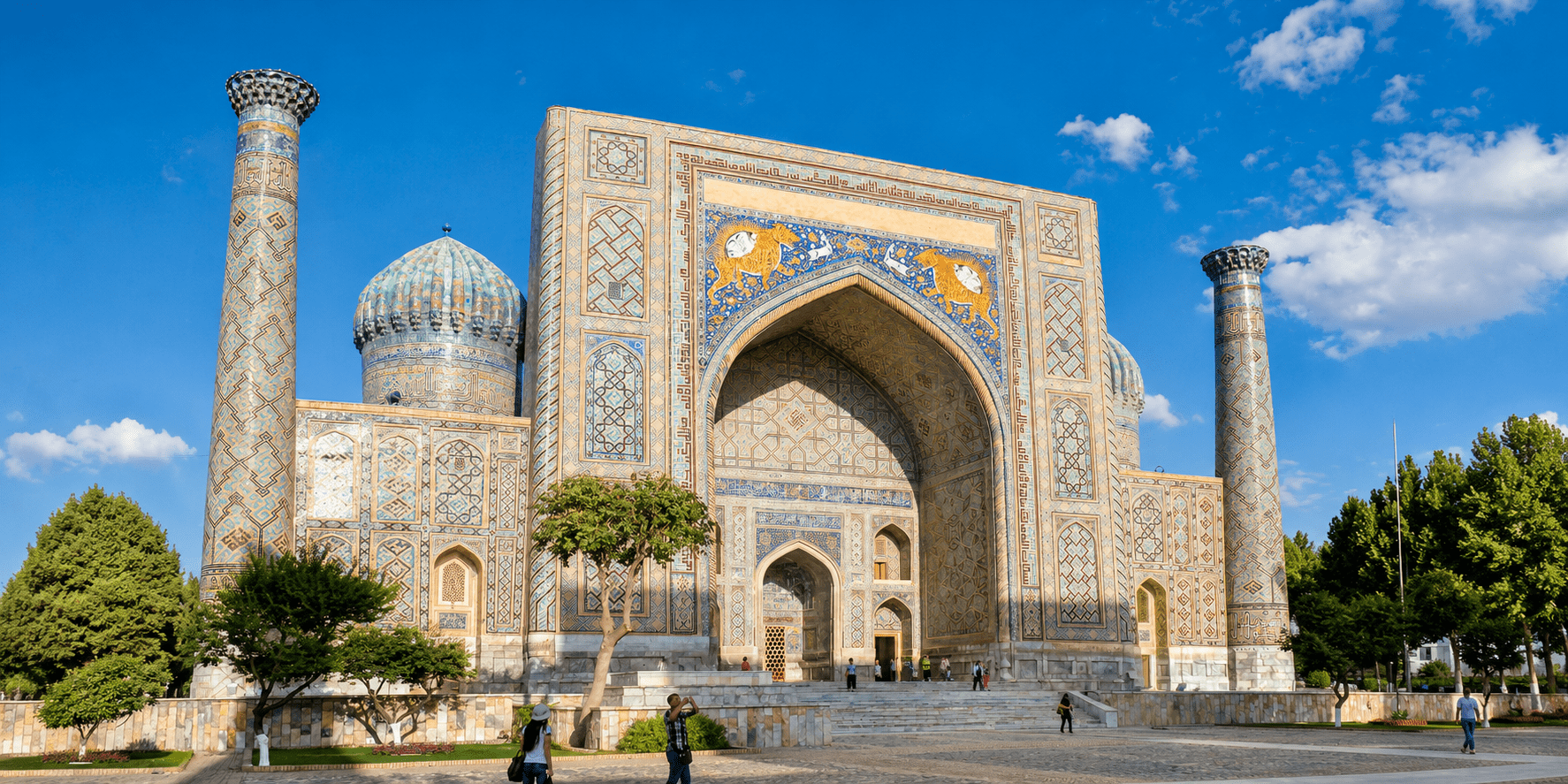
The Sher-Dor Madrassa; image: TCA, Stephen M. Bland
The American calendar goes beyond culture. Rogers is on a May 27-June 10 regional trip with stops including Uzbekistan and Turkmenistan. In Tashkent, she also met Foreign Minister Bakhtiyor Saidov for talks on education, culture, information exchange, and public diplomacy. That placed the C5+1 culture meeting inside a larger set of bilateral and regional conversations.
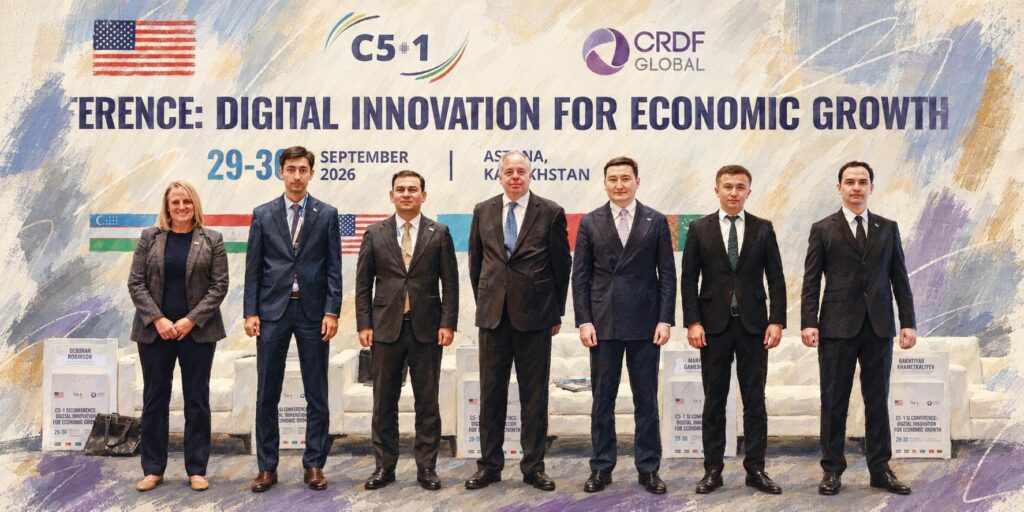
The next stop for the format is Astana. The current AMM 2026 program lists C5+1 Critical Minerals Dialogue activity on June 10, immediately before the Astana Mining & Metallurgy Congress on June 11-12, which will bring Kazakhstan’s critical minerals sector, investment agenda, and role in global supply chains into sharper focus. The official program includes panels on investment conditions, taxation, transport and logistics, copper as a strategic metal, and the move from mineral resources to investment projects.
The program also lists B2B and B2G meetings, as well as a June 13 industrial tour to a Qarmet enterprise, giving the congress a direct business-development and site-visit component.
Those panels point to the kind of work investors usually need before projects move forward: clearer tax terms, transport routes for getting ore and processed metals to market, bankable project lists, and agreements on where processing will take place. Copper is a useful example because it links mining directly to power grids, electric vehicles, data centers, and other parts of the global energy transition.
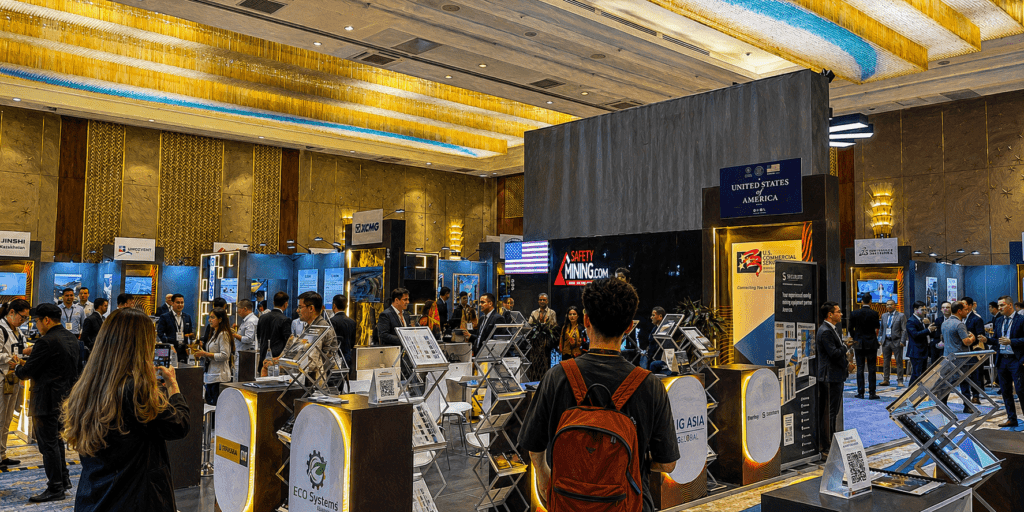
Kazakhstan has strong reasons to host this event as it seeks more processing inside the country, more foreign capital, and better access to high-value industrial chains. The AMM organizers say the congress will place Central Asia’s role in global supply chains of strategic resources at the center of the discussions. The exhibition plans participation from companies and groups from Kazakhstan, Canada, China, Germany, Saudi Arabia, Sweden, the United States, and others.
The scale is already significant. The International Trade Administration says Kazakhstan accounted for 39% of global uranium production and 48.8% of global natural uranium exports, while hard minerals and metals made up 18% of the country’s exports by value in 2024. Refined copper exports alone generated $2 billion that year, with zinc exports at $788 million and silver at $588 million.
Kazakhstan is also trying to turn early-stage rare earth potential into bankable projects. In 2025, Kazakh officials announced the discovery of the Zhana Kazakhstan rare earth deposit, with estimated resources of more than 20 million metric tons and containing neodymium, cerium, lanthanum, and yttrium, though Reuters reported that no developer or timeline had yet been specified.
For Washington, critical minerals have become one of the strongest economic reasons to keep the C5+1 format moving. The United States wants supply chains that are less vulnerable to political pressure, export controls, and transport bottlenecks. Central Asian governments want technology, finance, new routes to markets, and a larger share of the value from their own resources. The format also suits the region’s multi-vector approach: it gives all six governments involved a common forum, while each Central Asian state keeps working bilaterally with other partners.
Kazakhstan enters the critical minerals race with an advantage many countries lack: an industrial base already in place. The country has substantial mining, smelting, and metallurgical capacity, active geological exploration, growing technical and laboratory infrastructure, and long-running partnerships with international energy and mining companies, including Chevron’s presence through Tengizchevroil since 1993. The next step is to expand domestic processing, attract more investment in critical minerals, and capture more of the value chain inside the country. For U.S. companies, that means looking beyond access to raw materials and assessing where refining, logistics, equipment supply, geological services, environmental technologies, and long-term offtake agreements could fit.
The sequence building up to Astana shows how the format is changing. Leaders set broad priorities in Washington last November. Ministers and sector officials are now turning those priorities into practical areas of work. Culture may produce working groups, exchanges, festivals, and digitization projects, while minerals may produce project lists, roundtables, investment contacts, and long-term purchase talks.
That does not mean all proposals will become funded programs, but it does show that the C5+1 is becoming more regular and more specific. For Central Asia and the United States, that is the point. After the meetings, the real measure will be whether funded programs, signed contracts, and regular work continue after the summit photos have faded.
For more on the Astana Mining & Metallurgy Congress and Exhibition 2026, see our special coverage.
Follow our interactive critical minerals timeline tracing the partnerships, investments, and policies reshaping U.S. engagement with Central Asia.