• KGS/USD = 0.01143 -0%
  • KZT/USD = 0.00191 0%
  • TJS/USD = 0.10833 0.28%
  • UZS/USD = 0.00008 0%
  • TMT/USD = 0.28575 0%
  • KGS/USD = 0.01143 -0%
  • KZT/USD = 0.00191 0%
  • TJS/USD = 0.10833 0.28%
  • UZS/USD = 0.00008 0%
  • TMT/USD = 0.28575 0%
  • KGS/USD = 0.01143 -0%
  • KZT/USD = 0.00191 0%
  • TJS/USD = 0.10833 0.28%
  • UZS/USD = 0.00008 0%
  • TMT/USD = 0.28575 0%
  • KGS/USD = 0.01143 -0%
  • KZT/USD = 0.00191 0%
  • TJS/USD = 0.10833 0.28%
  • UZS/USD = 0.00008 0%
  • TMT/USD = 0.28575 0%
  • KGS/USD = 0.01143 -0%
  • KZT/USD = 0.00191 0%
  • TJS/USD = 0.10833 0.28%
  • UZS/USD = 0.00008 0%
  • TMT/USD = 0.28575 0%
  • KGS/USD = 0.01143 -0%
  • KZT/USD = 0.00191 0%
  • TJS/USD = 0.10833 0.28%
  • UZS/USD = 0.00008 0%
  • TMT/USD = 0.28575 0%
  • KGS/USD = 0.01143 -0%
  • KZT/USD = 0.00191 0%
  • TJS/USD = 0.10833 0.28%
  • UZS/USD = 0.00008 0%
  • TMT/USD = 0.28575 0%
  • KGS/USD = 0.01143 -0%
  • KZT/USD = 0.00191 0%
  • TJS/USD = 0.10833 0.28%
  • UZS/USD = 0.00008 0%
  • TMT/USD = 0.28575 0%
09 November 2025

Viewing results 7 - 12 of 321

Uzbekistan’s Abdukodir Khusanov Judged Asia’s Joint Most Valuable Footballer

At just 21 years old, Uzbek defender Abdukodir Khusanov has been named as Asia’s joint most expensive footballer, with a current market valuation of €35 million, according to Transfermarkt’s latest update. This places him on par with Brighton's Japanese winger Kaoru Mitoma, whose value was recently revised down from €40 million to €35 million. Bayern Munich’s Kim Min-jae, a South Korean international, also saw a decrease, from €40 million to €32 million, making Khusanov the continent’s equal top-valued player with Mitoma. Khusanov’s meteoric rise follows his high-profile transfer to English champions Manchester City earlier this year. The long-term deal, reportedly valued at €40 million, marked a record for an Uzbek player and one of the largest fees ever paid for an Asian footballer. Manchester City confirmed the signing from French club RC Lens in January. British media reported that the deal includes performance-based bonuses, which could further increase its value. The central defender made 31 appearances for Lens after transferring from Belarusian side Energetik-BGU Minsk in 2023. Khusanov is the first player from Uzbekistan to play in the English Premier League, a landmark achievement that has garnered widespread attention in his home country. Manchester City officials praised his tactical awareness, composure under pressure, and pace, qualities he demonstrated throughout his Ligue 1 campaign.

Dinosaur Fossils Unearthed in Uzbekistan and Tajikistan Illuminate Central Asia’s Prehistoric Past

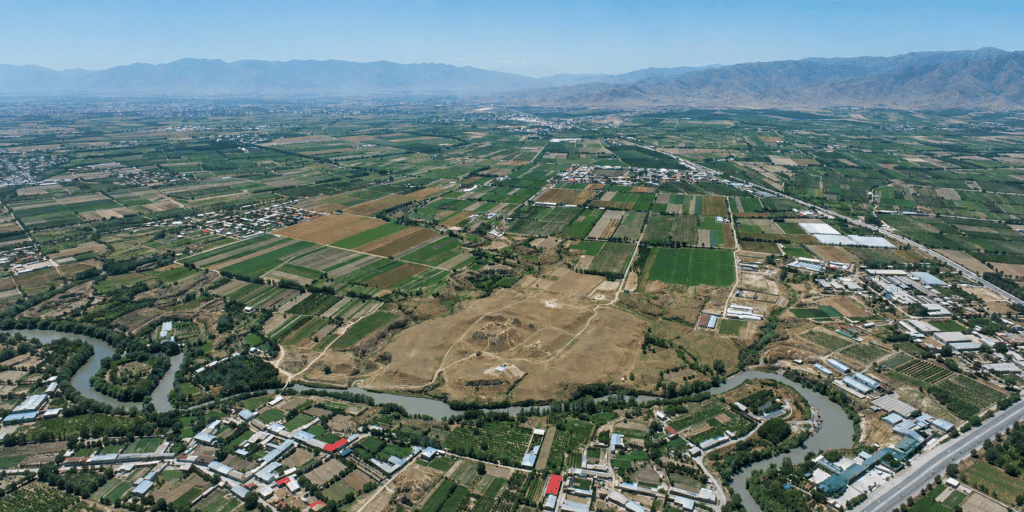
Rare dinosaur remains estimated to be around 75 million years old have been uncovered in Uzbekistan’s Karakalpakstan region, according to the State Geological Museum. The discovery adds to a growing body of paleontological evidence shedding light on Central Asia’s ancient ecosystems. On October 12, Akhmadjon Akhmedshaev, Director of the State Geological Museum, visited the excavation site near the Khodzhakul foothills in the Sultan Uvays mountain range, where the “Uzbek Geologiya Qidiruv” expedition had uncovered fossilized dinosaur bones during a geological survey. Found at a depth of approximately three meters, the remains are believed to belong to a large dinosaur from the Cretaceous period, dating back roughly 65-75 million years. The fossils include fragments of vertebrae, ribs, and leg bones, all remarkably well preserved. Scientists believe the find could offer valuable insights into the types of dinosaurs that once inhabited what is now western Uzbekistan. The region is thought to have been a humid, coastal environment during the late Cretaceous. The fossils are currently undergoing analysis at the State Geological Museum to determine their species and any potential connections to previously identified dinosaurs from Central Asia. Meanwhile, paleontologists from St. Petersburg State University have announced a second significant find, this time in Tajikistan. Researchers uncovered a well-preserved fragment of a duck-billed dinosaur skull. According to spbdnevnik.ru, the fossil’s exceptional condition may enable scientists to accurately identify the species and potentially describe a new genus. Comparative analysis is now underway with fossil collections from other countries to trace its evolutionary lineage.

Canadian Musician Releases Protest Song About Uzbek Student’s Experience with Wizz Air

Canadian singer-songwriter Dave Carroll, best known for his 2009 viral hit “United Breaks Guitars,” has released a new protest song titled “Don’t Fly Wizness Class,” inspired by the travel ordeal of Uzbek student Suhrob Ubaydullayev. The track and accompanying video, featuring Ubaydullayev himself, highlight his experience with Wizz Air in 2023 and raise broader concerns about discrimination and passenger rights. Carroll first gained international attention after United Airlines damaged his $3,500 Taylor guitar during a 2008 flight and refused to compensate him. In response, he released “United Breaks Guitars,” which amassed over 20 million views on YouTube and reportedly caused a $180 million drop in United’s stock value. The episode sparked industry-wide changes in customer service protocols. More than a decade later, Carroll has turned his attention to another case of alleged mistreatment, this time involving a 24-year-old Uzbek national. His latest song recounts how Ubaydullayev was denied boarding on a Wizz Air flight on August 31, 2023. “I had all my documents in order,” Ubaydullayev previously told The Times of Central Asia. “The staff checked them and returned them to me, but when I reached the gate, they suddenly said I couldn’t fly. No reason. No explanation.” According to Ubaydullayev, one airline employee asked, “Are you from Uzbekistan?” Upon confirming he was, he says he was denied boarding without further justification. What followed, he claims, was a humiliating ordeal: threats to call the police, warnings that the Uzbek embassy could not assist him, and refusal to provide any written explanation. Ubaydullayev had just completed a Work and Travel program in Europe and was returning home. After spending his savings on the now-cancelled flight, he borrowed money to reach Istanbul, where he was robbed and left stranded. “I met some Uzbek guys near the Sultan Ahmed Mosque who offered to help,” he said. “But they ended up taking my money and disappearing.” His journey home eventually took him through Kazan in Russia and Osh in Kyrgyzstan, before he reached the Uzbek city of Namangan, exhausted, indebted, and disillusioned. In May, during a visit to Canada, Ubaydullayev met Carroll in person. “He was kind and respectful,” Ubaydullayev told The Times of Central Asia. “Carroll listened to my story and was deeply moved.” Carroll then turned the young man’s experience into a song, aiming to bring attention to the broader issue of traveler discrimination. “My goal,” Ubaydullayev said, “is to ensure Wizz Air and other airlines stop discriminating against Uzbek citizens and start treating them with respect.”

First Uzbek Genome Project Reveals High Rate of Hereditary Mutations

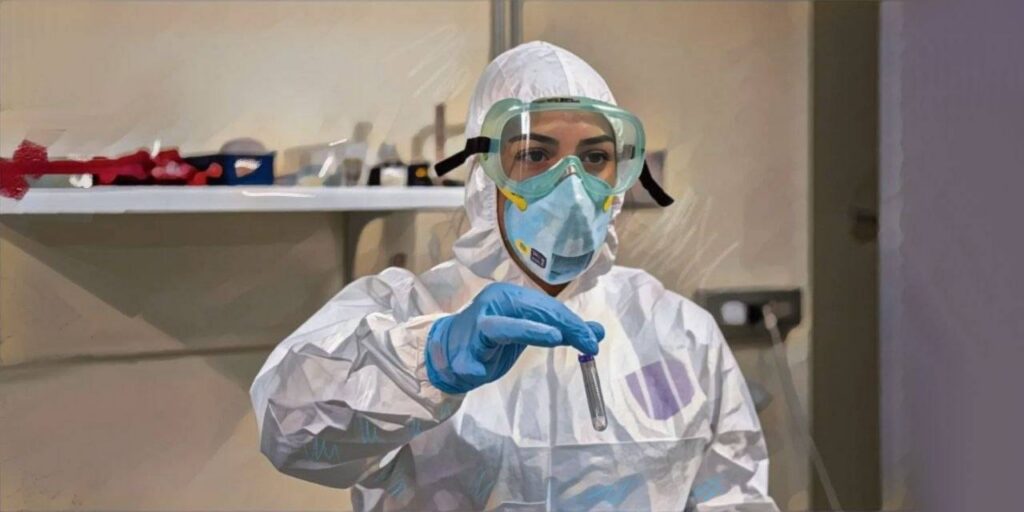
Uzbek scientists have completed the country’s first full-scale human genome study, marking a significant milestone in both national science and global genomics. Conducted by researchers at the Center for Advanced Technologies, the study identified dozens of previously undocumented genetic mutations unique to the Uzbek population. The findings have been submitted to international genomic databases and signal Uzbekistan’s growing contribution to global biomedical research. The study revealed that 50% of children examined carried a hereditary mutation, and 86% were carriers of at least one defective gene, roughly double the global average. Experts linked the elevated rate to consanguineous marriages, which occur in up to a quarter of all unions in certain regions. Professor Shakhlo Turdikulova, Director of the Center for Advanced Technologies and head of the “1,000 Genomes of Uzbekistan” project, emphasized the significance of the findings. “For the first time, we have a clear picture of the genetic makeup of our people,” she said. “If most children carry hidden hereditary mutations, we cannot reverse this trend without a system of genetic counseling and preventive screening. That is why implementing premarital genetic testing programs is essential.” Beyond rare inherited conditions, the study found strong correlations between genetic mutations and common diseases such as diabetes, cardiovascular disorders, and cancer. More than half of the participants received precise genetic diagnoses, allowing physicians to tailor treatments more effectively. Roughly one-third of the mutations identified were previously unknown to global science. The “1,000 Genomes of Uzbekistan” project is part of a broader initiative to establish a national biobank and genetic map. Its goals include advancing personalized medicine, supporting pharmaceutical development, and enabling early disease detection. The Center for Advanced Technologies, which co-developed the ZF-UZ-VAC 2001 vaccine during the COVID-19 pandemic, continues to solidify Uzbekistan’s role as a regional leader in biotechnology and genetic science. Researchers believe the project’s results will help shape nationwide preventive healthcare strategies and improve the health outlook for future generations.

Kazakh Surgeons Use MAKO Robotic System in Tashkent for the First Time

Kazakh surgeons have performed groundbreaking joint replacement procedures in Uzbekistan's capital Tashkent using the MAKO robotic system, an advanced technology in orthopedic surgery. The operations were a centerpiece of the event 'Days of Kazakh Medicine in Uzbekistan'. A surgical team led by traumatologist-orthopedist Timur Baidalin, head of the endoprosthetics department at the Batpenov National Scientific Center for Orthopedics and Traumatology, successfully conducted two joint replacements, one knee and one hip, using the MAKO robotic assistant. The system enables surgeons to plan and execute procedures with exceptional precision and reduced risk of complications. Developed by the U.S. based company Stryker, the MAKO system functions as an intelligent surgical assistant using 3D modeling technology. It creates a virtual replica of the patient’s joint, allowing the surgical team to pre-calculate the optimal implant angle, depth, and trajectory. During the procedure, the surgeon guides the MAKO manipulator, which operates with micromillimeter accuracy. This significantly lowers the risk of tissue damage and extends the lifespan of the implanted prosthesis. “The main advantage of MAKO is the ability to combine the surgeon’s experience with machine precision. This sets a new standard in endoprosthetics,” said Baidalin. For Uzbek specialists, the event served as a hands-on masterclass. In addition to observing the procedures, local doctors operated the system under the supervision of the Kazakh team. “We’ve been anticipating this technology for a long time. Today, we not only saw it in action but experienced the difference. This is a milestone for Uzbek orthopedics, and we’re grateful to our Kazakh colleagues for the opportunity to gain this experience,” said Odil Valiev, head of the adult orthopedics department at Uzbekistan’s Republican Specialized Scientific and Practical Center for Traumatology and Orthopedics. This collaboration follows another recent highlight: in spring 2025, Kazakh specialists from UMC, led by cardiac surgeon Yuri Pii, presented the ALEM device at EXPO 2025 in Osaka. The technology enables the long-term preservation of donor organs and represents another significant advance in regional medical innovation.

Uzbekistan’s Akbar Juraev Takes Three Golds at World Weightlifting Championships

Uzbek weightlifter Akbar Juraev delivered one of the standout performances of the 2025 World Weightlifting Championships by claiming three gold medals in the men’s 110 kg class, breaking world records and asserting his dominance in the sport. The championships, held October 2–11 in Førde, Norway, drew nearly 500 athletes from 87 countries to compete under the auspices of the International Weightlifting Federation (IWF). On Day 9, the 110 kg division was one of the marquee finals, especially as two Uzbek Olympic champions – Juraev and Ruslan Nuridinov – faced off in the same category.  Juraev, 25, came in with a formidable résumé: already a world champion in 2021 and 2023, and an Olympic gold medalist from Tokyo 2020. After a near-miss at the 2024 Paris Games, where he took silver in the 102 kg class, Juraev said he was “back at my right weight” and hungry for redemption.  In Norway, Juraev delivered a flawless sequence. On his third snatch attempt he lifted 196 kg, setting a new world record in the snatch. He followed that with a 232 kg clean and jerk, reaching a combined total of 428 kg, also a world record. He even attempted 245 kg in the clean and jerk, later joking that he was “just messing around.” After the victory, Juraev said, “I am back at my right weight. I can eat properly, train properly. I feel good, very happy.” He added that last year’s Olympic disappointment still drives him: “That’s why I have silver and not gold.”  Juraev’s sweep of snatch, clean & jerk, and total golds made him a three-time world champion. Meanwhile, his compatriot Nuridinov, the 33-year-old veteran and Rio 2016 Olympic champion, also shone in Førde. He lifted 186 kg in the snatch and 228 kg in the clean and jerk, earning two bronzes (in clean & jerk and total) with a combined 414 kg. His performance underscored not only his own resilience but also Uzbekistan’s continuing dominance in the world of weightlifting.