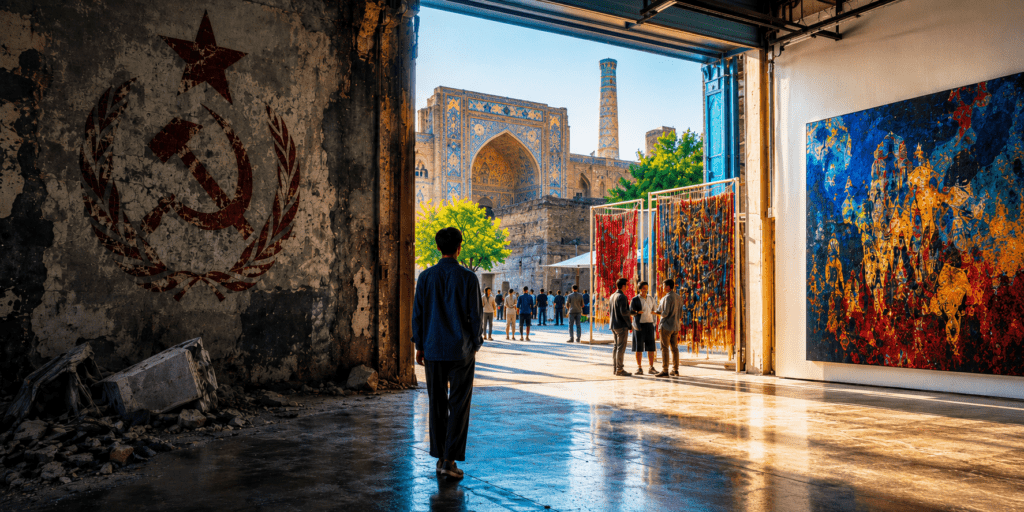
Uzbekistan made its debut at Milan Design Week 2026 on April 20, with When Apricots Blossom, an immersive exhibition at Palazzo Citterio exploring how craft and design can respond to environmental crisis. Running through April 26, the project is organized by the Uzbekistan Art and Culture Development Foundation (ACDF), commissioned by its chairperson, Gayane Umerova, and curated by Kulapat Yantrasast, founder of WHY Architecture. It marks the country’s first major presentation at one of the world’s leading design platforms.
At the center of the project is Karakalpakstan, a region in northwestern Uzbekistan that has experienced one of the world’s most severe environmental crises. Over the past six decades, the shrinking of the Aral Sea has transformed the area’s landscape, economy, and way of life. Once a vast inland body of water, the sea has largely disappeared, leaving behind desert, salt plains, and struggling communities.
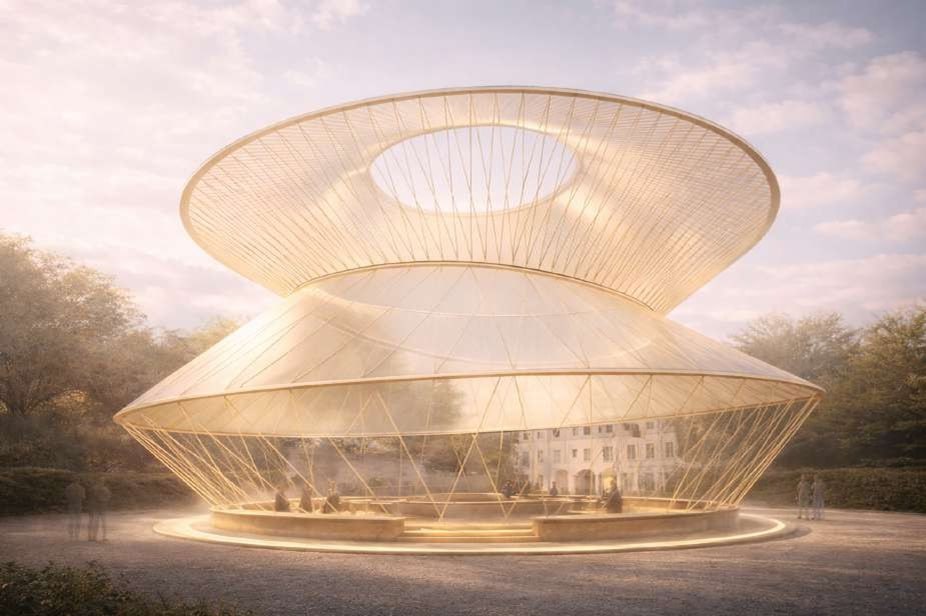
The Garden Pavilion at Palazzo Citterio, indicative render: Lightweight latticed framework ‘deconstructed yurt’ by Kulapat Yantrasast. When Apricots Blossom, Milan Design Week 2026. Courtesy of ACDF and WHY Architecture
When Apricots Blossom traces this transformation while also looking ahead.
“The Aral Sea is both a cautionary tale and an opportunity to offer a blueprint for other regions facing extreme environmental change,” Umerova said ahead of the opening. She emphasized that design and craft are not separate from these challenges, but part of the response. “They begin with people and knowledge.”
Inside Palazzo Citterio, the exhibition unfolds as a journey through the region’s past, present, and possible futures. The main gallery features an installation of reed-like structures that evoke the landscapes of Karakalpakstan. Within this setting, visitors encounter objects and ideas connecting everyday life with broader environmental questions.
A key focus is on three traditional practices: bread-making, yurt-building, and textile crafts. These are presented not as relics of the past, but as systems of knowledge shaped by generations of adaptation.
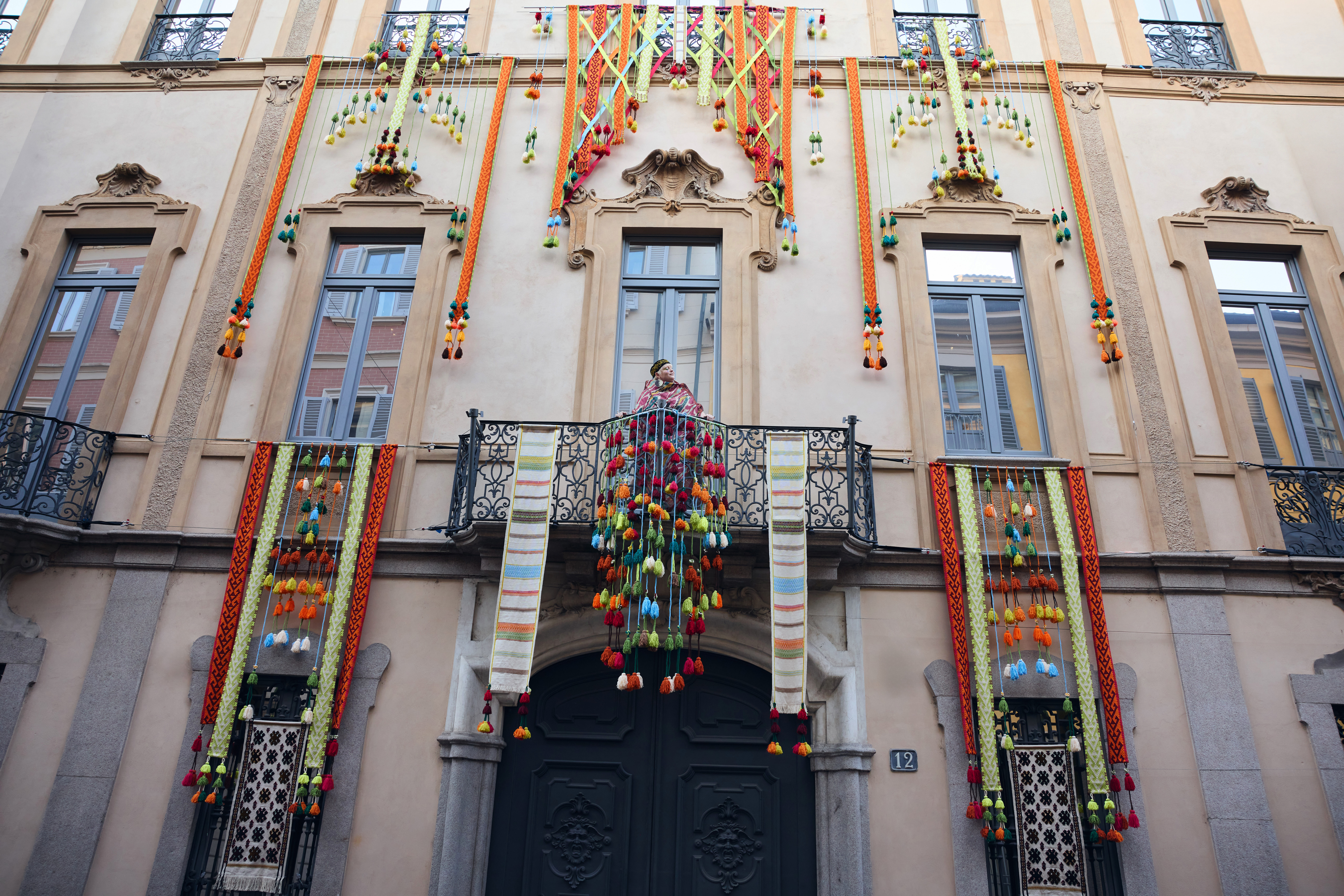
Bethan Laura Wood at Palazzo Citterio – When Apricots Blossom – commissioned by ACDF. Image courtesy of ACDF
Twelve international designers have worked with Uzbek and Karakalpak artisans to create new pieces inspired by these traditions. Among them are custom bread trays and stamps (chekich), reflecting the central role of bread in Uzbek culture. Made from materials such as wood, felt, ceramics, and reeds, the works reinterpret familiar forms while remaining rooted in local techniques.
Alongside these contemporary designs are artifacts selected by participants of the Aral School, an international postgraduate program that treats the region as a site for creative and critical exploration. The exhibition also premieres Where the Water Ends, a new film by filmmaker Manuel Correa and architect Marina Otero Verzier, offering a closer look at landscapes and communities shaped by the Aral Sea’s decline.

The main gallery interior, indicative render: Reed-link forms by WHY Architecture. When Apricots Blossom – Milan Design Week 2026. Courtesy of ACDF and WHY Architecture
Together, these elements form a broader narrative about how people adapt to change, not only through technology, but through culture.
The exhibition also serves as a platform to announce the next Aral Culture Summit, which will take place in Nukus from September 11 to 13. Held every 18 months, the summit brings together designers, scientists, and policymakers to explore how culture can contribute to environmental and social regeneration.
According to ACDF, these initiatives are part of a wider ten-year vision supported by the Uzbek government to revitalize the Aral Sea region, with a focus on cultural, economic, and social development.
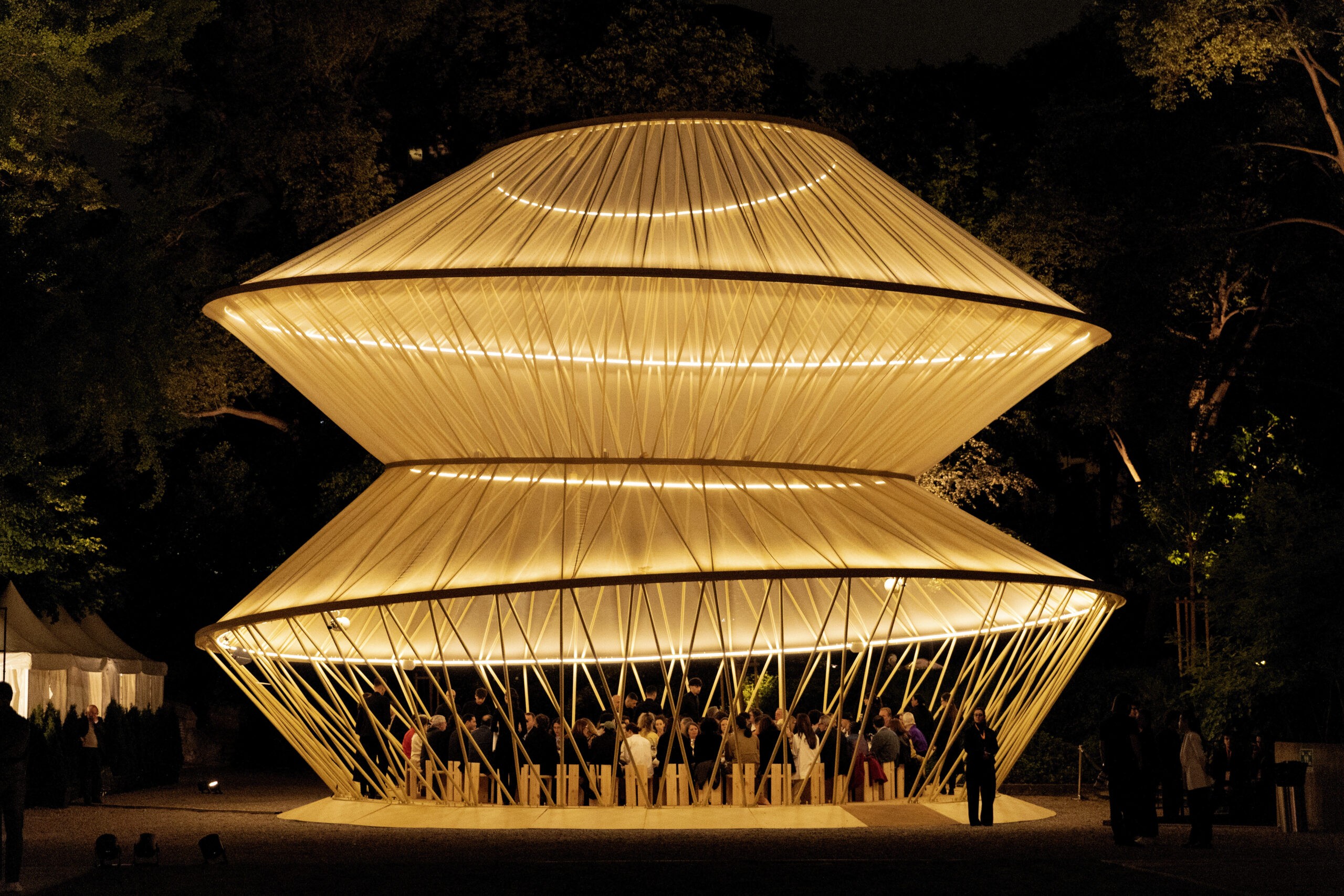
Beyond the main exhibition spaces, visitors are drawn into the palazzo’s garden, where Yantrasast has created a pavilion inspired by the traditional yurt. Known as the Garden Pavilion, the structure reinterprets the portable homes used by nomadic communities across Central Asia.

Traditional bread stamps (chekich). When Apricots Blossom – Milan Design Week 2026. Courtesy of ACDF.
“The yurt is one of the most honest pieces of architecture ever made,” Yantrasast said. “It was designed to move with its people and respond to changing conditions.”
For the exhibition, he has taken this idea further, creating what he describes as a “deconstructed yurt.” The structure serves as a gathering space for talks, workshops, and discussions, while also symbolizing absence, including the loss of water and ways of life in the Aral Sea region.
“We wanted to open it up,” Yantrasast explained. “To show not only what it holds, but also what has been lost.”
The pavilion will host daily events throughout the week, including demonstrations by Uzbek artisans, such as bread-stamp carving and tassel-making. It will also provide a space for conversations between local practitioners and international designers, linking traditional knowledge with global debates on sustainability.
By placing Uzbekistan at the center of Milan Design Week, the exhibition aims to reach a wider audience and reshape how the Aral Sea is understood.
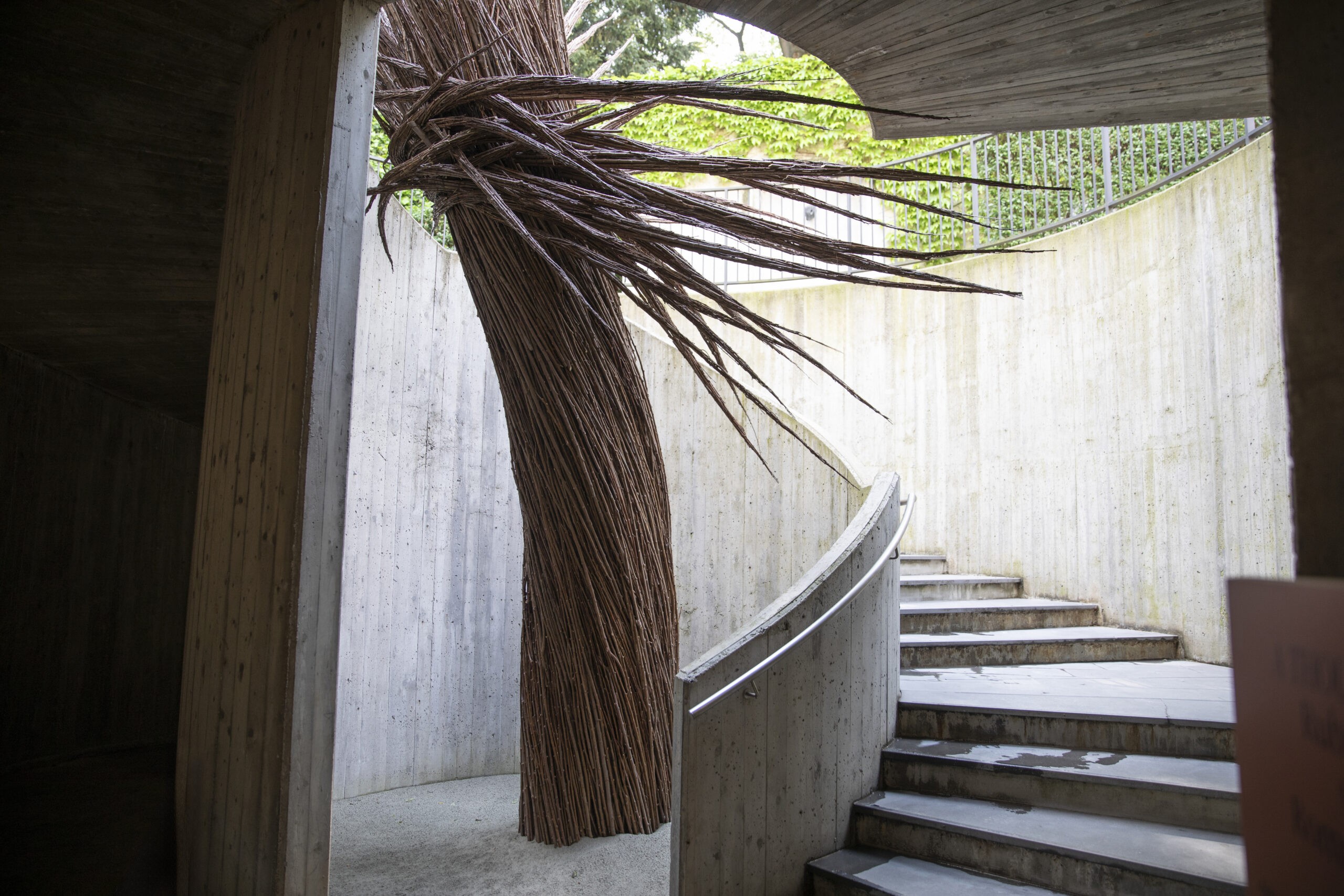
A Thousand Voices – When Apricots Blossom – by Ruben Saakyan and Roman Shtengauer, commissioned by ACDF – MDW 2026 – Image Credit: ACDF
Rather than focusing solely on environmental damage, When Apricots Blossom highlights resilience, the ability of communities to adapt, create, and endure.
For Umerova, this message is central. “We are sharing the story of Karakalpakstan not only as a history of loss,” she said, “but as a story of creativity and possibility.”
As the exhibition opens this week, it positions Uzbekistan not just as a participant in global design, but as a contributor to ongoing conversations about climate, culture, and the future of communities facing environmental change.