• KZT/USD = 0.00213
  • TJS/USD = 0.10800
  • UZS/USD = 0.00008
  • TMT/USD = 0.29850
  • KZT/USD = 0.00213
  • TJS/USD = 0.10800
  • UZS/USD = 0.00008
  • TMT/USD = 0.29850
  • KZT/USD = 0.00213
  • TJS/USD = 0.10800
  • UZS/USD = 0.00008
  • TMT/USD = 0.29850
  • KZT/USD = 0.00213
  • TJS/USD = 0.10800
  • UZS/USD = 0.00008
  • TMT/USD = 0.29850
  • KZT/USD = 0.00213
  • TJS/USD = 0.10800
  • UZS/USD = 0.00008
  • TMT/USD = 0.29850
  • KZT/USD = 0.00213
  • TJS/USD = 0.10800
  • UZS/USD = 0.00008
  • TMT/USD = 0.29850
  • KZT/USD = 0.00213
  • TJS/USD = 0.10800
  • UZS/USD = 0.00008
  • TMT/USD = 0.29850
  • KZT/USD = 0.00213
  • TJS/USD = 0.10800
  • UZS/USD = 0.00008
  • TMT/USD = 0.29850

Our People > Aliya Haidar

Aliya Haidar's Avatar

Aliya Haidar

Journalist

Aliya Haidar is a Kazakhstani journalist. She started her career in 1998, and has worked in the country's leading regional and national publications ever since.

Articles

Kazakhstan Faces Landmark Constitutional Referendum

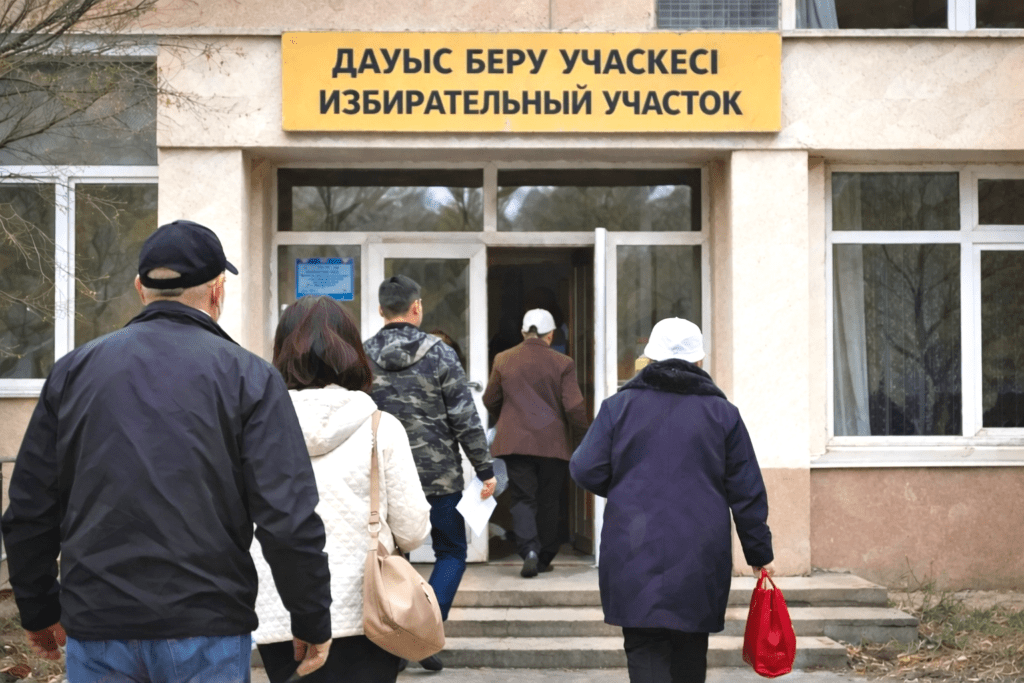
On March 15, citizens will vote in a nationwide referendum on sweeping constitutional amendments that could significantly reshape Kazakhstan’s political system. Kazakhstan’s Constitution has undergone periodic revision since independence, with changes adopted in 1998, 2007, 2011, 2017, 2019, and most recently in 2022, when 56 amendments to the basic law were approved in a national referendum. According to official statements, the proposed draft would affect about 84% of the Constitution, making it the most extensive revision in the country’s modern history. President Kassym-Jomart Tokayev has described the proposed document as “essentially a new Constitution.” At the same time, the draft retains several core principles. Kazakhstan would continue to be defined as a secular, democratic, unitary state, with the people recognized as the sole source of state power. Attempts to overthrow the constitutional order would remain punishable by law. The draft also proposes the creation of a new representative body, the Kurultai, which would replace the current bicameral parliament, consisting of the Mazhilis (lower house) and the Senate (upper house), with a unicameral legislature. The scale of the proposed reforms has generated significant public attention. The draft Constitution has been widely debated, and the referendum campaign has been accompanied by a large-scale public information effort. Supporters argue that the changes could streamline governance and modernize political institutions, while critics have raised concerns about the concentration of authority and the pace of reform. Rights and Freedoms The current Constitution states that human rights and freedoms must not infringe on the rights of others, the constitutional order, or public morality. The new draft expands this provision, specifying that the exercise of rights and freedoms must not violate the rights or restrict the freedoms of other individuals, undermine the constitutional order, disrupt public order, threaten public health, or contradict societal morality. The document continues to guarantee freedom of speech and prohibit censorship, stating, “Freedom of speech and scientific, technical, and artistic creativity is guaranteed.” It also introduces an additional clause stipulating that the dissemination of information must not infringe upon the honor and dignity of others, public health, or public order. The list of prohibited forms of propaganda is also broadened. It includes advocacy for violent changes to the constitutional order, violations of territorial integrity and sovereignty, threats to national security, incitement to war or armed conflict, and the promotion of social, racial, national, ethnic, or religious superiority or discord, as well as the glorification of cruelty and violence. Supporters of the draft say these provisions are intended to strengthen social stability and national security. However, some observers note that broader restrictions linked to public order or morality may raise questions about how such norms would be interpreted and applied in practice. In family law, the draft specifies that marriage is defined as a voluntary and equal union between a man and a woman, registered by the state in accordance with the law. President and Vice President Proposed changes to the structure of executive power have been among the most widely discussed aspects of the...

4 months ago

Growing Trade Disputes Test the Eurasian Economic Union

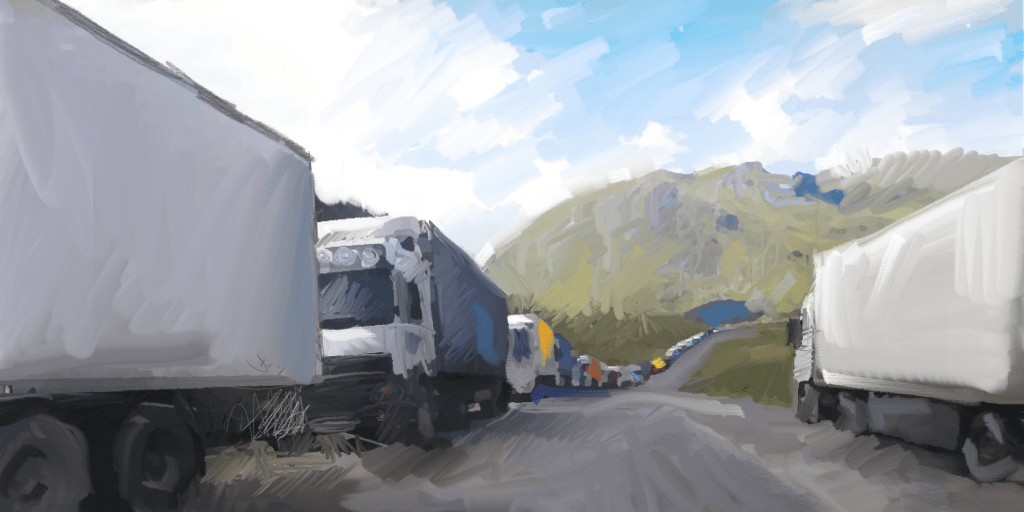
Trade disputes within the Eurasian Economic Union (EAEU) are as old as its creation. Restrictions on the import and export of certain goods have long been common practice. However, analysts increasingly warn that tensions have reached a point at which the organization risks losing its core function, ensuring the free movement of goods across borders and maintaining simplified conditions for migrant workers. Mounting Restrictions The EAEU currently comprises Armenia, Belarus, Kazakhstan, Kyrgyzstan, and Russia. Economic integration among several post-Soviet states began in 2000 with the establishment of the Eurasian Economic Community (EurAsEC), formed by Belarus, Kazakhstan, Kyrgyzstan, Russia, and Tajikistan. Uzbekistan joined in 2006, but suspended its participation in 2008. The foundation of this organization was the Customs Union agreement, intended to abolish customs duties among member states. The structure of the integration project has since evolved. The EAEU treaty was signed in 2014 and entered into force on January 1, 2015. Tajikistan and Uzbekistan did not join, while Armenia became a member in 2015. More than two decades after the first integration agreements, however, many of the bloc’s original promises remain only partially fulfilled. Experts have long argued that protectionist measures remain widespread within the bloc and that full freedom of movement for all categories of goods, including strategic products, has not been achieved. They also point to pronounced economic asymmetry: Russia accounts for approximately 85–87% of the union’s combined GDP, whereas Kazakhstan accounts for approximately 9–10%. Russia’s significantly larger population and political influence have further reinforced perceptions of structural imbalance. Moscow is now preparing new regulatory measures affecting its partners. From April 1, 2026, a national system for confirming the arrival of goods will be introduced for road imports from EAEU countries. According to the Russian authorities, shifting key control procedures to the pre-border stage is intended to improve transparency in the administration of indirect taxes. Previously, such checks were conducted after goods entered the country through desk and field audits. At the same time, Russia has intensified selective customs controls on its borders with Kazakhstan and Belarus, officially citing efforts to combat counterfeit goods. Particular scrutiny is being applied to product labelling and accompanying documentation. Controls were tightened last summer, when mobile checkpoints were established along the Kazakh-Russian border, followed by the inspections of vehicles leaving Belarus in the autumn. Full-scale checkpoints are now operating on the Kazakh-Russian border, while a simplified regime linked to the Union State and EAEU agreements continues to apply on the Belarusian-Russian border. Logistics industry representatives report that stricter controls on the Kazakh border have significantly increased transit delivery times. Carriers often face lengthy delays at checkpoints even when their documentation is in order. According to Alexandra Pokumeiko, head of a freight-forwarding department, the changes have created uncertainty in delivery schedules along Belarus-Russia transport corridors and on transit routes through Russia to Kazakhstan. The growing number of administrative restrictions has begun to spill into specific sectors of the economy, triggering retaliatory measures between member states. Escalating Tensions in the Automotive Sector A new dispute...

4 months ago

Shell Signs New Exploration Deal in Kazakhstan Amid Legal Disputes

British energy company Shell has launched a new exploration project in Kazakhstan despite previously announcing that it would pause new investments in the country. On March 5, it was announced that Shell had signed a contract for geological exploration in the Aktobe region. The company has been involved in several legal disputes with Kazakhstan over subsoil use and had stated that it did not plan to invest further in the country’s energy sector. Geological Exploration Contract The Zhanaturmys site, which has attracted Shell’s interest, covers an area of 1,377 square kilometers and is located in one of Kazakhstan’s most actively developed oil and gas basins. The document was signed by Kazakhstan’s Deputy Energy Minister, Yerlan Akbarov, and Shell’s Senior Vice President and Chair in Kazakhstan, Suzanne Coogan. The contract provides for seismic exploration, data collection, and technical assessments. “The signing of today’s contract for geological exploration is further confirmation of Shell’s commitment to long-term cooperation with the Republic of Kazakhstan. Drawing on our global experience and advanced technologies, we intend to continue contributing to geological exploration and the expansion of the country’s resource base,” Coogan said. The agreement will remain in force until 2032. The project will be implemented under the terms of an improved model contract. According to Kazakhstan’s Energy Ministry, the company will allocate at least 100 million tenge (about $200,000) to finance socio-economic development in the region where the site is located. Shell is currently involved in three projects in Kazakhstan: the North Caspian Production Sharing Agreement (NCOC, 16.81% stake); the Karachaganak Production Sharing Agreement (29.25% stake); and the Caspian Pipeline Consortium (7.4% stake). Kazakhstan produces around 1.8–1.9 million barrels per day and hosts some of the world’s largest offshore reserves in the Caspian Sea. Western energy majors, including Shell, Chevron, ExxonMobil, and Eni, have operated in the country for decades through complex production-sharing agreements. Legal Disputes In February, Shell CEO Wael Sawan said the company would suspend new investments in Kazakhstan while legal proceedings with the government were ongoing. Numerous lawsuits filed by Kazakhstan, with claims amounting to billions of dollars, have reduced the company’s willingness to invest in the country, he said. “This affects our desire to continue investing in Kazakhstan. Although we see many opportunities for investment in the future, we will wait until we have a clearer picture of how things will turn out,” Sawan stated. Karachaganak and Kashagan Kazakhstan is currently involved in several legal disputes with Western oil companies, both in national courts and international arbitration. The cases concern two major oil and gas projects. One of them is Karachaganak. In 2023, the Kazakh government filed a lawsuit against the field's developers over cost deductions. The initial claim amounted to $3.5 billion but later increased to $6 billion after additional claims were filed. The project is operated by a consortium led by Eni and Shell, each holding a 29.25% stake. Other partners include Chevron (18%), Lukoil (13.5%, which has agreed to sell its stake), and KazMunayGas (10%). In January, it was...

5 months ago

UK Expands Strategic Engagement in Central Asia Amid Growing Global Competition

The world’s largest economies have recently increased their focus on Central Asia. The United Kingdom, alongside the U.S., the European Union, and China, is seeking to strengthen partnerships in a region that was previously not among its top foreign policy priorities. Britain Replicates an Established Format Throughout the years of independence, Kazakhstan and its regional neighbors were often perceived as operating within Russia’s sphere of influence. The war in Ukraine and broader geopolitical shifts have altered international attitudes toward Central Asia. Major powers are now intensifying dialogue with the region, with particular emphasis on economic cooperation. At the end of February, foreign ministers met in London under the Central Asia-UK (CA5+1) format. Although this was the first meeting of its kind in the British capital, the format mirrors similar mechanisms already used by the U.S., the European Union, Russia, China, and Japan. Participants noted that the CA5+1 format has proven to be an effective mechanism for structured and substantive engagement with external partners. The regional agenda is addressed comprehensively, reflecting Central Asian priorities while creating additional opportunities to advance economic initiatives and implement joint projects. Particular attention has been paid to trade diversification, industrial cooperation, sustainable infrastructure development, and unlocking Central Asia’s potential in critical minerals and renewable energy. The meeting also covered economic growth prospects, key challenges facing Central Asian economies, and the expansion of trade and investment. Logistics was a central topic, including the development of the Trans-Caspian International Transport Route, widely known as the Middle Corridor. British Foreign Secretary Yvette Cooper emphasized the strategic importance of Central Asia as a dynamically developing region characterized by sustained economic growth, expanding regional cooperation, and a growing role in international affairs. According to the British participants, the region’s countries are pursuing a pragmatic approach, strengthening connectivity and expanding their participation in shaping a modern architecture of economic and political cooperation. Education and Finance Interest in British education continues to grow across all five Central Asian countries. Four branches of British universities are operating in Kazakhstan, and nearly 6,000 students have earned British degrees through the Bolashak international scholarship program. Uzbekistan and Kyrgyzstan have announced plans to establish international financial centers modeled on the Astana International Financial Centre in Kazakhstan. British Ambassador to Uzbekistan Timothy Smart said that work is underway to create an international financial center in Tashkent based on international arbitration standards. Like the Astana model, the new center will operate under English common law. British Ambassador to Kyrgyzstan Nicholas Bowler highlighted London’s role in assisting with legislation for the International Dispute Resolution Center, which will operate under English law and be located in the Issyk-Kul region. Greater participation by Central Asian companies on the London Stock Exchange is also anticipated. Logistics and Resources British diplomats have placed particular emphasis on cooperation in critical minerals, a priority within the United Kingdom’s global strategy. Projects are underway across the region, accompanied by new agreements and industrial partnerships. Agreements have reportedly been reached between the Kazakh producer Zhezkazganredmet and the British...

5 months ago

New Earthquake Jolts Almaty, Highlighting Central Asia’s Seismic Threat

Many residents of Almaty, Kazakhstan’s largest city, have known since childhood what to do in the event of an earthquake. Children are taught to stand near load-bearing walls or structural beams in their homes, as these areas are considered more resistant during tremors. Many households keep an emergency kit with water, food and blankets in an accessible place. Such precautions are not excessive: Almaty experiences regular seismic activity. The latest significant tremor occurred on February 17, with an epicenter located 74 kilometers northeast of the city. The earthquake registered a magnitude of 5.0. City residents left their homes and offices and gathered outside, a familiar reaction in a city long accustomed to seismic risk. National alert system In May 2024, Almaty introduced the Mass Alert system to notify residents of emergencies, including earthquakes, floods, and man-made disasters. The system uses Cell Broadcast technology to send text notifications to all mobile subscribers within a specific geographic area, regardless of their mobile operator. Because messages are transmitted through cell towers rather than individual calls or messages, the system is designed to avoid overloading mobile networks during emergencies. It is integrated with 28 seismic stations. Many experts say the system’s launch followed the January 2024 earthquake, which was felt across southern Kazakhstan. Almaty experienced several tremors measuring up to magnitude 5.0, triggering widespread panic. Traffic jams stretching for kilometers formed on roads leading out of the city. Forty-four people sought medical attention, most of them injured while attempting to exit buildings quickly. Scientists warn that a powerful and destructive earthquake in the region is inevitable, although the timing cannot be predicted. Almaty is located in a zone rated at up to 10 points on the MSK-64 seismic intensity scale. Each year, up to 200 minor tremors are recorded within an 80-kilometer radius of the city. Earthquakes with magnitudes between 2.0 and 4.0 are considered typical. Approximately 30 tectonic faults run through the city and its surroundings, more than 60% of them in mountainous areas. Experts estimate that, given current dense and high-rise construction, as many as 30% of buildings could be destroyed in the event of an earthquake measuring 9-10 points in intensity. During the Soviet period, buildings taller than nine stories were generally prohibited in the city. The notable exception was the 25-story Kazakhstan Hotel, which was constructed with seismic reinforcement measures. Today, high-rise construction has expanded significantly, including in some of the city’s more seismically vulnerable foothill areas. The emergency warning system does not predict earthquakes in advance; it issues alerts only once tremors have already been detected. The system has been activated during several real seismic events. Seismological predictions In Kazakhstan, official forecasts are issued by the Institute of Seismology. At the same time, attempts at earthquake prediction have occasionally emerged outside the scientific mainstream. One of the most prominent figures associated with such efforts is biophysicist Viktor Inyushin. In the 1990s, he appeared in the media describing experiments aimed at predicting earthquakes by observing crushed peas, acorns, barley seeds,...

5 months ago

On the Eve of Valentine’s Day: Customs of Love and Marriage in Central Asia

On the eve of Valentine’s Day, Central Asia is once again debating whether to celebrate the holiday or regard it as a symbol of foreign influence. Yet the region has its own rich and diverse customs related to love, matchmaking, and marriage. Accusations of Alien Influence and “Corruption” Valentine’s Day, like Halloween, spread to the former Soviet republics after the collapse of the USSR. In the first decades, young people embraced the new holidays. In recent years, however, critics have increasingly argued that commemorating a Catholic saint in a format centered on romantic love contradicts the traditions of the region’s peoples. For example, in Kazakhstan last year, deputies of the Mazhilis, the lower house of parliament, sharply criticized Valentine’s Day. Some deputies argued that it corrupts young people, promotes “free love,” and even carries “homosexual overtones.”  It is worth noting that Kazakhstan recently adopted legislation prohibiting so-called “propaganda of non-traditional sexual relations.” The Spiritual Administration of Muslims of Kazakhstan has also stated that Valentine’s Day promotes alien values and encourages promiscuity. Gratitude for Raising a Daughter Many matchmaking and marriage customs remain common across Central Asia, particularly the significant role of the bride’s and groom’s parents in ceremonies and celebrations. While traditions have evolved, many are still practiced in modern engagements and weddings. The well-known custom of paying bride price, kalym, has been preserved, though it has undergone significant change. Today, kalym varies depending on the wealth of the families. It may include apartments or cars, or it may amount to several hundred dollars. Importantly, kalym is now generally regarded as financial support for the young family and, as a rule, remains at the disposal of the bride and groom. Historically, in Kazakhstan and Kyrgyzstan, kalym was paid in livestock, and wedding celebrations could last more than a month.  One of the main Kazakh wedding rituals is the groom’s visit to the bride’s village or, in modern practice, her home. Before his first visit, the groom sends gifts to the bride’s family, known as Ilu,  an expression of gratitude for raising their daughter. In some regions of Kazakhstan, this ritual is called ana suty (“mother’s milk payment”). In the past, it included horses, camels, sheep, and riding equipment for the bride’s father. Today, it may consist of any valuable gift, and jewelry is often presented to the women in the bride’s family. The bride traditionally gives the groom a scarf as a symbol of her purity. Festivities then begin, with singing and dancing. Kazakh traditions often involve two weddings: one at the bride’s home and one at the groom’s. The bride’s farewell from her family home remains especially significant, reflecting her relatives’ wishes for her future life. Today, this ceremony is often held in a restaurant. The bride does not wear a white wedding dress at the farewell celebration but appears in an elegant outfit and a traditional headdress known as a saukele. During the farewell, the groom and his friends are subjected to playful pranks, for which they must...

5 months ago

Kazakhstan Proposes Restrictions on Social Media Access for Minors

An active and ongoing debate is taking place in Kazakhstan over proposed amendments to legislation that would ban children under the age of 16 from using social media. The initiative has been raised repeatedly by lawmakers, although many experts believe teenagers would still find ways to circumvent such restrictions. The primary objective cited by lawmakers is to protect children from harmful content, including violence and pornography, and to reduce cyberbullying. The Ministry of Culture and Information has already prepared draft amendments that would affect the regulation of social media. Mechanisms for verifying users’ ages will be developed jointly with the Ministries of Education and Digital Development. Specifically, the proposals under discussion would introduce a ban on registering users under the age of 16 on social media platforms, with an exception for instant messaging services. Education Minister Zhuldyz Suleimenova said the working group is considering measures, including SIM card registration for children under 14 as an initial step toward access control, monitoring the content minors consume, and stronger digital and media literacy education in schools. Lawmakers argue that the issue is becoming increasingly urgent. In February, officials reported that around 200 registered cases of bullying and cyberbullying involving children were recorded in 2025. The figures were cited by Yulia Ovechkina, deputy chair of the Committee for the Protection of Children’s Rights. According to Ovechkina, these statistics primarily reflect improved detection and reporting rather than the full scale of the problem. She also noted that administrative liability for bullying was expanded in 2024. Officials say the number of teenagers experiencing harassment on social media continues to rise. In November 2025, police in Astana reported a sharp increase in cyberbullying complaints nationwide, particularly among female students and individuals active in public life. Law enforcement agencies note that forms of digital violence are evolving rapidly and becoming less visible. The most common manifestations include cyberbullying, stalking, the publication of personal data, extortion involving intimate materials, and the growing use of deepfake technologies. Increased online activity among teenagers heightens their vulnerability to such threats, police say. At the same time, experts question whether a blanket ban would be effective or meaningfully improve child safety. According to educational psychologist and Gestalt consultant Olga Tretyakova, building trusting relationships with children, openly discussing the dangers of harmful content, and conducting sustained preventive and educational work are far more effective than simply passing restrictive legislation. While such efforts require significantly more resources, she argues they are the only measures likely to produce lasting results. Skepticism also stems from the deep integration of social media into everyday communication, education, and adolescent development. Attempts to isolate minors from these platforms through legal measures risk cutting them off from a social environment they perceive as normal. Children are likely to register using other people’s phones, false names, or fake dates of birth, said Gabit Umirbekov, deputy chairman of the Chamber of Legal Advisors of the Republic of Kazakhstan. For many minors, especially those who are socially isolated or vulnerable, social networks serve as...

6 months ago

Jackson-Vanik Repeal Gains Momentum as U.S. Courts Central Asia

For many years, U.S. relations with Central Asia were primarily political in nature, while economic ties developed slowly. However, in the past year, engagement has intensified significantly, with recent agreements suggesting the U.S. is poised to strengthen its economic presence in the region. A recent statement by U.S. Secretary of State Marco Rubio reinforces this outlook. Calls to repeal the outdated Jackson-Vanik trade restrictions have been framed by U.S. officials as a way to facilitate trade with Central Asia and strengthen U.S. energy security. The Jackson-Vanik Amendment The Jackson-Vanik Amendment, enacted in 1974, restricts trade with countries that limit their citizens’ right to emigrate. At the time of its passage, Central Asia was still part of the Soviet Union.  The amendment prohibits granting most-favored-nation (MFN) status, government loans, and credit guarantees to countries that violate their citizens’ right to emigrate, and allows for discriminatory tariffs and fees on imports from non-market economies. The amendment was repealed for Ukraine in 2006, and for Russia and Moldova in 2012. However, it remains in effect for several countries, including Azerbaijan, Kazakhstan, Tajikistan, Turkmenistan, and Uzbekistan, which continue to receive only temporary normal trade relations. In May 2023, a bill proposing the establishment of permanent trade relations with Kazakhstan, which included repealing the Jackson-Vanik Amendment, was introduced in the U.S. Congress. A follow-up bill with similar provisions was submitted in February 2025. Then-nominee and now Secretary of State Marco Rubio previously noted that some policymakers viewed the amendment as a tool to extract concessions on human rights or to push Central Asian states toward the U.S. and away from Russia. However, he characterized such thinking as outdated, stating that, “In some cases, it is an absurd relic of the past.”  Rubio has consistently supported expanding U.S. ties with Central Asia. Expanding Cooperation In 2025, relations between the U.S. and Central Asia deepened significantly, particularly with Kazakhstan and Uzbekistan, which are seen by analysts as the primary beneficiaries of this cooperation. In late October 2025, U.S. Deputy Secretary of State Christopher Landau and U.S. Special Representative for South and Central Asia Sergio Gor visited Kazakhstan and Uzbekistan. One of the year’s major events was the Central Asia-U.S. (C5+1) summit held in Washington on November 6. Leaders of the five Central Asian states met with President Donald Trump and members of the U.S. business community. Uzbekistani President Shavkat Mirziyoyev also met with U.S. Senator Steve Daines, co-chair of the Senate Central Asia Caucus, with both sides focusing heavily on economic cooperation. At the summit, Uzbekistan finalized major commercial agreements with U.S. companies, including aircraft orders by Uzbekistan Airways and deals spanning aviation, energy, and industrial cooperation. Kazakhstan signed agreements worth $17 billion with U.S. companies in sectors including aviation, mineral resources, and digital technologies. This included a deal granting American company Cove Kaz Capital Group a 70% stake in a joint venture to develop one of Kazakhstan’s largest tungsten deposits, an agreement valued at $1.1 billion.  Further agreements were signed on critical minerals exploration. Kazakhstan and the...

6 months ago

The Potential and Problems of Tourism in Kazakhstan

Kazakhstan boasts unique natural landscapes that could attract international visitors, and significantly enrich the country's economy. Each year, the government allocates increasing funds to support tourism. However, services and infrastructure in many tourist destinations still remain well below international standards. Undeniable Improvements According to Talgat Gazizov, Chairman of the Board of the national company Kazakh Tourism, more than 1,100 tours to Kazakhstan are currently available on 18 major online platforms across Europe and Asia – a threefold increase compared to 2023. This reflects growing interest among international tour operators. As previously reported by The Times of Central Asia, authorities are also weighing up the possibility of opening casinos in designated tourist zones, accessible exclusively to foreign citizens. In 2025, Kazakhstan invested nearly $2.5 billion in the development of its tourism sector, a 32% year-on-year increase. The number of tourists staying in accommodation facilities rose by 12%, surpassing 10 million. Kazakhstan also improved its position in the World Economic Forum’s global tourism index, climbing from 66th to 52nd place. The stated goal is to break into the top 50. Currently, 328 tourism investment projects are underway. Notable among them are the Oi-Karagai mountain resort, Hilton and Mandarin Oriental hotel complexes, the Zhibek Zholy entertainment complex, and the Keruen Inn roadside service chain. These projects are expected to create around 10,000 permanent jobs. A Comprehensive Development Plan for the Almaty Mountain Cluster includes expanding ski resorts and integrating them into a unified system. The celebrated Shymbulak ski base and Medeu high-altitude skating rink, both located near Almaty, are among the country’s most distinctive attractions. The plan envisions 30 new cable cars and 161 kilometers of ski slopes, aiming to boost annual tourist numbers from 1.8 million to 5 million. Authorities note that, globally, ski tourists spend seven times more than beach tourists. The Shchuchinsk-Borovskaya (Burabai) resort area is also a development priority. Infrastructure expansion around Lakes Katarkol, Maloye and Bolshoye Chebachye, and Zhukei is intended to ease pressure on Lakes Shchuchye and Borovoye. The number of inbound tourists to Burabai is projected to reach 94,000 by the end of 2029, with 32,500 people employed in the local tourism industry. In western Kazakhstan, development is planned along the Mangistau Peninsula, including Teply beach and Kendirli resorts on the Caspian Sea. Efforts are also underway to improve access to the striking rock formations of Bozhyr and Tamsha, which rival world-famous geological landmarks. Services and Infrastructure Lag Behind Despite progress, serious shortcomings persist, chief among them underdeveloped services. The lack of public toilets in tourist zones and along highways has been repeatedly highlighted. Government data shows that many resort areas in the Akmola, Karaganda, and Pavlodar regions, as well as in the Abai and Zhetysu regions, lack reliable water supply and central sewage systems. The use of well water remains a pressing concern. In the Abai region, some recreation centers are situated dangerously close to water sources. Lake Alakol, a popular summer destination, requires urgent shoreline reinforcement. Similar dredging work is also necessary in Caspian...

6 months ago

Epiphany in Central Asia: Orthodox Traditions and Regional Unity

On the night of January 18-19, Orthodox Christians across Central Asia gather at frozen rivers and lakes to celebrate the feast of Epiphany by plunging into icy waters, three times each, in line with tradition. Though rooted in the Christian faith, this ritual has evolved into a broader cultural event, drawing participation from people of many backgrounds. A Test of Faith and Endurance In Central Asia, Epiphany coincides with some of the coldest days of the year, often referred to as the "Epiphany frosts." Despite subzero temperatures, participation in ice bathing continues to grow. According to Orthodox tradition, Epiphany commemorates the baptism of Jesus in the River Jordan. While the climate in Israel was mild, believers in the region embrace the symbolic cleansing despite the extreme cold. The Orthodox Church does not consider ice bathing a requirement for the faithful. Instead, the central ritual of the holiday is the Great Blessing of Water, performed both on Epiphany and the evening before. Priests encourage believers to collect holy water from churches, sprinkle it throughout their homes, and drink it in small amounts on an empty stomach. Many believe this brings health and protection for the year ahead. Nevertheless, in the main Orthodox churches of Central Asia, fonts and pools are prepared for those who wish to immerse themselves. Designated ice holes are also opened in lakes and rivers for traditional bathing. Strict Safety Measures in Kazakhstan In Kazakhstan, authorities take extensive precautions to ensure public safety during Epiphany bathing. In Astana, the celebration began with a religious procession from the Constantine and Helen Cathedral to the embankment of the Ishim River, where the water was consecrated despite temperatures dipping to minus 30 degrees Celsius. Warm changing rooms were provided, and teams from the Ministry of Emergency Situations, along with paramedics and rescue personnel, were on hand throughout the night. In Almaty, where temperatures hovered around minus 15 degrees, Epiphany fonts were set up at 10 churches. Authorities reminded residents that swimming in non-designated natural bodies of water is prohibited due to the risk of slipping or falling through the ice. However, safety teams and patrols were stationed at approved bathing sites, including the Bolshaya Almatinka, Malaya Almatinka, Butakovka, Goryachiy Istochnik, and Gorenik rivers. Officials advised those with cardiovascular or endocrine conditions to avoid the ritual and warned against participating while intoxicated. A Cultural Tradition Embraced by Many Over time, Epiphany bathing in Central Asia has grown beyond a strictly religious practice. In Kazakhstan, many ethnic Kazakhs and other non-Christian residents eagerly take part, viewing the ritual as a source of health and vitality. It has become a powerful symbol of interethnic and interfaith unity in the region. While Muslim clerics typically do not encourage participation, they generally refrain from direct criticism, recognizing the tradition's broader cultural significance. Orthodox priests also emphasize that the ritual is more custom than doctrine, open to anyone. Some compare Epiphany bathing to the festive atmosphere of Kurban Ait, when Muslims share food in public spaces. Likewise,...

6 months ago