• KGS/USD = 0.01144 0%
  • KZT/USD = 0.00205 0%
  • TJS/USD = 0.10771 0%
  • UZS/USD = 0.00009 0%
  • TMT/USD = 0.28571 0.28%
  • KGS/USD = 0.01144 0%
  • KZT/USD = 0.00205 0%
  • TJS/USD = 0.10771 0%
  • UZS/USD = 0.00009 0%
  • TMT/USD = 0.28571 0.28%
  • KGS/USD = 0.01144 0%
  • KZT/USD = 0.00205 0%
  • TJS/USD = 0.10771 0%
  • UZS/USD = 0.00009 0%
  • TMT/USD = 0.28571 0.28%
  • KGS/USD = 0.01144 0%
  • KZT/USD = 0.00205 0%
  • TJS/USD = 0.10771 0%
  • UZS/USD = 0.00009 0%
  • TMT/USD = 0.28571 0.28%
  • KGS/USD = 0.01144 0%
  • KZT/USD = 0.00205 0%
  • TJS/USD = 0.10771 0%
  • UZS/USD = 0.00009 0%
  • TMT/USD = 0.28571 0.28%
  • KGS/USD = 0.01144 0%
  • KZT/USD = 0.00205 0%
  • TJS/USD = 0.10771 0%
  • UZS/USD = 0.00009 0%
  • TMT/USD = 0.28571 0.28%
  • KGS/USD = 0.01144 0%
  • KZT/USD = 0.00205 0%
  • TJS/USD = 0.10771 0%
  • UZS/USD = 0.00009 0%
  • TMT/USD = 0.28571 0.28%
  • KGS/USD = 0.01144 0%
  • KZT/USD = 0.00205 0%
  • TJS/USD = 0.10771 0%
  • UZS/USD = 0.00009 0%
  • TMT/USD = 0.28571 0.28%

Our People > Andrei Matveev

Andrei Matveev's Avatar

Journalist

Andrei Matveev is a journalist from Kazakhstan.

Articles

Opinion: Why Russia May Stop Oil Supplies via the CPC

The global confrontation between the West and East could, quite literally, devastate the economies of Central Asian countries in the near future. Some experts argue that the position Kazakhstan and its regional neighbors now occupy, four years into the war between Russia and Ukraine, has spiraled beyond anyone’s control. The disruption began with Ukrainian drone strikes on Russian infrastructure used by the Caspian Pipeline Consortium (CPC), which indirectly impacted oil flows from Kazakhstan to Europe. On August 2, several media outlets, citing sources within the Ukrainian military, reported an attack on the Central Asia-Center (SAC) gas pipeline running through Kazakhstan. The attack allegedly caused an indefinite halt in gas deliveries that Russia had been sending in reverse flow to Uzbekistan. Kazakhstan also uses this gas domestically. Shortly after, the energy ministries of both Uzbekistan and Kazakhstan denied reports of any damage to the pipeline. Nonetheless, Ukraine’s classification of the SAC pipeline as a legitimate target remains on record. Notably, although Kazakhstan’s Foreign Ministry has issued a formal protest to Kyiv over the CPC attacks, it has yet to reveal any official response from the Ukrainian side. Kazakhstan thus finds itself in an extremely vulnerable position: its national budget is heavily dependent on oil exports, while its southern infrastructure increasingly relies on imported gas. For example, the planned conversion of Almaty’s TPP-2 to gas is unfeasible without stable fuel supplies. In other words, Kazakhstan has become fully dependent on developments in the Russian-Ukrainian war. Compounding the geopolitical tension, U.S. President Donald Trump has pursued an aggressive and often unpredictable foreign policy approach. He has threatened sanctions against Russia’s economic partners if they continue buying oil from President Vladimir Putin. This pressure is primarily directed at China and India, both of which have already signaled they do not intend to comply with Trump’s ultimatum. In response, Russia may adopt symmetrical countermeasures targeting American companies, specifically, by halting oil flows via the CPC. That’s the view of JPMorgan analysts, who suggest that such a move could drive global oil prices up to $80 per barrel. This would benefit Russia but would deal a serious blow to Kazakhstan, which relies on CPC to export up to a million barrels of oil per day. Unfortunately, Kazakhstan lacks viable alternatives. The Baku-Tbilisi-Ceyhan (BTC) pipeline, often cited as a backup route, depends heavily on Caspian Sea shipping, which is increasingly hindered by shallow waters. Heavier oil barges dispatched from Aktau to Baku risk running aground. As a result, Kazakhstan's oil volume transported via BTC is expected to increase by only 300,000 tons this year, from 1.4 to 1.7 million tons. It's worth noting that CPC exports oil produced by American firms Exxon and Chevron, the British company Shell, Italy's ENI, and France’s TotalEnergies. These are the very firms Russia could target in retaliation. As Trump’s statements deepen the appearance of a Russia-versus-West conflict, energy infrastructure could increasingly become a battlefield. Hints of Moscow’s readiness to act have already emerged. In mid-July, President Putin signed a decree mandating...

11 months ago

Kazakhstan and Turkey Tighten Ties Amid Shifting Caspian Dynamics

Kazakhstan’s President Kassym-Jomart Tokayev arrived in Turkey on an official visit late on Monday, where he held talks with President Recep Tayyip Erdoğan. The two leaders went on to co-chair the fifth meeting of the Kazakhstan–Turkey High-Level Strategic Cooperation Council. Coming amid heightened tensions in the Caspian region, particularly between Russia and Azerbaijan, the trip appears aimed at recalibrating regional dynamics, though analysts say its full implications remain unclear. Tokayev’s visit ended on a ceremonial high, as Erdoğan bestowed upon him the Devlet Nişanı, Turkey’s highest state honor. Accepting the award, Tokayev — who noted he had previously declined both domestic and foreign distinctions — thanked the Turkish president and people, highlighting Kazakhstan’s political and economic achievements. Erdoğan, in turn, praised Kazakhstan as the “center of peace and stability in its region.” Yet with Kazakhstan straddling both Central Asia and the Caspian basin — each a strategic priority for Ankara — it remains unclear which “region” Erdoğan had in mind. Much of the visit, however, played out behind closed doors. The official press release offered only general statements and few specifics. But the images released were polished and plentiful. Ahead of the summit, Tokayev met with prominent Turkish business leaders already active in Kazakhstan or planning future investments in the country’s economy. Political analyst Adil Kaukenov, a China specialist, weighed in on Tokayev’s business meetings via his Telegram channel, stating that the main topics were processing and logistics. His colleague Daniyar Ashimbayev, meanwhile, interpreted the visit as evidence that Astana is pursuing the foreign policy course it deems necessary. “I have already written about the logistical and geopolitical rivalry between Central Asia, the South Caucasus, and Asia Minor,” Ashimbayev observed. “A strange situation even arose when Kazakhstan signed one agreement on the Trans-Afghan Highway with Kabul, and Tashkent signed another. Or the constant discussion between Tashkent and Baku on the development of the Trans-Caspian corridor without the participation of Ashgabat and Astana. Tensions have risen in relations between Baku and Moscow, which could jeopardize Caspian logistics. Against this backdrop, the Kazakh authorities are methodically pushing through their agenda.” Ashimbayev also recalled Kazakhstan’s recent diplomatic successes, such as securing EU sanctions exemptions for agricultural and coal exports. “In this regard, Tokayev’s trip to Ankara was intended to resolve possible contradictions and misunderstandings in bilateral relations,” Ashimbayev concluded. While official sources emphasized economic and cultural-humanitarian cooperation as the main themes of the visit, Ashimbayev hinted that more sensitive topics may have been discussed privately. “The Turkish release mentions that the parties discussed defense issues, while the Kazakh release says they talked about IT,” he noted. “But by and large, the meaning of the talks is that both leaders calmly sorted out mutual issues, with no one acting as a supplicant or ‘vassal’ (as is sometimes the case at similar meetings). Kazakhstan methodically focused on the issues of interest to it and correctly discussed the issues raised by the host of the summit.” A closer analysis of publications on Akorda, the Kazakh presidential...

11 months ago

Opinion: A Sea of Discord? Intensifying Military Drills Threaten Stability in the Caspian Region

On Monday, Russia and Iran launched joint military exercises in the Caspian Sea under the banner “Together for a Safe and Secure Caspian Sea.” Officially, the drills aim to enhance maritime security and naval cooperation between the two countries and are being coordinated by Iran’s Northern Fleet. While such exercises might once have passed without much notice, their timing and frequency reflect a shifting dynamic: the Caspian region is rapidly emerging as a potential hotspot in global geopolitics. Just one month prior, the same waters hosted joint military exercises between Azerbaijan and Kazakhstan, held in Aktau, western Kazakhstan. These were followed by the “Tarlan-2025” air and tactical drills in Azerbaijan from July 8-10, which focused on enhancing UAV operations and military coordination. Baku’s strategic alliance with Ankara is a key factor here. Azerbaijan, a close Turkish partner, is now engaged in a more strained relationship with Russia. Moscow’s muted reaction to this cooling suggests an awareness that Ankara is increasingly shaping a Turkic military-political bloc, an emerging force in a region of strategic importance to both Russia and China. Earlier this month, Turkey launched its annual Anadolu-2025 special forces exercises. Participants included troops from 33 nations, Kazakhstan, Azerbaijan, Pakistan, Uzbekistan, and others but notably excluded Russia. For the first time, in 2024, military exercises were held in the Caspian without Russian involvement. The Birleistik (Unity) 2024 drills were conducted at Kazakhstan’s Oymasha training ground and Cape Tokmak along the Caspian coast. Troops from Azerbaijan, Kazakhstan, Kyrgyzstan, Tajikistan, and Uzbekistan rehearsed scenarios including conflict zone identification, night maritime operations, and amphibious landings. Previously, regional military cooperation had been limited to bilateral engagements, such as the 2023 UZAZ exercises (Azerbaijan-Uzbekistan), Kanzhar-2023 (Kazakhstan-Uzbekistan), and Hazri-2023 (Azerbaijan-Kazakhstan). The spike in joint drills during 2024-2025 underscores growing rivalries between regional and global powers. These operations are not mere formalities but reveal emerging security alignments and geopolitical signals. Three distinct blocs appear to be coalescing in the Caspian, with implications for Central Asia as well. The first bloc includes Russia, Iran, and China. These nations have held annual “Maritime Security Belt” exercises since 2019, with the most recent in March 2025 off the Iranian coast. The second bloc comprises Turkey, Azerbaijan, and members of the Organization of Turkic States (OTS). Defense ties among these countries are becoming a core element of OTS cooperation. At the 10th OTS Summit in Astana in 2023, Azerbaijani President Ilham Aliyev emphasized defense as the main guarantor of member state security, citing ongoing regional conflicts and violations of international law. The third bloc, more pragmatic and focused, is the Kazakhstan-Azerbaijan partnership. These countries are cooperating on the basis of the 2018 Caspian Convention to secure maritime communications. Azerbaijan contributes military expertise, particularly in UAV and drone warfare developed during the Karabakh conflicts. Kazakhstan brings diplomatic credibility and promotes regional governance and connectivity, offering a stabilizing complement to Azerbaijan’s military strengths. In sum, the Caspian Sea, once colloquially referred to as “Russia’s lake”, is steadily losing that identity. It is transforming into...

11 months ago

Central Asia Charts New Course as Russian Aviation Falters

Sanctions against Russia may intensify if U.S. President Donald Trump escalates pressure on the Kremlin and Vladimir Putin. But even without additional measures, several sectors of Russia’s economy are already buckling under strain. Among the most vulnerable is civil aviation, now grappling with “fleet cannibalization”, a practice born of scarcity and isolation. In this context, alarmist claims from Russian aviation analysts that Central Asian airlines might soon replace Russian carriers not only on international routes but potentially within Russia itself are being reassessed. So, what is actually happening and why? Squeezing Russia Out One of the most overlooked aviation developments of 2024 was the announcement at the Central Asian Aviation Summit in Astana that regional countries were forming their own civil aviation regulatory body. As Amir Akhmetov, senior advisor to the director of the Aviation Administration of Kazakhstan, put it: “In the changing geopolitical environment of the republics of Central Asia and the South Caucasus, together with like-minded countries, they are creating their own regional civil aviation organization, the Eurasian Civil Aviation Conference (EACAC).” This initiative, first proposed by Astana in 2023, includes Kazakhstan, Kyrgyzstan, Uzbekistan, Tajikistan, and Turkmenistan, as well as Armenia, Azerbaijan, Georgia, Moldova, and Mongolia. Although initially scheduled for 2025, the first EACAC meeting took place in Almaty in November 2024. Russian observers have taken note. The publication Versiya, which had predicted Russia’s marginalization in the Central Asian aviation market as early as 2016, commented on the development in stark terms: “It is hard not to notice that this is truly a momentous event in the field of civil aviation regulation within the EAEU member states, aimed precisely at pushing Russia out of the process… which, after the formation of the announced structure, will de facto exist and be managed under direct Anglo-American influence.” However alarmist the tone, the underlying concern is not unfounded. Russia’s aviation sector is increasingly isolated and dependent. By December 2024, it was confirmed that a new aircraft maintenance hub would be built in Aktau, one of Kazakhstan’s four major aviation centers. The project, spearheaded by Turkish Technic, YDA, and ASFAT, will serve civil and military aircraft from Kazakhstan, Russia, Uzbekistan, Turkmenistan, Kyrgyzstan, and Tajikistan. According to then-Minister of Transport Marat Karabayev, “The center will serve 411 civil aircraft... As a result of the project, the airport’s cargo handling capacity will increase to 200,000 tons per year, with an annual turnover of 520 billion tenge ($996.7 million).” Aviation in Central Asia: A Regional Snapshot In Kazakhstan, liberalization and competition have allowed the civil aviation sector to flourish. National carrier Air Astana operates hubs in Almaty and Astana and is widely considered among the best airlines in the post-Soviet space. Its low-cost subsidiary, FlyArystan, has grown rapidly, fueled by a strong Airbus fleet, now over 60 aircraft, with new A320 and A321 deliveries annually. Private airline SCAT flies across the former USSR and Asia, while Qazaq Air, now rebranded as Vietjet Qazaqstan, entered into a strategic partnership in 2025 with Vietnam’s Sovico Group, owner...

11 months ago

Comic Con Astana 2025: Kazakhstan’s Premier Geek Culture Festival Set to Break Records

Geek culture has become a vibrant facet of Astana’s tourist appeal, and on July 9, the city kicked off the fourth edition of Comic Con Astana, Kazakhstan’s flagship festival for anime, comics, and cosplay. Over the years, festival-goers have become a familiar sight in the capital's summer streets, embodying characters from across the worlds of comics, gaming, and fantasy. While other Central Asian capitals, including Tashkent, have made similar attempts, it is Astana that has succeeded in establishing a sustainable and growing comic convention. The inaugural Comic Con Astana was held in 2019, but subsequent years were disrupted by the COVID-19 pandemic and the political turbulence of 2022. In 2023, however, the festival returned with renewed energy, drawing not only domestic fans but also international guests eager to meet Hollywood actors Michael Rooker and Sean Gunn, known for their roles as Yondu and Kraglin in Guardians of the Galaxy. The guest list also included top Eurasian video bloggers and prominent cosplayers, names that may be unfamiliar to the broader public, but are iconic within the global geek community. That year, organizers reported at least 60,000 attendees. [caption id="attachment_33875" align="aligncenter" width="1280"] Image: TCA[/caption] In 2024, the festival built on that momentum. A major highlight was the appearance of Danish actor Mads Mikkelsen, famed for his portrayal of Hannibal Lecter in the eponymous TV series, whose popularity kept him signing autographs late into the night, well past the scheduled program. He was joined by Canadian actor Percy Hynes White, who had recently risen to prominence through his role in Netflix’s Wednesday. Now, in 2025, Comic Con Astana is aiming to surpass its own benchmarks. [caption id="attachment_33876" align="aligncenter" width="1280"] Image: TCA[/caption] "This year, we decided to scale up and break our own record: two venues, Astana Arena and Barys Arena, and an extended five-day program," said Natalina Abrashkin, general producer of Comic Con Astana. "Every year, Comic Con grows in terms of guests, international stars, and economic impact. In 2025, we expect more than 75,000 attendees, including at least 10,000 foreign tourists." Organizers estimate that each foreign visitor spends around 118,000 KZT ($228) per day. With an average stay of three days, the festival is projected to generate over 3.5 billion KZT (nearly $7 million) in economic activity through accommodation, food, transportation, entertainment, and shopping. This year’s expanded program reflects that ambition. Even the two arenas may struggle to accommodate the crowds expected to attend appearances by three Hollywood stars: Andy Serkis, renowned for his motion-capture roles as Gollum in The Lord of the Rings and Caesar in Planet of the Apes, will headline. He will be joined by Esai Morales (Ozark, Titans, Mission: Impossible, La Bamba) and Scott Adkins (John Wick 4, Doctor Strange, Ip Man 4). Their public sessions are scheduled for the festival’s final weekend. [caption id="attachment_33877" align="aligncenter" width="1832"] Image: TCA[/caption] A central feature of Comic Con Astana remains the cosplay competition. This year, organizers have raised the prize fund to 15 million KZT ($29,000). Cosplay has been a cornerstone...

11 months ago

What Does the Arrest of a Former Top Anti-Corruption Official Signal for Kazakhstan?

On Friday, July 4, Kazakhstani media erupted with news of the arrest of Talgat Tatubayev, former head of the National Anti-Corruption Bureau, predecessor to the current Anti-Corruption Agency. Yet the significance of Tatubayev’s arrest may extend far beyond his own record. Many believe the case is the opening move in a broader probe that could ensnare Kairat Kozhamzharov, a former senator and top security official under Kazakhstan’s first president. Tatubayev’s arrest was amplified by a post from Aset Mataev, head of the KazTAG news agency and the son of Seytkazy Mataev, the current chairman of the Union of Journalists of Kazakhstan. Both father and son were previously prosecuted during Kozhamzharov’s tenure, a period marked by high-profile anti-corruption investigations, including the conviction of former economy minister Kuandyk Bishimbayev. While Kozhamzharov’s leadership was once praised for exposing major corruption cases, many in Kazakhstan’s media remained skeptical. The elder Mataev's case in particular shook the journalistic community, which saw his prosecution as politically motivated. It is widely believed that the Mataevs were targeted after refusing to sell KazTAG to allies of then-Mazhilis Speaker Nurlan Nigmatulin. “In 2016, I had two encounters with Deputy Head of the Financial Police, Talgat Tatubayev,” Aset Mataev wrote on his Telegram channel. “He offered us a deal under Article 65 of the Criminal Code, exemption from liability in exchange for a guilty plea. Others close to Nigmatulin, Yeseyev, Baybek, Zhumagaliyev, and Mailybayev took that route. We refused”. At the time, the Union of Journalists was gaining influence in the blogosphere amid growing distrust in traditional media. According to Aset Mataev, this created an opportunity for authorities to undermine the Mataevs’ reputation and isolate them professionally. Tatubayev’s damaging interview, published on Ratel.kz, appeared to many as a tool in this campaign. “He tried to intimidate us, saying, ‘We have orders, and we’ll crush you anyway,’” Mataev wrote. After Seytkazy’s arrest, Tatubayev allegedly contacted Aset from his father’s phone, urging him to stop speaking to the press. “He promised the case would be dropped. Of course, he lied. We were tortured until the verdict was handed down, while he gave interviews claiming my father admitted guilt.” Unlike Ratel.kz, which was seen as aligned with certain state actors, other outlets mentioned by Mataev allegedly served figures like Bulat Utemuratov, long considered the financial backer of former President Nursultan Nazarbayev, and Karim Massimov, who moved from prime minister to head of the National Security Committee in 2016. The Mataev prosecution sparked widespread condemnation among journalists, who viewed it as a watershed moment in Kazakhstan’s clampdown on press freedom. To this day, the Mataev case is widely believed to have been orchestrated by Nigmatulin and his political allies. Now, with Tatubayev under arrest once more, this time for alleged torture in the notorious Khorgos customs embezzlement case, some observers see the return of unfinished business from the “Old Kazakhstan.” Khorgos, a major border post linking Kazakhstan and China, was the center of large-scale corruption investigations under Kozhamzharov’s leadership. The General Prosecutor’s Office confirmed...

12 months ago

Kazakhstan Confronts Major Data Leak in High-Stakes Security Crackdown

A detective thriller worthy of a Hollywood script is quietly playing out in the daily lives of Kazakhstani citizens, one with implications for nearly every household. At its core lies the largest leak of personal data in Kazakhstan’s history, unfolding across Almaty and Astana. The incident touches on something deeply personal: data that could be weaponized by fraudsters for illicit gain. Sixteen Million Records Exposed In early June, the Telegram channel SecuriXy.kz, known for its cybersecurity reporting, revealed a massive breach of Kazakh citizens' personal data. "A CSV file containing the personal data of Kazakh citizens, containing 16.3 million lines, has been discovered. The table contains the following fields: Last name, First name, Middle name, Gender, Date of birth, ID number, IIN [Bank Identification Number], Mobile phone number, Work phone number, Home phone number, Citizenship, Nationality, Address, Confirmed address, Start and end dates of residence," the channel stated. The analysis identified 16,302,107 records, 16.9 million unique phone numbers, and 15,851,699 unique individual identification numbers (IINs), the number of citizens whose information had been compromised. “The ‘address’ field often contains the addresses of dental clinics, polyclinics, the Tax Committee, universities, and other organizations,” the channel noted. The leak included highly sensitive personal data such as contact details and IINs, which the channel warned could be used for: “Phishing, social engineering, document forgery, and telephone fraud.” The data appears to have been compiled over a significant period. SecuriXy.kz reported that, “Most of the records were entered into the system after 2011,” with over two million added in 2022 alone. Data from 2023-2024 also appears, underscoring the leak's relevance. The revelation sparked swift reactions from officials. The Ministry of Digital Development, Innovation, and Aerospace Industry (MCIAI) released a statement confirming an investigation in collaboration with law enforcement and intelligence agencies. “It should be noted that the initial analysis indicates that the information may have originated from private information systems. No hacker attacks or leaks of personal data from state information systems have been recorded at this time. It is premature to draw final conclusions or confirm the accuracy of the information until the investigation is complete,” the ministry stated, adding that similar past incidents often involved outdated data compiled by service sector firms or microfinance institutions. “The ministry is monitoring the situation," the authorities concluded. "Additional information will be posted after the investigation is complete.” Cybersecurity experts, however, were less dismissive. Enlik Satieva, vice president of the TSARKA Group, a cybersecurity firm affiliated with the government, stressed the seriousness of the breach. "These are not just names," she stated. "The published database contains the most important personal data of citizens. In particular, it includes surnames, first names, patronymics, gender, dates of birth, IINs, citizenship, nationality, residential addresses, registration and residence periods, as well as mobile, home, and work phone numbers." Satieva suggested that some of the data may have been sourced from medical organizations, and that the leak might stem from a specific entity or multiple sources linked through IINs. Criminal Case and Contradictions...

12 months ago

Bans and Beliefs: Understanding Central Asia’s Most Controversial Restrictions

A recent controversy involving the Spiritual Administration of Muslims of Kazakhstan (SAMK) has reignited public debate over seemingly bizarre bans in Central Asia. SAMK was asked to comment on whether popular video games such as Counter-Strike 2, Dota 2, GTA, League of Legends, Minecraft, and Genshin Impact are permissible under Islamic law. SAMK responded that, from a Sharia perspective, all of these games are prohibited. The public interpreted this as an official ban, possibly even a fatwa, sparking a media uproar. But the reaction wasn’t unfounded: Central Asian republics often make headlines with prohibitions that, from the outside, can appear surreal. Yet, context often provides a more nuanced explanation. Turkmenistan: The Regional Champion of Bans Turkmenistan remains unmatched in its record of curious restrictions. Under its first president, Saparmurat Niyazov, the state banned smoking in cars, mobile phones, radios, stereo systems, clowns, and lip-syncing. Public smoking was also prohibited, and officials were barred from having gold teeth. Other bans targeted personal appearance. Men were forbidden from wearing long hair, beards, or mustaches, while makeup was banned for television presenters. Niyazov justified the latter by claiming it was difficult to distinguish men from women on screen and that Turkmen women’s natural “wheat-colored” complexion should be visible. Cultural life was similarly curtailed. Niyazov abolished ballet, opera, the circus, and even the national folk dance ensemble. “I don’t understand ballet. Why do I need it?” he said. “You can’t instill a love for ballet in Turkmen people if it’s not in their blood”. His successor, Gurbanguly Berdimuhamedov, retained many of these restrictions, particularly the sweeping limitations on internet access. According to Turkmen.news, as of 2023, approximately 75% of global IP addresses were blocked in Turkmenistan. The list of banned platforms includes Facebook, Instagram, TikTok, Telegram, YouTube, WhatsApp, and X (formerly Twitter). Cloud services such as Google Cloud, Microsoft Azure, and Dropbox are also blocked, along with most public DNS servers and online games such as Minecraft, Dota 2, and League of Legends. Dushanbe Follows Suit Kazakhstan and Turkmenistan are not alone in targeting video games. In 2024, the Interior Ministry in Tajikistan’s capital, Dushanbe, banned the distribution of games and video clips deemed violent or immoral. Authorities argued that such content negatively influenced youth behavior and contributed to crime. Games like Counter-Strike and GTA were explicitly named. Tajikistan has also imposed a range of non-digital bans. In 2018, the Committee for Architecture and Construction ordered that rooftops follow a citywide color scheme: green on one side of the river, burgundy on the other. The directive was short-lived. That same year, the mayor banned wearing house clothes, galoshes, and slippers in public, citing the need to uphold the capital’s dignity. The city also outlawed drying laundry on balconies to preserve the urban aesthetic. While these rules may seem odd, they reflect the ongoing transformation of societies that, until recently, were largely agrarian. Urbanization has brought with it an effort to instill new norms and behaviors. Sorcery, Beards, and Dress Codes This same logic applies...

12 months ago

After U.S. Bombs Iran, Central Asia Calls for Diplomacy and Restraint

In the early hours of June 22, the United States launched airstrikes on Iran’s nuclear facilities, triggering widespread concern across Central Asia. Despite the potential economic upside for Kazakhstan, with the possibility of rising oil prices, the region’s governments have uniformly called for restraint and a peaceful resolution. The operation, dubbed “Midnight Hammer” by the U.S. Department of Defense, reportedly targeted facilities in Fordow, Natanz, and Isfahan. While Washington claimed success, the Iranian authorities asserted they had evacuated uranium from the Fordow site in advance, calling the mission a failure. Military experts continue to debate the extent of the damage. Coordinated Responses from Central Asian Capitals The foreign ministries of Kazakhstan, Uzbekistan, Kyrgyzstan, Turkmenistan, and Tajikistan issued similarly worded statements expressing concern over the rapidly deteriorating situation. Kazakhstan’s Ministry of Foreign Affairs stated that the U.S. airstrikes marked a dangerous escalation and emphasized the need for negotiations grounded in the UN Charter. “Kazakhstan is part of the group of Caspian countries and is developing cooperation with Iran in various areas. Our country believes that all disagreements, including nuclear issues, should be resolved through negotiations,” the statement said. It also urged international efforts to prevent nuclear proliferation and establish security guarantees for nations adhering to the non-proliferation regime. Uzbekistan’s Foreign Ministry echoed this sentiment and advised citizens to avoid traveling to Israel and Iran. It also urged those currently in those countries to leave high-risk areas where possible. Kyrgyzstan called on all parties to exercise “maximum restraint” and avoid steps that could exacerbate the crisis. Turkmenistan reaffirmed its policy of "positive neutrality," stressing the importance of diplomacy and adherence to international law. Ashgabat stated that it “does not accept the use or threat of force as a means of resolving political and other disputes”. Tajikistan, meanwhile, issued the strongest statement, condemning the U.S. and Israeli strikes outright and warning that the conflict could lead to a prolonged regional war. Dushanbe called on the UN, IAEA, and other global bodies to prevent violations of international law and work towards peace and environmental safety. The Economic Subtext: Rising Oil Prices While official reactions were uniformly cautious, analysts in Kazakhstan noted the economic implications. Expert Olzhas Baidildin pointed out that shares in KazMunayGas surged by 11% following the strikes, with its market capitalization rising to 10.3 trillion KZT ($19.8 billion). Baidildin previously argued that Iran is unlikely to follow through on threats to block the Strait of Hormuz. Nevertheless, he noted that such a move would dramatically increase the strategic importance of Kazakhstan and other Central Asian energy producers to major consumers such as China and India. Financial analyst Andrei Chebotarev agreed, stating: "Iran’s threat to close the Strait of Hormuz is no longer the ace it once was. The West has diversified away from Gulf oil, while the real impact would fall on China, the region’s largest importer. Meanwhile, the U.S. could benefit from a price surge through its shale exports". It is estimated that China purchases approximately 90% of Iran's oil exports...

12 months ago

XI Jinping’s Five Points: How China Is Looking To Reshape Central Asia

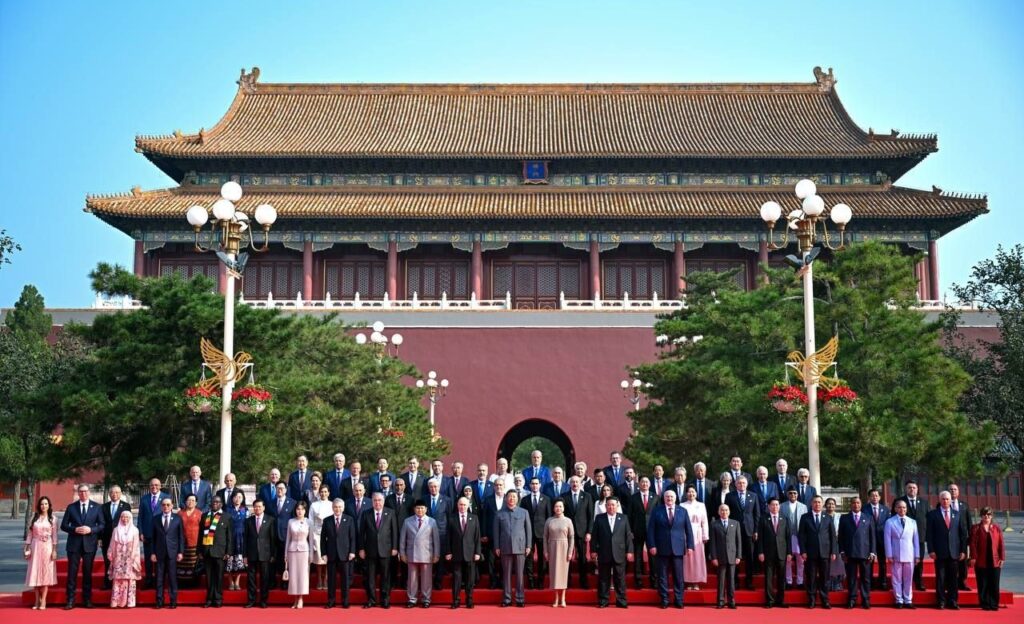
The second China-Central Asia summit on June 17, held in Astana, Kazakhstan, underscored the strengthening ties between China and the region. This event marked a significant milestone in solidifying the China-Central Asia cooperation framework with the signing of the Treaty on Eternal Good-Neighborliness, Friendship, and Cooperation. Experts note that Central Asian countries, once unable to adopt an intra-regional treaty, collectively reached this broader agreement with China. The summit also featured a range of side events, including the Energy Forum “Energy of Central Asia - China,” the Forum on Humanitarian Exchange, the Second Forum on Industrial and Investment Cooperation, and the Central Asia-China Business Council meeting, among others. These gatherings highlighted cooperation in energy, trade, and cultural exchange, reflecting China’s deepening influence in the region. Kazakh President Kassym-Jomart Tokayev praised China’s approach to equal partnership, stating that relations between the two nations are “stable and free from the negative impacts of geopolitical challenges and shocks as well as the international circumstances. China has never imposed any political conditions regarding cooperation with Kazakhstan.” “This is a very important point, Kazakhstani Sinologist Adil Kaukenov explained, “as the head of state, being at the forefront of Kazakhstan's foreign and domestic policies, faces political games, manipulation, and pressure at various levels, which require considerable restraint, experience as a statesman, and popular support to overcome.” During the summit, the heads of the Central Asian states articulated their priorities for cooperation with China. Kazakhstan emphasized projects like the creation of a joint cargo terminal in the port of Kuryk on the Caspian Sea, cooperation in the fields of nuclear energy and artificial intelligence, and counteracting international cybercrime. Kyrgyzstan focused on security, transport, e-commerce, energy, and tourism. Tajikistan prioritized industrial development, trade, food security, and green economy initiatives. Uzbekistan, meanwhile, sought the further integration of Afghanistan into the region, and proposed an “Electronic Silk Road” trade platform, and the development of a long-term strategy called the “Central Asia-China Industrial and Infrastructure Belt.” Chinese President Xi Jinping used his address to outline five key points that shape China’s vision for the future of its relationship with Central Asia. “Our cooperation is rooted in more than two thousand years of friendly relations, consolidated by the solidarity and mutual trust that has been established for 30 years since the establishment of diplomatic relations, and has made great progress thanks to mutually beneficial cooperation in the new era,” Xi stated in his keynote speech. According to Xi, China considers Central Asia one of the priorities of its foreign policy, and this building of peaceful, inclusive partnerships was marked by the historical milestone of the signing of the treaty at the summit. “We will improve the architecture of cooperation, which is characterized by pragmatism, efficiency, and deep integration,” the Chinese president said, adding that 2025–2026 have been declared the Years of High-Quality Development of China-Central Asia Cooperation. This initiative will focus on trade, transport connectivity, green energy, agriculture, and technology. Notably, China pledged 1.5 billion yuan ($208 million) in grants for projects aimed...

1 year ago