• KGS/USD = 0.01144 0%
  • KZT/USD = 0.00205 0%
  • TJS/USD = 0.10782 0%
  • UZS/USD = 0.00008 0%
  • TMT/USD = 0.28490 0%
  • KGS/USD = 0.01144 0%
  • KZT/USD = 0.00205 0%
  • TJS/USD = 0.10782 0%
  • UZS/USD = 0.00008 0%
  • TMT/USD = 0.28490 0%
  • KGS/USD = 0.01144 0%
  • KZT/USD = 0.00205 0%
  • TJS/USD = 0.10782 0%
  • UZS/USD = 0.00008 0%
  • TMT/USD = 0.28490 0%
  • KGS/USD = 0.01144 0%
  • KZT/USD = 0.00205 0%
  • TJS/USD = 0.10782 0%
  • UZS/USD = 0.00008 0%
  • TMT/USD = 0.28490 0%
  • KGS/USD = 0.01144 0%
  • KZT/USD = 0.00205 0%
  • TJS/USD = 0.10782 0%
  • UZS/USD = 0.00008 0%
  • TMT/USD = 0.28490 0%
  • KGS/USD = 0.01144 0%
  • KZT/USD = 0.00205 0%
  • TJS/USD = 0.10782 0%
  • UZS/USD = 0.00008 0%
  • TMT/USD = 0.28490 0%
  • KGS/USD = 0.01144 0%
  • KZT/USD = 0.00205 0%
  • TJS/USD = 0.10782 0%
  • UZS/USD = 0.00008 0%
  • TMT/USD = 0.28490 0%
  • KGS/USD = 0.01144 0%
  • KZT/USD = 0.00205 0%
  • TJS/USD = 0.10782 0%
  • UZS/USD = 0.00008 0%
  • TMT/USD = 0.28490 0%

Our People > Andrei Matveev

Andrei Matveev's Avatar

Journalist

Andrei Matveev is a journalist from Kazakhstan.

Articles

How U.S. and EU Sanctions Are Rippling Through Central Asia

Russia’s economy has faced renewed pressure following a fresh round of sanctions imposed this past week by both the European Union and the United States. After abruptly canceling a planned meeting with Vladimir Putin in Budapest, President Donald Trump shifted to a more hardline stance, announcing new sanctions. While these sanctions may not cripple Moscow, they are already having secondary effects on Central Asia, particularly on Kazakhstan’s banking and energy sectors. The EU's 19th sanctions package, adopted on October 22, introduces a phased ban on Russian liquefied natural gas (LNG). According to Reuters, short-term contracts will be terminated within six months, while long-term contracts are to expire by January 1, 2027. The package also includes a total ban on transactions with Russian oil giants Rosneft and Gazprom Neft, an expanded blacklist of so-called "shadow fleet" vessels, and sanctions against 45 companies in Russia and third countries supplying military-related technologies. Of growing concern in Central Asia is the inclusion of several regional financial institutions in the EU's sanctions list. These include the Kazakh branch of Russia’s VTB Bank, Kyrgyz banks Tolubai and Eurasian Savings Bank, and Tajik banks Dushanbe City Bank, Kommertsbank of Tajikistan, and Spitamen. These restrictions are scheduled to take effect between November and December 2025. Both Kyrgyzstan’s President Sadyr Japarov and the nation's Foreign Ministry have publicly expressed dismay over the sanctions, with Japarov urging Western leaders to stop “politicizing the economy.” In his speech at the UN General Assembly in New York in September, Japarov criticized the impact of unilateral sanctions, while the Foreign Ministry has stated that the country adheres to its international obligations and maintains an open dialogue with the EU to prevent risks associated with possible sanctions circumvention. The ministry has proposed launching an independent, internationally recognized audit and forming a joint “Kyrgyzstan-European Union” technical working group to facilitate data exchange, transaction monitoring, and risk assessments. In Kazakhstan, the National Bank downplayed the impact of sanctions against VTB. Deputy Chairman Yerulan Zhamaubayev noted that the bank had already been under nominal restrictions, and handles few transactions. “VTB does not affect the country’s financial stability, and we do not expect serious risks for the economy,” Zhamaubayev stated. However, the latest U.S. sanctions may prove more consequential for Kazakhstan, particularly amid efforts to strengthen bilateral trade with the United States, including through the repeal of the Jackson-Vanik amendment. The U.S. Treasury Department has sanctioned Russian oil majors Rosneft and Lukoil. The latter has deep economic ties with Kazakhstan. Just days before the announcement, on October 14, President Kassym-Jomart Tokayev personally attended the 30th anniversary of Lukoil’s operations in Kazakhstan, awarding CEO Vagit Alekperov the Order of Barys, first class. Oil and gas journalist Oleg Chervinsky reported that the joint venture Kalamkas-Khazar Operating LLP, co-owned by Lukoil and KazMunayGas, is directly affected. “Only the Tengiz and CPC projects, which Lukoil operates with American partners, have been exempted from the sanctions,” Chervinsky noted. A final investment decision for Kalamkas-Khazar was expected in December 2025. Yerkanat Abeni, a member of...

8 months ago

Pipelines Under Pressure: Ukraine War Hits Kazakhstan Energy Arteries

The ongoing war between Ukraine and Russia continues to have indirect but notable implications for Kazakhstan’s energy sector. Following the September drone attack in Russia’s Novorossiysk that damaged the offices of the Caspian Pipeline Consortium (CPC) - which exports the majority of Kazakhstan’s oil - another incident has raised concern: the October 19 strike on Russia’s Orenburg Gas Processing Plant, which handles gas from Kazakhstan’s Karachaganak field. The CPC confirmed that its export terminal continued operating after the September 24 incident, though two employees were injured and part of its office complex was damaged. The consortium remains the backbone of Kazakhstan’s oil exports, handling over 80% of national crude shipments to world markets. This concentration has long been viewed as a vulnerability because nearly all flows depend on infrastructure inside Russian territory. The war has underscored that risk, prompting Astana to accelerate plans for alternative routes across the Caspian Sea toward Azerbaijan and Georgia. Astana has been working with Baku and Tbilisi to expand capacity along the Trans-Caspian International Transport Route (Middle Corridor), supported by EU and World Bank funding commitments. Kazakhstan’s Ministry of Energy confirmed that the plant, located about 150 kilometers northwest of Kazakhstan’s Karachaganak field across the Russian border, was temporarily shut down following the UAV strike. “According to information from PJSC Gazprom, on October 19, 2025, an emergency situation occurred at the Orenburg gas processing plant as a result of a UAV attack, in connection with which the plant temporarily stopped receiving raw gas from the Karachaganak field.” The Ministry added that gas supplies to domestic consumers remain unaffected and that consultations are underway with field operators to assess potential disruptions and losses. No details on the extent of the damage or repair timelines have been released by the Russian side. Ukraine’s military confirmed responsibility for the attack as part of its campaign against Russian energy infrastructure, according to statements reported by Interfax-Ukraine and Ukrainska Pravda. Industry analysts, however, remain cautious. Journalist Oleg Chervinsky noted that the Orenburg plant processes up to nine billion cubic meters of Karachaganak gas annually, a portion of which is returned to Kazakhstan’s northern regions. He warned that a prolonged shutdown could lead to supply shortages, particularly during the winter months. The timing of the Orenburg attack - just before the start of the heating season - adds a seasonal risk dimension. Olzhas Baidildinov, an expert in the energy sector, criticized delays in constructing a domestic gas processing facility at Karachaganak, arguing that reliance on foreign infrastructure heightens Kazakhstan’s vulnerability to regional conflict and economic disruptions. The replacement of damaged equipment, including components from France’s Technip, could also be complicated by sanctions and supply chain issues, ultimately impacting tariffs and consumer costs. The cumulative effect of reduced gas processing capacity and potential production slowdowns at Karachaganak could weigh on Kazakhstan’s already strained budget. While some observers note that reduced output may help the country align with its OPEC+ production commitments, previously exceeded at major fields including Kashagan, Tengiz, and Karachaganak, such...

8 months ago

Automotive Shift in Central Asia: China Edges Out Russia

In the 2020s, Central Asia has emerged as an increasingly attractive market for the automotive industry. A combination of investment inflows, technological development, and improved logistics, much of it initiated by China, has fueled this transformation. Since the onset of the COVID-19 pandemic, China has rapidly expanded its influence in the region’s automotive sector and is becoming the dominant external supplier in import-reliant markets, even in countries with domestic manufacturing capabilities. Manufacturing Hubs and Import Markets The Central Asian automotive landscape reflects the region’s economic diversity. Uzbekistan and Kazakhstan serve as the main manufacturing hubs, while Kyrgyzstan, Tajikistan, and Turkmenistan rely heavily on imports. By the end of 2024, while the global automotive sector faced a slowdown, Uzbekistan recorded modest growth in car production, up 0.8% year-on-year. In contrast, Kazakhstan saw a 1.6% decrease. During the first seven months of 2025, Uzbekistan produced 212,200 passenger vehicles, a 3.5% increase compared to the same period in 2024. Truck production rose sharply by 28%, from 1,800 to 2,300 units. With a population of approximately 37 million, Uzbekistan remains the region’s industrial center. The state-owned UzAuto Motors, formerly GM Uzbekistan, dominates more than 90% of the domestic passenger car market. Models such as the Chevrolet Cobalt, Nexia, and Tracker are built on General Motors platforms and produced at the main plant in Asaka, which has a capacity of 280,000 vehicles per year. Some of this output is exported to Russia, Azerbaijan, and Georgia. In a bid to stay competitive with Chinese brands, Uzbekistan launched a joint venture with BYD in 2023 and announced the construction of a $1.5 billion electric vehicle (EV) plant in the Ferghana region with Chinese support. Kazakhstan’s key market players include Allur and Hyundai Trans Kazakhstan. Allur’s Kostanay plant produces up to 125,000 Kia, Chevrolet, Skoda, JAC, Jetour, and Hongqi vehicles annually, and accounts for 61% of the national output. Hyundai Trans Kazakhstan in Almaty has a capacity of 50,000 units, covering 31% of production. Two new car plants are expected to open in 2025. The first, a $200 million investment by Kia, will be located in the Kostanay region and marks the company’s first Central Asian plant. With a planned capacity of 70,000 vehicles per year, the move underscores Kia’s long-term commitment to Kazakhstan. “We are excited about the promising opportunities opening up in the Kazakh market. Kazakhstan's economy is developing dynamically and on a large scale. We see great potential for our business in this market,” said Kia President and CEO Ho Sung Song. The second plant, in Almaty, will assemble Chinese brands with a target of 90,000 vehicles annually. Rather than compete with Chinese imports, Kazakhstan has opted to localize production in partnership with Chinese manufacturers. Import-Dependent Markets and China’s Tailored Approach While Kyrgyzstan and Tajikistan host minor assembly operations, primarily with Chinese partners, their automotive fleets, along with Turkmenistan’s, are largely replenished through imports. Since 2020, shifts in global logistics have transformed China from an alternative supplier into the dominant source of vehicles in these...

8 months ago

Russia Seeks to Reassert Role at Central Asia Summit, but Kazakhstan and Uzbekistan Push Their Own Agendas

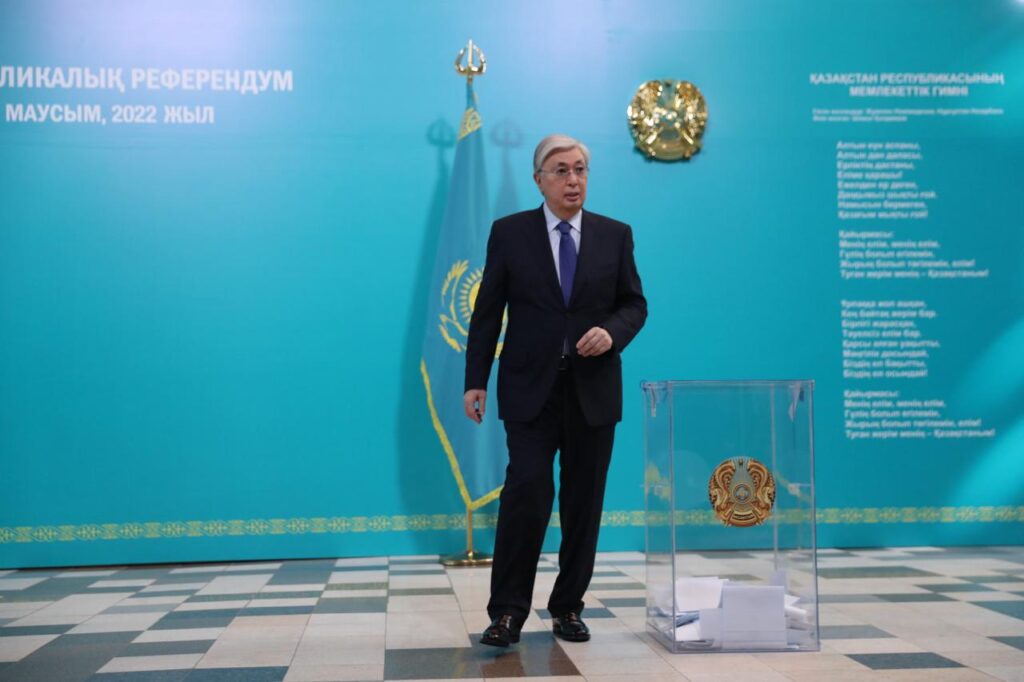
The second Central Asia-Russia summit, held ahead of the Commonwealth of Independent States (CIS) leaders’ meeting, reaffirmed the Kremlin’s continued intent to assert influence over the region. Russian President Vladimir Putin used the platform not only to signal discontent with the pace of economic integration but also to critique the Central Asian republics for what he portrayed as insufficient engagement in bilateral trade. Despite growing ties between Central Asian states and external partners, exemplified by the “C5+1” dialogue format that includes major powers such as the U.S. and China, Putin made clear that Russia does not view its influence in the region as diminished. Opening the summit, Putin took a veiled swipe at the “C5+1” initiative, which has gained traction in recent years. “I am in constant contact with each of the Central Asian presidents,” he said, before adding, “But I am sure that this multilateral format of communication is also very useful and has its obvious ‘added value’, so to speak.” By “added value,” the Russian leader appeared to suggest that multilateral engagement enables Central Asian states to present a more unified front in foreign negotiations, an approach that complicates Moscow’s ability to exert influence through bilateral channels. Putin also expressed dissatisfaction with the current levels of mutual trade and Russian investment in the region. While acknowledging that trade between Russia and Central Asia had surpassed $45 billion, he pointedly compared this figure to trade with Belarus, which exceeds $50 billion despite its far smaller population. “Our trade turnover with Belarus exceeds $50 billion. Let me remind you that Belarus has a population of 10 million. Uzbekistan already has nearly 40 million, Tajikistan over 10 million, and Kazakhstan more than 20 million. Can you imagine what a colossal resource this is?” Putin said. “This means there are strong prospects for expanding our economic relations.” Putin described Russia’s current $20 billion in regional investments as inadequate and called for increased engagement, but also tempered expectations surrounding major infrastructure and logistics projects championed by Astana and Tashkent, while positioning Russia as a central player in their development. He proposed integrating existing North-South and East-West corridors into a unified Eurasian logistics network supported by digital and transport services. “This will allow us to significantly increase international transport volumes through our common region,” Putin said. Kazakh President Kassym-Jomart Tokayev responded directly, updating figures presented by Putin and reaffirming Kazakhstan’s commitment to regional integration. He noted that Russia’s total trade with Central Asia exceeded $50 billion in 2024, with $28 billion in trade between Russia and Kazakhstan alone. Tokayev emphasized the strategic importance of transport cooperation with Russia, stating that “Russia is a key gateway for the region’s countries to global markets. Therefore, cooperation in the transport and logistics sector is a matter of heightened strategic importance.” [caption id="attachment_37343" align="aligncenter" width="1600"] Image: Akorda.kz[/caption] Tokayev outlined Kazakhstan’s existing transport infrastructure, eleven international corridors, including five rail and six road routes, that carry about 85% of land freight between Asia and Europe. Over 15 years, Kazakhstan has...

8 months ago

Old Kazakhstan in Retreat: The Fate of Nazarbayev’s Allies

Since early 2022, the influence of the so-called “Old Kazakhstan” - the political and business circle that once surrounded former President Nursultan Nazarbayev — has been steadily eroded. Institutions have been reshaped, loyalties tested, and the once-untouchable elite has found itself under unprecedented scrutiny. Yet the names of Nazarbayev and his closest allies still surface regularly in courtrooms, parliament debates, and media headlines. Are these prosecutions and investigations an attempt to build President Kassym-Jomart Tokayev’s vision of a “Fair Kazakhstan,” or do they mark a new phase of elite score-settling under the banner of reform? The Times of Central Asia examined the fortunes of six figures from Nazarbayev’s inner circle to trace the shifting balance of power. Nurbоl Nazarbayev Recent headlines have revived scrutiny of Nazarbayev's nephew Nurbоl Nazarbayev, the son of his late brother Bolat. Authorities have launched bankruptcy proceedings against him, citing debts of approximately 58 billion tenge ($107 million). His assets and bank accounts have been frozen, and he is subject to travel restrictions. Under the current law, Nurbоl will be barred from taking out loans for five years, registering as an individual entrepreneur, or conducting major financial transactions without notifying the relevant authorities. His assets may be liquidated to repay creditors, with the exception of his primary residence. Once listed as Kazakhstan’s 57th richest businessman by Forbes Kazakhstan, he held ownership stakes in Prime Capital Invest and Prime Capital Holding, was a co-owner of PLS Construction Company and PLS-TM, and the majority shareholder of the Almaty Heavy Machinery Plant. This legal action follows a parliamentary inquiry into a previously sealed court case initiated by the General Prosecutor’s Office. The court ordered the confiscation of assets worth 57 billion tenge ($105.5 million) and imposed a fine of 925 million tenge ($1.7 million), along with penalties totaling 230.4 million tenge ($425,000). Members of parliament, Rinat Zaitov and Ermurat Bapi, have both demanded transparency in the case. Zaitov called for a comprehensive audit of Nurbоl’s assets, including those linked to the Altyn Orda market and land plots in Almaty and its surrounding areas. Shortly afterward, Bapi echoed the call, referencing a complaint from a Karaganda businessman who claimed his company was seized in a raid involving Nazarbayev’s circle. Bapi criticized law enforcement for closing the case, calling it “a betrayal of the President’s vision of a Fair Kazakhstan.” Zhomart Ertayev Zhomart Ertayev, a flamboyant banker once sentenced to 11 years for embezzling 144 billion tenge ($266 million) from Bank RBK, was unexpectedly released earlier this year under an amnesty, according to the Committee of the Penal System. However, a month later, parliament deputy Abzal Kuspan announced that the court’s decision had been overturned, and a formal appeal to the Prosecutor General’s Office led to Ertayev’s re-arrest. Ertayev previously held refugee status and a Russian residence permit, both of which were revoked after Kazakhstan issued an international warrant for his arrest. Kairat Boranbayev Kairat Boranbayev, a prominent businessman and former in-law of the Nazarbayev family, was arrested in 2022 and...

8 months ago

Japarov and Tokayev’s High-Level Reshuffles Usher in a New Political Season

Kyrgyzstan and Kazakhstan recently witnessed high-level political developments that drew attention beyond their borders. In Kyrgyzstan, the national parliament self-dissolved, while Kazakhstan underwent a series of administrative reshuffles. Though both events were driven by reform-oriented policies, observers have offered sharply contrasting interpretations. In Kyrgyzstan, the initiative to dissolve the Jogorku Kenesh (parliament) was led by a group of 32 deputies headed by Speaker Nurlanbek Turgunbek uulu. They cited logistical and financial concerns over the proximity of the next parliamentary and presidential elections, scheduled for November 2026 and January 2027, respectively. Holding two major elections in such a short span, they argued, would pose political and economic challenges. As a result, early parliamentary elections will now take place on November 30, under revised electoral rules. The new system divides the country into 30 constituencies, each electing three deputies. Political parties may nominate only one candidate per district, and the overall number of deputies will remain at 90. However, the majority of seats are now expected to go to independents, reducing the dominance of political parties in the electoral process. Some Kazakh observers, long accustomed to viewing Kyrgyzstan as a “democratic island” in the region, interpreted these changes as a move toward greater political openness. Former diplomat and public figure Kazbek Beysembayev contrasted Kyrgyzstan’s reforms with Kazakhstan’s political trajectory, where authorities are reportedly planning to eliminate single-mandate districts in favor of a fully party-based electoral system. He warned this would further consolidate the ruling party’s dominance. “Such a move might be acceptable if laws on political party registration had first been liberalized. But that hasn’t happened,” Beysembayev argued. However, not all analysts share this optimistic view. Central Asia expert Arkady Dubnov sees the Kyrgyz move as a calculated maneuver by the ruling elite. He argues that a political duumvirate, composed of President Sadyr Japarov and State Committee for National Security (SCNS) chief Kamchybek Tashiev, has increasingly consolidated control. According to Dubnov, the early elections are designed to cement this grip on power. “By extending the gap between the parliamentary and presidential elections to 14 months, the authorities are creating space for a politically engineered campaign,” Dubnov explained. “This may pave the way for General Tashiev’s eventual rise to the presidency. His image as the real power broker, from resolving the border conflict with Tajikistan to renaming his hometown Jalal-Abad to Manas, has been solidified. President Japarov would likely retain influence within a reconfigured leadership structure.” In Kazakhstan, meanwhile, administrative reshuffles have continued, drawing significant attention, particularly the replacement of Foreign Minister Murat Nurtleu with seasoned diplomat Yermek Kosherbayev. The change followed speculation in early September that Nurtleu had been detained by the National Security Committee, a claim that proved false but nevertheless added intrigue to his removal from the Foreign Ministry. He has since been appointed presidential aide for international investment and trade cooperation. Political analyst Daniyar Ashimbayev acknowledged that this role is technically a demotion but argued it still reflects political trust. “Tokayev doesn’t typically reappoint officials who have committed serious...

9 months ago

Caspian Pipeline Attack After Zelenskyy-Tokayev Meeting Puts Kazakhstan in Delicate Position

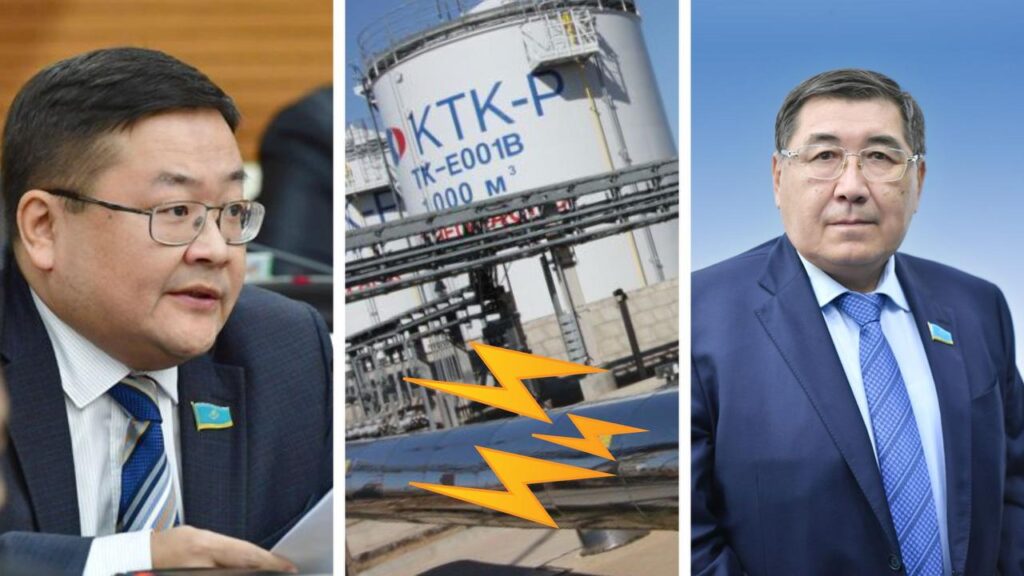
A recent drone strike on the Caspian Pipeline Consortium (CPC) office in Novorossiysk has raised concerns in Kazakhstan, whose oil exports rely heavily on the pipeline route. The attack, which killed two people and damaged nearby infrastructure, occurred just one day after Kazakh President Kassym-Jomart Tokayev met with Ukrainian President Volodymyr Zelenskyy in New York. While there is no official indication that the CPC was a deliberate target, the incident has prompted debate over the implications for Kazakhstan’s economic security and diplomatic neutrality amid the ongoing war. According to CPC, the attack struck its administrative office in central Novorossiysk during the workday. The building sustained damage in addition to nearby residential blocks and a hotel. Two CPC employees were wounded and evacuated; the office’s operations were suspended. The consortium also said others in the building, not employed by CPC, suffered serious injuries.  Authorities in the Krasnodar region confirmed two deaths and seven injuries from the strike, declaring a state of emergency in the city.  Russian media reported extensive damage to residential buildings and a hotel near the CPC office.  In response, Kazakhstan’s Ministry of Energy issued a statement assuring that pipeline operations would continue as normal. The ministry said oil intake from Kazakh shippers remains unaffected, and the transportation and loading of oil via the CPC marine terminal is proceeding without restrictions. The ministry added that it is coordinating with CPC shareholders and monitoring developments in real time.  Notably, the attack followed just 12 hours after Tokayev’s meeting with Zelenskyy in New York. According to the Kazakh presidential press service, Zelenskyy expressed his view of the war’s trajectory while Tokayev emphasized the importance of sustained diplomacy. Ukraine’s version, via its presidential press service, was more expansive: Zelenskyy thanked Tokayev for support on sovereignty, insisted on a leaders’ summit, and said Kazakhstan’s mediation role was welcome. In a later interview, Zelenskyy even floated the possibility of meeting Russian President Vladimir Putin on neutral territory such as Kazakhstan.  When asked about that proposal after the Novorossiysk attack, Tokayev stated firmly that Kazakhstan does not see itself as a mediator in the Russia-Ukraine conflict. He reiterated that both sides should engage directly, while supporting continued talks. “Talks must continue,” he said.  Kazakh political analyst Daniyar Ashimbayev noted that Tokayev’s extended commentary suggested he may feel less enthusiastic about a repeat meeting with Zelenskyy. Oil expert Olzhas Baidildinov stated that around 80 percent of Kazakhstan’s oil exports transit via the CPC; he therefore warned the strike directly threatens Astana’s interests.  Baidildinov also suggested that Kazakhstan may need to consider a range of policy responses to ensure the security of its oil export routes, including enhanced monitoring of trade and transit channels. He noted that international companies operating in Kazakhstan, particularly those using the CPC pipeline, could be indirectly affected by any future disruptions. Kazakhstan’s Foreign Ministry has not issued a public statement on the incident. Meanwhile, diplomatic engagement continues at various levels. During his visit to New York, Tokayev also met with Chevron CEO Michael...

9 months ago

From Reform to Deals: Central Asia Steps Onto the Global Stage at UNGA-80

Ecology, global instability, and the need for UN reform dominated the speeches of all five Central Asian presidents at the 80th session of the UN General Assembly. Presenting a united front while emphasizing national priorities, the leaders made clear that Central Asia intends to play a pivotal role in shaping the global future. UN Reform Kazakh President Kassym-Jomart Tokayev was the first among the CIS leaders to address the assembly, speaking of a growing crisis of trust in multilateral institutions and calling for sweeping reforms. Tokayev emphasized the need to expand the UN Security Council, arguing that major powers from Asia, Africa, and Latin America must receive rotational representation, and that the influence of middle powers should be strengthened. “We need to create a new group of like-minded states that will professionally and decisively advance concrete proposals for reforming the UN so that it better responds to today’s challenges and tomorrow’s tasks,” he said, proposing Kazakhstan as a platform for these discussions. Uzbek President Shavkat Mirziyoyev echoed these concerns, highlighting the weakening of international institutions and the proliferation of global conflicts. He endorsed UN Secretary-General António Guterres’ UN-80 initiative and voiced support for the Pact for the Future, which sets out commitments to strengthen multilateral cooperation and address global challenges through 2045, the UN’s centenary. Mirziyoyev also advocated for an expanded Security Council to better represent developing countries. In his address, Kyrgyz President Sadyr Japarov called for a more just and representative Security Council, underscoring Africa’s right to greater participation. He also announced Kyrgyzstan’s candidacy for a non-permanent seat on the Security Council for 2027-2028, noting that his country has never before held such a position. Tajik President Emomali Rahmon warned of growing instability, uncertainty, and complexity in world affairs. Rahmon stressed the UN’s role as a platform for dialogue and cooperation and called for equal partnerships between large and small states to restore adherence to international law. Turkmen President Serdar Berdimuhamedov argued that the current global situation requires a "decisive shift toward coordinated interaction among states and international organizations to maintain peace and security.” He proposed declaring 2028 the Year of International Law to strengthen the legal foundations of global cooperation. Ecology and Finance On environmental issues, the Central Asian leaders focused on national and regional concerns. Tokayev addressed the ongoing shallowing of the Caspian Sea, while both he and Mirziyoyev raised the issue of the Aral Sea crisis, often described as "one of the world’s worst environmental disasters." Rahmon highlighted the rapid disappearance of glaciers, a point supported by Japarov, given the critical dependence of Kyrgyzstan and Tajikistan on mountain water resources. Berdimuhamedov, meanwhile, proposed establishing a regional center for combating desertification in Central Asia. Other initiatives included the proposed Caspian Environmental Forum in 2026 and continued advancement of the Caspian Environmental Initiative, originally introduced by Ashgabat. Financial concerns were also prominent. Rahmon called for reforms to international financial mechanisms, citing the continued suffering of vulnerable developing countries from the impacts of economic crises, poverty, disease, natural disasters,...

9 months ago

Faith and Diplomacy: Kazakhstan Reconciles Religious Leaders

On September 17-18, 2025, Kazakhstan’s capital hosted the 8th Congress of Leaders of World and Traditional Religions. The event reinforced what has become increasingly evident: the Congress is evolving into a meaningful instrument of global dialogue, one President Kassym-Jomart Tokayev hopes to leverage in his broader efforts to reform the United Nations. Three years ago, the 7th Congress was notable for the visit of the late Pope Francis, who held a mass in Astana for residents and guests of the capital. This year’s edition welcomed another high-profile religious figure: Patriarch Kirill of Moscow and All Russia, head of the Russian Orthodox Church, who echoed the growing view that the Congress now carries global influence. “We have truly found a global interfaith platform, a group of people interested in working together for peace and prosperity,” Patriarch Kirill said. “Alongside other significant platforms, we can participate in solving, or at least studying, the problems confronting all of humanity. It is important that religious leaders of different faiths work hand in hand today as one family, which speaks to the closeness of our positions.” In his opening remarks, President Tokayev described the global situation as one of rising tension and deepening instability. “Hybrid wars being waged across various regions have no clear front lines, yet they result in significant casualties, refugee crises, and massive damage to the world economy,” he said. “The risk of nuclear conflict is greater now than at any point in recent decades.” In such a climate, Tokayev argued, the moral authority of religious leaders is more vital than ever. “We are placing our hopes on religious figures to help prevent global chaos, reminding politicians of common sense, goodwill, and moral responsibility.” He proposed further development of his earlier idea, a global “Movement for Peace” under the umbrella of the Congress. “Religious hierarchies could become the moral backbone of such a movement, issuing a neutral and apolitical call to end violence and seek peaceful solutions. Grounded in universal values like the sanctity of life, compassion, and mercy, it could unite not only believers, but also political leaders, NGOs, experts, and youth,” Tokayev said. Over the next two days, delegates from 60 countries, representing diverse cultures, civilizations, and faiths, gathered to discuss major global challenges. Their work culminated in the Declaration of the VIII Congress of Leaders of World and Traditional Religions, which was read at the closing session by George Jacob Kuttianickal, Prefect of the Dicastery for Interreligious Dialogue of the Holy See. The Declaration endorsed Tokayev’s peace initiative and emphasized the need to intensify international dialogue. It proposed a series of global and regional events to advance a culture of peace, as well as active promotion of the Congress’s goals within the UN and other international forums. “We call on the international community and the UN General Assembly to acknowledge the Congress’s 20-year contribution to dialogue and harmony among religions, and to strengthening peace and mutual understanding,” the Declaration stated. Delegates also reaffirmed Kazakhstan’s growing role as a respected...

9 months ago

Russia’s Crackdown Forces Central Asia to Rethink Labor Migration

The most recent World Bank study on labor migration highlighted the immense scale of the issue, describing it as "an ongoing development challenge in Europe and Central Asia, which is currently home to 100 million migrants," roughly one-third of all migrants globally. Historically, Russia has been the primary destination for Central Asia's mobile labor force. However, since March 2024, Moscow’s increasingly restrictive migration policies have forced Central Asian states to confront a dual challenge: managing displaced workers and rethinking the logistics of cross-border labor flows. As of 2023, more than 80% of labor migrants from Tajikistan and Kyrgyzstan were working in Russia. Migration from Uzbekistan was more diversified, with 57% of migrants heading to Russia, 15% to Kazakhstan, and 10% to Ukraine. For millions across the region, labor migration remains a vital economic lifeline. According to the World Bank report, The Journey Ahead: Supporting Successful Migration in Europe and Central Asia, remittances in 2024 accounted for 45% of Tajikistan’s GDP, the highest ratio globally. In Kyrgyzstan, remittances made up 24% of GDP, while in Uzbekistan the figure was 14%. A 2025 update increased the figure for Tajikistan further still, noting that domestic consumption was "supported by large remittance inflows - peaking at 49% of GDP in 2024." Since the start of the war in Ukraine, rhetoric in the Russian media and among some politicians toward Central Asian migrants has increasingly shifted toward overt hostility. Following the March 2024 terrorist attack at Moscow’s Crocus City Hall, in which Tajik nationals were named among the suspects, Russia began implementing harsher measures. This included widespread street inspections of Kyrgyz, Uzbek, and Tajik citizens, alongside new, more restrictive legal frameworks. While certain steps, such as mandatory biometric data collection, were officially justified by security concerns, other policies have further complicated daily life for foreign nationals. For example, since January 2025, all foreign-owned SIM cards in Russia have been deactivated. Foreign citizens must now register with government agencies to obtain new mobile services, a policy framed as a response to telecom fraud. Another measure, introduced on June 30, requires citizens of visa-free countries to register in the “Gosuslugi RuID” app before entering Russia. They must obtain a digital code to pass border control, effectively instituting a pre-entry surveillance mechanism. Kazakhstan was the first to publicly respond, with Foreign Ministry spokesman Aibek Smadiyarov refusing to rule out reciprocal measures against Russian citizens. “We are studying this issue very carefully. It requires consultations with our government agencies,” Smadiyarov said. Yet, despite these developments, none of the Central Asian countries currently maintains a comprehensive migration strategy equipped to handle these shifting dynamics. In Kazakhstan, the issue came to the fore in 2025 with a noticeable influx of Tajik nationals, the group most affected by Russia’s new rules. At a government meeting in late July, officials noted that Kazakhstan had recorded a positive migration balance for the second consecutive year, as well as a 1.5-fold increase in the number of foreign citizens permanently residing in the country. “The importance...

9 months ago