• KGS/USD = 0.01144 0%
  • KZT/USD = 0.00191 -0%
  • TJS/USD = 0.10838 0.37%
  • UZS/USD = 0.00008 0%
  • TMT/USD = 0.28571 0.28%
  • KGS/USD = 0.01144 0%
  • KZT/USD = 0.00191 -0%
  • TJS/USD = 0.10838 0.37%
  • UZS/USD = 0.00008 0%
  • TMT/USD = 0.28571 0.28%
  • KGS/USD = 0.01144 0%
  • KZT/USD = 0.00191 -0%
  • TJS/USD = 0.10838 0.37%
  • UZS/USD = 0.00008 0%
  • TMT/USD = 0.28571 0.28%
  • KGS/USD = 0.01144 0%
  • KZT/USD = 0.00191 -0%
  • TJS/USD = 0.10838 0.37%
  • UZS/USD = 0.00008 0%
  • TMT/USD = 0.28571 0.28%
  • KGS/USD = 0.01144 0%
  • KZT/USD = 0.00191 -0%
  • TJS/USD = 0.10838 0.37%
  • UZS/USD = 0.00008 0%
  • TMT/USD = 0.28571 0.28%
  • KGS/USD = 0.01144 0%
  • KZT/USD = 0.00191 -0%
  • TJS/USD = 0.10838 0.37%
  • UZS/USD = 0.00008 0%
  • TMT/USD = 0.28571 0.28%
  • KGS/USD = 0.01144 0%
  • KZT/USD = 0.00191 -0%
  • TJS/USD = 0.10838 0.37%
  • UZS/USD = 0.00008 0%
  • TMT/USD = 0.28571 0.28%
  • KGS/USD = 0.01144 0%
  • KZT/USD = 0.00191 -0%
  • TJS/USD = 0.10838 0.37%
  • UZS/USD = 0.00008 0%
  • TMT/USD = 0.28571 0.28%
11 November 2025

Our People > Duisenali Alimakyn

Duisenali Alimakyn's Avatar

Duisenali Alimakyn is a Kazakh journalist, translator, and researcher covering literature, culture, and science. His research, including at the George Washington University, has a strong focus on Western narratives about Central Asia over the centuries.

Articles

TCA Interview: Author Judith Lindbergh on Her Novel “Akmaral”, Set on the Kazakh Steppe

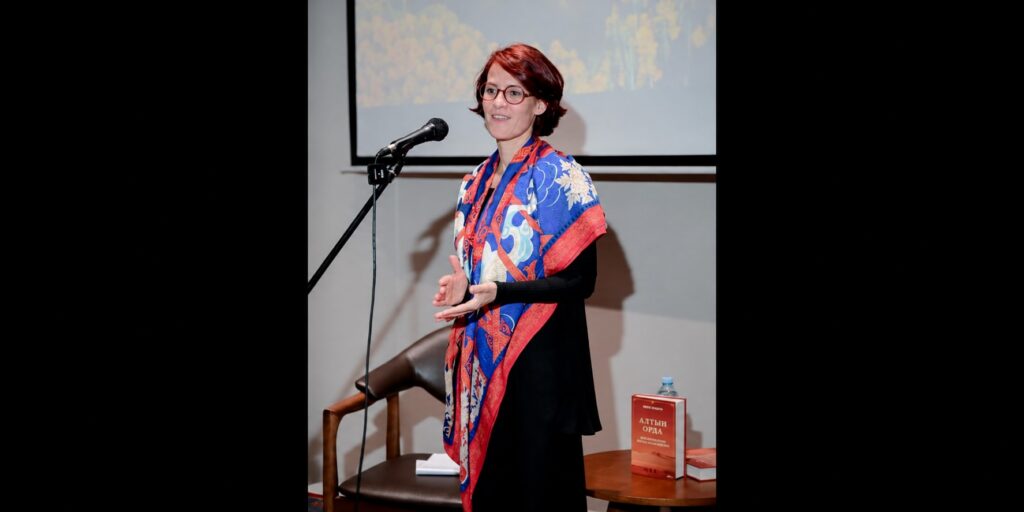
In recent years, many international writers have written books about Kazakhstan. One of these is the American author Judith Lindbergh, whose latest historical novel, Akmaral, is set on the Kazakh steppe. TCA: The story of Akmaral is related to Central Asia, and particularly, Kazakhstan... JL: Absolutely correct. Akmaral is about a nomadic woman warrior on the Central Asian steppes in the 5th century BCE. It’s based on archaeology that many of your readers are likely familiar with: the Siberian Ice Maiden discovered in Tuva and the Issyk Golden Warrior of Kazakhstan. These two burials were just the beginning of my research, which also included the writings of the Greek historian Herodotus about the Amazon warrior women who fought in the Trojan War. I delved deeply into the history, landscape, and cultures of Central Asia, both ancient and modern. In writing my novel, I worked hard to understand how people lived, and still live, on the steppes: their traditional nomadic ways of herding and hunting, and especially how this ancient, often-forgotten culture fits into the broader story of human civilization. [caption id="attachment_38735" align="aligncenter" width="349"] Judith Lindbergh[/caption] TCA: How did the idea to write such a novel come about? JL: It all started with a documentary about the Siberian Ice Maiden. I love ancient history and archaeology, especially when they reveal truths about women’s lives. The Ice Maiden burial was fascinating. Her body was so well preserved that I could almost imagine her standing before me. I wanted to understand how she might have lived, and to uncover the mystery of why she was buried in such an isolated place. As I continued my research, I realized that she was not the only important female burial from that era in Central Asia. There were, in fact, countless others. Many women who had died of war wounds were buried with weapons. I began combining these burials in my imagination to create my main character, Akmaral, which I learned means “White Deer.” The name felt connected to the Siberian Ice Maiden’s famous tattoo, which became an important spiritual symbol in my novel. I used extensive research to try to accurately represent what life might have been like for these ancient women. In historical fiction, as in history itself, women rarely play significant roles in public life. Yet these artifacts and burials show us that many nomadic women once held important military and spiritual positions.   There are almost no works written in English about nomadic peoples, including the real life and history of the Kazakhs. In fact, nomads were people who lived freely and truly in their time. And now we are not able to glorify their values, their way of life. What do you think about this? You’re right that there’s very little written in the West about the Sarmatians, or really much about Central Asia at all. I wanted to bring my fascination with this vital, “forgotten” part of history to new readers. In many ways, it can be hard for modern...

6 days ago

Kazakhstan Highlights Its Literary Heritage at the 2025 Frankfurt Book Fair

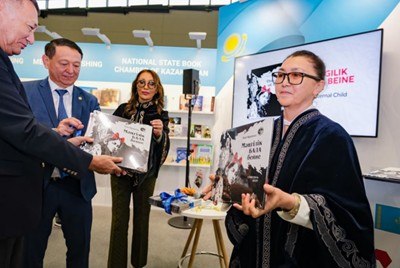
From October 15 to 19, Kazakhstan took part in the 2025 Frankfurter Buchmesse in Germany – one of the world’s most prominent and influential international book fairs. At its national stand, the country presented a diverse selection of new publications from leading Kazakh publishers to a global readership.  Celebrating its 77th edition, this year’s Frankfurt Book Fair featured more than 30 delegates from Kazakhstan, from major publishing houses such as Mektep, Almatykitap, Atamura, ARMAN-PV, Steppe & World Publishing, Evero, Kazformoms, and AmalBooks. [caption id="attachment_38141" align="aligncenter" width="351"] @TCA[/caption] The national pavilion became an important hub for expanding international publishing partnerships. Approximately 350 Kazakh titles were showcased, spanning a wide range of genres from literary fiction and scholarly works to educational and children’s books.  Book Presentations and Highlights Several notable book launches took place during the fair. Of particular interest was the multilingual edition Abai’s “Words of Wisdom: Legacy for Generations”, translated into seven languages and presented with the participation of German writer Anja Tuckermann. Another major highlight was a creative presentation of Mirzhakyp Dulatov’s timeless novel “Unfortunate Jamal”, regarded as one of the classics of Kazakh literature. [caption id="attachment_38142" align="aligncenter" width="224"] @TCA[/caption] The Consul General of Kazakhstan in Frankfurt am Main, Tauboldy Umbetbayev, visited the national pavilion to show support for the Kazakh delegation and to emphasize literature’s vital role in promoting cultural diplomacy. Throughout the fair, publishers from Canada, China, Turkey, Azerbaijan, Denmark, Germany, Singapore, and several other countries met with Kazakh representatives to discuss potential collaborations.

2 weeks ago

Rediscovering Mustafa Shokay: A Fragment of Kazakh History in an American Bookstore

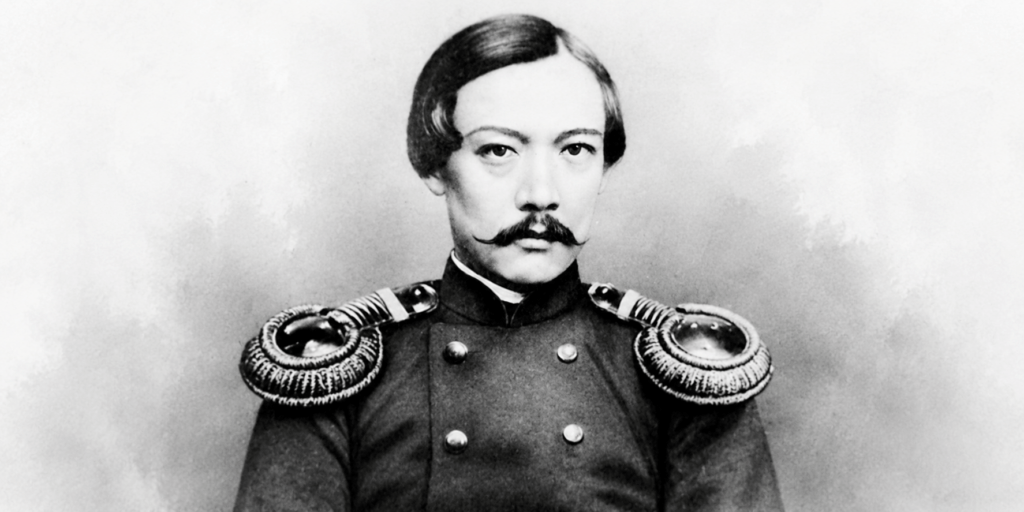
While studying in the United States, I have spent my free hours chasing traces of home — fragments of Kazakh history scattered across libraries, archives, and private collections. Much of our past lies far from the steppe, carried off by the tides of empire and exile. My purpose has been simple: to return those fragments, in words and images, to our people. One afternoon in Washington, D.C., I wandered into an old bookstore. The two floors seemed to contain the intellectual wealth of the world — every shelf whispering stories of vanished nations and stubborn identities. I made straight for the section on Central Asia, where the spines of a few rare volumes caught my eye. As I turned the pages of one yellowed book, something stopped me cold: a photograph of Mustafa Shokay, the Kazakh statesman and intellectual who devoted his life to the cause of Turkestan’s autonomy. [caption id="attachment_37511" align="aligncenter" width="596"] Mustafa Shokay in his student days[/caption] A Visionary in Exile Born in 1890 in what is now southern Kazakhstan, Mustafa Shokay emerged as one of the most eloquent voices for Central Asian self-determination during the revolutionary upheavals of 1917. When the Russian Empire collapsed, he helped lead the short-lived Kokand (Turkestan) Autonomy, which sought to build a government based on equality and Muslim representation. Within weeks, the Bolsheviks crushed the movement. Forced into exile, Shokay continued his work from abroad — first in Turkey, then in France — editing journals and writing tirelessly about the rights and dignity of Turkic peoples. His story embodies the tragedy of a generation of intellectuals who dreamed of independence decades before it arrived. During World War II, Shokay’s moral integrity was tested once again. Arrested by Nazi forces after the invasion of France, he was asked to lead the “Turkestan Legion” — a military formation of Soviet prisoners of war. Shokay refused, condemning the brutal treatment of the prisoners and rejecting any collaboration with the Nazi regime. He died in captivity in 1941, but his name endures as a symbol of conscience and courage in Kazakhstan. Richard Pipes and the Rediscovery of Forgotten Nations The photograph I found was printed in The Formation of the Soviet Union: Communism and Nationalism, 1917–1923, a classic study by Richard Pipes, the Harvard historian who helped introduce Western audiences to the complexity of the early Soviet era. Pipes’s research explored how the Bolsheviks built a multiethnic empire from the ruins of tsarist Russia, often manipulating national aspirations for political ends. Crucially, he paid special attention to the Muslim and Turkic regions — to the Caucasus, the Volga, and Central Asia — and recognized that their quest for self-determination represented the “Achilles’ heel” of the Soviet system. His work anticipated the eventual collapse of the USSR and the independence of states like Kazakhstan, Uzbekistan, and Azerbaijan. In one recollection, Pipes described visiting Almaty in the 1950s and watching a May Day parade. As Kazakhs marched silently past portraits of Stalin, he turned to a Russian colleague...

4 weeks ago

How a Kazakh Writer`s Book About American Couch Grass Was Written

During his lifetime, Gabit Musirepov was celebrated as a people’s writer, translator, dramatist, critic, academician, Hero of Socialist Labor, and statesman. Known in Kazakhstan as the “Master of Words,” he became a figure of national pride, and his works continue to be widely read today. What is less known, however, is the story of his very first book. Long before he became famous for his fiction, Musirepov published a small agricultural manual titled Amirkan Bidayygy (American Couch Grass). Released in 1928 by the “Kazakhstan State” publishing house in Kyzylorda with a circulation of 5,000, the booklet sought to answer a pressing question: how could Kazakh farmers improve their fields and livestock fodder? [caption id="attachment_36744" align="aligncenter" width="308"] First page of book Amirkan Bidayygy (American Couch Grass)[/caption] The introduction explained the need for such a work. At the time, Kazakh peasants planted oats, millet, wheat, and barley, but often without proper techniques. Fodder crops were largely unknown, except in limited areas along the Syr Darya River. Previous manuals existed, but they were poorly translated from Russian or intended for experienced Russian farmers, making them inaccessible to Kazakhs. Musirepov’s book, written in plain language and tailored to local conditions, filled that gap. This was Musirepov’s first published book. He wrote it in early 1927, the same year his first prose work, In the Grip of the Sea, appeared later in the autumn. Fellow writer Sabit Mukanov recalled: “After graduating from the Orenburg Workers’ Faculty in 1926, Gabit entered the Agricultural Academy in Omsk. In early 1927, he sent me his booklet Amirkan Bidayygy for publication. We printed it. I still keep his letter where he wrote, ‘The money from this book kept my family fed for half the winter.’” The publisher acknowledged in the foreword that the young author might have overlooked some scientific details, but praised the work as “one of the best guides for improving the lives of Kazakh peasants,” insisting that every farmer should read it. [caption id="attachment_36745" align="aligncenter" width="436"] Musirepov`s introduction[/caption] In his own introduction, Musirepov explained, “I had two goals. First, to show why farming remained unproductive by pointing out poor land conditions. Second, to offer ways of overcoming these problems and raising productivity. I believe I achieved both.” This statement reflects the sincerity and social purpose that would later define his literary career: whatever he wrote, it was always with the hope of benefiting his people. Musirepov also asked a practical question: What kind of grass does the Kazakh land need? His answer was clear - crops that could withstand severe winters, scorching summers, and drought, while producing abundant, nutritious fodder and enriching the soil. After considering various options, he concluded that yellow alfalfa and American couch grass were the most suitable. Of the two, he argued, couch grass was best suited to Kazakhstan’s harsh climate.

1 month ago

Shared Values, Shared Voices: An Interview With Spain’s Ambassador to Kazakhstan

In recent years, cultural cooperation between Spain and Kazakhstan has gained new momentum. Although the two countries are separated by a vast geographical distance, their cultural ties are growing closer through shared values. The Embassy of Spain in Kazakhstan has implemented a number of major projects in this regard. TCA spoke with the Ambassador of Spain to Kazakhstan, Luis Martínez Montes. TCA: It’s been several months since you became the Ambassador to Kazakhstan. What aspects of our culture do you enjoy? LMM: In fact, this is my second diplomatic posting to Kazakhstan. The first was from 1999 to 2002, when Spain opened its embassy in Almaty before moving to Astana. Twenty-five years later, I’ve returned as Ambassador to a country I consider my second home. There are so many things I love about Kazakhstan, including its nature and its gastronomy, that it’s hard to choose. But if I had to pick one, it would be the people, especially the younger generations. I spend much of my time visiting schools and universities, where I see a tremendous energy and thirst for knowledge among Kazakh students. I organize weekly lectures, debate clubs, and informal lunches at my residence with students and Kazakh intellectuals. Their conversations enrich me and help me better understand the direction this country is taking. TCA: You once mentioned that you visited the Mausoleum of Khoja Ahmed Yasawi. What impression did it leave on you? LMM: I visited Turkistan in 1999, and I have a memorable anecdote from that trip. While visiting the mausoleum, the local guide found out I was from Spain and enthusiastically mentioned Ibn Arabi, the great Sufi poet from Al-Andalus [the name for Spain during its Islamic period]. She spoke of him as a near-contemporary of Ahmed Yasawi. I’m grateful for that moment because it was through this cultivated Kazakh woman who could recite at length poems by both Sufi sages that I developed my lifelong admiration for Ibn Arabi. I found it truly fascinating that two poets, Ibn Arabi and Khoja Ahmed Yasawi, living at opposite ends of the Eurasian continent, could produce such profound and beautiful poetry, inspired by the same spiritual quest for God. TCA: Abai Kunanbayuly, like Cervantes, elevated a nation’s literature and culture. We translated Cervantes into Kazakh many years ago, and Don Quixote has been reprinted many times. We also heard that Abai’s works have been translated into Spanish. How has the Spanish readership received him? LMM: As you know, the late Pope Francis, who was from Argentina, quoted Abai more than a dozen times at the opening of the Seventh Congress of Leaders of World and Traditional Religions in 2022. Some works by Abai were translated into Spanish in 2020 by María Sánchez Puig, who received the Order of Dostyk for her work in bringing Kazakh literature closer to Spanish-speaking audiences. Another project is currently underway to translate selections from Abai’s Book of Words into Spanish this year. We’re also developing the first Kazakh-Spanish dictionary to make it...

2 months ago