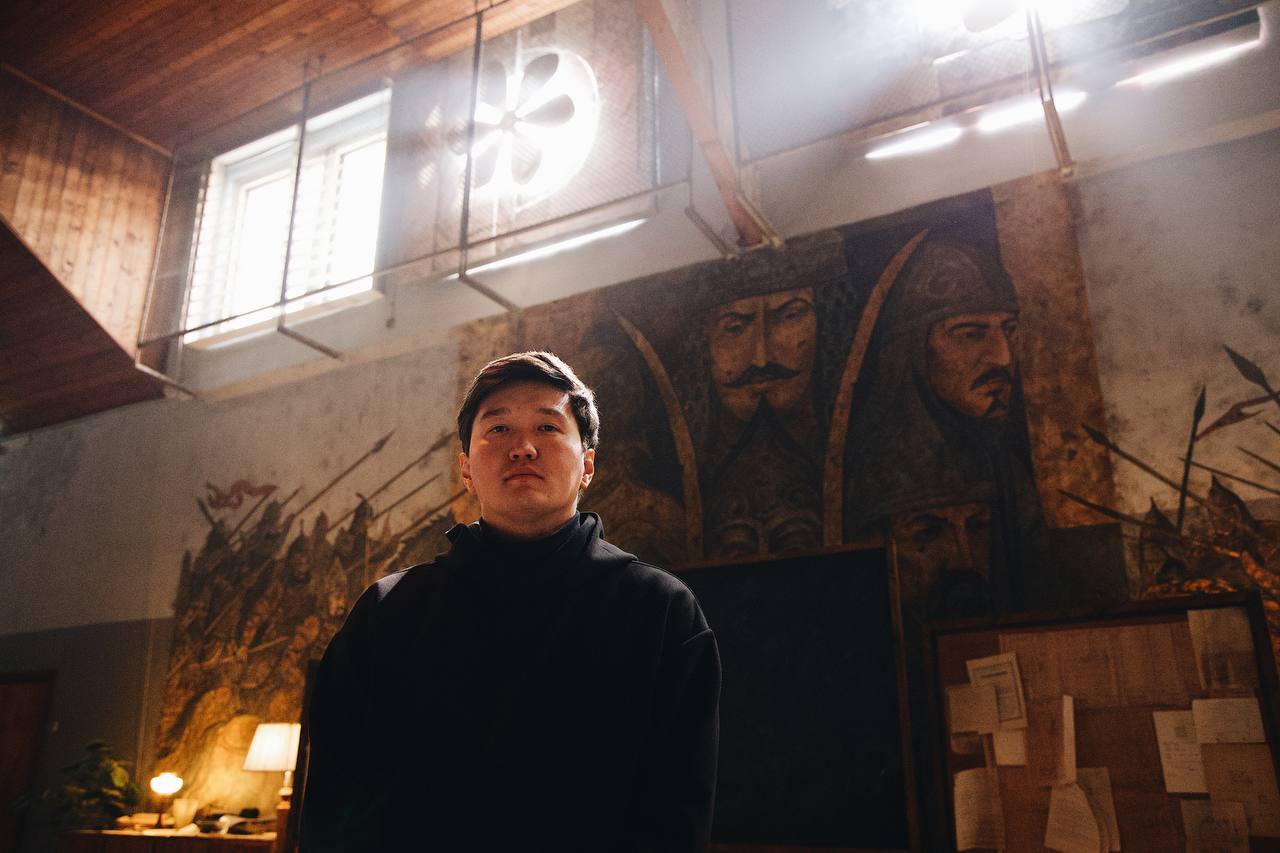
Kazybek Orazbek is one of the screenwriters behind a recent shift in Kazakh cinema, as locally produced horror and thriller films have begun to punch above their weight, both at the domestic box-office and internationally. His credits include Dästür, the Kazakh-language horror film that earned more than 1 billion tenge ($2.2 million) in its first week, and Auru, a 2025 drama-thriller released with a 21+ rating in Kazakhstan and screened internationally under the English title Sicko.
In an interview with The Times of Central Asia, Orazbek explains why deeply local stories can resonate globally, why Kazakhstan’s film industry needs international markets, and what mistake local filmmakers most often make when trying to appeal to Western audiences.
TCA: Sicko, for which you wrote the screenplay, is a genre film aimed at mass audiences, yet it ended up in the International Film Festival Rotterdam program. Was that your goal from the beginning?
Orazbek: Honestly, when we made the film, we weren’t thinking about festivals at all. We never set ourselves the task of getting into an international competition. We simply made a film we ourselves would want to watch.
But after Dastur (Tradition), we met the European producer Anna Katchko and showed her Sicko. She immediately said the film had strong festival potential and started promoting it. That’s how it ended up in Rotterdam.
If we had thought about festivals earlier, perhaps we could have submitted it to larger festivals as well. We finished the film after most major deadlines had already passed.
TCA: How did international audiences react to the film?
Orazbek: It was an interesting experience. We were given a fairly large screening hall with 600–700 seats. At first, the audience consisted mainly of Kazakhs living in Rotterdam and nearby cities, so everything felt familiar. I wasn’t nervous because our whole team was there – director Aitore Zholdaskali, actor Ayan Utepbergen, and producers Kuanysh Beisek and Almas Zhali.
But then more and more foreigners started arriving, Europeans in the broadest sense, people of different ages, backgrounds and appearances. And when you realize they came specifically to watch a story created in Kazakhstan for a Kazakh audience, it becomes overwhelming.
TCA: Were you nervous?
Orazbek: It was a strange feeling. I was both happy and extremely anxious. I sat there listening to the audience reactions. They reacted even more intensely than audiences back home. They laughed exactly where they were supposed to laugh, and they were genuinely frightened where we wanted them to be frightened. Every emotion we had built into the film, they understood perfectly.
That surprised me because they are far removed from Kazakh reality, yet they still connected with the story exactly as intended. Maybe that distance made their reactions somehow “cleaner” and more direct.
Whenever someone left the theater, I worried they hated the movie. In my head I kept saying, “Please come back.” Thankfully, people returned and stayed until the end.
TCA: And what was the reaction during the Q&A afterward?
Orazbek: The film was very well received. People asked thoughtful questions, and overall it was a very pleasant experience.
But it didn’t suddenly make me think “we now absolutely have to conquer the world of festival cinema”. I still want to make films for broad audiences. Maybe in 15 or 20 years, after I fulfill certain personal ambitions, I’ll move more toward auteur festival films. But not now.
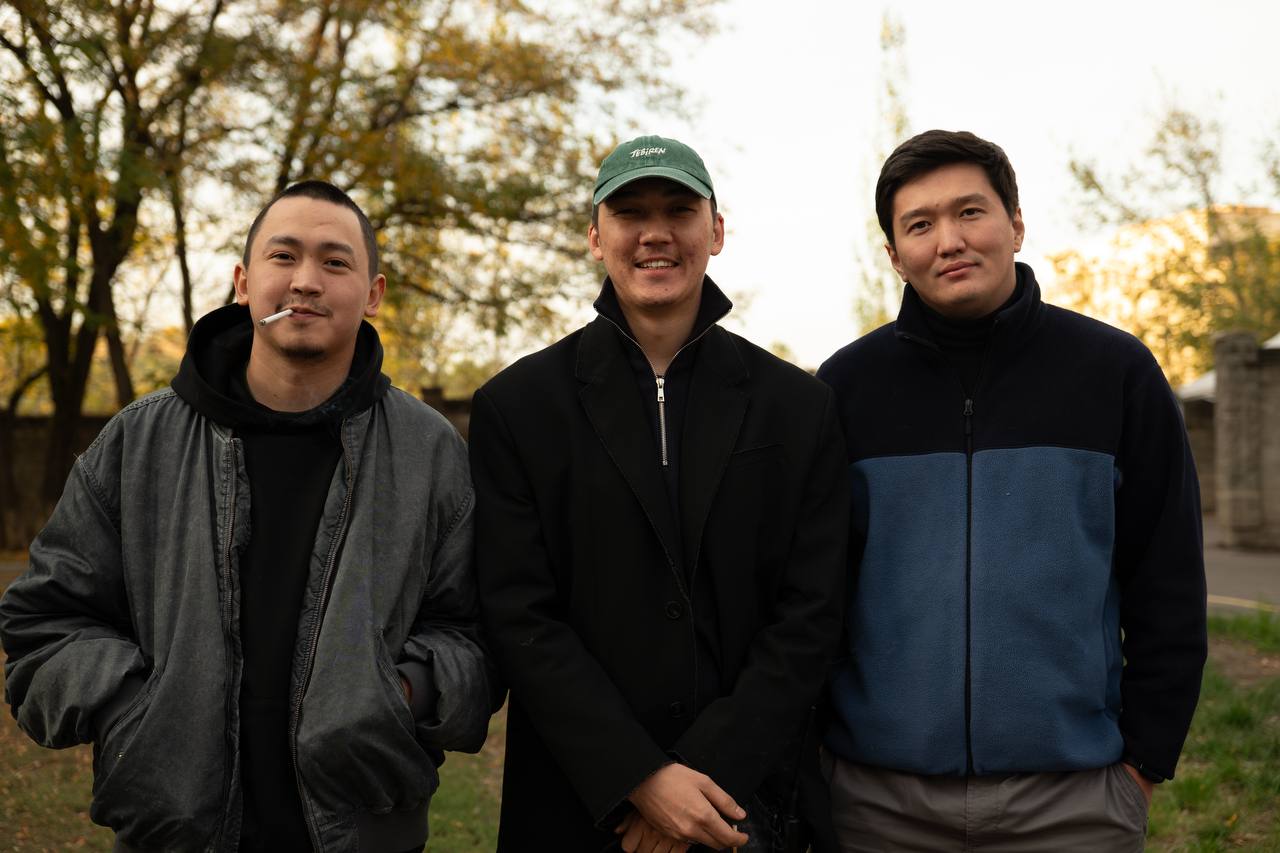
Image: From Kazybek Orazbek’s personal archive
TCA: Festivals are often valuable because they allow filmmakers to speak directly with industry professionals from around the world. Did you have any memorable meetings?
Orazbek: We met many different people, and every conversation was useful. We spoke with Rotterdam’s chief programmer, I think he’s originally from Ukraine. We were introduced to a representative of Germany’s Ministry of Culture responsible for contemporary German cinema. Around 200 films pass through their system every year, and that gives you a completely different scale of thinking.
We had long dinners and conversations with these people, and the main insight was always the same: tell stories about yourselves. Don’t try to guess what the West wants. Don’t make films specifically for them; make films that feel true to you.
I think they were speaking primarily about festival cinema, but honestly, the principle works everywhere. Look at Squid Game: an extremely local story, yet so honest and authentic that the whole world connected with it.
TCA: Is there genuine international interest in Kazakh cinema?
Orazbek: Definitely. We spoke with people from all over the world, many of them key figures in their industries. They shared insights very generously and talked about how their film industries developed. Listening to them, you realize that international success is not some unreachable fantasy. It’s a real path – just a long one that requires preparation.
TCA: What was the most valuable piece of advice you received?
Orazbek: For me, as a screenwriter, the most important discussion was about the financial structure of the industry and creators’ long-term incentives. That doesn’t mean filmmakers should work only for money, but many people told us that filmmakers should not only receive fees — they should also receive a percentage of sales and profits.
At minimum, three professions should always have participation: producers, directors and screenwriters.
Under those conditions, people become far more invested in the success of the film. A screenwriter no longer just finishes the script and rushes to another project, they care deeply about the film’s future life. That changes both the attitude and the quality of work. We are now trying to structure our projects that way.
TCA: After the success of Dastur and Sicko, did you start feeling that Kazakhstan alone was too small and that you wanted to reach larger markets?
Orazbek: Yes, partly out of competitive ambition. Of course, we primarily want to make films for our own audience, but there is also a desire to go further and prove that Kazakhs can make world-class cinema. It’s less about ego and more about wanting to demonstrate the level of our industry.
At the same time, the domestic audience is relatively limited, especially when your film gets a 21+ rating and only a few screenings per day, as happened with Sicko. That dramatically reduces box office potential. Naturally, you begin wondering what could happen if the film were aimed at a wider market. Kazakhstan’s market is small, we have only around 20 million people. Even if a film performs extremely well and earns three billion tenge, or just over $6 million, that is still close to the ceiling.
We want to invest more in quality and scale, but with our audience size alone it becomes difficult to sustain larger projects. So eventually, entering international markets becomes the logical next step.
And we want to aim high. We’re not looking primarily at Russia or neighboring countries like Kyrgyzstan and Uzbekistan – those audiences already watch Kazakh films. We want to move toward Western markets and then see where we can establish ourselves.
TCA: What kind of story can resonate beyond Kazakhstan?
Orazbek: I don’t think the question is what story to tell, but how to tell it. When we wrote Sicko, we assumed it was deeply local, tied to our mentality and our social issues. We never expected people abroad to fully understand it. But they did. People who had never visited Kazakhstan still found parallels in their own lives.
In general, I think the goal is to create stories that work on a fundamental human level, stories about good and evil, about basic moral conflicts that don’t require extensive knowledge of a specific cultural context.
A story can take place in Kazakhstan without being exclusively “about Kazakhstan.” It should be about people, choices and universal conflicts that anyone anywhere can understand. That’s probably the key.
TCA: How would you describe contemporary Kazakh cinema? Does it have its own style or identity?
Orazbek: Kazakh cinema is definitely unique, but it’s difficult to define because it’s incredibly diverse. We have so many different directors, writers and actors that it’s impossible to place them all into one stylistic category.
Take Adilkhan Yerzhanov, he’s a genius of our generation with a very strong auteur vision. Then there are filmmakers working in a kind of art-mainstream space: Kuanysh Beisek, Aitore Zholdaskali, Darkhan Tulegenov, Anvar Matzhanov, Yernar Nurgaliyev, Sergey Litovchenko and Alisher Utev. They all create accessible, visually striking films, yet every one of them is completely different.
That diversity is our strength. There is no single aesthetic and that’s a good thing.
TCA: What is still missing for Kazakh cinema to break through globally?
Orazbek: Time. We already have the tools, the talent and the ambition. It’s similar to what happened in music, at some point there was a leap, and suddenly our artists began reaching international audiences. I think the same thing will happen with cinema. We just need patience.
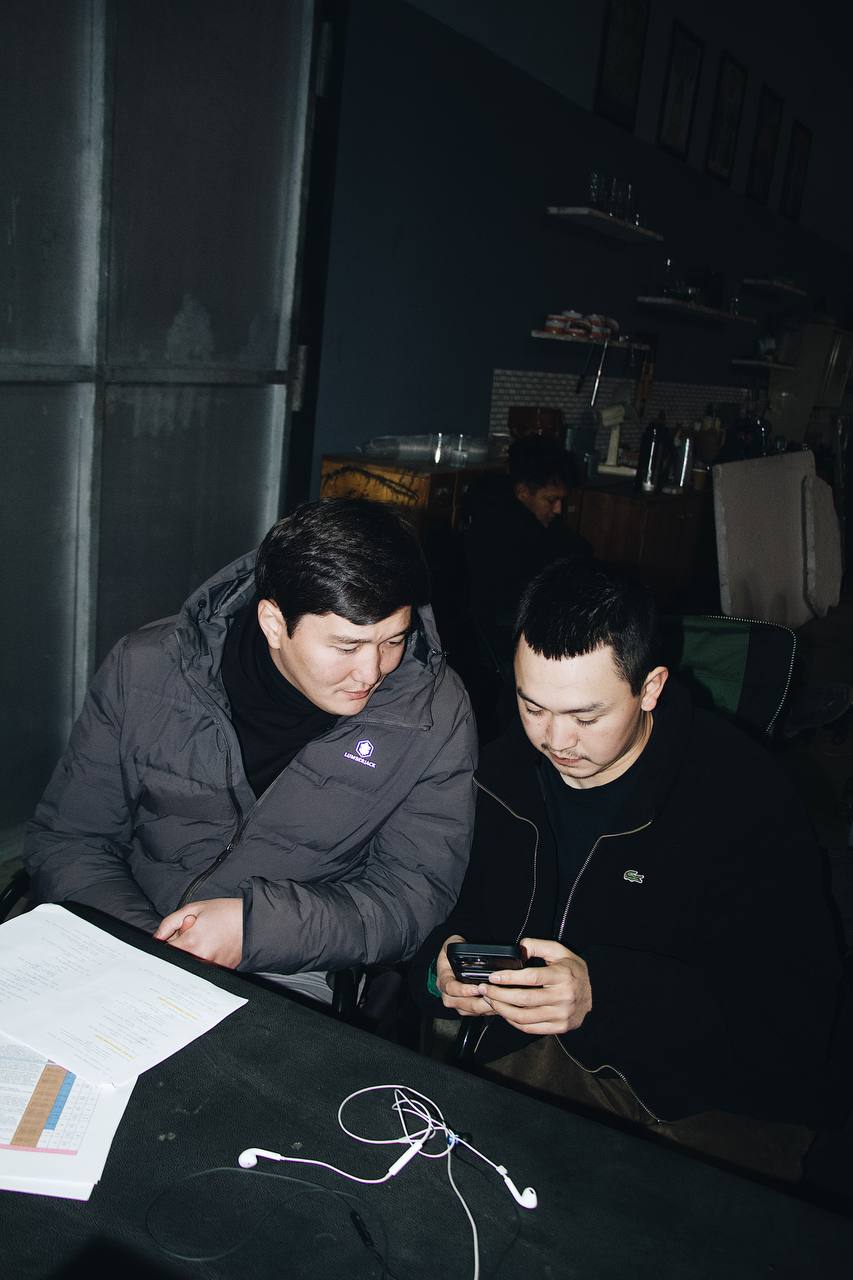
Image: From Kazybek Orazbek’s personal archive
TCA: Alongside Higgsfield, Kazakhstan’s first AI unicorn, which enables near-cinematic video generation, AI-driven filmmaking has also started developing in Kazakhstan. What do you think about it?
Orazbek: We also joined one AI-related project because we became genuinely curious about the technology. AI is evolving exponentially. It’s a little frightening, but we need to understand what we’re dealing with.
It’s a large project involving several producers. We joined mainly out of curiosity and a kind of competitive desire to understand how this technology works and what can be created with it. I can’t share details yet, but it will have something of the atmosphere of Black Mirror or Love, Death & Robots.
TCA: Don’t you think working with AI is, in some sense, “working for evil,” since artificial intelligence increasingly threatens human creativity?
Orazbek: At first, I absolutely felt that way. I went through all the stages, denial, anger, even depression, feeling there would eventually be no work left for us. But then I accepted it.
Now I see AI as simply another tool. It’s like the introduction of sound in cinema, people once believed that would destroy the art form too. In reality, it just became a new stage of development.
If before we had an ordinary saw, now we have a chainsaw, faster and more powerful, but you still need to know what you’re doing. So the question is not whether to fight AI, but how to adapt to it.
TCA: Do you personally use AI while writing screenplays?
Orazbek: Hardly at all. At most, I use it for research. Right now, it’s faster and easier for me to write something myself than to edit and rewrite AI-generated text. Otherwise, it becomes double the work.
Maybe that will change over time, but for now I’m more comfortable working the traditional way.
TCA: Do you think traditional film institutions and festivals are ready for AI, or will they resist it?
Orazbek: They will probably resist it, especially conservative institutions like major film festivals. But for us, that isn’t the main goal anyway. We don’t make films simply to satisfy someone else’s expectations or rules.