
• KZT/USD = 0.00221
  • TJS/USD = 0.10860
  • UZS/USD = 0.00008
  • TMT/USD = 0.29760
  • KZT/USD = 0.00221
  • TJS/USD = 0.10860
  • UZS/USD = 0.00008
  • TMT/USD = 0.29760
  • KZT/USD = 0.00221
  • TJS/USD = 0.10860
  • UZS/USD = 0.00008
  • TMT/USD = 0.29760
  • KZT/USD = 0.00221
  • TJS/USD = 0.10860
  • UZS/USD = 0.00008
  • TMT/USD = 0.29760
  • KZT/USD = 0.00221
  • TJS/USD = 0.10860
  • UZS/USD = 0.00008
  • TMT/USD = 0.29760
  • KZT/USD = 0.00221
  • TJS/USD = 0.10860
  • UZS/USD = 0.00008
  • TMT/USD = 0.29760
  • KZT/USD = 0.00221
  • TJS/USD = 0.10860
  • UZS/USD = 0.00008
  • TMT/USD = 0.29760
  • KZT/USD = 0.00221
  • TJS/USD = 0.10860
  • UZS/USD = 0.00008
  • TMT/USD = 0.29760
04 November 2026

Our People > Galiya Baizhanova

Galiya Baizhanova's Avatar

Journalist

Galiya Baizhanova is a Kazakhstani journalist, interviewer, and film critic whose work spans leading Kazakhstani and international media outlets. A member of the International Federation of Film Critics (FIPRESCI), she explores cinema, culture, and the people and ideas shaping contemporary society. She has covered major international film festivals, including Cannes, Venice, and Tokyo, bringing a Kazakhstani perspective to the global conversation about cinema.

Articles

Interview: Alina Mustafina on Her New Book and Freedom in Filmmaking

Kazakh filmmaker and writer Alina Mustafina moved from Almaty to Dubai before relocating to Barcelona with her husband. There, she studied film directing after working as a journalist, a career change she recounts in her second book, Between Heaven and Cinema: When a Dream Changes the Route. Her debut feature documentary, Gingerbread for Her Dad, premiered at the Busan International Film Festival in 2024 and competed at the Torino Film Festival later that year. Those screenings give her firsthand experience of taking a film made in Kazakhstan to international audiences. The Times of Central Asia spoke with Mustafina about her new book and the prospects for Kazakh filmmakers abroad. She discusses life in a Spanish film school and the challenge of explaining Central Asian humor to foreign collaborators. TCA: How did the idea for Between Heaven and Cinema come about? Alina Mustafina: This is my second book. It's about how my husband and I decided to change our lives when we were already in our thirties. We moved from the Emirates to Spain. I retrained as a filmmaker after working as a journalist, and he went from being an engineer to a pilot. I describe the book as “a story about a pilot's wife and a filmmaker's husband.” I started writing it back in 2021, still excited about the publication of my first book, How to Move to Dubai and Stay There, which had become quite popular. In about seven months, I wrote the section about Spain, then put the manuscript aside. I no longer had time for books, and it sat there for several years. TCA: What prompted you to return to the manuscript? Alina: The book is dedicated to my son Ander, who, sadly, passed away last year. In it, I write about the time when we found out we were going to become parents and have a son. That happened in Spain. It was important for me to reflect on that difficult period in my life. I decided to contact the same editor I'd worked with on How to Move to Dubai. I sent him the manuscript and suggested that if the publisher was interested, I would finish the book and we could publish it. If not, I wanted them to tell me right away. I decided that a positive response would give me the push to finally finish what I'd started. It would also give me a firm deadline. TCA: Was working on the book therapeutic for you in some way? Alina: In a sense, probably, yes. At the very least, it helped me look back at my journey in detail, feel grateful for it, and see how much my husband and I had been through together and how we'd supported each other. Besides, the book had been hanging over me as unfinished business all those years. I kept thinking about what I'd written, sitting in a drawer somewhere. If the publisher had turned it down, the manuscript would have stayed there. I wouldn't have had...

1 week ago
Kazakh Director Daulet Zhumabayev on New Film Kesu and Pursuing a Career in Hollywood

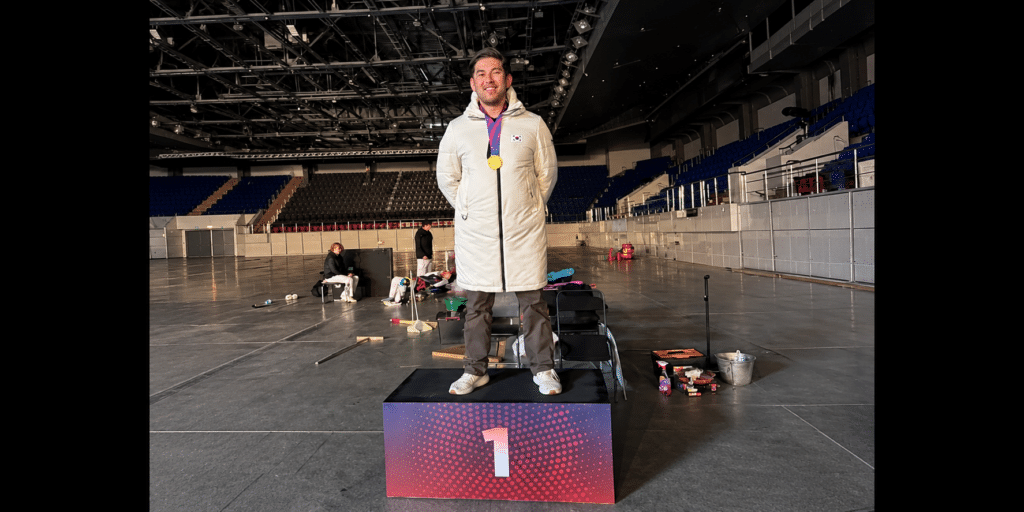
Kazakh director Daulet Zhumabayev hopes to bring his new action film, Kesu, featuring South Korean actors, to South Korean theaters. The film was released in Kazakhstan on October 15. It follows a Kazakh taekwondo practitioner and a South Korean champion as they travel to Seoul in search of their missing mentor. The film is Zhumabayev’s second feature, following the sports drama Arlan: The Final Round. Zhumabayev focuses on mainstream genre films and sees international collaboration as an opportunity to reach audiences beyond Kazakhstan. His debut feature became available on Amazon Prime Video, although he does not consider a streaming release equivalent to breaking into the American market. In an interview with The Times of Central Asia, Zhumabayev discussed working with South Korean actors, the prospects for international film production, his experience studying abroad, and why Kazakhstan may find it difficult to replicate Korean cinema’s success in Hollywood. TCA: Your new film, Kesu, features both Kazakh and South Korean actors. Did you have to change your directing approach when working with an international cast? Daulet Zhumabayev: No, I worked with everyone the same way. I don’t really have a fully developed directing system yet. I have my own methods for trying to communicate to actors what I want to achieve. I’ve taken some things from Judith Weston’s book Directing Actors, others from the Stanislavski method, and still others I’ve come up with intuitively. I gave both groups of actors the same kind of direction, and everyone understood perfectly well what I wanted from them. TCA: How did you build relationships between the Kazakh and Korean members of the film crew? Zhumabayev: That’s very important. And I’m extremely grateful to our lead actor, Asylkhan Tolepov, for the way he supported his Korean co-star, Ben (Joo Woo Geon). From the very beginning, we tried to create a particular atmosphere. When the Korean actors arrived in Kazakhstan, we didn’t just put them up in a hotel and provide meals. We welcomed them as real guests. We took them to Shymbulak, treated them to beshbarmak, and introduced them to our traditions. We wanted them to experience Kazakh hospitality and never feel like outsiders here, not even for a second. That immediately set the tone for our relationship. They could see that we treated them warmly and sincerely, that we cared not only about getting good performances from them but also about making their stay in Kazakhstan comfortable. And I think that probably motivated them to give their best on set as well. TCA: Did you make any allowances for the foreign actors during filming? Zhumabayev: None whatsoever. I expected complete dedication from them. They trained in the gym, learned Kazakh, and prepared for difficult scenes. We treated them as guests, but we worked as one team, with everyone having their own responsibilities. They’re very respectful and attentive. After filming ended, they all sent me warm messages thanking me for working together. They said they’d felt comfortable working with me and had learned a lot themselves....

2 weeks ago

Teen in Kazakhstan Develops AI Sign Language Translator

Fifteen-year-old Sanzhar Yerezhepov is developing an artificial intelligence (AI) translator to make online information more accessible to deaf people in Kazakhstan. Called Tusin (“Understand”), the platform converts speech and text into lifelike sign language videos that reproduce facial expressions as well as hand movements. Yerezhepov attends Daryn, a specialized school for gifted children in Kokshetau, northern Kazakhstan. A boarding school for children with hearing and speech impairments is located nearby. Watching its students communicate in sign language made him wonder how easily they could access information online, giving him the idea for Tusin. Yerezhepov is from Shiyeli, a small village in Kazakhstan’s Burabay district. Neither of his parents works in science or IT. He is now working with the Kazakhstan Society of the Deaf to test an early version of Tusin and says five organizations have expressed willingness to work with him. The project reached the semifinals of an IT competition at Astana Hub, Kazakhstan’s international technology park for startups. In an interview with The Times of Central Asia, Yerezhepov explains why translating into sign language is more complicated than adding subtitles. He discusses the medical startup he put on hold and what he hopes to change in Kazakhstan’s education system. TCA: Tusin translates online content into sign language, but many videos already have subtitles. Why are those sometimes not enough for deaf viewers? Yerezhepov: For some deaf people, especially those whose primary language is sign language, understanding written text can be difficult. First, subtitles are not always available in a language they are comfortable with. They are often automatically generated and do not convey information accurately. Second, sign language has its own grammar and structure. So even someone living in Kazakhstan may have difficulty understanding subtitles in Kazakh or Russian. Many deaf people can read subtitles fluently, but others need sign language translation. TCA: Isn’t sign language the same around the world? Yerezhepov: No. Different countries use different sign languages. There is no single universal sign language that everyone on Earth understands. TCA: So which sign language is used in Kazakhstan? Yerezhepov: Kazakhstan, like some other former Soviet countries, uses Russian Sign Language. We do not have a separate Kazakh Sign Language, although some signs have been adapted. TCA: How do you teach artificial intelligence to understand and reproduce signs? Who checks its work? Yerezhepov: We work with representatives of the Akmola branch of the Kazakhstan Society of the Deaf and with sign language interpreters. Together, we examine each sign, check how accurately it is reproduced, and analyze the results. We have already demonstrated our technology to deaf and hard-of-hearing people, and they understand what the platform communicates. TCA: A sign can change meaning depending on the situation. How does Tusin handle that? Yerezhepov: Quite well, although we are still working on it. The same sign can have different meanings depending on the context. That is exactly the problem we are addressing with artificial intelligence, which can take context into account and determine what is being communicated. Our platform...

3 weeks ago

Interview: Kazakhstan’s Dinara Kerey on Borat, the Boundaries of Humor, and International Stand-Up

In just four years, Dinara Kerey has gone from performing at open mics to staging her own stand-up shows across Europe, North America, and Central Asia, including a tour of her solo show Crazy Eurasian. Born in Kazakhstan, she left the country at 17, studied in South Korea and the United States, and now lives in Berlin, where she works in IT and performs comedy in English, Russian, and German. At a show in Vancouver, she found an immediate connection with Kazakhs living abroad. In other rooms, she says, her first jokes must explain that she is from Kazakhstan. The Times of Central Asia spoke with Kerey about cultural boundaries in comedy, Borat’s portrayal of Kazakhstan, the fear of being seen, and the cost of building a career largely on her own. TCA: Dinara, you sometimes perform eight or nine shows a month and have appeared in Kazakhstan, Germany, Canada, the United Kingdom, and Turkey, though you’ve only been doing stand-up for four years. Do you feel popular? Dinara Kerey: For me, this is just the beginning. My schedule is busy because I want it to be busy. I organize all my shows myself, so it’s entirely up to me. Right now, for example, I’m heading home to Berlin after touring Kazakhstan, where I did an English-language show for 150 people. TCA: Were most of the people in the audience foreigners or locals? Kerey: There were a lot of foreigners, but most of the audience was Kazakh. They were well-educated, English-speaking young people. And there was this funny thing; after the show, a lot of them came up to me and we kept speaking English, even though both sides knew perfectly well that we could speak another language. Maybe some of them just wanted the practice. TCA: What kind of reception do you get back home? And where have you found particularly warm audiences? Kerey: The reception at home is good, especially in Almaty, which is nice. But I’d also single out Vancouver. More than 90 people came to my show there, and around 40 of them were Kazakhs who had been living there for a long time. I’ve lived abroad for 14 years myself, so there was an immediate connection with them, this shared relatability. Pretty much all my jokes landed really well. I guess we have similar backgrounds and look at life from the same angles: as immigrants, as Kazakhs, as Asians, and ultimately as post-Soviet people, or Eastern Europeans, as people tend to say now. All those different parts of me matched up with them. TCA: Did the material resonate with the other Canadians as well? Kerey: Yes. The people who came to my show had similar experiences. They were very well-traveled and had also moved from country to country before finding a place they could call home. I think the difference was especially noticeable because in Canada, more than anywhere else I’ve been, people celebrate their differences. They may be Canadian by passport, but nobody demands...

1 month ago

Kazakhstani Director Darkhan Tulegenov: “We Have Long Been Part of the Global Film Industry”

The Cord, the latest feature by Kazakhstani director Darkhan Tulegenov, will have its world premiere in the Vision section of the 31st Busan International Film Festival, held in South Korea from October 6 to 15. Developed from his series Kindik, the film has been described by its creators as a drama about blind maternal love, but further plot details remain under wraps. The Kazakhstani director’s recent television work also includes Mūnai and Khanskaya Okhota. Tulegenov studied acting before moving into directing, making eight short films and earning early recognition on the festival circuit before completing his first feature, Brothers, in 2022. In an interview with The Times of Central Asia, Tulegenov explained why filmmakers from Kazakhstan  now have lessons of their own to share with international colleagues, how his acting education helps him on set, and how a director adapts when nature rewrites the plan, from unexpected snow in Aktau to the icy waters of the Caspian Sea. TCA: Your path into international cinema began while you were still a student. Which festival was your first? Tulegenov: Yes, essentially it all started with short films, which I began making while I was still a student. Before making my debut in full-length feature cinema, I made eight short films and several series. My short films won many awards around the world. My first trip abroad with one of my films was, I think, to Bishkek, to a short film festival, where I won the Grand Prix. That was the beginning. After that, I really traveled a lot thanks to cinema. TCA: One of those trips took you to Iran’s Fajr Film Festival. How did that experience influence you as a filmmaker? Tulegenov: In Iran, I participated in the Talent Campus program. It is similar to Berlinale Talents at the Berlin Film Festival, only at the Fajr Film Festival. They organize it for participants from Arab countries, Central Asia, other parts of Asia, and other regions. Well-known Iranian directors serve as mentors there: Majid Majidi was there, for example, and Asghar Farhadi had come the year before me. For a student, it is an amazing experience because you can attend lectures by masters of Iranian cinema while surrounded by people from all over the world. At some point, you realize that filmmakers everywhere actually speak the same language, and where you studied does not matter at all. You can study cinema in Iran, Kazakhstan, or America. The main thing is to speak the language of real cinema. [caption id="attachment_56009" align="aligncenter" width="1200"] All images courtesy of Darkhan Tulegenov[/caption] TCA: You also studied at the New York Film Academy. How different was that experience from studying in Kazakhstan? Tulegenov: Yes, it was what they called an “academic mobility program” at the Zhurgenov Academy, where I graduated. I don’t know whether it still exists, but at the time they sent us to Los Angeles for three months. The academy paid for our tickets, daily expenses, and other costs. For me, above all, it was an...

2 months ago

“It’s a Fantasy About Those Who Could Have Prevented the Tragedy”: Shugyla Yeshen on Kazakhstan’s New Cinema

Kazakhstan’s Semipalatinsk nuclear test site was the scene of more than 450 Soviet nuclear tests, leaving a legacy of illness, environmental damage, and displacement that continues to shape the country. A new historical action film, Zheti Qaraqshy, reimagines that history through a group of seven young heroes who set out to prevent the tragedy. For 24-year-old actress Shugyla Yeshen, who plays one of the seven, the film prompted her to look more closely at a history she had known about since childhood. Yeshen also works at one of Kazakhstan’s leading Kazakh-language theaters and is beginning to develop projects of her own. In an interview with The Times of Central Asia, she discussed the shortage of substantial roles for women, the discipline she learned in theater, her ambitions beyond Kazakhstan, and why her character goes into action armed with a slingshot. TCA: One of Kazakhstan’s most anticipated projects of the year, Zheti Qaraqshy, will be released on September 24. Tell us about the film and your character. Yeshen: Literally translated from Kazakh, Zheti Qaraqshy means “Seven Bandits,” but there is a play on words: it is also the Kazakh name for the Big Dipper. It’s a historical action film set in the 1980s. It’s about seven very different people who come together for one important mission. They all have very different personalities, but they’re interesting, and each of them has secrets. My character’s name is Gainy. She grew up in an orphanage with her foster brothers. I don’t want to say too much because I don’t want to give away any spoilers, but at some point they become the heroes of one of the most important historical events. TCA: The film tells Kazakhstan’s history in the language of comic books. Is it a kind of Kazakh Suicide Squad? Yeshen: Probably, yes. Each of the seven has their own weapon. Mine, for example, is a slingshot. It seems like a childish, harmless weapon, but when you actually pick one up, it can be quite dangerous and hit a target very accurately. It all depends on who is holding it. I think that describes my character perfectly. Gainy is the same: she looks like a harmless girl, but in reality she is a strong and daring heroine. TCA: The film is connected to the tragedy of the Semipalatinsk nuclear test site, where the Soviet Union conducted hundreds of nuclear tests. You belong to a very young generation of Kazakhstanis. How much did you know about this history before filming? Yeshen: Of course, I had known about it since childhood, but to be honest, I had never really gone very deeply into the subject. It was only when we started filming – and even after the film – that I began to fully understand what it was really about and how many lives the test site actually destroyed. An older colleague of mine said something I really liked. He said this film is a fantasy about a team of brave young people who could...

2 months ago

Kazakhstani AI Creator Alissa Kamorskaya on the Rise of AI Animation

Kazakhstani model and AI content creator Alissa Kamorskaya runs Chudno, a school and agency specializing in AI-generated content. Kamorskaya began publishing AI cartoons in February 2026, and one of her videos has since received more than 30 million views on Instagram. The Times of Central Asia spoke with her about the rise of AI animation and the role of social media algorithms in driving views. TCA: You began creating AI cartoons before the format became widespread in Kazakhstan. Why do you think your most-viewed video attracted such a large audience? Alissa: I think several factors played a role. One was that when I made my most-viewed cartoons, almost no one in the post-Soviet space was using this format. I posted my first one on February 3 this year. I wanted to tell my followers how I met my husband, but I simply didn’t have any video footage to illustrate it, so I decided to turn it into a cartoon. The views quickly took off, my social media audience started growing, and I realized it was a very promising niche. AI cartoons have now become hugely popular. You can see animated videos recommended on social media getting as many as 100 million views. They have spread across social media so quickly that it feels as though AI cartoons have been around for a long time. In reality, broadly speaking, they have only been this widespread for about six months. TCA: Why does animation work so well with a mass audience? Alissa: I think it’s because animation is almost universal. Very often it doesn’t need words at all. A cartoon can be understood by someone of any age, from any country, speaking any language. Someone could be sitting somewhere in Cambodia, see the video, and still understand what is happening. So the potential audience for this kind of content is enormous. TCA: Do you see that in the geographic breakdown of your audience? Alissa: I analyzed the statistics for several videos and noticed that a lot of viewers come from Turkey and Iran. I think that is partly connected to how my characters look. They have dark hair and darker skin, so viewers in those countries may find them more familiar-looking. I often see comments in Turkish under the videos, and I can tell that people recognize themselves in these characters. Visual identification is very important here. It works much like it does in movies, or when we were children and picked a favorite character and said, “I’ll be this one.” We want to recognize ourselves in characters and identify with them. TCA: Before AI animation, you ran a conventional blog for about five years. Why did cartoons change things so dramatically? Alissa: I had been blogging for about five years, constantly filming myself, and my audience barely grew. For several years, my follower count stayed at around 3,000. Everything changed only when I switched from making what I personally liked to what interested a much wider range of people. I used...

3 months ago

Interview: Ayana Nurdinova on Mugalim, Balkhash, and San Sebastián

Kazakh director Ayana Nurdinova will screen her debut feature, Mugalim (The Teacher), in the New Directors section of the San Sebastián International Film Festival, which runs September 18–26. The selection comes almost ten years after Nurdinova graduated from the Zhurgenov Academy of Arts. Shot in Balkhash, the film follows a music teacher who dreams of leaving the small city for somewhere bigger, while questioning what he wants from his work and his life. The Times of Central Asia spoke with Nurdinova about her long road to a first feature, her love of small towns and Japanese cinema, the influence of Takeshi Kitano, and her forthcoming trip to San Sebastián.   Times of Central Asia: Ayana, congratulations on being selected for San Sebastián. Getting into a festival like this with a debut feature is a major achievement. What was your reaction? Ayana Nurdinova: When the news came, the film’s producer, Aruzhan Dosymkozha, called me. It was already around midnight and I was asleep, so at first I didn’t really understand what was happening. She was in this kind of joyful shock and told me the wonderful news. To be honest, at first I couldn’t believe it had actually happened. When we submitted the film to festivals, of course I hoped it would be appreciated, but I tried not to expect too much so I wouldn’t be disappointed later. So I really didn’t expect that we would actually be selected. TCA: Did you submit the film to other major festivals as well? Ayana: Yes, we submitted it everywhere, from Cannes and Venice to Karlovy Vary. We sent it to Cannes a month before the festival. We knew it was late, but we decided to try anyway. We didn’t get in, and then three months later the news came from San Sebastián. When I found out we had been selected, I started reading about the festival and the city and looking at photographs. At some point, I even noticed an unexpected visual similarity with our film: the city there also sits on the water, only it is surrounded by the Bay of Biscay, and there is even something similar about the landscape. I thought it was funny that a film shot in Balkhash would make its first trip precisely there. TCA: You graduated from the Zhurgenov Academy as a feature film director almost ten years ago, but after graduating, you spent quite a long time working in other film professions. How did that happen? Ayana: Yes, I graduated from the academy when I was 22, and looking back now, I realize that at the time I had very little life or professional experience. So I decided to immerse myself in the profession. While I was still a student, I got my first job on a major film set, working as a clapper loader [a junior camera role] on The Kazakh Khanate. After graduating, I wanted to gain real practical experience and understand how a film set actually works. For a while, I worked in casting,...

3 months ago

From Instagram to Hollywood: How Kazakhstan’s Yerlan Tanay Became a Sought-After Colorist

Kazakhstani colorist Yerlan Tanay has built an international career in post-production, working with major companies including The Mill and Company 3. Now based in Los Angeles and working freelance, he has experienced both the opportunities and instability of Hollywood’s highly competitive market. His long-term goal is to move further into feature films. Tanay career changed after he began sharing his work on Instagram, where he was approached about joining The Mill. In this interview with The Times of Central Asia, he explains how that move opened the door to Hollywood and what he learned inside leading post-production studios. TCA: You have worked as a colorist for eight years, including three years in Hollywood. You were initially invited to join the renowned British post-production company The Mill, which had an office in Los Angeles. How did they find you? Tanay: I was invited by Paul Yacono, the head of The Mill’s Los Angeles office. He is a well-known Australian colorist who has lived and worked in the United States for many years. He graded films for David Fincher and Chloé Zhao and also worked on major series such as House of Cards and music videos for international artists. We met on Instagram and spent almost two years simply communicating, following each other’s work, and occasionally discussing projects. Then one day, he wrote to me: “Would you like to have a Zoom call? We have an offer for you.” During the call, he asked whether I would consider moving to the United States. He then explained that a position had opened and that they were looking for a colorist from outside the American market; someone with a different professional background. It came as a complete surprise to me. TCA: So, Instagram literally changed your career? Tanay: Yes, absolutely. A producer once told me something very simple: “You do good work, but nobody knows who you are.” That was when I realized I needed somewhere to show my work. To be honest, I was skeptical about Instagram at first. I thought it was a platform where people posted pictures of food or makeup, not a place for a professional portfolio. But once I started posting my projects regularly, things gradually changed. My audience grew, people began noticing me, and then job offers started coming in. I was probably also fortunate to enter the platform at a time when professionals were only beginning to use Instagram actively for work. TCA: Last year, The Mill ran into financial difficulties and was sold and restructured. What changed for you? Tanay: I spent two very productive years there, but I had to leave together with the old team. After that, I received an offer from Company 3. To give you an idea, it is one of the companies that sets the standard for color grading in global cinema. If you ask any good cinematographer or director what Company 3 is, there is no need to explain it. Everyone knows the brand. You could say Company 3 is...

3 months ago

Saving The Caspian Seal: An Interview with Assel Baimukanova

The Caspian seal is the only marine mammal native to the Caspian Sea and the world’s only seal species found exclusively in an inland body of water. Once numbering close to one million, its population has declined dramatically over the past century due to commercial hunting, habitat degradation, pollution, accidental entanglement in fishing gear, and climate change. Today, the species is listed as Endangered on the IUCN Red List. Kazakh zoologist Assel Baimukanova has spent the past 13 years studying the Caspian seal alongside her father, renowned scientist Mirgaliy Baimukanov. Their work takes them to remote islands in the northern Caspian, where they spend weeks living in tents, monitoring the animals and collecting data essential to understanding the rapidly changing sea. The Times of Central Asia spoke with Baimukanova about how the Caspian seal coexists with offshore oil production, why scientists perform necropsies on dead animals, and what the future holds for the sea’s only endemic marine mammal. TCA: Assel, you have been studying the Caspian seal for 13 years. Since it is an endemic species found nowhere else in the world, are there many international researchers working on it, or is it studied mainly by Kazakh scientists? Baimukanova: The Caspian seal is indeed an endemic species, meaning it is found only in the Caspian Sea. But it is not studied only by our Institute of Hydrobiology and Ecology. Several research organizations, both in Kazakhstan and abroad, are involved in studying the species. Russian and Iranian scientists also work on the Caspian seal. In addition, we cooperate with researchers who study other seal species in Estonia, Finland, the United Kingdom, and the United States. Each of these countries has experience studying different pinniped species, so we regularly exchange expertise and research findings. Our cooperation with international colleagues was particularly active between 2005 and 2017, when we carried out a number of joint research projects. TCA: In your documentary film, you say that although the Caspian Sea is shared by several countries, Kazakhstan bears the greatest responsibility for protecting the Caspian sealbecause the species’ most important habitats are located in Kazakh waters. Baimukanova: Yes, that is true. In spring and autumn, up to 90% of the Caspian seal population may gather in Kazakhstan’s sector of the Caspian Sea. In winter, the animals breed on the ice in the northern Caspian. Depending on ice conditions, breeding colonies may be located in either the Kazakh or Russian sectors. During spring and autumn, however, most seals are found in the shallow and hard-to-reach northeastern part of Kazakhstan’s sector of the sea. That is why the condition of our part of the Caspian is critical to the conservation of the species. TCA: But the ice cover is shrinking every year because of climate change. Should we already be worried, or is there no immediate cause for concern? Baimukanova: There is every reason to be concerned. Warm winters are becoming more common, while cold and severe winters are becoming increasingly rare. Ice still forms, but it...

4 months ago