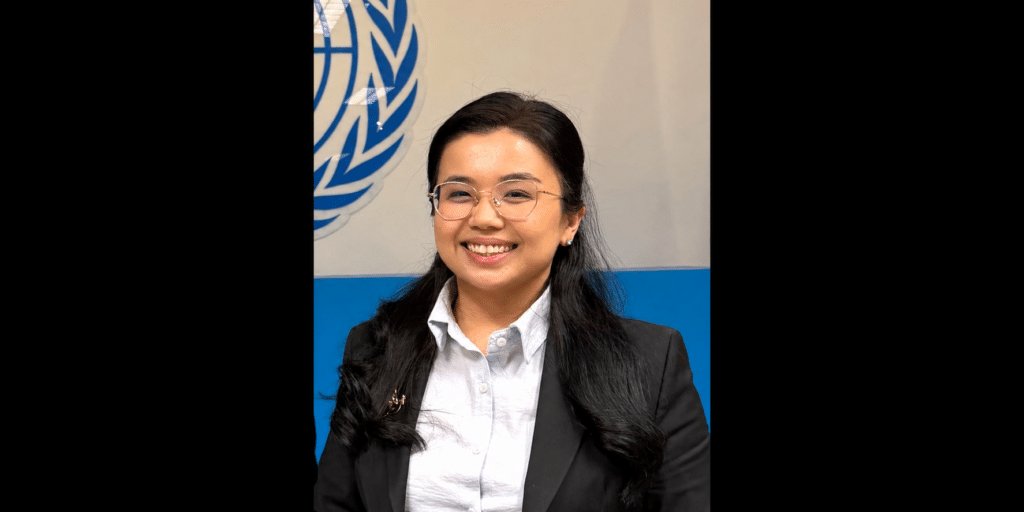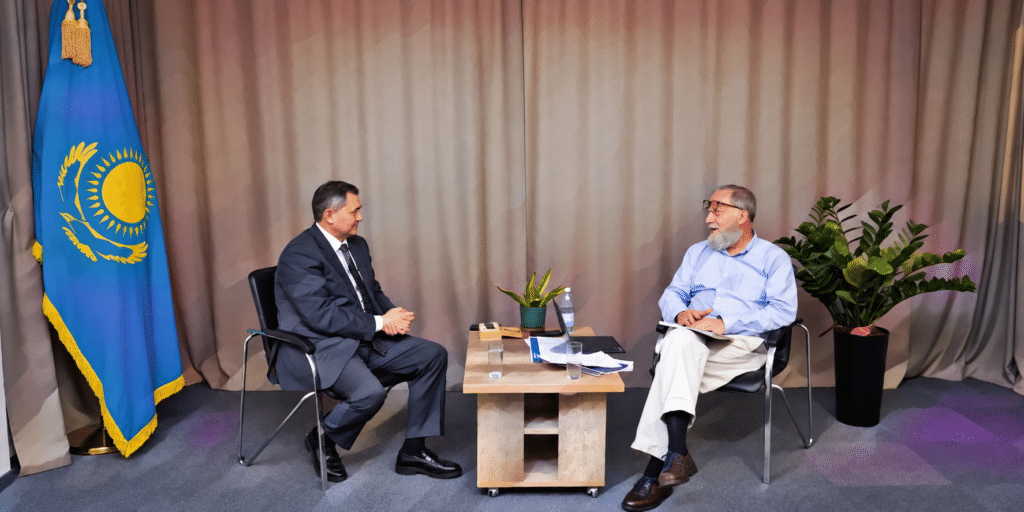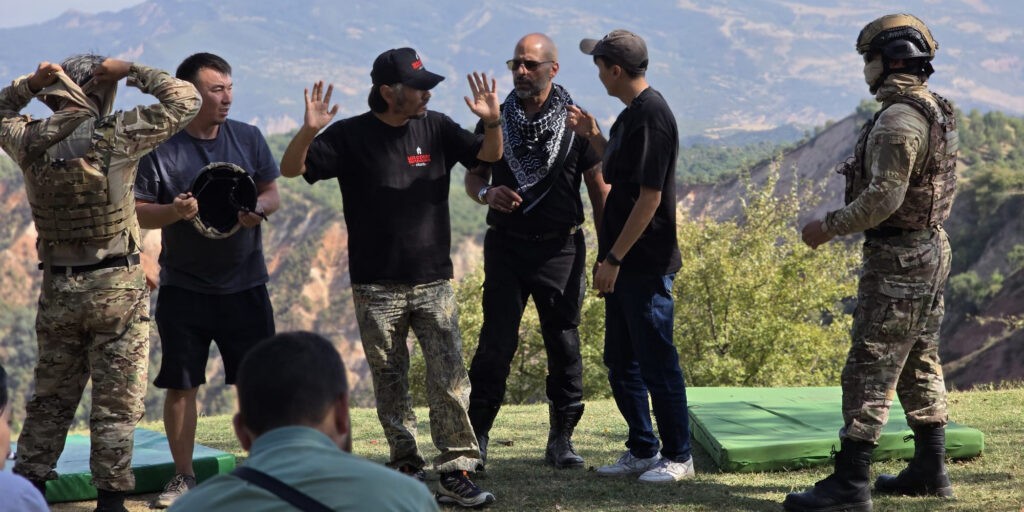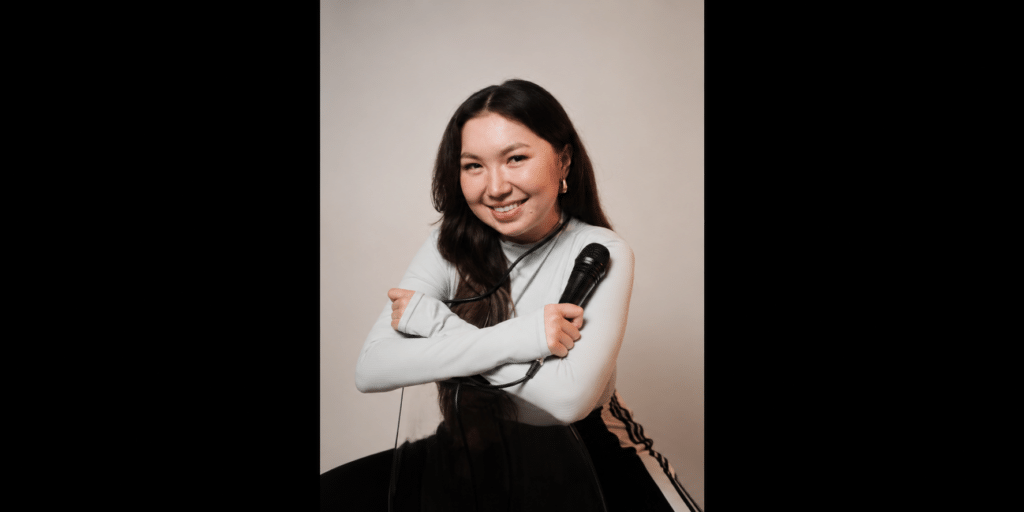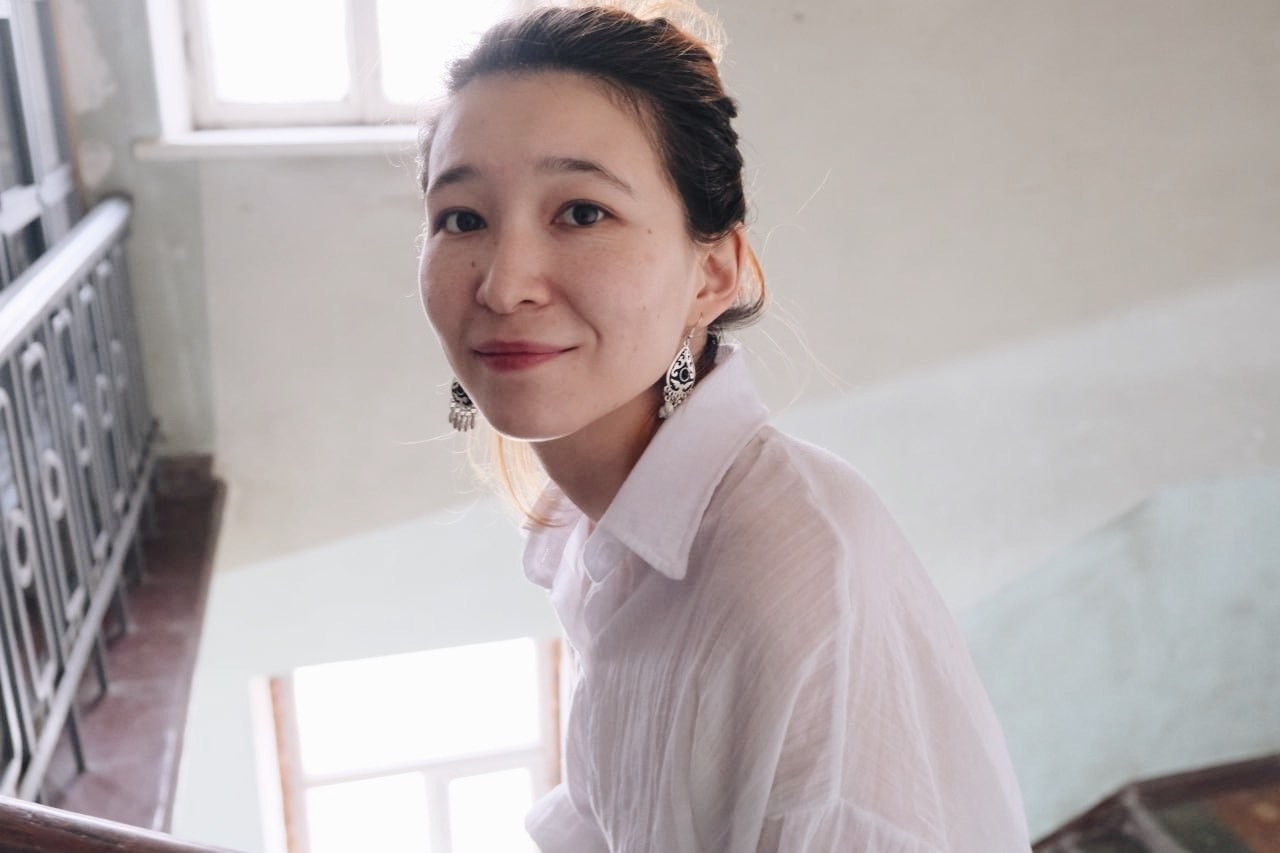
Kazakh director Ayana Nurdinova will screen her debut feature, Mugalim (The Teacher), in the New Directors section of the San Sebastián International Film Festival, which runs September 18–26. The selection comes almost ten years after Nurdinova graduated from the Zhurgenov Academy of Arts. Shot in Balkhash, the film follows a music teacher who dreams of leaving the small city for somewhere bigger, while questioning what he wants from his work and his life.
The Times of Central Asia spoke with Nurdinova about her long road to a first feature, her love of small towns and Japanese cinema, the influence of Takeshi Kitano, and her forthcoming trip to San Sebastián.
Times of Central Asia: Ayana, congratulations on being selected for San Sebastián. Getting into a festival like this with a debut feature is a major achievement. What was your reaction?
Ayana Nurdinova: When the news came, the film’s producer, Aruzhan Dosymkozha, called me. It was already around midnight and I was asleep, so at first I didn’t really understand what was happening. She was in this kind of joyful shock and told me the wonderful news. To be honest, at first I couldn’t believe it had actually happened. When we submitted the film to festivals, of course I hoped it would be appreciated, but I tried not to expect too much so I wouldn’t be disappointed later. So I really didn’t expect that we would actually be selected.
TCA: Did you submit the film to other major festivals as well?
Ayana: Yes, we submitted it everywhere, from Cannes and Venice to Karlovy Vary. We sent it to Cannes a month before the festival. We knew it was late, but we decided to try anyway. We didn’t get in, and then three months later the news came from San Sebastián. When I found out we had been selected, I started reading about the festival and the city and looking at photographs. At some point, I even noticed an unexpected visual similarity with our film: the city there also sits on the water, only it is surrounded by the Bay of Biscay, and there is even something similar about the landscape. I thought it was funny that a film shot in Balkhash would make its first trip precisely there.
TCA: You graduated from the Zhurgenov Academy as a feature film director almost ten years ago, but after graduating, you spent quite a long time working in other film professions. How did that happen?
Ayana: Yes, I graduated from the academy when I was 22, and looking back now, I realize that at the time I had very little life or professional experience. So I decided to immerse myself in the profession. While I was still a student, I got my first job on a major film set, working as a clapper loader [a junior camera role] on The Kazakh Khanate. After graduating, I wanted to gain real practical experience and understand how a film set actually works.
For a while, I worked in casting, but I found it quite difficult. Then I decided to try working in the art department, which is how I came to be a production designer. I don’t think I’m going to leave that profession just yet. I’ll try to keep doing it alongside directing.
TCA: Was your debut delayed partly because it is quite difficult for women to find financing?
Ayana: Finding money for a debut feature really isn’t easy. When we failed to secure funding for this project the first time, of course I was upset. Then I thought that perhaps everything happens in its own time, so I revised the project based on the feedback we received at the pitch and applied again later.
Now I’m actually glad the film came about when it did, because those ten years certainly weren’t wasted. I got older, gained life experience, worked on different film sets, and watched how other directors and departments worked. When I finally came onto a set as a director myself, all that accumulated experience helped me. I think that at 22, I would have made a completely different film.
TCA: Who did you study with, and were there many women in your class?
Ayana: There were about eleven people in our group, three of them women. But it was a good group, and almost all of my classmates stayed in the film industry. Darkhan Tulegenov and Alen Rakhmetaliyev, for example, already have more than one successful project behind them. Yadykar Ibraimov makes excellent documentaries. Maya Iskakova left for VGIK [a Moscow film school] halfway through her studies, then came back and worked in our industry. Now we’re working together on our next project, which I don’t want to say too much about yet because the screenplay is still being written. Another of our classmates, Aidana Sadykbekova, became a film editor and has worked on quite a few well-known projects.
TCA: In the history of Kazakh cinema, there have periodically been these remarkable classes where several distinctive directors emerge from the same workshop. Why does one class produce an entire generation of original filmmakers, while another leaves almost no one in the profession?
Ayana: It’s hard to say. Maybe it’s a coincidence, or maybe under the guidance of our teachers we really did get a good grasp of the profession. Perhaps some of the credit goes to the master who selects the class, although, of course, the decision isn’t made by one person. There is a large admissions committee, and the teachers look at the applicants’ creative work and try to see their potential. In our case, it seems their choice turned out to be a good one.
TCA: And who was your master?
Ayana: Initially, our workshop was formed by Talgat Temenov. But after teaching us for one year, he left for Astana. After that, Amanzhol Aituarov took over our workshop and stayed with us through graduation. So I consider Amanzhol Tolyqbayevich my master. We studied with him for most of our time there, and he guided us all the way to graduation.
TCA: Your film was shot in Balkhash. Where are you originally from?
Ayana: I was born in Taldykorgan and spent my entire childhood there. It’s like that joke where you can leave a small town, but the small town never leaves you. I think that describes me perfectly. I really love small towns.
TCA: So much so that you decided to make a film about one?
Ayana: Yes. When I moved from Taldykorgan to Almaty, I started missing my hometown. And I came up with this story about a music teacher working in the provinces. At first, it seemed completely natural to me that the story should take place there. I even made a special trip to Taldykorgan to look for locations, but I realized that despite my very personal emotional connection to the place, visually I was missing something.
Then I started thinking back to my childhood and suddenly remembered Balkhash. When I was little, my whole family used to go there every summer. When my producer and I went there to scout locations, I realized that the story fit the city very naturally.
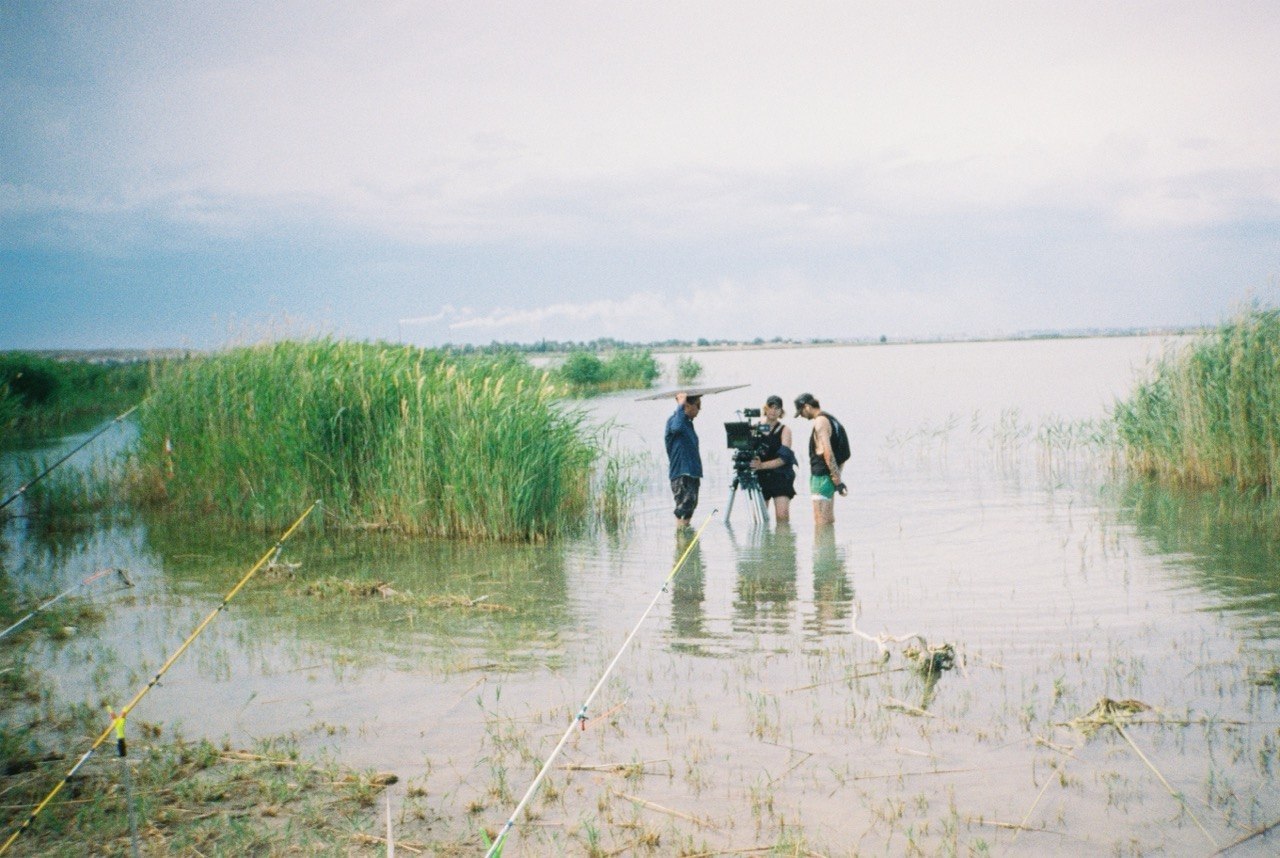
TCA: What inspired you while you were making the film? What shaped its visual and emotional world?
Ayana: One of my main cinematic references was Takeshi Kitano’s A Scene at the Sea, the story of a deaf garbage collector who one day decides to take up surfing. We also looked at Kikujiro. It’s probably one of his most audience-friendly films, about the friendship between a little boy and an adult man.
At the time, I was really fixated on Kitano’s work, and in my own film I wanted to capture the same kind of tone he has.
TCA: Why?
Ayana: I really like his quiet way of telling stories. His characters don’t say much, but you understand perfectly well what they’re going through. There is this almost meditative observation of people, while at the same time he tells very interesting and often incredibly moving stories. Just think of Hana-bi.
TCA: But there’s a lot of violence in that film alongside the tenderness, and it seems Kitano has more violent films than gentle ones…
Ayana: Maybe. I also love his yakuza films, Outrage, for example, and pretty much everything I’ve seen by him except, perhaps, his latest historical film, although maybe I just need to watch it again. I think Kitano was really where my interest in Japanese cinema began, and where I developed a kind of love for it.
TCA: I’ve heard there’s even a mini-film within your film made as a tribute to Japanese cinema?
Ayana: Yes, there’s a scene inspired by Masaki Kobayashi’s Harakiri. We devoted a separate shooting day to it and managed to film it just while the apricot and peach trees were still in bloom.
TCA: So can your film be considered a tribute to Japanese cinema?
Ayana: No. I wasn’t inspired only by Japanese cinema. There were Soviet films as well, such as Georgiy Daneliya’s Mimino and Nikolai Dostal’s Cloud-Paradise. Another important reference was Alexander Payne’s The Holdovers. Of course, it has the theme of a teacher, which is close to our story, but the film’s tone was also important to me, particularly the way it works with its characters and with a fairly intimate human story.
In terms of narrative rhythm, I wanted our film to have something of Paul Thomas Anderson’s Punch-Drunk Love.
TCA: And what was your musical starting point?
Ayana: My main musical reference was the composer Henry Purcell, a representative of the early English Baroque. It just happened that while I was writing the screenplay, I kept listening to one of his compositions. It had a particular rhythm and mood that somehow really helped me work.
Listening to it made it much easier for me to visualize scenes, to literally see the future film. So when I began working with the composer, Purcell was the reference I brought to him. Sanzhar seemed a little surprised by the choice, but he liked the idea. For him, it became a kind of creative puzzle: figuring out how to start from that musical feeling while still creating the film’s own world.
TCA: Did Balkhash itself dictate anything once you started working there, in terms of space, color, or composition?
Ayana: Surprisingly, the city fit our screenplay so precisely that we hardly had to make any major changes for the actual locations. Of course, after scouting, some of the staging became more specific because you already understood the real space you would be filming in. But overall, everything remained as we had originally imagined it.
There were even some incredible coincidences. For example, from the very beginning I had imagined that you should be able to see the lake from the music classroom where the main character works. I wanted water to be a constant presence in the film. It didn’t necessarily have to come to the foreground, but I wanted you to feel that it was always there somewhere.
When we came to scout locations, it turned out that in the school we eventually chose for filming, the music classroom really did have windows overlooking the lake. Coincidences like that felt almost symbolic.
TCA: What was it like filming in Balkhash?
Ayana: Wonderful. To make sure it was exactly the place I needed, I started going there long before filming began. At first, Aruzhan and I went together to see the city in different seasons, in winter and spring. Then I went back on my own while I was working on the screenplay. After that, Aigul Nurbulatova, our cinematographer, came with me several times, and we looked for locations that would work for us.
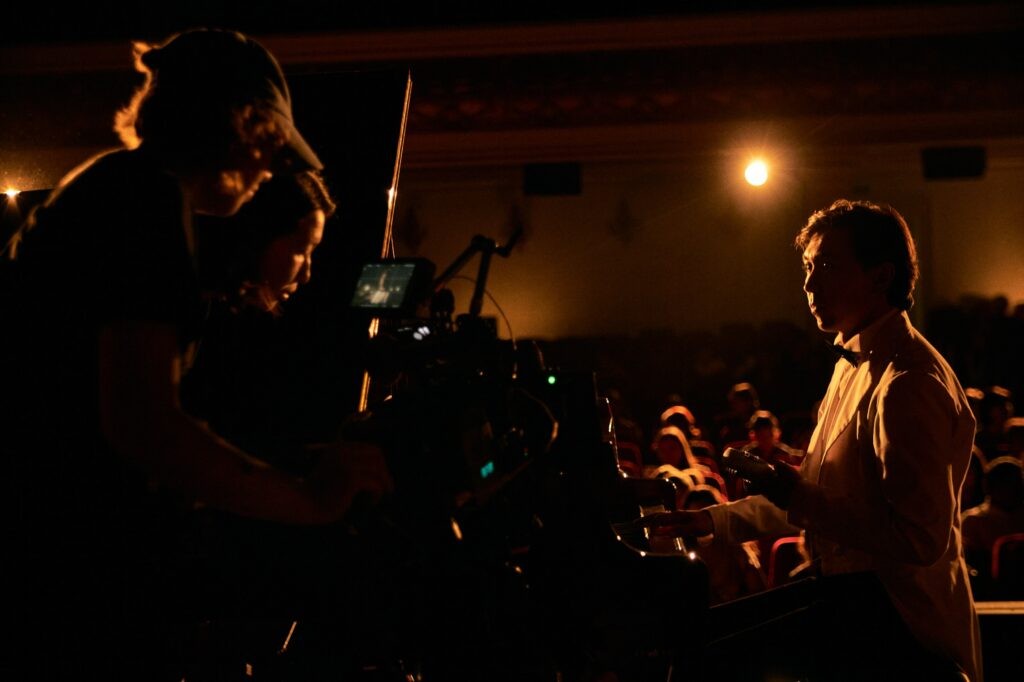
Altogether, that process lasted about two years. We already had the screenplay ready in 2023, and we shot the film in 2025. We had about 20 to 25 days of shooting.
TCA: How did local residents react to the filming?
Ayana: With great interest. They had the feeling that something important was happening, so the local residents were very involved. We were also lucky with the actors. Some of them were recognizable, and that attracted attention too.
Of course, working with extras there had its own challenges. In Almaty, people who regularly work as extras understand how to behave on set and what they can and can’t do. In Balkhash, sometimes we had to spend more time explaining the task. But people took the filming extremely seriously, and in the end they did a great job and gave it their all.
I remember we finished one scene with a group of extras and were getting ready to leave for the next location, where we were supposed to film with a different group of people. Suddenly, some of the people from the previous scene asked us, “Can we come with you?” They wanted to keep filming.
So I have very warm memories of working there, and I’m truly very grateful to the people of Balkhash.
TCA: There are quite a few women on your crew. What was it like working with a female team?
Ayana: It was great. I didn’t have to prove myself every day. With men, sometimes you have to do that. You have to show that you really know what you’re doing and that you have the right to make decisions. That can sometimes lead to conflict.
I wouldn’t want to generalize and say that working with all women is wonderful and working with all men is difficult. But speaking specifically about the people I work with regularly, I feel very comfortable working with women. We know each other, we trust each other, and we can simply get on with the work.
TCA: In September, you’re going to San Sebastián to present the film. Who from your team will be going?
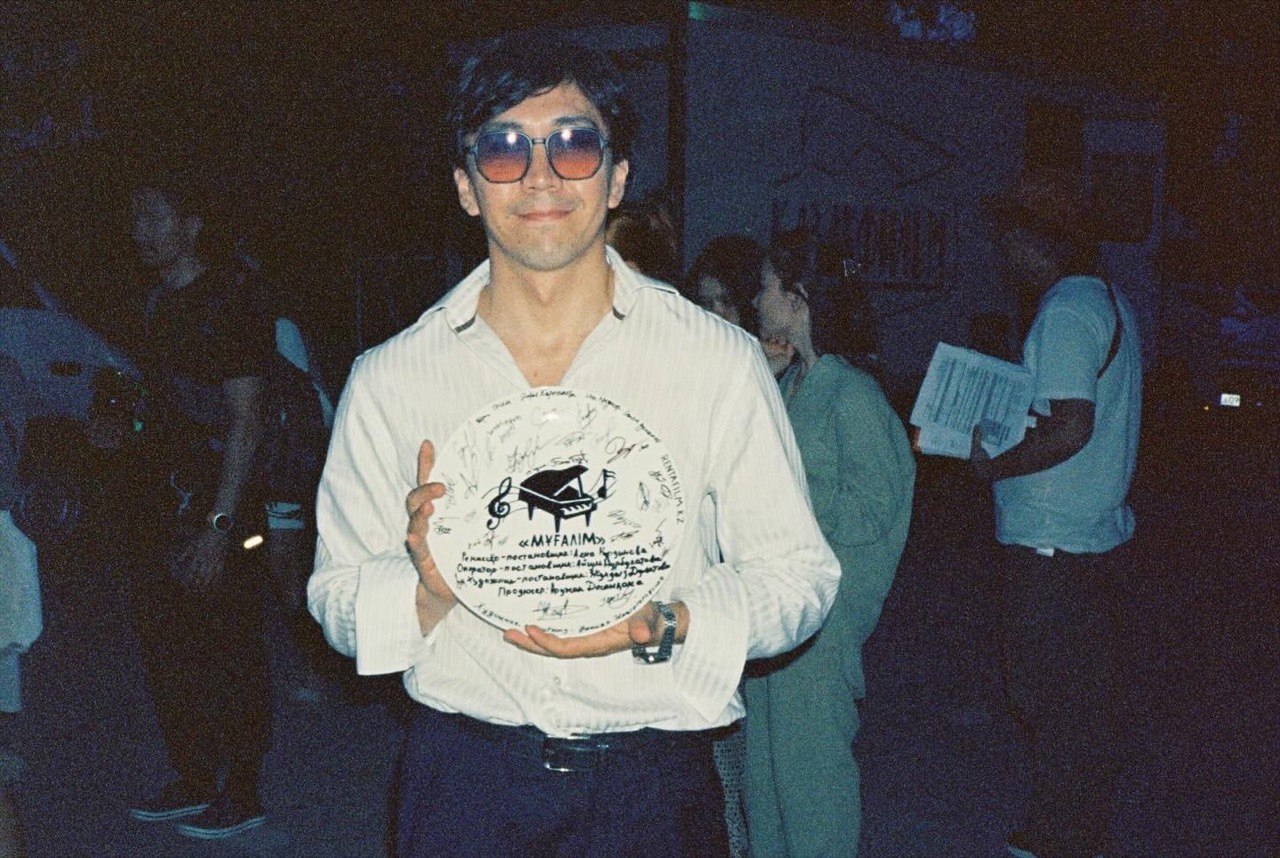
Ayana: I’ll be going, along with the film’s producer, Aruzhan Dosymkozha, our cinematographer, Aigul Nurbulatova, and our lead actor, Olzhas Dalelkhan. Our sound engineer, Ilya Gariev, really wanted to go as well, but the schedule for another project he’s working on has shifted, so for now it’s unclear whether he’ll be able to join us.
The festival is inviting us, but it doesn’t cover the entire trip. As far as I remember, only three nights of accommodation are covered. We’re paying the remaining expenses ourselves. We’re really looking forward to the trip and hope everything goes well and that we come back with good memories.