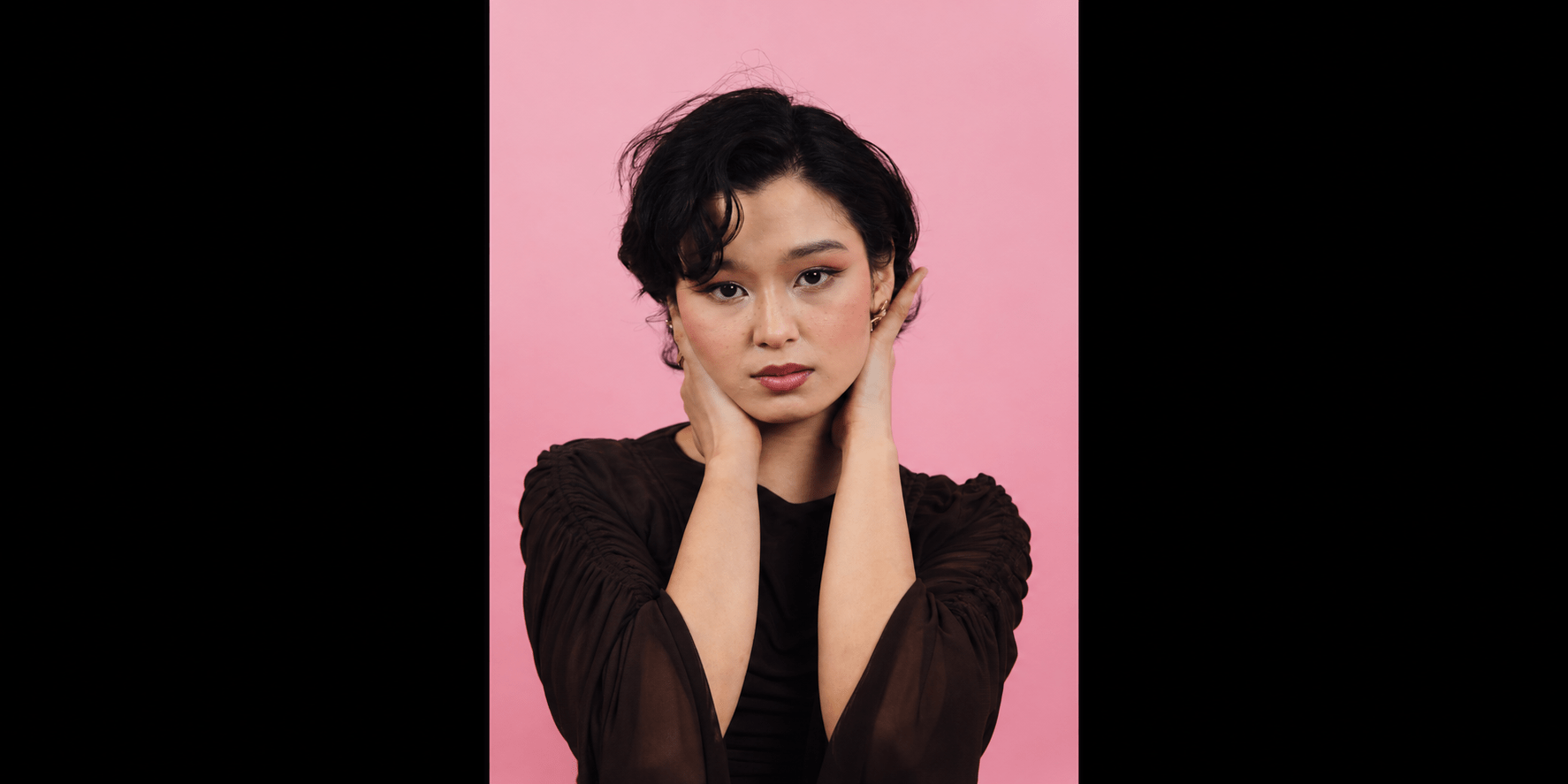
Kazakhstan’s Semipalatinsk nuclear test site was the scene of more than 450 Soviet nuclear tests, leaving a legacy of illness, environmental damage, and displacement that continues to shape the country. A new historical action film, Zheti Qaraqshy, reimagines that history through a group of seven young heroes who set out to prevent the tragedy.
For 24-year-old actress Shugyla Yeshen, who plays one of the seven, the film prompted her to look more closely at a history she had known about since childhood. Yeshen also works at one of Kazakhstan’s leading Kazakh-language theaters and is beginning to develop projects of her own. In an interview with The Times of Central Asia, she discussed the shortage of substantial roles for women, the discipline she learned in theater, her ambitions beyond Kazakhstan, and why her character goes into action armed with a slingshot.

TCA: One of Kazakhstan’s most anticipated projects of the year, Zheti Qaraqshy, will be released on September 24. Tell us about the film and your character.
Yeshen: Literally translated from Kazakh, Zheti Qaraqshy means “Seven Bandits,” but there is a play on words: it is also the Kazakh name for the Big Dipper. It’s a historical action film set in the 1980s. It’s about seven very different people who come together for one important mission. They all have very different personalities, but they’re interesting, and each of them has secrets. My character’s name is Gainy. She grew up in an orphanage with her foster brothers. I don’t want to say too much because I don’t want to give away any spoilers, but at some point they become the heroes of one of the most important historical events.
TCA: The film tells Kazakhstan’s history in the language of comic books. Is it a kind of Kazakh Suicide Squad?
Yeshen: Probably, yes. Each of the seven has their own weapon. Mine, for example, is a slingshot. It seems like a childish, harmless weapon, but when you actually pick one up, it can be quite dangerous and hit a target very accurately. It all depends on who is holding it. I think that describes my character perfectly. Gainy is the same: she looks like a harmless girl, but in reality she is a strong and daring heroine.
TCA: The film is connected to the tragedy of the Semipalatinsk nuclear test site, where the Soviet Union conducted hundreds of nuclear tests. You belong to a very young generation of Kazakhstanis. How much did you know about this history before filming?
Yeshen: Of course, I had known about it since childhood, but to be honest, I had never really gone very deeply into the subject. It was only when we started filming – and even after the film – that I began to fully understand what it was really about and how many lives the test site actually destroyed. An older colleague of mine said something I really liked. He said this film is a fantasy about a team of brave young people who could have prevented this tragedy – at least in a parallel universe.

TCA: August 29 marked 35 years since the closure of the Semipalatinsk test site. Yet people in the affected areas still live with its consequences.
Yeshen: Yes, the test site was closed 35 years ago, but we will feel the consequences of this tragedy for a long time to come. When we were filming promotional material for Zheti Qaraqshy, I read real letters from people who had lived near the test site and witnessed the consequences of the tests. The stories were very different, but all of them were tragic. Each person described how the tests had affected their lives – deaths, illnesses, miscarriages, sick children. When you read that, it’s terrifying.
TCA: Let’s talk about theater. You are a member of the company at the Gabit Musrepov Kazakh State Academic Theater for Children and Youth in Almaty. How busy are you there with such a demanding filming schedule?
Yeshen: Even busier. If you’re an actor at this theater, you perform at least 15 times a month. In my first year, I performed in 117 shows in a single season. In my second year, I performed 88 times, although I’m counting all my roles here, including supporting ones. During that same period, I was filming Zheti Qaraqshy, Gashyqpyn Sagan, and other projects, but I still went on stage 88 times.
TCA: Do you go on tour with the theater?
Yeshen: Yes, but rarely. The opportunity doesn’t always come up. This year was only my second tour. My productions aren’t always included in the touring program, and sometimes the trips coincide with filming, so I have to turn them down because tours can sometimes last two weeks. This summer, I traveled with the company and really enjoyed meeting audiences in different cities.
TCA: Does the theater ever get jealous of your film work?
Yeshen: No. But when I first joined the theater, in my first year, they gave me a lot of performances because I was a young actress. At first, the roles were small, but back then I turned down a lot of film auditions myself because of the theater. Combining theater and film is difficult because you have to be at the theater practically every day. Sometimes there are two performances in one day.
TCA: You play the title character in a production based on Antoine de Saint-Exupéry’s The Little Prince. Is it an adaptation of the novella?
Yeshen: Yes, it’s a fairy tale in which I play the Little Prince. It’s funny, but when I first came to the theater, I was immediately given three or four tough roles – boys or tomboyish girls. For example, there was a production called Bolmagan Balalyq Shaq (The Childhood That Never Was), based on a play by Kazakh poet Akberen Yelgezek. Unfortunately, it isn’t in our repertoire now. It’s a very good production, and I’d love to see it brought back. I played a boy named Alyoshka. That was my first theater role. Then came the Little Prince – another boy. In Mugalim (The Teacher), I played a girl, but she was a tomboy too. So I ended up with four or five roles like that in a row.
TCA: Early in your career, you had a lot of tough roles: a female boxer, boys, tomboyish girls. Now directors seem to see more tenderness in you. Has something changed in you, or have they simply discovered another side?
Yeshen: I think every woman – and really every person – has many different qualities. At certain points in life, our softer side comes through more strongly, and at others, our more combative side does. It can change at different stages. When I was filming Soqqy (The Punch), where I played a boxer, my blood was boiling. I probably had more testosterone.
TCA: Are you a tomboy in real life?
Yeshen: Not at all. I can’t even say I was a tomboy as a child. I think I bring those qualities out when I get a particular role. If I need to play a girl with that kind of fighting spirit, I start pulling that side out of myself. When I need to play a romantic heroine, I become completely different. I have both sides in me.
TCA: You already have several professional awards, including theater honors and an award from the Film Critics Association. What do they mean to you?
Yeshen: That I’m on the right path. It means a lot when professionals recognize your work.
TCA: What do you think Kazakh cinema is missing?
Yeshen: New female voices, in my opinion – screenwriters and directors. I’d be very interested in working with a woman, and I hope I’ll have that opportunity soon. Actress Nazgul Karabalina, the wife of well-known actor Azamat Satybaldy, recently invited me to work on a project. Like us, they are students of Tungyshbay Zhamankulov’s acting school, so we come from the same tradition. I can’t say what the project is about yet, but it’s a story where I’ll play a mother – not just someone’s pregnant fiancée, as in Shulama or Sheker: The Last Chance, but an actual mother. And I don’t know whether I’m allowed to say this yet, but my classmate and friend Dana Amirkul wants to direct a project. I want to produce it and act in it. I’ll be very happy to support her.
TCA: There are far more female characters in Kazakh films now than there were five or six years ago. Are there also more genuinely good roles?
Yeshen: Yes, there are definitely more female characters, but there are still very few good, substantial roles among them. The quantity has increased, but the quality still isn’t there.
TCA: If you’re offered a project but think the script is weak, do you accept it or turn it down?
Yeshen: There are so many factors: the director, the story, the other actors, the role itself. Sometimes a project where I can really show what I’m capable of doesn’t come along for a long time, so I settle for something less. I understand that the project won’t be the best, but I need the money, so I say yes. I can’t think only about creativity. I need to live and have at least enough for everyday expenses.
TCA: You decided to become an actress when you were 15?
Yeshen: Yes. I was 15, I had finished ninth grade, and I decided I was going to study acting at college. I was obsessed with movies and watched a huge number of them. I could stay up watching films until morning and then sleep at school. In ninth grade, around April or May, when I had to decide what I was going to do next, I told my family, “I’m going to be an actress.” Almost everyone – my grandfather, grandmother, and relatives on my father’s side – was against it. Except my mother.
TCA: She supported you?
Yeshen: Yes. My mother said, “You’re a grown-up girl. You know what you’re doing, so do what you think is right.” There are no creative people in our family apart from me; nobody looked at me when I was a child and thought I would become an actress. But I realized that my mother had given me such a foundation that creative work became something completely natural to me.
The thing is, she worked a lot, literally 24/7, and because she didn’t want my sister and me wandering around with nothing to do or falling in with the wrong crowd, she constantly enrolled us in different activities. We didn’t have a nanny, so my mother tried to make sure we always had something to do after school. By the time she came home from work, we would usually be getting home too.
TCA: What did you do?
Yeshen: I went swimming and graduated from music school, where I studied violin. My sister played the kobyz, a traditional Kazakh bowed string instrument. In the evenings, we played volleyball, and there was also choir, ensemble, dancing, singing – my mother signed us up for practically everything. I was also very active at school and was constantly hosting different events.
It was only when I grew up that I realized all of this had given me a certain creative foundation. So even though my mother never deliberately steered me toward acting, the lifestyle she created for us ultimately played a big part in leading me to it.
TCA: So you can play the violin? That takes an enormous amount of work.
Yeshen: I haven’t played for about ten years, but if I started again, I’d remember quickly because the foundation is still there. Actually, music school was my mother’s dream, and she tried to realize it through my sister and me. We both graduated from music school, but it was more for our mother. She also had this principle: if you start something, you have to finish it. Whether you like it or not doesn’t matter. Now I think that’s a very good quality. If you take something on, you shouldn’t quit halfway.
TCA: Have those skills been useful in your acting career?
Yeshen: Of course. I did a huge number of different activities, so I can say I have some knowledge and basic skills in many different areas. When a role requires something specific, I only need to adapt that foundation a little and prepare. Because of that, I pick up new skills quite quickly. The violin, for example, not only helps develop your musical ear, but is also very good for fine motor skills.
TCA: How do you stay physically fit now?
Yeshen: I work out, swim, play volleyball, love the mountains, and ride horses, although I’m taking a break from riding right now. Usually, I try to ride about once a week. I also really want to take up tennis… And this year I discovered fishing! I go fishing and bring the fish home to my mother.
TCA: What has been your biggest catch?
Yeshen: I only started fishing this summer, so I haven’t gone that many times yet and don’t really have anything to brag about. But that’s not why I go. I just enjoy it.
TCA: Is it true that you once worked as a mountain guide?
Yeshen: Yes. I love hiking in the mountains and spending the night there. There was a period when I regularly took people into the mountains. I know how to prepare for a climb, what clothes to bring, how to build a fire… I learned a lot there in general. And I saw quite a few beautiful places in the Almaty region – Kolsai, Charyn, Tuzkol, Tekes, and the area around Narynkol. But I haven’t worked as a guide like that outside the Almaty region yet.
TCA: Let’s return to acting. What unexpected things have you discovered through the profession?
Yeshen: One of them is that a grown adult might come to me, a 24-year-old girl, for advice. To be honest, that came as a complete surprise. I’m only 24, and sometimes I think: Do I even have the right to give anyone advice? So even when I do decide to give advice, I’m careful about it.
I always say, “I had one experience, but things may turn out completely differently for you. What worked for me may not work for you at all.” There isn’t one answer in life about what’s right and what’s wrong. What’s right for you may be completely different for another person. So I usually say the same thing I was once taught: listen to your heart and follow what you truly want.
TCA: Do you often ask other people for advice yourself?
Yeshen: Not very often. I usually make decisions myself, and somehow the answer comes to me on its own. If I’m unsure, I tell myself, “I’ll think about it for one more day.” If the desire becomes stronger, I go for it. If it weakens, then maybe the desire wasn’t genuine.
For work, I sometimes consult my agent, Madiyar Sarybay. He was the casting director for Soqqy, my first TV series. He is a theater scholar and a dean at the academy. He is a very educated person with extensive experience in film.
TCA: What do you dream about? What are your career and personal ambitions?
Yeshen: I actually have a lot of them. There are short-term goals and long-term ones: some concern me personally, some my family, and some my career. But I don’t talk about all of them. In general, I don’t really like sharing all my plans.
I would really like to buy my mother a house and my sister a car. I don’t know yet how or with what money, but I want to do it within the next year or two, three at most. If everything becomes really difficult, then five years. I’ll try to make it happen.
TCA: Is there anything you want to buy for yourself?
Yeshen: I don’t need anything. Except travel. I don’t want to live in one place all the time. As long as there’s such a big world out there and I have the opportunity to go wherever I want, I want to use it. I didn’t have that opportunity before. I don’t know whether I’ll have it in the future either. So while I can, I want to see as many beautiful places as possible.
TCA: Where have you traveled so far?
Yeshen: Not very many places yet: Georgia, Dubai, Thailand. I haven’t traveled abroad for filming yet. The most international exposure I’ve had is that my films have been released in Kyrgyzstan and Uzbekistan.
TCA: Are you open to international projects? How is your English?
Yeshen: My English is basic right now, but I learn quickly, so I don’t see it as a major problem. Although maybe I’m saying that too confidently now, and tomorrow my circumstances will change and I won’t be so sure. But right now, I don’t have a family or children, and I can devote myself completely to the profession. So I’m really looking forward to those opportunities.