• KGS/USD = 0.01144 0%
  • KZT/USD = 0.00213 0%
  • TJS/USD = 0.10699 0%
  • UZS/USD = 0.00008 0%
  • TMT/USD = 0.28571 0%
  • KGS/USD = 0.01144 0%
  • KZT/USD = 0.00213 0%
  • TJS/USD = 0.10699 0%
  • UZS/USD = 0.00008 0%
  • TMT/USD = 0.28571 0%
  • KGS/USD = 0.01144 0%
  • KZT/USD = 0.00213 0%
  • TJS/USD = 0.10699 0%
  • UZS/USD = 0.00008 0%
  • TMT/USD = 0.28571 0%
  • KGS/USD = 0.01144 0%
  • KZT/USD = 0.00213 0%
  • TJS/USD = 0.10699 0%
  • UZS/USD = 0.00008 0%
  • TMT/USD = 0.28571 0%
  • KGS/USD = 0.01144 0%
  • KZT/USD = 0.00213 0%
  • TJS/USD = 0.10699 0%
  • UZS/USD = 0.00008 0%
  • TMT/USD = 0.28571 0%
  • KGS/USD = 0.01144 0%
  • KZT/USD = 0.00213 0%
  • TJS/USD = 0.10699 0%
  • UZS/USD = 0.00008 0%
  • TMT/USD = 0.28571 0%
  • KGS/USD = 0.01144 0%
  • KZT/USD = 0.00213 0%
  • TJS/USD = 0.10699 0%
  • UZS/USD = 0.00008 0%
  • TMT/USD = 0.28571 0%
  • KGS/USD = 0.01144 0%
  • KZT/USD = 0.00213 0%
  • TJS/USD = 0.10699 0%
  • UZS/USD = 0.00008 0%
  • TMT/USD = 0.28571 0%

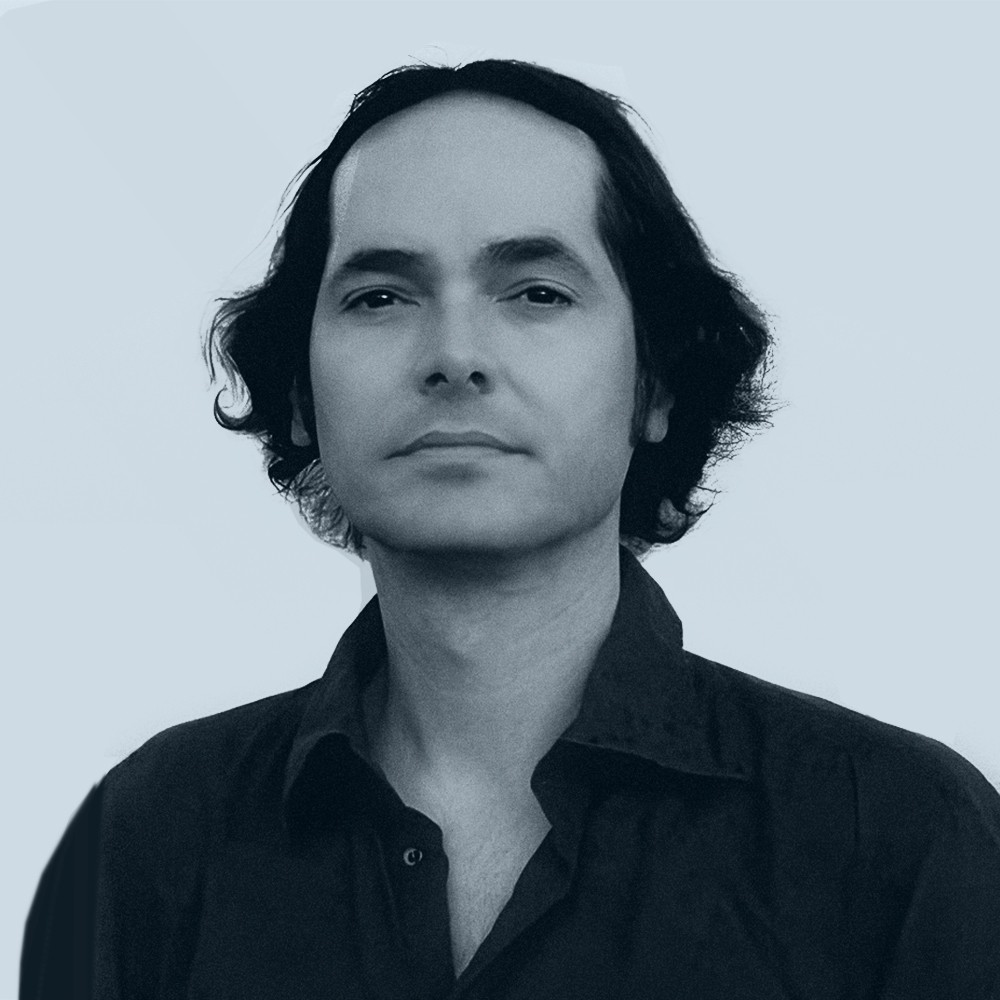
Our People > Stephen M. Bland

Stephen M. Bland's Avatar

Stephen M. Bland

Managing Editor and Head of Investigations

Stephen M. Bland is a journalist, author, editor, commentator, and researcher specializing in Central Asia and the Caucasus. Prior to joining The Times of Central Asia, he worked for NGOs, think tanks, as the Central Asia expert on a forthcoming documentary series, for the BBC, The Diplomat, EurasiaNet, and numerous other publications.

His award-winning book on Central Asia was published in 2016, and he is currently putting the finishing touches to a book about the Caucasus.

Articles

Central Asia Holds Back on Hungary Election as Orbán Era Ends

Central Asian governments have still yet to issue public statements on Hungary’s election, which brought an end to Viktor Orbán’s 16-year tenure. Hungary’s National Election Office published official updates after the April 12 vote, with Orbán conceding defeat after preliminary results indicated a landslide victory for Péter Magyar’s Tisza party. European leaders responded quickly, but no comparable messages have appeared on the main official channels in Astana, Tashkent, Bishkek, Dushanbe, or Ashgabat. The absence is not a breach of diplomatic protocol. Governments often wait for formal certification or initial contacts before issuing congratulations after parliamentary elections. Yet Hungary occupies a distinct place in Central Asia’s external relations. It is an observer in the Organization of Turkic States, and President Kassym-Jomart Tokayev attended the informal OTS summit in Budapest, where Viktor Orbán hosted regional leaders and promoted closer ties. Hungary has presented itself as a bridge between Central Asia and the European Union, with regular high-level exchanges and expanding economic links. Recent precedent underscores the contrast. Following Hungary’s 2022 election, Kazakhstan’s Akorda said Kassym-Jomart Tokayev sent Viktor Orbán a congratulatory telegram on April 4, the day after the vote, and Uzbekistan reported that President Shavkat Mirziyoyev phoned Orbán on April 14, 2022 to offer his congratulations. No similar outreach has been made public so far in 2026. The delay reflects a period of adjustment rather than a clear shift. Orbán’s government had cultivated close personal and political ties with Central Asian leaders, and Budapest played an active role in advancing cooperation through the Turkic framework. A new Hungarian administration may recalibrate those priorities as it seeks to strengthen relations within the EU, creating uncertainty for partners that had relied on Hungary as a consistent advocate in Europe. For now, the silence signals caution. Central Asian governments appear to be waiting for the formal transition in Budapest and for early indications of the new government’s foreign policy. If statements follow in the coming days, the current pause will look procedural. If it continues, it will carry more weight as a sign of recalibration in a relationship that had been unusually close.

1 month ago

Central Asia Recalculates as the Iran War Enters a New Phase

Central Asia’s first response to the Iran war was public and urgent. Governments organized evacuations, welcomed a ceasefire, and watched the Strait of Hormuz because the region’s trade routes, fuel costs, and food prices were already under pressure. The next phase looks different. Following the April 12 collapse of U.S.-Iran talks in Islamabad, Washington moved to block maritime traffic entering and leaving Iranian ports. That step does not formally close Hormuz to all shipping, but it pushes the crisis into a more serious phase for any country or company still treating Iran as a viable corridor. That distinction is important in Central Asia because the region does not need a formal legal closure of Hormuz to feel the shock. It only needs insurers, banks, freight forwarders, airlines, and traders to decide that the southern option has become too risky for routine planning. That process was already underway. The route through Iran had come under strain in southern corridor traffic, food systems, and in the wider pricing of regional connectivity. A U.S. move against Iranian ports is likely to reinforce that view. Official statements across Central Asia still reflect the ceasefire moment more than the latest escalation. On April 8, Kazakhstan’s President Kassym-Jomart Tokayev welcomed the truce and said he hoped it would support global trade and prosperity. Kyrgyzstan’s Foreign Ministry also welcomed the ceasefire and praised efforts to reduce tensions. Uzbekistan’s Foreign Ministry did the same, calling the truce an “important step toward de-escalating tensions,” and stressing that it should serve as a pathway to a broader political settlement. Tajikistan’s Foreign Ministry also welcomed the ceasefire agreement between Iran and the United States. Turkmenistan, meanwhile, had already taken a practical line, saying on March 4 that it was keeping all international checkpoints open and providing passage for foreign citizens, vehicles, and rail stock across the Turkmen-Iranian border. Since then, public messaging has lagged behind the latest escalation. By April 13, Qazinform’s foreign news flow had shifted to the failed Islamabad talks and Trump’s blockade order, while the latest publicly visible official positions elsewhere in the region still reflected the April 8 ceasefire. That does not mean backchannel diplomacy has stopped, but it does suggest that Central Asian governments prefer caution in public as the conflict shifts from direct strikes to pressure on shipping and trade. For the region, the economic logic is now clearer than the politics. Approximately 20% of global oil supplies and one-third of global fertilizer trade move through the Strait of Hormuz, while urea prices surged by almost 46% between February and March 2026. The World Bank’s April Europe and Central Asia Economic Update said growth in the developing economies of Europe and Central Asia is expected to slow to 2.1% in 2026, down from 2.6% in 2025, as the Middle East conflict, wider geopolitical tension, and trade fragmentation weigh on the region. Those pressures were already significant. The collapse of the main post-ceasefire diplomatic effort, followed by oil rising back above $100 a barrel, has made them harder...

1 month ago

Central Asia Welcomes Ceasefire, Urges Talks as Energy Risks Persist

Central Asian governments have cautiously welcomed the two-week ceasefire between the United States and Iran, describing it as a necessary pause in a conflict that has already begun to affect regional stability, trade, and energy flows. Across the region, official statements struck a consistent balance: support for the truce, alongside calls to translate it quickly into negotiations rather than allow it to become a temporary pause in hostilities. Kazakhstan’s President Kassym-Jomart Tokayev described the agreement as a “ceasefire and truce” reached through international mediation, including efforts involving Pakistan’s leadership. According to the presidential press service, Tokayev said that “this agreement became possible due to the goodwill and wisdom of the President of the United States, Donald Trump, and the senior leadership of Iran, as well as all countries involved in the military conflict.” Tokayev went on to express his hope that the agreement would prove sustainable and contribute to global trade and economic stability. Uzbekistan’s Foreign Ministry described the ceasefire as an “important step toward de-escalating tensions” and stressed that it should serve as a pathway to a broader political settlement. Tashkent called for “all parties to exercise restraint, [and] refrain from actions that could further escalate the situation, warning that further escalation risks widening the conflict and undermining regional stability. The statement reaffirmed Uzbekistan's “unwavering position on the need to resolve conflicts exclusively by peaceful means in strict accordance with the principles of the Charter of the United Nations.” Tajikistan’s Foreign Ministry also welcomed the agreement, expressing hope that the ceasefire would open the way to a comprehensive and long-term peace. Dushanbe emphasized that the conflict has “no military solution and its continuation will only worsen the already difficult situation in the Middle East and cause colossal damage to all countries in the region.” The statement urged all parties to “abandon the use of force” and use political and diplomatic mechanisms in accordance with international law and the UN Charter. Kyrgyzstan’s Foreign Ministry said it “welcomes the achievement of a ceasefire agreement in the Middle East,” highlighting the role of Pakistan’s mediation efforts in reducing tensions. Bishkek reaffirmed that disputes must be resolved exclusively through political and diplomatic means on the basis of the UN Charter and international law, and expressed its “hope for achieving sustainable and long-term peace in the region.” Turkmenistan had not issued an official public statement on the ceasefire at the time of publication, in line with its longstanding policy of neutrality and cautious approach to external conflicts. Meanwhile, Azerbaijan’s Foreign Ministry also welcomed the “announced ceasefire” and praised the efforts of mediators who helped broker the agreement. Baku called on all parties to “engage in productive dialogue aimed at resolving existing problems and strengthening mutual trust” and signaled its readiness to “support initiatives aimed at strengthening lasting peace, security, and cooperation in the region.” The convergence in tone reflects more than diplomatic routine. The conflict has already spilled into Central Asia’s political and humanitarian agenda, prompting coordination on evacuations, aid deliveries, and contingency planning....

1 month ago

Kazakhstan Pushes to Unlock Private Investment as IFC Backs Reform Drive

Kazakhstan is positioning itself as a more attractive destination for private investment, as authorities push to expand infrastructure, improve access to capital, and strengthen its role along key Eurasian trade routes. In an interview with The Times of Central Asia, Lisa Kaestner, the new Regional Director for Türkiye, Kazakhstan, and Uzbekistan at the International Finance Corporation (IFC), outlines how the World Bank Group’s private sector arm plans to support that shift, from backing transport corridors to mobilizing capital for businesses and infrastructure projects. TCA: Since taking up your new role, how has your career path and leadership experience shaped your approach to this position? Kaestner: I joined IFC as Resident Representative in Georgia in 1999, and that early experience shaped how I approach working directly with local partners and stakeholders. Since then, I've held several leadership roles across IFC and the World Bank, primarily in Eastern Europe and Central Asia, while also expanding into Africa, where I led advisory services to governments across Eastern and Southern Africa — working across sectors like agribusiness, tourism, housing, technologies and financial services to support private sector-led growth. More recently, I served as Country Manager for Ukraine and earlier also Moldova, where I led IFC's strategic work on expanding support for businesses and financial institutions and helping lay the groundwork for private sector participation in Ukraine’s reconstruction. In March 2026, I stepped into my current role as Director overseeing IFC's activities in Türkiye, Kazakhstan, and Uzbekistan, focused on mobilizing private investment and advancing reforms in close partnership with governments and the private sector. TCA: How do you assess the investment attractiveness of Kazakhstan at present? Kaestner: Kazakhstan presents a compelling investment story. The country benefits from a strategic geographic position at the heart of Eurasia, significant natural resources, and a government that has demonstrated a genuine commitment to reform and private sector development. From our point of view, several factors stand out as particularly encouraging. Kazakhstan has made meaningful progress in strengthening financial sector regulation and advancing infrastructure development. At the same time, we recognize that challenges remain. One key factor is the dominant role of the state in the economy, which represents roughly 40% of GDP, especially in major sectors like natural resources, electricity, telecommunications, and infrastructure. In this regard, we support the government’s efforts to increase private sector participation through privatization, IPOs, and public-private partnerships (PPPs). Additionally, maintaining steady progress on governance, transparency, and the rule of law remains crucial for sustaining investor confidence in the long term. Diversifying the economy away from commodity dependence — while significant strides have been made — remains a priority, as does deepening domestic capital markets to reduce reliance on external financing. Broader reforms are needed to achieve stable economic growth and improve the business climate, which will allow Kazakhstan to reach the level of developed countries. Significant efforts to develop the Trans-Caspian Transport Corridor (TCTC)—also known as the Middle Corridor, which is becoming increasingly important as an alternative trade route between Asia and Europe are...

1 month ago

Iran Conflict Drives Food Price Pressures Across Central Asia

The war around Iran is beginning to push up food price risks in Central Asia as disruptions to shipping through the Strait of Hormuz raise fertilizer and fuel costs, while Tehran’s halt to some food exports adds pressure in regional markets. The impact is not manifesting as shortages, but as rising costs across the systems that produce, move, and sell food. The United Nations has warned that the crisis is disrupting one of the world’s most important trade corridors for energy and agricultural supplies. A large share of global fertilizer trade passes through the Strait of Hormuz, and reduced shipping traffic is tightening supply and pushing up prices. Higher fuel costs are adding a second layer of pressure on farmers and transport networks. Fertilizer and fuel are among agriculture’s highest costs. Even modest increases can compress margins quickly, forcing farmers to cut usage or pass costs on, with pressure moving through to retail prices. Central Asia is particularly exposed to this shift in costs. The region relies on imported fuel and fertilizers, and depends on long, multi-stage transport routes. When costs increase at any point in that chain, they accumulate before goods reach markets. The second layer of pressure comes from Iran itself. On March 3, Tehran imposed a ban on exports of food products as part of wartime economic measures. Reporting in Tajikistan indicates that the move could affect the availability and pricing of goods such as dairy, sugar, fruit, and spices, particularly in wholesale and lower-cost retail markets. Iran is not a dominant supplier, but plays a role in specific markets. Tajikistan is the clearest example. Tajikistan has also expanded its economic relationship with Iran in recent years, supported by cooperation in industry and transport. Iranian goods are widely present in retail supply chains, and trade between the two countries has grown steadily in recent years. That growth is part of a broader trend. Iran’s economic ties with Central Asia have expanded under new trade arrangements and bilateral initiatives. Kazakhstan and Iran have discussed increasing trade turnover to $3 billion, reflecting the rising use of Caspian routes and port infrastructure, which are now under threat. [caption id="attachment_46480" align="aligncenter" width="1600"] Aralsk Bazaar. Rising transport and fertilizer costs are beginning to push up food prices across the region. Image: Michael J. Bland[/caption] Transport adds a third layer of pressure. As risks rise across the Middle East, airlines and freight operators are avoiding large swathes of Iranian airspace and surrounding routes, forcing rerouting and raising costs across supply chains. European aviation safety authorities have issued conflict-zone bulletins warning of heightened risks in the region, and carriers have adjusted accordingly. Rerouting increases fuel use, extends journey times, and raises insurance costs. Those increases affect cargo as well as passengers, and over time, higher logistics costs feed into the price of imported goods, including food. On land, the same pattern is visible. As southern routes become less predictable, more freight is shifting toward the Trans-Caspian International Transport Route - the Middle Corridor -...

1 month ago

Empowering Kazakhstan’s Future: Navigating Diplomatic, Energy, and Geopolitical Challenges in the Nuclear Power Referendum

Never short of diplomatic acumen, on September 2, President Kassym-Jomart Tokayev signed a decree on holding a referendum on the construction of a nuclear power plant (NPP) in Kazakhstan. Tokayev’s goal is to ensure that arguments for nuclear energy are compelling and to involve citizens, scientists, and government officials in the decision-making process. However, it's crucial that the public are fully informed about these plans as Kazakhstan finalizes the first stage of its new nuclear development. With demand for electricity soaring, it can be argued that the case for the NPP is compelling. Officials forecast that electricity deficits are set to worsen, leading to a reliance on imports, such as was the case in the 1990s. In the first three months of 2024 alone, tariffs rose by 26%. Electricity in Kazakhstan is currently generated by 222 power plants under various forms of ownership, with 84% coming from fossil fuels, hydropower accounting for 12%, and less than 2% coming from solar and wind installations as of 2019. Renewables had expanded to 5.92% by 2023, but the deficit continues to grow.   Old-Timers and Newcomers On October 6 of this year, the Kazakhstani people will give the final answer in a referendum on whether nuclear power will become a component of their everyday lives or whether nuclear-phobia, connecting both the memory of atomic testing at Semipalatinsk and persistent distrust in the ability of officials to build something grandiose without embezzlement, will prevail. The example of the LRT (the project for elevated light-rail transportation in Astana, which was to be implemented back in 2013) stands as a stark monument to corruption which has even penetrated the cultural code of today's youth. One of the first episodes of a then-popular show hosted by politician and businessman, Bulat Abilov, was devoted to nuclear energy and the need to build nuclear power plants. Abilov's inspiration for this topic was Mukhtar Dzhakishev. The former Head of Kazatomprom and Deputy Minister of Energy and Mineral Resources, on November 10, 2009, Dzhakishev was charged with the theft of Kazatomprom property and the receipt of bribes, and was sentenced to fourteen years imprisonment. Subsequently found guilty on separate charges related to embezzlement, fraud, involvement in organized crime and the abuse of power, he was sentenced to a further ten years to run concurrent to his prior sentence. Dzhakishev was released in March 2020, but this episode has led neither man to change their position - nuclear power plants are the best thing for Kazakhstan in light of coming energy shortfalls. Agitators for the NPP, who also include the General Director of Kazakhstan Nuclear Power Plants JSC, Timur Zhantikin, and specialists from the Institute of Nuclear Physics of the Ministry of Energy, have, however, encountered vociferous opposition. Some still oppose the NPP, such as ecologist Mels Yeleusizov. The arguments among those resistant to construction of the NPP have long remained unchanged, with seismic hazards, radiophobia, and corruption at the forefront. The pressure on emotions has also remained unwavering, with slogans such...

2 years ago

Banker’s Murder: Former-FBI Director Speaks in Kazakhstan Over High-Stakes Tokmadi Parole Case

Louis Freeh, former director of the U.S. Federal Bureau of Investigation (FBI), will speak at a hearing of the Almaty Oblast Court on August 23 on the case to review the early release of businessman Muratkhan Tokmadi, who in 2018 was sentenced to ten and a half years for the 2004 murder of the BTA Bank chair, Yerzhan Tatishev. On August 9, it was ruled that Tokmadi should be released on parole after serving six and a half years. In 2017, Freeh led a team of U.S. investigators and forensic experts who were brought in by the Tatishev family to look into the death of Yerzhan Tatishev, one of the founders and co-owners of what was at the time Kazakhstan's largest bank. On the morning of the 23rd, Freeh, who served as a U.S. district judge before becoming the fifth director of the FBI, leading the agency from September 1993 to June 2001, shared details of his investigation with the media in Kazakhstan. "In 2018, Murakhan Tokmadi admitted that he killed Tatishev and said that he did it because Mukhtar Ablyazov promised to pay four million dollars. Ablyazov's goal was to gain control of BTA Bank," Freeh told reporters. "His accidental shooting is impossible... The gun didn't go off by itself." The probe and the findings of investigative firm Freeh Group International Solutions (FGIS), part of the law firm Freeh Sporkin & Sullivan LLP (FSS), since acquired by Alix Partners LLP, formed the basis of the original indictment against Tokmadi, after FSS and FGIS staff accessed documents which proved the banker's death was willful. The court hearing into Tokmadi's parole was initiated by the family of the deceased. On December 19, 2004, Yerzhan Tatishev died on a hunting trip whilst driving an SUV in the Zhambyl Region. At the car's wheel pursuing prey across the steppe, Tatishev handed a 12-gauge shotgun to Tokmadi, who was sitting beside him. According to the defense, the SUV suddenly hit a bump, and the gun fired accidentally, with Tatishev receiving a gunshot wound to the head, the bullet passing through his left eye. At the time, the killing was ruled to be an “accident,” with Tokmadi sentenced to one and a half years for manslaughter. One of the witnesses to the incident was the banker's security guard, Sergei Kozlikin, who swiftly fled Kazakhstan, saying he feared for his life. In 2017, the case was reopened, and Tokmadi was charged with extortion and the illegal possession of firearms. In his 2018 testimony, Tokmadi stated that he was fulfilling an order from fugitive oligarch Mukhtar Ablyazov, who was the co-owner of BTA Bank at the time. “Each time I met [Ablyazov] he argued that Yerzhan could not at any instant keep or sustain his word," Tokmadi testified. "He proposed to deal with the problem through the physical elimination of Yerzhan. This would happen during a hunting trip and look like an accidental death. And so it happened.” Some of the documents relating to the investigation -  which...

2 years ago

Blast off to Baikonur: A Space Tourist’s Odyssey

Space tourism is a growing industry, with visitors to Baikonur attending launches, especially missions to the International Space Station. The town is a leased Russian enclave ensconced within Kazakhstan, including the cosmodrome which is controlled by Roscosmos, the Russian space agency. After NASA ended its Space Shuttle program in 2011, Baikonur became the only launch site to the International Space Station (ISS) until 2020. Now, 60 years after space travel began, it still remains an important gateway to the stars. As described by Megan Eaves, “Baikonur is in many ways a perfect relic of the Soviet 1960s. Stoic mosaics depicting muscular comrades heralding a new era of space still decorate entrance gates and the walls of the town's functional, Brutalist apartment blocks, which once housed construction workers, aerospace engineers and space families. Inside the cosmodrome, crumbling hangars stand side-by-side next to the original, minimalist cottages where Yuri Gagarin and the early cosmonauts slept.” [caption id="attachment_21654" align="aligncenter" width="800"] Statue of Yuri Gagarin in the town of Baikonur, Kazakhstan; image: Ric Gazarian[/caption]   Near a hotel where visitors stay is Cosmonaut’s Alley, a path in a wooded area surrounded by trees planted by all those who launched into space from Baikonur. The first tree that greets visitors is Yuri Gagarin’s from 1961. Continuing our coverage of Baikonur, TCA spoke to renowned travel blogger, Ric Gazarian, who in 2018 witnessed the MS-08 launch which sent three men on the 55th expedition to the ISS. TCA: Your blogs about your experience at Baikonur contain a lot of history on the Russian space program; where and when did you find out about Baikonur and the space program? Was there anything in particular that piqued your interest? Gazarian: There wasn’t a specific moment, but I’ve been intrigued by space travel since I was a kid. NASA is exceedingly cool and fascinating, and so is Roscosmos, but with the addition of the exoticness from a Western perspective. The history and rivalry between the U.S. and the Soviet Union’s space program is so rich. So, when I found out about the opportunity to visit Baikonur and witness a space launch, it was immediately added to my bucketlist. It was this unique opportunity to witness firsthand Soviet/Russian space traditions. The added bonus is so few people make the effort to visit. [caption id="attachment_21619" align="aligncenter" width="2560"] Museum in the Chelomey International Space School, Baikonur, Kazakhstan; image: Ric Gazarian[/caption]   TCA: You stated that “This was not your typical tourist trip to Paris…This was a group of space geeks and Soviet fan boys.” Which one are you? Gazarian: A little bit of both. One experience we had was watching the cosmonauts leave their quarantine hotel and board the bus to take them for their final preparations before the launch. A crowd of a couple of hundred people had circled their bus; it was a rock star moment. To know these guys were soon to be launched into space touches you emotionally. And yes, this is a dream come true for Soviet...

2 years ago