
• KZT/USD = 0.00220
  • TJS/USD = 0.10860
  • UZS/USD = 0.00008
  • TMT/USD = 0.29850
  • KZT/USD = 0.00220
  • TJS/USD = 0.10860
  • UZS/USD = 0.00008
  • TMT/USD = 0.29850
  • KZT/USD = 0.00220
  • TJS/USD = 0.10860
  • UZS/USD = 0.00008
  • TMT/USD = 0.29850
  • KZT/USD = 0.00220
  • TJS/USD = 0.10860
  • UZS/USD = 0.00008
  • TMT/USD = 0.29850
  • KZT/USD = 0.00220
  • TJS/USD = 0.10860
  • UZS/USD = 0.00008
  • TMT/USD = 0.29850
  • KZT/USD = 0.00220
  • TJS/USD = 0.10860
  • UZS/USD = 0.00008
  • TMT/USD = 0.29850
  • KZT/USD = 0.00220
  • TJS/USD = 0.10860
  • UZS/USD = 0.00008
  • TMT/USD = 0.29850
  • KZT/USD = 0.00220
  • TJS/USD = 0.10860
  • UZS/USD = 0.00008
  • TMT/USD = 0.29850
03 November 2026

Our People > Yulia Yermasheva

Yulia Yermasheva's Avatar

Journalist

Yulia Yermasheva is a Kazakhstani journalist specializing in data journalism.

Articles

Drone Strikes on Russian Data Centers Disrupt Yandex Services Across Central Asia

Drone attacks on three Yandex data centers in Russia disrupted taxi, delivery, and other digital services in Kazakhstan, Kyrgyzstan, and Uzbekistan. At the same time, the company said that Kazakh users’ personal data continued to be stored within Kazakhstan. The outages revealed how heavily Central Asia’s digital economy depends on computing infrastructure beyond its borders. Between October 8 and 11, drones attacked three Yandex data centers in Russia. The first facility hit was in Sasovo, in the Ryazan region, where two supercomputers used for artificial intelligence development were located. The center shut down completely. A subsequent strike hit a data center in Kaluga, disabling some of its equipment. On October 11, another attack forced a facility in Vladimir to shut down. Yandex confirmed the damage and said no employees were injured. Company specialists began redistributing computing workloads among the remaining operational sites, but it is not yet known when the damaged equipment will be fully restored. According to Reuters, the strikes on Russian data centers were part of an expansion of attacks on economic and technological infrastructure during Russia’s war against Ukraine. The consequences quickly spread beyond Russia. On October 11, users in Kazakhstan encountered problems ordering taxis, meals, and groceries through Yandex Go, Yandex Eats, and Yandex Lavka. The disruptions also affected scooter rentals and other applications. Drivers and couriers could not receive orders, while restaurants and stores temporarily lost access to some of their customers. Yandex Qazaqstan confirmed the technical problems. By evening, taxi booking was available again, although some functions continued to operate with restrictions. The company explained that when servers fail, computing tasks are transferred to other resources, but switching workloads takes time. Similar disruptions occurred in Kyrgyzstan and Uzbekistan. Users reported errors when booking rides and ordering deliveries, as well as problems displaying fares. In Kyrgyzstan, Yandex’s local division acknowledged the problems and confirmed that damage to infrastructure in one country could disrupt applications in another. For Central Asia, this is more than a temporary inconvenience. Digital platforms have become part of the urban economy, supporting the work of drivers, couriers, restaurants, stores, and delivery services. When an application stops accepting orders, some market participants effectively lose access to customers. However, reliable estimates of financial losses in Kazakhstan, Kyrgyzstan, and Uzbekistan are not yet available. It is unclear how many orders were lost or whether partners will be compensated for their losses. The outages also affected Yandex’s financial services. Dmitry Pirogov, head of the company’s fintech division, said on October 11 that users were temporarily unable to check their balances, pay for purchases, or transfer money through Yandex Pay. According to him, account information is stored in multiple copies, and checks found no loss of records. However, data preservation did not ensure uninterrupted access to financial transactions. This distinction proved particularly important for Kazakhstan. Following the widespread outages, questions arose about why damage to servers in Russia affected applications in Kazakhstan despite local legal requirements to store personal data within the country. Yandex Qazaqstan said...

3 weeks ago
Tajikistan Holds Fuel Talks With U.S. After Starting Imports From Iran

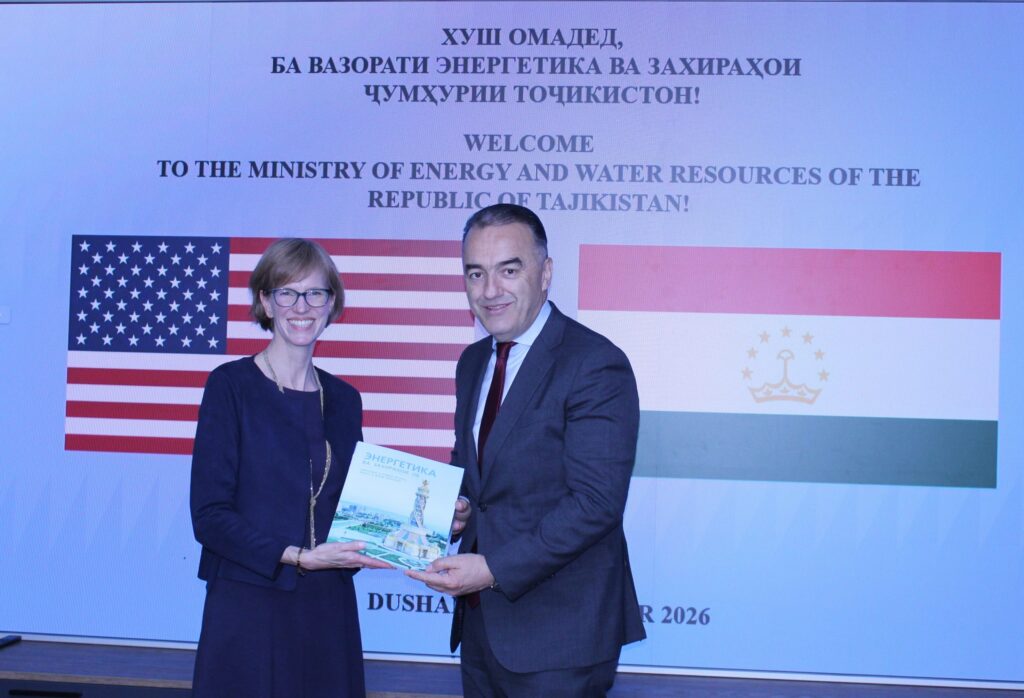
Tajikistan has discussed fuel supplies with the United States after beginning imports of petroleum products from Iran, whose oil sector is under U.S. sanctions. On October 8, Tajikistan's Minister of Energy and Water Resources Daler Juma met with Carson Relitz Rocker, chargé d'affaires at the U.S. Embassy, to discuss the country's petroleum supplies and other issues. Tajikistan depends almost entirely on imports of petroleum products. From January through September 2026, the country imported approximately 1.37 million metric tons of oil, petroleum products, liquefied gas, and related goods worth $1.13 billion. This included 333,200 metric tons of gasoline, 424,800 metric tons of diesel, and 321,300 metric tons of liquefied gas. Russia remains the country's main fuel supplier, accounting for more than half of its imports. It delivered approximately 708,000 metric tons worth $628.9 million over the nine-month period. Dushanbe purchases some of this fuel duty-free under intergovernmental agreements. Kazakhstan, meanwhile, accounts for a significant share of liquefied gas imports, supplying 225,600 metric tons worth $153.8 million. Imports of petroleum products from Iran totaled 15,600 metric tons worth $14.7 million over the nine-month period. In September, Tajikistan's Ministry of Energy and Water Resources confirmed that shipments of Iranian oil and petroleum products had begun in late August. The two sides had previously discussed potential purchases of up to 2.55 million metric tons annually, but this was a proposed volume rather than an existing contract. Tajikistan's authorities have not disclosed the exact composition of the shipments already received or how they were transported to the country. American restrictions cover Iran's oil sector and can affect international payments, insurance, and transportation. An official at the U.S. Department of the Treasury warned in comments to Radio Free Europe/Radio Liberty in early October that companies operating in Iran's petroleum sector face sanctions risks, but declined to comment on specific possible violations. Washington has not publicly accused Tajikistan of breaching sanctions over the shipments. Separately, Tajikistan is preparing to host the third B5+1 Forum, bringing together business representatives and policymakers from the U.S. and the five Central Asian countries. The meeting is scheduled for April 20–21, 2027. It is being organized by the U.S.-based Center for International Private Enterprise (CIPE) in cooperation with Tajikistan's government. B5+1 complements C5+1, the diplomatic format between the same six countries, and is intended to address trade, investment, and barriers to doing business. Previous forums were held in Almaty in 2024 and Bishkek in February 2026. According to CIPE, more than 15 memorandums were signed between American companies and Central Asian partners at the meeting in the Kyrgyz capital. The forum is expected to build on discussions of critical minerals, transport, and digitalization. However, CIPE has not announced a detailed agenda for the Dushanbe meeting, and there is no indication that American fuel supplies will be discussed.

4 weeks ago

Kyrgyzstan Court Jails Kadyr Atambayev and Temirlan Sultanbekov

A court in Kyrgyzstan has sentenced Kadyr Atambayev, the son of former President Almazbek Atambayev, to four years in prison and opposition Social Democrats leader Temirlan Sultanbekov to seven years over an alleged plot to seize power following last year's parliamentary elections. The defendants denied the allegations, and Sultanbekov described the prosecution as politically motivated shortly before the October 8 verdict. The trial at Bishkek’s Pervomaisky District Court was held behind closed doors despite defense lawyers’ requests for public hearings, preventing independent scrutiny of much of the evidence. Kadyr Atambayev entered politics in 2021, when he was elected to Bishkek's city council as a Social Democrats representative. His father served as Kyrgyzstan's president from 2011 to 2017 but fell into conflict with his successor, Sooronbay Jeenbekov, and subsequently faced several criminal prosecutions. Sultanbekov leads the Social Democrats, a party closely associated with the former president's political circle. He is also a vice president of the Socialist International, an international association of socialist and social democratic parties. He was previously convicted in a separate case involving allegations of vote buying during the November 2024 local elections. His new seven-year prison term takes into account the earlier sentence. The latest case began on November 22, 2025, eight days before Kyrgyzstan's early parliamentary elections. Police detained ten people, including Social Democrats members, former lawmakers, and associates of Almazbek Atambayev. Investigators alleged that the group was preparing to organize unrest after the vote. Atambayev and Sultanbekov were among those charged with preparing a forcible seizure of power. Defense lawyers challenged the prosecution's evidence. Lawyer Asel Argymbaeva questioned a recording used in the case, alleging that it was made before investigators obtained judicial authorization for surveillance and that expert examinations found no calls for violence. The court acquitted former lawmaker Kubanychbek Kadyrov, while some other defendants received lesser penalties or were released from custody. Those convicted have the right to appeal. The verdicts come less than four months before Kyrgyzstan's presidential election on January 27, 2027, in which incumbent President Sadyr Japarov intends to seek a second term. Since Japarov came to power in 2020, Kyrgyzstan has adopted a presidential system that concentrates greater authority in the head of state. The presidential election is taking place amid criminal prosecutions of several prominent political figures and restrictions on rallies in central Bishkek.

4 weeks ago

Oman Trade Corridor Could Link Kazakhstan to Indian Ocean

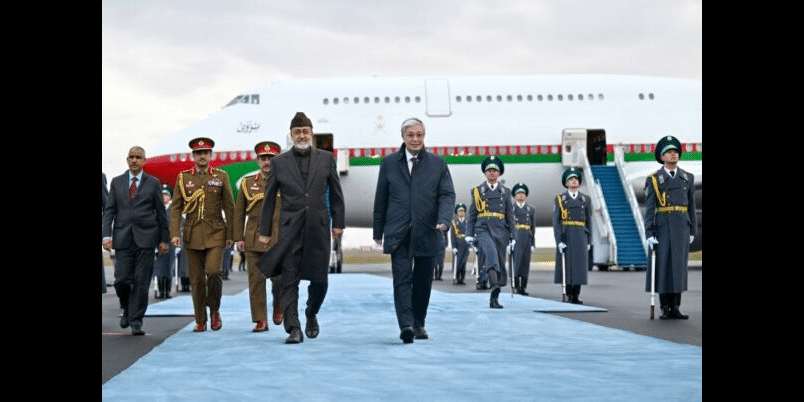
Kazakhstan could gain a new trade route to the Indian Ocean through Oman’s ports, offering an alternative to its traditional northern and Caspian corridors. Haitham bin Tariq Al Said, the sultan of Oman, raised the proposal during talks with President Kassym-Jomart Tokayev in Astana on October 6. He arrived in Astana on October 5, becoming the first Omani sultan to visit Central Asia “We look forward to developing cooperation in transport and logistics, including the development of a trade corridor through Oman’s ports, as well as strengthening air links between our countries,” the Sultan said. For landlocked Kazakhstan, Omani ports would provide another potential route to the Indian Ocean. Kazakhstan is already developing the Middle Corridor across the Caspian Sea and the South Caucasus, while Kazakhstan, Uzbekistan, and the United Arab Emirates are studying the CASA railway project through Afghanistan to Pakistani ports. No route, transit countries, cargo volumes, costs, or launch timetable have yet been announced for the Omani proposal. The talks came immediately after Kazakhstan signed an agreement aimed at settling a long-running dispute over Dunga, an oil field in western Kazakhstan near the Caspian coast. KazMunayGas controls a 60% interest in the project through Dunga Operating GmbH, while Oman Oil Company Limited and Thailand’s PTT Exploration and Production Public Company Limited (PTTEP) each hold 20%. The dispute concerned costs accumulated under the production-sharing agreement that Kazakhstan considered non-recoverable. On October 5, the Energy Ministry and KazMunayGas signed an agreement to resolve the disputed issues. The agreement will now be sent to the foreign partners, Oman Oil Company Limited and PTTEP, for signature. A new development plan for 2026-2039 provides for production of 67.4 million barrels of oil, as well as capital and operating investment. Omani capital is also present in Kazakhstan’s gold industry. Maaden International Investment, an Omani state-owned investment fund, held 31.7% of Solidcore’s voting rights as of March 31, 2026, making it the company’s largest shareholder. Solidcore operates gold-mining assets in Kazakhstan. Kazakhstan and Oman have assembled a portfolio of five major joint projects worth around $3 billion. Two projects totaling approximately $1.1 billion have already been implemented in the energy and railway sectors, while others, including ore-processing projects, are at various stages of development. Oman Investment Authority and Kazakhstan’s sovereign wealth fund Samruk-Kazyna are among the main partners. During the visit, Samruk-Kazyna and the Oman Investment Authority exchanged an implementation agreement on establishing a joint investment fund and a term sheet for a Rixos hotel project at Blue City in Oman. KazMunayGas and OQ Exploration and Production also agreed to cooperate on investment opportunities in oil and gas exploration and production. The package of agreements covered areas including transport, agriculture, technology, healthcare, mining, and renewable energy. Despite a joint investment portfolio measured in billions of dollars, merchandise trade between the two countries remains modest. On October 5, the Chamber of International Commerce of Kazakhstan and the Oman Chamber of Commerce and Industry signed a memorandum of understanding. Kazakhstan proposed expanding exports of grain, meat, and...

4 weeks ago

Industrial AI Reaches Kazakhstan’s Factories, but Many Projects Remain Experimental

Artificial intelligence (AI) is already monitoring mining trucks, production lines, and workplace safety at industrial sites in Kazakhstan. Yet a gap remains between a successful experiment and technology that works every day at a factory or mine. Closing it was one of the main issues discussed at the third meeting of Kazakhstan’s Council for the Development of Artificial Intelligence. A study by the British Chamber of Commerce in Kazakhstan, with contributions from Narxoz University and the Kazakh-British Technical University, found that 58.8% of AI projects among the industrial companies surveyed remained at the pilot stage, with none reaching full-scale deployment. The sample was small, comprising just 17 executives and specialists from several industrial sectors, so its findings cannot be extrapolated to Kazakhstan’s entire industrial sector. The responses illustrate the problems companies encounter after their first experiments with AI. Respondents most often cited a shortage of in-house specialists and expertise, followed by implementation costs. Yet 70.6% of completed pilots cost less than $50,000. The greater expense can come when the technology has to be integrated with existing equipment, data, and production processes. The government’s 2025–26 roadmap covers 41 projects at 11 major industrial enterprises. They include Qarmet, which operates the country’s largest steelworks in Temirtau; copper producers Kazakhmys and KAZ Minerals; gold producer Solidcore Eurasia; and mining and metals group Eurasian Resources Group (ERG). Industrial AI Acceleration has become one testing ground for deploying artificial intelligence directly at industrial sites. More than 12 companies submitted over 140 problems for AI teams to tackle, including equipment maintenance, safety, and procurement. Of 24 pilot projects initiated under the program, seven have reached industrial operation. Some technologies have already made it onto factory floors and into mines. ERG uses its manufacturing execution system, ERG MES, to monitor production in real time. It collects data on output, technological processes, production losses, and equipment downtime. The Ministry of Industry and Construction estimates the economic effect at around 1.5 billion tenge, or approximately $3.39 million at the official exchange rate on October 2. At KAZ Minerals’ Aktogay copper mine in eastern Kazakhstan, AI is used to manage the movement of mining trucks. Solidcore Eurasia uses the technology in medical examinations for employees working in hazardous production environments. The Council also discussed the bureaucratic obstacles that can hold up successful projects. After a pilot, companies can face further approvals and testing, along with procurement and regulatory hurdles. Tokayev proposed avoiding the entire testing cycle again when a solution has already demonstrated results at a company operating under similar production conditions. The government and Samruk-Kazyna are to select companies for wider AI deployment. Samruk-Kazyna is Kazakhstan’s sovereign wealth fund, which manages state assets across major industries. The government also wants production workers to identify problems for developers. Engineers and operators see equipment downtime, product defects, and wasted materials firsthand. These problems are to form a list of practical challenges for technology companies and researchers. The list is intended in part to guide Qazaq AI Research University, a specialized university...

4 weeks ago

Central Asia Wins 186 Asian Games Medals as Uzbekistan Finishes Fifth

Athletes from Central Asia’s five countries won 186 medals at the Asian Games in Japan, where Uzbekistan finished fifth overall and Kazakhstan claimed the region’s largest medal haul. The 20th Summer Asian Games were held from September 19 to October 4 in Aichi-Nagoya, Japan. China once again topped the medal table, followed by Japan and South Korea. Uzbekistan won 70 medals, including 21 golds, matching its fifth-place finish at the previous Games in Hangzhou. The result follows a 13th-place finish in the medal table at the 2024 Paris Olympics. Kazakhstan won 84 medals, including 12 golds, and finished eighth in the standings, up from 11th at the previous Asian Games. Among Kazakhstan’s champions was road cyclist Alexey Lutsenko, whose two victories took his Asian Games career tally to six golds, making him the country’s most successful athlete in the competition by number of gold medals. Boxers Torekhan Sabyrkhan and Aibek Oralbay also won gold. Kazakhstan’s men’s épée fencing team claimed another title, while Vladislav Yakovlev and Ivan Chernukhin took gold in the men’s pair rowing event. Kazakhstan’s Yasmina Toxanbayeva crossed the line first in the women’s marathon race walk, a 26.2-mile event, but was disqualified because her shoes did not comply with World Athletics requirements. The Kazakhstan Athletics Federation challenged the decision. Tajikistan won 16 medals and finished 22nd, surpassing its previous record of seven medals at a single Asian Games. Before the Japan Games, the country had won 35 medals in total across all previous Summer Asian Games appearances. Kyrgyzstan finished 26th with 14 medals, including one gold and three silvers. The country also won 10 bronzes, and all but one of its medals came in combat sports. Turkmenistan’s two silver medals went to karate athlete Davut Nazmyradov and weightlifter Shahzadbek Matyakubov. Matyakubov finished second in the men’s 110-kilogram category behind Uzbekistan’s Akbar Djuraev. The next Summer Asian Games will be held in Doha in 2030.

4 weeks ago

Kyrgyzstan’s First Satellite to Launch Aboard SpaceX Falcon 9

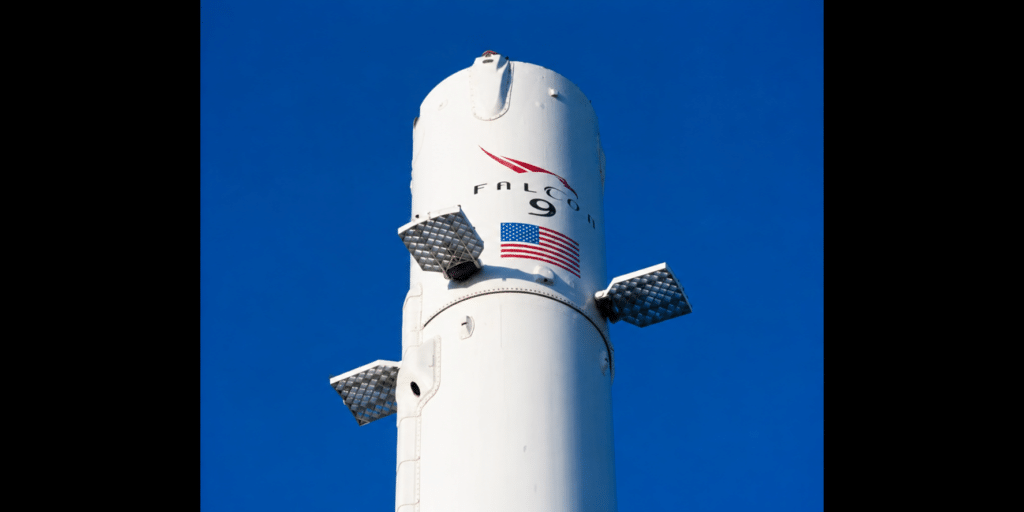
Kyrgyzstan plans to send its first national satellite into low Earth orbit on October 1. The roughly five-kilogram spacecraft, developed over about two and a half years, is due to launch from California aboard a SpaceX Falcon 9 rocket. President Sadyr Japarov has arrived in Los Angeles to attend events marking the launch, Kabar reported on October 1, citing the presidential administration. SpaceX is targeting October 1 for its Transporter-18 mission, a dedicated rideshare launch for small satellites, from Vandenberg Space Force Base in California. The 58-minute launch window opens at 11:18 a.m. Pacific Time, or 12:18 a.m. on October 2 in Bishkek. A backup opportunity is available the following day. Falcon 9 is scheduled to carry 130 payloads, including CubeSats and microsatellites. Under SpaceX’s rideshare model, several customers share capacity on the same rocket, making access to low Earth orbit more affordable for smaller countries. SpaceX does not separately name the Kyrgyz spacecraft in its published launch description. The satellite, equipped with high-resolution cameras, was unveiled on September 24 at the Lenin Plant in Bishkek. About 10 Kyrgyz engineers worked on the spacecraft, which is estimated to have cost 10–12 million soms, or approximately $115,000–140,000. Ilya Cherny, director of Kyrgyz Electronics, previously said that most of the technologies used were Russian. Developing all of the satellite’s systems from scratch, he said, would have taken considerably longer. The project also involves state-owned Kyrgyz Asman, which Kyrgyz authorities describe as the company responsible for developing and assembling the spacecraft. The satellite is intended for Earth observation. Its imagery is expected to be used to monitor crops and pastures for signs of drought and assess the effects of natural disasters. For mountainous Kyrgyzstan, satellite data are particularly important for monitoring water resources and glaciers because mountain rivers provide irrigation for farmland and feed the country’s hydropower system. Having its own spacecraft would give Kyrgyzstan an additional source of data on areas that are difficult to monitor from the ground. The developers say Kyrgyzstan may eventually need four or five satellites to meet these monitoring needs. Kazakhstan already operates communications and Earth-observation satellites, while Uzbekistan is also expanding its space program. In August, a Chinese-built satellite named Samarkand-2028 entered orbit carrying an artificial intelligence module developed by Uzbek engineers. Uzbekcosmos, the country’s space agency, has stressed that the spacecraft is not Uzbekistan’s national satellite. Uzbek engineers are separately working on the 6U-format Mirzo Ulugbek scientific satellite, which is planned for launch in 2028.

1 month ago

Turkmenistan Expands Galkynysh Gas Field With $5.1 Billion Fourth Phase

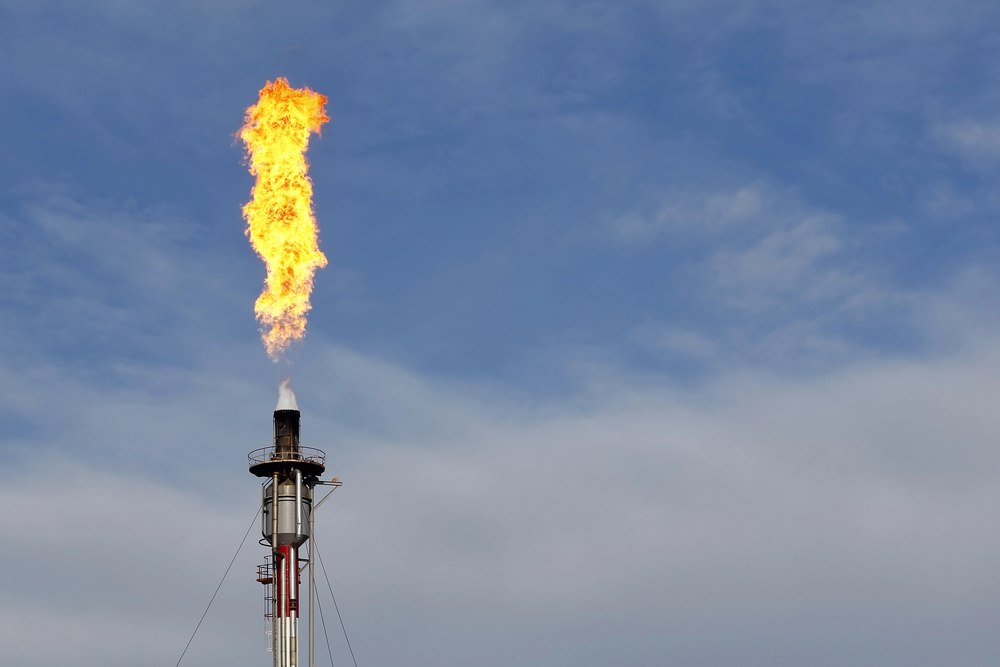
Turkmenistan has renewed its focus on the $5.1 billion fourth phase of the Galkynysh gas field, with Gurbanguly Berdimuhamedov telling the Halk Maslahaty on September 23 that the expansion would increase gas production and boost the country’s export capacity. The CNPC-built project, launched in April, is expected to add ten billion cubic meters of commercial gas capacity a year. The fourth phase involves drilling production wells and building a commercial gas treatment facility. CNPC is also responsible for gas gathering and treatment systems, pipelines, and related infrastructure. Although CNPC is building the project, Turkmenistan is financing the expansion itself. In March, state-owned Türkmengaz was authorized to sign a turnkey design-and-construction contract with CNPC Amudarya Petroleum Company Ltd. Work on the fourth phase officially began on April 17. Galkynysh, in southeastern Turkmenistan, is one of the world’s largest gas fields and is central to Ashgabat’s plans to expand gas exports. China remains the main buyer of Turkmen gas, with supplies flowing through the Central Asia-China gas pipeline via Uzbekistan and Kazakhstan. Beijing imports around 30 billion cubic meters of Turkmen gas annually, so the planned additional capacity at Galkynysh would be roughly one-third of current annual supplies to China. Turkmenistan has not said how the additional ten billion cubic meters will be divided between domestic use and exports, or which export routes would carry any additional volumes. One potential outlet is TAPI, the planned Turkmenistan-Afghanistan-Pakistan-India pipeline, with a design capacity of 33 billion cubic meters per year. Construction of the 153-kilometer section from the Turkmen border toward Herat began in September 2024. By mid-September 2026, 122.3 kilometers of pipe had been welded and laid in Herat Province. As previously reported by The Times of Central Asia, construction of TAPI is advancing in Herat, while Turkmenistan is exploring supplying gas to the local Afghan market before the full pipeline reaches Pakistan and India. No timetable has been announced for extending the route beyond Herat.

1 month ago

Paleolithic Sites and Pamir Petroglyphs Added to Tajikistan UNESCO Tentative List

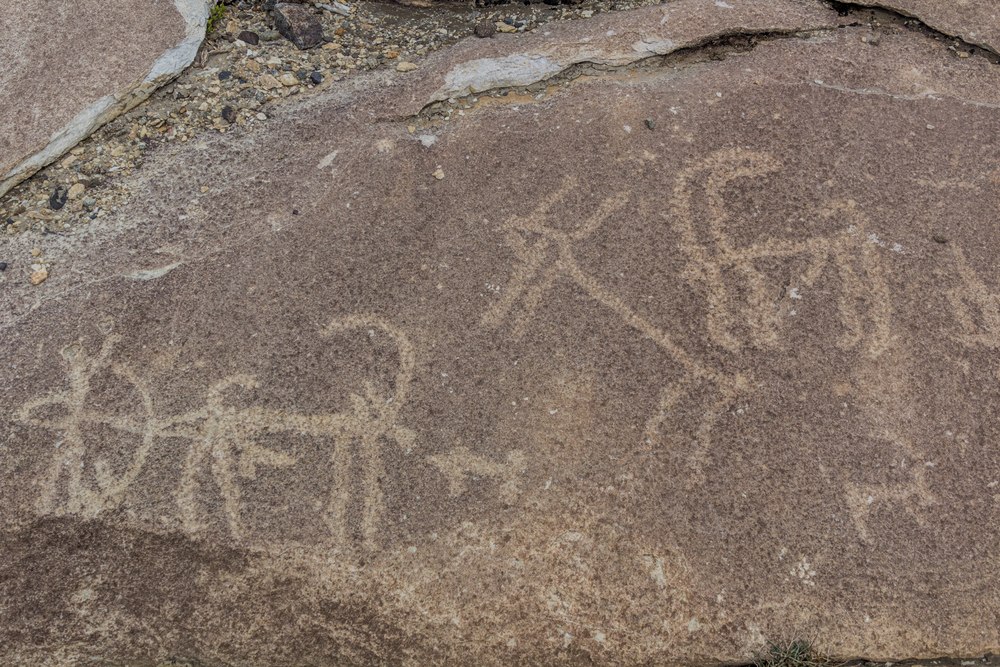
Tajikistan has added two groups of archaeological sites to UNESCO’s World Heritage Tentative List: Paleolithic sites in southern Tajikistan documenting early human occupation, and petroglyph complexes in the high-altitude Pamirs. Tajik authorities announced the additions on September 21, although both entries were submitted to UNESCO on June 19, 2026. The first group comprises Kuldara, Lohuti, Obi Mazor, and Khonakho in the Khovaling district of southern Tajikistan’s Khatlon region. UNESCO describes the archaeological complex as one of the most significant Paleolithic heritage areas in Central Asia. The sites provide evidence of early human occupation and adaptation to mountainous and semi-arid environments and help researchers study the dispersal of early human populations across Eurasia. Kuldara is particularly significant. According to UNESCO, the site preserves cultural layers dating to the Lower and Middle Paleolithic periods and has yielded numerous stone tools. Together with the neighboring sites, the complex documents different stages of early human history and changes in stone-tool technology. The second group lies nearly at the opposite end of the country, in the Gorno-Badakhshan Autonomous Region (GBAO), which covers much of eastern Tajikistan and the Pamirs. The nomination includes five petroglyph complexes: Langar, Darshair, Shakhta, Nayzatash, and Bakhmaljilga. The rock carvings were created over thousands of years, from the Mesolithic and Neolithic periods through the Bronze and Iron Ages and into the medieval period. They depict ibex, argali sheep, deer and predators, as well as human figures, hunting scenes, symbolic compositions, and geometric motifs. The hunting scenes and other images give archaeologists a record of life in high-mountain communities. They also document cultural contacts in the Pamirs, a region that has long stood at a crossroads between Central, South, and East Asia and the Iranian cultural sphere. UNESCO's Tentative List is an inventory of properties a country intends to consider for future nomination. A property must first appear on that list before the country can formally nominate it for World Heritage status. With the two additions, Tajikistan now has 18 properties on its Tentative List. Five properties in the country are already inscribed on UNESCO’s World Heritage List. They include Sarazm, a settlement dating from the fourth to the third millennium BCE near Panjakent; the Cultural Heritage Sites of Ancient Khuttal in southern Tajikistan; and Tajik National Park, which encompasses a vast area of the Pamir Mountains. Archaeological finds in southern Tajikistan include a royal seal from the Kushan period. Around two millennia ago, the Kushan Empire extended across parts of present-day Central Asia, Afghanistan, Pakistan, and northern India.

1 month ago

Central Asia Growth Forecasts Remain Strong in Latest ADB Outlook

Four of Central Asia’s five economies are expected to grow faster in 2026 than developing Asia and the Pacific as a whole, according to the Asian Development Bank’s September Asian Development Outlook. ADB forecasts growth of 5% across developing Asia and the Pacific this year, compared with 8.9% in Kyrgyzstan, 7% in Uzbekistan and Tajikistan, and 6.3% in Turkmenistan. Kazakhstan is the exception, with growth forecast at 4.8%. Kyrgyzstan is growing faster than its neighbors but is also facing the highest inflation among the five countries. ADB forecasts inflation at 11.2% this year and 8.5% next year. Growth continues to be supported by domestic demand and sustained investment, while ADB says import dependence and electricity-generation shortfalls are contributing to inflationary pressures. For Uzbekistan, ADB forecasts gross domestic product growth of 7% and inflation of 6.7% in 2026. In 2027, the figures are expected to be 6.8% and 5%, respectively. Stronger-than-expected economic activity prompted ADB to upgrade Uzbekistan’s 2026 growth forecast in its September outlook. Tajikistan is also forecast to grow by 7% in 2026, with inflation at 4.5%. Growth is expected to slow to 6.8% in 2027, while inflation is forecast to edge up to 4.7%. ADB lowered its 2026 growth projection in September, saying the escalation of Russia’s war in Ukraine had disrupted fuel imports and constrained near-term economic activity. Kazakhstan, the region’s largest economy, is growing more slowly than its neighbors. ADB expects growth of 4.8% this year and 4.5% next year, with inflation forecast at 10.4% and 9.5%, respectively. The bank left its growth and inflation forecasts unchanged from its previous outlook, with inflation expected to ease only gradually. For Turkmenistan, ADB forecasts growth of 6.3% in 2026 and 6.2% in 2027, with inflation at 6% in both years. The country’s economic indicators remain more difficult to compare with those of its neighbors because of limited access to reliable and detailed economic data. Its economy also remains heavily dependent on natural gas exports, with China its main gas market. Central Asia’s growth figures look strong against the Asian backdrop, but ADB is warning of energy and climate risks across developing Asia and the Pacific. Prolonged disruption to global energy markets could keep oil and gas prices elevated and volatile. For energy importers, that means higher fuel costs and additional inflationary pressure, while hydrocarbon exporters may benefit from higher prices but remain vulnerable to disruption in production and export routes. Another risk is a very strong El Niño, which ADB expects to persist through the first quarter of 2027. Extreme weather could reduce agricultural production and push up food prices, while a decline in hydropower generation could increase demand for other energy sources. For Kyrgyzstan and Tajikistan, where hydropower supplies most electricity, weather and water availability add another layer of vulnerability. The differences between forecasts for the region remain substantial. In August, The Times of Central Asia compared projections from international financial institutions. The Eurasian Development Bank (EDB) forecast 2026 growth of 10.2% for Kyrgyzstan, 8.3% for Tajikistan,...

1 month ago