• KZT/USD = 0.00220
  • TJS/USD = 0.10860
  • UZS/USD = 0.00008
  • TMT/USD = 0.29850
  • KZT/USD = 0.00220
  • TJS/USD = 0.10860
  • UZS/USD = 0.00008
  • TMT/USD = 0.29850
  • KZT/USD = 0.00220
  • TJS/USD = 0.10860
  • UZS/USD = 0.00008
  • TMT/USD = 0.29850
  • KZT/USD = 0.00220
  • TJS/USD = 0.10860
  • UZS/USD = 0.00008
  • TMT/USD = 0.29850
  • KZT/USD = 0.00220
  • TJS/USD = 0.10860
  • UZS/USD = 0.00008
  • TMT/USD = 0.29850
  • KZT/USD = 0.00220
  • TJS/USD = 0.10860
  • UZS/USD = 0.00008
  • TMT/USD = 0.29850
  • KZT/USD = 0.00220
  • TJS/USD = 0.10860
  • UZS/USD = 0.00008
  • TMT/USD = 0.29850
  • KZT/USD = 0.00220
  • TJS/USD = 0.10860
  • UZS/USD = 0.00008
  • TMT/USD = 0.29850
03 November 2026

Our People > Yulia Yermasheva

Yulia Yermasheva's Avatar

Journalist

Yulia Yermasheva is a Kazakhstani journalist specializing in data journalism.

Articles

Astana to Host Central Asia’s First UEFA Super Cup

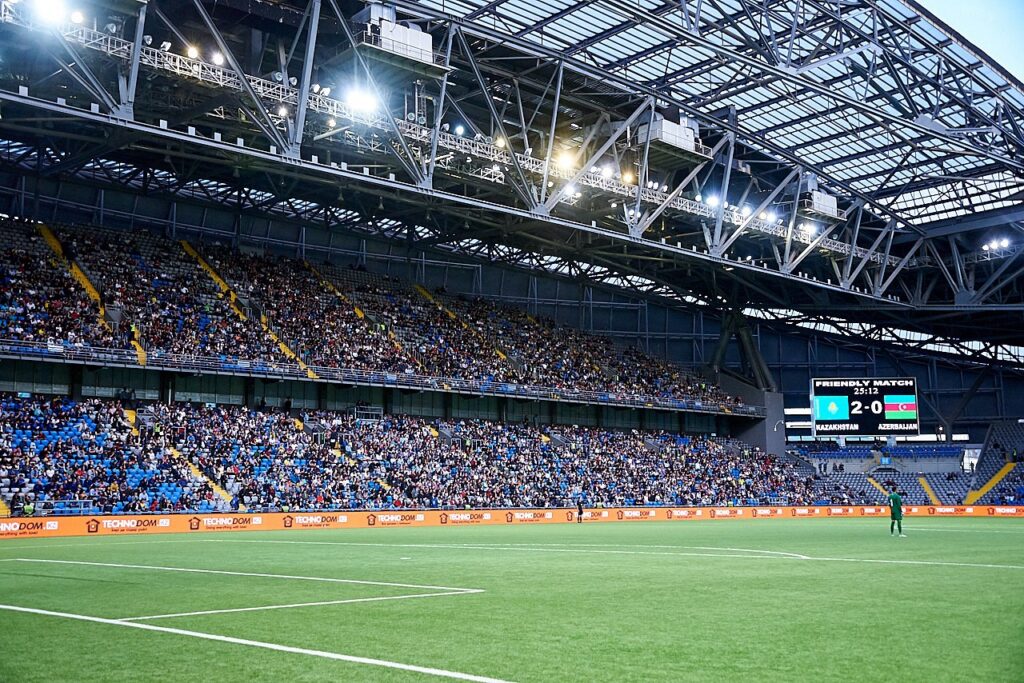
Astana will host the 2028 Union of European Football Associations (UEFA) Super Cup, the first such match to be held in Kazakhstan or anywhere in Central Asia. To stage one of the major fixtures of the European club season, Astana Arena will have to replace its recently installed artificial turf with natural grass and undergo further upgrades. UEFA’s Executive Committee, the governing body of European soccer, selected Astana at a meeting in Thessaloniki on September 15. The match will bring together the winners of the 2027/28 Champions League and Europa League. The Super Cup is played as a single match between the holders of UEFA’s two leading men’s club trophies. In 2027, it will be staged at the Johan Cruijff Arena in Amsterdam. A year later, the trophy will be contested in Central Asia for the first time. For Kazakhstan, the decision follows several years of work on hosting a major UEFA fixture. In the bidding process launched in 2025, the country sought to host the Conference League finals, the third tier of UEFA men’s club competition, in 2028 and 2029. Those finals ultimately went to Turin and Budapest, respectively, while UEFA separately awarded Astana the 2028 Super Cup. Kazakhstan Football Federation (KFF) General Secretary Scott Munn said the federation had been working on the project for several years. Astana Arena has a capacity of around 30,000 and holds UEFA Category 4 status, the organization’s highest stadium classification. Kazakhstan’s national team regularly plays there, and in the 2015/16 season FC Astana hosted its Champions League group-stage opponents at the stadium. Kieran Maguire, a soccer finance expert and lecturer at the University of Liverpool Management School, sees Kazakhstan’s experience in hosting international matches as one of the strengths of its bid. UEFA’s familiarity with the stadium and the federation’s experience organizing European fixtures would reduce operational risks, but Maguire said the bid’s quality was ultimately decisive. A major renovation of the stadium was completed only recently. The arena closed for repairs in 2024, with work covering the roof and its retractable mechanism, engineering and fire-safety systems, screens, media systems, and ticketing infrastructure. The old pitch was also replaced with new heated artificial turf, which received UEFA certification in December 2024. Kazakh media reported that around KZT 15 billion, or about $28 million, was allocated for the renovation. In January 2025, the Astana City Maslikhat, the capital’s elected representative body, reported that the renovation had been completed in line with UEFA recommendations. Ayan Alzhanov, head of the KFF’s International Relations Department, said UEFA specialists will conduct another inspection of the arena and determine what additional work is required. “Astana Arena has UEFA Category 4 status. Our national team has played many official matches here, and Champions League games have been held here. So UEFA knows our stadium," Alzhanov said. The cost of preparing for the Super Cup has not yet been announced. It is also unclear whether the natural-grass pitch will remain after the match. Another challenge is distance. Astana is considerably...

1 month ago
Russian Diesel Returns, but Kyrgyzstan and Tajikistan Remain Exposed

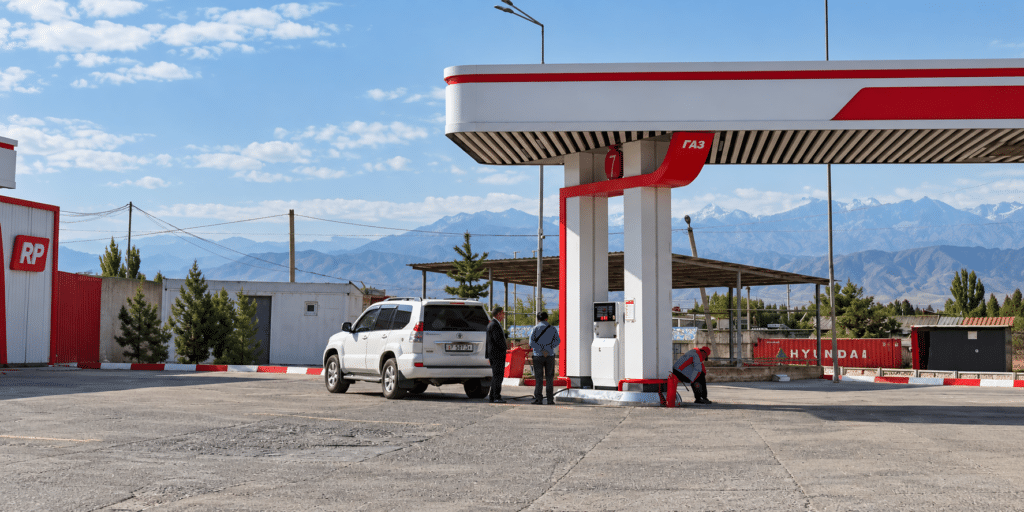
Russia sharply increased diesel supplies to Kyrgyzstan and Tajikistan in August after a summer slump in Russian fuel exports strained both countries’ markets and pushed prices higher. But the August rebound underscored a weakness already exposed over the summer: disruptions at Russian refineries can quickly ripple through fuel markets across both countries. In August, Kyrgyzstan received more than 72,000 tons of Russian diesel, up from just 4,400 tons in July. Supplies to Tajikistan rose from 16,000 tons to more than 56,000 tons, around 3.5 times the July level. Overall, Russia exported more than 370,000 tons of diesel to Kazakhstan, Kyrgyzstan, Tajikistan, and Mongolia in August, more than double the July volume. Kazakhstan received around 28,000 tons after no deliveries in July, while Mongolia imported about 215,000 tons. Russia's diesel production recovered to around 170,000 tons per day in August, but Moscow maintained restrictions on exports to protect its domestic market, with exceptions for countries covered by intergovernmental agreements. The summer disruption showed that such arrangements do not insulate Kyrgyzstan and Tajikistan from falling production at Russian refineries. Kyrgyzstan Starts to Diversify Kyrgyzstan consumes around 1.6 million tons of petroleum products a year and receives the overwhelming majority of its imports from Russia. The summer disruption pushed Bishkek to look for additional sources. The authorities discussed purchases from Kazakhstan, Belarus, Azerbaijan, Uzbekistan, and Turkmenistan. Belarusian deliveries began arriving in July, while China also sent an initial batch of fuel. In August, Kyrgyz officials opened talks with China’s Sinopec over further supplies. Another option is to refine more crude oil domestically. In August, 35,000 tons of crude were shipped through Kazakhstan to Kyrgyzstan for processing at local refineries. The new route gives Bishkek another way to source feedstock while reducing its dependence on finished gasoline and diesel from Russian refineries. The 72,000 tons of Russian diesel delivered in August largely offset July’s collapse rather than establishing a new level of supply. Tajikistan's Options Tajikistan is even more dependent. In the first half of 2026, the country imported 599,500 tons of petroleum products worth $494.7 million. Russia accounted for 91.1% of those supplies. Diesel imports totaled 300,200 tons. The reduction in supplies became visible on the streets of Dushanbe over the summer. In early July, diesel disappeared from some filling stations, while others limited purchases to 20 liters per vehicle. By late July, prices at some stations had reached 17–18 somoni (about $1.90) per liter. As of August 31, the average price was around 16.5 somoni, compared with approximately 11 somoni in early June. Dushanbe responded by increasing purchases from neighboring countries. In July, imports of gasoline, diesel, and jet fuel from Kazakhstan, Uzbekistan, and Turkmenistan roughly tripled to 34,000 tons. But average monthly imports of these fuels from all suppliers in the first half of the year were around 97,000 tons. Neighboring suppliers can cover part of the shortfall, but for now they cannot quickly replace Russian volumes. In July, the presidents of Tajikistan and Kazakhstan discussed increasing supplies of Kazakh petroleum...

1 month ago

SOCAR and BP Prepare for Exploration Drilling in Uzbekistan’s Ustyurt Region

Azerbaijan’s SOCAR, Britain’s BP, and state-owned Uzbekneftegaz are preparing for exploration drilling across six blocks in Uzbekistan’s Ustyurt region. Following completion of a 3D seismic survey, the next stage involves processing the data and selecting a site for the first exploration well. Drilling will help establish whether preliminary estimates of 100 million metric tons of oil and 35 billion cubic meters of gas could translate into commercially recoverable reserves. The work covered the Boyterak, Terengquduq, Birqori, Kharoy, Qoraqalpoq, and Qulboy blocks in the Republic of Karakalpakstan. The seismic survey covered more than 3,000 square kilometers, compared with a minimum commitment of 1,000 square kilometers. The partners reviewed the completed fieldwork and discussed preparations for exploration drilling at a managing committee meeting in Tashkent on September 7. The data still need to be processed and interpreted, and no drilling location or date has been announced. Total investment in the project has been estimated at approximately $2 billion, with development dependent on a commercial discovery. The partners remain at the exploration stage and have committed to drilling one well. Decisions on further investment will depend on its results. Uzbek officials expect the six blocks could contain around 100 million metric tons of oil and 35 billion cubic meters of gas. Potential annual oil production has been estimated at five million metric tons. All three figures remain projections: seismic data help identify promising structures, but drilling is needed to confirm the presence and characteristics of hydrocarbons. Uzbekistan’s Energy Ministry, SOCAR, and Uzbekneftegaz signed a production-sharing agreement covering the six blocks in July 2025. SOCAR was designated the operator. BP joined the project in May 2026, acquiring a 20% interest from each of the two original partners. The British company now holds 40%, while SOCAR and Uzbekneftegaz retain 30% each. The deal marks BP’s return to exploration in Uzbekistan, where it first signed exploration agreements with the same partners in 2018 before withdrawing in 2021. The acquisition coincided with BP’s renewed emphasis on oil and gas investment. The company had previously reduced its exploration portfolio as part of a shift toward low-carbon energy, but subsequently revised its strategy and refocused on its traditional business. When BP joined the project, its regional president for Azerbaijan, Georgia, and Turkey, Gio Cristofoli, said the company saw significant resource potential in Uzbekistan. He said participation in the agreement would expand BP’s exploration portfolio and support its long-term organic growth. For SOCAR, the Ustyurt survey is its largest seismic exploration project outside Azerbaijan. In June, the company reported that more than 80% of the seismic program had been completed and that initial results were providing insights into deeper geological structures. SOCAR announced the completion of fieldwork in July, with data processing expected to finish in the first quarter of 2027. The partners have developed a work plan through 2029. Uzbekneftegaz head Abdugani Sanginov previously proposed accelerating the project and beginning drilling by the end of 2027, but an approved drilling schedule has not been published. Uzbekistan needs to find...

2 months ago

Karachaganak Maintenance to Cut Kazakhstan’s Oil Output by Up to 450,000 Tons

Karachaganak, one of Kazakhstan’s three largest oil and gas fields, entered planned maintenance on September 7, a shutdown expected to reduce the country’s oil and gas condensate output by 400,000–450,000 metric tons before work ends on October 1. The interruption comes in a year when the government has already lowered its national production forecast following repeated disruptions to the Caspian Pipeline Consortium (CPC), the main export route for Kazakhstan’s oil. In August, Energy Minister Yerlan Akkenzhenov said Kazakhstan had lowered its 2026 oil production target from 98 million to 96 million metric tons. He put production losses from attacks on CPC infrastructure in January, June, and July at about 3.5 million metric tons. CPC loadings rebounded by 22% in August after July’s disruptions, reaching around 1.6 million barrels per day (bpd). CPC exports are expected to fall to about 1.5 million bpd in September, partly because of the Karachaganak maintenance. More than 80% of Kazakhstan’s oil exports move through CPC. The July shutdown at the Black Sea terminal showed how quickly an export disruption can force production cuts at fields far inland. On July 22, Kazakhstan’s oil and gas condensate output fell by about 21%, while output at Tengiz dropped 56%, from roughly 925,000 to 406,000 bpd. Karachaganak also depends on Russian processing infrastructure. Raw gas from the field is sent to Russia’s Orenburg gas processing plant. In June, Karachaganak reduced production after an incident at the plant sharply curtailed its intake of gas from the field. Karachaganak Petroleum Operating B.V. (KPO), the field’s operator, is expanding its gas reinjection capacity. The process returns some of the produced gas to the reservoir, helping to maintain pressure and sustain oil and gas condensate output. A fifth gas reinjection compressor began operating in 2024. In June 2026, KPO announced that the KEP-1B project, which includes a sixth compressor, had begun reinjecting gas ahead of schedule. The Energy Ministry has said the two compressors would help maintain Karachaganak’s liquid hydrocarbon production at around 11–12 million metric tons a year. Following the expansion of Tengiz, Kazakhstan had expected national oil production to approach 100 million metric tons a year. Its production capacity has increased, but the events of 2026 have exposed the limits of the infrastructure used to move that oil to market. In May, Akkenzhenov said there was no full-scale alternative to CPC. Some oil can be rerouted across the Caspian into the Baku-Tbilisi-Ceyhan pipeline or east to China, but these routes cannot absorb CPC-scale volumes. CPC can carry up to 72.5 million metric tons a year from Kazakhstan. Whether or not the maintenance reduction was already incorporated into the revised forecast, Kazakhstan has little room for further disruption to the export and processing infrastructure on which its production depends.

2 months ago

Nearly 100,000 Uzbeks Return From Russia as Labor Migration Slows

Nearly 100,000 Uzbek citizens returned from Russia between August 25 and September 5, as broader figures point to a decline in labor migration from Uzbekistan to Russia amid rising costs and tighter migration controls. According to Uzbekistan’s Migration Agency, 96,415 people returned during the ten-day period. The agency has not published comparable figures for last year or explained why most of them came home, meaning the figure alone cannot be taken as evidence of a mass exodus. There is, however, evidence of a broader slowdown. Between January and June, Uzbek citizens made more than 1.1 million entries into Russia declaring “work” as the purpose of their trip, down 13.2% year-on-year. Across Uzbekistan, Tajikistan, and Kyrgyzstan, work-related entries fell by about 15%, from more than 2.3 million to 1.9 million. The figures count border crossings rather than individual workers, meaning the same person may appear more than once. But unlike the ten-day return figure, they show a decline sustained over the first half of the year. Alexander Safonov, a professor at Russia’s Financial University, told Vedomosti that “tighter migration policy and the rising cost of work patents” were among the factors behind the decline. Uzbek and Tajik citizens need patents to work legally in Russia. Safonov also pointed to the cost of medical examinations, housing, and travel, which reduce the amount migrants can save or send home. At the same time, Russia has tightened migration controls. Since February 2025, foreign nationals who no longer have legal grounds to remain in the country have been placed on a register of controlled persons. Those listed face restrictions on certain banking transactions, registering property and vehicles, and other activities. Moscow and the Moscow Region have introduced additional controls. Some visa-free foreign workers are required to use the Amina mobile application for migration registration and to provide information about their location. From September 1, 2026, the system was expanded to other categories of adult foreign nationals from visa-free countries staying in the capital region for more than 90 days. The treatment of Uzbek migrants has also become an issue in relations between Tashkent and Moscow. In late August, Uzbek representatives discussed migration checks, the situation of citizens placed on the register of controlled persons, and the possibility of regularizing the status of some foreign nationals with Russia’s Interior Ministry, Prosecutor General’s Office, and Foreign Ministry. Some Uzbek workers who have already left Russia describe a similar calculation. In the spring, Azattyq Asia spoke with Uzbeks who had worked in Russia and returned home. They cited rising living costs, tougher migration rules, inspections, and concerns about their safety. Said, from Samarkand, had worked in Russia for several years before returning and finding a job at home. He said that Russian wages appeared less attractive once rent and the cost of a work patent were taken into account. Human rights advocate Valentina Chupik told the outlet that the return trend had begun before this year. She cited the ruble exchange rate, the war in Ukraine, and concerns...

2 months ago

South Korea and ADB Expand Central Asia Critical Minerals Push

Two days before South Korea hosts its first summit with all five Central Asian countries on September 16, Seoul held a series of talks with the Asian Development Bank over how Korean technology and financing could be used in critical-mineral projects in the region. On September 14, South Korean President Lee Jae Myung met ADB President Masato Kanda in Seoul, where they agreed to work more closely on critical-mineral supply chains, artificial intelligence, and energy. Kanda later held separate talks with South Korean Finance Minister Koo Yun-cheol. More specifically, the two discussed combining ADB financing with the technology and expertise of South Korean companies for projects in Central Asia. The talks build on a financing mechanism that was already in place. ADB formally launched its Critical Minerals-to-Manufacturing Financing Partnership Facility at its annual meeting in Samarkand in May. It is designed to support critical-mineral supply chains across ADB’s developing member countries in Asia and the Pacific. The facility has two components. The first is a grant window that pays for early-stage work, including feasibility studies, environmental and social assessments, and technical assistance. At its launch, ADB announced a $20 million contribution from Japan and $1.6 million from the United Kingdom to this part of the facility. The second is designed to mobilize additional capital and share risk. This is where South Korea comes in. Korea Eximbank and Korea Trade Insurance Corporation (K-SURE) each signed a memorandum covering up to $500 million in potential financing, giving the two South Korean institutions a combined potential cofinancing commitment of up to $1 billion. The facility is intended to support projects across the value chain, from mining and processing to manufacturing and recycling. ADB is already working on critical-minerals initiatives in Central Asia. In Kazakhstan, the bank is supporting the development of a critical-minerals strategy, while in Uzbekistan it is working on AI-driven critical-metals production and circular approaches to raw materials. At an ADB seminar launching the facility during the bank’s annual meeting in Samarkand, Kanda said the aim was to ensure mineral-producing countries benefited from more than extraction. “Asia and the Pacific should be more than a source of raw materials. The region should also capture the jobs, technology, and value these minerals provide,” Kanda said. Central Asia's Critical Minerals Play Kazakhstan is already a major producer of uranium and chromite and also produces or processes titanium, beryllium, tantalum, zinc, and other strategic materials. In July, Kazakhstan and South Korea began establishing a joint research center for rare and rare-earth metals at Satbayev University in Almaty. The center is expected to work on processing technologies and specialist training. Ahead of the summit, Kazakhstan said it wanted to expand cooperation with South Korea beyond the already established automotive industry into AI, advanced technologies, and critical minerals. Astana is interested in deeper processing of raw materials and producing higher-value-added goods. Uzbekistan is moving in the same direction. The country has a $4.2 billion critical-minerals program for 2026–2030 comprising 120 projects. Tashkent plans to increase industry...

2 months ago

Uzbekistan J-10CE Fighter Jets Confirmed in Official Footage

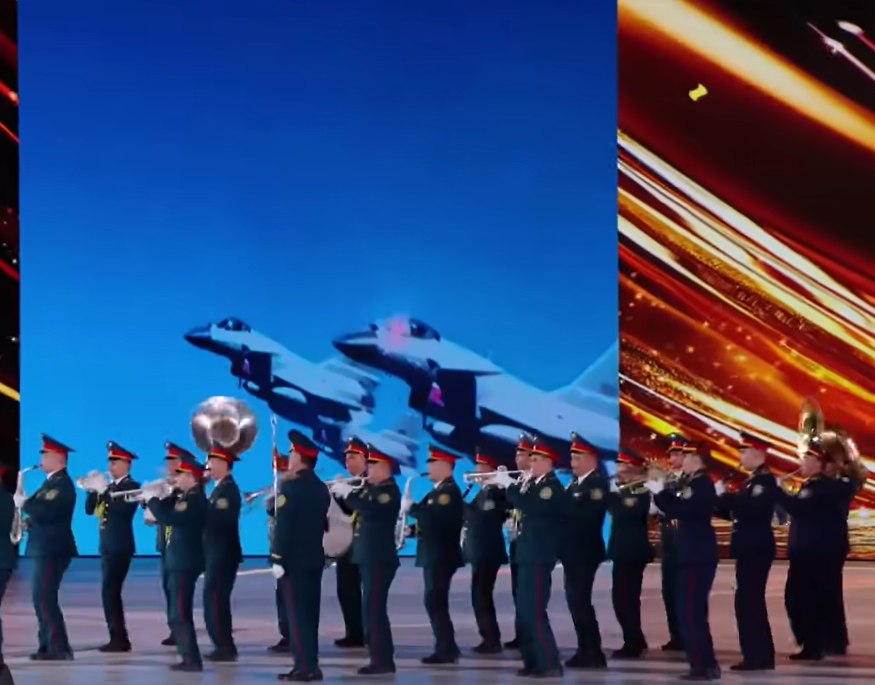
Uzbekistan has publicly unveiled Chinese J-10CE fighter jets for the first time, ending months of speculation over the aircraft’s arrival in its air force. Official footage shows at least six aircraft carrying Uzbek military markings. For three decades, Soviet-designed MiG-29s and Su-27s have formed the backbone of Uzbekistan’s fighter fleet. The country has now become the first Central Asian state to operate a modern Chinese fighter and the second confirmed foreign operator of the J-10CE after Pakistan. The first reports of a potential J-10CE purchase appeared several months before the aircraft were publicly unveiled. Confirmation came on August 28, when footage marking the 35th anniversary of Uzbekistan’s independence showed Chinese-built fighters carrying Uzbek insignia. Uzbekistan’s Defense Ministry subsequently released its own video of the new aircraft. At least six J-10CEs have now been publicly shown, while earlier reports that Uzbekistan had ordered 24 aircraft remain unconfirmed. The need to modernize the fleet has been apparent for years. Much of the country’s combat fleet consists of Soviet-designed aircraft, but open sources do not establish how many are currently combat-ready. GlobalMilitary.net, which updated its Uzbekistan inventory in July 2026, lists 38 MiG-29s, 25 Su-27s, and 13 Su-25 ground-attack aircraft as active. The J-10CE gives Uzbekistan a modern platform as an alternative to relying exclusively on aging Soviet-designed fighters. The export version of China’s J-10C is equipped with an active electronically scanned array (AESA) radar and can employ modern Chinese guided weapons. But the significance of the acquisition goes beyond the capabilities of the aircraft itself. Switching to a new fighter type requires training pilots and engineers, securing spare parts and munitions, maintaining engines and electronics, and, over time, developing domestic maintenance infrastructure. In combat aviation, choosing a new platform can create a relationship with its supplier that lasts for decades. In Uzbekistan’s case, some of that infrastructure could build on existing military cooperation with China. Tashkent previously acquired Chinese FD-2000 air defense systems, the export version of the HQ-9. In 2019, the Uzbek military conducted the first publicly reported live-fire tests of the systems. Chinese military analyst Zhang Junshe told the Global Times on August 31 that the six aircraft displayed could be the first batch of a larger delivery. The newspaper also raised the possibility of integrating the J-10CE with Chinese-made ground-based air defense systems through data links. Diversifying Beyond Russia The J-10CE acquisition, however, does not necessarily signal a sudden Uzbek shift from Russia to China. Tashkent has long diversified its military procurement and operates equipment from multiple suppliers. This is particularly visible in transport aviation. Alongside Soviet-designed Il-76s, An-26s, and An-12s, Uzbekistan has acquired European Airbus C295s. In February 2026, Brazil’s Embraer officially identified Uzbekistan as the previously undisclosed customer for its C-390 Millennium and the first operator of the aircraft in Central Asia. Fighter aviation had been different. For decades, the MiG-29 and Su-27 were the staples of its air force. China has now entered this segment for the first time. It is therefore premature to speak of...

2 months ago