• KGS/USD = 0.01144 0%
  • KZT/USD = 0.00192 -0%
  • TJS/USD = 0.10866 0.18%
  • UZS/USD = 0.00008 0%
  • TMT/USD = 0.28571 0%
  • KGS/USD = 0.01144 0%
  • KZT/USD = 0.00192 -0%
  • TJS/USD = 0.10866 0.18%
  • UZS/USD = 0.00008 0%
  • TMT/USD = 0.28571 0%
  • KGS/USD = 0.01144 0%
  • KZT/USD = 0.00192 -0%
  • TJS/USD = 0.10866 0.18%
  • UZS/USD = 0.00008 0%
  • TMT/USD = 0.28571 0%
  • KGS/USD = 0.01144 0%
  • KZT/USD = 0.00192 -0%
  • TJS/USD = 0.10866 0.18%
  • UZS/USD = 0.00008 0%
  • TMT/USD = 0.28571 0%
  • KGS/USD = 0.01144 0%
  • KZT/USD = 0.00192 -0%
  • TJS/USD = 0.10866 0.18%
  • UZS/USD = 0.00008 0%
  • TMT/USD = 0.28571 0%
  • KGS/USD = 0.01144 0%
  • KZT/USD = 0.00192 -0%
  • TJS/USD = 0.10866 0.18%
  • UZS/USD = 0.00008 0%
  • TMT/USD = 0.28571 0%
  • KGS/USD = 0.01144 0%
  • KZT/USD = 0.00192 -0%
  • TJS/USD = 0.10866 0.18%
  • UZS/USD = 0.00008 0%
  • TMT/USD = 0.28571 0%
  • KGS/USD = 0.01144 0%
  • KZT/USD = 0.00192 -0%
  • TJS/USD = 0.10866 0.18%
  • UZS/USD = 0.00008 0%
  • TMT/USD = 0.28571 0%
12 December 2025

Cancer Patients in Uzbekistan Dying for Want of Palliative Care

Despite being approved back in 2017, the construction of a hospice for adults in Tashkent remains but a dream. Deprived of palliative care for the past five years, Uzbek citizens afflicted by oncological, haematological, neurological and immunological diseases have been left to suffer and die.

Tasked with building the facility, the Comfort Engineering Group has defended the long delay by citing a lack of funds. Although allocated $1.4 million for the build, the company received only $113.5 thousand and as a consequence, was forced to down tools.

The city administration had promised to finish the “long construction” back in November 2023 and in April this year, the hospice was expected to receive its first patients.

Frustrated by the Uzbek capital’s authorities, Yakhyo Ziyayev, oncologist and long-term campaigner for the development of palliative and hospice care in Uzbekistan, stated on social media, “I can honestly tell you, I’m losing faith in the possibility of changing anything for the better in this country. Here comes April. Where is the fulfilment of the promise? A week ago, Rustam (oncologist Rustam Norboev) and I visited the site. Nothing has started. We were told that it would start on Monday, next week. It’s OK if they finish late, it’s still a victory for us, so I didn’t take it negatively.”

Local specialists have also voiced their disappointment, “Stephen Connor, head of the World Association for Hospice and Palliative Care, is due to visit Uzbekistan in May. But his visit will be pointless because of the lack of basic infrastructure.”

As a result of the high profile afforded to the oncologist’s appeal, the Tashkent khokimiyat has now promised to discuss the issue with the city’s recently appointed khokim, Shavkat Umurzakov, within 10-15 days. “If it is not possible to (secure) money to complete the hospice, they will get it from other sources and complete the hospice by September,” assured an administration spokesperson.

Thanks to the efforts of the Ezgu Amal Charitable Foundation, Israeli Ambassador to Uzbekistan Zehavit Ben-Hillel, Embassy employee Daphne Kfir-Furman and sponsors, Uzbekistan’s first and only children’s hospice opened in August 2022, has treated 260 patients to date.

Forthcoming Official Visit of Kyrgyz President to Kazakhstan

On April 9, Kazakh Prime Minister Olzhas Bektenov attended a meeting in Bishkek with the Chairman of the Cabinet of Ministers of Kyrgyzstan, Akylbek Japarov, to discuss an official visit by the President of Kyrgyzstan, Sadyr Japarov to Kazakhstan, on April 18-19.

Akylbek Japarov emphasized the existing potential to increase the volume of trade turnover between the two countries which already amounts to $2 billion this year. In 2023, trade between Kazakhstan and Kyrgyzstan amounted to $1.317 billion, an increase of 11.6% compared to 2022. Bektenov, in turn, stated Kazakhstan’s readiness to increase its exports by $260 million.

The parties noted that the planned launch of an Industrial Trade and Logistics Complex on the Kazakh-Kyrgyz border promised a multiplier effect and additional impetus to trade, economic, and investment cooperation.

As the use of transboundary water resources for irrigation remains a vital issue in bilateral relations, the Kazakh prime minister emphasized the importance of approving operating modes of water management facilities for interstate use for the growing season of 2024.

The meeting also addressed the need for collaboration to increase the transit capacity of the Kazakh-Kyrgyz border. The Concept for the Development of the Transit and Transport Potential of Kazakhstan, in place until 2030, covers the construction and reconstruction of checkpoints of Karasu, Besagash, Aukhatty, Sartobe, Aisha Bibi, Sypatai Batyr, and Kegen.

Kyrgyzstan Delivers Humanitarian Aid to Flood-Affected Kazakhstan

In response to the devastation caused by Kazakhstan’s unprecedented floods, on April 4, Chairman of the Cabinet of Ministers of the Kyrgyz Republic, Akylbek Japarov, announced that Kyrgyzstan would reach out a helping hand to its neighbour.

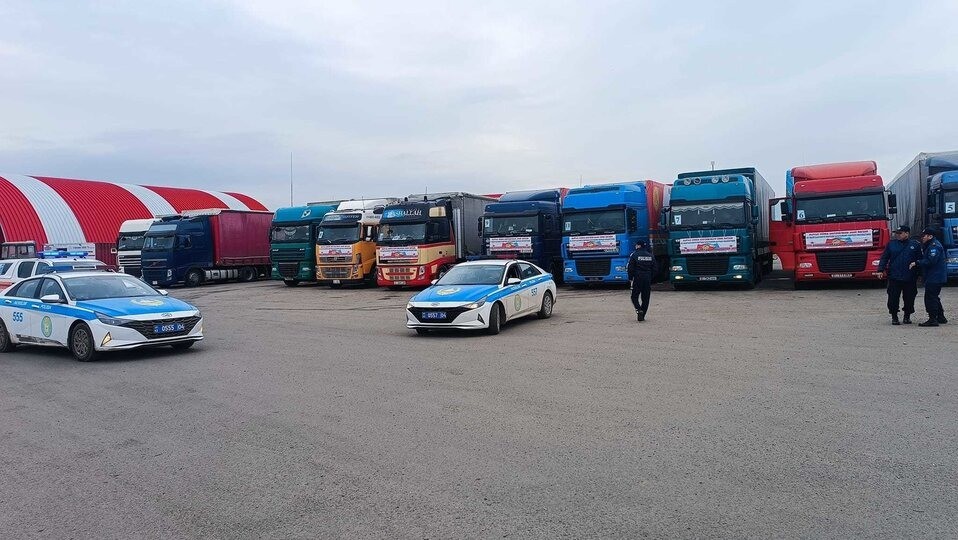
A convoy of 15 trucks carrying 300 tons of humanitarian aid from Kyrgyzstan duly arrived in the city of Aktobe in Kazakhstan on 8 April. Emergency supplies include sunflower oil, sugar, rice, pasta, confectionery, as well as locally-produced mattresses and tents.

As reported by the Kyrgyz Ministry of Emergency Situations, aid will be distributed amongst the four regions of Kazakhstan worst hit by unprecedented spring floods. Three trucks are headed the Kostanay region, 4 to the Aktobe region, 4 to the Ural region, and 4 to the Atyrau region.

In a statement, Japarov recalled that following the explosion at the Bishkek thermal power plant on 2 February, which left the city without hot water and heating for several days, President of Kazakhstan Kassym-Jomart Tokayev sent 2,000 tons of diesel fuel.

Expressing his gratitude for the help offered by Kazakhstan, he explained, “we will also send them humanitarian aid, even if they did not ask.”

Kazakhstan To Auction Rights For 100 Mineral Deposits

At a meeting with President Kassym-Jomart Tokayev on April 8th, Kazakhstan’s Minister of Industry and Construction Kanat Sharlapayev reported on plans regarding geological prospecting and the use of subsoil.

According to the minister, Kazakhstan is poised to auction rights for subsoil use at 100 solid minerals deposits. Sharlapayev also highlighted a 2.5-fold growth in private investment in geological exploration of solid minerals. With the introduction of the digital platform “E-Qazyna.kz,” auctions are now conducted electronically, resulting in a significant increase in transparency and accessibility.

In a statement, the minister stressed, “Participation in the auctions by major global companies, including Rio Tinto and Fortescue, indicates increasing competition for the opportunity to explore potentially resource-rich, but as yet undeveloped fields in Kazakhstan.”

Major international companies including Arras Minerals, Rio Tinto, IG Kazakhstan, Fortescue, East Star Resources, Pallas Resources, Sarytogan Graphite, and Esan Eczacibasi have now invested at least 41 billion tenge on the excavation of areas amounting to 25 thousand square kilometres.

Major Industrial and Energy Projects for Uzbekistan

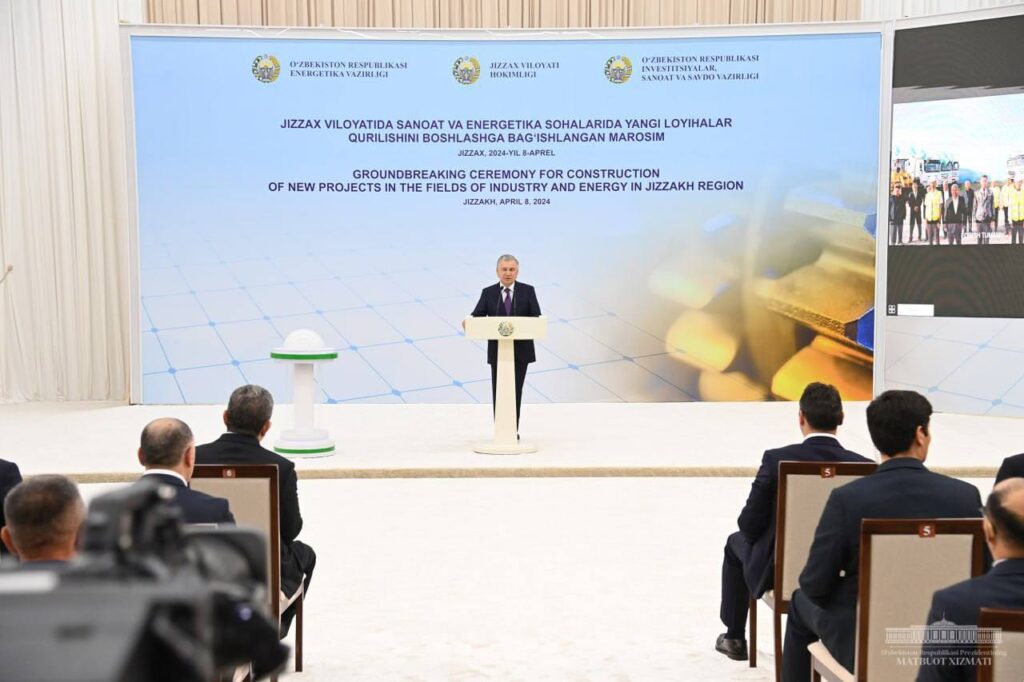
On April 8th, Uzbekistan President Shavkat Mirziyoyev attended a launch ceremony for the construction of two major industry and energy projects in the Jizzakh region.

The first, in the Gallyaaral district, comprises an industrial zone specializing in metallurgy. Encompassing a customs warehouse and 7 projects worth $500 million, the new zone will manufacture various fittings, steel balls, pipes, automobile bodies, and provide 5,000 jobs.

The second project to be established in the Farish district in collaboration with China Poly Group and China Electric, is a large 500-megawatt solar power plant. With investment of $350 million, the plant will generate 1.1 billion kilowatt-hours of electricity per annum and improve the supply of energy to 450,000 households. The first 200 megawatts will be put into operation later this year.

It was announced at the ceremony that in the coming years, additional thermal, wind and solar power plants with a total capacity of 1,660 megawatts will be built in the Jizzakh region. The new facilities will improve the standard of living of the local population and provide a new impetus to the region’s economic development.

Bishkek Locals Bemoan Corruption Which Yields Terrible Roads

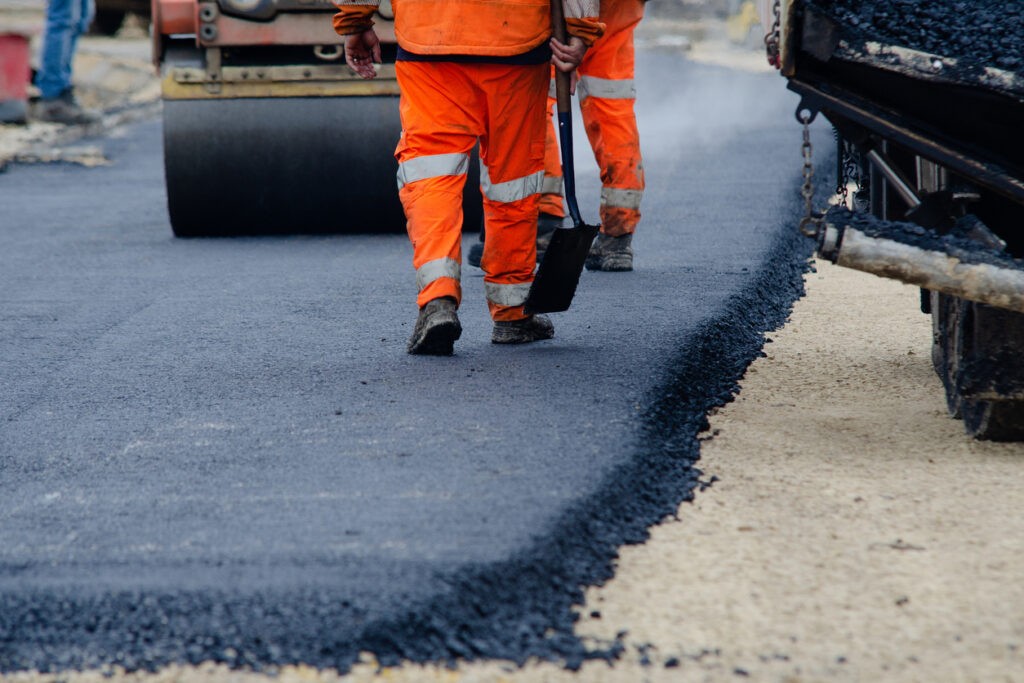
Residents of Bishkek are outraged by the condition of roads in the city. In their opinion, every spring the asphalt literally disappears. President Sadyr Japarov has said he shares the citizens’ dissatisfaction. Responding to the criticism, representatives of the Ministry of Transport and Communications said that the presence of potholes and holes on highways is a natural process.

“The situation depends on many factors, including weather and climatic conditions and the intensity of road traffic. The Ministry of Transport and Communications makes every effort to repair and properly maintain the roads of international state and local importance on its balance sheet and tries to fulfill the adopted plan for their construction and maintenance as much as possible, even exceeding this plan,” the press service of the Ministry of Transport said. The ministry stressed that only 19,000 kilometers of roads are on the balance sheet of the Ministry, whilst the quality of the remainder of Kyrgyzstan’s roads is monitored by municipal authorities in cities – and therefore Bishkek residents should complain to the city authorities.

The capital’s municipal services were also criticized by President Japarov, who said in an interview that it was time to change the system of road construction and maintenance completely.

“How did the Ministry of Transport work in road construction for 30 years? If they needed to asphalt a road 100 kilometers long, they attracted private companies, calculated the cost of the work and demanded 10% of that amount from those same companies. Of course, they did not pay this 10% to the ministry, but into their own pockets. And after the private companies completed construction, they gave [more] money in order to put it into operation,” Japarov stated.

The President instructed the government to change the rules: roads should be repaired not by private companies, but by government agencies. The government is now allocating funds to buy its own equipment to help solve the problem of corruption, he said. Consequently, over the past two years, about 300 units of special equipment have been purchased and distributed to the regions. Another 450 special vehicles are expected to be delivered this year. The quality of roads will improve, though not immediately, Japarov said. Finding qualified personnel and strengthening their technical know-how will take time.

“We have not increased funds for asphalting roads. The result is due to the fact that we started to build it ourselves… Of course, there are certain shortcomings in quality. However, as the saying goes, ‘everything has its time,’ and our transport workers will gradually achieve high quality. I think this process will take three to five years,” the President concluded.

This year, the capital’s municipal authorities have barely reacted to the complaints of citizens; roads in Bishkek are being repaired slowly with the arrival of spring. However, after harsh criticism from the head of state, the situation has changed.

Mayor of Bishkek, Aibek Junushaliyev recently went on an inspection to check construction work. “Bishkeksafalt service [has been tasked with] monitoring the quality of asphalt. Otherwise, strict measures will be taken against those responsible for road repair,” threatened the head of the city in comments made during the inspection.