• KGS/USD = 0.01144 0%
  • KZT/USD = 0.00196 -0%
  • TJS/USD = 0.10899 -0%
  • UZS/USD = 0.00008 -0%
  • TMT/USD = 0.28490 0%
  • KGS/USD = 0.01144 0%
  • KZT/USD = 0.00196 -0%
  • TJS/USD = 0.10899 -0%
  • UZS/USD = 0.00008 -0%
  • TMT/USD = 0.28490 0%
  • KGS/USD = 0.01144 0%
  • KZT/USD = 0.00196 -0%
  • TJS/USD = 0.10899 -0%
  • UZS/USD = 0.00008 -0%
  • TMT/USD = 0.28490 0%
  • KGS/USD = 0.01144 0%
  • KZT/USD = 0.00196 -0%
  • TJS/USD = 0.10899 -0%
  • UZS/USD = 0.00008 -0%
  • TMT/USD = 0.28490 0%
  • KGS/USD = 0.01144 0%
  • KZT/USD = 0.00196 -0%
  • TJS/USD = 0.10899 -0%
  • UZS/USD = 0.00008 -0%
  • TMT/USD = 0.28490 0%
  • KGS/USD = 0.01144 0%
  • KZT/USD = 0.00196 -0%
  • TJS/USD = 0.10899 -0%
  • UZS/USD = 0.00008 -0%
  • TMT/USD = 0.28490 0%
  • KGS/USD = 0.01144 0%
  • KZT/USD = 0.00196 -0%
  • TJS/USD = 0.10899 -0%
  • UZS/USD = 0.00008 -0%
  • TMT/USD = 0.28490 0%
  • KGS/USD = 0.01144 0%
  • KZT/USD = 0.00196 -0%
  • TJS/USD = 0.10899 -0%
  • UZS/USD = 0.00008 -0%
  • TMT/USD = 0.28490 0%
08 December 2025

Great Women in the History of the Kyrgyz Republic

Nestled in the heart of Central Asia, Kyrgyzstan boasts a rich tapestry of history woven by extraordinary women who have played pivotal roles in shaping the nation. From political pioneers to cultural icons, these women have left an indelible mark on the nation. To mark International Women’s Day, we remember some great women in the history of Kyrgyzstan, acknowledging their contribution and enduring impact.

 Kurmanjan Datka

Photo: Carl Gustav Mannerheim

Known as the “Queen of the South,” Kurmanjan Datka, the “Tsaritsa of Alai” was a courageous and noble woman who was not afraid to break with tradition. An important politician, in the second half of the eighteen century Kurmanjan ruled over the region wisely. Seeking both compromise and fighting for the rights of her people, she played a crucial role in unifying the Kyrgyz tribes during a tumultuous period, when her leadership and diplomacy skills were instrumental in maintaining peace.

Aside from Kurmanjan, no other woman has ever been honored with the title “Datka” – meaning “general” – in the history of Kyrgyzstan. Kurmanjan was the only woman to rule over the Kyrgyz nation. Recognized as the “mother of the nation,” 2011 was declared the year of Kurmanjan Datka in the Republic, where her face adorns banknotes.

Olga Manuilova

Photo: ilgeri.kg

Olga Manuilova’s contributions were valued highly by the Government of the Kyrgyz SSR, which in 1954 recognized her with the prestigious title, People’s Artist of the Kyrgyz SSR. In acknowledgment of her outstanding work, she was also honored with many other awards, including the Order of the Red Banner of Labor, the Badge of Honor, and the medal For Valorous Labor. Additionally, Manuilova received commendations in the form of diplomas from the Supreme Soviet of the Republic.

Among her notable creations were artistic masterpieces such as “Builders of the Great Chui Canal,” “In Aid of the Front” from 1942, and a monument to General Panfilov, which entwined her work with the fate of the nation. These remarkable works earned Manuilova the distinguished title of “Honored Art Worker of the Kyrgyz SSR.” This recognition underscored the significant impact of her artistic endeavors and highlighted her exceptional role in contributing to the cultural and artistic heritage of Kyrgyzstan. In 1973, a main belt asteroid was named after her.

Urkuya Salieva

Illustration: limon.kg

At the age of just seventeen, in 1927 Salieva became the secretary of her local Komsomol cell in the Osh Oblast, indicating her early inclination towards political activism. The following year, she defied societal expectations by assuming the role of chairperson for the council of her birth village of Murkut. Displaying exceptional leadership, Salieva was elected chairperson of the Kyzyl-Asker collective farm despite opposition from affluent individuals who underestimated her ability to navigate the challenges of this role. Showing devotion to her people, Salieva worked tirelessly to surpass all expectations, securing a seat on the Central Executive Committee of the Kyrgyz Autonomous Republic. In 1934, she was murdered by members of the Basmachi movement – an Islamic group opposed to Soviet rule. The collective farm which she had overseen was later renamed after her.

Sabira Kumushalieva

Photo: Alexander Fedorov

A hugely gifted actor, starting at the age of fourteen, Kumushalieva portrayed over a hundred different characters across theater and cinema in both Kyrgyzstan and Kazakhstan, demonstrating her ability to breathe life into a wide array of roles. She was a recipient of Order of the Badge of Honor, and named both People’s Artist of the Kyrgyz Republic and Honored Artist of the USSR. Among Kumushalieva’s most unforgettable performances which are etched into the memories of the Kyrgyz people are the prominent characters played by her in the movies “Milky Way,” “White Steamboat,” “Urkuya,” and “Elevator.” Following her passing, in 2008 a postage stamp bearing her image was issued to commemorate her life and work.

Zhetikashkayeva Nurkamal

Photo: kmborboru.su

The celebrated poet Zhetikashkayeva Nurkamal completed her education at the Lunacharsky Institute in Moscow in 1941 and subsequently became an artist at the Republican Kyrgyz Theater. Concurrently, Nurkamal engaged in research activities at the Institute of Kyrgyz Language, Literature, and History. She was inducted into the Union of Writers of the USSR in 1946, and in 1949 her first poem, entitled “Zhangan Zhalyn” (“Sparkling Flame”), was published.

A comprehensive collection of Nurkamal’s poems, along with a compilation of works in Russian entitled “I am the Daughter of October” was published posthumously in 1953. In her thirty-four years of life, Nurkamal received the medal For Labor during the Great Patriotic War of 1941-1945. In 1988, a street in Bishkek was named after her. Her legacy endures in the literary realm, showcasing the profound impact of her poetic contribution.

Dinara Asanova

Photo: seance.ru

A luminary in the world of film, Dinara Asanova was known for her multifaceted roles as a director and actress. Born in November 24 1942, in Bishkek – then known as Frunze – she left a significant mark in the late Soviet-era with her unique storytelling and directorial style.

Starting her career in the early 1960s, Asanova worked as an assistant at the Kyrgyzfilm studio, showcasing her versatile acting skills in films like “The Girl from Tien Shan” and “Everyone Has His Own Way”. Furthering her passion for cinema, she completed her studies in the directing department of VGIK in 1968.

In 1973, Asanova assumed the role of a director at Lenfilm, one of the most prominent studios in the USSR. Her directorial venture, “The Woodpecker Doesn’t Get Headaches” resonated with audiences and critics alike, marking a significant milestone in her career. This feature film solidified her reputation as a talented and impactful director. Despite her untimely death at the age of 42, Asanova’s contributions to the world of cinema continue to inspire and influence filmmakers today.

Kulbubu Mademilova

Photo: kino-teatr.ru

A respected figure in the performing arts, Mademilova held the prestigious titles of People’s Artist and prima ballerina of the Kyrgyz Opera and Ballet Theater. Not only did she mesmerize audiences with her performances, but she also blazed a trail as the first female ballet master in Kyrgyzstan. Additionally, Mademilova was instrumental in establishing the department of professional ballet masters at the Kalya Moldobasanov National Culture Center.

Over the course of her distinguished career, Mademilova amassed a wealth of creative productions and extensive pedagogic experience. As a ballet director, she played a pivotal role in the evolution of ballet theater in Kyrgyzstan, leaving a lasting legacy that transcends national boundaries. Her influence extended to such countries as Mongolia and Vietnam, where she staged iconic ballets such as “Giselle,” “Daughter of the Sun,” and “Don Quixote.” Her contributions to the world of ballet had a profound impact both locally and globally.

The great women of Kyrgyzstan have left an enduring legacy, shaping the cultural, political, and educational landscape of the nation. From Kurmanjan Datka’s leadership to Dinara Asanova’s cinematic vision, these remarkable women have enriched Kyrgyzstan’s history, leaving an indelible impact which will continue to inspire generations to come.

Uncategorized

Chinese Company to Help Uzbekistan Develop Logistics Network

Chinese Shenzhen Neptune Logistics Co. Ltd. plans to invest about $10-$15m to build a transport and logistics center in Uzbekistan.

The company held talks with JSC Uztemiryulcontainer, which is the operator of the container park of state railway company JSC Uzbekistan Temir Yollari. During the meeting the parties discussed cooperation on joint use of existing logistics centers, the creation of new ones, establishment of distribution services, and joint use of railcars and containers. Shenzhen Neptune Logistics offered to create modern warehouses of the “A+” category in Uzbekistan. The parties also discussed cooperation on transportation from the Xi’an, Chengdu, and Shenzhen provinces along the China-Kyrgyzstan-Uzbekistan multimodal route, and along existing transport corridors, to Turkey and Europe.

Shenzhen Neptune Logistics was founded in 2002 and has its own logistics centers in more than 10 provinces in China, plus Europe, Central Asia, and Singapore. In 2023 the company launched about 100 container trains from China to Europe and on China-Central Asia routes from Xi’an, Chengdu, Shenzhen provinces. The company specializes in multimodal transportation and owns 25,000 of its own containers.

By modernizing and expanding logistics infrastructure, Uzbekistan and China are laying the foundation for a reliable logistics network that will link Central Asia and European markets.

Earlier, Chinese logistics company Zhengzhou Hongyi Transportation launched road-freight transportation from Shenzhen to Tashkent. The 6,500-kilometer route reduced the previous travel time of 20 days down to seven. As experts note, new projects focusing on development of rail and road lines will compensate for the deficit of legacy trunkline infrastructure in Central Asia — which will favorably affect both the economy of the country itself and its partners.

According to the Statistics Agency of Uzbekistan, the volume of cargo that transited Uzbekistan in 2023 amounted to 11.3 million tons — 22.8% more than in 2022.

Uncategorized

S&P Global Ratings to Evaluate Kyrgyz Stock Exchange for Green, Social Bond Issuances

The Kyrgyz Stock Exchange (KYSE) in Bishkek has expanded its list of verifiers to include S&P Global Ratings, who will conduct an independent assessment of sustainable finance instruments. The audit is centered on the evaluation of bonds aimed at green, social and sustainability (GSS) initiatives, according to a report on the KYSE website.

According to KYSE stakeholders, the participation of the high-profile rating agency gives investors who want to help GSS projects in Kyrgyzstan an opportunity to get an independent analysis and guarantees of sustainability of financial instruments on the exchange. The so-called Second Party Opinion will serve as a guarantee that investors’ money will be spent on environmental, climate, social and other projects related to sustainable development.

“The participation of a world-famous American company in KYSE activities will help attract the attention of international investors to Kyrgyz companies placing their green bonds. It will also create an incentive for Kyrgyz businesses to participate in these projects,” Irina Ivanova, head of KYSE’s sustainable development department, told the Times of Central Asia.

In addition to the U.S. rating agency, KYSE’s list of international appraisers includes several companies from Russia and Kazakhstan.

Earlier this year, the Kyrgyz Stock Exchange created a portal for issuing green bonds on its platform, so that foreign investors could participate in financing environmental projects in the country on market terms. According to participants of the exchange, large global companies are now changing their strategies in favor of socially responsible policy and investing in green projects — and an instrument like green bonds can serve as a driver for attracting foreign investment in the country.

For example, in Kazakhstan the total market value of sustainable finance is $257m, of which the market value of green finance is $188m — and green bonds comprise 65% of that amount. The advantages of such bonds are increased demand and trust from investors, which also has a positive impact on the rating of the issuer.

Several commercial banks in Kyrgyzstan have already placed the first so-called gender bonds on the KYSE at a total amount of 114 million Kyrgyz som ($1.3m) to finance women’s entrepreneurship projects in the country.

Uncategorized

Titanium-Zirconium Deposit in Kazakhstan to Get New Owner

Kazakhstan’s Ministry of Industry and Construction says that the Obukhovskoye deposit, which is located in the North Kazakhstan region, has been put up for auction. The sale of the titanium-zirconium deposit will be held electronically on May 15th. All three sections of the deposit will go on the auction block.

The Obukhovskoye deposit may prove to be a very valuable asset due to its high-percentage concentration of minerals in the ore.

Until 2021 the location belonged to a company called Tioline, which ended up losing its license due to violations of its financial and investment obligations. In February this year one of the co-owners of the Obukhovskoye mine, Viktor Dolgalev, was arrested — he is accused of misuse of subsoil resources, tax evasion and illegal receipt of funds in excess of 26bn tenge (~$58m).

These events have led to the current situation, in which the project needs a new investor who can prove their ability to execute a sustainable ore extraction and processing plan at the site. The Ministry of Industry and Construction has already disclosed that the size of the minimum bid for the signing bonus -is 1.85m tenge ($4,132).

The company who submits the winning bid will be obliged to supply raw materials from the deposit to local producers at reduced prices — to restore the project after the substandard work of the past license holder — and to comply with environmental regulations. It will also be obliged to support the Kazakhstani market by using at least 60% locally-sourced goods and services in its work.

Great Women in the History of Kazakhstan

Women have played an important role in the history of Kazakhstan, making a significant contribution to the development of the country. They have shown courage, determination and talent in various walks of life, from politics and education to culture. Today, their role is being recognized, and women in Kazakhstan are becoming more aware of their actions than ever before.

“I have always been inspired by our women, the women of the great steppe,” Karina from Taraz told TCA, “especially in the field of culture, because at that time, such professions were considered solely for men. Thanks to them, we now have the opportunity not only to work in such professions, but also to become respected individuals.”

“Because of them, I have the opportunity to become whatever I want to be,” Alina from Astana told TCA. “Their talent and drive has given freedom to the next generation.”

Today, on International Women’s Day, we take a look at some of the outstanding women whose lives have had a fundamental impact on the course of the nation’s history.

Tomyris

A still from the movie, “Tomyris”

The name of Tomyris, the Queen of the Massagetes, is well-known in the culture of Kazakhstan, and is a source of pride and inspiration for Kazakhstani women. Queen Tomyris fought the mighty Persian king, Cyrus the Great, demonstrating her military prowess and intransigence. Tomyris won the battle, in which most of the Persian Army was destroyed.

According to a legend, she placed Cyrus’ head in a wine fur filled with blood, saying: “You thirsted for blood, king of the Persians, so drink it now to your heart’s content.” Thus, Tomyris brought peace to her people.

Nazipa Kul zhanova

Photo: kaznu.kz

Nazipa Kul zhanova was the first accredited female teacher in Kazakhstan and the first female journalist on the editorial staff of Yenbekshi Kazakh (Working Kazakh). An educator, ethnographer and translator, she became the preeminent specialist in the preparation of the Kazakh alphabet. Among other things, her philosophical articles addressed the role of a woman’s place in public life and in the family.

A proponent of the importance of education and the active participation of women in the progress and development society, Kulzhanova stated that “A woman is the mother of the people. Only an educated, skillful, free woman is able to raise her people to the level of advanced nations.”

Nagima Arykova

Photo: Rate.kz

Nagima Arykova was an outstanding woman stateswoman and one of the leading lights of the women’s movement in Kazakhstan. She was the author of “The Role of a Woman Commissioner” and “The Struggle for the Rights of Working Women in Kazakhstan.” Arykova was the editor of the newspaper Kazakh capital, and was the first woman to become a leading member of the government of Kazakhstan.

Manshuk Mametova

Photo: pochta-polevaya.ru

Manshuk Mametova was a machine-gunner during the Second World War and was the first Kazakh woman to be awarded the title of Hero of the Soviet Union. On October 15th 1943, during the battle for the liberation of Nevel, Manshuk felled as many as seventy enemy soldiers, an incredible achievement memorialized in the military history of Kazakhstan.

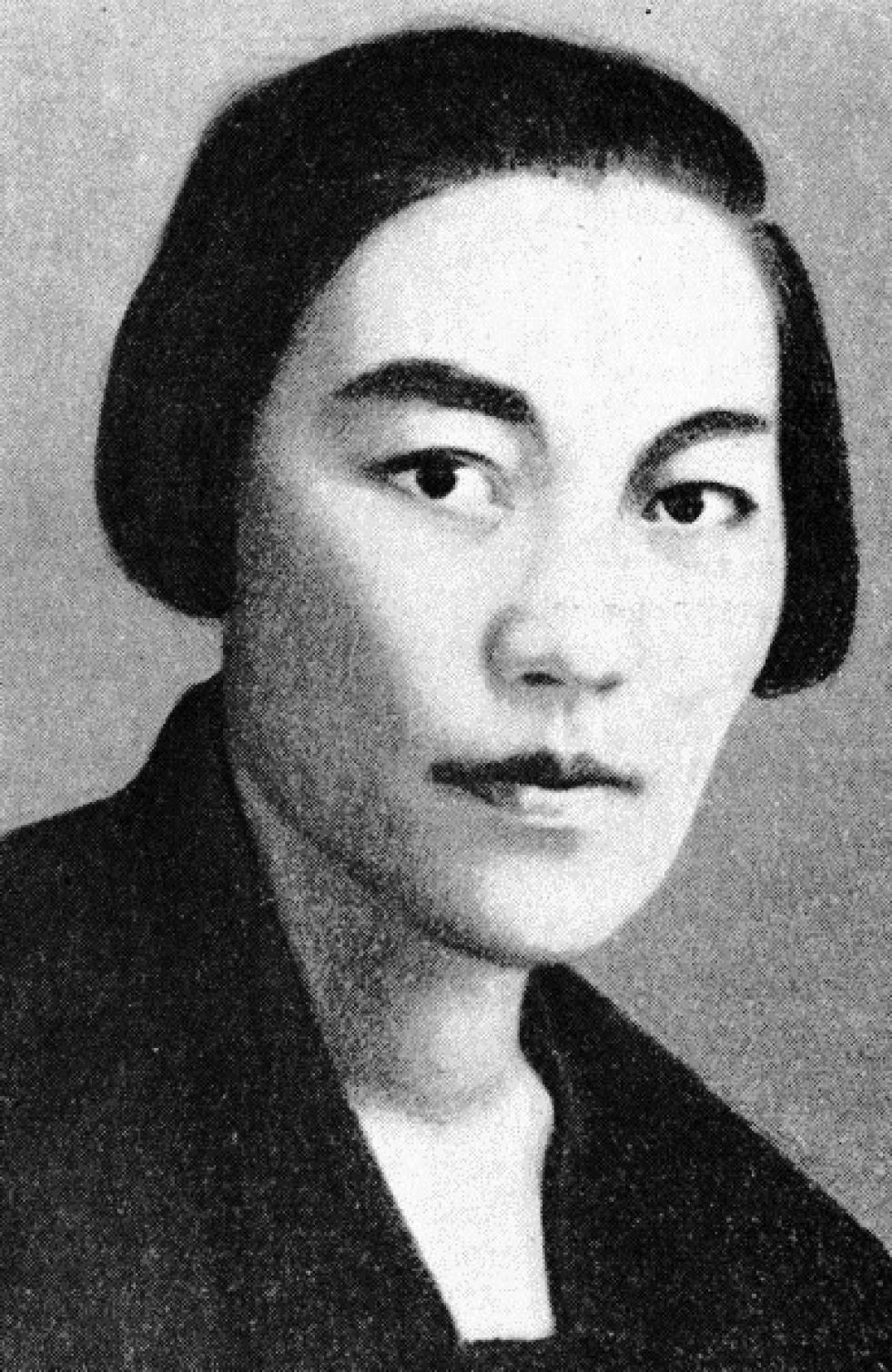
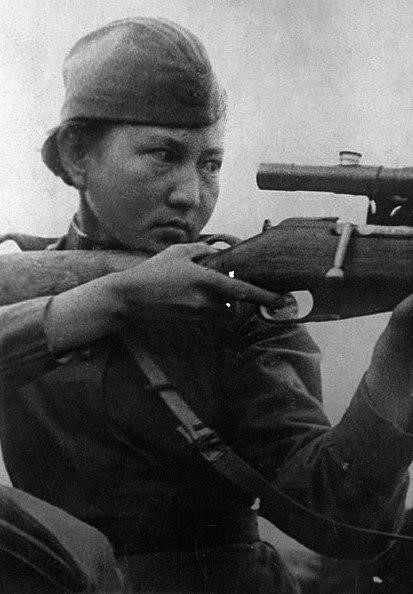
Aliya Moldagulova

During the Second World War, at the age of seventeen, Moldogulova volunteered and was sent to the front-line. In Kazakhstan, women who were sent to the front-line accounted for 40% of the total volunteers. Despite the doubts of her commanders, Moldogulova proved her determination and skill.

A letter written by a Lieutenant Colonel and kept in the Heroine’s Museum in Aktobe reads that Aliya “worked tirelessly to destroy the Germans. She killed 32 Nazis in a short period. In January, our unit was tasked with breaking through the enemy’s defenses… Leah fired a rifle and threw grenades, killing ten enemy soldiers and one officers [then] took a sub-machine gun and opened fire, killing 28 German soldiers and officers. But they managed to get to our trench. A hand-to-hand battle began. The heroine shot eight enemy soldiers. But Leah did not notice the German officer [and] she could not escape. Gathering her last strength, Leah pointed her machine gun at the officer, and pulled the trigger. This was the last German killed by her.” Moldogulova was awarded the title of Hero of the Soviet Union and posthumously awarded the Order of Lenin.

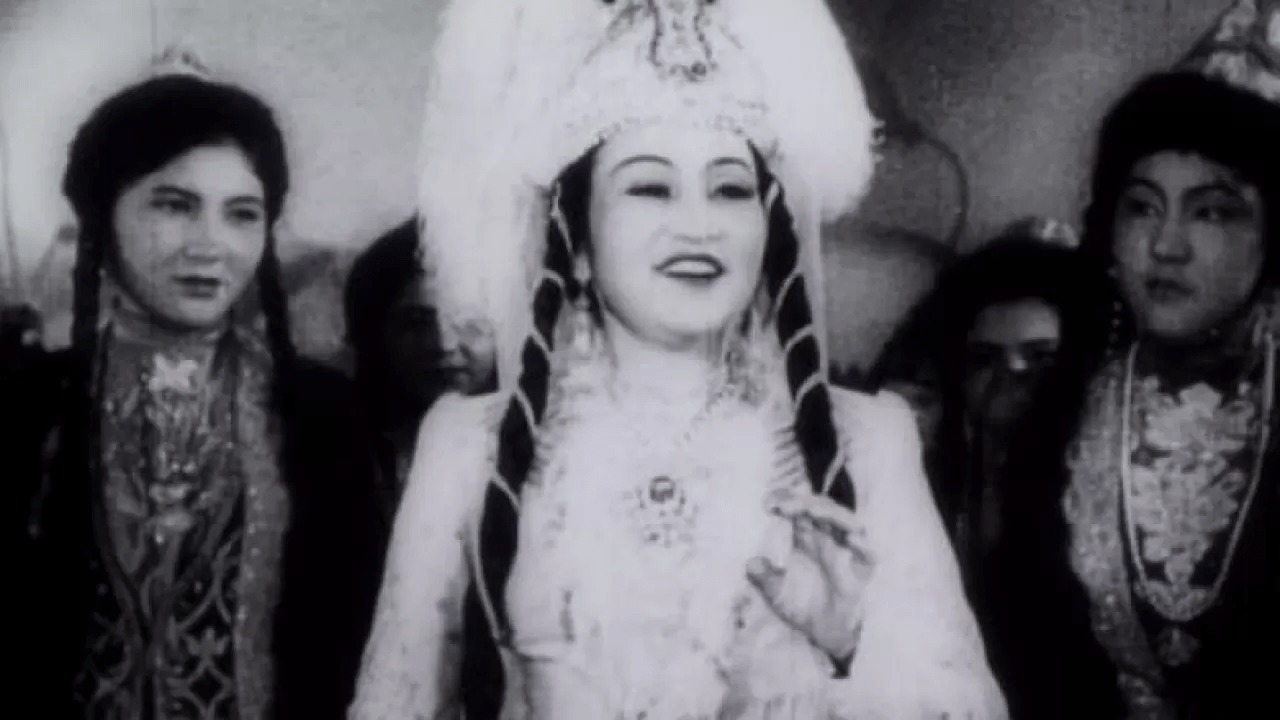
Aisha Galimbayeva

Photo: National Academic Library of the Republic of Kazakhstan

Aisha Galimbayeva made a significant contribution to the art of Kazakhstan with her vivid depictions of women’s changing position in the Soviet Union. She is fondly remembered for her sketches for the famous black-and-white movie, “Songs of Abay.” Today, she still stands as a role model for many artists, and is memorialized for demonstrating that a woman is capable of opening new horizons and realizing her creative potential, particularly in a period when the profession of an artist was considered predominantly “male.” Galimbayeva became a member of the Union of Artists of Kazakhstan and continued to actively create and contribute to the development of art in Kazakhstan until her passing at the age of eighty in 2008.

“I am especially inspired by Aisha Galimbayeva, not only with her paintings and costumes, but by her actions and love for art no matter what,” Alua from Taraz told TCA.

Kulyash Baiseitova

Photo: dknews.kz

Despite coming from a background where her parents were so poor, they could not afford to feed her and gave her up to an orphanage, Kulyash Baiseitova became an outstanding opera singer and actress, who became the first Kazakh to receive the title of People’s Artist of the USSR at the age of just 24. Her talent led to her emergence on the world opera scene. In 1938, Baisetova became a deputy of the Supreme Soviet of the Kazakh SSR.

Almagul Menlibayeva

Photo: vlast.kz

Almagul Menlibayeva is an outstanding contemporary artist and curator creative work has had a telling influence on the global art scene. Her pieces have made a unique and valuable contribution to art, revealing important social and environmental issues in the context of Central Asia.

Uncategorized

IMF Releases Latest Kyrgyzstan Report

The International Monetary Fund (IMF) has published a Kyrgyzstan country report, according to which the country’s economy grew steadily in 2023, mainly due to expansion of construction and trade. Collection of tax revenues has also improved, and inflation has decreased.

The IMF highlighted that due to the Covid-19 pandemic, rising global food and energy prices, exacerbated by the war in Ukraine, drove inflation in Kyrgyzstan to surge in 2022. From February 2020 to February 2023 inflation rose by 10 percentage points to 16.2%, which represented a ten-year peak for the republic.

However, authorities have now managed to tame the situation. “Inflation in Kyrgyzstan almost halved from 14.7 percent in December 2022 to 7.3 percent in December 2023, thanks to which food and fuel prices fell markedly,” the IMF said in its report.

The IMF expects production to grow in Kyrgyzstan in the near future — which will also have a positive impact on inflation. In the medium term, according to their data, the volume of production in the republic will grow by 4% per year. Despite weak performance in the sectors of agriculture and gold mining, the country’s economy continues to grow — and showed a growth rate of 5% at the end of 2023. The leading industries were trade and construction, followed by transportation and communications.

“An unexpected inflow of labor and income from Russia, as well as a significant increase in trade with that country — mainly re-exports of goods from China to Russia — has boosted domestic development and increased domestic demand for goods and services,” the IMF stressed.

Still, core inflation in the country remains high, which is one of the main drivers of poverty. According to official data, a third of the country’s population lives below the poverty line. Despite a strong recovery from the pandemic, poverty and inequality remain significant challenges for the Kyrgyz economy, which remains vulnerable to shocks, according to the IMF. Without higher and more inclusive growth, it will take decades for the republic to reach the income levels of Europe’s emerging economies, IMF specialists warned.

Meanwhile, IMF experts see headline risks for the Kyrgyz economy in further escalation of the war in Ukraine. Russia is currently Kyrgyzstan’s largest trade partner, alongside China. Exports of Kyrgyz goods to Russia account for half of the country’s foreign trade, and the Kyrgyz economy is heavily dependent on remittances from migrants working there. However, due to Western sanctions, the Russian economy may weaken, which will affect both remittances to Kyrgyzstan and bilateral trade — therefore delivering a harsh and broad impact to the entire Kyrgyz economy.