• KGS/USD = 0.01144 0%
  • KZT/USD = 0.00196 -0%
  • TJS/USD = 0.10899 -0%
  • UZS/USD = 0.00008 -0%
  • TMT/USD = 0.28490 0%
  • KGS/USD = 0.01144 0%
  • KZT/USD = 0.00196 -0%
  • TJS/USD = 0.10899 -0%
  • UZS/USD = 0.00008 -0%
  • TMT/USD = 0.28490 0%
  • KGS/USD = 0.01144 0%
  • KZT/USD = 0.00196 -0%
  • TJS/USD = 0.10899 -0%
  • UZS/USD = 0.00008 -0%
  • TMT/USD = 0.28490 0%
  • KGS/USD = 0.01144 0%
  • KZT/USD = 0.00196 -0%
  • TJS/USD = 0.10899 -0%
  • UZS/USD = 0.00008 -0%
  • TMT/USD = 0.28490 0%
  • KGS/USD = 0.01144 0%
  • KZT/USD = 0.00196 -0%
  • TJS/USD = 0.10899 -0%
  • UZS/USD = 0.00008 -0%
  • TMT/USD = 0.28490 0%
  • KGS/USD = 0.01144 0%
  • KZT/USD = 0.00196 -0%
  • TJS/USD = 0.10899 -0%
  • UZS/USD = 0.00008 -0%
  • TMT/USD = 0.28490 0%
  • KGS/USD = 0.01144 0%
  • KZT/USD = 0.00196 -0%
  • TJS/USD = 0.10899 -0%
  • UZS/USD = 0.00008 -0%
  • TMT/USD = 0.28490 0%
  • KGS/USD = 0.01144 0%
  • KZT/USD = 0.00196 -0%
  • TJS/USD = 0.10899 -0%
  • UZS/USD = 0.00008 -0%
  • TMT/USD = 0.28490 0%
08 December 2025

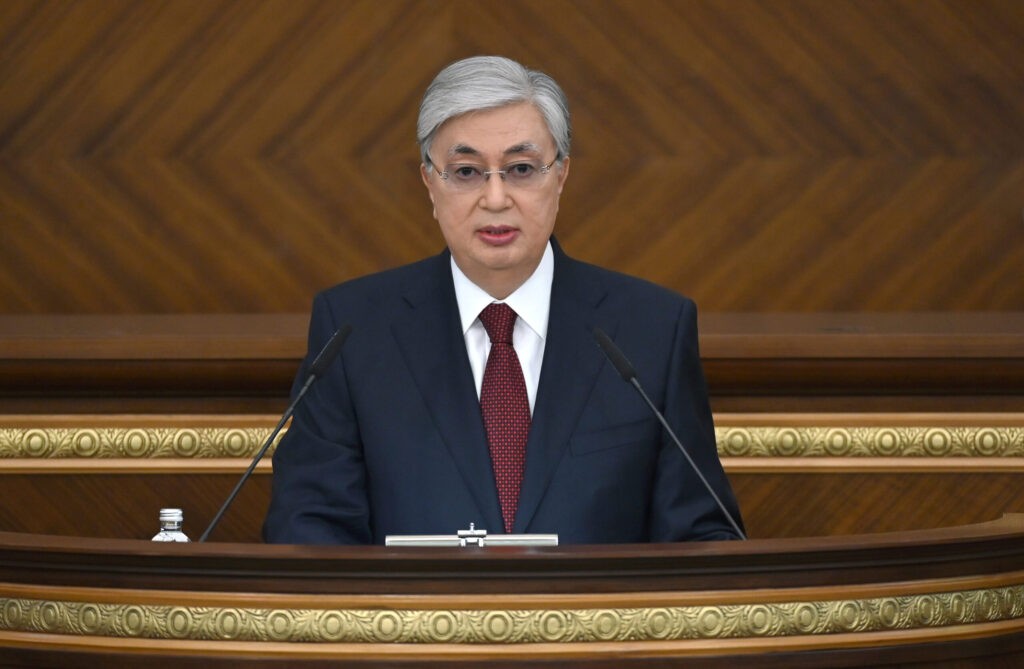
Kazakhstan’s progression to a “listening state”

30 December 2022

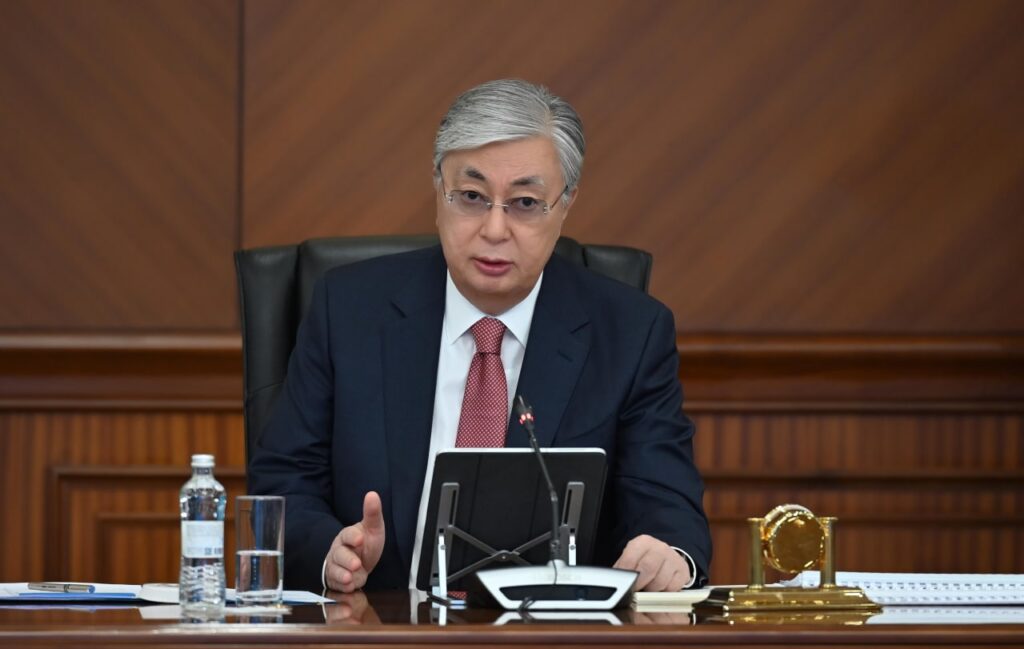
Kazakhstan had a momentous year in 2022. It started with the January unrest, when thousands of citizens went into the streets in peaceful rallies against a sudden sharp increase in prices of the liquefied gas they used in their homes. These rallies turned into a mass protest against the legacy of the regime of Kazakhstan’s first president, Nursultan Nazarbayev, who had failed to give the people a voice and listen to their legitimate needs. What started out as a dangerous and tragic affair, however, soon turned into a real opportunity for the country’s democratic future.

The big shift from Nazarbayev to Tokayev

While the entrenched business elites around Nazarbayev ruled the country for over three decades, discontent grew among the broader population who perceived an economic class bias against them. Tokayev began weakening the power of Nazarbayev and his hangers-on after he became president in 2019; and in 2020, he began to dismantle the Nazarbayevite oligarchy.

After Tokayev removed Nazarbayev’s eldest daughter, Dariga, from her post as Speaker of the Senate and cancelled a state contract worth millions of dollars to another daughter, Dinara, the Nazarbayevite elites became alarmed and began to view Tokayev as an existential threat to their continued power.

Three days into the January events, security forces controlled by Nazarbayevite cliques, and led by National Security Committee head Karim Massimov, hijacked the protests. Using their own criminal provocateurs, they deliberately turned the peaceful protests violent and attempted to stage a coup d’état. They raided armouries and stormed government buildings in a co-ordinated effort to push Tokayev from power.

After order was restored, both Nazarbayev and Massimov were ousted from all their official duties, opening the way for an ambitious drive to transform the country’s social, economic and political system through a series of reforms.

What is a “listening state”?

The concept of the “listening state” goes beyond Gorbachev’s glasnost. In English, “glasnost” translates as “openness” or “transparency”, but in Russian, the meaning is more nuanced. The word comes from the noun golos and the suffix -nost. Golos means voice, and -nost means “the quality of”. So, glasnost is the quality of having a voice, as opposed to not having one. Hence, “glasnost” in Russian implies listening to the voice of the public.

Glasnost was the foundation of two other Gorbachev reforms: perestroika and democratization. Perestroika meant “restructuring” of the economy, while democratization meant political reforms. Under Gorbachev in the Soviet Union, glasnost, restructuring and democratization were supposed to reinforce one another. All three had to work together for any one of them to succeed completely.

The problems that Tokayev confronted when he became president in 2019 broadly resemble the problems that Gorbachev faced in 1985. The Brezhnev regime, which Gorbachev inherited, became referred to as a period of “stagnation”, thus the antithesis of glasnost. Like Brezhnev, Nazarbayev entrenched an elite political class, disconnected from the people, and unwilling to respond to their needs or institute significant reforms. Implementing a “listening state” is the most important and necessary of Tokayev’s reforms, intimately linking glasnost with democratization.

The outlook of Tokayev’s “listening state” bodes well for Kazakhstan

Tokayev’s “listening state” represents a transformational democratic shift in relations between the Kazakhstan state and its public. It goes further than glasnost by not only acknowledging and listening to the public’s voice but also providing legitimate channels for its amplification. Tokayev’s reforms for a “fair and just Kazakhstan” foresee that public policy will respond to public input and its implementation will likewise depend on public feedback. This is a fundamental change from the authoritarian suppression of such input and feedback under the Nazarbayev regime.

Tokayev’s moves against the oligarchs who have ruled Kazakhstan’s economy for the last 30 years aim to restructure the domestic economy, as did perestroika in Russia. In addition, he is diversifying the economy outside the energy sector. His program also reforms trade relations and foreign investment regulations to allow small and medium enterprises to become internationally more competitive.

Gorbachev’s glasnost, restructuring and democratization failed partly because domestic political opposition undercut them, and partly because the Soviet Union was too far gone by 1985 to be able to implement such wide-ranging and interactive fundamental reforms without falling into chaos. Kazakhstan in 2022 differs from the Soviet Union in 1985 in important ways. The Kazakhstani people have had 30 years to shake off the inherited Soviet political culture. They not only recognize the value of these reforms but also outright demand them.

Conclusion

Tokayev began promoting the “‘listening state’, which quickly and efficiently responds to all constructive citizens’ requests” in his address to the nation on September 2, 2019. He is more likely to succeed than Gorbachev not only because he has had a head-start but also because he is a more experienced leader and statesman. The events of January 2022 were tragic, but they opened real possibilities for the country’s democratic transformation and the success of the “listening state”.


 

“This isn’t Moscow” – Kazakh Oligarchs Scuppered in New York Court

In a tale which reaches from “fraud on an epic scale” in the UK to Donald Trump’s shady former business partners, a long-running case against fugitive banker and oligarch Mukhtar Ablyazov and his associates recorded another verdict in the New York Southern District court earlier this month. Yet despite having judgments against him totaling $4.9 billion in Britain alone, over a decade since he fled the UK on a fake passport to avoid three concurrent 22-month sentences for contempt of court, the former Minister for Energy, Industry and Trade in Kazakhstan – who has done business with multiple individuals sanctioned in the West – remains a free man, bemoaning his plight to be a case of “political persecution”.

In the early days of Wild West capitalism following the collapse of the USSR, Ablyazov abandoned a career as a nuclear physicist to register a company selling fax machines, photocopiers and computers. By 1998, together with a consortium of investors, Ablyazov acquired a loan to buy Bank Turan Alem – later to become known as BTA Bank – in a privatization auction for a cut-price fee of $72 million. In 2005, he became chairman of the bank following the death of his predecessor, Yerzhan Tatishev, whom Ablyazov has been sentenced in absentia to life in prison in his homeland for ordering the murder of.

In May 2019, the District Court of Fairfax, Virginia found Ablyazov’s sister, Gauhar Kusainova guilty of handling over $6 million of assets stolen by her brother from BTA. Already, in September 2018 a UK court had fined Ablyazov’s son-in-law, Ilyas Khrapunov, $500 million for helping him breach an asset freezing order. Ilyas is the son of the former Mayor of Almaty, Viktor Khrapunov, who is accused of embezzlement schemes amounting to at least $300 million and comingling funds with Ablyazov in Trump Organization projects.

Viktor and his TV anchorwoman wife fled to Switzerland in August 2008 – allegedly loading up a chartered plane with 18 tonnes of art and antiquities – to join Ilyas, who had established an entity called the Swiss Development Group (SDG) – company slogan: “It’s Good to be Swiss”. By 2014, the Kazakh authorities had identified 58 shell companies and subsidiaries said to be controlled by Ilyas, (that’s nothing compared to Ablyazov’s 1000+) one of which was Triadou SPV. In 2016, Nicolas Bourg, the former Director of Triadou testified the Khrapunovs’ had ordered him to move money out of the US after a California lawsuit was filed against them. “Triadou is a shell entity for SDG,” he said.

In the latest round of litigation, seeking to discredit the plaintiff’s witnesses, Mr. Roman for the defense spoke of the “lengths to which BTA Bank was prepared to go to find… Mr. Ablyazov’s allegedly stolen money,” and claimed BTA had paid witnesses, including Ilyas former business partners, Frank Monstrey ($25M) and Felix Sater ($2.7M). Roman argued that “Triadou didn’t even know about Ablyazov’s freezing orders in London” and Triadou’s rehabilitation of Flathotel, Cabrini, Syracuse and the Tri-County Mall were not the actions of a shell company. “Triadou doesn’t have BTA’s money”, he concluded; “Triadou never had BTA’s money”.

For the plaintiffs, John Zach characterized Ablyazov as a mob boss hiding behind facades who relied on family ties and nepotism. He pointed to cash movements from 2013 which showed Ilyas ran Triadou and emails from Ablyazov which said that Ilyas was “the one that I trust; just one person.” Ablyazov had previously admitted in regard to BTA that from 1998, “I was the key owner [but] no one can actually know who it belongs to… I was [Tatishev’s] boss in American terms.” The plaintiffs demonstrated how by way of a process known as ‘round-tripping’, as testified to by Sadykov, “they would obtain loans and use the funds to obtain other loans.” One such example was a $103 million loan made to Tradestock, an entity which offered “no services” and had “no employees”, for the purchase of goods such as soy flour, which never even materialized.

Zach detailed how in November 2012, Ilyas offshore financial planner, Eesh Aggarwal moved $10.5 million through eight shell companies in one day before it landed in the accounts of Triadou. By this time, the backdating of documents to before asset freezes began was already well underway. Loans made to Triadou by SDG subsidiary Telford international between November 2012 and May 2013 worth $71.7 million dollars were suspiciously never mentioned in SDG board minutes, and never repaid. If it sounds opaque, it’s because it’s supposed to be.

When Ablyazov was arrested in the summer of 2013, Triadou stopped receiving funds, and referring to Ilyas, in the words of Bourg, “the little one started to panic”. In his closing statement, Zach told the jury that this “isn’t Moscow [or] London, this is New York,” and asked them to make this “a case to send a message”. The jury duly returned a guilty verdict against Triadou on charges of conversion and undue enrichment, handing down a fine of $100.6 million with interest dating to 2013, resulting in an award of $218 million.

In total, Ablyazov stands accused of having embezzled up to $10 billion, whilst Ilyas – who hasn’t left Switzerland since 2013 for fear of arrest – is subject to freezing orders in the amount of approximately $424 million. Earlier this week, the National Court of Asylum in France (CBDA) dismissed Ablyazov’s request for refugee status, ruling that his criminal past did not allow him to obtain this protection.

Tokayev and Mirziyoyev make “historic breakthrough” in Kazakhstan-Uzbekistan relations

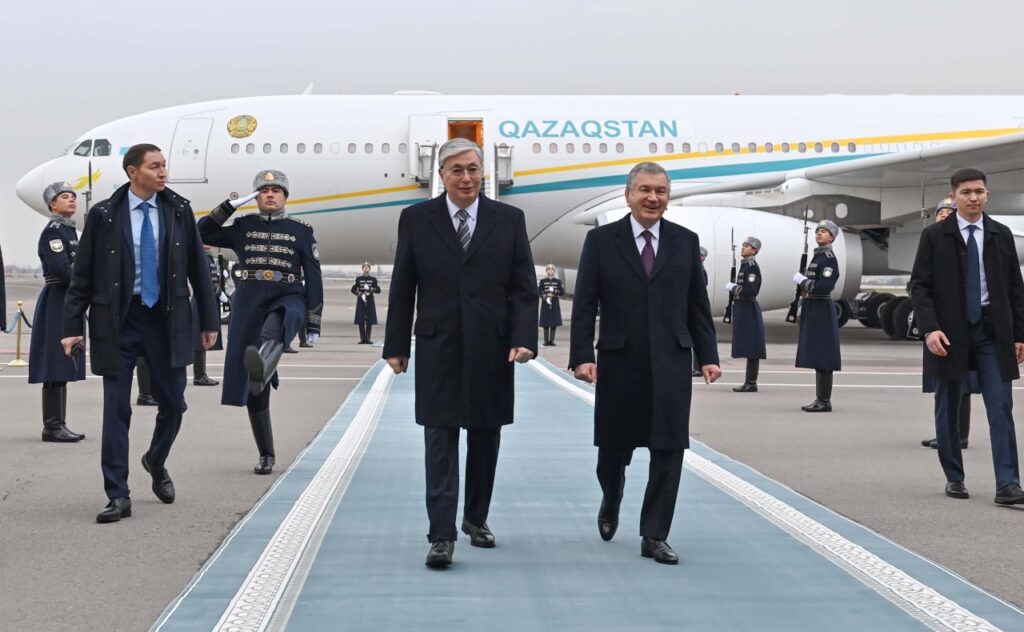
Kazakhstan’s President Kassym-Jomart Tokayev met with his counterpart from Uzbekistan, President Shavkat Mirziyoyev, during his state visit to Tashkent on December 21-22. Some 40 commercial agreements worth $2.5 billion were signed over two days while the two leaders also reached a border-demarcation agreement. Most significantly, the two countries signed the Treaty on Allied Relations. “It would be no exaggeration,” Tokayev said, “to call this document historic [and indeed] a breakthrough.”

Background to the Treaty on Allied Relations

Tokayev is no stranger to regional diplomacy. In the first decade and a half of his country’s independence, he served as Kazakhstan’s deputy foreign minister, foreign minister, deputy prime minister, prime minister, and state secretary. His leadership in developing the Treaty on Allied Relations with Uzbekistan marks a re-inauguration of autonomous economic co-operation amongst the Central Asian states. It is a promising indicator that they are again tending toward such co-operation outside Russian influence.

Post-Soviet co-operation between Kazakhstan and Uzbekistan began with the Central Asian Union, created in 1994 and which also included Kyrgyzstan. This organization soon expanded to include Tajikistan and was renamed the Central Asian Co-operation Organisation (CACO). However, after Russia joined CACO a few years later, it was absorbed by the Moscow-directed EurAsian Economic Community (EurAsEC). This killed Central Asia’s first attempt at autonomous economic co-operation and integration. Uzbekistan withdrew from EurAsEC three years later in 2008.

In 2015, EurAsEC was superseded by and absorbed into the Eurasian Economic Union (EEU), another Moscow-dominated economic integration project designed to maintain and project Russian influence across the former Soviet areas. Of the EEU’s five full members, only two — Kazakhstan and Kyrgyzstan — are from Central Asia while Uzbekistan is an observer. Western sanctions against Russia have further stalled the EEU’s already sluggish integration momentum and confirmed the diversion of its non-Russian members’ trade outside this bloc.

What the new Treaty achieves

Although the new Treaty is not the equivalent of NATO or the Collective Security Treaty Organisation of the Commonwealth of Independent States, it still constitutes a landmark founding document of autonomous Central Asian co-operation. “Treaties of allied relations” have been signed by other post-Soviet and Asian countries in recent years. These are mainly enhanced agreements that in the Soviet tradition used to be called “friendship and co-operation” agreements.

Such agreements leave the door open to deepening co-operation in other spheres. Currency integration was not directly discussed, but this new co-operation will certainly help Uzbekistan to better implement the convertibility of its national currency, the Som. It was only in 2017 that Uzbekistan’s Som became freely convertible into Western currencies. Foreign direct investment in Uzbekistan had suffered greatly from its absence, hindering any dynamic growth during the whole reign of Mirziyoyev’s predecessor Islam Karimov, who led Uzbekistan from 1989 until his death in 2016.

There is significant potential for an important future deepening of this newly established bilateral co-operation. Kazakhstan and Uzbekistan reached an agreement, for example, to create a working group chaired at the level of their deputy prime ministers, with a view toward establishing a joint foreign trade company. A series of other specific agreements for industrial co-operation point toward a certain degree of general economic integration. The two countries also agreed, during the recent negotiations, to create a Supreme Interstate Council and an Inter-Parliamentary Council.

The Treaty in the context of Kazakhstan’s foreign policy

Kazakhstan’s Treaty on Allied Relations with Uzbekistan will reinforce Central Asian geo-economic cohesion, greatly needed in the face of their two powerful neighbours, Russia and China. As confidence and trust build in the bilateral relationship, the alliance could deepen to provide modest mutual guarantees for security assistance. At the same time, Kazakhstan continues its longstanding “multi-vector” foreign policy, which (as discussed above) Tokayev has directly shepherded in his various political roles for a decade and a half after his country’s independence.

This strategy notably includes economic co-operation with various European countries and the United Kingdom as well as with South Korea and Japan in East Asia. This year, Tokayev launched yet another diplomatic initiative to add more countries to Kazakhstan’s list of foreign policy “vectors”. Notably, Astana is now pursuing a new “Turkic vector” that includes not just the Republic of Türkiye but all member-states of the Organisation of Turkic states (OTS), which was recently created—following a suggestion from Kazakhstan itself—on the basis of the former Turkic Council.

The OTS represents nothing less than an organisational restructuring and transformation of the Turkic Council and its affiliated institutions, providing them with a legal personality as a fully-fledged intergovernmental organisation. This “Turkic vector” complements and strengthens trans-Caspian initiatives for trade and logistical connections, in particular the Trans-Caspian International Transit Route (also called the “Middle Corridor”). The OTS also adopted a visionary road-map for the Turkic world in 2040.

Conclusion

The bilateral Treaty on Allied Relations between Kazakhstan and Uzbekistan—Central Asia’s two largest and most important states—creates again a potential for relatively autonomous economic integration in the region. Azerbaijan is already an important player in the newly enhanced Turkic space co-operation, which increasingly has multilateral aspects. Thus, Baku is playing an important trans-Caspian and facilitating role in trilateral co-operation with Turkiye and Turkmenistan. The new treaty between Kazakhstan and Uzbekistan further reinforces this regional tendency toward relative autonomy, and it deserves the support of all countries interested in preserving geopolitical balance in the region.

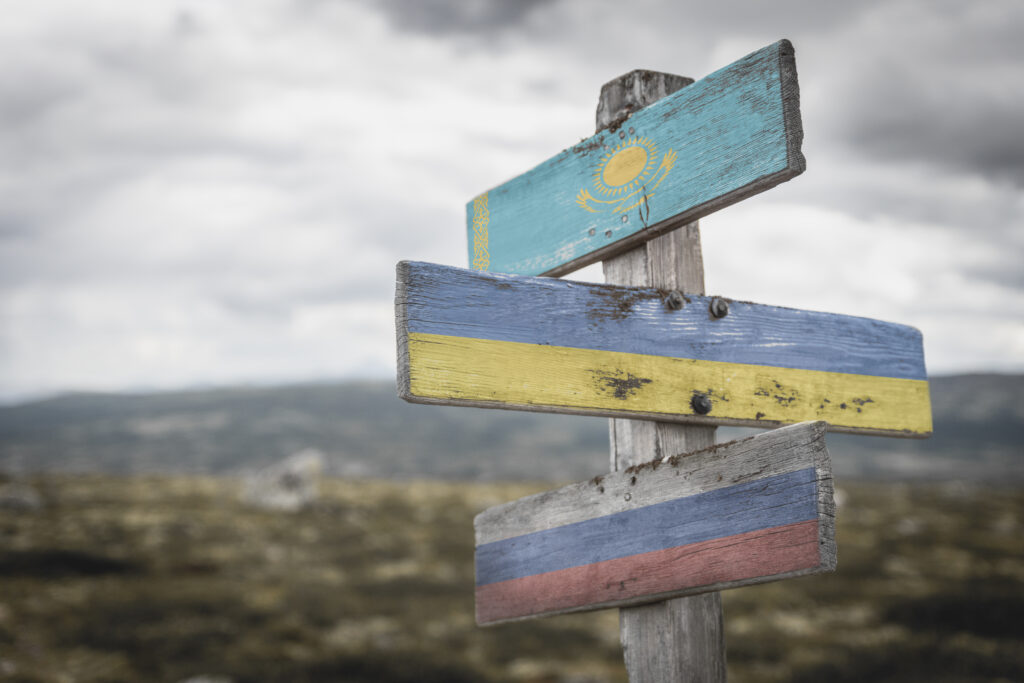
Who Should Mediate between Russia and Ukraine? Kazakhstan Could Be the Best Option

As Russia’s war on Ukraine continues to rage, there is little disagreement in the international community that the ever-rising human and material costs make it imperative to find a quick solution to the crisis. There is less agreement on how to achieve this. To swiftly reach a workable peace, the international community and the two fighting sides will need to put their faith in mediation efforts by a trusted, neutral leader.  While face-to-face negotiations between representatives from the two countries began in Belarussia and are domiciled in Turkey for the time being, the road to peace remains unclear. Even if a ceasefire is agreed, its sustainability will depend on the demarcation of contested lands, guarantees for sovereignty and security, and helping those dislocated by the conflict.

So far, Turkey, Israel and Kazakhstan are among the countries that have declared willingness to mediate negotiations between the sides. Israel maintains good diplomatic ties with both Russia and Ukraine. It also has the trust of the U.S. and other NATO members. It remains neutral in the conflict by furnishing only humanitarian aid to Ukraine, and not weapons systems.  As for Turkey, it is a NATO member with profound economic ties to Russia.  However, its offer to arbitrate comes against the backdrop of supplying Ukraine with its Bayraktar its TB2 drones, which continue to relentlessly smash Russian tanks, personnel carriers, and supply trucks.

Of the three countries, Kazakhstan has perhaps the deepest-rooted interests in a swift and peaceful end to the conflict. Its president, Kassym-Jomart Tokayev, has announced willingness to help: “We call on both states to find a common ground and reach agreements”, he declared at a recent congress of the ruling party Amanat, adding, “For its part, Kazakhstan is ready to provide all possible assistance, including mediation services if necessary”.

There are four main reasons that explain why Kazakhstan is likely the best candidate to serve as a mediator: It is highly motivated economically; its foreign-policy framework has positioned it well for such a role; its leadership is unique in terms of its diplomatic prowess; and finally, its bilateral understandings with Ukraine and Russia will it help achieve a successful result.

Economic motivation

After Ukraine and Russia, from an economic perspective, Kazakhstan is probably the only other country with as great a need for a peaceful resolution to the conflict.  Sharing a 7,644-kilometre border with Russia, Kazakhstan has suffered significant (albeit for now not overwhelming) collateral damage in its economy.  Crippling trade sanctions and severed trade routes have sunk its national currency, the tenge, by 20 per cent.  Two-thirds of its oil exports have been throttled at the Russian leg of the Caspian Pipeline Consortium.  Businesses around the world are de-risking supply chains and might write off swathes of Kazakhstan businesses in fear of possible unspecified ties to sanctioned Russian entities. Given these real reasons, neither Ukraine nor Russia would question Kazakhstan’s earnestness for an expeditious and peaceful resolution.

Some observers suspect that Putin might seek to mitigate the impact of sanctions through Russia’s membership of the Eurasian Economic Union (EAEU).  The EAEU is a free-trade zone and customs union comprising Armenia, Belarus, Kazakhstan, Kyrgyzstan and Russia. There have been calls in the West to sanction pre-emptively the four EAEU members besides Russia to close any possible trade loopholes.

Officials in Kazakhstan have shown no interest in flouting the recent sanctions.  Branches in Kazakhstan of the designated Sberbank and VTB Bank were shuttered.  Imports and exports are being directed away from Russian ports.  Kazakhstan’s compliance with international sanctions regimes combined with its steadfast neutrality in the conflict will make wide-ranging international sanctions against it highly unlikely.

Multi-vector foreign policy

Like most Central Asian countries, Kazakhstan tries not to pick geopolitical sides. It was in fact the innovator in the early 1990s of a “multi-vector” balancing policy that many other states in the region now also employ. This version of neutrality has generally been a diplomatic asset and enhanced the country’s international profile. Kazakhstan’s public rhetoric over Ukraine has, like its diplomacy, been balanced.

Kazakhstan reportedly denied a Russian request for Kazakhstani troops to assist Russian military forces in Ukraine. Such a request would have been an informal diplomatic feeler from Russia as Kazakhstan’s defence ministry denied that any request had been formally received.

Its only intervention in the conflict so far has been on humanitarian grounds.  Responding to a request by Ukraine’s president, Volodymyr Zelenskyy, President Tokayev instructed his government to provide urgent humanitarian aid to the people of Ukraine. Kazakhstan sent twenty-five types of medicines weighing 82 tonnes.

While Kazakhstan has complied with international sanctions, it has not imposed sanctions of its own on either side of the conflict. At the same time, it has abstained from the UN on the General Assembly resolution condemning Russia. The country’s deputy defence minister, Sultan Kamaletdinov, was quoted as saying, “The conflict between Russia and Ukraine has nothing to do with Kazakhstan. We support neither side. So, there shouldn’t be any questions in this regard.” On the other hand, its foreign affairs minister, Mukhtar Tleuberdi, has noted that his country does not intend to recognise the unilaterally proclaimed independence of the so-called “Donetsk People’s Republic” or “Lugansk People’s Republic.”

Leadership qualifications

Before becoming president, Tokayev served as a professional diplomat for two decades including holding the position of Director General of the United Nations in Geneva.  He speaks four languages and earned a respected Ph.D. from the Moscow State Institute of International Relations during the Soviet era. It is hard to think of another head of state who today brings such pedigree of peace-brokering skills to the negotiating table.

The neutrality of Tokayev’s messaging is a case in point.  At the beginning of March 2022, he called on Russia and Ukraine to find a common language for negotiations. He insisted on “the principle of the indivisibility of Eurasian security,” meaning that states should not threaten one another and that their “mutual understanding” should be “based on mutual trust”. In Ukraine, he observed, “this did not happen.” Therefore, he called on both states “to find a common ground and reach agreements”.

Accordingly, Tokayev has held talks with both presidents Putin and Zelenskyy, offering them a negotiation platform. Indeed, Kazakhstan’s recent experience in contributing to conflict resolution includes hosting talks in 2015 on the original Joint Comprehensive Plan of Action with Iran, as well as more recently on Syria as part of the Astana Process. Kazakhstan also tempered the rift between Ankara and Moscow following Turkey’s downing of a Russia jet airplane in 2015.

Bilateral understandings

Kazakhstan has perhaps the greatest understanding of the overall situation and the specific concerns of each party. With Russia, this understanding is based on their common history and language, and with Ukraine, it is based on sharing a common geopolitical situation.

Kazakhstan has a long history with Russia going back three centuries. The Russian conquest of the Kazakh khans began in the 1830s and culminated in the 1870s. Three waves of Russian immigration settled parts of what is now Kazakhstan over the centuries. At independence, the ethnic Russian population of Kazakhstan was nearly equivalent to the ethnic Kazakhs, although that has since changed. Many Kazakhs still learn Russian as their first or their second language.

It can also equally relate to Ukraine.  Both states were union-republics of the USSR during the Soviet era, and both were subject to Russian imperial rule before that. Russia has claimed title to parts of the northern and eastern Kazakhstan, just as it has claimed parts of Ukraine. Both Ukraine and Kazakhstan have relied on Russia for oil and gas transit routes as well as for trade and ensuring their territorial sovereignty.  Both have had to balance their ties to Russia with their relationship with the West (and Kazakhstan also with China) since their independence in 1991.  Both countries aspire towards becoming fully democratic and prosperous states.  President Tokayev’s reformist democratic plan announced on March 16, 2022 demonstrates the leadership’s sincerity in pursuing that path.

Conclusion

Finding a diplomatic solution between Russia and Ukraine is an urgent but difficult and delicate task. Ukraine’s government and people are oriented toward the West. NATO’s East European members understand very well the threat of Russian aggression and have warned the international community about it for years, only for their Cassandra-like prophecies to fall on deaf ears of many Western leaders, at least until now.

The international community will demand that Russia is held accountable for yet another unjustified invasion of sovereign Ukraine, for the material destruction of its cities and the forced deportation of Ukrainian citizens to Russia. These acute issues may need to be addressed later. Essential at present is stopping war itself.

In this current landscape, Kazakhstan is the most suitable third party for finding the necessary middle ground. Only Kazakhstan has the compelling combination of high economic motivation, the right foreign-policy orientation, and a deep, empathetic understanding of the concerns for the two belligerent parties. Most importantly of all, it has President Tokayev at its helm, whose decades-long professional experience as a high-level diplomat and balanced relationship with the two warring countries make him well equipped to mediate and bring an end to the military conflict.

Kazakhstan to End “Super-Presidential” Model of Government

Earlier today, March 16, 2022, historical new reforms were introduced in Kazakhstan. After 30 years of independence from the Soviet Union, its progress towards democracy went dormant.  The reforms announced today, if implemented, will bring Kazakhstan’s democracy standards on par and in some cases above those of the European Union.

Tokayev has served as president of Kazakhstan for 2 years.  After protests and the attempted coup in January 2022, it became clear that the country needed to introduce fundamental reforms aimed at human rights, openness, welfare and the fight against corruption.

Moreover, the tragic events in January were seen in part as a consequence of political “stagnation” which required fundamental changes to resolve. The monopoly in the political sphere led to various social issues and the overall degradation of the state under the increased influence of individuals close to the center of power and oligarchic groups.

In today’s message to the people of Kazakhstan, Tokayev announced reforms impacting almost all the country’s political institutions. The key powers of the main governmental bodies, such as the presidential office, parliament, local administrations, as well as the judicial and law enforcement systems will be revised.  Laws regarding political parties and the electoral process will also be revised.

At the same time, President Tokayev emphasized that reforms in Kazakhstan should not be in name only.  He declared: “Reforms for the sake of reforms are not needed. The time when we were content with achievements only on paper has passed. It is necessary to eradicate the monopoly in the economy and politics, to move from a super-presidential to a presidential model of government.”

According to Tokayev, there will be a significant limitation applied to presidential powers in Kazakhstan. This will entail, the parliament’s authorities will be strengthened. A mixed proportional representation voting system will be introduced amidst a broader plan to reform the parliamentarian system.

The entry of new political parties into Kazakhstan’s democratic contest can be expected.  Barriers to forming new political parties will be removed.  The number of signatures required will be decreased. The registration process will be streamlined.

Tokayev also called for a strong parliament that has checks and balances over the authority over the presidency.  He lessened the president’s influence over the parliament by reducing the number of appointed senators from 15 to 10.  Of the 10 appointees, half will be recommended by the Assembly of the People of Kazakhstan, a consultative body that develops the policy of friendship and unity between the various nationalities that make up the Kazakh people.

The judicial system of Kazakhstan will also be changed, and a Constitutional Court created. Under the new initiative, the president’s appointment of the chairman of the Constitutional Court, and the chairman of the Supreme Judicial Council, will require the consent of the Senate, a move which is aimed at strengthening the independence and transparency of the judiciary.

In addition, according to new legislation, the president will be required to terminate any membership in a political party during their term in office. President Tokayev also announced the end of “institutionalized nepotism” which in his words “becomes fertile ground for the flourishing of corruption”.  Close relatives of the president will be barred from holding senior positions in government and the quasi-public sector. These measures further will prevent not only corruption but the concentration of power of current and future presidents.

The implementation of these reforms decentralizes the state’s power in Kazakhstan. This will affect not only the powers of the president, but also the activities of akims (governors) of the districts, cities, rural districts. Moving forward, their work will be evaluated for the most part by the people, not the president.

Importantly, before the adoption of such a large-scale package of reforms, the authorities of Kazakhstan undertook significant work, heard public opinion and consulted with public associations, scientists, experts, political parties and more. These discussions were held openly and publicly.

President Tokayev’s program of political reforms may mark the beginning of a new era Kazakhstan’s democratic transformation. Due to its geographical proximity to Russia and China, these reforms are particularly significant.  A successful reformation will bring stability to the state and the broader region.  However, the biggest winner of the reforms would be the Kazakh people.  Improved human rights, press freedoms, governance, and a level economic playing field would make the country a better place for today’s Kazakhs and future generations to come.

Tajikistan: Remittances from labor migrants exceed foreign investments

DUSHANBE (TCA) — Tajikistan’s labor migrants abroad send home much more money than direct foreign investments coming to Tajikistan, Avesta news agency reported.

According to Tajik government sources, in 2013-2019 the economy of Tajikistan received a little more than US $3 billion of direct foreign investment.

In November, Jamshed Nurmakhmadzoda, chairman of the National Bank of Tajikistan, said that in January-September 2019, Tajik labor migrants abroad sent home $2.490 billion, a 7-percent increase on-year.

Experts say that the main source of living of hundreds of thousands of Tajik families is money sent home by their family members working abroad.

Most Tajik labor migrants work in Russia.

It was earlier reported that over the past five years (2013-2018), Tajik labor migrants sent home via bank transfers more than $15 billion, which manifold exceeds the amount of direct foreign investments during the period.

Avesta earlier reported that the amount of money sent home by Tajik labor migrants from Russia in January-September of this year exceeded Tajikistan’s annual budget.

It was also reported that remittances from labor migrants abroad account for more than 75 percent of all income of Tajikistan’s population.