• KGS/USD = 0.01144 0%
  • KZT/USD = 0.00207 0%
  • TJS/USD = 0.10456 0.19%
  • UZS/USD = 0.00008 0%
  • TMT/USD = 0.28490 -0.28%
  • KGS/USD = 0.01144 0%
  • KZT/USD = 0.00207 0%
  • TJS/USD = 0.10456 0.19%
  • UZS/USD = 0.00008 0%
  • TMT/USD = 0.28490 -0.28%
  • KGS/USD = 0.01144 0%
  • KZT/USD = 0.00207 0%
  • TJS/USD = 0.10456 0.19%
  • UZS/USD = 0.00008 0%
  • TMT/USD = 0.28490 -0.28%
  • KGS/USD = 0.01144 0%
  • KZT/USD = 0.00207 0%
  • TJS/USD = 0.10456 0.19%
  • UZS/USD = 0.00008 0%
  • TMT/USD = 0.28490 -0.28%
  • KGS/USD = 0.01144 0%
  • KZT/USD = 0.00207 0%
  • TJS/USD = 0.10456 0.19%
  • UZS/USD = 0.00008 0%
  • TMT/USD = 0.28490 -0.28%
  • KGS/USD = 0.01144 0%
  • KZT/USD = 0.00207 0%
  • TJS/USD = 0.10456 0.19%
  • UZS/USD = 0.00008 0%
  • TMT/USD = 0.28490 -0.28%
  • KGS/USD = 0.01144 0%
  • KZT/USD = 0.00207 0%
  • TJS/USD = 0.10456 0.19%
  • UZS/USD = 0.00008 0%
  • TMT/USD = 0.28490 -0.28%
  • KGS/USD = 0.01144 0%
  • KZT/USD = 0.00207 0%
  • TJS/USD = 0.10456 0.19%
  • UZS/USD = 0.00008 0%
  • TMT/USD = 0.28490 -0.28%

Viewing results 1 - 6 of 139

Azerbaijan Is Bringing Uzbekistan into the Middle Corridor

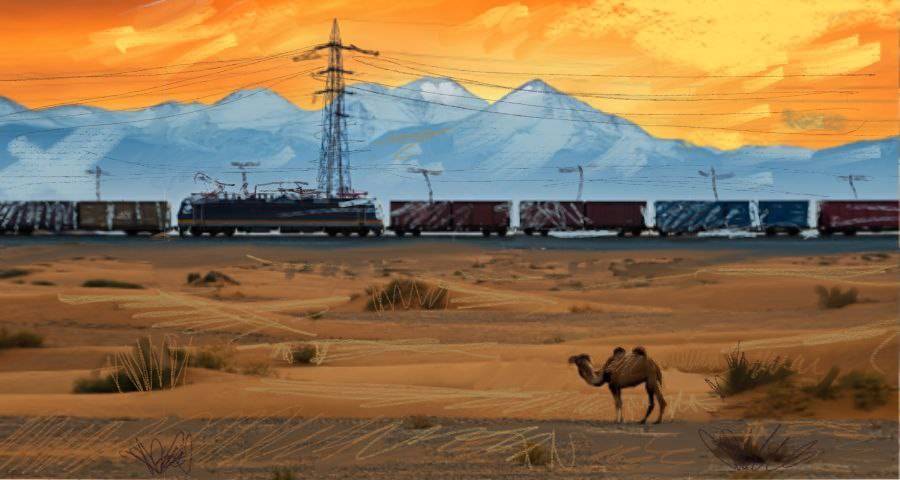
The Treaty on Allied Relations between Azerbaijan and Uzbekistan, signed last month, formalizes their growing strategic partnership and signals a new phase in their deepening ties. Their relationship has gained momentum particularly as Azerbaijan has been prioritizing the expansion of its networks in the region since 2020. Uzbekistan now plays a significant role in Azerbaijan’s efforts to strengthen the Trans-Caspian International Trade Route (TITR, also known as the Middle Corridor), the key trade and infrastructure link among Central Asia, the South Caucasus, and Turkey.   Uzbekistan and the Middle Corridor Within the last year and a half, many international financial institutions have published comprehensive studies on the implementation of the TITR project. One of the most influential was organized by the European Bank for Reconstruction and Development (EBRD) in June 2023, in collaboration with the European Commission. It was an in-depth examination of existing and potential infrastructure and logistical networks across the region. The goal of the report was to determine the “most sustainable option” for efficient transport connections between Central Asia and Europe. This report identified a route that it called the Central Trans-Caspian Network (CTCN), running principally through southern Kazakhstan. This route leverages the already well-established infrastructure and logistical systems there, making it the most viable option for trade and transport in the region. In a separate and complementary report, published in November 2023, the World Bank noted that Uzbekistan’s rail connections with Kazakhstan might be improved, but it did not identify any potential projects. Nevertheless, the Darbaza–Maktaaral project in Kazakhstan, projected for completion in 2025, could be extended first to Kazakhstan’s Syrdarya station, whence a further branch line could run to Zhetysai on the border with Uzbekistan. That project would reduce congestion at the existing Saryagash border crossing, which connects to Keles in Uzbekistan, in the north of the Tashkent conurbation. It could increase transport capacity by as much as 10 million tons per year. Still, the project focuses only on increasing the level of bilateral trade, largely in foodstuffs and agricultural goods, and does not target Uzbekistan’s integration into the Middle Corridor. On the other hand, Azerbaijan has been working actively with Uzbekistan to integrate it into the Middle Corridor, without relying on routes through southern Kazakhstan. Their cooperation includes significant efforts to enhance infrastructure and logistics. Examples include joint ventures in logistics centers and, notably, inter-modal transport links between Samarkand and Baku. Such efforts are designed to offer Uzbekistan direct access to the Caspian Sea and European markets via Azerbaijan, largely bypassing Kazakhstan and building a stronger trade partnership within the trans-Caspian framework.   Uzbekistan’s Relations with Turkey Set the Context While this all started only a few years ago, a look back to 2016 when Uzbekistan’s President Islam Karimov died provides a more complete picture. After Shavkat Mirziyoyev succeeded Karimov, Uzbekistan began to open up from its diplomatic isolation. One of the first interested parties was Turkey. Both nations signaled interest in improving ties, and Turkish President Recep Tayyip Erdoğan began to take steps...
Kyrgyzstan Seeks Crude Oil Supplies from Azerbaijan

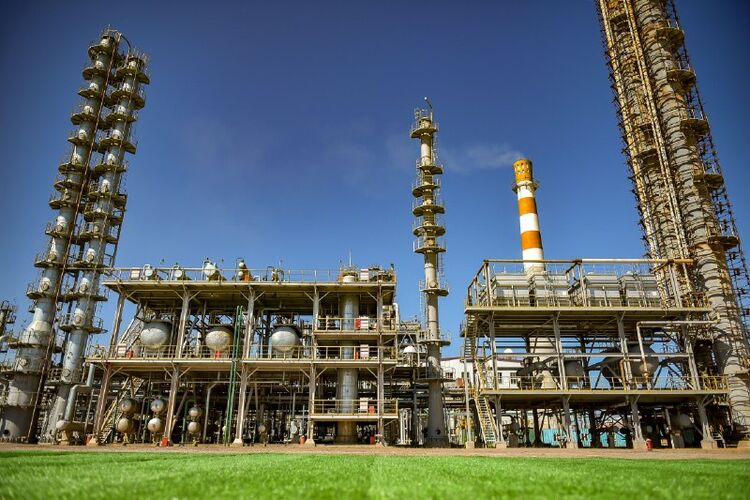
At a meeting with Azerbaijan’s Energy Minister Parviz Shahbazov, his counterpart from Kyrgyzstan, Taalaibek Ibrayev, proposed signing a long-term contract to supply Azeri crude oil to Kyrgyzstan. The bilateral meeting took place on September 16 in Bishkek, on the sidelines of the 4th meeting of energy ministers of the Organization of Turkic States (Azerbaijan, Kazakhstan, Kyrgyzstan, Turkey, and Uzbekistan). Representatives of Turkmenistan and Hungary attended as observers. The Azeri Energy Minister expressed its readiness for cooperation, and proposed establishing a special working group to organize oil supplies. Ibrayev also proposed that Azerbaijan participate in hydropower and renewable energy projects in Kyrgyzstan, and consider preferential financing of $2 million from the Azerbaijan-Kyrgyzstan Development Fund for the purchase and installation of charging devices for electric vehicles in Kyrgyzstan. Today, Kyrgyzstan’s local capacity for refining crude oil and producing motor fuel covers about 5% of domestic demand, with the rest imported from Russia. During Kyrgyz President Sadyr Japarov’s visit to oil-rich Azerbaijan earlier this year, negotiations were held with the Azeri state oil company, SOCAR, on Azerbaijani oil supplies to Kyrgyzstan’s Junda refinery. Energy Minister Ibrayev commented that the Junda oil refinery requires more than 1 million tons of crude oil annually for refining. On August 30, the refinery reopened in the town of Kara-Balta, about 100 kilometers west of Bishkek. Late in March, the refinery completed a significant overhaul and plans to reach its total annual capacity of processing 800,000 tons of crude oil by the end of this year.

Azerbaijan and Uzbekistan Collaborate to Construct Ferries

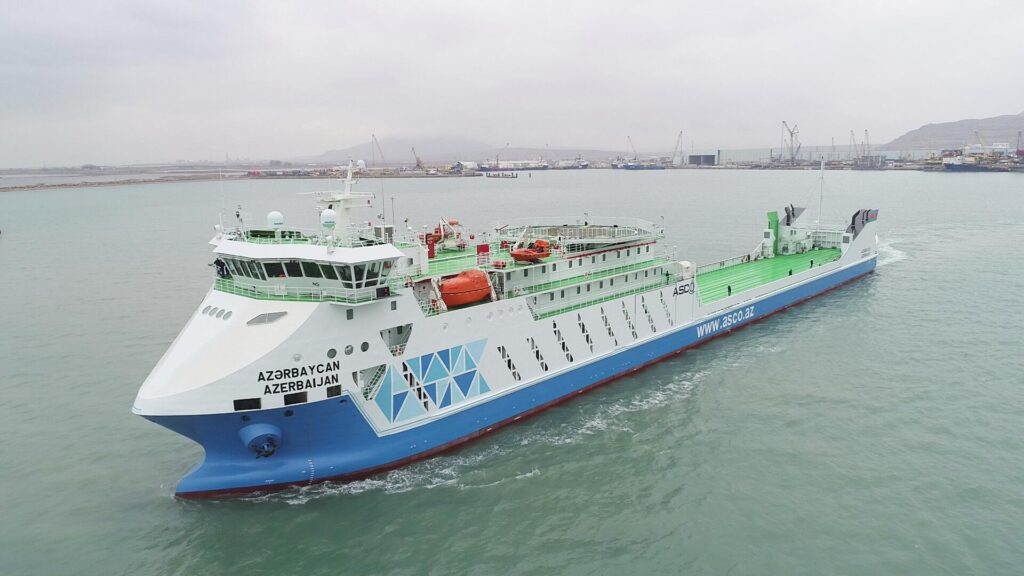
Azerbaijan and Uzbekistan plan to cooperate on the construction of ferries. These ferries will be provided for Uzbekistan's needs, and the project will cost $150 million. Several measures are being suggested to expand the countries' cooperation in the transport and transit sectors. The joint construction of warehouse infrastructure is being mooted, as well as the creation of a joint venture to further develop transportation along the Trans-Caspian route. The Times of Central Asia previously wrote about the Uzbekistan-Azerbaijan business forum that was held in Tashkent on August 22. As a result of the forum, a portfolio of projects worth $2 billion was formed in energy, chemistry, mining, textile, agriculture, urban development, and other areas. Also, on May 1 this year, the energy ministers of Azerbaijan, Kazakhstan, and Uzbekistan met in Tashkent and signed a memorandum of cooperation to connect their countries' energy networks. The initiative's main goal is to study the means of connecting energy systems through a high-voltage cable installed in the Caspian Sea to export green energy from Azerbaijan, Kazakhstan, and Uzbekistan to countries of the European Union.

Uzbekistan and Azerbaijan Seal Lucrative Deals

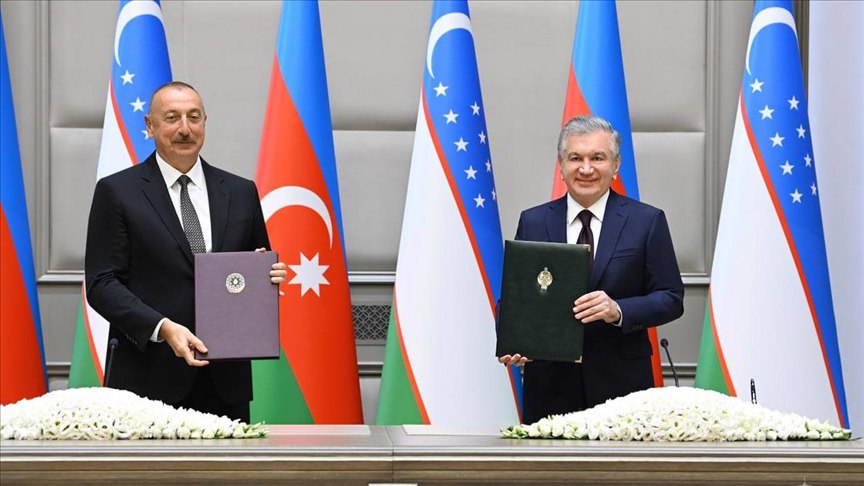
On August 22, at the invitation of Shavkat Mirziyoyev, President of Azerbaijan, Ilham Aliyev, arrived in Uzbekistan on a state visit. The event, covered by the presidential text service, included a report on a meeting between the presidents, and the first sitting of the Interstate Supreme Council on August 23, at which Mirziyoyev announced:  “Today, we will sign the Treaty on Union Relations. For several years, we have raised Uzbekistan-Azerbaijan relations to the highest level of interstate cooperation." The Uzbek president then referred to the 30th anniversary of diplomatic relations between Uzbekistan and Azerbaijan, to be celebrated next year and in turn,  Mirziyoyev proposed commemorating the date and declaring 2025, 'Year of Economic Cooperation between Uzbekistan and Azerbaijan'. As a result of the meeting, an agreement was made to adopt a comprehensive program covering 20 prioritized sectors. Cooperation on a portfolio of projects, worth over 2 billion dollars, in energy, chemistry, mining, textile, agriculture, urban development, and other areas was established, and agreement met on increasing the number of air flights, easing surface and air transport procedures, and digital solutions. Mirziyoyev proposed establishing a mechanism for regular meetings between rectors of the two countries' leading universities and holding a joint media forum. Prospects of building tourism and business complexes in the capitals were also discussed to increase the flow of tourists, humanitarians, and business exchanges. In addition,  the presidents signed an Agreement on Union Relations, adopted at the first meeting of the Interstate Supreme Council. The meeting closed with a ceremonial signing of bilateral documents comprising: ¾ Intergovernmental agreement on labor activity and protection of citizens’ rights; ¾ Practical action plan for further expansion of trade, economic, and investment cooperation; ¾ Memorandum on cooperation in the fields of preschool education, vocational education, secondary special education, higher education, and science; ¾ Action plan in the field of tourism for 2024-2026; ¾ Cooperation program for 2024-2026 between the Ministry of Justice of Uzbekistan and the State Agency for Citizen Services and Social Innovation under the President of Azerbaijan; ¾ Memorandum on cooperation between the Center for Professional Development of Lawyers under the Ministry of Justice of Uzbekistan and the Academy of Justice of the Ministry of Justice of Azerbaijan; ¾ Agreement on cooperation between the National Guard of Uzbekistan and the Ministry of Internal Affairs of Azerbaijan, and ¾ Memorandum on cooperation between centers of forensic expertise. During the event, the presidents also met with representatives of companies from both countries including Azerbaijan’s PASHA Holding, SOCAR, SOFAZ, Agalarov Development, Silk Way Group, Matanat, Sarda Group, AzerGold, Azermash, Azerbaijan Investment Holding, Azerbaijan Railways, and  Alyat Free Economic Zone. The meeting concluded with the launch of various cooperative projects ranging from the construction of hotel and residential complexes in Tashkent and building material production in the Kashkadarya region (Uzbekistan),  to the establishment of textile clusters and a sewing factory in Azerbaijan. To mark the end of the state visit, the two presidents and their wives attended in a concert featuring artists from the two countries.

Caspian Sea Swim by Travelers Carl Bushby and Angela Maxwell

British traveler Carl Bushby and American traveler Angela Maxwell, accompanied by accompanied by 15-time Azerbaijani swimming champions Anastasia Boborkina and Abdurrahman Rustamov, plan to become the first people ever to swim across the world's largest closed inland body of water, the Caspian Sea. The expedition covering approximately 300 kilometers, from Aktau, Kazakhstan, to Baku, Azerbaijan, will begin mid-August and take about a month to complete. Crossing the Caspian Sea is a significant part of the unique and ambitious 'Goliath' project instigated by Carl Bushby to circumnavigate the globe without using any form of transport. Having set off in 1998, the paratrooper-turned writer has now covered over two-thirds of the 58,000-kilometre journey. Angela Maxwell is an experienced American traveler, renowned for her extreme expeditions. In 2014, she sold all her belongings and set off on foot to explore the world.  Since then, she has covered thousands of kilometers, often alone, through different countries, encountering diverse cultures and overcoming numerous challenges. Maxwell's participation in the Caspian Sea swim adds a new dimension to the Goliath expedition whilst emphasizing both adventurers' daring spirit and courage. The Caspian Sea swim is a physically challenging and strategically important part of  journey, given the current climate which prohibits crossing Russia and Iran by foot. Bushby admits to having limited swimming experience and to preserve their energy and safely attain their goal, the pair plan to swim around 10 kilometers a day, escorted by a boat to assist in any emergencies.

Azerbaijan and Turkmenistan Nominate Traditional Craft of ‘Guram’ for UNESCO Cultural Heritage List

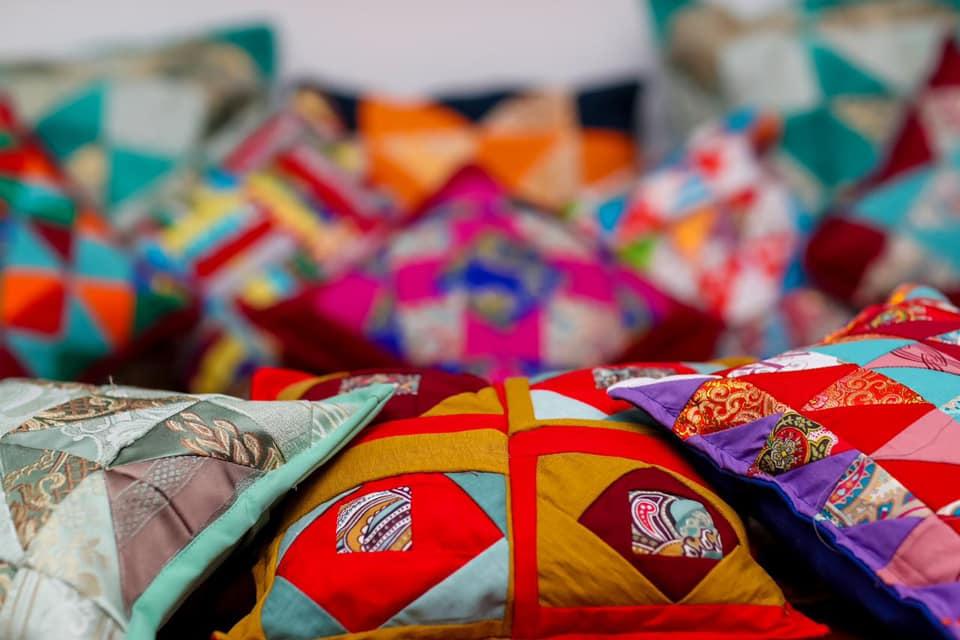
Turkmenistan's National Commission to UNESCO is actively working towards the international promotion of the country's cultural heritage and in collaboration with Azerbaijan, has nominated the patchwork art of 'guram' for inclusion in the List of Intangible Cultural Heritage of Humanity. Regarding the move, Chinar Rustemova, Executive Secretary of the National Commission of Turkmenistan for UNESCO, stated, "We have also started talks with the Turkic History and Culture Foundation of the Republic of Turkey (TURKTAV) on cooperation in popularizing the cultural heritage of the Turkmen people in the Turkic world. The plans include expanding exhibition and library activities and organizing specific events within the framework of the regional project 'Our Heritage' proposed by the Turkmen side." It should be noted that this year, on the initiative of Turkmenistan, Tajikistan, and Iran, preparations are underway to nominate "Traditions of making cradles and singing cradle songs" for inclusion in the List of Intangible Cultural Heritage of Humanity.