• KZT/USD = 0.00216
  • TJS/USD = 0.10800
  • UZS/USD = 0.00009
  • TMT/USD = 0.29850
  • KZT/USD = 0.00216
  • TJS/USD = 0.10800
  • UZS/USD = 0.00009
  • TMT/USD = 0.29850
  • KZT/USD = 0.00216
  • TJS/USD = 0.10800
  • UZS/USD = 0.00009
  • TMT/USD = 0.29850
  • KZT/USD = 0.00216
  • TJS/USD = 0.10800
  • UZS/USD = 0.00009
  • TMT/USD = 0.29850
  • KZT/USD = 0.00216
  • TJS/USD = 0.10800
  • UZS/USD = 0.00009
  • TMT/USD = 0.29850
  • KZT/USD = 0.00216
  • TJS/USD = 0.10800
  • UZS/USD = 0.00009
  • TMT/USD = 0.29850
  • KZT/USD = 0.00216
  • TJS/USD = 0.10800
  • UZS/USD = 0.00009
  • TMT/USD = 0.29850
  • KZT/USD = 0.00216
  • TJS/USD = 0.10800
  • UZS/USD = 0.00009
  • TMT/USD = 0.29850
19 August 2026

Viewing results 1 - 6 of 19

CPC Halts Oil Loadings Again After Two More Tankers Attacked Near Novorossiysk

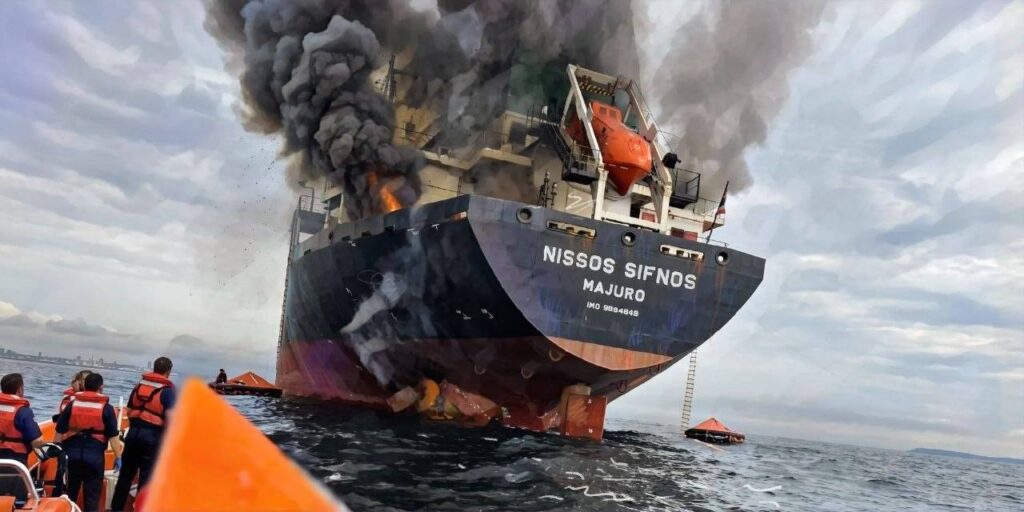
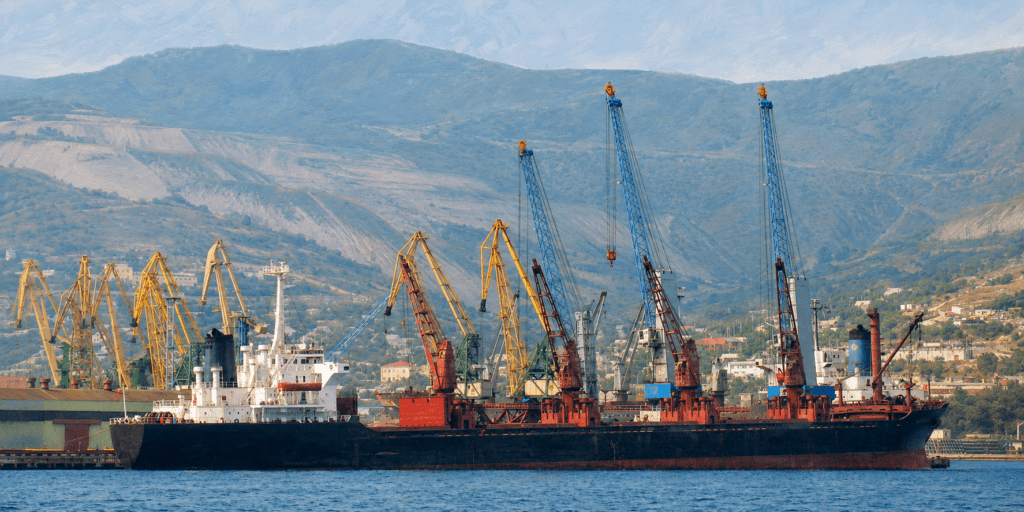
The Caspian Pipeline Consortium has stopped oil loading at its Black Sea terminal near Novorossiysk after two more tankers were attacked early on July 30. The suspension came only three days after Kazakhstan resumed exports through the route following a week-long disruption. The Marshall Islands-flagged NISSOS SIFNOS was attacked at 1:48 a.m. Moscow time while loading Tengizchevroil crude at single-point mooring SPM-3, CPC said. A drone hit the cargo deck near the manifolds used to receive oil. The strike caused a fire, which the crew extinguished with help from three CPC support vessels. CPC said no employees or contractors were injured, no oil spill occurred, and the crew did not request medical assistance or evacuation. Okeanis Eco Tankers, the vessel’s owner, said NISSOS SIFNOS sustained only minor damage, its crew was safe, and no spill or pollution occurred. The company said the tanker was continuing its voyage operations. The tanker MARATHI was also attacked while awaiting a berth at the CPC terminal, about six nautical miles, or eleven kilometres, offshore. Dynacom Tankers, the vessel’s operator, said it was struck by two projectiles of unknown origin. The resulting fire was extinguished by the crew, all of whom were safe and accounted for. No pollution was reported. Dynacom said it had activated its emergency response plan and remained in contact with the crew and the relevant authorities. “Oil loading has been stopped, while pipeline facilities are operating normally,” CPC said. The consortium did not identify who carried out either attack. No party had claimed responsibility when the suspension was announced. Ukraine’s drone forces later said they had struck four Russian tankers in the Black and Azov seas overnight but did not identify the vessels or locations. The statement therefore did not establish responsibility for the attacks on NISSOS SIFNOS or MARATHI. CPC said appeals from Kazakhstan and its foreign shareholders had been ignored. It said some representations were made through the U.S. State Department. On July 23, the chair of the House Foreign Affairs Subcommittee on South and Central Asia, Bill Huizenga, told The Times of Central Asia that further strikes affecting CPC infrastructure would “not be tolerated.” CPC said attacks near loading equipment could cause a major fire and oil spill. The consortium also warned of damage to Kazakhstan and to shippers including Chevron, ExxonMobil, Eni, TotalEnergies, and Shell. On July 27, CPC had restarted tanker loadings and resumed accepting oil from Kazakhstan after storage constraints forced producers to cut output. The July 30 incidents bring the number of tankers struck near or while serving the CPC terminal during July to at least eight. The sequence began with the Chevron-chartered Yasa Polaris on July 7. Nordic Zenith was hit on July 17. ASIA and NISSOS IOS were attacked while loading Kazakh crude on July 19. NELSA was struck at SPM-1 on July 20, and HERA was reported damaged while approaching the terminal on July 23. The earlier attacks repeatedly stopped loadings. CPC then stopped accepting crude, and tankers scheduled to collect...

As Two Wars Reach the Caspian, Central Asia’s Middle Corridor Holds

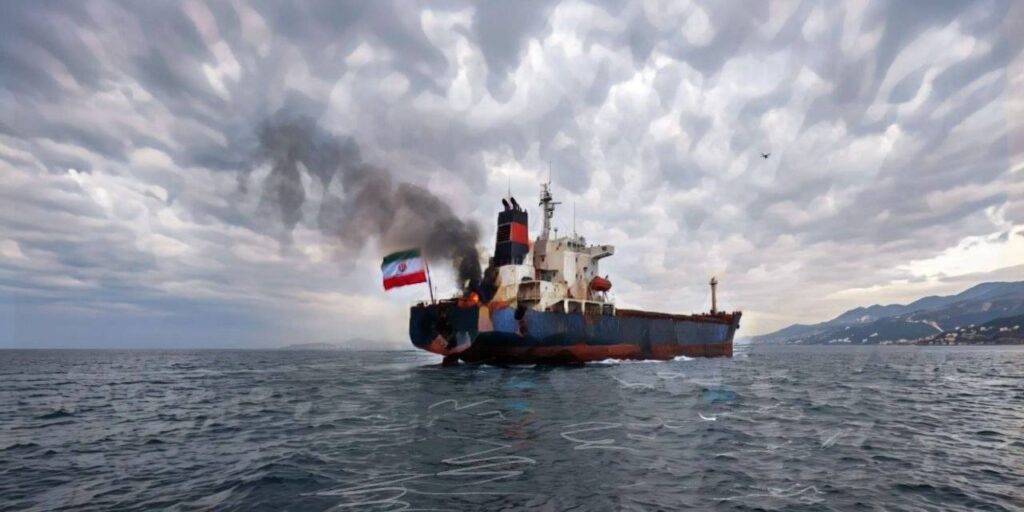
On July 25, two wars met in waters that Central Asian governments had tried to keep apart. Ukraine reported successful long-range strikes in the Caspian Sea. President Volodymyr Zelenskyy said the targets included vessels involved in carrying military cargo from Iran and a warship. Tehran said an Iranian commercial vessel had been struck, killing one sailor and injuring another, and accused Kyiv of trying to widen the war. It remains unclear whether the vessel identified by Iran was among the targets described by Zelenskyy. Diplomacy produced a limited off-ramp. On July 28, Ukrainian Foreign Minister Andrii Sybiha told his Iranian counterpart, Abbas Araqchi, that the strike on the Iranian ship was unintended. Both governments said they wanted to avoid further escalation. The call reduced the immediate risk of retaliation, but it did not remove the new danger. The Caspian is now one of the places where Russia’s war against Ukraine and the war involving Iran, Israel, and the United States intersect. Central Asia is exposed through the infrastructure and trade routes linking them. A “Sea of Peace” Under Pressure Turkmenistan responded to the incident with unusually direct language. Its Foreign Ministry called attacks on vessels in the Caspian “inadmissible” and described the waterway as a “sea of peace, harmony and good-neighborliness.” Ashgabat did not name Ukraine or endorse Iran’s account. Its restraint was characteristic, but the public criticism was unusual. Turkmenistan’s permanent neutrality normally produces guarded statements during external conflicts. The intervention showed that Ashgabat viewed the attack as a challenge to the regional order. Turkmenistan faces Iran across a 1,148-kilometer land border and the southern Caspian. Turkmenbashi port is also central to its plans for a larger role in Eurasian trade. The principle is set out in the Convention on the Legal Status of the Caspian Sea, signed in Aktau in 2018. Its text calls for the peaceful use of the sea, prohibits the use or threat of force, and bars armed forces belonging to non-Caspian states. The convention has not entered into force because Iran has not ratified it. Its provisions were designed to govern relations among the five littoral states. They do not address a long-range strike carried out by a non-littoral state. But modern drones can cross distances that once provided strategic shelter. A landlocked sea can no longer be assumed to sit beyond the reach of surrounding wars. The Iran-Russia Link Ukraine has clear military reasons to look toward the Caspian. Iran has supplied Russia with drone technology used against Ukrainian cities and infrastructure. The sea also provides a direct commercial route between Iranian ports and Russia’s Volga region. Kyiv now treats vessels on that route carrying military cargo as part of Russia’s military logistics. Iran described the vessel struck on July 25 as civilian. The dispute over the ship’s cargo is central because commercial and military supply chains can overlap. A vessel may be civilian by flag and registration while carrying goods that Ukraine considers part of Russia’s war effort. That uncertainty reaches beyond...

Kazakhstan Resumes CPC Oil Exports After Output More Than Halves

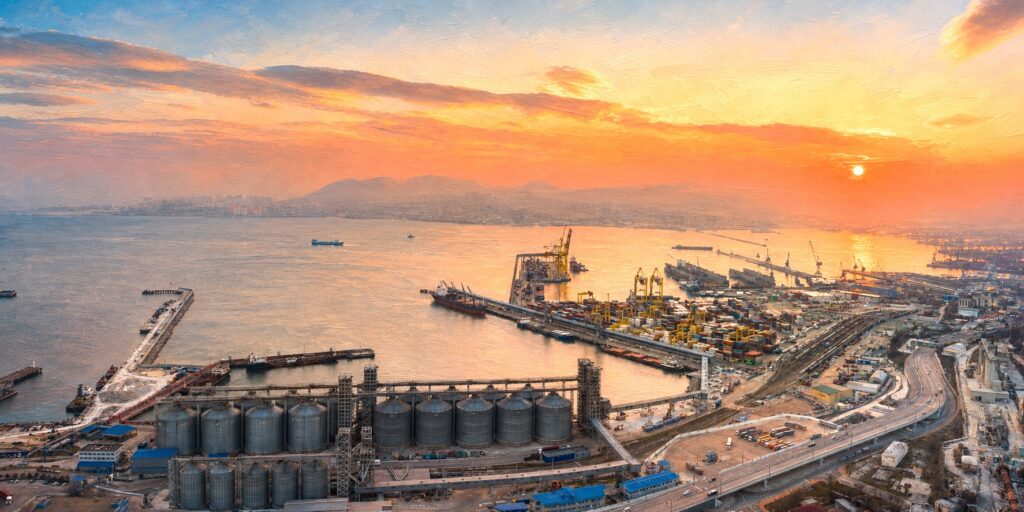
Kazakhstan resumed oil exports through the Caspian Pipeline Consortium on July 27 after the consortium restarted accepting crude and loading tankers at its Black Sea terminal near Novorossiysk. The Energy Ministry said the SEAMAJESTY and MILOS tankers were loading crude supplied by Tengizchevroil at two of the terminal’s single-point moorings. CPC said its pipeline had been back online since 12:28 p.m. Moscow time. Loading operations resumed after a week-long suspension. The ministry said terminal operations would continue according to assessments of the security situation and compliance with safety requirements. It remains in contact with CPC management, oil producers, and other companies involved in the shipments. The restart followed the sharpest production decline recorded during the disruption. Kazakhstan’s oil and gas condensate output fell to about one million barrels per day on July 26, according to an industry source. That was less than half the June average of 2.16 million barrels per day. Production had already fallen by about 21% as of July 22, to 1.63 million barrels per day. Tengiz, Kazakhstan’s largest oilfield, bore the heaviest initial reduction. Its output dropped by 56%, from a July average of 925,000 barrels per day to about 406,000 barrels per day. By July 26, the cuts had spread across Kazakhstan’s three largest oil projects. Daily production at Tengiz, Kashagan, and Karachaganak fell by between 70% and 90% compared with June levels, according to an industry source. The Energy Ministry and the projects’ operators did not comment on the field-level figures. Producers reduced output after CPC restricted intake from Kazakhstan and suspended tanker loadings. Storage tanks at the terminal had reached capacity, leaving the pipeline system with little room to receive additional crude. The Energy Ministry described the reductions as a technical measure intended to keep production operations stable. The halt followed a series of drone attacks on tankers near the CPC terminal. Three vessels were struck on July 17 and 19, including two loading Kazakh oil. Loadings briefly resumed before another tanker, NELSA, was hit at a single-point mooring on July 20. No casualties or oil spills were reported. Kazakhstan condemned the attacks and said an agreed information-sharing mechanism intended to protect civilian vessels carrying CPC crude had been disregarded. The government described the incidents as a threat to international energy security and demanded an immediate halt. The 1,510-kilometer CPC pipeline carries crude from western Kazakhstan through Russia to the Black Sea. It handles more than 80% of Kazakhstan’s oil exports, including most production from Tengiz, Kashagan, and Karachaganak. The shutdown added to a difficult year for the sector. Kazakhstan produced 45.7 million tonnes of oil in the first half of 2026, down 8.4% year-on-year. The ministry expects full-year production of 98 million tonnes after lowering its previous target because of earlier Tengiz outages and CPC disruptions. It was not immediately clear how quickly output would return to earlier levels. The reopening restores Kazakhstan’s main export outlet, but the speed and scale of the cuts again exposed its dependence on infrastructure vulnerable to...

Tokayev Calls for Ukraine War Freeze as Black Sea and Caspian Risks Grow

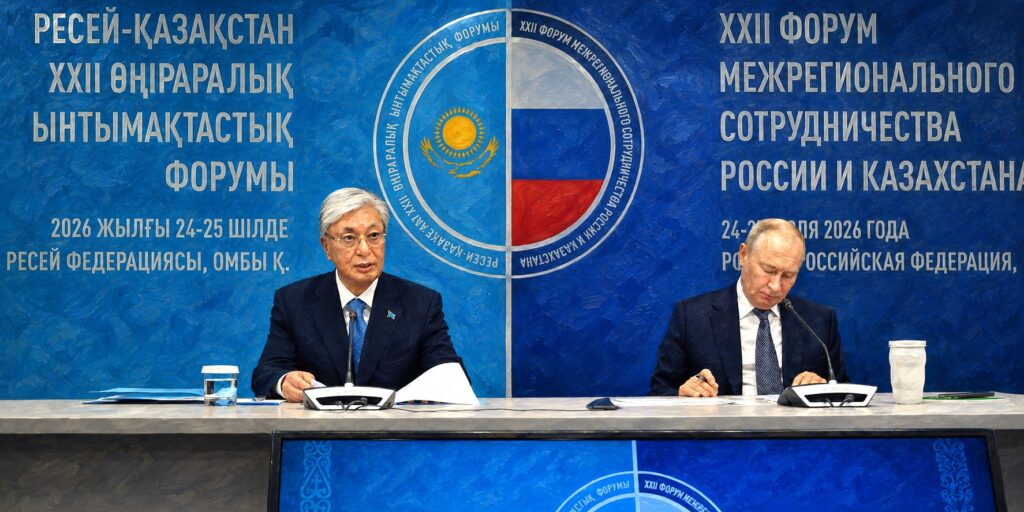
Kazakh President Kassym-Jomart Tokayev has called for Russia and Ukraine to freeze the war and return to negotiations, delivering one of his clearest public appeals for an end to the conflict while seated beside Russian President Vladimir Putin. "Perhaps this conflict should already be frozen and we should return to the Istanbul Formula 2.0, since significant results were achieved there," Tokayev said during talks in Omsk on July 25. He said major powers, including Russia, should provide security guarantees before the sides moved towards a lasting peace. Russia and Ukraine held talks in Istanbul soon after Russia's full-scale invasion in 2022 and resumed direct negotiations there in 2025, though neither round produced a settlement. Moscow and Kyiv dispute how close the 2022 talks came to an agreement and why they collapsed. Tokayev described the war as an "interstate conflict," and said that Kazakhstan respects the Ukrainian people, their culture and language. He also expressed concern over the deaths of young Russians and Ukrainians. Tokayev declined any formal role for Astana, but stated that he had received proposals and appeals concerning mediation, including from Europe and the United States. He said Kazakhstan was not an outsider, but that Russia was capable of resolving the issue without an intermediary. He also reaffirmed Kazakhstan's strategic partnership and allied relationship with Russia, praising what he called Putin's diplomatic flexibility during the Russian president's August 2025 meeting with U.S. President Donald Trump in Anchorage. The Kremlin rejected the idea of a freeze. Spokesperson Dmitry Peskov said it was impossible under Kyiv's current position. He repeated Moscow's claim that fighting could stop if Ukraine made what Russia considers the necessary decisions. Russia's stated terms include Ukrainian withdrawal from Donetsk, Luhansk, Zaporizhzhia, and Kherson regions, including areas Moscow does not control. Putin also wants Kyiv to renounce its aim of joining NATO. Ukraine has rejected those conditions. Tokayev's position has developed publicly, but has remained centered on negotiations. In September 2024, he said Russia was "militarily invincible" and argued that continued escalation could bring about a wider disaster. He called for hostilities to stop before negotiations moved to territorial issues. Kazakhstan has also kept its distance from several central Kremlin claims. In June 2022, Tokayev refused to recognize the Russian-backed entities in Donetsk and Luhansk, describing them as "quasi-state territories." Astana has continued to cite the UN Charter, state sovereignty, and territorial integrity. The latest appeal came as the war reached shipping routes close to Kazakhstan and disrupted the country's main oil export corridor. On July 25, Iran accused Ukraine of attacking an Iranian commercial vessel in the Caspian Sea. Tehran said an explosion killed one sailor and injured another, summoning Ukraine's chargé d'affaires and describing the strike as hostile and criminal. Ukrainian President Volodymyr Zelensky said his forces had achieved "very strong results" with long-range strikes in the Caspian, and that targets included a Russian warship and vessels used for military cargo shipments involving Iran. Zelensky did not identify the vessels, and Iran did not name...

Kazakhstan Oil Output Falls 21% as CPC Halt More Than Halves Tengiz Production

Kazakhstan's oil and gas condensate output fell by about 21% on July 22 after the Caspian Pipeline Consortium stopped receiving Kazakh crude and suspended loadings at its Black Sea terminal. Output dropped to 1.63 million barrels per day from a July average of 2.07 million, Reuters said, citing an industry source. The sharpest reduction came at Tengiz, Kazakhstan's largest oilfield. Production fell by 56%, from an average 925,000 barrels per day in July to about 406,000 on Wednesday, reflecting how quickly a halt at Novorossiysk can force cuts at a field more than 1,500 kilometres away. Kazakhstan's Energy Ministry confirmed the reduction, stating that producers had cut output because CPC had restricted intake and their storage tanks were nearing capacity. "The adjustment was a technical measure intended to keep production operations stable," the ministry said. It added that CPC’s production facilities remained operational and could resume shipments when conditions allowed. Consultations were continuing with the consortium, producers, shipowners, and state agencies. No timetable was given. Tengiz Bears the Brunt Chevron began production from the $48 billion Future Growth Project in January 2025. The expansion was designed to add 260,000 barrels of crude per day and raise total Tengiz output to about one million barrels of oil equivalent per day at full capacity. Chevron owns 50% of Tengizchevroil, while ExxonMobil holds 25%, KazMunayGas 20%, and Lukoil 5%. The field provides a large share of Kazakhstan's oil production and export income. After the tanker ASIA was struck on July 19, Chevron told The Times of Central Asia that the crew was safe and the vessel was stable. "There has been no impact to TCO operations or exports," the company said. However, by July 22, the export halt had forced cuts at Tengiz. Chevron did not immediately comment on the new production figures cited by Reuters. The cut compounds a difficult year for the sector. Kazakhstan produced 45.7 million tonnes of oil in the first half of 2026, down 8.4% from a year earlier. The Energy Ministry still expects 98 million tonnes for the full year, after lowering its previous target because of Tengiz outages and earlier CPC disruption. Kazakhstan's OPEC+ crude quota rose to 1.608 million barrels per day for July. The national output figure includes gas condensate and cannot be compared directly with the crude allocation. The latest reduction removes barrels Kazakhstan intended to export. The timing adds to the revenue loss. Brent rose above $100 on July 23 after attacks on Saudi tankers in the Red Sea added to disruption around the Strait of Hormuz. Tanker Attacks Halt CPC Loadings The production cuts followed a series of attacks on tankers near CPC's marine terminal. The Chevron-chartered Yasa Polaris was hit on July 7 while empty and waiting offshore. Its crew was safe, and no pollution or major hull damage was reported. Nordic Zenith was struck on July 17 while empty and approaching the terminal. ASIA and NISSOS IOS were hit on July 19 while loading Kazakhstan-produced crude. Loading briefly resumed...

Huizenga Warns Kyiv Further Strikes on CPC “Will Not Be Tolerated”

The House Foreign Affairs subcommittee chair invoked nearly $200 billion in U.S. support as attacks around Kazakhstan’s principal oil-export route forced production cuts and sharpened questions about Europe’s response. Representative Bill Huizenga has warned that further strikes affecting the Caspian Pipeline Consortium terminal will not be tolerated, explicitly linking Ukraine’s obligation to protect legitimate allied energy exports with the scale of American support for Kyiv. Huizenga, a Michigan Republican who chairs the House Foreign Affairs Subcommittee on South and Central Asia, was asked by The Times of Central Asia what immediate diplomatic steps the administration should take to safeguard Kazakhstan’s principal oil-export route and civilian vessels carrying its crude. He responded: “The Administration must be clear with the Ukrainians: Targeting the CPC Terminal poses a risk not only to civilians, but also to US interests. Ukraine has an obligation to steer clear of any legitimate allied energy exports and infrastructure that contributes to global energy security and economic stability. The generosity of the American people, nearly $200 billion in direct support to the Government of Ukraine, is not charity. Further strikes will not be tolerated.” Huizenga was warning that U.S. support for Ukraine is not unconditional. By linking American aid to Ukraine’s duty to avoid striking allied energy infrastructure, he signaled that further attacks on vital facilities like the CPC terminal could put that support at risk. American support, as Huizenga framed it, comes with obligations. A government receiving aid on this scale cannot repeatedly disregard safeguards protecting U.S. interests, allied energy exports, and civilian shipping without jeopardizing that support. The U.S. Ukraine Oversight tracker currently lists total appropriations for Operation Atlantic Resolve and broader Ukraine assistance at $195 billion — a figure that includes military replenishment and other U.S. costs beyond direct transfers to Kyiv. Washington Had Already Drawn the Boundary Huizenga’s intervention follows two earlier warnings from the administration. In February, Ukraine’s ambassador to the United States, Olha Stefanishyna, acknowledged that the State Department had delivered a formal démarche after a Ukrainian attack on Novorossiysk affected American and Kazakh economic interests. Stefanishyna said the communication was directed at the harm caused to those interests rather than Ukraine’s campaign against Russian military and energy infrastructure more broadly. Ukraine, she said, had taken note of the message. The same distinction emerged again on July 21. The Wall Street Journal reported that the Trump administration had urged Kyiv to curb attacks on non-Russian vessels following four strikes in four days on tankers serving the CPC terminal. The warning drew a boundary around foreign commercial shipping and third-country trade without calling on Ukraine to abandon its broader campaign against Russian targets. Huizenga has now carried that position further. The State Department communicated the boundary privately in February, and the White House reiterated it in July. By invoking the scale of American assistance and warning that further strikes would not be tolerated, Huizenga made clear that continued violations could place U.S. support at risk. The latest disruption also continued after the White House...