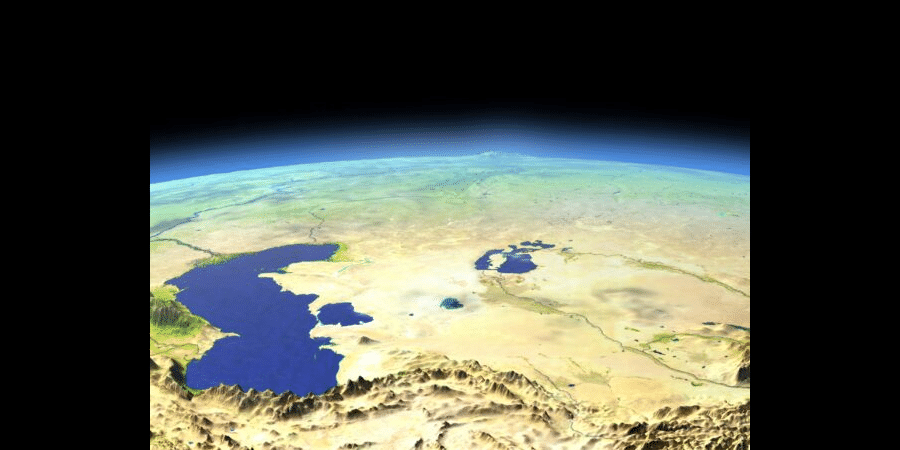
On July 25, two wars met in waters that Central Asian governments had tried to keep apart.
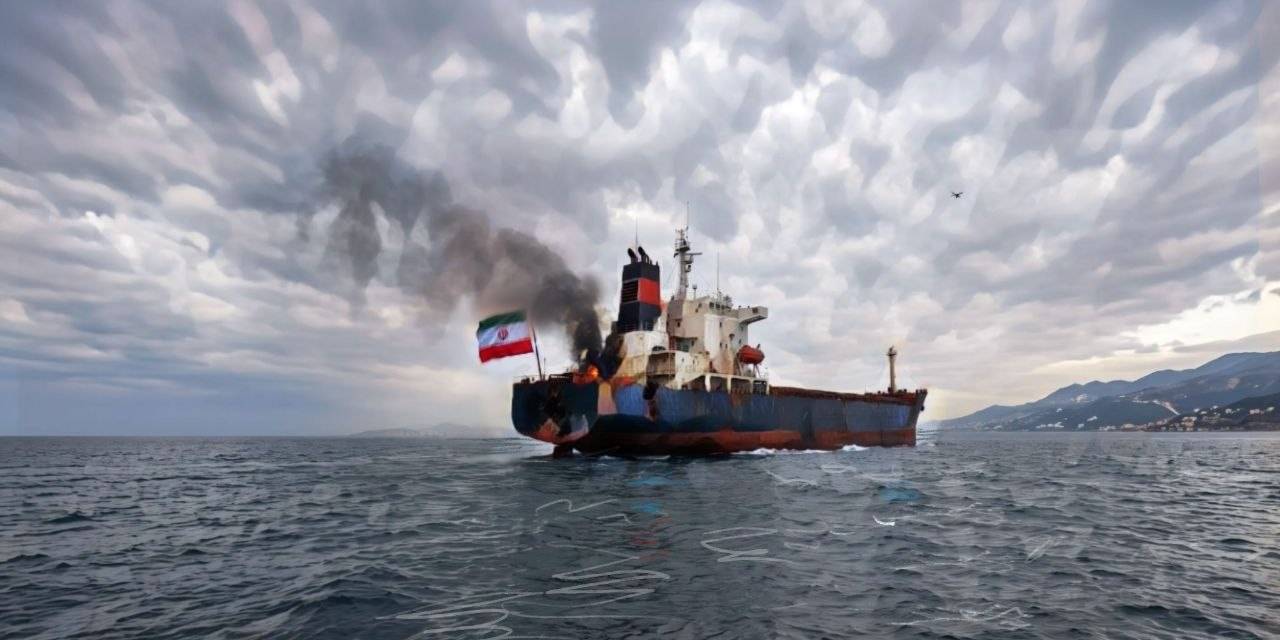
Ukraine reported successful long-range strikes in the Caspian Sea. President Volodymyr Zelenskyy said the targets included vessels involved in carrying military cargo from Iran and a warship.
Tehran said an Iranian commercial vessel had been struck, killing one sailor and injuring another, and accused Kyiv of trying to widen the war. It remains unclear whether the vessel identified by Iran was among the targets described by Zelenskyy.
Diplomacy produced a limited off-ramp. On July 28, Ukrainian Foreign Minister Andrii Sybiha told his Iranian counterpart, Abbas Araqchi, that the strike on the Iranian ship was unintended. Both governments said they wanted to avoid further escalation.
The call reduced the immediate risk of retaliation, but it did not remove the new danger. The Caspian is now one of the places where Russia’s war against Ukraine and the war involving Iran, Israel, and the United States intersect. Central Asia is exposed through the infrastructure and trade routes linking them.
A “Sea of Peace” Under Pressure
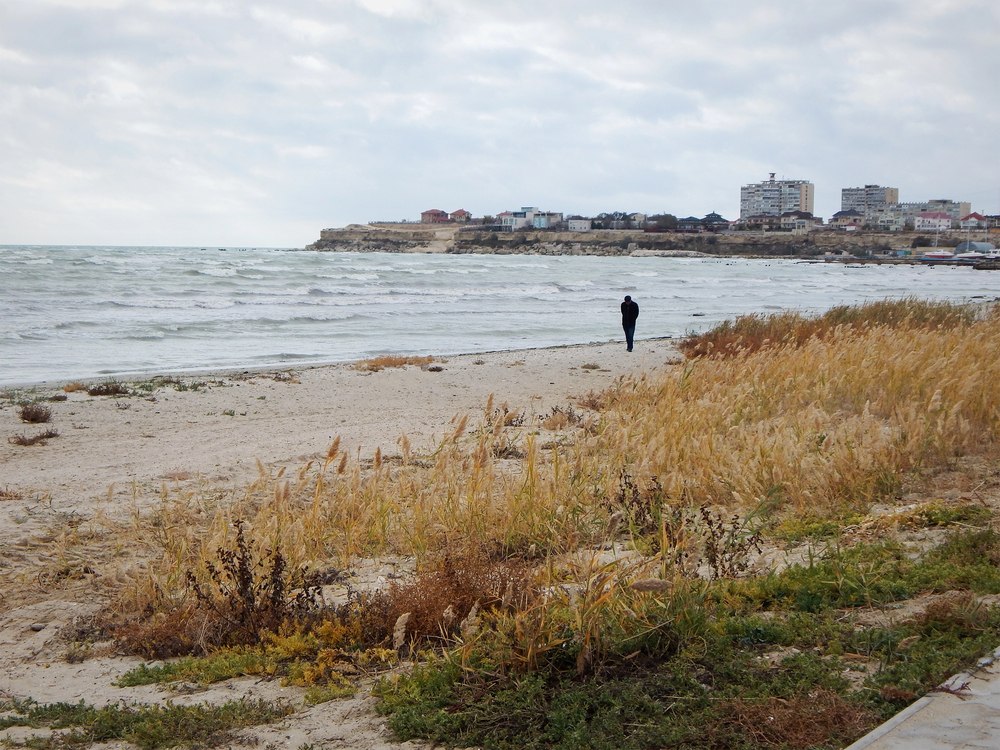
Turkmenistan responded to the incident with unusually direct language. Its Foreign Ministry called attacks on vessels in the Caspian “inadmissible” and described the waterway as a “sea of peace, harmony and good-neighborliness.”
Ashgabat did not name Ukraine or endorse Iran’s account. Its restraint was characteristic, but the public criticism was unusual. Turkmenistan’s permanent neutrality normally produces guarded statements during external conflicts.
The intervention showed that Ashgabat viewed the attack as a challenge to the regional order. Turkmenistan faces Iran across a 1,148-kilometer land border and the southern Caspian. Turkmenbashi port is also central to its plans for a larger role in Eurasian trade.
The principle is set out in the Convention on the Legal Status of the Caspian Sea, signed in Aktau in 2018. Its text calls for the peaceful use of the sea, prohibits the use or threat of force, and bars armed forces belonging to non-Caspian states. The convention has not entered into force because Iran has not ratified it.
Its provisions were designed to govern relations among the five littoral states. They do not address a long-range strike carried out by a non-littoral state. But modern drones can cross distances that once provided strategic shelter. A landlocked sea can no longer be assumed to sit beyond the reach of surrounding wars.
The Iran-Russia Link
Ukraine has clear military reasons to look toward the Caspian. Iran has supplied Russia with drone technology used against Ukrainian cities and infrastructure. The sea also provides a direct commercial route between Iranian ports and Russia’s Volga region. Kyiv now treats vessels on that route carrying military cargo as part of Russia’s military logistics.
Iran described the vessel struck on July 25 as civilian. The dispute over the ship’s cargo is central because commercial and military supply chains can overlap. A vessel may be civilian by flag and registration while carrying goods that Ukraine considers part of Russia’s war effort.
That uncertainty reaches beyond Iran and Russia. Commercial vessels use the same ports and sea lanes as military-linked traffic. Insurers respond to perceived risk rather than diplomatic distinctions. Ashgabat has invested in new cargo vessels for the Middle Corridor. The July 25 strike did not interrupt freight on the route.
Kazakhstan’s Main Oil Export Route Is Disrupted
The clearest Central Asian disruption occurred on the Black Sea. Four tankers were struck near the Caspian Pipeline Consortium terminal at Novorossiysk between July 17 and 20, including two vessels loading Kazakh crude.
Russia accused Ukraine of carrying out the strikes. Ukraine’s ambassador to Kazakhstan told The Times of Central Asia that there was “no evidence whatsoever” that Kyiv had carried out the attacks on July 17 and 19.
Washington has raised the issue directly with Kyiv twice. In February, Ukraine’s ambassador to the United States disclosed that the State Department had delivered a formal démarche after a Ukrainian attack on Novorossiysk affected American and Kazakh economic interests. On July 21, The Wall Street Journal reported that the Trump administration had again urged Kyiv to avoid attacks on non-Russian vessels serving the terminal.
Together, the two interventions draw a clear boundary around damage to American and Kazakh interests and attacks on non-Russian vessels serving CPC. On July 23, Representative Bill Huizenga, chair of the House Foreign Affairs Subcommittee on South and Central Asia, reinforced that position publicly. “Further strikes will not be tolerated,” he told The Times of Central Asia.
In total, six tankers were struck near CPC during July. The disruption left terminal storage tanks full. Three industry sources said CPC had stopped accepting crude from Kazakhstan. Producers then reduced output to prevent crude from backing up through the pipeline system. By July 26, Kazakhstan’s oil and gas condensate production had fallen to about one million barrels per day, less than half the June average of 2.16 million barrels per day.
Tengiz, the country’s largest oilfield, bore the heaviest initial cut. Its output fell by 56%, from a July average of 925,000 barrels per day to around 406,000. By July 26, an industry source said production at Tengiz, Kashagan, and Karachaganak was between 70% and 90% below June levels.
Loading resumed on July 27, but the shutdown exposed the cost of Kazakhstan’s geographic dependence. The 1,510-kilometer CPC pipeline carries more than 80% of Kazakhstan’s oil exports.
Despite its name, the pipeline does not cross the Caspian. It runs from western Kazakhstan through Russia to the Black Sea. The interruption strengthened the case for alternatives rather than showing that diversification had failed. The Middle Corridor remained operational, while Kazakhstan’s separate trans-Caspian oil route provided a limited outlet.
The Middle Corridor Becomes More Important
The July 25 strike introduced a new security concern around the Caspian leg of the Middle Corridor. Yet the alternatives carry greater immediate risks. Northern routes through Russia remain exposed to the war and sanctions-related or political disruption. Southern routes through Iran now face direct military danger, alongside sanctions and banking constraints. The route across the Caspian through Azerbaijan, Georgia, and Türkiye therefore remains Central Asia’s main established westbound alternative. Its maritime leg, however, can no longer be assumed to remain insulated from surrounding conflicts.
Azerbaijan, the corridor’s western landing point, has already experienced direct spillover from the Iran conflict. In March, drones that Baku said were launched from Iranian territory struck the terminal at Nakhchivan International Airport and crashed near a school. Civilians were injured, while Iran denied responsibility. The incident did not interrupt the Middle Corridor, but it showed that the South Caucasus section is also exposed to regional escalation.
The corridor is also becoming more capable. Freight volumes transported through Kazakhstan rose from 0.8 million to about 4.5 million metric tons over seven years. The 2026 plan targets 600 container trains from China, while Kazakhstan is also expanding its port and vessel capacity. An $846 million World Bank guarantee approved in February is intended to mobilize $1.41 billion in long-term financing for a major rail project on the Kazakh section. These investments will not remove border crossings or the need to transfer cargo between rail and ship, but they should gradually ease several of the corridor’s main bottlenecks.
The route now has wider strategic value. Washington is seeking closer critical minerals partnerships with Central Asia through the C5+1 Critical Minerals Dialogue. Europe also has a direct interest in preserving access to Kazakh oil. Across 2025, Kazakhstan accounted for 12.7% of the value of EU imports of petroleum oils from outside the bloc, behind only the United States and Norway.
The Middle Corridor cannot match the northern rail network at its current capacity. Kazakhstan’s separate trans-Caspian oil route also cannot replace CPC. Trans-Caspian oil shipments offer only limited relief, while the corridor’s immediate strength lies in containerized and industrial freight, including selected critical mineral supply chains. Its value comes from giving exporters another route.
The Caspian strike makes the protection of civilian shipping and contingency planning more urgent. It also strengthens the case for expanding Central Asia’s main established westbound corridor that avoids both Russia and Iran. Washington wants resilient access to Central Asian minerals, while Europe relies on Kazakhstan as a major oil supplier. That redundancy has growing importance for global supply-chain security.
Pressure from the North and South
The war involving Iran has also complicated Central Asia’s southern outlets. Routes through Iran offer access to Persian Gulf ports and connections toward Türkiye, but U.S. strikes on Iranian rail and coastal infrastructure have made security concerns more concrete.
Kazakhstan and Turkmenistan have invested in those routes for years. Uzbekistan also stands to benefit from reliable rail access through Iran. The conflict has not severed every southern connection, but it has made planning less predictable. Higher insurance costs and cautious banks can divert ordinary freight without a formal border closure.
Russia’s war threatens the northern routes inherited from the Soviet period. Novorossiysk lies about 115 kilometers across the Black Sea from Russian-occupied Crimea. The tanker attacks show how quickly fighting can reach Kazakhstan’s exports, even when the cargo is Kazakh and commercially traded.
The Middle Corridor has become more valuable as northern and southern routes face disruption. The July 25 strike did not make the corridor unworkable; it showed why governments must protect the commercial shipping and infrastructure on which it depends.
The two wars have not formally merged. Kyiv and Tehran still have incentives to contain their confrontation. Central Asian governments also retain working relations with both sides.
Repeated Ukrainian strikes on Iranian shipping could trigger direct retaliation. Another incident involving Azerbaijan could draw Baku and Türkiye more deeply into the Iran war. Neither outcome is inevitable.
For Central Asia, the immediate lesson is not that diversification has failed. CPC restarted, the Middle Corridor remained open, and southern connections through Iran were not severed. A system with several imperfect routes is safer than overwhelming dependence on one.
The Caspian no longer offers complete distance from surrounding wars, but it remains central to the solution. As two wars reach the sea, Central Asia needs more routes and stronger safeguards for commercial shipping.