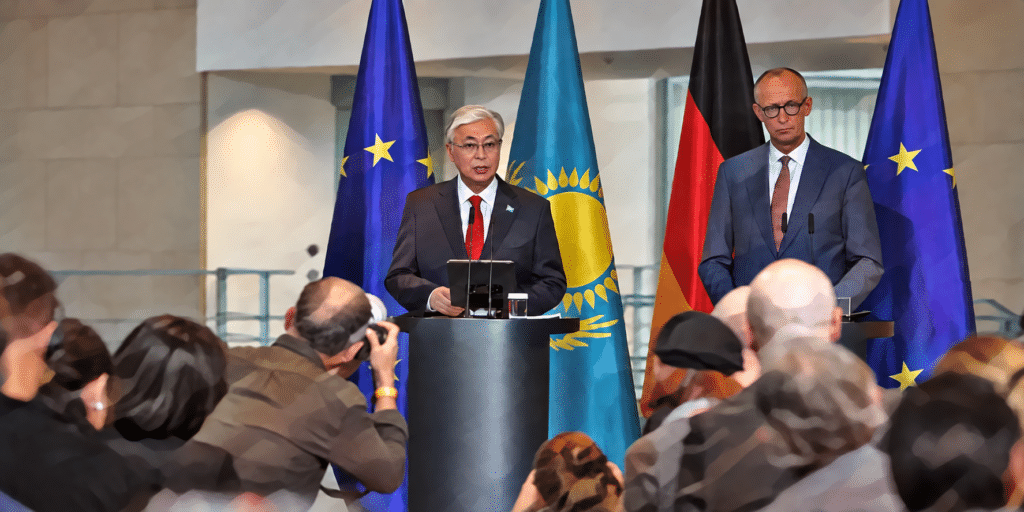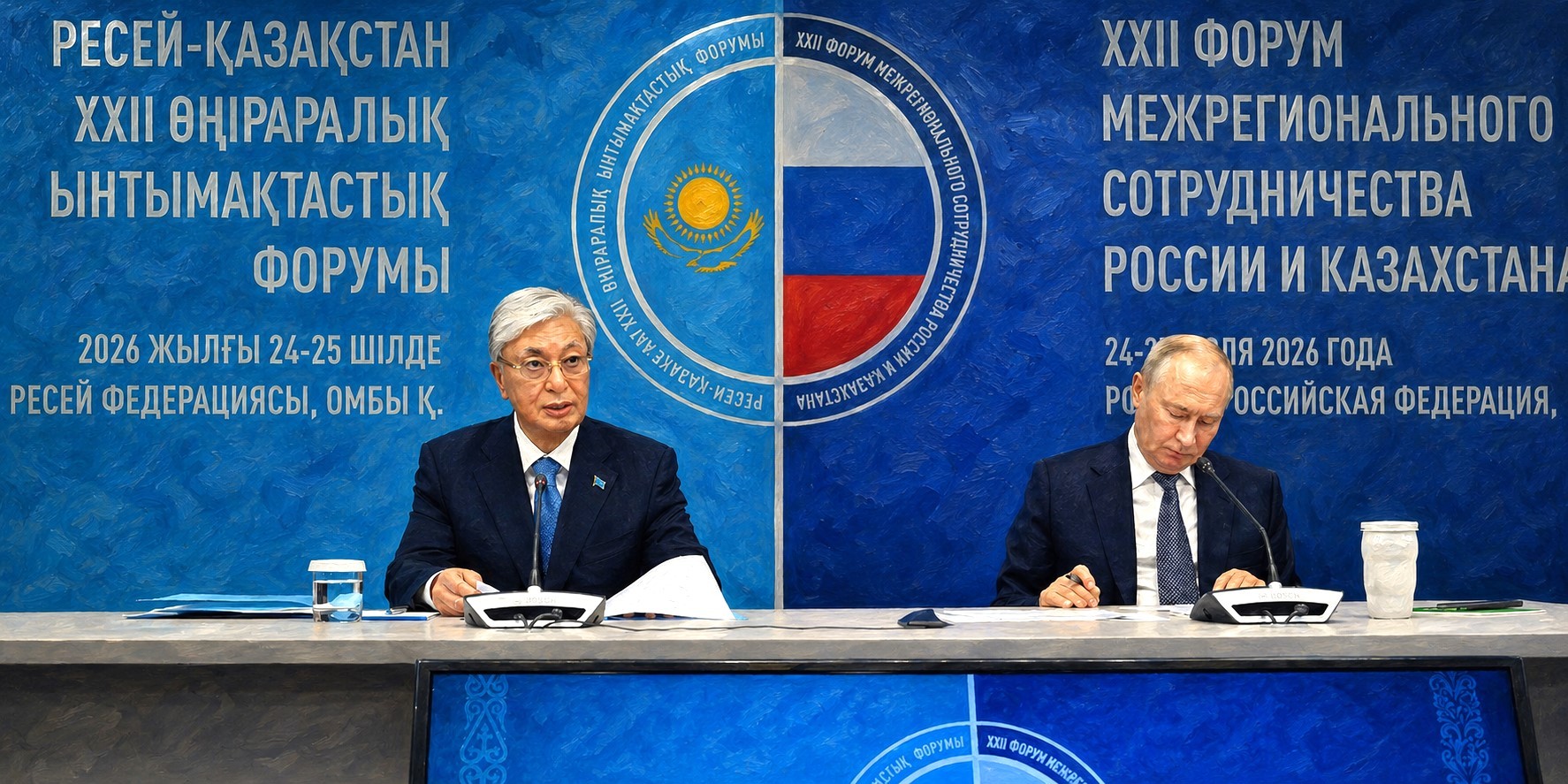
Kazakh President Kassym-Jomart Tokayev has called for Russia and Ukraine to freeze the war and return to negotiations, delivering one of his clearest public appeals for an end to the conflict while seated beside Russian President Vladimir Putin.
“Perhaps this conflict should already be frozen and we should return to the Istanbul Formula 2.0, since significant results were achieved there,” Tokayev said during talks in Omsk on July 25. He said major powers, including Russia, should provide security guarantees before the sides moved towards a lasting peace.
Russia and Ukraine held talks in Istanbul soon after Russia’s full-scale invasion in 2022 and resumed direct negotiations there in 2025, though neither round produced a settlement. Moscow and Kyiv dispute how close the 2022 talks came to an agreement and why they collapsed.
Tokayev described the war as an “interstate conflict,” and said that Kazakhstan respects the Ukrainian people, their culture and language. He also expressed concern over the deaths of young Russians and Ukrainians.
Tokayev declined any formal role for Astana, but stated that he had received proposals and appeals concerning mediation, including from Europe and the United States. He said Kazakhstan was not an outsider, but that Russia was capable of resolving the issue without an intermediary.
He also reaffirmed Kazakhstan’s strategic partnership and allied relationship with Russia, praising what he called Putin’s diplomatic flexibility during the Russian president’s August 2025 meeting with U.S. President Donald Trump in Anchorage.
The Kremlin rejected the idea of a freeze. Spokesperson Dmitry Peskov said it was impossible under Kyiv’s current position. He repeated Moscow’s claim that fighting could stop if Ukraine made what Russia considers the necessary decisions.
Russia’s stated terms include Ukrainian withdrawal from Donetsk, Luhansk, Zaporizhzhia, and Kherson regions, including areas Moscow does not control. Putin also wants Kyiv to renounce its aim of joining NATO. Ukraine has rejected those conditions.
Tokayev’s position has developed publicly, but has remained centered on negotiations. In September 2024, he said Russia was “militarily invincible” and argued that continued escalation could bring about a wider disaster. He called for hostilities to stop before negotiations moved to territorial issues.
Kazakhstan has also kept its distance from several central Kremlin claims. In June 2022, Tokayev refused to recognize the Russian-backed entities in Donetsk and Luhansk, describing them as “quasi-state territories.” Astana has continued to cite the UN Charter, state sovereignty, and territorial integrity.
The latest appeal came as the war reached shipping routes close to Kazakhstan and disrupted the country’s main oil export corridor.
On July 25, Iran accused Ukraine of attacking an Iranian commercial vessel in the Caspian Sea. Tehran said an explosion killed one sailor and injured another, summoning Ukraine’s chargé d’affaires and describing the strike as hostile and criminal.
Ukrainian President Volodymyr Zelensky said his forces had achieved “very strong results” with long-range strikes in the Caspian, and that targets included a Russian warship and vessels used for military cargo shipments involving Iran.
Zelensky did not identify the vessels, and Iran did not name the ship in its initial statement. It remained unclear whether the Iranian vessel was among the targets described by Kyiv.
The incident brought the conflict into the Caspian Sea, shared by Kazakhstan, Russia, Iran, Azerbaijan, and Turkmenistan. The Caspian is also central to Kazakhstan’s Middle Corridor trade, carrying cargo west to Azerbaijan and onward to Europe.
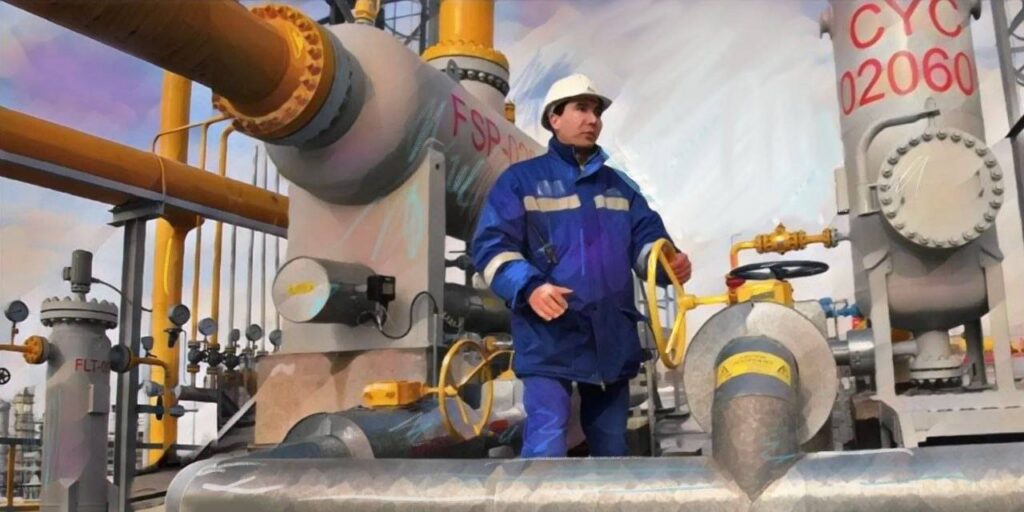
Kazakhstan has recently suffered direct economic damage from attacks near the Caspian Pipeline Consortium terminal on Russia’s Black Sea coast. CPC carries more than 80% of Kazakhstan’s oil exports and close to 2% of global crude supply.
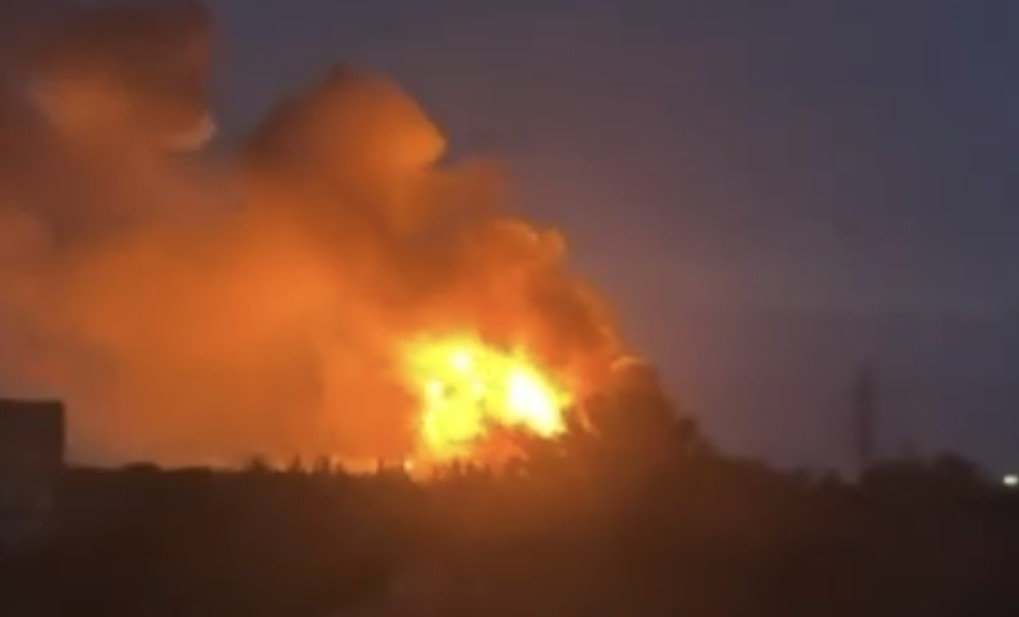
A series of attacks on tankers approaching or loading at the terminal forced CPC to suspend loadings in July. The consortium stopped accepting Kazakh crude on July 21 after its storage tanks filled. CPC did not confirm the intake halt or publicly identify the attacker in the latest incidents.
Kazakhstan’s oil and gas condensate output fell by 21% on July 22, with production at Tengiz, the country’s largest oilfield, dropping by 56% from its July average. Kazakhstan’s Energy Ministry said loadings had been halted to protect ships, crews, and the Black Sea environment.
Alternative routes across the Caspian, through China, and towards Germany can carry only a small share of normal CPC volumes, meaning any prolonged closure threatens export losses.
Tokayev’s appeal comes from a country with a direct stake in ending the war. Kazakhstan has refused to endorse Russia’s territorial claims and has sought to preserve an independent, multi-vector foreign policy, but geography leaves it exposed to the conflict’s economic and security fallout. Its main oil export route crosses Russian territory, while attacks have spread across the Black Sea and into the Caspian. Astana has limited room to remain insulated from a war it cannot control.