• KGS/USD = 0.01144 0%
  • KZT/USD = 0.00211 0%
  • TJS/USD = 0.10678 0%
  • UZS/USD = 0.00008 0%
  • TMT/USD = 0.28490 0%
  • KGS/USD = 0.01144 0%
  • KZT/USD = 0.00211 0%
  • TJS/USD = 0.10678 0%
  • UZS/USD = 0.00008 0%
  • TMT/USD = 0.28490 0%
  • KGS/USD = 0.01144 0%
  • KZT/USD = 0.00211 0%
  • TJS/USD = 0.10678 0%
  • UZS/USD = 0.00008 0%
  • TMT/USD = 0.28490 0%
  • KGS/USD = 0.01144 0%
  • KZT/USD = 0.00211 0%
  • TJS/USD = 0.10678 0%
  • UZS/USD = 0.00008 0%
  • TMT/USD = 0.28490 0%
  • KGS/USD = 0.01144 0%
  • KZT/USD = 0.00211 0%
  • TJS/USD = 0.10678 0%
  • UZS/USD = 0.00008 0%
  • TMT/USD = 0.28490 0%
  • KGS/USD = 0.01144 0%
  • KZT/USD = 0.00211 0%
  • TJS/USD = 0.10678 0%
  • UZS/USD = 0.00008 0%
  • TMT/USD = 0.28490 0%
  • KGS/USD = 0.01144 0%
  • KZT/USD = 0.00211 0%
  • TJS/USD = 0.10678 0%
  • UZS/USD = 0.00008 0%
  • TMT/USD = 0.28490 0%
  • KGS/USD = 0.01144 0%
  • KZT/USD = 0.00211 0%
  • TJS/USD = 0.10678 0%
  • UZS/USD = 0.00008 0%
  • TMT/USD = 0.28490 0%

Viewing results 1 - 6 of 892

Kyrgyzstan to Install 300,000 Smart Electricity Meters Purchased from China

Kyrgyzstan’s Ministry of Energy has signed a contract with Shenzhen Kaifa Technology for the purchase of 300,000 smart electricity meters for the National Electric Network in 2026, according to the ministry. Negotiations are also underway for an additional 90,000 units. The National Electric Network of Kyrgyzstan has introduced an automated electricity control and metering system that has helped strengthen financial discipline in the energy sector. As of the end of 2025, 500,100 smart meters had been installed across the country, bringing the total number of installed meters to more than 923,000. This has improved metering accuracy and reduced electricity losses from 11.7% to 10.6%. Smart meters offer several advantages. They enable automatic data transmission, with readings sent to a central server in real time, eliminating the need for manual inspections. They also allow for remote control: electricity supply can be automatically suspended in cases of non-payment and restored once payment is made. In addition, smart meters help protect against overloads, support voltage stability in the grid, and reduce human error by minimising manual data entry. This also contributes to lowering electricity theft. The rollout is part of the Kyrgyz Energy Modernization and Sustainability Project, supported by the World Bank. The project aims to modernise the energy sector, improve the accuracy of electricity metering, and reduce power losses. Smart metering is particularly important for Kyrgyzstan, which continues to face electricity shortages and relies on imports to meet growing demand from industry and households.

Chinese Firm Begins Construction of Wind Farm in Kazakhstan

China’s State Power Investment Corporation has begun construction of a 1 GW wind farm in northern Kazakhstan. The project, located near the city of Ekibastuz in the Pavlodar region, is being implemented jointly with Pavlodar Green Energy LLP under agreements signed with the Energy Ministry on January 29. According to the ministry, foreign direct investment in the project will total approximately $1.2 billion, with commissioning scheduled for 2029. The wind farm will include a 300 MW energy storage system designed to stabilize electricity output and support Kazakhstan’s unified power grid. Once operational, the facility is expected to generate around 3.4 billion kWh of electricity annually. The project is also projected to reduce greenhouse gas emissions by up to 2 million tonnes of CO₂ per year. In 2025, renewable energy generation reached 8.6 billion kWh, exceeding official targets by 19.4%. Renewables accounted for 7% of total electricity output, up from 6.43% in 2024. Kazakhstan currently operates 162 renewable energy facilities with a combined capacity of approximately 3.5 GW. In 2026, authorities plan to increase renewable output to 8.8 billion kWh through the launch of 10 new projects, including wind, solar, and hydropower plants. Despite growth in renewables, Kazakhstan remains heavily dependent on coal and natural gas. Total electricity generation stood at 123.1 billion kWh in 2025 and is expected to rise to 126.5 billion kWh in 2026. The government is also advancing plans to add 7.6 GW of coal-fired generation capacity, supported by reserves estimated at over 33 billion tonnes. At the same time, Kazakhstan aims to increase the share of renewables to 15% by 2030 and 50% by 2050, alongside plans to update legislation on alternative energy and hydrogen development. The Times of Central Asia previously reported that Kazakhstan is launching a large-scale investment program in the energy sector. By 2030, the country plans to attract at least $15.5 billion for the development of coal-fired power generation. The corresponding national project has been approved by the government.

Chinese Company Plans to Build Solar Power Plant in Tajikistan

Authorities in Tajikistan’s Khatlon region are in talks with a Chinese company over the construction of a 500-megawatt solar power plant, a project that could significantly reshape the region’s energy landscape. The proposal was discussed at a meeting between Khatlon regional head Davlatali Said and representatives of the Chinese company SETS. For a region where power outages remain a persistent issue, the project could mark an important step forward. With population growth and rising energy demand placing increasing strain on the existing grid, authorities are turning to alternative energy sources. Regional officials expect the plant to help reduce electricity shortages and improve environmental conditions. The Chinese side has expressed readiness to invest in the project and introduce modern technologies. The company reportedly has experience implementing similar energy projects, including in Central Asia. Although the project remains at the discussion stage, the parties are already considering key aspects of implementation, including construction timelines and personnel training. If agreements are finalized, the solar power plant in Khatlon could become one of the largest renewable energy projects in Tajikistan.

Berdimuhamedov’s Beijing Visit and the Reshaping of Central Asia’s Gas System

The visit by Turkmenistan’s Gurbanguly Berdimuhamedov, Chairman of the Halk Maslahaty, to Beijing on March 17–19 did more than routinely reaffirm Turkmenistan’s ties with China. It opened onto a wider issue in Central Asian energy, not simply about continuing the cooperation between Ashgabat and Beijing, but about how the renewal of that cooperation would affect the Central Asia–wide gas production and transmission system that increasingly intersects with China’s wider infrastructural and industrial presence in the region. No dramatic announcement of any new export route highlighted that wider significance, which emerged from a narrower sequence of policy initiatives that carried broader implications. Xi Jinping used the visit to restate the importance of cooperation in natural gas while widening the agenda to include connectivity, clean energy, artificial intelligence, and the digital economy. Within days of the meeting, Turkmenistan moved ahead on a new phase of development at Galkynysh with CNPC. These events signal a further deepening Chinese role in the upstream and systemic organization of Central Asian energy. What Beijing Actually Signaled Beijing’s own language about the matter was direct. In the official Xinhua account of Xi’s March 18 meeting with Berdimuhamedov, China called for the two sides to “expand the scale of cooperation in the natural gas sector” and to raise trade and investment levels. Such language confirms that gas remains at the center of the relationship even as the bilateral agenda widens. For all the parallel discussions of digitalization, transport links, and non-resource cooperation, the political weight of Sino-Turkmen ties still rests primarily on energy. The Chinese side, however, did not treat gas as a self-contained file. Gas remains the primary, but it is increasingly embedded within a wider pattern of regional engagement comprising energy, transport, and adjacent economic sectors. The same Beijing readout on the meeting with Berdimuhamedov placed connectivity, artificial intelligence, the digital economy, and clean energy alongside natural gas under a broader heading of expanded cooperation. This framing removes gas from its status as a stand-alone commodity and places it within a larger operational perspective. Neither the main Chinese readout nor the public official Turkmen framing of the visit highlighted Line D of the Central Asia–China gas pipeline system. Line D has long stood as the clearest indicator of a future expansion of Turkmen gas exports through Tajikistan and Kyrgyzstan into China. Had the visit produced a concrete breakthrough on that front, the official language would have been the obvious place to signal it. The practical movement after the trip lay elsewhere. Why It Matters Beyond Turkmenistan The focus lay at Galkynysh. In the immediate wake of the visit, President Serdar Berdimuhamedov authorized Turkmengaz to conclude a turnkey contract with CNPC Amudarya Petroleum Company Ltd. for Phase 4 of the Galkynysh gas field. The official Turkmen account linked the decision to meetings held during Gurbanguly Berdimuhamedov’s visit to China and specified facilities capable of processing 10 billion cubic meters of marketable gas per year. TCA reported the same move as a new phase of CNPC-backed field development....

Kyrgyzstan Seeks Chinese Cooperation to Develop EV Charging Infrastructure

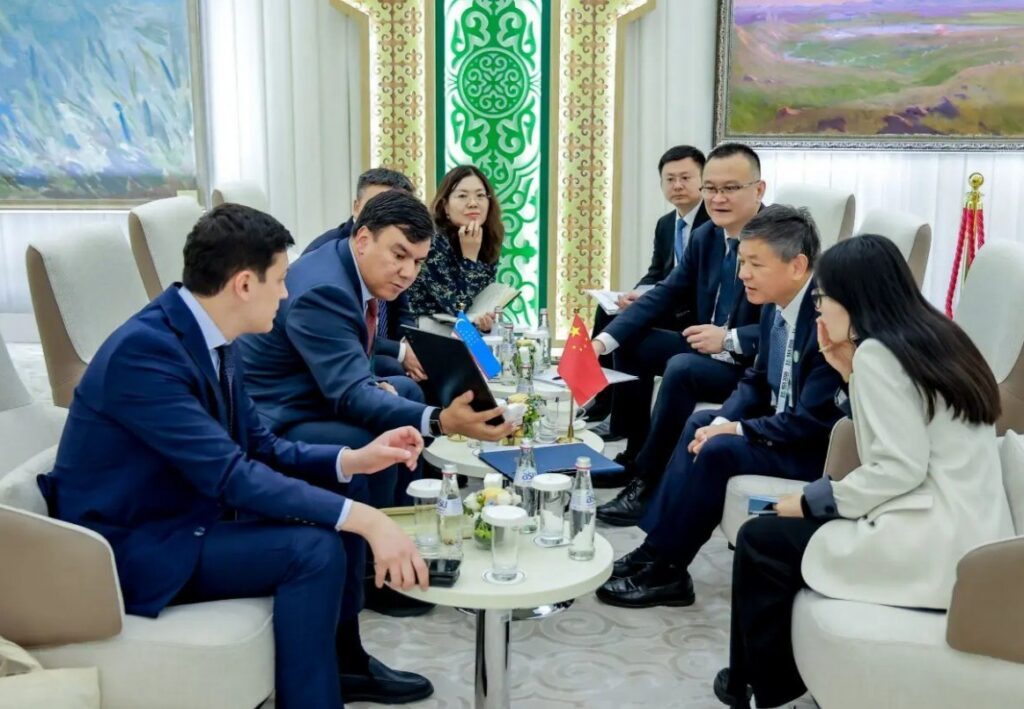
Kyrgyzstan is seeking to collaborate with Chinese companies to develop electric vehicle (EV) charging infrastructure as part of efforts to modernize its energy sector and promote sustainable transport. On March 25, Energy Minister Taalaibek Ibrayev visited China, where he held a series of meetings with energy and technology companies involved in EV infrastructure development. During the visit, Ibrayev toured a manufacturing facility operated by ShuiFa Group and signed a memorandum of understanding between the Kyrgyz Ministry of Energy and the company. The agreement involves cooperation in energy infrastructure, including the development of EV charging stations and energy storage systems. Officials said the memorandum represents a step toward modernizing Kyrgyzstan’s energy sector and supporting sustainable transport. Ibrayev also met with representatives of NUCL New Energy Technology (GD) Ltd to discuss potential cooperation on EV charging infrastructure and the introduction of modern technologies. The company expressed readiness to work with Kyrgyz authorities. In addition, talks were held with Zhejiang Anfu New Energy Technology Co., Ltd. regarding the possible supply of equipment and the localization of production in Kyrgyzstan These initiatives align with the government’s broader strategy to promote environmentally friendly transport and reduce air pollution in Bishkek and other major cities. The number of electric vehicles in Kyrgyzstan has been rising steadily. According to First Deputy Prime Minister Daniyar Amangeldiev, more than 200 electric vehicles are imported into the country daily under a value-added tax (VAT) exemption scheme. As a member of the Eurasian Economic Union (EAEU), Kyrgyzstan also benefits from an annual quota allowing the duty-free import of up to 15,000 electric vehicles. Despite this growth, EVs still account for a small share of the country’s total vehicle fleet. According to the Ministry of Natural Resources, Ecology, and Technical Supervision, Kyrgyzstan had more than 1.9 million registered vehicles as of early 2026, a 13% increase compared with 2024. Of these, 972,000 run on gasoline, 339,000 on diesel, 56,900 on gas, and 37,000 are hybrids. Electric vehicles make up about 0.8% of the total, or approximately 15,200 vehicles.

Kazakhstan’s Trade with China Is Growing, but the Deficit Is Widening

Kazakhstan’s trade and economic ties with China continue to deepen, yet the expansion in bilateral trade is accompanied by a widening imbalance. By the end of 2025, China had consolidated its position as one of the country’s key trading partners, accounting for nearly a quarter of total foreign trade turnover. According to data from the analytical centre of the Association of Financiers of Kazakhstan (AFK), bilateral trade reached $34.1 billion, an increase of 13.2% compared with the previous year. China’s share in Kazakhstan’s foreign trade rose to 23.7% from 21.2% a year earlier. Growth in trade was driven primarily by an increase in imports of Chinese goods. In 2025, imports from China reached $18.9 billion, 23.6% higher than the previous year. China accounted for 29.2% of all imports into the country. The structure of imports indicates growth in shipments of both consumer goods and industrial products. The largest increases were recorded in vehicles (+$3.4 billion), metals (+$645 million), and chemical products (+$412 million). According to analysts, this reflects expanding investment activity, infrastructure projects, and domestic demand. In contrast to imports, Kazakhstan’s exports to China showed only moderate growth, rising by 2.1% to $15.2 billion. At the same time, the export structure changed. Shipments of agricultural and chemical products increased, while exports of traditional raw materials declined. Experts attribute this to cooling industrial demand in China, lower global commodity prices, and growth in domestic production within China itself. Faster growth in imports led to a sharp deterioration in the trade balance. According to AFK data, the bilateral trade deficit with China increased tenfold, from $370 million to $3.7 billion. At the same time, price trends for goods imported from China remained largely downward. Declining prices for a number of items are linked to low inflation in China and increased competition from Chinese manufacturers in foreign markets. This, in turn, is exerting a restraining effect on inflation in Kazakhstan, partially offsetting price increases driven by domestic factors such as tariffs, demand, and budget spending. In the short term, analysts expect imports from China to remain the main driver of bilateral trade. Kazakhstan’s exports, meanwhile, will depend on commodity prices and the level of industrial demand in China. High oil prices (above $100 per barrel) could temporarily reduce the deficit by boosting export revenues. However, this effect would be largely price-driven and is unlikely to change the overall structure of trade.