• KGS/USD = 0.01144 0%
  • KZT/USD = 0.00210 0%
  • TJS/USD = 0.10438 0.19%
  • UZS/USD = 0.00008 0%
  • TMT/USD = 0.28571 0%
  • KGS/USD = 0.01144 0%
  • KZT/USD = 0.00210 0%
  • TJS/USD = 0.10438 0.19%
  • UZS/USD = 0.00008 0%
  • TMT/USD = 0.28571 0%
  • KGS/USD = 0.01144 0%
  • KZT/USD = 0.00210 0%
  • TJS/USD = 0.10438 0.19%
  • UZS/USD = 0.00008 0%
  • TMT/USD = 0.28571 0%
  • KGS/USD = 0.01144 0%
  • KZT/USD = 0.00210 0%
  • TJS/USD = 0.10438 0.19%
  • UZS/USD = 0.00008 0%
  • TMT/USD = 0.28571 0%
  • KGS/USD = 0.01144 0%
  • KZT/USD = 0.00210 0%
  • TJS/USD = 0.10438 0.19%
  • UZS/USD = 0.00008 0%
  • TMT/USD = 0.28571 0%
  • KGS/USD = 0.01144 0%
  • KZT/USD = 0.00210 0%
  • TJS/USD = 0.10438 0.19%
  • UZS/USD = 0.00008 0%
  • TMT/USD = 0.28571 0%
  • KGS/USD = 0.01144 0%
  • KZT/USD = 0.00210 0%
  • TJS/USD = 0.10438 0.19%
  • UZS/USD = 0.00008 0%
  • TMT/USD = 0.28571 0%
  • KGS/USD = 0.01144 0%
  • KZT/USD = 0.00210 0%
  • TJS/USD = 0.10438 0.19%
  • UZS/USD = 0.00008 0%
  • TMT/USD = 0.28571 0%

Viewing results 1 - 6 of 122

Billion-Dollar Agreements and a Boeing Deal: Inside Mirziyoyev’s Visit to New York

On September 20, President of Uzbekistan Shavkat Mirziyoyev arrived in New York to participate in events marking the 80th session of the UN General Assembly. At John F. Kennedy Airport, he was welcomed by Paolo Zampolli, Special Envoy of the U.S. President for Global Partnerships, Carolyn Lamm, Chair of the American-Uzbekistan Chamber of Commerce, and other officials. Finance and Critical Minerals Cooperation On September 22, Mirziyoyev held a series of high-level meetings with executives from leading corporations and international institutions. Uzbekistan is seeking to position itself as a reliable supplier in the global critical minerals chain. With reserves of copper, gold, uranium, and rare earths, officials have prioritized foreign partnerships to accelerate exploration and processing capacity, while also ensuring environmental and governance standards are met. In talks with IMF Managing Director Kristalina Georgieva, the two sides discussed expanding cooperation on monetary policy, statistical reform, and educational programs. Georgieva commended Uzbekistan’s economic reforms and reaffirmed the Fund’s support. A $1 billion package of initiatives was finalized with Traxys, the Colorado School of Mines, FLSmidth, McKinsey, and Go Green Partners. These projects focus on critical minerals mining and processing, alongside the creation of a Competence Center in Uzbekistan. Discussions with BlackRock board member Adebayo Ogunlesi centered on establishing a joint infrastructure fund. With Citigroup Chairman John Dugan, the president addressed IPOs of state-owned enterprises, Eurobond issuance, and trade finance mechanisms. Franklin Templeton CEO Jenny Johnson confirmed agreements related to the transformation of state-owned companies and the development of the Tashkent Stock Exchange. President Brian Friedman of the New York-based global investment banking and capital markets firm, Jefferies, meanwhile, expressed interest in helping attract strategic investors to Uzbekistan’s National Investment Fund. Franklin Templeton’s management of Uzbekistan’s $1.7 billion National Investment Fund signals growing trust in U.S. asset managers. Meanwhile, Jefferies’ potential involvement in attracting strategic investors highlights the rising role of global capital markets in Uzbekistan’s privatization and modernization agenda. NASDAQ CEO Adena Friedman discussed the modernization of the Tashkent Stock Exchange and the introduction of a government bond trading platform. Oppenheimer Holdings CEO Robert Lowenthal pledged support for Uzbekistan’s private sector and participation in Eurobond issuance. [caption id="attachment_36462" align="aligncenter" width="1280"] Image: president.uz[/caption] Strategic Agreements Signed A signing ceremony was held in the presence of President Mirziyoyev and U.S. Presidential Special Envoy Sergio Gor. Agreements were exchanged with Boeing, FLSmidth, Cleveland Clinic, Citigroup, Cargill, Pangea Filtration Technology, SLB, Biologic International, and others. During a meeting with WTO Director-General Ngozi Okonjo-Iweala, Mirziyoyev reaffirmed Uzbekistan’s commitment to aligning its legislation with international standards, with the goal of completing WTO accession by 2026. Uzbekistan’s WTO accession is being closely watched in Central Asia, as its success could set a precedent for other countries still outside the organization. For investors, WTO membership would mean greater legal predictability and integration into global trade frameworks. The president also met with Air Products CEO Eduardo Menezes. The company has already invested over $1 billion in Uzbekistan, with projects at the GTL plant, Ferghana Refinery, and “Navoiazot.” Both parties agreed to...

Trump Reengages Central Asia Amid Tariffs and Rising Competition

In a bid that signals renewed U.S. interest in Central Asia, U.S. President Donald Trump on September 7, 2025, held what he described as a “great conversation” with Kazakhstan’s President Kassym-Jomart Tokayev. Earlier in the week, Trump also spoke over the phone with Uzbek President Shavkat Mirziyoyev, with both sides highlighting plans to expand their strategic partnership. Commentators have noted that Trump’s rhetoric and transactional approach to foreign policy in his second term create both challenges and opportunities for sustained U.S. engagement in the region. “Great Conversation” With Tokayev As he departed the White House for the U.S. Open men’s final, President Trump told reporters, “We had a great conversation,” though he offered no further details on the substance of the discussion. On Kazakhstan’s side, President Tokayev had reached out in July, expressing his openness to constructive trade talks following Trump’s imposition of 25% U.S. tariffs on Kazakh goods. In that July letter, Tokayev committed to “developing fair, predictable, and mutually beneficial trade relations.” He also emphasized his readiness for “constructive dialogue aimed at finding a rational solution.” The exchange reflects the broader importance of the U.S.–Kazakhstan relationship, which extends far beyond tariffs. Since 2017, the two nations have maintained an “enhanced strategic partnership,” covering trade, security, and energy cooperation. Kazakhstan is the world’s largest uranium producer and a leading supplier to U.S. nuclear power plants, while American firms such as Chevron and ExxonMobil are deeply invested in the country’s vast oil fields. Strategically located between Russia, China, and Europe, Kazakhstan offers Washington a critical partner in promoting regional stability and developing alternative trade corridors traditionally reliant on Russian land. By engaging closely with Astana, the U.S. strengthens its foothold in Central Asia while securing vital resources and supporting Kazakhstan’s multi-vector diplomacy. Strategic Outreach to Uzbekistan Earlier the same week, Trump and Uzbekistan’s Mirziyoyev agreed to broaden their strategic partnership across economic, security, and cultural domains, the Uzbekistan press office reported. According to the office, Trump praised Uzbekistan’s “irreversible reforms” aimed at modernizing its economy and improving living standards, while Mirziyoyev lauded what he termed the “impressive results of the domestic and foreign policy” of the U.S. administration. This extension of engagement to Tashkent comes against a backdrop of longstanding U.S. involvement in Uzbekistan, including trade under bilateral agreements since the mid-1990s and cooperation on border control and counter-terrorism programs. In late 2024, shortly before Trump’s second term began, Washington reaffirmed its support for Uzbekistan’s bid to join the World Trade Organization, with U.S. Trade Representative Katherine Tai announcing the completion of bilateral market-access negotiations. That same year, U.S. officials also underscored opportunities in critical minerals cooperation with Tashkent through the C5+1 diplomatic framework. Beyond trade and security, Uzbekistan is strategically important as Central Asia’s most populous nation and a key transit hub between China, Russia, and South Asia. Closer U.S.–Uzbek ties complement Washington’s regional engagement with Kazakhstan, creating overlapping partnerships that strengthen American influence, promote economic diversification, and reinforce stability across Central Asia. Why Now? Geopolitics, Tariffs, and Regional...

Uzbekistan and United States Leaders Discuss Expanding Strategic Partnership

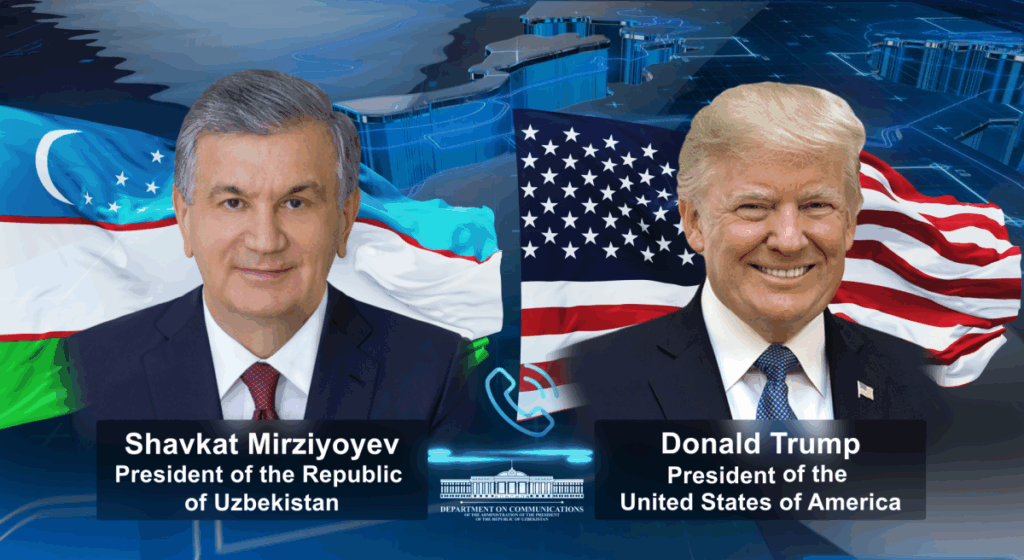
According to the office of President Shavkat Mirziyoyev, the Uzbek and U.S. presidents held a telephone conversation on Friday, focusing on ways to deepen their countries’ strategic partnership across economic, security, and cultural fields. The details of the call were provided by the Uzbek president’s office. Strengthening Economic Ties The presidential office reported that both leaders emphasized opportunities to expand trade and investment. Bilateral trade grew by 15% in 2024, and the two sides signaled interest in building on that momentum. Prospective projects span civil aviation, mineral resources, energy, agriculture, digital technologies, finance, and education. Later this month, meetings are expected between Uzbek representatives and leading U.S. companies to explore long-term cooperation. Security and Regional Cooperation According to the statement, security issues also featured prominently in the conversation. The two presidents noted ongoing joint work against terrorism, extremism, and illegal migration. They also exchanged views on regional cooperation in Central Asia, highlighting the role of the “C5+1” dialogue format that brings together the United States and five Central Asian countries. Cultural and Humanitarian Exchanges The Uzbek president’s office noted that the discussion touched on expanding cultural and educational links. Branches of U.S. universities are operating in Tashkent, providing new opportunities for academic exchange. Looking ahead, the leaders noted with satisfaction that Uzbekistan’s national football team will participate for the first time in the 2026 World Cup, which the United States will be the main host of. A Growing Partnership Since Mirziyoyev assumed the presidency in 2016, Uzbekistan has pursued a more open foreign policy and a program of internal reforms aimed at modernizing the economy and improving governance. These changes have created new opportunities for cooperation with Washington. The United States, for its part, has supported regional initiatives through the C5+1 framework, while also seeking closer ties with Tashkent in areas such as counterterrorism, economic development, and education. American universities and companies have increased their presence in Uzbekistan, and cultural exchanges have expanded steadily in recent years. Next Steps The president’s office stated that President Mirziyoyev invited President Trump to pay an official visit to Uzbekistan. Both leaders agreed to maintain high-level contacts and continue advancing joint projects and programs. According to the Uzbek president’s office, the conversation was held in a constructive and friendly atmosphere, underscoring a shared interest in further strengthening Uzbek-American relations.

Kazakhstan’s Rare Earth Reserves Surpass Projections Following New Geological Surveys

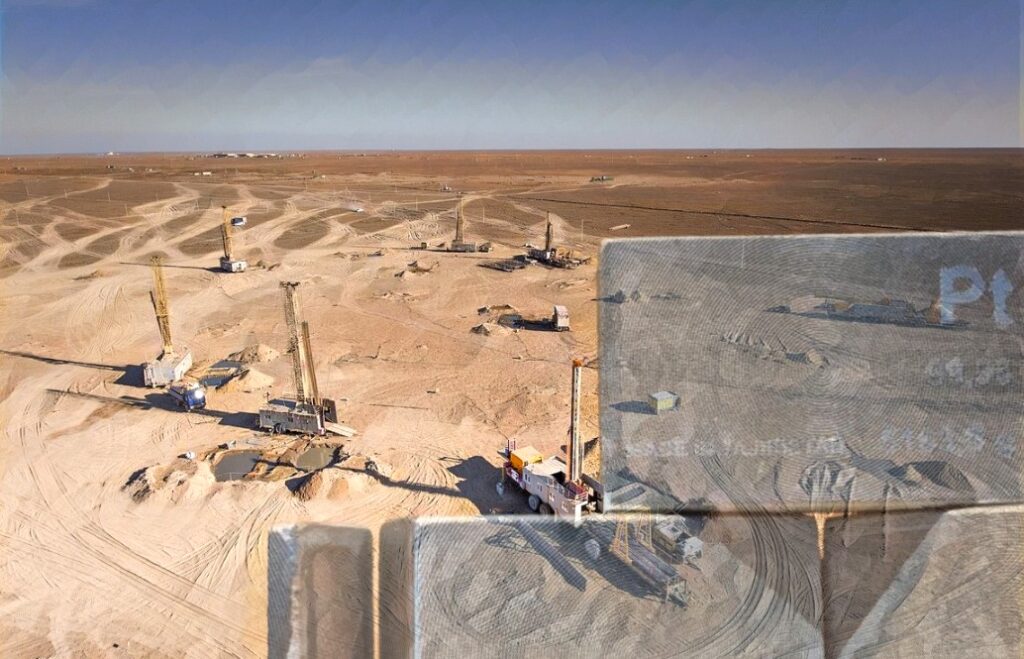
Geological exploration at Kazakhstan’s largest rare earth metal deposit, Kuirektykol, in the Karaganda region, has revealed significantly higher reserves than previously estimated. The latest data suggests that the site holds 28.2 million tons of commercially viable rare earth elements, up from an initial estimate of 20 million tons. Exploration work began in 2022, and by November 2024, geologists had already confirmed significant concentrations of cerium and other lanthanides across four key zones at depths of up to 300 meters. Regional Potential Expands Alibek Aldeney, Deputy Akim of the Karaganda region, said that the surveys also revealed new prospective sites for gold, copper, and tungsten. “Foreign companies are already conducting surveys. This will allow us to expand our mineral resource base and create new production facilities for processing rare earth and precious metals,” Aldeney said. Industry experts have long maintained that Kazakhstan holds the potential to ensure stable supplies of critical minerals amid rising global demand. Strategic Priorities and Government Support In August, Prime Minister Olzhas Bektenov convened a meeting to discuss the development of Kazakhstan’s rare earth sector. He emphasized the need to modernize production, adopt advanced technologies, and increase scientific research. According to the Ministry of Industry, rare and rare earth metals currently account for 2.4% of the country's metallurgical sector. Since 2018, the government has invested KZT 67 billion (approximately $124 million) in the industry. Kazakhstan is currently exploring 25 promising rare earth sites across a combined area of 100,000 square kilometers. In 2024 alone, 38 new deposits of solid minerals were identified. Production of beryllium, tantalum, niobium, scandium, titanium, rhenium, and osmium is already underway, along with the extraction of associated elements such as bismuth, antimony, selenium, and tellurium. Future Outlook and Strategic Concerns There are emerging industrial opportunities include the production and recycling of battery materials, heat-resistant alloys, semiconductors, and permanent magnets. However, as The Times of Central Asia previously reported, with the sector’s strategic value increasing, members of parliament have called for tighter regulation of rare earth exports to safeguard national interests.

Kazakhstan’s Rare Earth Exports Under Political Spotlight as Strategic Role Grows

Kazakhstan’s rare earth metal exports are once again under scrutiny. On September 3, the leader of the Ak Zhol party in Kazakhstan’s parliament, Azat Peruashev, renewed his call for tighter control over rare earth exports. Peruashev formally urged the Minister of Industry and Construction, Ersaiyn Nagaspayev, to investigate and improve oversight after concerns that state control over ore shipments is increasingly being delegated to private labs without adequate verification. Peruashev’s statement raised the alarm about the possible undervaluation of exports and the concealment of valuable trace metals, a practice that could deprive the state of critical revenues at a time of growing global demand for rare earth elements. “According to the law on precious metals and stones, the state authority is responsible for control over the import and export of ores and concentrates. But based on the official response from the Ministry of Industry, it appears that state control has effectively been delegated to laboratories hired by the subsoil users themselves. The government agency does not verify the accuracy of its data and limits itself to just receiving the documents,” Peruashev said. The appeal marks the latest development in a controversy that first surfaced earlier this year. On March 7, The Times of Central Asia reported that Peruashev had submitted a formal parliamentary inquiry to Kazakhstan’s Anti-Corruption Service and the Ministry of Industry. That inquiry cited allegations from a former Kazakhmys lab assistant who claimed ore and concentrate exports were leaving the country without undergoing proper chemical analysis. According to the complaint, this practice allowed exporters to underreport the presence of rare earth and precious metals, artificially lowering shipment valuations to the benefit of powerful business interests. Kazakhmys rejected suggestions of intentional wrongdoing, stressing that any rare metals recovered during processing were incidental and directed to the state enterprise Zhezkazganredmet. The company added that it welcomed greater state scrutiny and dialogue. Peruashev’s renewed demand, however, indicates that concerns remain unresolved, particularly around whether the government has sufficient oversight to prevent leakage or mismanagement in an industry viewed as of increasing strategic and economic importance. A Geological Windfall This renewed debate comes as Kazakhstan’s rare earth sector enjoys unprecedented global attention. In April, TCA reported the discovery of a massive new deposit in the Karagandy region, unofficially dubbed “Zhana Kazakhstan,” estimated at 20 million metric tons of ore containing neodymium, cerium, lanthanum, and yttrium. Officials said average concentrations reached 700 grams per ton, a figure that, if validated, would position Kazakhstan among the world’s top three in rare earth deposits. In total, the government has identified 38 new mineral deposits, including 3.7 million tons of copper and nickel and 19 tons of gold. These discoveries are part of an ambitious exploration program that aims to expand mapped geological territory to 2.2 million square kilometers by 2026. For policymakers, the figures highlight both an opportunity and a dilemma: how to harness world-class reserves without falling into the trap of export dependence. At Home and Abroad International interest in Kazakhstan’s deposits is on...

Kazakhstan Consolidates Leadership at the Tianjin SCO Summit

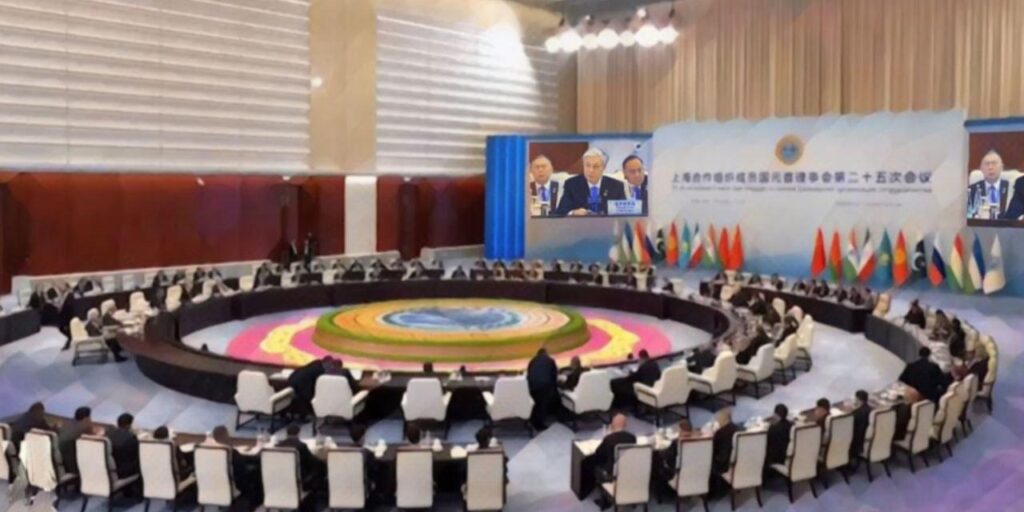
The 2025 Shanghai Cooperation Organization (SCO) Summit, which convened in Tianjin (also known as Tientsin) in China from August 31 to September 1, was the largest in the bloc’s twenty-five-year history. It gathered more than twenty heads of state and institutional leaders, among them China’s Xi Jinping, Russia’s Vladimir Putin, India’s Narendra Modi, Pakistan’s Shehbaz Sharif, Iran’s Masoud Pezeshkian, Kazakhstan’s Kassym-Jomart Tokayev, and UN Secretary-General António Guterres. The agenda ranged widely: counterterrorism, supply chain resilience, energy transition, and climate cooperation all featured. For Beijing, the event was the centerpiece of its SCO presidency. Chinese officials cast it as a demonstration of “true multilateralism” at a time when protectionism and bloc politics are resurgent. The summit’s final product, the Tianjin Declaration, mapped strategic priorities to 2035. It stressed four pillars: collective security, economic integration, digital transformation, and sustainable development. Underpinning this ambition was trade estimated to be worth over $512 billion between China and SCO members in 2024, illustrating the economic weight now embedded in the organization. Over the past year, Kazakhstan’s policy entrepreneurship has heightened the significance of its spell as chair spanning 2024-2025. The country's prominence derives not only from these initiatives but also from its structural position as the largest economy on the Caspian Sea, endowed with the world’s largest reserves of uranium and significant critical minerals. Thanks to its successful implementation of a multi-vector foreign policy aligning with its national strategy priorities, including new energy and transportation agendas, Kazakhstan was able to consolidate its leadership profile. Policy Initiatives and Prolific Activism As one of the six founding members, Kazakhstan had chaired the SCO through 2024. At the 2024 Astana Summit, Tokayev unveiled initiatives that set the foundation for Tianjin. He called for the establishment of a UN Regional Center for Sustainable Development Goals in Central Asia and Afghanistan, arguing that the region’s fragility requires a dedicated UN presence. He also proposed an International Agency for Biological Security, intended to manage risks exposed by the pandemic era, and the creation of an SCO Investment Fund to finance joint projects in infrastructure and technology. During that year, Kazakhstan organized over 140 events in security, economic, and cultural fields, a scale that exceeded most previous chairs. This activism reinforced Astana’s image as a policy entrepreneur within Eurasia’s multilateral institutions. Energy cooperation emerged as the most concrete innovation. In 2024, under Kazakhstan’s presidency and at its motivation, the organization produced a new “SCO Strategy for Energy Cooperation to 2030” committing members to mutual coordination not only in hydrocarbons but also in renewable energy deployment, cross-border grids, and green finance.  In Tianjin in 2025, this framework was carried forward as members endorsed an action plan translating the strategy into specific mechanisms for project financing, technical standards, and pilot cross-border infrastructure. In this way, Kazakhstan’s energy agenda was embedded into the SCO’s medium-term program going forward. Cultural diplomacy was another theme. The “Spiritual Shrines of SCO Countries” project, launched under Kazakhstan’s chairmanship, sought to catalogue and promote shared civilizational heritage. Tokayev also advanced...