• KGS/USD = 0.01144 0%
  • KZT/USD = 0.00212 0%
  • TJS/USD = 0.10549 -0.28%
  • UZS/USD = 0.00008 0%
  • TMT/USD = 0.28530 0%
  • KGS/USD = 0.01144 0%
  • KZT/USD = 0.00212 0%
  • TJS/USD = 0.10549 -0.28%
  • UZS/USD = 0.00008 0%
  • TMT/USD = 0.28530 0%
  • KGS/USD = 0.01144 0%
  • KZT/USD = 0.00212 0%
  • TJS/USD = 0.10549 -0.28%
  • UZS/USD = 0.00008 0%
  • TMT/USD = 0.28530 0%
  • KGS/USD = 0.01144 0%
  • KZT/USD = 0.00212 0%
  • TJS/USD = 0.10549 -0.28%
  • UZS/USD = 0.00008 0%
  • TMT/USD = 0.28530 0%
  • KGS/USD = 0.01144 0%
  • KZT/USD = 0.00212 0%
  • TJS/USD = 0.10549 -0.28%
  • UZS/USD = 0.00008 0%
  • TMT/USD = 0.28530 0%
  • KGS/USD = 0.01144 0%
  • KZT/USD = 0.00212 0%
  • TJS/USD = 0.10549 -0.28%
  • UZS/USD = 0.00008 0%
  • TMT/USD = 0.28530 0%
  • KGS/USD = 0.01144 0%
  • KZT/USD = 0.00212 0%
  • TJS/USD = 0.10549 -0.28%
  • UZS/USD = 0.00008 0%
  • TMT/USD = 0.28530 0%
  • KGS/USD = 0.01144 0%
  • KZT/USD = 0.00212 0%
  • TJS/USD = 0.10549 -0.28%
  • UZS/USD = 0.00008 0%
  • TMT/USD = 0.28530 0%

Viewing results 1 - 6 of 213

Kazakhstan and South Korea: “A Golden Bridge of Friendship”

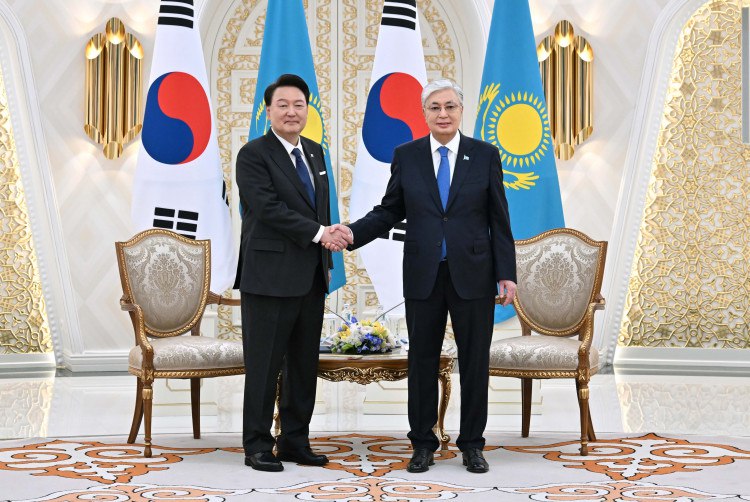
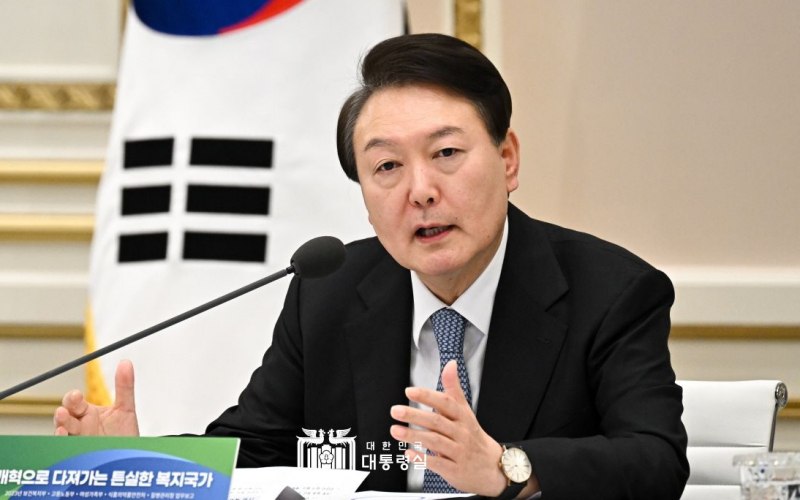
The President of Kazakhstan, Kassym-Jomart Tokayev, held talks with the President of South Korea, Yoon Suk Yeol. According to Tokayev, Seoul is one of Astana’s most important strategic partners in the Asia-Pacific region. Korea ranks fourth in foreign trade turnover, and is among Kazakhstan’s top ten largest foreign investors. South Korea has become a true economic and technological locomotive on a global scale, Tokayev stated. World-renowned Korean corporations seriously support promoting the country’s position in the international arena as a “key global state.” Kazakhstan and Korea have achieved a high level of political dialog, establishing fruitful economic cooperation and strong humanitarian ties. The two countries interact in various spheres, including inter-parliamentary, inter-governmental, and inter-departmental contacts. According to Tokayev, regular contact between businessmen of the two countries plays a very important role in building close ties. More than 700 companies with South Korean capital successfully operate in Kazakhstan. “The 120,000 ethnic Koreans in Kazakhstan fulfill an important role and make an invaluable contribution to strengthening our relations. In turn, more than a thousand Kazakh students studying in Korea are a ‘golden bridge of friendship’ between our countries,” Tokayev stated. During the talks, the presidents discussed prospects for bilateral cooperation in energy, infrastructure and industry, engineering, trade, transport and logistics, digitization and the aerospace industry, the financial sector, education, healthcare and pharmaceuticals, tourism and culture, ecology, and other fields.
South Korea Set to Intensify Cooperation with Central Asia

With the intention of  intensifying  cooperation between Seoul and Central Asia, South Korean President Yoon Suk-Yeol will make a state visit to three Central Asian countries from 10-15 June. As reported by Kim Tae-hyo First Deputy Director of the National Security Office of the Presidential Administration, President Yoon Suk-Yeol accompanied by his wife Kim Gong Hee, will visit Turkmenistan, Kazakhstan, and Uzbekistan and engage in talks with the countries' leaders as well as participate in business forums. Kim Tae-hyo emphasized that South Korea aims to intensify diplomacy and cooperation with Central Asia through wide-ranging efforts. These include a regular summit of the Korea-Central Asia K-Silk Road Initiative, the first of which will be hosted by Seoul next year. “Through this initiative, we intend to promote the joint, free, and peaceful development and prosperity of Korea and the Central Asian region,” stated Kim Tae-hyo The main areas of cooperation under the Initiative include the development of four key sectors : natural resources, official development assistance, cultural and people-to-people exchanges, and enhanced official and private contacts. Areas for cooperation will be identified and prioritized in each of the five Central Asian countries :Kazakhstan, Kyrgyzstan, Turkmenistan, Uzbekistan and Tajikistan. Cooperation in Kazakhstan will focus on energy and infrastructure; in Kyrgyzstan, water resources and tourism, and in Turkmenistan, constructing energy plants. Seoul makes no secret of its high interest in the region's rich natural resources, including uranium, lithium and tungsten.

Kazakhstan and the Netherlands to Further Bilateral Cooperation

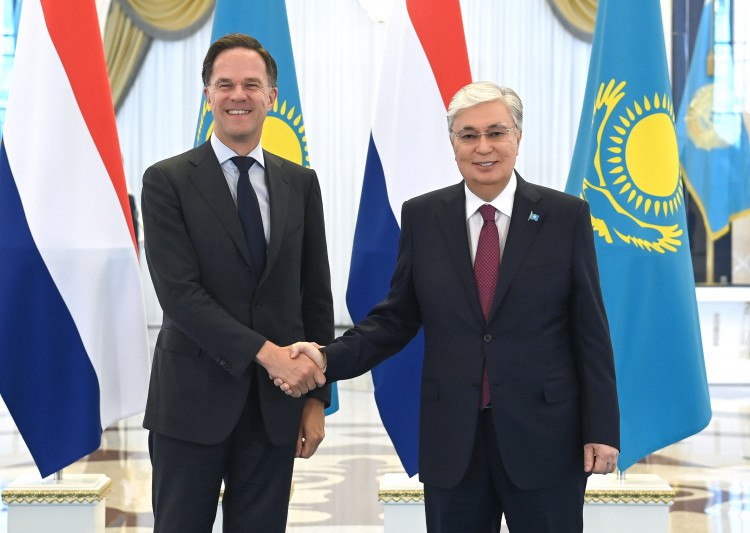
During a working visit to Astana , Prime Minister of the Netherlands Mark Rutte engaged in talks with Kazakhstan President Kassym-Jomart Tokayev. Rutte had visited Astana back in 2010 during his first trip outside the EU as Prime Minister, and had not been back since his second visit in 2015. According to reports  issued by press service of the President of the Republic of Kazakhstan, the leaders' discussions focused on strengthening cooperation in various sectors including trade and economics, energy, and investment, and cultural-humanitarian spheres. Information was also exchanged on their respective countries' practices regarding  transport, innovation, nuclear energy, agriculture, health, climate, and water management. Welcoming the opportunity to expand dialogue on the above issues, Tokayev emphasized, "I would like to note the dynamic development of our bilateral cooperation. The Netherlands is the largest investor in our economy. The volume of direct investments has exceeded 120 billion dollars. Our countries are implementing large-scale joint projects." Furthermore, the President stated that the Prime Minister of the Netherlands's visit would provide additional impetus to the development of trade and economic relations between Astana and Amsterdam.  Mark Rutte expressed his appreciation of the level of bilateral partnership enjoyed by their countries and spoke in favor of intensifying practical cooperation between Kazakhstan and the Netherlands.  Turning to environmental issues, he confirmed, " We will be happy to share ideas and developments that we have in the field of agriculture, green energy, water management." Views were also exchanged on current issues on the international and regional agenda and both leaders stressed the  importance of continued dialogue within the framework of interaction with the European Union.

Kyrgyzstan and China Aim to Increase Trade

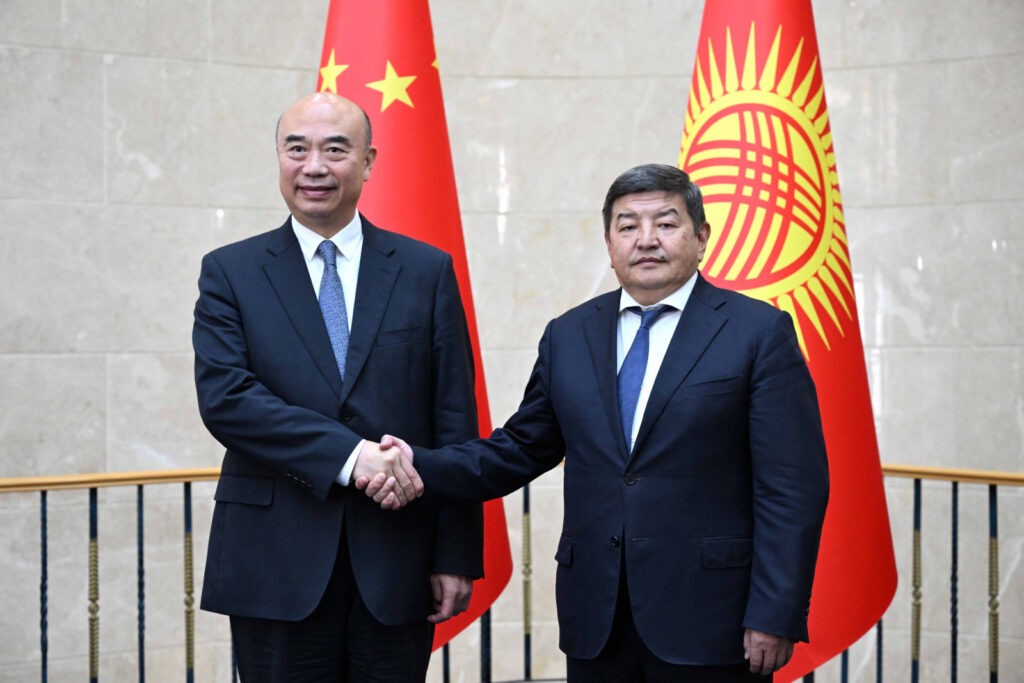
On May 18 in Bishkek, Chairman of the Cabinet of Ministers of the Kyrgyz Republic, Akylbek Japarov held talks with Vice Premier of the State Council of the People's Republic of China, Liu Guozhong. Emphasizing that China is one of Kyrgyzstan’s main trade and investment partners, Japarov stated that bilateral trade turnover is growing every year and reached $19.8 billion in 2023, an increase of 30% compared to 2022. “But this is not the limit, and the Kyrgyz Republic is ready to jointly make efforts to increase all trade and economic indicators,” he stated. Japarov stressed the importance of the full and uninterrupted functionality of the Torugart and Irkeshtam checkpoints on the Kyrgyz-Chinese border to further increases in trade between the two countries. According to Japarov, the Kyrgyz side is aiming to develop transport and logistics infrastructure, removing restrictions that impede trade exchanges, and creating mutually beneficial conditions. “We would like to expand our capabilities and switch to daily and round-the-clock operation of these border checkpoints. I believe this will also be useful for the Chinese side, as it will allow an even larger volume of cargo and goods to be exported from China to Kyrgyzstan, and on to third countries. We are aiming to increase the throughput capacity of the border checkpoints to 1,000 vehicles per day,” the prime minister said. Kyrgyzstan also expects to sign protocols on new types of agricultural products and simplify procedures for the export of these products from Kyrgyzstan to China. In turn, Vice Premier Liu Guozhong noted the high level of Kyrgyz-Chinese relations and the readiness to further develop and strengthen mutually beneficial and multifaceted cooperation. Guozhong stated that construction of the China-Kyrgyzstan-Uzbekistan railway is of strategic importance for the entire region and urged that its construction start sooner. He also noted the importance of increasing trade turnover, increasing the capacity at border checkpoints, opening the new Bedel border checkpoint this year, and expanding cooperation in tourism. Guozhong also stated that the Chinese market is open to the import of Kyrgyz agricultural products.

Kazakhstan, Kyrgyzstan, and Uzbekistan Favor EEU Economic Integration

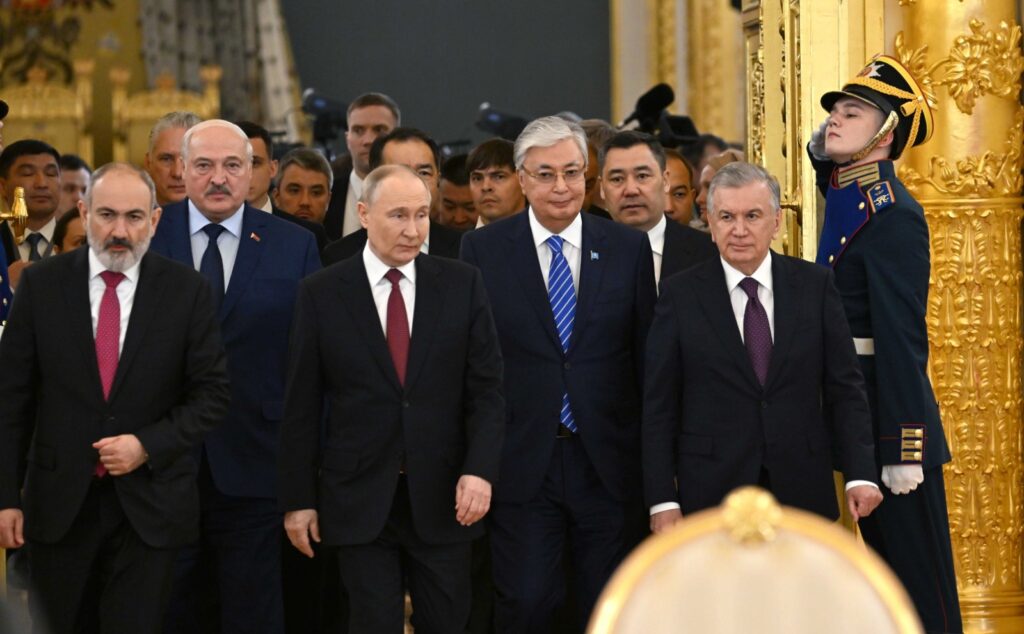
On May 8, Russian President Vladimir Putin, President of Belarus Alexander Lukashenko, President of Kazakhstan Kassym-Jomart Tokayev, President of Kyrgyzstan Sadyr Japarov, and Prime Minister of Armenia Nikol Pashinyan convened in Moscow for a meeting of the Supreme Eurasian Economic Council - the governing body of the Eurasian Economic Union (EEU). The event, which marked the tenth anniversary of the establishment of the Russian-led economic integration bloc, was also attended by heads of the EEU observer states, President of Cuba Miguel Diaz-Canel Bermudez and President of Uzbekistan Shavkat Mirziyoyev. In his address, Kazakhstan President Tokayev remarked that in the relatively short period since the Treaty on the Eurasian Economic Union was signed in Astana ten years ago, cooperation between the parties has contributed greatly to the development of Kazakhstan’s economy, and stated: “The correctness of the chosen vector of development of our association has been confirmed by the macroeconomic results of the past decade. Thus, Kazakhstan’s trade turnover with the EEU member countries has increased 1.7-fold and reached $28.5 billion.” Referencing the positive potential for EEU cooperation with rapidly developing countries in Asia, Africa, and the Middle East, he urged EEU member states to join the Ashgabat Agreement on the creation of an International Transport Corridor to engage with markets in the Persian Gulf. The Kazakh president also emphasized the need for improvements to trade links between Europe and Asia, North and South, and warned that unless renewed, the existing infrastructure in the Eurasian region will continue to deteriorate. Citing the modernization and expansion of transport and logistics infrastructure as a key priority, he stated, “In Kazakhstan, we plan to repair 11,000  and build over 5,000  kilometers of new railways by 2030. As part of the Belt and Road initiative, a Kazakh terminal, built in the Chinese city of Xi’an, accounts for up to 40% of all container traffic on the China-Europe route. There are also plans to launch 5 cross-border transport and logistics hubs on Kazakhstan’s borders with Russia, China, Uzbekistan, and Kyrgyzstan, and on the Caspian Sea.” Kyrgyz President Japarov announced that further development of Eurasian economic integration, including the creation of a single market for goods and services without barriers, a common energy market, and freedom of movement of labor resources, remains a priority for Kyrgyzstan. Regarding benefits afforded by Kyrgyzstan’s membership of the EEU, Japarov said that the country’s trade with EEU member states has grown by 76%, from $2.5 billion to $4.4 billion, its exports to EEU countries have tripled from $410 million to $1.23 billion, and its imports  increased by more than 50%, from $2 billion to $3 billion. Apart from gold, 80% of Kyrgyzstan’s exports go to the EEU countries. The Kyrgyz president also emphasized the importance of linking the EEU and the Chinese Belt and Road initiative. Despite the current observer status of his country and the EEU, Uzbek President Mirziyoyev reported that over the past three years, trade between Uzbekistan and the EEU has grown by 60 percent. Looking ahead, he announced, “Uzbekistan is interested in expanding practical partnership and...

Uzbekistan and Hungary Expand Economic Cooperation

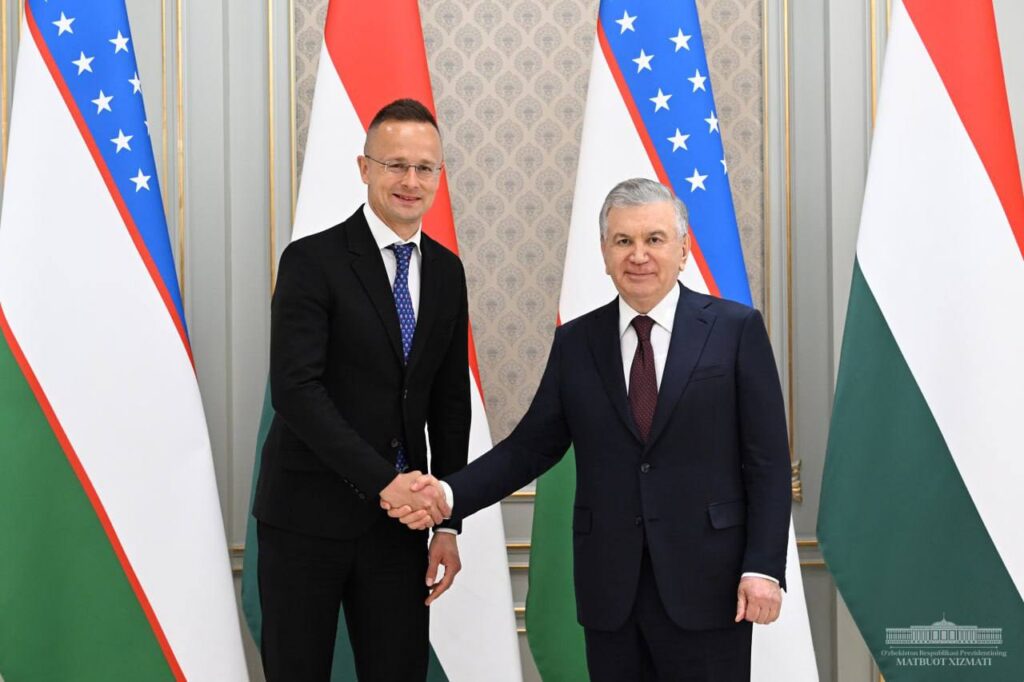
On May 7, President of Uzbekistan Shavkat Mirziyoyev received the Minister of Foreign Affairs and Trade of Hungary, Peter Szijjártó at the 9th meeting of the Uzbek-Hungarian Intergovernmental Commission on Economic Cooperation in Taskent. Focus was placed on cooperation on projects in industry, pharmaceuticals, agriculture, fish farming, logistics, and real estate construction, with added emphasis on the importance of accelerating the launch of a special economic zone for projects conducted by Hungarian and European companies in the Tashkent region. Co-chaired by Peter Szijjártó and the Minister of Investment, Industry and Trade of Uzbekistan Laziz Kudratov, the meeting also addressed the further development of cooperation in investment, industrial, trade and economic, banking, cultural and humanitarian sectors. It was stated that over the past 5 years, Uzbek-Hungarian trade turnover has doubled and in the first quarter of 2024 alone, bilateral trade grew six-fold compared to the same period in 2023. Measures to increase bilateral trade include the launch of “Meet Uzbekistan” programs to promote Uzbek products in Budapest’s large retail chains, as well as the organization of roadshows for Uzbek manufacturers in Hungary’s largest cities. Both sides stressed the importance of diversifying transport routes, liberalizing permits for bilateral and transit transportation, resuming direct flights between Tashkent and Budapest, and organizing a logistics hub for Uzbek products in Hungary. Note was made of Hungarian companies’ implementation of projects worth almost $500 million in Uzbekistan, and thanks expressed for Hungary’s provision of a state scholarship ‘Stipendium Hungaricum’ which enables some 300 Uzbek students to study at its universities.