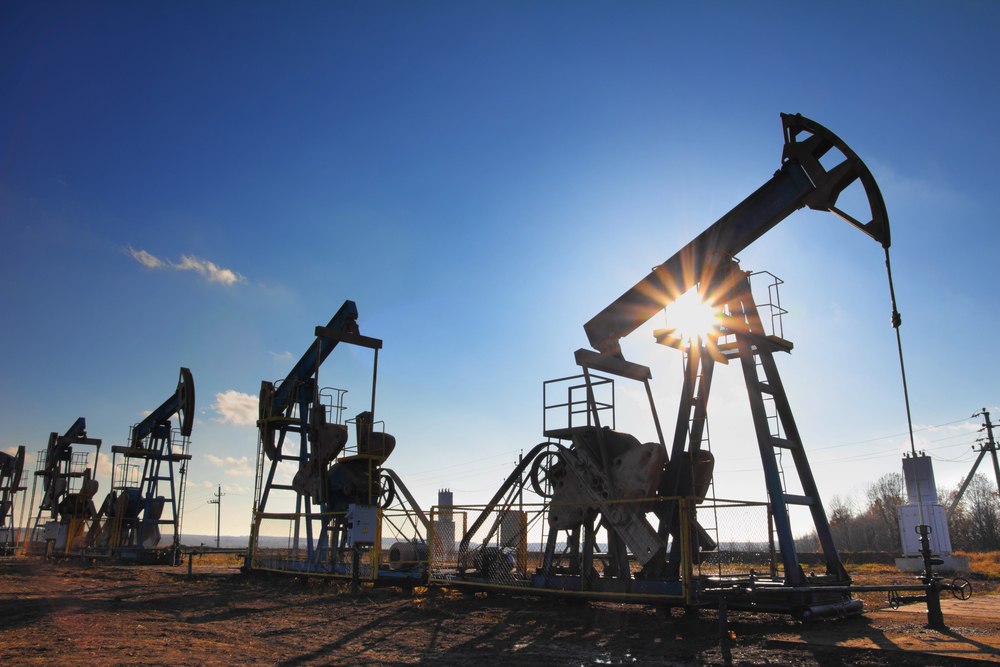
Kazakhstan’s prosperity has been built largely on oil, much of which still reaches world markets through infrastructure crossing Russian territory. That would be a strategic exposure for any country; for a landlocked state bordering Russia during the largest war in Europe since 1945, it is impossible to ignore.
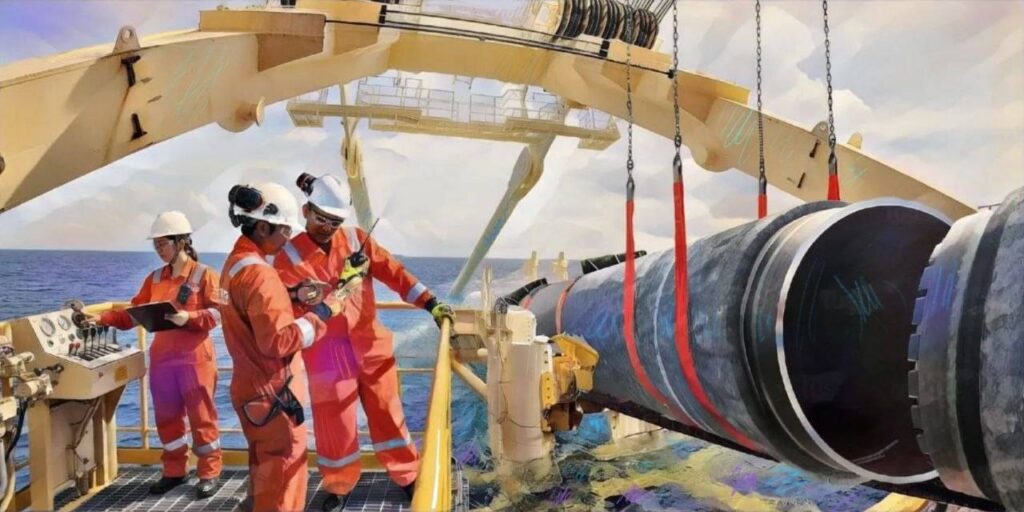
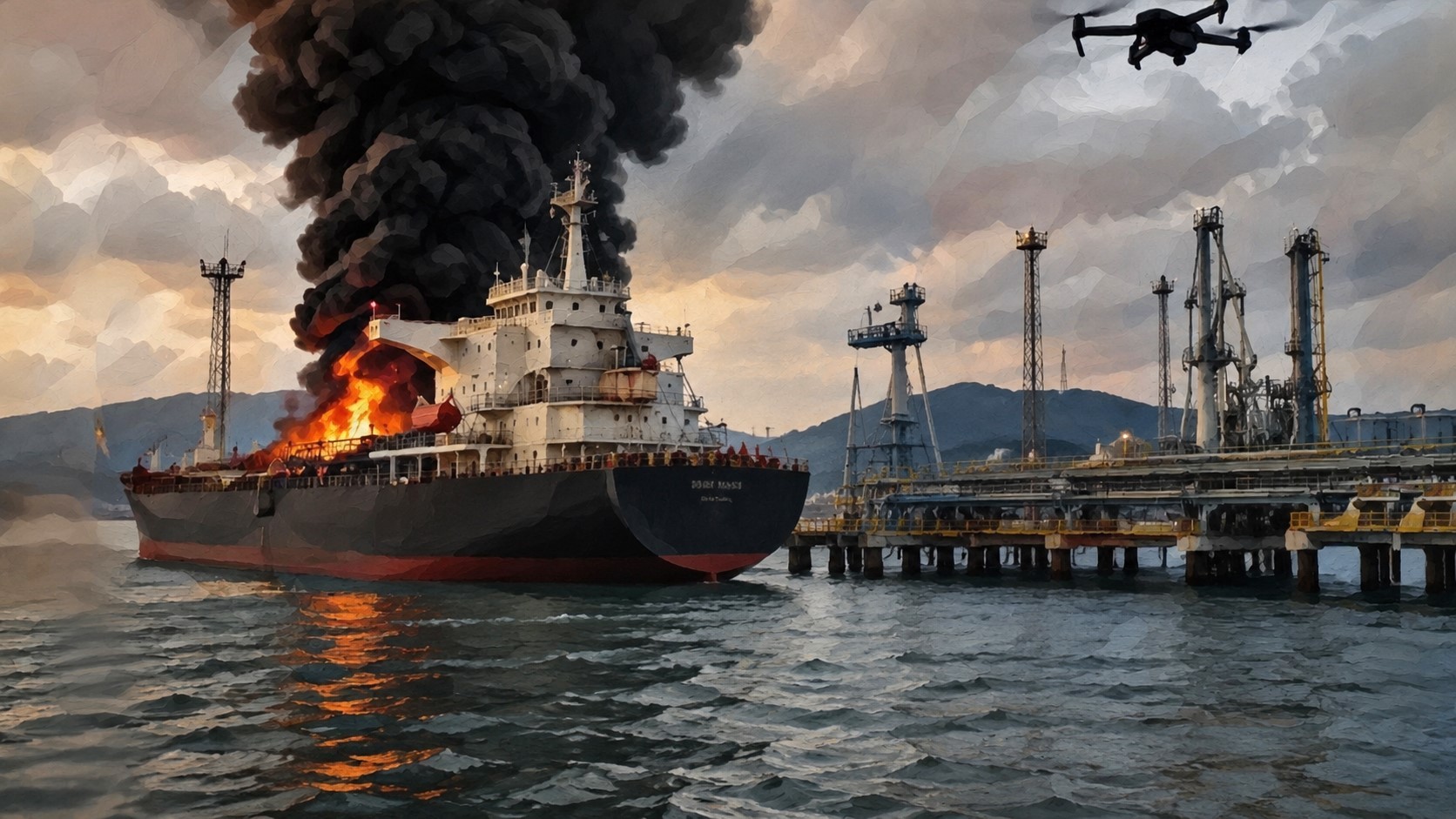
The Caspian Pipeline Consortium route to the Black Sea remains Kazakhstan’s most important oil artery, carrying about 80% of its crude exports. Three tankers were struck near the terminal on July 17 and 19, two while loading Kazakh oil. Loadings briefly resumed before a fourth tanker, NELSA, was hit on July 20, forcing another suspension. No casualties or oil spill were reported, but the attacks repeatedly interrupted Kazakhstan’s main export route.
Kazakhstan treated the attacks as a direct threat to its own economic interests, not as an incident confined to Russia. Its Foreign Ministry condemned the July 17 and 19 strikes as unacceptable, said an agreed mechanism for sharing information about civilian vessels entering the Black Sea to load CPC oil had been disregarded, and demanded an immediate halt. Ukraine’s General Staff said it had struck two tankers overnight on July 19 as part of its campaign against Russian oil and military-fuel logistics, but did not identify them. CPC said the vessels at its terminal were loading Kazakh crude. The episode exposed Kazakhstan’s dependence on infrastructure beyond its control. That exposure reflects geography and inherited infrastructure, not Kazakhstan’s foreign policy alignment. It is a serious strategic vulnerability that Astana is trying to reduce.
Kazakhstan did not choose its geography, and its export system was not designed for the rupture that followed Russia’s invasion of Ukraine. It is the world’s largest landlocked country, bordered by Russia and China, and sits on the Middle Corridor linking China and Central Asia with the South Caucasus and Europe. No government in Astana can alter those facts. The relevant question is how it has responded to them.
Under President Kassym-Jomart Tokayev, Kazakhstan remains highly exposed to oil, but it is not an oil economy standing still. KAZENERGY’s 2023 National Energy Report put the hydrocarbon sector at about 23% of GDP in 2019 and about 20% in 2022. Kazakhstan’s Bureau of National Statistics put the oil and gas sector at 16.3% of GDP in 2024. The series are not directly comparable, but both indicate that hydrocarbons remain central even as non-oil sectors expand.
Oil dependence has not disappeared. UNCTAD notes that oil exports still account for more than half of total exports and remain central to foreign exchange earnings and public finances. Kazakhstan has made more progress in reducing oil’s share of GDP than its weight in exports and state revenue. Any serious assessment has to account for both.
Kazakhstan’s position on Ukraine also needs to be judged in context. Binary judgments obscure the constraints facing a country that shares a long border, trade channels, energy infrastructure and significant security exposure with Russia. Kazakhstan has not recognized Russia’s attempted annexations. In 2022, its Foreign Ministry said it would not recognize the Russian-organized referendums in occupied Ukrainian regions, citing territorial integrity, sovereign equality and peaceful coexistence.
Tokayev has repeatedly made sovereignty a central principle of Kazakhstan’s foreign policy. That principle also shapes Astana’s position on Ukraine. Calls for a more confrontational posture often understate the economic and security consequences that Kazakhstan itself would have to bear. Its government’s responsibility is to protect its citizens, preserve room for maneuver, and avoid risks it cannot control. Tokayev has described Kazakhstan’s approach as support for Ukraine’s statehood and territorial integrity, combined with “balance and reason” in seeking an end to the conflict.
Astana has also increased shipments across the Caspian to Azerbaijan and onward through the Baku–Tbilisi–Ceyhan pipeline, while using the Kazakhstan–China pipeline and other outlets to limit the effects of CPC disruptions. Exports through Aktau and the Baku–Tbilisi–Ceyhan pipeline reached 1.3 million tons in 2025 and are expected to rise to 1.6 million tons in 2026. Shipments to China totaled about 1.1 million tons in 2025. Those volumes remain small compared to CPC, but they give producers somewhere to redirect at least part of their output when the Black Sea route is disrupted.
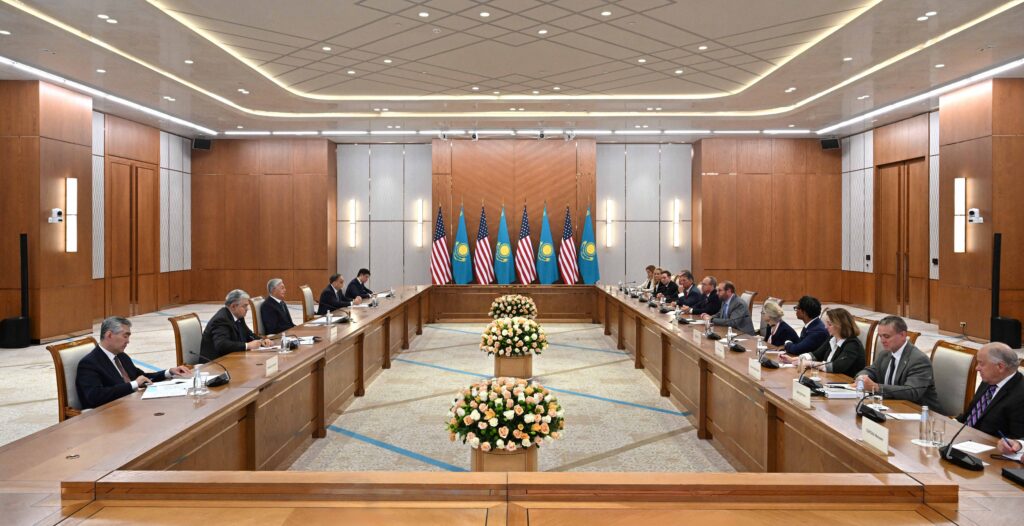
That effort to widen Kazakhstan’s options extends beyond oil transport. The country joined the U.S.-led Pax Silica initiative in June 2026, becoming the first in its region to do so. The framework covers artificial intelligence, critical minerals, semiconductors, data centers, energy infrastructure, high-tech manufacturing, research and talent development. It will not replace oil exports, but it could move Kazakhstan into more valuable parts of global supply chains.
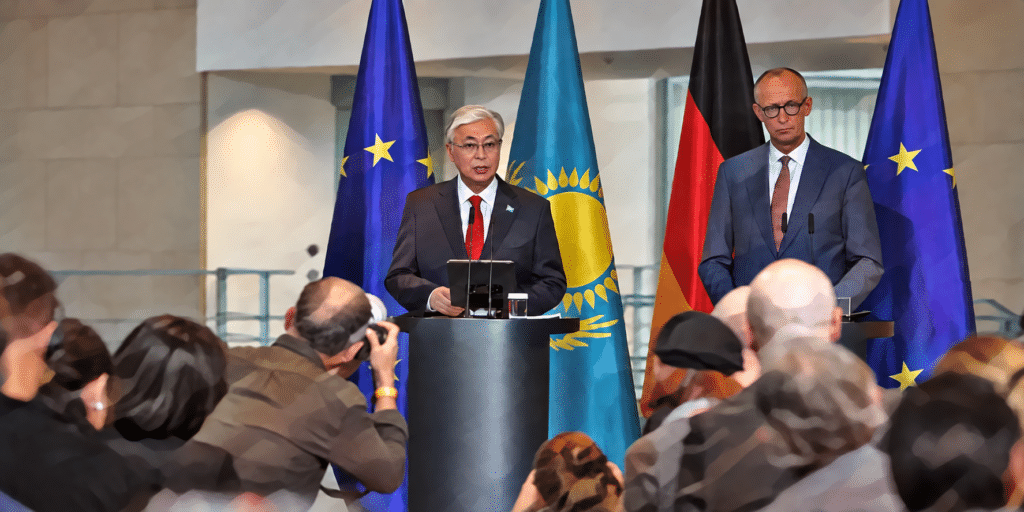
The relationship with Europe is developing along similar lines. In June 2026, the EU and Kazakhstan reaffirmed cooperation on critical raw materials, batteries, renewable hydrogen, energy, transport, digitalization and emerging technologies. Their joint statement recognized Kazakhstan as an important supplier of oil and uranium to Europe while reaffirming sovereignty, territorial integrity and the peaceful settlement of disputes. Taken together, those commitments describe Kazakhstan’s policy better than the familiar shorthand of dependence on Russia. Astana is keeping necessary commercial channels open while defending legal principles and steadily creating alternatives.
Kazakhstan has also cultivated the Gulf and China. The UAE signed 22 agreements worth more than $5 billion with Kazakhstan in 2025, while bilateral trade with China reached a record $48.7 billion in 2025, according to figures cited by Kazakhstan’s Foreign Ministry. Neither relationship eliminates Kazakhstan’s exposure to infrastructure and trade routes through Russia, but together they broaden its sources of capital, trade and technology, and reduce the danger that any one country becomes its gatekeeper.
The test of Tokayev’s policy is whether each new shock merely reveals the same weakness or accelerates the work of reducing it. Since 2022, Astana has kept exports moving, upheld its position on territorial integrity, and continued to develop political and economic relations with Russia, China, Europe, the United States and the Gulf. That has not removed the underlying exposure, but it has expanded Kazakhstan’s room for maneuver under unusually tight constraints.
The July attacks showed how far the country still has to go. Kazakhstan cannot escape its geography or insulate itself entirely from a neighboring war. It can reduce the extent to which a single route, market or external disruption constrains its national choices. The real measure of success will come when the next interruption to CPC remains costly but no longer has the power to dictate Kazakhstan’s economic future.