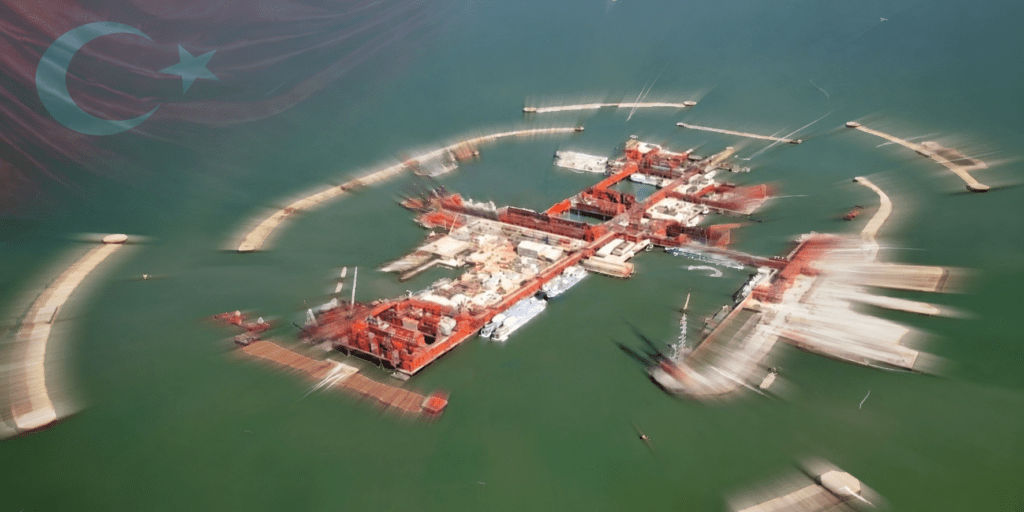
Russia’s full-scale invasion of Ukraine unleashed the war now expanding across the Black Sea, but it did not erase the distinction between Russian military logistics and the lawful commerce of other states. Kazakhstan is not a party to the war, yet its principal oil export route passes through an expanding maritime target zone. The attacks near the Caspian Pipeline Consortium terminal therefore raise a larger question: can civilian trade carrying Kazakh crude be treated as part of Russia’s war economy simply because geography places its outlet on the Russian coast?
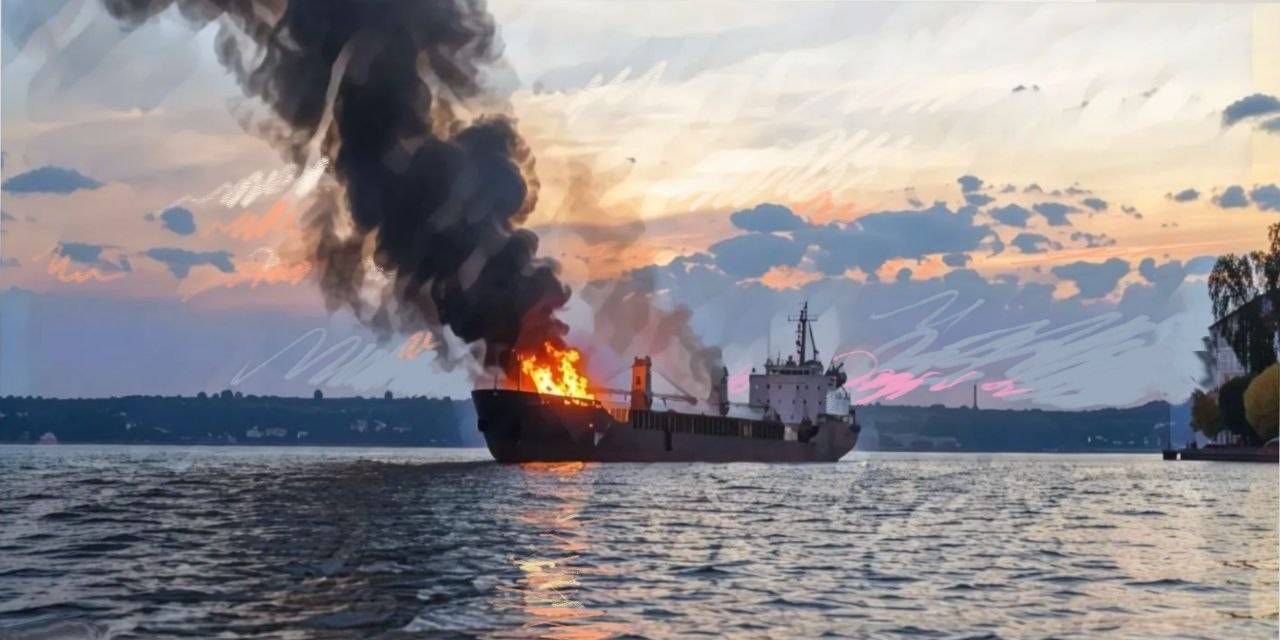
Four vessels were attacked near CPC’s Black Sea terminal on July 17, 19, and 20. Nordic Zenith, chartered by ExxonMobil according to Reuters, was empty and approaching the terminal when it was hit on July 17. Two days later, ASIA and NISSOS IOS were struck at single-point moorings off Novorossiysk while loading Kazakhstan-produced oil. ASIA was taking Tengizchevroil (TCO) crude; NISSOS IOS was loading oil from Kashagan B.V. and Maten. A fire on ASIA was extinguished; no one was injured, both vessels remained afloat, and no oil entered the sea. Chevron told The Times of Central Asia that the crew was safe, the vessel was stable, and there had been “no impact to TCO operations or exports.”
Loading briefly resumed that evening, but on July 20 a drone struck NELSA while it was loading at SPM-1. The impact on the tanker’s starboard side caused a fire on deck and in several compartments. Its 22-member international crew was evacuated except for the captain and chief officer; the vessel remained afloat, the fire was extinguished, and no oil spill occurred. CPC suspended loadings again.
Ukraine’s General Staff said separately that its forces had struck two tankers used to transport Russian oil, petroleum products, and fuel for the Russian military in the Black Sea. It did not identify the vessels or connect the claim to the attacks at the CPC terminal. Russia’s Foreign Ministry blamed Kyiv, while CPC itself did not publicly attribute the attacks.
Astana’s response to the attacks has remained measured and legalistic. The Foreign Ministry called the attacks an infringement on Kazakhstan’s economic interests and a threat to lawful international trade. It said an agreed mechanism for sharing information on civilian vessels entering the Black Sea to load CPC oil had been disregarded, endangering crews. It reserved Kazakhstan’s right to seek compensation under international law. Following the strike on NELSA, the Energy Ministry said it remained in constant contact with CPC while the tanker’s technical condition and the consequences of the attack were assessed. The statements focused on Kazakhstan’s rights. That is the distinction Astana is asserting: Kazakh cargoes, revenues, crews, and commercial partners should not be treated as extensions of Russia’s war economy merely because they use a terminal on Russian territory.
Kazakh Crude and the Western Stake
Russia’s invasion created the maritime battlefield in which these incidents occurred, and Ukraine has a legitimate interest in weakening the military logistics that sustain Russia’s campaign. But Kazakhstan is not Russia, Kazakh crude is not Russian crude, and CPC is not simply a Russian oil instrument. When those distinctions blur, the cost is borne not only by Moscow. It reaches Atyrau and Astana, European refineries, U.S. investors, insurers, shippers, and ultimately Kazakh households.
Kazakhstan’s position on Ukraine has been cautious but consistent on territorial integrity. It has not recognized Russia’s attempted annexations. In 2022, Kazakhstan said it would not recognize Russian-organized referendums in occupied Ukrainian regions, with its Foreign Ministry invoking sovereignty, territorial integrity, and peaceful coexistence, according to Reuters. The same principle underpins Kazakhstan’s insistence that its own sovereign and economic interests be respected. Astana’s calibrated position reflects both its support for sovereignty and territorial integrity and the practical responsibilities of a landlocked state whose citizens would bear the consequences of escalation.
The same distinction is reflected in the ownership of Kazakhstan’s oil industry. Western companies have a direct stake in the safe transit of its crude. Tengizchevroil dates to 1993, when Kazakhstan and Chevron agreed to develop the Tengiz field in one of the defining investments of the country’s early independence. Chevron and ExxonMobil now own a combined 75% of the venture. TCO says it has made about $214 billion in direct payments to Kazakhstan since 1993, illustrating why disruption to Tengiz exports affects public finances, employment, domestic suppliers, and the country’s investment reputation.
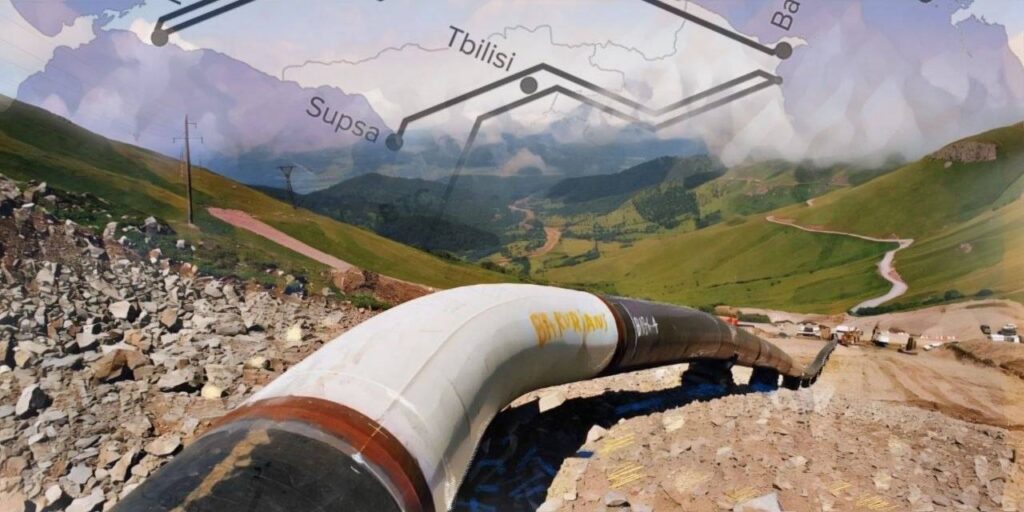
CPC is not insulated from Russia: it crosses Russian territory, includes substantial Russian interests, and carries some Russian crude. But it remains predominantly a Kazakh export system, and the two tankers at the moorings on July 19 were loading oil produced in Kazakhstan. The same multinational structure extends across the CPC system. Its shareholders include Kazakh and Russian state-linked interests alongside Chevron, ExxonMobil, Shell, Eni, and other international investors. The pipeline carries crude from Tengiz, Kashagan, and Karachaganak, where American, European, Kazakh, and Asian companies have invested over decades. A disruption at Novorossiysk therefore affects more than infrastructure on Russian territory. It affects a production and export system built jointly by Kazakhstan and some of the world’s largest energy companies.
U.S. sanctions policy already recognizes this distinction. When Washington designated Rosneft and Lukoil on October 22, 2025, OFAC simultaneously issued General License No. 124A covering CPC and Tengizchevroil. General License No. 124B, issued on November 14, added Karachaganak and authorized specified transactions involving Rosneft and Lukoil that were necessary for the operation of the three projects.
Europe sits at the other end of the same supply chain. Following earlier attacks, the EU told The Times of Central Asia that Kazakhstan plays a crucial role in European energy security and that Black Sea maritime safety supports European trade, supply chains, and connectivity. That assessment reflects Europe’s post-2022 shift away from Russian crude. Russia’s share of EU crude-oil imports fell from 25.8% in 2021 to 2.2% in 2025, while Kazakhstan supplied 12.8%, level with Norway and behind only the United States.
About 80% of Kazakhstan’s crude exports move through CPC, which carried roughly 1.5 million barrels a day in 2025. Europe has therefore reduced its reliance on Russian oil partly by increasing its exposure to Kazakh crude transported through Russia and loaded beside an active war zone. Repeated disruption would threaten more than individual cargoes or short-term prices. It would expose a structural weakness in the supply diversification Europe has pursued since Russia invaded Ukraine.
Astana is expanding alternative export routes and pursuing broader economic diversification, but neither can replace CPC or oil revenues at scale in the near term. Those wider relationships do not resolve the central problem. CPC remains too central, alternative oil-route capacity too limited, and sanctions compliance a continuing burden. Industrial diversification is unfinished, while ambitions in critical minerals, logistics, technology, and manufacturing will take years to produce results at scale. Kazakhstan will therefore remain vulnerable to CPC-related disruption for years to come.
Russia bears responsibility for creating the war and for turning the Black Sea into an increasingly dangerous operating environment. The same obligation to distinguish military objectives from civilian shipping applies to Moscow. Ukrainian officials said a Russian missile strike on the Guinea-Bissau-flagged Golden Leo near Odesa on July 19 killed ten people aboard a vessel carrying corn. Ukraine has the right to defend itself against Russia’s invasion and to strike lawful military objectives. That right does not remove the obligation to distinguish those objectives from the lawful commerce of third states. Kazakhstan is entitled to expect that its civilian exports, crews, and commercial partners will not become collateral casualties of a war it did not start and has worked carefully to avoid joining.
The immediate requirement is therefore practical rather than rhetorical. The vessel-notification mechanism should be reaffirmed and observed, the circumstances of each strike established transparently, and effective safeguards agreed for civilian tankers carrying Kazakh oil. Where damage has occurred, claims should be addressed through established legal channels. Kazakhstan’s European and American partners have an interest in supporting that process, both because their companies and energy supplies are directly involved and because a rules-based order must protect third countries as well as states defending themselves against aggression. Restraint in this case would not weaken support for Ukraine. It would help preserve the distinctions on which that support depends.