• KZT/USD = 0.00223
  • TJS/USD = 0.10810
  • UZS/USD = 0.00009
  • TMT/USD = 0.29850
  • KZT/USD = 0.00223
  • TJS/USD = 0.10810
  • UZS/USD = 0.00009
  • TMT/USD = 0.29850
  • KZT/USD = 0.00223
  • TJS/USD = 0.10810
  • UZS/USD = 0.00009
  • TMT/USD = 0.29850
  • KZT/USD = 0.00223
  • TJS/USD = 0.10810
  • UZS/USD = 0.00009
  • TMT/USD = 0.29850
  • KZT/USD = 0.00223
  • TJS/USD = 0.10810
  • UZS/USD = 0.00009
  • TMT/USD = 0.29850
  • KZT/USD = 0.00223
  • TJS/USD = 0.10810
  • UZS/USD = 0.00009
  • TMT/USD = 0.29850
  • KZT/USD = 0.00223
  • TJS/USD = 0.10810
  • UZS/USD = 0.00009
  • TMT/USD = 0.29850
  • KZT/USD = 0.00223
  • TJS/USD = 0.10810
  • UZS/USD = 0.00009
  • TMT/USD = 0.29850
22 September 2026

Viewing results 1 - 6 of 141

Kyrgyzstan Looks Beyond Russia as Fuel Squeeze Hits Central Asia

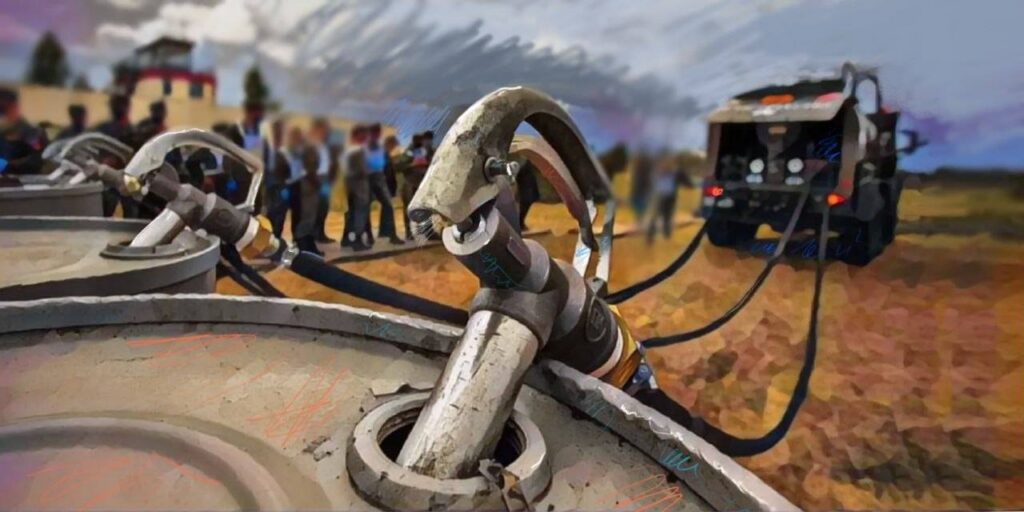
Kyrgyzstan has asked Azerbaijan, Belarus, Kazakhstan, Russia, Turkmenistan and Uzbekistan to help secure its fuel supplies as shortages inside Russia put new strain on Central Asia's fuel market. The move follows reduced Russian refining capacity after Ukrainian drone strikes on oil refineries, seasonal demand, and tighter export controls. “Due to the lack of adequate oil and gas production, we remain a country dependent on imports,” Deputy Energy Minister Nasipbek Kerimov told Birinchi Radio. “Kyrgyzstan annually consumes approximately 2 million tons of various types of fuel and lubricants, and almost 95% of this volume comes from Russia.” The dependence rests on long-standing trade terms; Russia supplies oil products to Kyrgyzstan duty-free under annual indicative balances within the Eurasian Economic Union. Russian Deputy Prime Minister Alexey Overchuk said in October 2025 that balances for 2026 had already been signed. The system has helped hold down prices, but it also leaves the market exposed when Russian refineries or export rules change. Kyrgyz officials have tried to calm consumers. The Energy Ministry said fuel reserves were sufficient, supplies were moving under existing contracts, and that “official requests have been sent” to relevant governments to support stable supplies. Local officials also pressed Kyrgyzneftegaz and the Junda refinery to increase domestic production and deliveries. The pressure is not equal across all fuel types. AI-95 and AI-98 gasoline have disappeared from some filling stations, while AI-92 reserves remain stronger. Oil Traders Association head Kanatbek Eshatov told Kaktus.media that AI-92 stocks would last 30 to 45 days, depending on the company. He said the AI-95 problem could be solved “in a couple of weeks, if refineries recover after the shelling.” Diesel remains available, and farmers had stocked up before harvest work began, he added. As of July 6, AI-95 remained unavailable at some Bishkek filling stations. Bishkek has also moved on prices, with the Cabinet introducing temporary price regulation under Resolution No. 369 of May 25, 2026. The system subsidizes importers and sellers until September 30 by compensating the gap between market prices and fixed benchmark import prices. In Bishkek, capped pump prices are 79.9 soms per liter for AI-92 gasoline, 88.9 soms for AI-95 and 93.9 soms for diesel, equal to about $3.46, $3.85 and $4.06 per U.S. gallon. The state is using subsidies to prevent a sharper jump at the pump. Kerimov said prices would stay unchanged while talks continued with suppliers. “We are currently offered fuel at various prices,” he said, and even if purchase prices rise, “there should be no shortage on the domestic market.” President Vladimir Putin acknowledged on June 28 that fuel shortages inside Russia had created queues at filling stations. “Problems for drivers and for businesses persist,” he said, adding that “the harvest depends on” keeping seasonal fuel schedules for farms. Russian officials said gasoline reserves stood at 1.7 million metric tons, but Moscow was considering a complete ban on diesel exports. Russia had already imposed temporary restrictions on gasoline exports, with exemptions for some intergovernmental arrangements. Reuters reported on June...

Kazakhstan Expects to Double Renewable Energy Capacity by 2029

Kazakhstan expects to fully meet domestic electricity demand by early 2027 and move into a stable power surplus by 2029, partly through a planned doubling of renewable energy capacity, Energy Minister Yerlan Akkenzhenov said at a government meeting. Akkenzhenov said Kazakhstan’s power system currently includes 254 generation facilities, including 172 renewable energy installations. Conventional energy sources still dominate the country’s power mix. Coal-fired plants account for 13.7 gigawatts (GW) of installed capacity, gas-fired plants for 7.1 GW, and large hydropower stations for 2.5 GW. Kazakhstan’s total installed generating capacity stands at 27.1 GW, while renewable energy facilities account for 3.8 GW. Kazakhstan generated a record 123.1 billion kilowatt-hours (kWh) of electricity last year, while consumption reached 124.6 billion kWh. This year, output is expected to rise further to 126.5 billion kWh, the ministry said. The gap between production and consumption has been narrowing steadily, and the government plans to commission 13.3 GW of new capacity by the end of 2029, including 5.9 GW from renewable energy sources. “By 2029, 13.3 GW of new capacity will be commissioned. Of this volume, 12.56 GW will come from entirely new generation facilities, while 0.74 GW will replace existing capacity,” Akkenzhenov said. “The commissioning of new facilities will allow us to fully meet the economy’s electricity demand starting from early 2027, followed by a surplus. This additional generation will also support energy-intensive artificial intelligence infrastructure and large data centers,” he added. Under Kazakhstan’s Energy Sector Development Plan through 2035, the government also plans to introduce more than 26.3 GW of additional generating capacity. The ministry said the decision to build new facilities is based on long-term projections of rising electricity demand. Kazakhstan is also implementing a national project to expand coal-fired generation using what officials describe as cleaner coal technologies in line with environmental regulations. That program includes investment projects with a combined installed capacity of around 7.8 GW. Key projects include the construction of the Ekibastuz GRES-3 power plant, a thermal power station in Kurchatov, and three new combined heat and power plants in Kokshetau, Semey, and Ust-Kamenogorsk. In total, the national energy project includes 19 initiatives, eight new projects and 11 focused on the expansion and modernization of existing facilities. As previously reported by The Times of Central Asia, Kazakhstan’s electricity deficit was projected to reach 5.7 billion kWh in January 2025, up from 2.4 billion kWh a year earlier. The country currently imports most of its shortfall from Russia and signed an agreement with Tajikistan in May 2025 to import electricity from the Rogun Hydropower Plant.

Kyrgyzstan Seeks Alternative Fuel Suppliers as Russian Export Restrictions Hit

Russia’s restrictions on fuel exports are expected to put pressure on Kyrgyzstan, which remains heavily dependent on Russian petroleum supplies, First Deputy Prime Minister Daniyar Amangeldiev has said. Amangeldiev told 24.kg that the government had already moved to extend the existing duty-free fuel import mechanism in order to help stabilize the domestic market. “This issue has already been agreed within the ‘group of five’,” he said, referring to the member states of the Eurasian Economic Union. He said the fuel market remained stable for now and assured the public that the government was taking steps to prevent shortages of gasoline, diesel and aviation fuel. The comments followed an emergency meeting chaired by Prime Minister Adylbek Kasymaliev on fuel supply security, during which officials reviewed stock levels and import flows. Government officials said geopolitical tensions and disruptions to logistics were continuing to affect fuel markets and add pressure on prices. Authorities are also accelerating efforts to diversify fuel imports. Participants in the meeting said new supply channels were already being negotiated, with some concrete agreements reached. Kasymaliev ordered daily monitoring of fuel supplies and weekly coordination meetings to ensure a rapid response to emerging risks. On July 1, Kyrgyzstan’s Energy Ministry said it had launched talks with several countries to expand fuel imports and reduce dependence on a single supplier. Official requests have been sent to authorities in Russia, Kazakhstan, Belarus, Azerbaijan, Uzbekistan, and Turkmenistan as Bishkek seeks to secure additional supplies. The ministry said Kyrgyzstan imports the vast majority of its fuel and remains vulnerable to fluctuations in global oil prices, geopolitical instability in the Middle East, and disruptions to international logistics. Officials added that domestic fuel reserves are currently sufficient and that deliveries under previously signed contracts are continuing. The Energy Ministry said it is conducting daily monitoring together with the anti-monopoly regulator and holding consultations with fuel traders on logistics, pricing and stockpiling. As previously reported by The Times of Central Asia, the impact of Russia’s fuel restrictions is already being felt across the region. Kyrgyzstan has recently reported supply disruptions involving premium AI-95 and AI-98 gasoline. Kanatbek Eshatov, head of the country’s Association of Oil Traders, said some filling stations had experienced interruptions because of reduced and irregular Russian deliveries, combined with seasonal demand. Kyrgyzstan receives more than 90% of its gasoline imports from Russia. Between January and May 2026, Russia supplied more than 251,000 tons of gasoline, 235,150 tons of diesel fuel, and 48,150 tons of jet fuel to Kyrgyzstan, according to industry estimates.

Russia’s Fuel Crisis Tests Kazakhstan’s Energy Resilience

Kazakhstan is being pulled into a new energy paradox. As Russia's fuel crisis deepens, the country is being discussed as a potential gasoline supplier to its largest neighbor. Meanwhile, Kazakhstan is tightening controls at home, building reserves around refinery maintenance, and weighing fuel imports from China to protect its own market. On June 24, Reuters reported that Russia was in talks with Kazakhstan to import about 50,000 metric tons of AI-92 gasoline, citing four industry sources. The discussions followed refinery outages and unscheduled repairs in Russia after Ukrainian drone attacks, which had led to shutdowns at several large refineries in central Russia and cut Russian gasoline output by roughly 25% year-on-year by late June. The news was striking because Russia is normally a major exporter of petroleum products. The need to consider gasoline imports, including seaborne imports and emergency market-stabilization measures, underlines the scale of disruption in Russia's refining system. Kazakhstan's Energy Minister Erlan Akkenzhenov said Astana had not received an official request from Moscow, but the question remains politically and economically sensitive for Kazakhstan: can it afford to send fuel abroad if its own margin of safety is narrowing? Officially, the domestic picture remains stable. Kazakhstan's government said on June 20 that national stocks of gasoline, diesel, and aviation fuel exceeded 1 million tons, enough to cover current demand. It said supplies were being prioritized for filling stations, agricultural producers, and domestic airlines, and that no shortage of fuels and lubricants had been observed. Yet those assurances sit alongside a more fragile structural reality. Kazakhstan's refining system depends heavily on three large refineries: Atyrau in the west, Pavlodar in the north, and Shymkent in the south. Last year, it was reported that, after modernization, the three plants had a combined annual output of about 17 million metric tons. Such a system can function efficiently when all units are operating normally, but it leaves limited room for simultaneous shocks. One of those shocks is already present. The Atyrau Oil Refinery began scheduled preventive maintenance on June 26 under a timetable approved by the Ministry of Energy. KazMunayGas said the work includes inspections of 20 reactors, 213 storage tanks, 32 columns, and 231 heat exchangers, as well as replacement of more than 335 tons of catalysts. The refinery entered maintenance with 38,000 tons of gasoline, 31,300 tons of diesel, and 6,800 tons of jet fuel. KazMunayGas said national stocks of AI-92 gasoline and diesel covered 34 and 32 days of demand, respectively, and that the phased restart of processing units was scheduled to begin on July 10. Those figures show resilience, but not abundance. Summer brings higher consumption from agriculture, passenger travel, freight, and aviation. For the government, managing this period means monitoring refinery output, shipments, inventories, and preventing fuel from leaving the country through unauthorized channels. After a June 20 meeting, Prime Minister Olzhas Bektenov ordered tighter border controls; the government said vehicles are restricted from crossing the state border by road more than once per day as part of...

Turkish Company Launches Construction of $3 Billion Hydropower Cascade in Kyrgyzstan

Construction of the Kazarman cascade of hydroelectric power plants on Kyrgyzstan’s Naryn River officially began on June 25, marking one of the country’s largest energy infrastructure projects since independence. The project, located in the Jalal-Abad region, includes three hydropower plants, Ala-Buga, Kara-Bulun-1, and Kara-Bulun-2, with a combined installed capacity of 912 megawatts and expected annual electricity generation of more than 3.75 billion kilowatt-hours. The cascade is being developed under an investment agreement with Orta Asya Investment Holding, a subsidiary of Turkey’s İhlas Holding, with total investments estimated at $3 billion. At the official launch ceremony, Kyrgyz President Sadyr Japarov described the Kazarman cascade as one of the largest energy projects in the country’s modern history. Japarov said Kyrgyzstan is accelerating hydropower and renewable energy development to strengthen energy security and reduce dependence on electricity imports. “Without developing the electric power industry, it is impossible to ensure the country’s sustainable development,” Japarov said. He noted that Kyrgyzstan imported about 3 billion kWh of electricity during winter in 2020, a figure that has now risen to 4 billion kWh, reflecting growing domestic demand. According to Japarov, electricity consumption continues to outpace new generation capacity despite ongoing construction of small and medium-sized hydropower plants, as well as solar and wind energy facilities. The president said the increase in demand is driven by rapid industrial expansion, with hundreds of new factories and social infrastructure facilities commissioned annually in recent years. Construction of the Kazarman cascade is scheduled for completion by 2031. Japarov said that once the Kazarman cascade and the strategic Kambarata-1 Hydropower Plant become operational, Kyrgyzstan expects to fully cover domestic electricity demand and begin exporting surplus energy to neighboring countries. Kambarata-1, which is being developed jointly with Kazakhstan and Uzbekistan, will have an installed capacity of 1,860 MW and annual generation of 5.6 billion kWh. In addition to the Kazarman project, İhlas Holding is also involved in building a 250 MW gas-fired combined heat and power plant in Bishkek. The company is further expanding its energy footprint in Kyrgyzstan through the Suusamyr-Kokomeren hydropower cascade, for which the Eurasian Development Bank and Orta Asya Investment Holding signed a feasibility study agreement in September 2025. That project will include three hydropower plants with a combined capacity of 1,305 MW. Under the agreements, Orta Asya Investment Holding will operate the facilities for 20 years, while Kyrgyzstan guarantees the purchase of the generated electricity.

The Fragile U.S.–Iran Truce: What Central Asia Stands to Gain and Lose

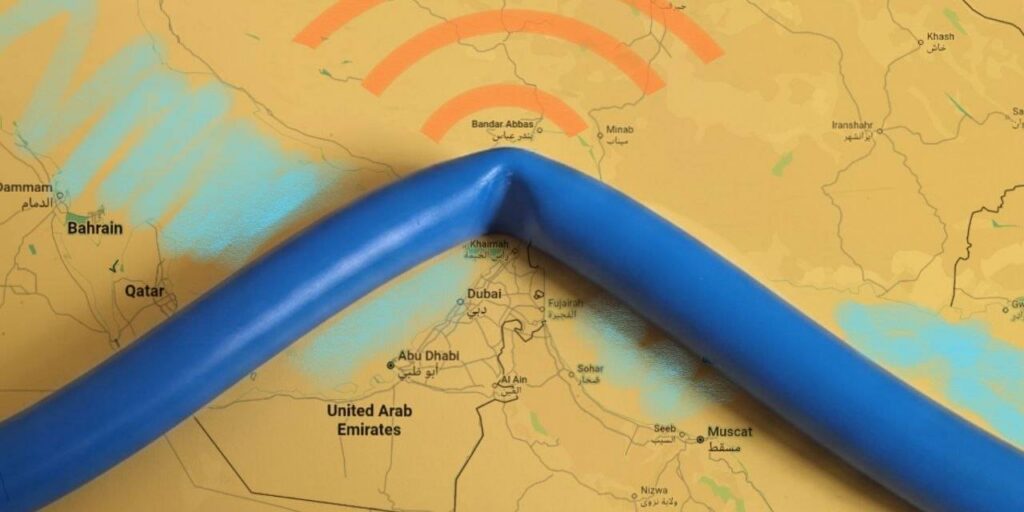
The preliminary memorandum signed in mid-June between the United States and Iran, followed by renewed talks between Washington and Tehran, has extended a U.S.–Iran truce and opened a 60-day window for negotiations on a final agreement. The nuclear terms remain unresolved, while Israel’s continued military presence in southern Lebanon, despite U.S. pressure for a withdrawal, underscores how fragile the broader regional de-escalation remains. At the end of this period, the parties may sign a final agreement, return to hostilities, or mutually agree to extend the interim arrangement. Kazakhstan, Uzbekistan, Kyrgyzstan, and Tajikistan, along with neighboring Azerbaijan, have welcomed efforts to de-escalate the conflict between the United States and Iran. The fighting briefly boosted demand for alternative routes through Central Asia, but prolonged instability would disrupt trade, raise transport and insurance costs, and increase security risks. The question now is what the region could gain if the pause holds. Those effects would vary across the region. Turkmenistan and Uzbekistan stand to benefit most directly from safer southern rail access through Iran to the Persian Gulf and Türkiye. Kyrgyzstan and Tajikistan, which are less directly connected to these corridors and less exposed to oil price swings, would feel the consequences mainly through freight costs, fuel prices, and wider regional trade. For Azerbaijan, a sustained pause would reinforce its role as the Caspian link between Central Asia, the South Caucasus, and Türkiye, while renewed instability would push more freight toward Trans-Caspian alternatives. That interest is not merely theoretical. Tajik-Iranian trade reached $119.6 million in the first quarter of 2026, while Tajikistan and Kyrgyzstan are developing access to Iranian maritime infrastructure through Uzbekistan and Turkmenistan. The opportunity, however, is conditional. A truce can reduce military risk, but it does not by itself remove the banking, insurance, and compliance problems that have long complicated trade through Iran. For Central Asian exporters and logistics companies, the question is not only whether routes are physically open, but whether carriers, lenders, insurers, and buyers are prepared to use them during a temporary 60-day window. Analysts interviewed by Deutsche Welle said the framework leaves several important provisions unresolved, making a final agreement uncertain. For Central Asia, the most immediate economic variable is the Strait of Hormuz. Kazakh historian and political analyst Sultan Akimbekov identifies its reopening as the key to easing global supply fears. A durable reopening, combined with the temporary U.S. waiver allowing Iranian oil sales through August 21, could put downward pressure on global energy prices. The effects would vary across Central Asia: weaker prices could strain hydrocarbon revenues, while lower fuel, fertilizer, and freight costs could ease imported inflation in Uzbekistan, Kyrgyzstan, and Tajikistan. For Kazakhstan, lower global oil prices would have significant implications. National Bank Governor Timur Suleimenov has said oil generates more than 50% of the country’s export revenues and over 30% of the state budget and National Fund revenues. That would reverse one of the conflict’s few short-term economic benefits for Kazakhstan. Higher crude prices had briefly improved the outlook for export revenues,...