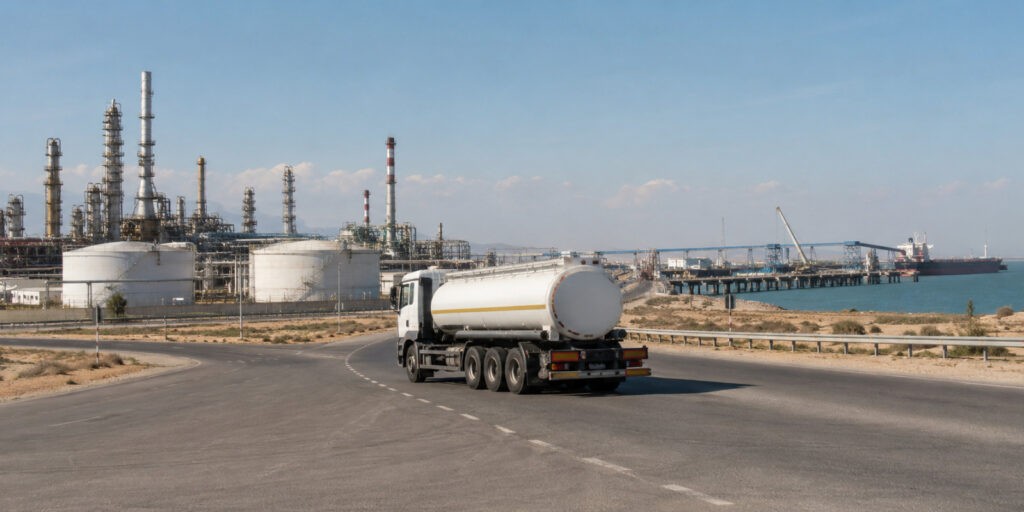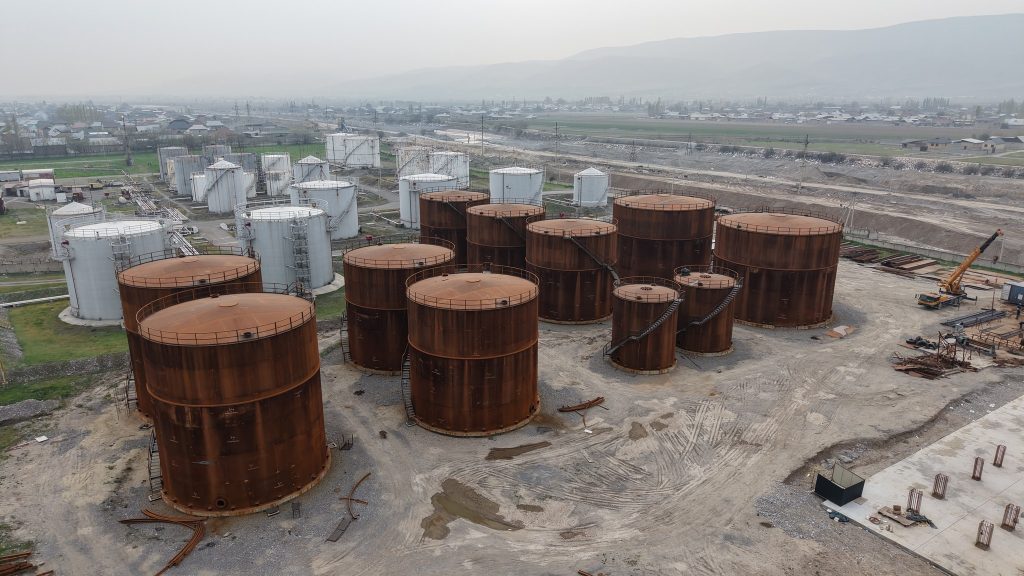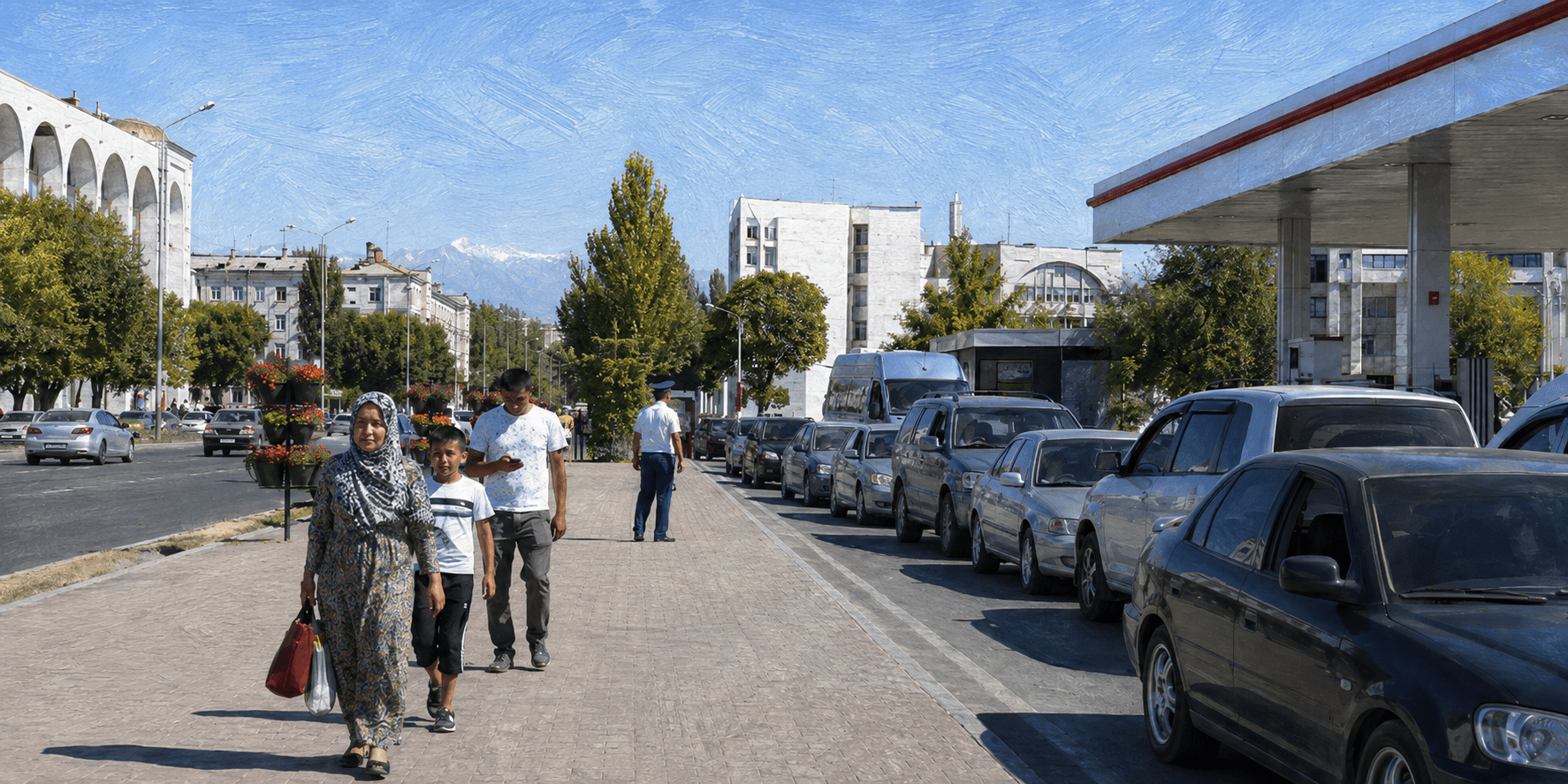
Kyrgyzstan has asked Azerbaijan, Belarus, Kazakhstan, Russia, Turkmenistan and Uzbekistan to help secure its fuel supplies as shortages inside Russia put new strain on Central Asia’s fuel market. The move follows reduced Russian refining capacity after Ukrainian drone strikes on oil refineries, seasonal demand, and tighter export controls.
“Due to the lack of adequate oil and gas production, we remain a country dependent on imports,” Deputy Energy Minister Nasipbek Kerimov told Birinchi Radio. “Kyrgyzstan annually consumes approximately 2 million tons of various types of fuel and lubricants, and almost 95% of this volume comes from Russia.”
The dependence rests on long-standing trade terms; Russia supplies oil products to Kyrgyzstan duty-free under annual indicative balances within the Eurasian Economic Union. Russian Deputy Prime Minister Alexey Overchuk said in October 2025 that balances for 2026 had already been signed. The system has helped hold down prices, but it also leaves the market exposed when Russian refineries or export rules change.
Kyrgyz officials have tried to calm consumers. The Energy Ministry said fuel reserves were sufficient, supplies were moving under existing contracts, and that “official requests have been sent” to relevant governments to support stable supplies. Local officials also pressed Kyrgyzneftegaz and the Junda refinery to increase domestic production and deliveries.
The pressure is not equal across all fuel types. AI-95 and AI-98 gasoline have disappeared from some filling stations, while AI-92 reserves remain stronger. Oil Traders Association head Kanatbek Eshatov told Kaktus.media that AI-92 stocks would last 30 to 45 days, depending on the company. He said the AI-95 problem could be solved “in a couple of weeks, if refineries recover after the shelling.” Diesel remains available, and farmers had stocked up before harvest work began, he added. As of July 6, AI-95 remained unavailable at some Bishkek filling stations.
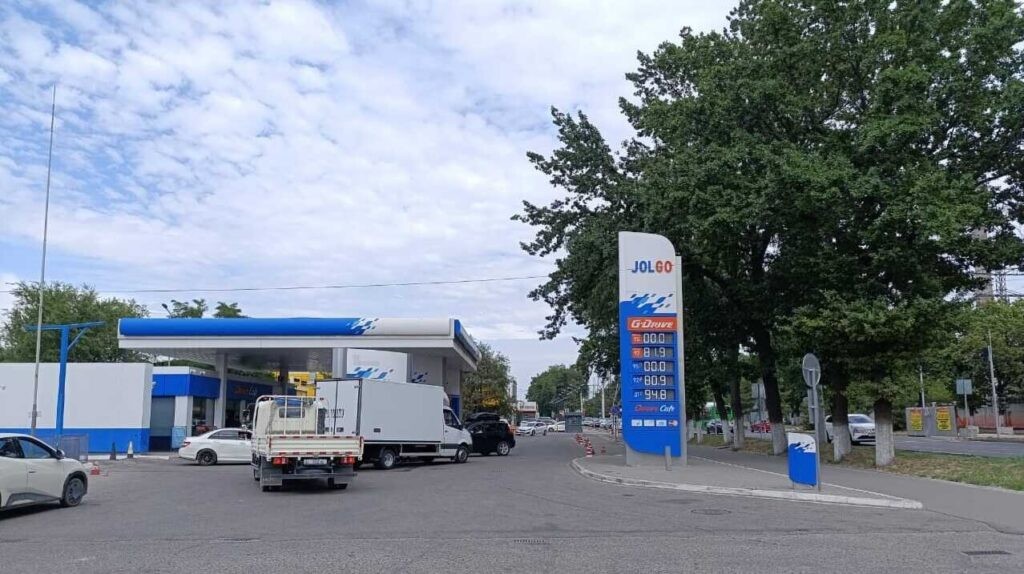
Bishkek has also moved on prices, with the Cabinet introducing temporary price regulation under Resolution No. 369 of May 25, 2026. The system subsidizes importers and sellers until September 30 by compensating the gap between market prices and fixed benchmark import prices. In Bishkek, capped pump prices are 79.9 soms per liter for AI-92 gasoline, 88.9 soms for AI-95 and 93.9 soms for diesel, equal to about $3.46, $3.85 and $4.06 per U.S. gallon.
The state is using subsidies to prevent a sharper jump at the pump. Kerimov said prices would stay unchanged while talks continued with suppliers. “We are currently offered fuel at various prices,” he said, and even if purchase prices rise, “there should be no shortage on the domestic market.”
President Vladimir Putin acknowledged on June 28 that fuel shortages inside Russia had created queues at filling stations. “Problems for drivers and for businesses persist,” he said, adding that “the harvest depends on” keeping seasonal fuel schedules for farms. Russian officials said gasoline reserves stood at 1.7 million metric tons, but Moscow was considering a complete ban on diesel exports. Russia had already imposed temporary restrictions on gasoline exports, with exemptions for some intergovernmental arrangements.
Reuters reported on June 30 that some independent Russian filling stations were selling gasoline above 100 roubles ($1.30) per liter. Sales of AI-92 and diesel on Russia’s SPIMEX exchange fell to less than half their June 2025 levels, while AI-95 sales dropped by about a third.
This leaves Bishkek with limited room for maneuver. First Deputy Cabinet Chairman Daniyar Amangeldiev said after talks in Moscow that Russia had agreed to allow transit across its territory for fuel Kyrgyzstan could buy elsewhere. The Russian side also pledged to “fulfill their obligations to supply fuel and lubricants to the extent possible.” Alternative purchases still depend on routes, rail capacity, or approvals connected to Russia.
Kazakhstan is an obvious option, but it faces its own pressure. TCA previously reported that Russia had discussed buying about 50,000 metric tons of AI-92 gasoline from Kazakhstan after outages cut Russian gasoline output by roughly 25% year-on-year in late June. Kazakhstan said there had been no official request from Moscow. Its Energy Ministry said exports would be considered only if domestic needs were protected. “The absolute priority remains the full and uninterrupted supply of the domestic market,” the ministry said.
Kazakhstan has also tightened controls. The government said on July 4 that the authorities had stopped 61 attempts to export fuel and lubricants at checkpoints over two days. Kazakhstan also extended limits on fuel exports by road, including to Eurasian Economic Union states.
Uzbekistan shows how quickly regional pressure can feed into prices. On June 29, AI-92 gasoline on Uzbekistan’s commodity exchange reached a record high of 13.919 million soums per ton (about $1,160), an 11.8% increase since the start of June. Exchange supply fell from 3,791 tons on June 1 to 1,898 tons on June 23, then partly recovered without prices lowering.
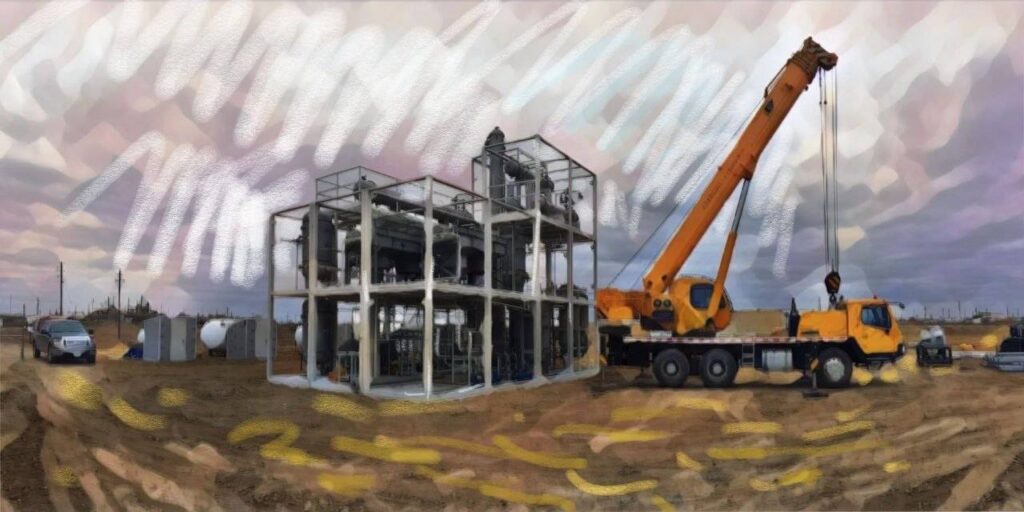
Kyrgyzstan is trying to reduce its exposure by refining domestically, but that process will take time. The modernized Junda refinery in Chuy Region has been instructed to raise output to 24,000 tons of gasoline a month soon and to 50,000 tons by the end of 2026. Earlier plans put completion of a $193.75 million modernization project at July 31. Kyrgyzstan produced 101,200 tons of gasoline in January-May 2026, up 53% year-on-year. Diesel output rose 69%, to 102,800 tons.
Those gains help, but they do not even begin to replace Russian supply. Bishkek still needs Russian deliveries to continue while it looks for smaller volumes from other countries and pushes Junda to raise its output. Price caps will soften the initial shock for drivers, but if purchase costs remain high, the bill will shift to the budget and importers. The squeeze has already shown how refinery disruptions inside Russia can cross borders within weeks and reach exchange prices and farm fuel schedules. Finding new suppliers is only part of the problem. Kyrgyzstan also needs the fuel to reach its depots before reserves tighten.