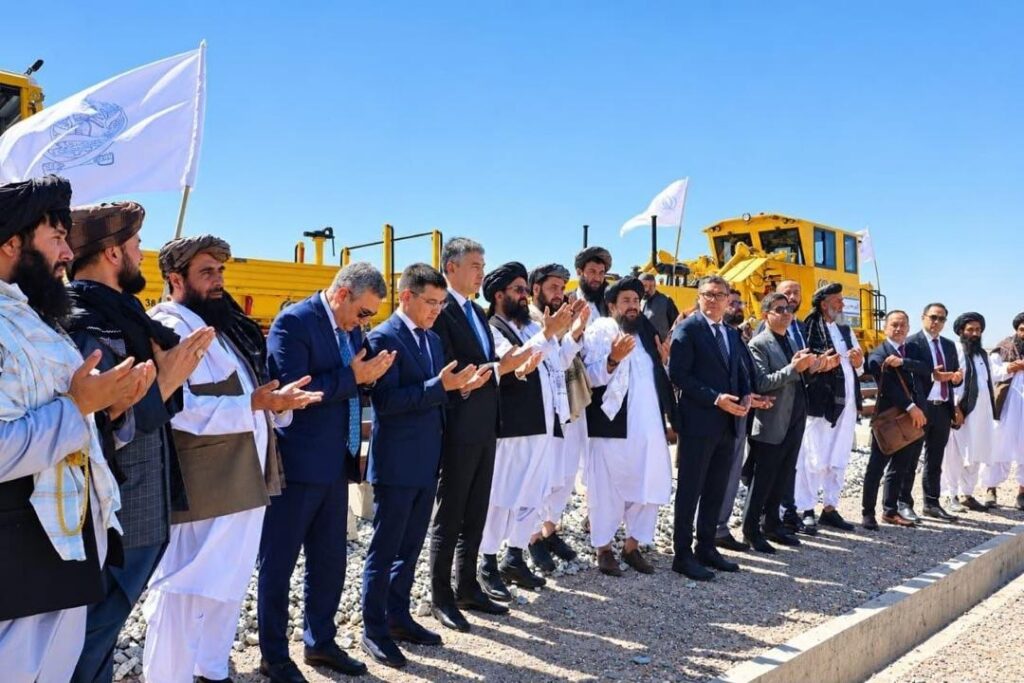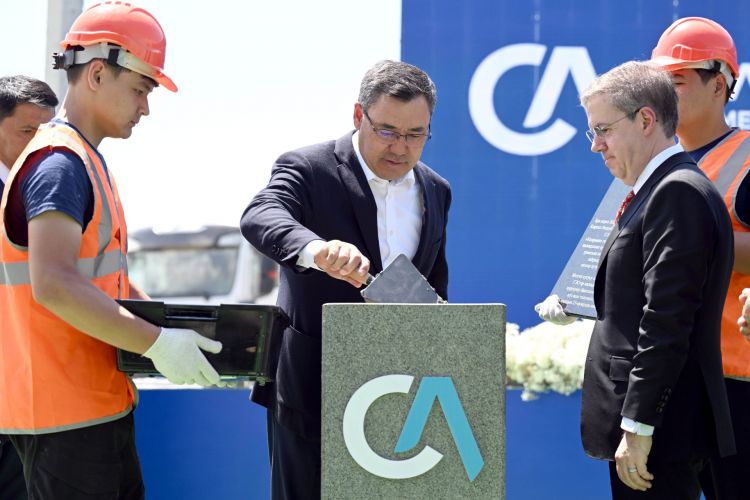
Construction of the Kazarman cascade of hydroelectric power plants on Kyrgyzstan’s Naryn River officially began on June 25, marking one of the country’s largest energy infrastructure projects since independence.
The project, located in the Jalal-Abad region, includes three hydropower plants, Ala-Buga, Kara-Bulun-1, and Kara-Bulun-2, with a combined installed capacity of 912 megawatts and expected annual electricity generation of more than 3.75 billion kilowatt-hours.
The cascade is being developed under an investment agreement with Orta Asya Investment Holding, a subsidiary of Turkey’s İhlas Holding, with total investments estimated at $3 billion.
At the official launch ceremony, Kyrgyz President Sadyr Japarov described the Kazarman cascade as one of the largest energy projects in the country’s modern history.
Japarov said Kyrgyzstan is accelerating hydropower and renewable energy development to strengthen energy security and reduce dependence on electricity imports.
“Without developing the electric power industry, it is impossible to ensure the country’s sustainable development,” Japarov said. He noted that Kyrgyzstan imported about 3 billion kWh of electricity during winter in 2020, a figure that has now risen to 4 billion kWh, reflecting growing domestic demand.
According to Japarov, electricity consumption continues to outpace new generation capacity despite ongoing construction of small and medium-sized hydropower plants, as well as solar and wind energy facilities.
The president said the increase in demand is driven by rapid industrial expansion, with hundreds of new factories and social infrastructure facilities commissioned annually in recent years.
Construction of the Kazarman cascade is scheduled for completion by 2031.
Japarov said that once the Kazarman cascade and the strategic Kambarata-1 Hydropower Plant become operational, Kyrgyzstan expects to fully cover domestic electricity demand and begin exporting surplus energy to neighboring countries.
Kambarata-1, which is being developed jointly with Kazakhstan and Uzbekistan, will have an installed capacity of 1,860 MW and annual generation of 5.6 billion kWh.
In addition to the Kazarman project, İhlas Holding is also involved in building a 250 MW gas-fired combined heat and power plant in Bishkek.
The company is further expanding its energy footprint in Kyrgyzstan through the Suusamyr-Kokomeren hydropower cascade, for which the Eurasian Development Bank and Orta Asya Investment Holding signed a feasibility study agreement in September 2025.
That project will include three hydropower plants with a combined capacity of 1,305 MW. Under the agreements, Orta Asya Investment Holding will operate the facilities for 20 years, while Kyrgyzstan guarantees the purchase of the generated electricity.