Viewing results 1 - 6 of 199
The European Bank for Reconstruction and Development (EBRD) says it is making its first direct equity investment in the graphite and critical raw materials sector in Central Asia by acquiring a stake in Sarytogan Graphite Limited, an Australian Securities Exchange-listed company involved in the exploration of the Sarytogan graphite deposit in the Karaganda region of central Kazakhstan. The EBRD’s investment of AUD 5 million (€3 million), representing a 17.36% shareholding in the company, and will finance Sarytogan Graphite’s development program, including preparing a feasibility study and meeting its working capital needs. According to the EU's critical raw materials (CRM) classification, graphite is a CRM mineral with a wide range of applications. It is used for producing electric vehicle batteries, the electric power industry, and metallurgy. The Sarytogan graphite deposit is one of the largest known graphite deposits in the world, with the potential to become one of the main suppliers of natural graphite in the region and beyond. The project aligns with the EU-Kazakhstan strategic partnership on raw materials, batteries, and renewable hydrogen. According to the country's Ministry of Industry and Construction, Kazakhstan produces 19 of the 34 critical raw materials listed by the European Union. Kazakhstani manufacturers currently supply the European market with metal and chemical products, including beryllium, tantalum, titanium, phosphorus, and ammonium metavanadate. Kazakhstan is among the world’s ten largest copper producers. It has the potential to produce battery raw materials such as nickel, cobalt, manganese, and lithium, which are essential for producing electric vehicles.
As of August 1, Uzbekistan's official reserves reached $37.4 billion, 1.06 billion dollars more than a month ago, according to a Kun.uz report based on data from the Central Bank of the Republic of Uzbekistan. This reserve value is a record indicator for the period after 2018 when data disclosure began. Still, $37.4 billion is enough to cover 12 months of imports. The increase in the value of international reserves is mainly due to the continued rise in gold reserves and prices. The physical volume of gold in reserves increased by 310,000 ounces (9.64 tons) to 12.05 million ounces (374.8 tons), and the value reached $29.15 billion (+$1.84 billion). According to the Central Bank, the impact of the increase in the price of gold from $2,327.6 to $2,419.6 in July amounted to $1.11 billion. In July, foreign currency assets decreased by $781.5 million to $7.69 billion and since the beginning of the year, have declined by $1.68 billion, partly affected by the extinguishment of the sovereign Eurobonds issued in 2019, worth $500 million. The value of securities purchased by the Central Bank was 35.3 million dollars.
The Chinese company ECOMOTO has announced plans to become a joint producer of electric scooters in the Yangiyul district of Uzbekistan. A memorandum was signed at a meeting between Odiljon Ataullayev, hokim of Yangiyul district and investors whereby the project will be funded by direct foreign investment of 10 million dollars and create 50 jobs. The production of modern, competitively-priced electric scooters is expected to begin in the second quarter of 2025. A metal construction plant, built by the Chinese company Da Fu which recently started operating near Yangiyul, will produce up to 500 tons of products per year.
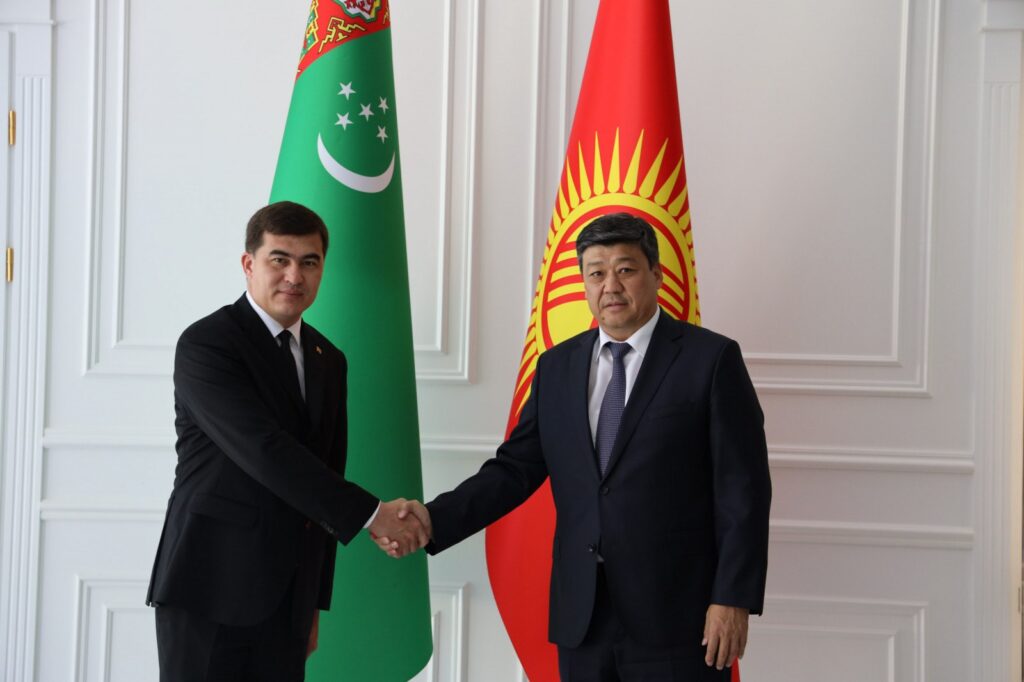
On July 25, Kyrgyzstan hosted the 6th meeting of the Kyrgyz-Turkmen intergovernmental commission on trade, economic, scientific, technical, and humanitarian cooperation, chaired by Kyrgyzstan’s Deputy Chairman of the Cabinet of Ministers—Bakyt Torobaev, Minister of Water Resources, Agriculture and Processing Industry, and Annageldi Saparov, Minister of Energy of Turkmenistan. The parties noted the sevenfold increase in trade turnover between Kyrgyzstan and Turkmenistan over the past four years and discussed means for further improvement. In 2023, bilateral trade totalled $64 million. Torobaev proposed opening a joint bonded zone in Turkmenistan to develop trade infrastructure and postal operations in e-commerce. He also noted that providing preferential tariffs for Kyrgyz cargo trucks through Turkmenistan's territory and simplifying the visa procedure for Kyrgyz drivers will significantly expand bilateral trade exchange. Due to their geographical locations, the parties emphasized that Kyrgyzstan and Turkmenistan have significant potential in the transport and logistics sector. In particular, the planned launch of a transport corridor from China through Kyrgyzstan and Uzbekistan to Turkmenistan, utilizing the Turkmenbashi seaport, will provide access to the Caspian Sea and the Russian Federation, opening up new economic opportunities for both countries. The meeting addressed the need to continue working on creating a Kyrgyz-Turkmen Development Fund as a mechanism for uniting the two countries' business sectors and stimulating the creation of joint ventures. The parties also discussed a project to build a Turkmen resort in Cholpon-Ata at Lake Issyk-Kul. The Kyrgyz government’s press service stated that the parties signed documents on Kyrgyzstan's import of Turkmen electricity in 2025 but did not disclose details.
On July 22, National Company Kazakh Invest announced its signing of a Memorandum of Understanding with the Vietnamese-Japanese joint venture LLP Mareven Food Tian Shan for the construction of a beverage production and bottling plant in the Almaty region. The plant, to be built in stages from 2025-26, will have four production lines with a 70,000 bottles per hour capacity, and an in-house warehouse with space for 15,000 pallets. A major investor in Almaty region's food production sector, Mareven Food Tian Shan has so far invested over 35 billion tenge in the country's economy, creating 690 jobs, 95% of which have been taken by locals. Emphasizing the importance of the initiative for Kazakhstan's economy, Yerzhan Yelekeyev, Chairman of the Board of Kazakh Invest, stated: "The investment project for beverage production and bottling in the Almaty region not only contributes to the development of local industry but also creates new jobs, positively impacting the socio-economic development of the region.” Nguyen Dinh Hien, Deputy General Director of Mareven Food Tian Shan, in turn, expressed his gratitude for Kazakh Invest's support and announcing the start of the third phase of the project, reiterated that the in addition to supplying the local market, the plant’s products will be exported to other Central Asian countries, Russia, Mongolia, and Afghanistan.
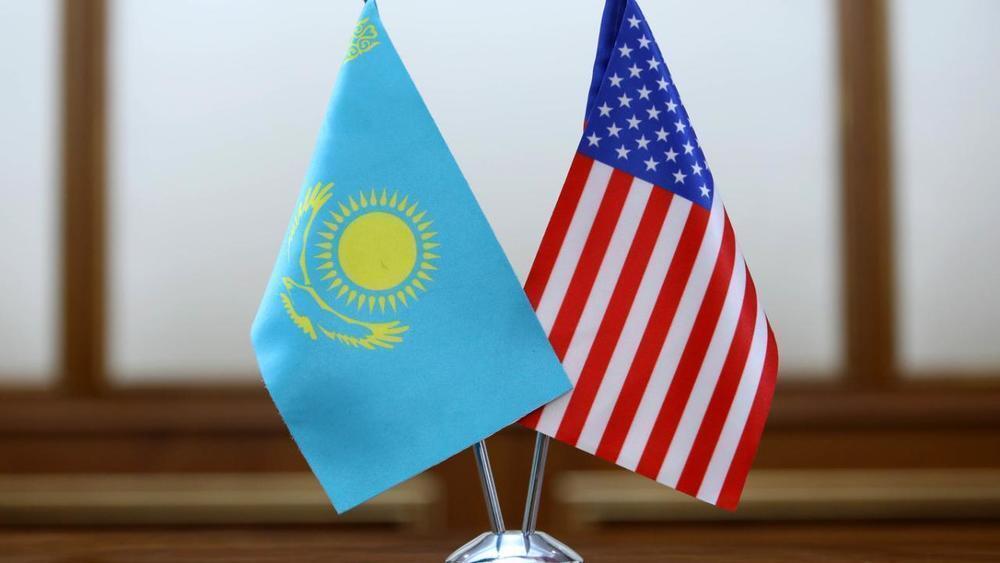
In Astana on July 18, the U.S. Department of State and Department of Energy, in coordination with Kazakhstan’s Ministry of Foreign Affairs and Ministry of Energy, held the 2024 U.S.-Kazakhstan Strategic Energy Dialogue. The U.S. Embassy in Kazakhstan reported that the Dialogue deepened cooperation between Kazakhstan and the United States on the shared priorities of enhancing energy security, accelerating the clean energy transition and methane mitigation, and developing Kazakhstan’s critical minerals sector. Deputy Assistant Secretary Kimberly Harrington from the Department of State’s Bureau of Energy Resources and Deputy Assistant Secretary Joshua Volz from the Department of Energy’s Office of International Affairs co-led the U.S. delegation. U.S. and Kazakh energy and international affairs experts discussed the current progress and plans to reduce greenhouse gas emissions and sustainably mine and refine critical materials. They also discussed civil nuclear cooperation, renewable energy sources, energy security, and global nuclear security. The U.S. Department of State also signed a memorandum of understanding with the Kazakh National Geological Service and National Mining Company Tau-Ken Samruk to expand and diversify the supply chains of critical minerals. According to the National Geological Service, the main goal of the memorandum of cooperation is to explore the promising regions of Kyzylorda and East Kazakhstan to extract rare metals. With this memorandum, the U.S. Department of State will support Kazakhstan in financing geological exploration and providing technical expertise for these projects. Explore our critical minerals special coverage for a timeline of Central Asia’s growing place in U.S. supply-chain strategy.