• KZT/USD = 0.00213
  • TJS/USD = 0.10800
  • UZS/USD = 0.00008
  • TMT/USD = 0.29850
  • KZT/USD = 0.00213
  • TJS/USD = 0.10800
  • UZS/USD = 0.00008
  • TMT/USD = 0.29850
  • KZT/USD = 0.00213
  • TJS/USD = 0.10800
  • UZS/USD = 0.00008
  • TMT/USD = 0.29850
  • KZT/USD = 0.00213
  • TJS/USD = 0.10800
  • UZS/USD = 0.00008
  • TMT/USD = 0.29850
  • KZT/USD = 0.00213
  • TJS/USD = 0.10800
  • UZS/USD = 0.00008
  • TMT/USD = 0.29850
  • KZT/USD = 0.00213
  • TJS/USD = 0.10800
  • UZS/USD = 0.00008
  • TMT/USD = 0.29850
  • KZT/USD = 0.00213
  • TJS/USD = 0.10800
  • UZS/USD = 0.00008
  • TMT/USD = 0.29850
  • KZT/USD = 0.00213
  • TJS/USD = 0.10800
  • UZS/USD = 0.00008
  • TMT/USD = 0.29850

Viewing results 1 - 6 of 158

Turkic States Focus on AI and Trade at Kazakhstan Summit

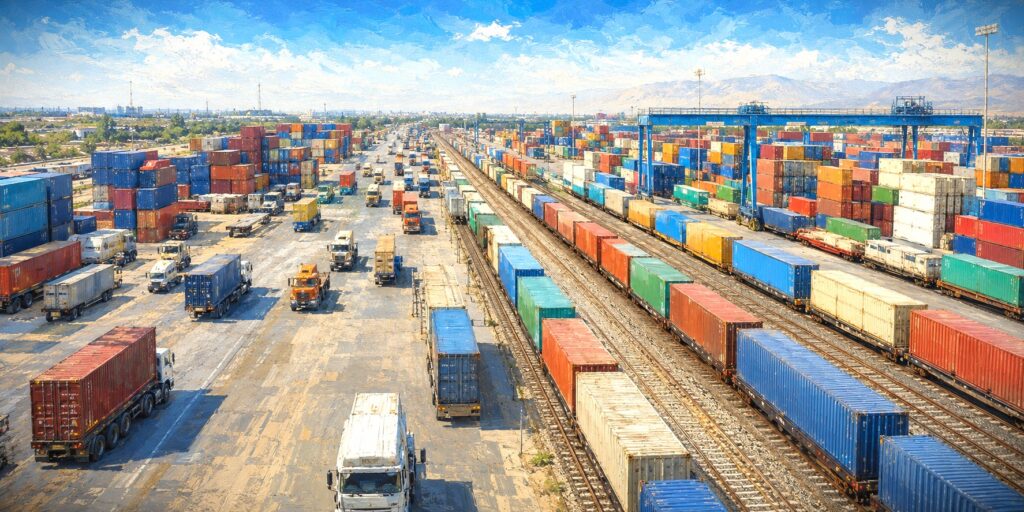
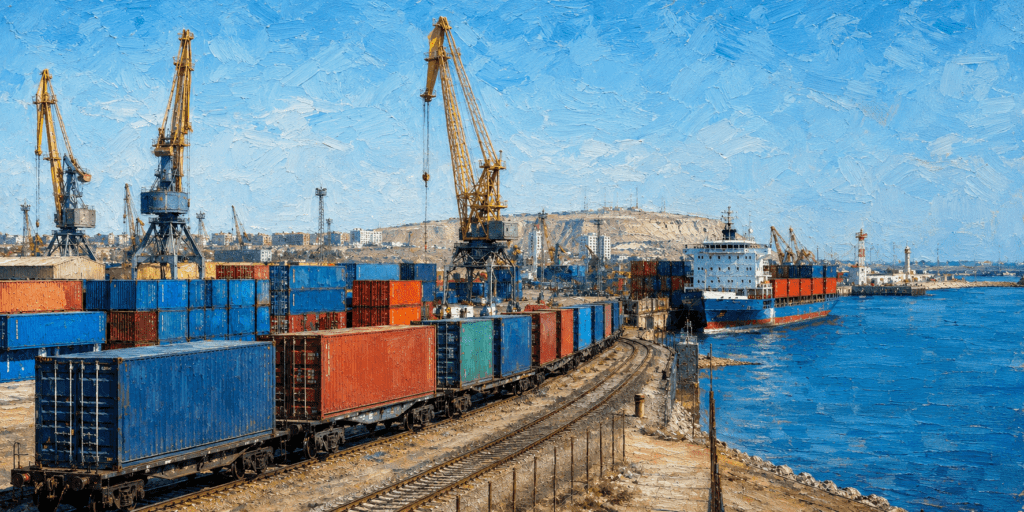
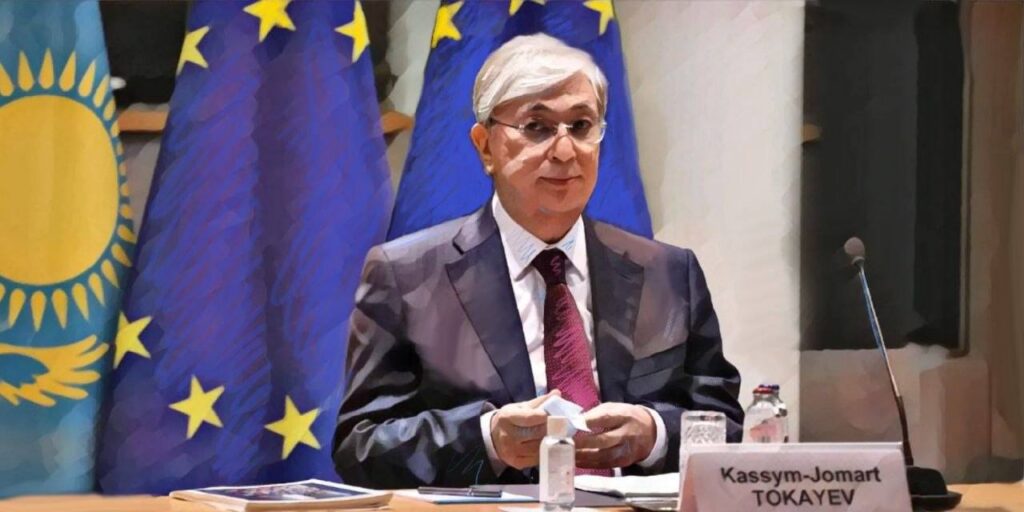
Leaders of the Organization of Turkic States (OTS) are holding an informal summit in the city of Turkistan, focused on artificial intelligence, digitalization, and economic integration, as Central Asia gains importance as an alternative trade corridor between Europe and China. The meeting brings together the leaders of Kazakhstan, Turkey, Azerbaijan, Uzbekistan, and Kyrgyzstan, along with representatives of observer states. Discussions are centered on digital platforms, joint AI projects, transport corridors, and industrial cooperation. The summit comes amid rapid growth of the Trans-Caspian International Transport Route, also known as the Middle Corridor, which links China and Europe through Central Asia and the Caucasus while bypassing Russia. According to analysts in Kazakhstan, cargo volumes along the route reached 3.3 million tons in 2024, almost six times the 2021 level. Turkish President Recep Tayyip Erdoğan arrived in Astana on a state visit ahead of the summit and held talks with Kazakh President Kassym-Jomart Tokayev. “Kazakhstan and Turkey are connected by enduring friendship, brotherhood, and eternal partnership,” Tokayev said following the meeting. Erdoğan thanked Kazakhstan for the reception and highlighted the escort provided by Kazakh military fighter jets after his aircraft entered the country’s airspace. According to participants at the OTS business forum, the combined GDP of member states exceeds $2.1 trillion, while their total population stands at 178 million people. Despite increasing political coordination, trade between OTS countries still accounts for only around 7% of their total foreign trade turnover, leaving considerable room for deeper economic integration, analysts say. OTS member states are increasingly seeking to expand cooperation beyond cultural and political ties by focusing on logistics, the digital economy, and joint investment projects. Kazakhstan views the organization as one of the instruments for diversifying its foreign economic relations and expanding its role as a transit hub between Asia and Europe.

Erdoğan Visit Highlights Kazakhstan’s Middle Corridor Strategy

Turkish President Recep Tayyip Erdoğan’s visit to Kazakhstan highlighted the growing importance of the Middle Corridor in Ankara-Astana relations, while also showing how Kazakhstan is trying to deepen ties with Turkey without abandoning its multi-vector foreign policy. According to experts, the central issue discussed during negotiations was the development of the Middle Corridor, officially known as the Trans-Caspian International Transport Route (TITR). The importance of the route was underscored directly by Erdoğan during a joint media briefing following the talks. The Turkish president highlighted the strategic significance of the East-West-Mediterranean transit corridor crossing the Caspian Sea, describing it as a “modern version of the Silk Road,” the relevance of which is becoming increasingly apparent. The Kazakh side sought to frame the visit within a broader political and cultural context. The declaration signed by the two presidents, along with other documents exchanged by the official delegations, pointed less to a breakthrough than to the continued expansion of existing political, economic, transport, and cultural cooperation. Kazakhstan and Turkey agreed to deepen cultural, humanitarian, and economic cooperation, while continuing joint investment projects, including the further infrastructure development of Almaty International Airport, which is managed by Turkey’s TAV Holding. Political analyst Daniyar Ashimbayev noted that the tone of the visit was largely shaped by an unusually emotional and ceremonial welcome. “Tokayev called Erdoğan a ‘dear brother’ and described his visit as a ‘historic event.’ Erdoğan, in turn, thanked the Kazakh leader for the invitation to visit the ‘land of ancestors.’ Tokayev twice emphasized that there are ‘no disagreements or contradictions’ between Kazakhstan and Turkey. He described Erdoğan’s policies as ‘balanced and far-sighted,’ while noting Turkey’s steadily growing influence on the global stage,” Ashimbayev wrote. According to Ashimbayev, Tokayev also praised Turkey as a “golden bridge” connecting Europe and Asia, as well as the broader Turkic world. At the same time, the analyst pointed out that Erdoğan, in an article written for the Kazinform agency, also sharply condemned what he described as Israel’s “crimes” against shared human values, despite Kazakhstan maintaining strong and mutually beneficial ties with Israel. “Contrary to some interpretations, Erdoğan’s visit did not resemble an inspection by a ‘senior brother.’ The Turkish leader was welcomed with maximum ceremony and genuine warmth, but the format of cooperation itself clearly points to equal relations in the economic and humanitarian spheres,” Ashimbayev argued. “Kazakhstan has its own clearly defined position on a broad range of international and domestic issues, and those positions are neither subject to outside discussion nor imply following anyone else’s political line,” he added. Alena Dmitriyeva, head of analysis and communications at the Youth Research Center, said the negotiations reflected the emergence of a new architecture of cooperation across Eurasia. “Ankara gains access to Central Asia, while Astana gains access to alternative transport routes,” Dmitriyeva said, pointing to intensified cooperation on the Trans-Caspian corridor, development of the Aktau and Kuryk ports, and increased oil shipments through the Baku-Tbilisi-Ceyhan pipeline. Cooperation with Turkey has already helped reduce cargo transit times along the Middle...

Central Asia Enters the Minerals Race

Central Asia is entering the critical minerals race at a time when deposits alone no longer confer strategic advantage. The Astana Mining & Metallurgy Congress, scheduled for June 11–12 at Hilton Astana, gives the issue operational form: supply chains, investment, and commercial projects. U.S. Under Secretary Jacob Helberg will participate there and in the preceding C5+1 Critical Minerals Dialogue on June 10–11. The Astana agenda also puts Central Asia’s role in global supply chains directly into view. The test is how quickly governments, investors, and industrial buyers can finance, process, move, and purchase minerals before they are locked into industrial supply chains. The G7 is moving in the same direction, but through institutional design rather than industrial action. The group is discussing a permanent critical minerals secretariat to maintain continuity across changing G7 presidencies, possibly at either the International Energy Agency or the OECD. The proposal acknowledges a real deficiency in Western coordination, but it also reveals the larger problem: continuity is useful only if it becomes execution. At the same time, reports have circulated about disagreements over stockpiling and leadership, including European resistance to both a single shared stockpile and a U.S.-led structure. For Central Asia, the practical question is not institutional architecture alone, but whether such coordination produces finance, processing capacity, and long-term offtake. The June dialogue in Astana is part of a wider C5+1 movement from diplomacy toward operational cooperation. Its participants are trying to convert the platform from a talk shop into a vehicle for business transactions. As TCA has reported, U.S. engagement in the region is increasingly tied to business mechanisms, export-credit support, and project finance. Kazakhstan has already moved into this framework track. Kazakhstan and the United States signed a memorandum of understanding on critical minerals cooperation during Tokayev’s November 2025 visit to Washington, and the agreement took immediate shape through the Tau-Ken Samruk–Cove Capital tungsten project. Kazakhstan’s Foreign Ministry later described the MOU as the first agreement of its kind in Central Asia, providing for processing capacity in Kazakhstan, technology transfer, and expanded access for Kazakh products to the U.S. market. In February 2026, Uzbekistan followed with its own U.S. critical minerals track: TCA reported that Tashkent signed a critical minerals MOU on February 4, and that DFC heads of terms for a Joint Investment Framework followed on February 19. Central Asian governments are not passive terrain for outside competition. Kazakhstan, with Central Asia’s most developed mining and metallurgical base, and Uzbekistan, with a rapidly expanding minerals program, are using minerals competition to attract capital and build processing capacity. They are seeking to diversify partners and move beyond dependence on raw material exports. The regional objective is industrial upgrading while preserving room for maneuver between China, Russia, the United States, Europe, and other partners. The minerals question cannot be separated from the larger Eurasian setting. Central Asia is trying to widen its own field of choice before its options are narrowed by what Hudson Institute senior fellow Ken Moriyasu called, in comments to...

Opinion: Turkey’s Third Vector: How the Turkic States Are Expanding Central Asia’s Room for Maneuver

President Recep Tayyip Erdoğan’s May 13-14 state visit to Kazakhstan and the May 15 informal summit of the Organization of Turkic States in Turkistan should not be read as isolated diplomatic events. Together, they point to a larger shift in Central Asia’s geopolitical architecture. During Erdoğan’s visit to Astana, Kazakhstan and Turkey signed the Declaration on Eternal Friendship and Expanded Strategic Partnership, along with agreements covering trade, transport, energy, education, investment, defense cooperation, oil and gas, and financial-sector collaboration. The two sides also reaffirmed their goal of raising bilateral trade to $15 billion. Erdoğan was awarded the newly established Khoja Ahmed Yassawi Order, a symbolic gesture tied to the summit being hosted in Turkistan, the city most closely associated with Yassawi’s legacy. A day later, Turkistan hosted the informal summit of the Organization of Turkic States under the theme “Artificial Intelligence and Digital Development.” The timing matters. Central Asia is no longer operating inside a simple Russia-China framework. Russia remains deeply embedded in the region through security history, infrastructure, language, labor migration, and energy networks. China remains the region’s main infrastructure and trade heavyweight. The West is increasingly focused on sanctions, critical minerals, connectivity, and the Middle Corridor. But Turkey is becoming something different: not a replacement for Russia or China, but a useful third vector. Its influence is built on identity, logistics, defense technology, education, digital cooperation, and institutional networking through the Turkic States framework, rather than overwhelming capital or military dominance. Turkey as a Corridor Power Turkey cannot match China’s investment scale in Central Asia. It also cannot match Russia’s historical security depth. Ankara does not need to replace either power to matter. Its comparative advantage is different. Turkey connects Central Asia westward, to the South Caucasus, the Black Sea, the Mediterranean, and Europe. It also offers a language of partnership that is culturally familiar and politically less threatening than great-power patronage. Tokayev captured this dimension during the joint statements in Astana, describing Turkey as a “golden bridge” connecting Europe and Asia. The framing is telling: not a partner of equal weight, but a connector, exactly the function of a corridor power. A corridor power does not dominate a region directly. It expands the routes, partnerships, platforms, and strategic options available to states that do not want to be trapped between larger powers. That is why the Erdoğan-Tokayev meeting and the Turkistan summit matter. The issue goes beyond bilateral trade. It is the gradual construction of a Turkic corridor linking identity, transport, defense, digital governance, and markets. The OTS as Identity Infrastructure The Organization of Turkic States is often dismissed as symbolic: summits, speeches, flags, cultural rhetoric, and references to shared history. That reading is incomplete. Identity is not just emotion. In international politics, identity can become infrastructure. Shared language, educational networks, media links, cultural affinity, and repeated institutional contact reduce the cost of trust-building. They make it easier to sign agreements, build transport projects, expand student exchanges, coordinate business forums, and create political habits of consultation. The...

Opinion: UK’s C6 Engagement and the Opportunity for British Geostrategic Renewal

Along with Nicholas Spykman, Sir Halford Mackinder is one of the most pre-eminent thinkers in the field of geopolitics. Whilst today geopolitics is a term used interchangeably with “world affairs,” “international relations,” and “foreign policy,” Spykman and Mackinder used the phrase to describe the narrow academic study of how geography influences international relations and the conduct of states. In the 1904 paper, The Geographical Pivot of History, Mackinder theorized that the key to controlling the balance of power in the world rested in a “heartland” of Eurasia, comprising Eastern Europe and Central Asia. Mackinder described the heartland region as the “pivot region” for regional and global hegemony. The word “pivot” has recently been popularized in international relations, with examples including President Obama’s pivot to the Pacific and Britain’s Indo-Pacific pivot in the 2021 Integrated Review. In 1997, former U.S. National Security Adviser Zbigniew Brzezinski built on Mackinder’s ideas in his work, The Grand Chessboard. Brzezinski defined a geopolitical pivot as being “determined by their geography, which in some cases gives them a special role either in defining access to important areas or in denying resources to a significant player. In some cases, a geopolitical pivot may act as a defensive shield for a vital state or even a region.” To Mackinder and Brzezinski, Central Asia was a crucial geostrategic pivot. Central Asia - comprising the five states of Uzbekistan, Kazakhstan, Tajikistan, Kyrgyzstan, and Turkmenistan, collectively termed the C5 - is located between China, Russia, Iran, and Afghanistan. Thus, the near abroad of the region is defined by conflict between Russia and Ukraine, Iran and Israel/U.S., and between Taliban-run Afghanistan and Pakistan. Pragmatic engagement is a necessity for the C5 but has not stopped them from pursuing greater diversification in security and economic arrangements, and they remain committed to U.S.-led diplomatic initiatives. Faced with a regionally assertive superpower in China, risks created by Russia’s war in Ukraine, theocratic Iran, and the Taliban in Afghanistan, Central Asia has continued to show its desire to build and deepen its economic and security partnerships from beyond traditional powers – such as China and Russia – to states in the Gulf, the Caucasus, Western Europe, and elsewhere. The United Kingdom has emerged as a new and important partner. Russia’s invasion of Ukraine has raised concerns in the Central Asian states about its regional revisionism, territorial ambitions, and Putin’s reconstruction of the Soviet Union. In 2014, Putin credited Nursultan Nazarbayev with having “created a state in a territory that had never had a state before,” adding that “the Kazakhs never had any statehood.” The remarks sparked anger in Kazakhstan and fed concern about Moscow’s view of post-Soviet sovereignty. Finally, Putin said that it would be best for Kazakhstan to “remain in the greater Russian world.” In The Grand Chessboard, Brzezinski predicted that “Russia without Ukraine can still strive for imperial status, but it would then become a predominantly Asian imperial state, more likely to be drawn into debilitating conflicts with aroused Central Asians.” Central Asia has been a...

Opinion: The Southern Dimension of the Middle Corridor – Afghanistan’s Role in Eurasia’s New Logistics Landscape

Afghanistan’s integration into the Trans-Caspian International Transport Route (TITR) is extending beyond local logistics and evolving into one of Eurasia’s key geo-economic projects. Amid the global transformation of supply chains, Central Asia has an opportunity to move beyond its role as a transit periphery and become an active participant in shaping new economic corridors, creating a full-fledged “southern dimension” of Eurasian connectivity. Two Routes: Strategic and Operational Two main directions for Afghanistan’s integration into the Eurasian transport system are currently under discussion, each reflecting a distinct development logic: strategic and pragmatic. The “Eastern Branch” (Termez-Mazar-i-Sharif-Kabul-Peshawar) is traditionally viewed as the primary trans-Afghan route. Its key advantage is direct access to the ports of Karachi and Gwadar, providing the shortest connection between Central Asia and the Indian Ocean. At the same time, geography makes the project highly complex. The route passes through the central and eastern regions of Afghanistan, including the Hindu Kush mountain range, where long tunnels and bridges would be required. This would sharply increase construction and maintenance costs, extend implementation timelines, and heighten security and infrastructure risks. According to available estimates, the project could cost around $5 billion and handle 15-20 million tons of cargo annually. However, the lengthy investment cycle and dependence on political stability mean implementation remains a long-term prospect. The “Western Branch” (Turgundi-Herat-Kandahar-Spin Boldak) represents an alternative logistics corridor based on more favorable geography. Western Afghanistan is characterized by predominantly flat, semi-arid terrain, reducing the need for complex engineering structures and allowing the project to be implemented in phases. This significantly lowers capital costs, shortens construction timelines, and reduces infrastructure risks. The western route’s initial capacity is estimated at 7-10 million tons of cargo annually, making it the more realistic option for medium-term planning. An additional advantage is its geo-economic flexibility. Via Herat, the route could be integrated not only southward through Pakistan, but also westward through Iran, providing access to Persian Gulf ports. This would transform it into a multi-directional corridor capable of serving several logistics flows simultaneously. The Eastern Branch, therefore, remains the strategic option offering the shortest route to the ocean but requiring substantial investment and time. The Western Branch, meanwhile, presents a more pragmatic solution: faster to implement and more flexible from a geo-economic standpoint. The Role of Turkmenistan and Kazakhstan in the “Western Maneuver” The implementation of the western trans-Afghan corridor depends on close coordination between two key regional players, Kazakhstan and Turkmenistan, which form the northern foundation of the future route by providing access to the Caspian Sea and, beyond it, global markets. Astana and Ashgabat are effectively creating a new geo-economic framework that could transform Central Asia from an isolated region into a strategic crossroads linking the Caspian Sea with the Indian Ocean. In 2026, Kazakhstan moved toward deeper institutionalization of the initiative, making the route through Herat and Kandahar a government priority. Astana’s strategy is multifaceted. In addition to establishing a permanent interdepartmental commission, Kazakhstan is actively seeking to attract international operators such as the Emirati AD...