Tashkent is trying to turn a fast rise in transit cargo into a larger role in Eurasian trade. President Shavkat Mirziyoyev reviewed proposals on July 1 to expand logistics centers, modernize border infrastructure, digitalize warehouse and customs systems, and attract private investment into transport hubs.
Transit cargo through Uzbekistan reached 15.3 million tons in 2025, up 54% from 2021. Yet Uzbekistan’s share of China-Europe transit freight remains only 1-2%. Annual China-Europe trade is estimated at $800 billion, while freight traffic reaches 120-150 million tons. Officials estimate that an extra 15-20 million tons of international transit cargo could bring $400-600 million in added revenue, attract $3 billion of investment into logistics centers and terminals, and create 50,000 permanent jobs.
The logistics push comes as Uzbekistan’s trade base becomes larger and more exposed to transport costs. Uzbekistan’s foreign trade turnover reached $81.2 billion in 2025, up 20.7% from 2024, with exports at $33.8 billion and imports at $47.4 billion. The 2026 figures are more uneven. In January-May, turnover rose 3.7% year on year to $32.8 billion, but imports climbed 20.8% while exports fell 15.5%. Gold sales drove much of the export decline. Excluding gold, goods exports grew 29.4%, which gives Tashkent a clear reason to cut freight costs, speed up customs clearance, and expand container capacity.
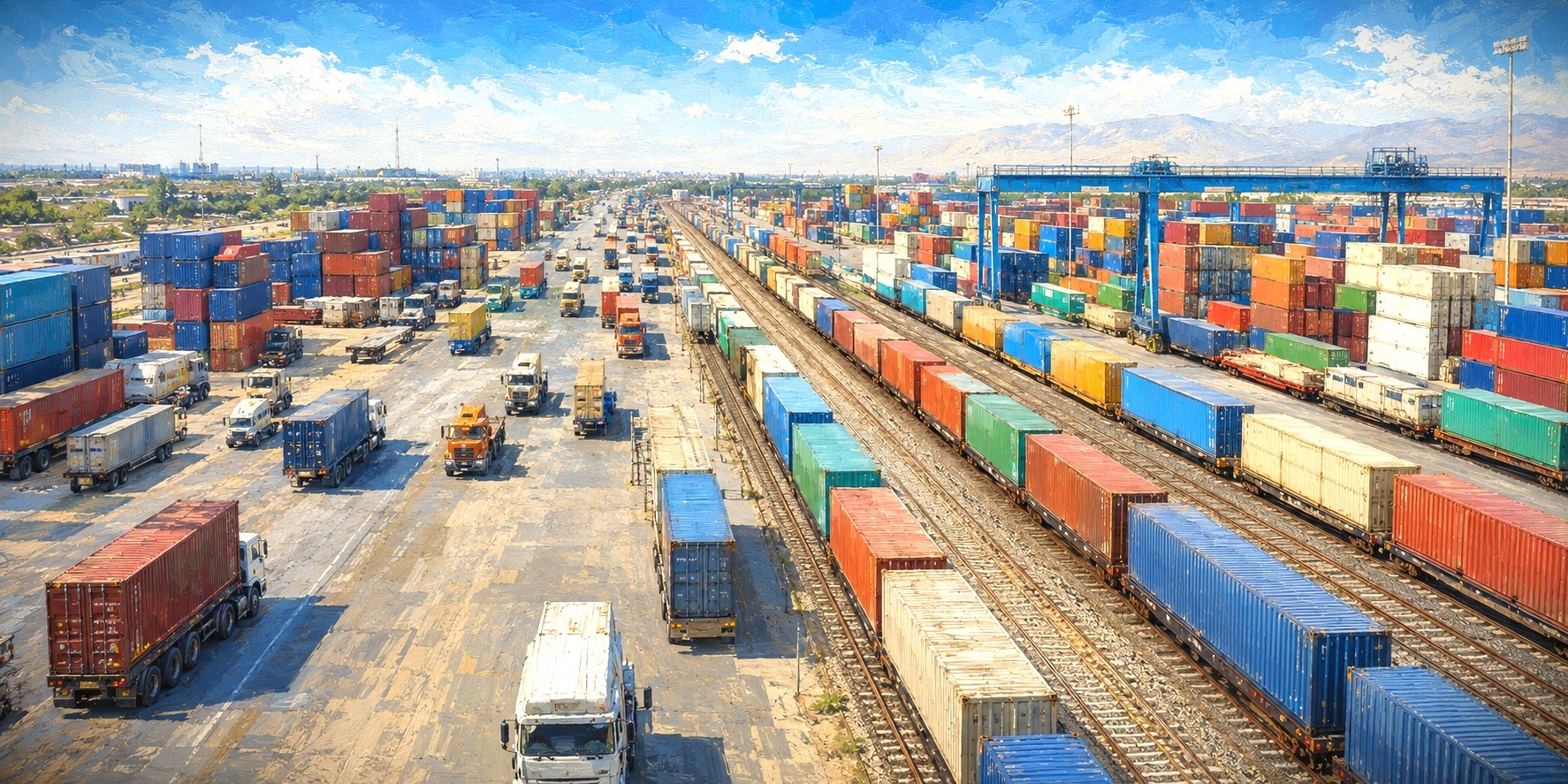
Uzbekistan already has about 4,000 kilometers of international transit corridors and a 4,700-kilometer railway network, but officials say the system remains too thin for the cargo volumes Tashkent wants to attract. Modern transport and logistics centers and dry ports are being developed in Tashkent, Navoi, and Namangan, while Navoi Airport serves Eurasian cargo routes.
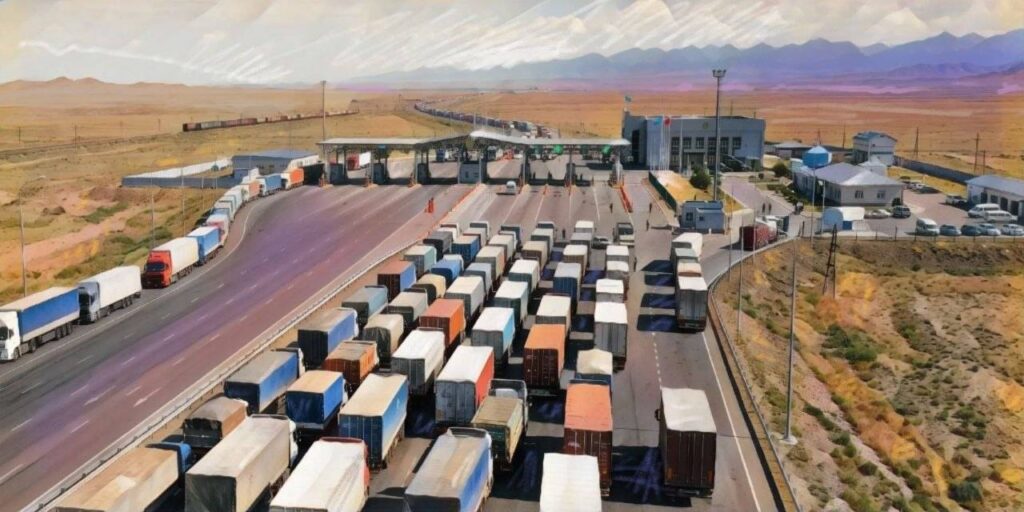
The July 1 proposals show how much still needs to change. Uzbekistan has 27 logistics centers that meet international standards, with total capacity of 27.2 million tons, but only one is in the highest category. Class A automated warehouses meet only 10-15% of demand. Officials also cited weak capacity at many border checkpoints, refrigerated and customs warehouse shortages, low containerization, and poor digital links.
The new plan would specialize six areas as logistics zones. Khanabad would handle China-linked routes toward the Caspian, Europe, Afghanistan, Pakistan, and Iran. Angren, Yangiyul, and Akhangaran would distribute transit and foreign trade cargo. Alat would support Middle Corridor routes, and Termez would focus on Pakistan via Afghanistan.
Entrepreneurs who build logistics centers in these locations would be offered 50 hectares of land in each area. The government plans to allocate $200 million a year in concessional and low-interest credit lines, with the budget covering external infrastructure. Projects also include customs terminals and parking in Qibray and Termez, a rail border checkpoint in Khanabad, Yangiyul station expansion, and a Class A center in Akhangaran.
Digital systems form another part of the package. The proposals call for terminal and warehouse management systems linked to the E-logistika platform. They also include online monitoring, license plate recognition, electronic vehicle registration, and one-stop border clearance. Customs duties and certification rules may be eased for imported warehouse equipment, cargo-handling machinery, spare parts, and related systems.
The plan follows a wider transport policy that Mirziyoyev has promoted in regional forums. At the Shanghai Cooperation Organization summit in 2024, he said, “I emphasize that the diversification of transport corridors is a crucial condition for the sustainable development of our entire region.” Mirziyoyev also proposed a plan to digitalize logistics procedures and organize electronic data exchange on goods crossing borders.
Two rail projects carry much of the long-term ambition. The China-Kyrgyzstan-Uzbekistan railway would give Uzbekistan a direct rail link toward western China. TCA previously reported that the project is estimated at $4.7 billion and is expected to handle up to 15 million tons of cargo a year once completed. The planned 523-kilometer line would run from Kashgar through Kyrgyzstan to Andijan. Large-scale work has begun in Kyrgyzstan, where the route requires 50 bridges and 29 tunnels.
The project gained new importance after Russia’s full-scale invasion of Ukraine and sanctions on Russia pushed some China-Europe shippers to avoid Russian overland routes. A financing agreement was signed in Bishkek in December 2025, with China holding 51% of the joint project company and Kyrgyzstan and Uzbekistan each holding 24.5%.
The second project is the Trans-Afghan railway. TCA previously reported that Mirziyoyev approved an intergovernmental agreement on a feasibility study for a line from Naibabad to Kharlachi, linking Uzbekistan, Afghanistan, and Pakistan. The updated route would run from Termez to Naibabad, then through Maidan Shahr and Logar to Kharlachi. Newer estimates put the cost at more than $7 billion; the feasibility study is expected by the end of 2026.
The southern route gives Uzbekistan a possible path to Karachi, Gwadar, and Qasim. It also depends on security and politics in Afghanistan and Pakistan. Reuters reported in January that Afghan trade had remained stable in 2025 despite repeated Pakistan border closures because traders shifted more cargo through Iran and Central Asia, including overland links through Uzbekistan, Turkmenistan, and Tajikistan.
Development banks have begun to frame logistics nodes as a separate investment need, not just a support service. Alexei Skatin, deputy chairman of the Eurasian Development Bank’s management board, said in June that “Uzbekistan is transforming from a landlocked country into a crossroads of East-West and North-South routes,” and that warehouses “are a condition for corridors to generate revenue.”
The World Bank has also tied transport reform to growth. In March, it approved a $200 million project for transport infrastructure in the Surkhandarya region and sector reforms. The bank said Uzbekistan’s transport sector contributes nearly 8% of GDP and employs about one million people. It also said the country rose from 129th to 88th place in the Logistics Performance Index between 2014 and 2023.
The July 1 plan moves Uzbekistan’s logistics ambitions into implementation: land, credit, warehouses, terminals, parking lots, border posts, digital systems, and customs simplification. Revenues will depend on whether cargo clears borders, shifts modes, enters warehouses, and leaves on predictable schedules.