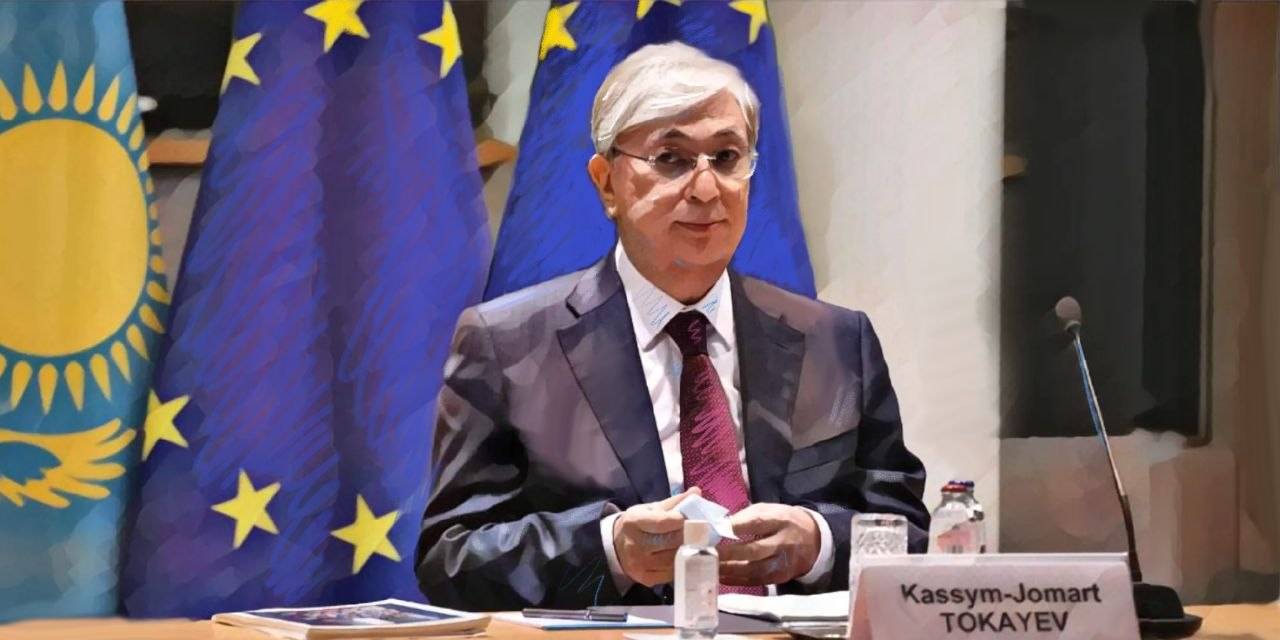
President Kassym-Jomart Tokayev left Brussels with a broader package than the transport announcements that opened his two-day visit on June 22-23. Kazakhstan and the European Union signed an aviation agreement, completed talks at negotiators’ level on easier short-stay visas, backed new road and mineral projects, and endorsed an Air Astana aircraft order worth €7.145 billion. Tokayev also said the business program produced commercial agreements and memoranda worth more than $12 billion.
Tokayev met with European Council President António Costa and European Commission President Ursula von der Leyen on June 23. Their joint statement placed connectivity, energy security and resilient supply chains at the center of the relationship. Von der Leyen called Kazakhstan “a global gateway” and said the EU was ready to turn it into “a pathway for jobs, business opportunities and common prosperity.”
Negotiators completed talks on Visa Facilitation and Readmission Agreements, opening the way for internal approval procedures. The visa agreement would simplify applications for short stays in the EU, though the agreement would not create visa-free travel and has not yet entered into force.
The two sides also signed a Horizontal Aviation Agreement after negotiations lasting more than two decades. Once internal procedures are complete, any eligible EU airline will be able to operate between Kazakhstan and 17 member states that already have air service arrangements with Astana. Existing rules generally reserve those rights for airlines owned or controlled by nationals of the country concerned. EU Transport Commissioner Apostolos Tzitzikostas said the pact would bring “our people and economies closer together.”
A separate agreement covered up to 50 Airbus A320neo and A321neo aircraft for Air Astana. The joint statement valued the order at €7.145 billion. That transaction formed the largest named item within the more than $12 billion in commercial agreements and memoranda announced during the visit. Tokayev presented the total as evidence of European business confidence in Kazakhstan.
Transport and connectivity remained the backbone of the trip. Before the leaders met, Kazakhstan and its European partners unveiled four Middle Corridor agreements worth a combined $462 million. They included airport digitalization work with SITA, an EBRD-backed loan for the 234-kilometer Aktobe-Ulgaisyn road, a KTZ Express project at Romania’s Port of Midia, and cooperation with A.P. Moller-Maersk on container traffic across the Trans-Caspian route.
The leaders welcomed a European Investment Bank framework agreement of up to €150 million for Kazakh roads along the Trans-Caspian Transport Corridor. An EBRD memorandum will support an internationally accredited chemical-analytical laboratory for critical raw materials. Other documents cover intelligent transport systems, the E-Zholdary road platform and a minerals and metals center of excellence. Brussels also encouraged the EIB to open an office in Astana.
These projects connect the visit to the EU’s effort to build a reliable route between Central Asia and Europe through the Caspian Sea, Azerbaijan, Georgia and Türkiye. Tokayev said annual freight volumes had risen from 800,000 tons to 4.1 million tons over six years. Kazakhstan aims to raise the corridor’s capacity to 10 million tons, but ports, railways, border procedures and cargo coordination are still limiting its speed and capacity. Tokayev said the country has invested more than $35 billion in transport and logistics infrastructure over the past 15 years, with Costa calling Kazakhstan a “key link in ensuring transport connectivity” between Europe and Asia.
Critical minerals were the second major economic pillar. The EU and Kazakhstan signed a strategic partnership on sustainable raw materials, batteries and renewable hydrogen in 2022. A 2025-2026 roadmap covers exploration, processing, recycling, research and skills. In Brussels, the leaders committed to advance that work and highlighted Kazakhstan’s role as an oil and uranium supplier. Kazakhstan is ready to supply 21 of the 34 materials on the EU’s critical raw materials list. Tokayev said Kazakhstan supplied nearly 13% of the EU’s crude oil imports in 2025, while Kazakhstan produced about 40% of the world’s uranium in 2025. They also called for stronger cooperation in renewable energy and civil nuclear power.
The trade relationship remains large but narrow. EU goods trade with Kazakhstan reached €41.4 billion in 2025. Imports from Kazakhstan totaled €30.8 billion, but fuel and mining products made up 92% of this figure. Machinery, transport equipment and chemicals led European exports. Tokayev told the business roundtable that the EU accounts for almost half of the foreign direct investment attracted to Kazakhstan, and that about 4,000 European companies operate in the country.
“Today, the European Union is our largest trade and investment partner,” Tokayev said. He listed Airbus, Alstom, Air Liquide, Polpharma and Škoda among the established investors, alongside newer entrants including Maersk, Inditex, and Damen Shipyards.
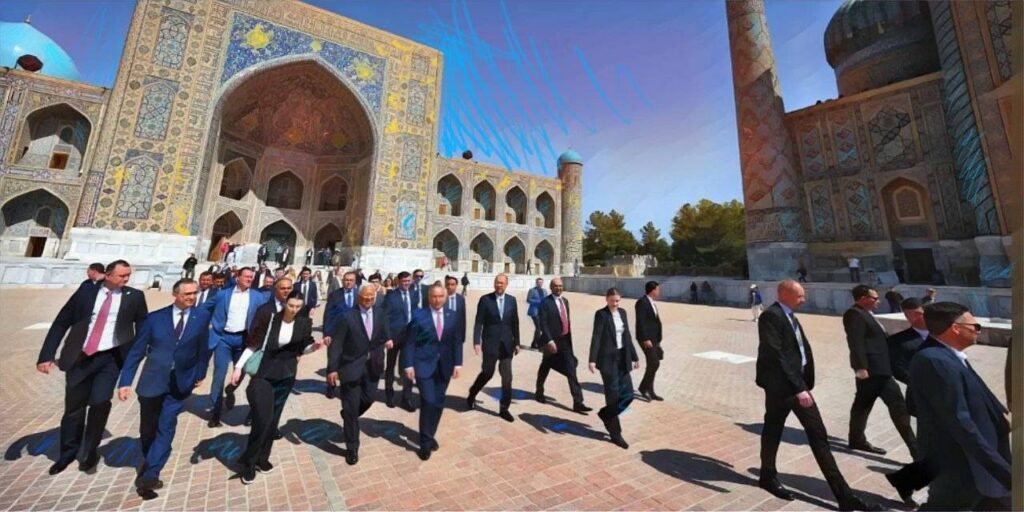
The institutional base has been in place for a decade. Kazakhstan and the EU signed an Enhanced Partnership and Cooperation Agreement in 2015, which entered into force in March 2020. It covers 29 policy areas, including trade, energy, transport, climate, research, justice and human rights. The relationship gained a regional layer at the first EU-Central Asia summit in Samarkand in April 2025, when the two regions upgraded ties to a strategic partnership and the EU announced a €12 billion Global Gateway package.
Education and technology also produced agreements in Brussels. Kazakh institutions signed partnerships with KU Leuven, the SIM² Institute and Astana Hub on critical minerals, industrial digitalization, and artificial intelligence. A separate agreement with Ghent University provides for a mirror laboratory in Kazakhstan focused on mathematics, AI, modeling, and engineering computing.
Tokayev’s meeting with Belgian Prime Minister Bart De Wever added a bilateral track. Belgium ranks among Kazakhstan’s ten largest investors, with about $15 billion invested over two decades. Trade exceeded $580 million in 2025, and more than 110 companies with Belgian capital operate in Kazakhstan. The leaders discussed logistics, minerals, petrochemicals, agriculture, finance and AI, and prepared for King Philippe’s first state visit to Kazakhstan.
The Brussels statement also recorded continuing talks on sanctions and welcomed dialogue on human rights, the rule of law and anti-corruption measures. The EU acknowledged Kazakhstan’s new constitution, approved in a March 2026 referendum. Both sides reaffirmed their commitment to sovereignty, territorial integrity and peaceful settlement of disputes under the UN Charter.
Several results still require formal action. The aviation pact and visa agreements must pass internal procedures before taking effect. Loans must become physical works, and minerals cooperation must produce laboratories, processing capacity and investable projects. The visit nevertheless moved a wide agenda into signed agreements and named financing.