Kazakhstan has once again found itself at the center of a heated public debate over how the state should address the country’s growing stray animal problem. Recently approved parliamentary amendments allowing the euthanasia of dogs after a short holding period have triggered strong criticism from animal rights activists, volunteers, and private shelter owners, who argue that the new measures fail to address the root causes of the crisis and instead merely conceal its consequences temporarily.
For many involved in the debate, the issue goes beyond animal welfare and points to deeper problems in state governance. For years, responsibility for stray animals in Kazakhstan has effectively been left to private initiatives, including small shelters and volunteer networks that operate largely on personal funds and donations.
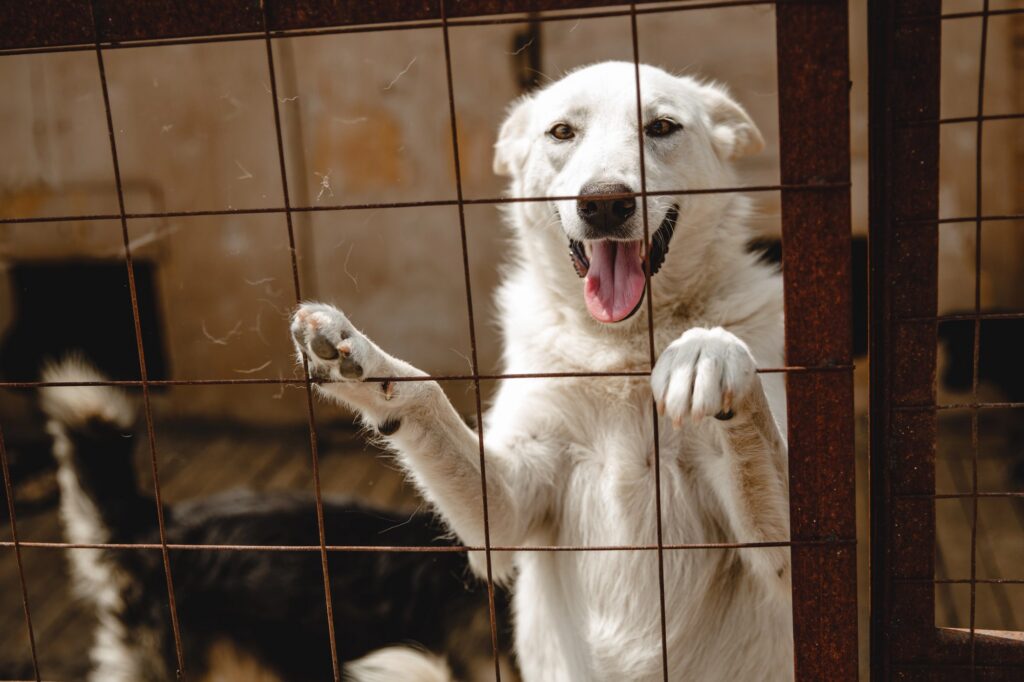
One such initiative is the Amigo shelter near Almaty, which currently houses around 200 dogs and 80 cats. The shelter did not begin as a business or long-term charitable project, but rather as a spontaneous effort to rescue several animals from capture facilities and the streets. Over time, the number of animals grew, and temporary assistance evolved into a permanent struggle for survival.

Image: TCA
“We never planned to create a shelter. It all started with a few rescued animals, and then it became impossible to stop because they were completely dependent on us,” Amigo representatives told The Times of Central Asia.
That dependency has become one of the defining features of Kazakhstan’s private shelter system. Unlike many Western countries, where large numbers of animals are adopted through well-developed adoption programs, animals in Kazakhstan often remain in shelters for years; sometimes for the rest of their lives. According to Amigo’s owners, society still approaches shelter animals with caution, while a culture of responsible adoption is only beginning to emerge.
The financial burden on such organizations is enormous. In addition to food and veterinary care, shelter owners must independently pay for land, kennel construction, transport, fuel, generators, heating, water supply, sterilization, vaccination, and staff salaries. In many cases, infrastructure must be built entirely from scratch.
Amigo’s own history reflects this instability. The shelter was initially located on a small property in Baiserke, but the growing number of animals and expanding residential development made continued operations impossible. The owners took out loans to purchase land near the village of Zhetygen, where they personally built enclosures and installed utilities. Later, after Zhetygen was incorporated into the new city of Alatau, they faced the threat of land seizure for state needs and were once again forced to search for a new location and finance another relocation through debt.

Image: TCA
According to shelter representatives, Kazakhstan still lacks a clear legal status for such facilities. Agricultural land is formally designated for livestock rather than cats and dogs, meaning that even privately purchased plots do not guarantee long-term security. For shelters, relocation means far more than changing addresses, it requires transporting hundreds of animals, rebuilding infrastructure, and effectively starting over.
Against this backdrop, discussions of mass euthanasia are especially painful for shelter owners. They argue that the stray animal problem does not emerge on its own. In their view, the main causes are the lack of widespread sterilization programs, weak oversight of pet owners, and near-total impunity for abandoning animals.
“If animals are simply destroyed without addressing the causes of their appearance, the streets will quickly fill with new ones,” Amigo representatives said. According to the shelter, many residents continue to breed animals irresponsibly before abandoning unwanted puppies and kittens, shifting the burden onto the streets, volunteers, and shelters.
Supporters of tougher measures, meanwhile, point to public safety concerns. In recent years, attacks by stray dogs have repeatedly sparked national debate in Kazakhstan, while authorities face growing pressure from residents demanding a reduction in the number of animals on the streets.
However, shelter owners argue that policies based solely on capture and euthanasia cannot deliver long-term results. As an alternative, they advocate year-round free sterilization programs, substantial fines for abandoning animals, and tighter regulation of breeding practices. In their view, only a combination of these measures can gradually reduce the stray population without perpetuating the cycle of new animals appearing on the streets.

Image: TCA
The precarious position of private shelters themselves remains another major issue. Most operate through the efforts of just a handful of people working without days off and often sacrificing their own finances, health, and personal lives. Amigo’s owners admit they do not see a sustainable future for a system built entirely on the commitment of individual citizens.
“People grow older, get tired, and burn out. If something happens to the owner of a shelter, it is often unclear what will happen to the animals afterward,” they said.
According to shelter representatives, the government should treat private organizations as part of the broader animal welfare system rather than as a complete substitute for state responsibility. Without official legal status, financial support, and a long-term state policy, many shelters could close within the coming years, they warn.
For volunteers themselves, meaningful change would require systemic measures: free sterilization programs, greater owner accountability, state support for shelters, and a shift in public attitudes toward animals. Until then, Amigo representatives believe Kazakhstan risks returning to the same debate again and again, responding to the consequences of the crisis while leaving its causes unresolved.