• KGS/USD = 0.01144 0%
  • KZT/USD = 0.00215 0%
  • TJS/USD = 0.10680 0.19%
  • UZS/USD = 0.00008 0%
  • TMT/USD = 0.28530 0%
  • KGS/USD = 0.01144 0%
  • KZT/USD = 0.00215 0%
  • TJS/USD = 0.10680 0.19%
  • UZS/USD = 0.00008 0%
  • TMT/USD = 0.28530 0%
  • KGS/USD = 0.01144 0%
  • KZT/USD = 0.00215 0%
  • TJS/USD = 0.10680 0.19%
  • UZS/USD = 0.00008 0%
  • TMT/USD = 0.28530 0%
  • KGS/USD = 0.01144 0%
  • KZT/USD = 0.00215 0%
  • TJS/USD = 0.10680 0.19%
  • UZS/USD = 0.00008 0%
  • TMT/USD = 0.28530 0%
  • KGS/USD = 0.01144 0%
  • KZT/USD = 0.00215 0%
  • TJS/USD = 0.10680 0.19%
  • UZS/USD = 0.00008 0%
  • TMT/USD = 0.28530 0%
  • KGS/USD = 0.01144 0%
  • KZT/USD = 0.00215 0%
  • TJS/USD = 0.10680 0.19%
  • UZS/USD = 0.00008 0%
  • TMT/USD = 0.28530 0%
  • KGS/USD = 0.01144 0%
  • KZT/USD = 0.00215 0%
  • TJS/USD = 0.10680 0.19%
  • UZS/USD = 0.00008 0%
  • TMT/USD = 0.28530 0%
  • KGS/USD = 0.01144 0%
  • KZT/USD = 0.00215 0%
  • TJS/USD = 0.10680 0.19%
  • UZS/USD = 0.00008 0%
  • TMT/USD = 0.28530 0%

Viewing results 1 - 6 of 458

Kyrgyzstan’s Capital to Switch to Russian Gas

At the St Petersburg International Economic Forum 2024, Gazprom Export LLC and Gazprom Kyrgyzstan LLC signed  a long-term contract for the supply of natural gas by Russia to Kyrgyzstan. Deputy General Director of Gazprom Kyrgyzstan Arzamat Aldayarov announced that Russian Gazprom is now set to double its supplies of 'blue fuel' to Kyrgyzstan from 2025-2040. He stated that the Bishkek Thermal Power Plant will switch completely to gas from 2026. In addition, the Kyrgyz authorities are planning to launch several more stations near Bishkek, which will also operate on Russian raw materials. Arzamat Aldayarov added that the development of a five-year roadmap for providing gas throughout Bishkek was imminent and referencing plans to build 250–300 kilometers of gas pipelines annually, connecting 13–15 thousand apartment buildings to supplies, said, “Currently, a lot of electricity is spent on heating, which puts pressure on city networks. We are looking for other sources of heat. We want to completely gasify residential areas and switch them to gas heating."

Russia Deports Thousands of Tajik Citizens

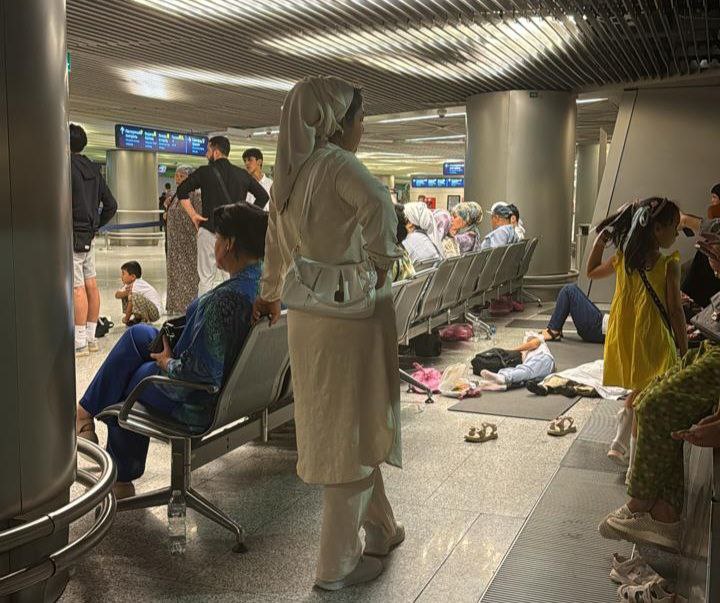
During a press conference, director of the Civil Aviation Agency, Habibullo Nazarzoda, announced that over the past six months, Russia expelled or deported some 3,400 Tajikistan citizens. Nazarzoda emphasized that the action was spurred by errors in the Tajik citizens' documents as opposed to being politically motivated and stated, “The reason for denied entry into Russian territory was sometimes a lack of necessary documents. 95% of people who travel to the country know where they are going and why they are going, but cannot answer questions when asked. Many become confused. That’s why it’s not political.” Conditions for migrants heading for Russia and for those already in the country, have become stricter following the recent terrorist attack at Moscow's Crocus City Hall and the suspected involvement of Tajik citizens. Complaints about difficulties in entering the country are increasing and dozens of migrants report being detained at Russian airports and land border crossings under various pretexts. Since neither the Tajik nor Russian sides have commented on the situation, the official reasons for the above remain unclear.

Ex-Chairman of Kazakhstan’s KNB Denied Pardon

President of Kazakhstan Kassym-Jomart Tokayev has refused to pardon the ex-head of the National Security Committee (KNB) Karim Massimov, who in 2023 was convicted of treason and the attempted seizure of power. This information was reported to Informburo.kz by the Presidential Administration. On June 27, the Commission on Pardons considered the petition for Massimov's pardon under the President of the Republic of Kazakhstan. The Presidential Administration responded to Informburo.kz, stating that "following the results of the study about the possibility of applying an act of pardon to Massimov, the Commission made a corresponding proposal to the Head of State, with which he agreed." Karim Massimov was detained during the events of January 2022. The criminal case against him was assigned "top secret". In late April 2023, a court in Astana sentenced Massimov to 18 years in prison for treason, the attempted violent seizure of power, abuse of power, and abuse of authority.

Kazakhstan, Iran, Turkmenistan and Russia to Develop North-South Transport Corridor

On July 19 - 20, the Ministry of Transport of Kazakhstan organized its first meeting on the North-South transit and trade corridor in Aktau attended by delegations from Azerbaijan, Armenia, Afghanistan, Kazakhstan, Russia, Belarus, Turkmenistan, UAE, Iran, Iraq, Oman, and Uzbekistan. By connecting Russia and Belarus to ports in the Persian Gulf, with further access to India, the North-South transport corridor will broaden prospects for trade and become a key engine for Kazakhstan's economic development. During the meeting,  Kazakhstan, Iran, Turkmenistan, and Russia signed a roadmap for the development of the eastern route of the North-South transport corridor from 2024 to 2025, aimed to increase the corridor's throughput to 15 million tons of cargo annually by 2027 and 20 million tons by 2030. Kazakh Minister of Transport Marat Karabaev commented: “Kazakhstan intends to continue its active participation in the development of the Eastern branch of the North-South corridor, which has the highest potential for growth in cargo flows until 2030 and appears to be the safest and shortest transit route to the Indian Ocean. Therefore, it is necessary to begin the practical implementation of the Roadmap signed today for the synchronous development of the eastern route of the North-South corridor passing through the territories of Kazakhstan, Russia, Turkmenistan, and Iran.”

Kazakhstan Ends Litigation With Moldovan Businessmen

After 15 years of litigation worldwide, a long-standing dispute between Kazakhstan and Anatol and Gabriel Stati, businessmen from Moldova, has ended. The Ministry of Justice of Kazakhstan has reported that the government, the National Bank of Kazakhstan, and representatives of Stati have signed a framework agreement. The parties, with the support and consent of leading creditors of Tristan Oil, have concluded a legally binding framework agreement on a peaceful and mutually acceptable resolution of the long dispute over oil and gas assets in Kazakhstan. As reported by the Ministry of Justice, the signatories have reached an agreement on mutually favorable terms that will lead to the termination of all legal proceedings and stop ongoing lawsuits in all jurisdictions. The specific terms of the agreement remain confidential. Daniel Chapman, CEO of Argentem Creek Partners, said, "We support the framework agreement and applaud President Kassym-Jomart Tokayev's decision to build a 'Just Kazakhstan' as part of his admirable reforms. The settlement of this dispute demonstrates Kazakhstan's compliance with international treaty obligations, which opens the door to increased investment and enhances its economic growth potential. We welcome a new era for Kazakhstan.” Argentem Creek Partners is the investment manager of specific funds that became lenders to Tristan Oil Limited, the investment vehicle of the Stati parties. According to Justice Minister Azamat Yeskarayev, "This agreement is made with the public interest in mind and does not involve the expenditure of public funds. We believe that this step will positively impact the attraction of new investments to our country and the economy's growth.” The legal battle between Stati and entities in Kazakhstan started in 2010. Lawsuits have been considered in the Netherlands, Belgium, Luxembourg, Sweden, the UK, and the United States. At one point, the assets of the National Fund of Kazakhstan were even frozen. The episode began in October 2008, when then President of Moldova,Vladimir Voronin, complained to Nursultan Nazarbayev that businessman Anatol Stati was using money received in Kazakhstan to sponsor the opposition in Moldova. Shortly thereafter, Stati's relationship with the authorities in Kazakhstan sharply deteriorated. A series of inspections initiated by state began, during which the unlicensed use of trunk pipelines, tax arrears, violations of license and contractual conditions under subsoil use contracts and other issues were discovered. According to experts familiar with the case against Stati, by that time the Moldovan businessmen had already decided to leave Kazakhstan and were preparing for these inspections, which would result in the termination of contracts. Therefore, by November 2009, they had amassed a lot of materials, which, in the hands of their lawyers could be used to argue that Kazakhstan was in violation of the regime of fair and equal treatment of investors under the Energy Charter Treaty. On July 21, 2010, the Ministry of Oil and Gas of Kazakhstan terminated the subsoil use contracts of the Stati companies Tolkynneftegaz LLP and Kazpolmunai LLP due to non-fulfillment of license and contractual terms. Five days after receiving the termination notice, on July 26, 2010, Stati filed...

Russia Ups Ban on Migrant Employment

Heads of  Russia's Chelyabinsk and Krasnodar regions have announced that this year, migrants are to be  banned from working in over a dozen sectors. In the Chelyabinsk region migrant workers have already been banned from driving cabs and buses. Restrictions will now extend to an additional 19 sectors, including the sale and repair of cars and motorcycles, providing financial services and in particular insurance and pensions, engaging in recruitment, organizing gambling and lotteries, and repairing computers and household appliances. Migrants will also be  prohibited from working in trade, hospitality, catering, and agriculture. They will be unable to work as lawyers, translators, accountants, veterinarians, and fitness trainers, nor conduct creative activities or organize entertainment events. From September 22, citizens of other countries will be prohibited from working as household assistants and employment in agriculture, manufacturing, culture, and the hospitality sector in the Krasnodar region.  Earlier bans in the region applied to trade, catering, education, health care, sports, medical services, courier services, and passenger transportation, including cabs. Employers violating the rules will either be fined up to 1 million roubles for each illegally employed migrant or have their business suspended for up to 90 days. In the Tomsk region, immigrants were previously banned from working in six areas: cabs, hotels, catering, security, education, and sports. In July, it was proposed at the federal level to introduce a ban on migrants working in cab and delivery services across Russia.