• KGS/USD = 0.01144 0%
  • KZT/USD = 0.00200 0%
  • TJS/USD = 0.10494 -0.28%
  • UZS/USD = 0.00008 0%
  • TMT/USD = 0.28490 -0.28%
  • KGS/USD = 0.01144 0%
  • KZT/USD = 0.00200 0%
  • TJS/USD = 0.10494 -0.28%
  • UZS/USD = 0.00008 0%
  • TMT/USD = 0.28490 -0.28%
  • KGS/USD = 0.01144 0%
  • KZT/USD = 0.00200 0%
  • TJS/USD = 0.10494 -0.28%
  • UZS/USD = 0.00008 0%
  • TMT/USD = 0.28490 -0.28%
  • KGS/USD = 0.01144 0%
  • KZT/USD = 0.00200 0%
  • TJS/USD = 0.10494 -0.28%
  • UZS/USD = 0.00008 0%
  • TMT/USD = 0.28490 -0.28%
  • KGS/USD = 0.01144 0%
  • KZT/USD = 0.00200 0%
  • TJS/USD = 0.10494 -0.28%
  • UZS/USD = 0.00008 0%
  • TMT/USD = 0.28490 -0.28%
  • KGS/USD = 0.01144 0%
  • KZT/USD = 0.00200 0%
  • TJS/USD = 0.10494 -0.28%
  • UZS/USD = 0.00008 0%
  • TMT/USD = 0.28490 -0.28%
  • KGS/USD = 0.01144 0%
  • KZT/USD = 0.00200 0%
  • TJS/USD = 0.10494 -0.28%
  • UZS/USD = 0.00008 0%
  • TMT/USD = 0.28490 -0.28%
  • KGS/USD = 0.01144 0%
  • KZT/USD = 0.00200 0%
  • TJS/USD = 0.10494 -0.28%
  • UZS/USD = 0.00008 0%
  • TMT/USD = 0.28490 -0.28%

Viewing results 1 - 6 of 61

Kazakhstan and Armenia Forge Strategic Partnership in Landmark Summit

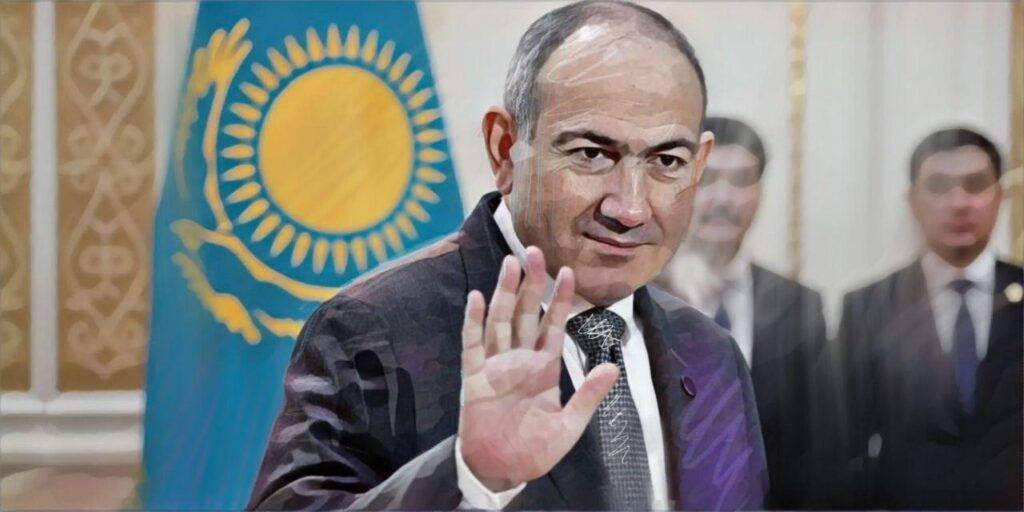
Kazakhstan and Armenia have upgraded their relations to a strategic partnership after high-level talks between President Kassym-Jomart Tokayev and Prime Minister Nikol Pashinyan in Astana on 21 November. The decision was sealed in a joint statement and framed as the start of a new phase in cooperation between the two Eurasian partners. During the official visit, the two sides exchanged 15 intergovernmental and interagency documents. These cover the protection of classified information, land for diplomatic missions, a trade and economic roadmap for 2026–2030, and cooperation in industry, agriculture, healthcare, science, education, digitalization, and the peaceful use of atomic energy, as well as new links between national museums, libraries, and film institutions. A Kazakhstan–Armenia Business Council was also created to bring companies into the process. Tokayev underlined the political meaning of the upgrade, stating that an “open and trusting political dialogue has been established between Astana and Yerevan at all levels. Interstate ties are truly constructive, with significant potential for their comprehensive strengthening and expansion.” Pashinyan, meanwhile, stressed the human dimension, noting that “we respect the Kazakh people, and this respect is the foundation for the further development of bilateral relations.” Their meeting builds on Tokayev’s official visit to Yerevan in April 2024, when the two governments first drew a roadmap for closer ties. Symbolism played a significant role in the visit, with Tokayev awarding Pashinyan the Order of Altyn Qyran (Golden Eagle), Kazakhstan’s highest state honor, in recognition of his role in Armenia’s development, regional peace efforts, and bilateral relations. This year, Yerevan has hosted the Days of Kazakhstan Culture and opened a park named after the Kazakh poet, Abai, while Kazakhstan has promoted Armenia’s cultural presence at events and academic centers, helping anchor the relationship beyond government channels. [caption id="attachment_39747" align="aligncenter" width="900"] Image: Akorda.kz[/caption] The strategic label is the high point of more than three decades of diplomatic relations. Armenia and Kazakhstan first established ties in August 1992, and shortly opened embassies in each other’s capitals. A Treaty of Friendship and Cooperation was signed in Astana in September 1999. Both are members of the Eurasian Economic Union and the Collective Security Treaty Organization, which lends their interaction a dense multilateral framework. Now, trade and connectivity are catching up with political rhetoric, with both sides eyeing room to expand. According to Armenia’s economy minister, bilateral trade reached $104 million in 2023, up 2.4 times from 2020, with Armenian exports making up more than two-thirds of the total. Kazakh figures, meanwhile, show mutual trade rising but still at a modest $53.1 million by the end of 2023, partly due to the lack of rail links and past transit restrictions in the South Caucasus. Those obstacles, however, are beginning to ease. In October, Azerbaijani President Ilham Aliyev lifted restrictions on transit to Armenia, which allowed the first shipment of 1,000 tons of Kazakh wheat to reach Armenian markets via Azerbaijani territory in November. Kazakhstan and Armenia also plan to launch direct air links and expand air cargo, a step Tokayev has called...

Kazakhstan, Russia Sign Comprehensive Strategic Partnership Declaration

Kazakh President Kassym-Jomart Tokayev and Russian President Vladimir Putin signed a declaration in Moscow on November 12, 2025, elevating their countries’ relationship to what they have dubbed a “Comprehensive Strategic Partnership and Alliance.” The document was signed at the Kremlin during Tokayev’s working visit to Russia at Putin’s invitation. Ahead of the trip, Tokayev wrote in Rossiyskaya Gazeta that the new declaration “will open a new era in bilateral relations, confirming an unprecedented level of mutual trust and joint readiness for closer work in all areas.” Putin described Kazakhstan as one of Russia’s closest allies and said the agreement “outlines measures to enhance regional partnerships and border cooperation.” Expanding Economic Cooperation During the Moscow visit, both leaders highlighted growing economic links and gas supplies. Tokayev told Russian media that bilateral trade had reached almost $30 billion in 2024 and continued to rise through 2025. Putin noted that Russia remained Kazakhstan’s largest trading and investment partner, while Tokayev said he wanted to increase joint projects in energy, manufacturing, and transport. Energy cooperation featured prominently. The two presidents discussed boosting Russian gas supplies to Kazakhstan’s northern and eastern regions and reaffirmed plans to build Kazakhstan’s first nuclear power plant in cooperation with Russia’s state company Rosatom. They also pledged to coordinate policies in the oil and electricity sectors and maintain stable operations of the Caspian Pipeline Consortium, which carries Kazakh crude to the Black Sea via Russia. Education and technology links were also addressed; Tokayev pointed to new Russian university branches opening in Kazakhstan as evidence that bilateral cooperation extends beyond energy and trade into culture and science. A Long Tradition of Partnership Kazakhstan and Russia share a 7,600-kilometer border and economic and security ties through the Eurasian Economic Union and the Collective Security Treaty Organization. Their cooperation spans space exploration at the Baikonur Cosmodrome, industrial projects, and joint infrastructure development across Central Asia. Tokayev’s government has framed the alliance as a natural evolution of their longstanding partnership. “Despite the complex international situation, interaction and cooperation are actively developing for the benefit of our people,” Tokayev stated. Balancing Major Powers While reinforcing ties with Moscow, Tokayev has also been extremely active in his diplomatic outreach with other world powers. Just days before his Russia trip, Tokayev and his Central Asian counterparts met U.S. President Donald Trump at the White House in a C5+1 summit marking ten years of U.S.-Central Asia cooperation. At that meeting, he welcomed what he called a new stage of engagement between Central Asia and the United States and oversaw new investment deals. Earlier in 2025, Tokayev met Chinese President Xi Jinping in Astana during a China-Central Asia summit, where both sides praised record trade volumes and agreed to deepen collaboration in energy, logistics, and technology. Kazakhstan’s leadership views these parallel partnerships as part of its long-standing multi-vector foreign policy - a strategy designed to maintain balanced relations with Russia, China, the U.S., and Europe - diversifying alliances and avoiding dependence on any single power. Cautious Neutrality on Global...

U.S. and Uzbekistan Sign Landmark Economic and Strategic Agreements

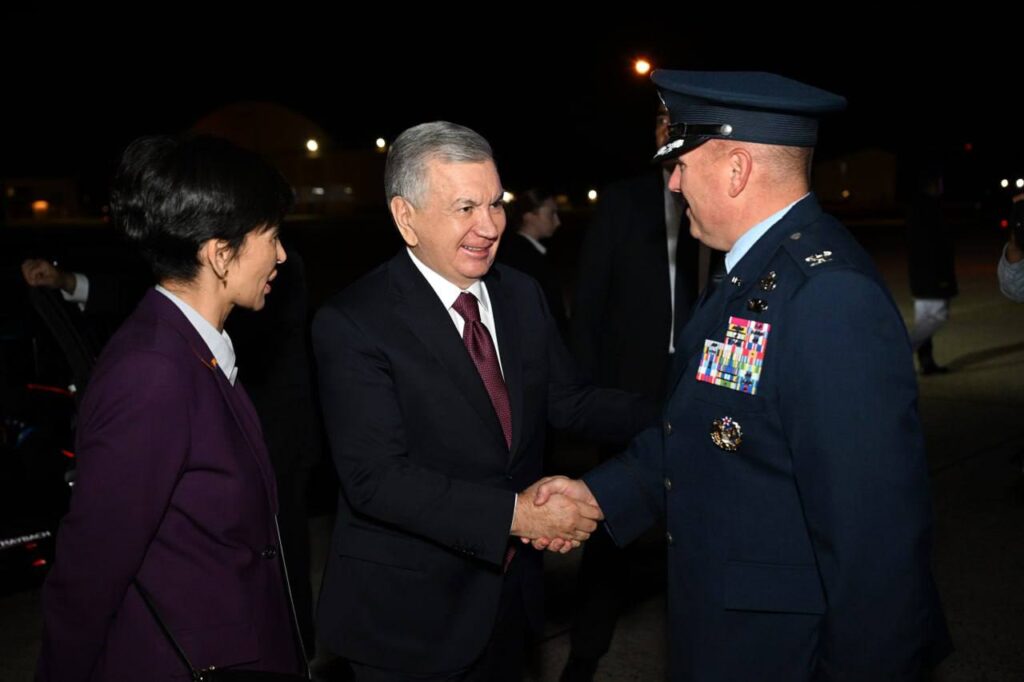
The United States and Uzbekistan are deepening their economic and technological partnership. Following President Shavkat Mirziyoyev’s meeting with U.S. President Donald Trump in Washington, the U.S. State Department announced a sweeping package of agreements, described as among the most significant in the history of bilateral relations in both investment and strategic scope. High-Level Business Engagements During his Washington visit, President Mirziyoyev held talks with representatives from major American corporations, investment funds, and financial institutions. The meeting was attended by U.S. Secretary of Commerce Howard Lutnick, Special Assistant to the President Ricky Gill, Special Assistant to the President Ricky Gill, Deputy Secretary of Agriculture Stephen Vaden, and executives from companies such as Traxys, FLSmidth, McKinsey, Meta, Google, Amazon, Boeing, Air Products, Axiom Space, Cove Capital, Freeport-McMoRan, Orion CMC, Cargill Cotton, John Deere, Honeywell, Valmont Industries, and Flowserve Corporation. Opening the event, Mirziyoyev highlighted that trade between Uzbekistan and the U.S. has quadrupled over the past eight years, and more than 300 American companies are now operating in the country. He added that this is just the beginning of a new era in economic cooperation. Key strategic goals were outlined: by 2030, Uzbekistan aims to develop a new-generation energy system with 18-20 GW of renewable capacity, more than half of it sourced from solar and wind. In this context, the two countries plan to jointly develop and process critical minerals such as uranium, copper, tungsten, molybdenum, and graphite, establishing resilient supply chains and leveraging U.S. processing technologies. Infrastructure is another major focus. Uzbekistan intends to invest over $12 billion by 2030 to modernize roads, railways, terminals, and airports. Digital cooperation is also expanding. Projects with Google, Meta, and NVIDIA include the launch of Apple Pay and Google Pay, the creation of a Digital Academy, and the development of startup hubs. These initiatives are expected to be supported by the U.S. International Development Finance Corporation (DFC) and the U.S. Exim Bank. Mirziyoyev reaffirmed his personal commitment to supporting American investment, stressing that Uzbekistan remains a stable and favorable destination for foreign businesses. Securing Access to Strategic Raw Materials Washington’s primary interest lies in critical minerals. The U.S. will gain priority access to joint mining projects and exclusive access to geological data on rare earth and other strategically significant elements. This move is part of a broader U.S. effort to diversify global sources of inputs vital to defense, green energy, and other high-tech sectors. The two countries are also preparing a $400 million investment package to develop sustainable supply chains for critical and rare earth minerals. For Uzbekistan, this represents a key step toward integration into global value chains and reduced reliance on limited partners. Energy Cooperation: A Role for Small Modular Reactors Uzbekistan plans to acquire American small modular reactors (SMRs), a technology increasingly favored by emerging economies for its scalability and relatively low upfront costs. Interest in SMRs has grown following the 2025 approval of the upgraded NuScale Power Module (77 MW), and Uzbekistan may become one of the first countries in...

Tokayev Meets with U.S. Envoys Ahead of C5+1 Summit

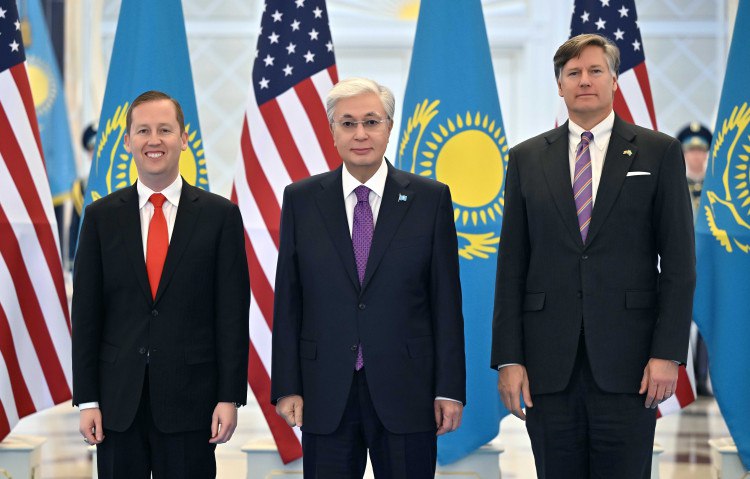
Kazakhstan's President Kassym-Jomart Tokayev met in Astana with Sergio Gor, U.S. Special Representative for South and Central Asia, and Christopher Landau, U.S. Deputy Secretary of State, to discuss the future of the Kazakh-American expanded strategic partnership and preparations for the upcoming C5+1 summit in Washington. Tokayev expressed confidence that the summit, scheduled for November 6, would be productive in setting priorities for long-term cooperation. He emphasized Kazakhstan’s commitment to strengthening trade, economic, and investment ties with the United States. Tokayev also conveyed his appreciation to U.S. President Donald Trump for the invitation to the summit. He voiced Kazakhstan’s support for the domestic and foreign policies pursued by the Trump administration and praised its role in promoting global peace and security. Sergio Gor delivered Trump’s greetings and reaffirmed the strategic importance of Central Asia in U.S. foreign policy. He noted that the upcoming summit is expected to elevate bilateral cooperation to a new level. The leaders discussed opportunities for deepening cooperation in energy, critical minerals, digitalization, and the development of transport and logistics infrastructure. Earlier in their visit, the U.S. delegation traveled to Almaty, where Gor and Landau met with local business leaders and executives from American companies operating in Kazakhstan. They also toured the Museum of Modern Art, the Shymbulak ski resort, and the Medeu high-altitude ice rink. “Almaty is Kazakhstan's largest city and financial capital, located at the foot of the Zailiyskiy Alatau mountains. Just half an hour’s drive from the city is the world-famous Shymbulak ski resort, where we enjoyed warm Kazakh hospitality. I’m starting to feel at home here, surrounded by golden eagles and my new Kazakh friends!” Landau wrote on social media. The date of the C5+1 summit was first reported in media outlets before being confirmed through official correspondence between Tokayev and Trump. Uzbek media later corroborated the event, citing sources close to President Shavkat Mirziyoyev’s administration, followed by confirmation from Kyrgyz President Sadyr Japarov.

Tokayev in New York: $100B U.S. Investment Push Boosts Kazakhstan Ties

Kazakhstan and the United States are continuing to strengthen their strategic partnership, with investment playing a central role. At a roundtable with U.S. business representatives in New York, President Kassym-Jomart Tokayev stated that American investments in Kazakhstan’s economy have surpassed $100 billion. “Today, more than 630 American companies are successfully operating in our country, including Chevron, ExxonMobil, Boeing, Visa, Mastercard, Meta, Wabtec, and Citibank. We regard the U.S. as an important strategic partner and reaffirm our commitment to further developing multifaceted cooperation,” Tokayev said. The president noted that Kazakhstan’s economy grew by 6.5% in the first eight months of 2025. He added that ongoing political and economic reforms are creating favorable conditions for long-term growth and attracting further investment. Energy and Uranium: The Cornerstone of Cooperation Energy continues to underpin U.S.-Kazakhstan relations. “We recognize and highly value the large and successful investments of Chevron and ExxonMobil over the past 30 years. Despite all the turbulence in regional geopolitics, their presence in our country has never been questioned,” Tokayev said. He pointed out that Kazakhstan supplies about 40% of the global uranium market and nearly a quarter of U.S. imports. Tokayev also highlighted Kazakhstan’s “four sources” strategy - oil, gas, coal, and uranium - and expressed support for the U.S. approach to coal as a reliable energy source in the near term. $4.2 Billion Wabtec Agreement: A Landmark Deal A key outcome of Tokayev’s U.S. visit was the signing of a $4.2 billion agreement with American locomotive manufacturer Wabtec. According to the U.S. Department of Commerce, the deal will see Kazakhstan’s national railway company, Kazakhstan Temir Zholy (KTZ), acquire 300 ES44Aci Evolution Series freight locomotives over the next decade. U.S. Secretary of Commerce Howard Lutnick described the contract as the "largest in history,” noting it would create approximately 11,000 jobs in Texas and Pennsylvania. “This is not just a story of massive success, it’s an example of how American innovation strengthens global leadership,” he posted on X. Wabtec President and CEO Rafael Santana added, “This project represents KTZ’s ambition to transform Kazakhstan’s railway network into a key bridge between Europe and Asia.” Tokayev has emphasized that Kazakhstan is upgrading transport hubs and rolling out a “Smart Cargo” digital customs and logistics system to streamline east–west and Trans-Caspian transit traffic. Presidential Support: Trump and Tokayev Hold Call The Wabtec agreement was preceded by a phone call between U.S. President Donald Trump and President Tokayev. “I just concluded a wonderful call with the Highly Respected President of Kazakhstan, Kassym-Jomart Kemeluly Tokayev,” Trump wrote on Truth Social. He emphasized the significance of the locomotive deal and linked it to his broader support for revitalizing U.S. infrastructure. “We need to support our rail industry, which has been attacked for years by ‘fake environmentalists.’ Now railroads are coming back and fast!” he said. Observers noted that Trump’s personal involvement underscored the political importance of the agreement for bilateral relations. Green Energy Progress: SAF Plant with LanzaJet Another notable development was the agreement between Kazakhstan’s national oil...

Insider’s View: Uzbekistan–U.S. – A New Era of Environmentally Friendly and Energy-Efficient Investment

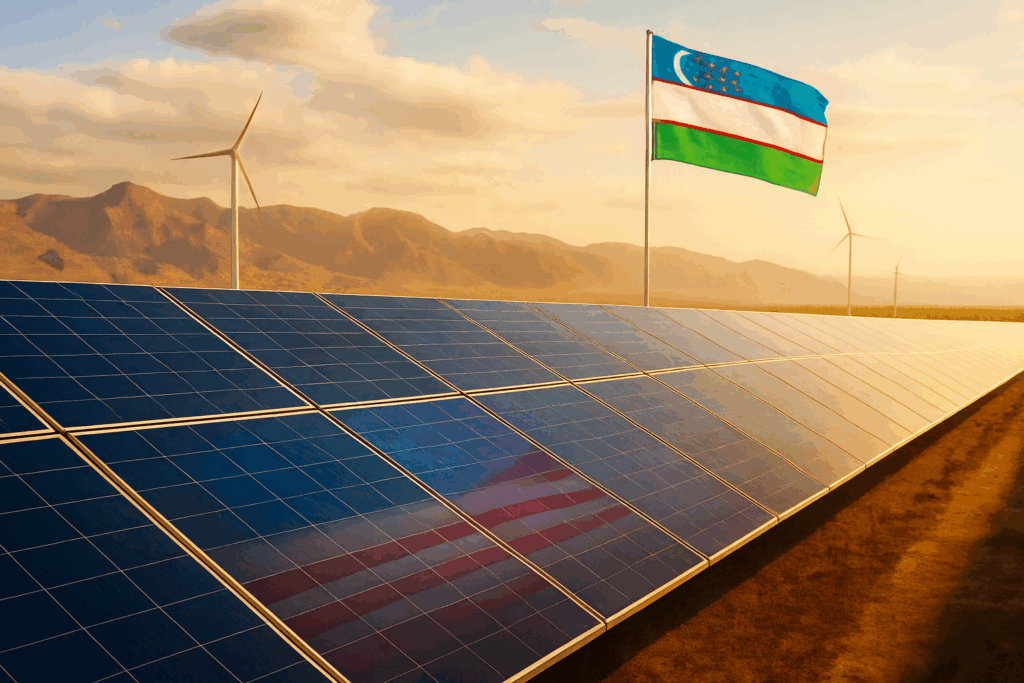
Today, environmentally friendly and energy-efficient projects are no longer just a fashionable trend but a factor of global competitiveness. Uzbekistan, once regarded as a country with a resource-based energy system and limited opportunities for the adoption of modern technologies, is now becoming a hub for “green” investment and innovation. A strategic partnership with the United States plays a special role in this process, encompassing key areas ranging from energy and ecology to finance, education, and culture. Clean and innovative projects are becoming the hallmark of Uzbek-American relations, shaping a new model of cooperation in the 21st century. Green Energy and Strategic Partnership Uzbekistan is moving confidently toward a “green” future. While in 2018 renewable energy sources accounted for less than one percent of electricity generation, from January to July 2025, renewables already provided 20.3% of the country’s total electricity. More than 11 billion kWh of “green” energy were produced, including 6.4 billion kWh from solar power plants and 3.6 billion kWh from wind farms. This volume saved 3.6 billion cubic meters of natural gas and prevented over 2.2 million tons of harmful emissions. Every day, renewables now generate about 26.7 million kWh – enough to cover the needs of 7.28 million households for half a year, or 3.64 million homes for an entire year. Currently, 10 solar and 4 wind plants with a combined capacity of more than 4.5 GW operate across 10 regions of the country. A key focus of Uzbek-American cooperation has become “green” energy. In 2025, Allied Green Ammonia (AGA), together with the U.S. company Plug Power, announced a major project for the production of sustainable aviation fuel, green diesel, and urea. The plan includes the supply of electrolyzers with a capacity of up to 2 GW for the future complex. A final investment decision is expected by the end of 2025, and the project has already been recognized as one of the flagship initiatives for Central Asia. Air Products – A Flagship of American Presence Air Products, a global leader in industrial gases and hydrogen energy, occupies a special place in Uzbek-American cooperation. In the Kashkadarya region, the company participates in a large-scale gas-to-liquids (GTL) project worth around $1 billion. The complex is designed to produce about 1.5 million tons of synthetic fuels per year, including diesel, jet kerosene, and naphtha. Its structure includes air separation units, autothermal reformers, and hydrogen production facilities. This project has become a landmark example of how U.S. technologies are transforming Uzbekistan’s energy sector. In addition to GTL, Air Products is actively developing industrial gas production in Uzbekistan. The company participates in oxygen, nitrogen, and hydrogen production projects, introduces the latest PSA units, as well as freezing and storage technologies that reduce food losses and enhance economic resilience. Furthermore, the company has implemented a “green financing” system that links investments to sustainability principles. These projects not only strengthen the country’s industrial potential but also pave the way for positioning Uzbekistan as a regional hub for “green” energy. The company’s future plans...