• KZT/USD = 0.00223
  • TJS/USD = 0.10860
  • UZS/USD = 0.00008
  • TMT/USD = 0.29850
  • KZT/USD = 0.00223
  • TJS/USD = 0.10860
  • UZS/USD = 0.00008
  • TMT/USD = 0.29850
  • KZT/USD = 0.00223
  • TJS/USD = 0.10860
  • UZS/USD = 0.00008
  • TMT/USD = 0.29850
  • KZT/USD = 0.00223
  • TJS/USD = 0.10860
  • UZS/USD = 0.00008
  • TMT/USD = 0.29850
  • KZT/USD = 0.00223
  • TJS/USD = 0.10860
  • UZS/USD = 0.00008
  • TMT/USD = 0.29850
  • KZT/USD = 0.00223
  • TJS/USD = 0.10860
  • UZS/USD = 0.00008
  • TMT/USD = 0.29850
  • KZT/USD = 0.00223
  • TJS/USD = 0.10860
  • UZS/USD = 0.00008
  • TMT/USD = 0.29850
  • KZT/USD = 0.00223
  • TJS/USD = 0.10860
  • UZS/USD = 0.00008
  • TMT/USD = 0.29850
08 November 2026

Viewing results 1 - 6 of 2

Uzbekistan–Türkiye Trade Agreement to Cover More Products

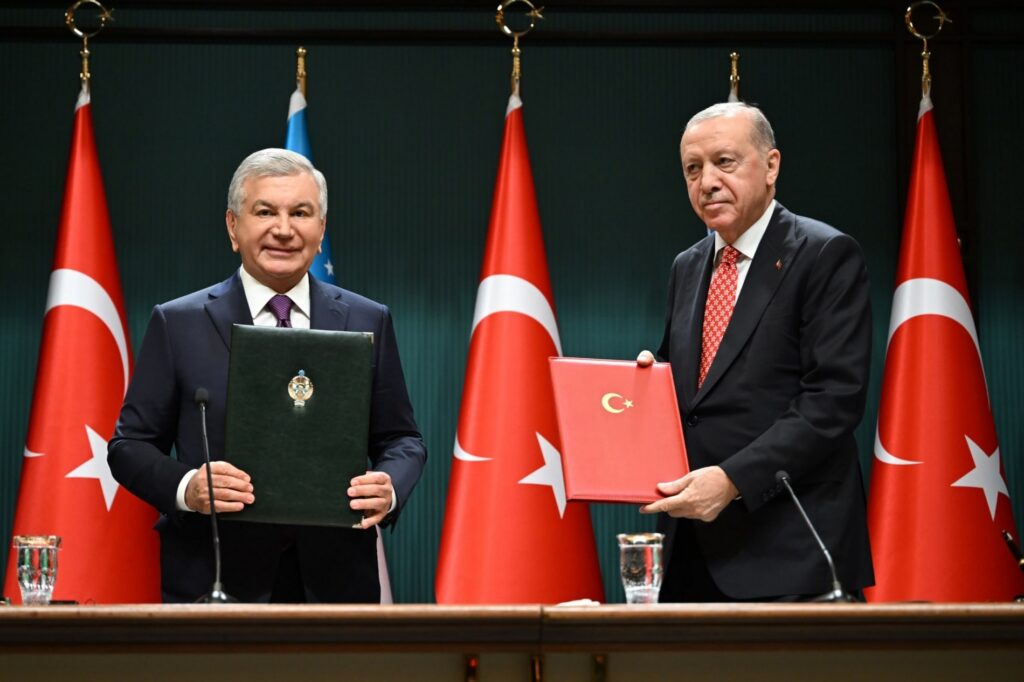
Uzbekistan and Türkiye have agreed to expand the list of goods eligible for preferential trade treatment and signed agreements on business support and social security. Five documents were signed in Ankara on October 29 following talks between Presidents Shavkat Mirziyoyev and Recep Tayyip Erdoğan. Turkish Trade Minister Ömer Bolat explained the expansion in an interview with Aziza Kurbonova, first deputy head of the Communications Department of Uzbekistan’s Presidential Administration. "In addition to the 12 products on each side already benefiting from preferential treatment, we mutually agreed to add another eight products each," Bolat said. The minister estimated annual bilateral trade at approximately $3.25 billion, with the two countries aiming to increase it to $5 billion in the near term and $10 billion in the medium term. Their presidents set the near-term target in January 2026. The new trade preferences will take effect once both countries complete their approval procedures. The other agreements signed in Ankara include one establishing a High-Level Business Support Council. Two cover social security and the implementation of those arrangements, while the fifth amends a 2022 agreement on exchanging customs information about goods and vehicles before they cross borders. According to Bolat, a Turkish business delegation led by Vice President Cevdet Yılmaz is scheduled to visit Uzbekistan on November 18 to discuss joint projects. A meeting of the Joint Intergovernmental Commission on economic cooperation is expected to take place in Ankara in December. A Turkish Trade Ministry delegation is also expected to visit Tashkent to share its experience with free trade zones. Under the existing preferential trade agreement, Uzbek agricultural exports, including onions, nuts, and dried fruit, receive preferential access to Türkiye, while Turkish industrial products, including machinery and electrical equipment, benefit from reduced import duties in Uzbekistan. The additional products covered by the new agreement have not yet been disclosed.

U.S. and Uzbekistan Sign Landmark Economic and Strategic Agreements

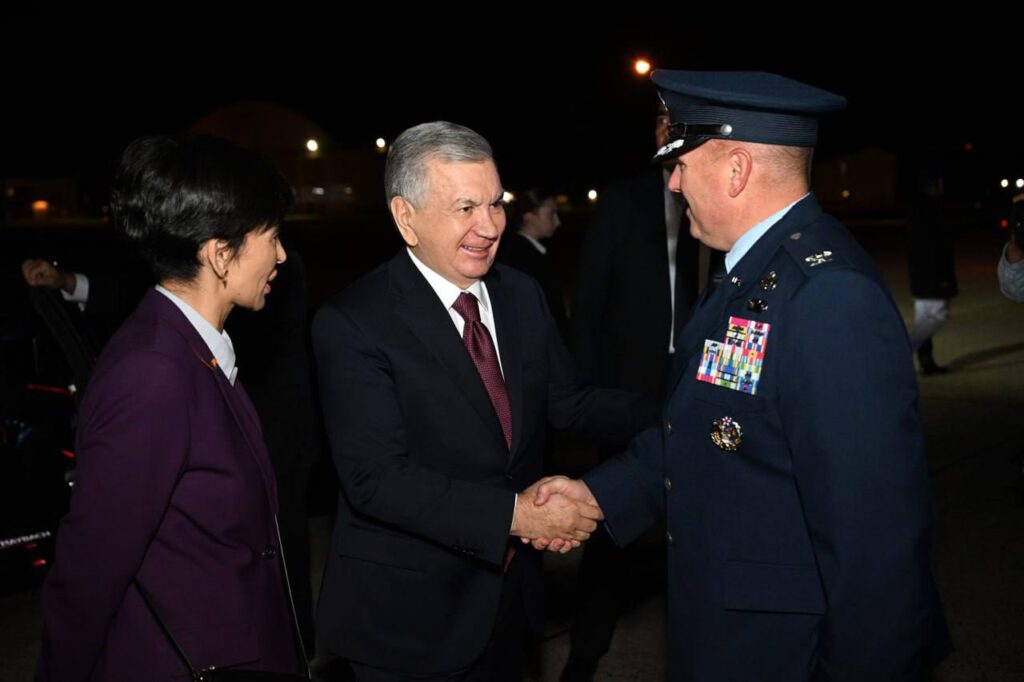
The United States and Uzbekistan are deepening their economic and technological partnership. Following President Shavkat Mirziyoyev’s meeting with U.S. President Donald Trump in Washington, the U.S. State Department announced a sweeping package of agreements, described as among the most significant in the history of bilateral relations in both investment and strategic scope. High-Level Business Engagements During his Washington visit, President Mirziyoyev held talks with representatives from major American corporations, investment funds, and financial institutions. The meeting was attended by U.S. Secretary of Commerce Howard Lutnick, Special Assistant to the President Ricky Gill, Special Assistant to the President Ricky Gill, Deputy Secretary of Agriculture Stephen Vaden, and executives from companies such as Traxys, FLSmidth, McKinsey, Meta, Google, Amazon, Boeing, Air Products, Axiom Space, Cove Capital, Freeport-McMoRan, Orion CMC, Cargill Cotton, John Deere, Honeywell, Valmont Industries, and Flowserve Corporation. Opening the event, Mirziyoyev highlighted that trade between Uzbekistan and the U.S. has quadrupled over the past eight years, and more than 300 American companies are now operating in the country. He added that this is just the beginning of a new era in economic cooperation. Key strategic goals were outlined: by 2030, Uzbekistan aims to develop a new-generation energy system with 18-20 GW of renewable capacity, more than half of it sourced from solar and wind. In this context, the two countries plan to jointly develop and process critical minerals such as uranium, copper, tungsten, molybdenum, and graphite, establishing resilient supply chains and leveraging U.S. processing technologies. Infrastructure is another major focus. Uzbekistan intends to invest over $12 billion by 2030 to modernize roads, railways, terminals, and airports. Digital cooperation is also expanding. Projects with Google, Meta, and NVIDIA include the launch of Apple Pay and Google Pay, the creation of a Digital Academy, and the development of startup hubs. These initiatives are expected to be supported by the U.S. International Development Finance Corporation (DFC) and the U.S. Exim Bank. Mirziyoyev reaffirmed his personal commitment to supporting American investment, stressing that Uzbekistan remains a stable and favorable destination for foreign businesses. Securing Access to Strategic Raw Materials Washington’s primary interest lies in critical minerals. The U.S. will gain priority access to joint mining projects and exclusive access to geological data on rare earth and other strategically significant elements. This move is part of a broader U.S. effort to diversify global sources of inputs vital to defense, green energy, and other high-tech sectors. The two countries are also preparing a $400 million investment package to develop sustainable supply chains for critical and rare earth minerals. For Uzbekistan, this represents a key step toward integration into global value chains and reduced reliance on limited partners. Energy Cooperation: A Role for Small Modular Reactors Uzbekistan plans to acquire American small modular reactors (SMRs), a technology increasingly favored by emerging economies for its scalability and relatively low upfront costs. Interest in SMRs has grown following the 2025 approval of the upgraded NuScale Power Module (77 MW), and Uzbekistan may become one of the first countries in...