• KZT/USD = 0.00218
  • TJS/USD = 0.10800
  • UZS/USD = 0.00008
  • TMT/USD = 0.29850
  • KZT/USD = 0.00218
  • TJS/USD = 0.10800
  • UZS/USD = 0.00008
  • TMT/USD = 0.29850
  • KZT/USD = 0.00218
  • TJS/USD = 0.10800
  • UZS/USD = 0.00008
  • TMT/USD = 0.29850
  • KZT/USD = 0.00218
  • TJS/USD = 0.10800
  • UZS/USD = 0.00008
  • TMT/USD = 0.29850
  • KZT/USD = 0.00218
  • TJS/USD = 0.10800
  • UZS/USD = 0.00008
  • TMT/USD = 0.29850
  • KZT/USD = 0.00218
  • TJS/USD = 0.10800
  • UZS/USD = 0.00008
  • TMT/USD = 0.29850
  • KZT/USD = 0.00218
  • TJS/USD = 0.10800
  • UZS/USD = 0.00008
  • TMT/USD = 0.29850
  • KZT/USD = 0.00218
  • TJS/USD = 0.10800
  • UZS/USD = 0.00008
  • TMT/USD = 0.29850
29 November 2026

Viewing results 1 - 6 of 17

Uzbekistan’s U.S. Package: What Supports the $12 Billion Figure?

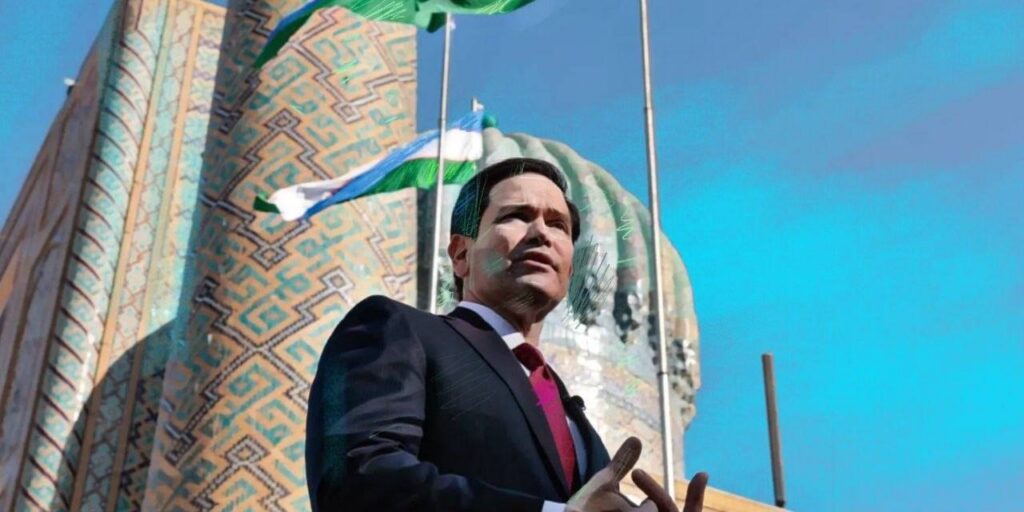
Uzbekistan announced a package of 54 agreements and prospective initiatives that it valued at about $12 billion during U.S. Secretary of State Marco Rubio’s visit to Samarkand on October 19. The Ministry of Investment, Industry and Trade lists engine supplies from GE Aerospace for new Uzbekistan Airways aircraft as part of the package. The investment ministry makes that value conditional on implementation. The presidency’s account says a comprehensive implementation program will be developed for the agreements and initiatives. October’s $12 billion may include projects still awaiting finance or development, but the values assigned to them must have an identifiable basis in project estimates or specific transactions. The official announcements identify counterparties and sectors, but the evidence examined does not provide the individual values needed to reconstruct the $12 billion total. Earlier Announcements and Additional Value In November 2025, Donald Trump announced that Uzbekistan would undertake roughly $35 billion in purchases and investment in American sectors over the following three years. The stated total did not separate the amounts assigned to purchases and investment. Uzbekistani purchases from American suppliers and investment in American sectors cannot be counted as an equivalent inflow of U.S. capital into Uzbekistan. Purchasing American equipment and receiving American investment give Uzbekistani participants different roles in the financing and implementation of projects. In September 2026, Investment Minister Laziz Kudratov said projects worth $7 billion had already been completed within a $35 billion portfolio. UzDaily described the figure as one-fifth of the value of the previous year’s agreements, without identifying the completed projects or defining completion. A transaction-level account would show what equipment was delivered, which facilities were commissioned, and what contract payments were made, giving the value and completion date of each transaction. October’s $12 billion cannot be added to the earlier figures without reconciling the transactions included in each package and the values assigned to them. The matching $35 billion figures do not establish that Kudratov and Trump referred to the same transaction list. An October agreement could introduce a fresh transaction or add obligations within an existing project, but it could also cover work already reflected in an earlier valuation. A company’s reappearance in successive announcements does not establish which relationship applies. What the Agreements Establish American Resources Corporation and ReElement Technologies announced an October 19 agreement with Uzbekistan Technological Metals Complex and the Fund for Reconstruction and Development, advancing their November 2025 memorandum. ReElement’s release describes a further stage of technical and commercial work under an existing partnership, but it provides no valuation showing how that work contributes to the $12 billion total. The companies report successful processing of Uzbek-sourced tungsten into high-purity oxide. The planned demonstration at ReElement’s U.S. facilities is intended to evaluate commercial viability, processing efficiency, and scalability; preliminary engineering and economic modeling concern possible refining operations in Uzbekistan. In the financial sector, the investment ministry describes Franklin Templeton, Oppenheimer, Citigroup, and BlackRock as helping to attract capital, but does not explain whether or how these arrangements contribute to the $12 billion...
Opinion: C5+1 in Samarkand: What Uzbekistan Expects and What Washington Wants

U.S. Secretary of State Marco Rubio has arrived in Uzbekistan with a delegation representing more than 200 American companies. He is attending a C5+1 ministerial meeting with the foreign ministers of Kazakhstan, Kyrgyzstan, Tajikistan, Turkmenistan, and Uzbekistan. The agenda includes regional connectivity, energy security, trade, private investment, and economic modernization. The visit brings the format back to its birthplace. The first C5+1 ministerial meeting was held in Samarkand on November 1, 2015, with then-Secretary of State John Kerry. The November 6, 2025, summit in Washington gave the relationship a substantial commercial dimension. Uzbekistan and the United States announced economic agreements and trade contracts worth approximately $34.5 billion. President Donald Trump also said Uzbekistan intended to purchase and invest more than $100 billion in the United States over the following decade. Samarkand is now hosting a ministerial meeting accompanied by a large business delegation. The immediate question is how much of the previously announced portfolio has moved toward financing and implementation. In late September, Uzbekistan's Minister of Investment, Industry, and Trade, Laziz Kudratov, valued the project portfolio with the United States at $35 billion, with approximately $7 billion already completed. On that accounting, about $28 billion remains. In my assessment, the strongest overlap between American and Uzbek interests lies in processing critical minerals inside Uzbekistan, using American financing and technology to serve international supply chains. Washington wants alternative sources of strategic materials. Tashkent wants investment in industrial production rather than simply exporting raw materials. Their positions are less closely aligned on technology and relations with Iran. Uzbekistan seeks access to American artificial intelligence infrastructure while maintaining cooperation with China. It also regards Iran as an important transit partner. Washington's approach to sensitive technologies and sanctions could complicate both ambitions. Another Uzbek priority is ending the application of the Jackson–Vanik Amendment to Uzbekistan, a U.S. trade-law provision dating from 1974 that continues to affect the legal framework for bilateral commerce. Rubio can support its repeal, but Congress must make the decision. Investment Deals The C5+1 format has become more commercially focused. At the Washington summit, the U.S. Department of Commerce organized a dedicated venue for business agreements and announced more than $25 billion in commercial deals involving the five Central Asian countries. Since the Washington summit, Uzbekistan has developed additional channels for economic cooperation with the United States. A bilateral Business and Investment Council has brought together officials and business representatives. Cooperation has also expanded into critical minerals, energy, infrastructure, and advanced manufacturing. In June 2026, Uzbekistan's Ministry of Investment, Industry, and Trade, its Fund for Reconstruction and Development, the U.S. International Development Finance Corporation (DFC), and the Export-Import Bank of the United States (EXIM) announced a joint investment platform. Uzbekistan has also adopted a critical minerals development program for 2026–2030, covering 120 projects valued at $4.2 billion. The first stage includes 12 projects worth $166 million, with plans to produce high-purity selenium, tellurium, and rhenium. These plans reflect Tashkent's industrial priorities. Uzbekistan wants foreign partners to help build processing facilities and...

Uzbekistan Signs Space Accords as Rubio Opens Samarkand Talks

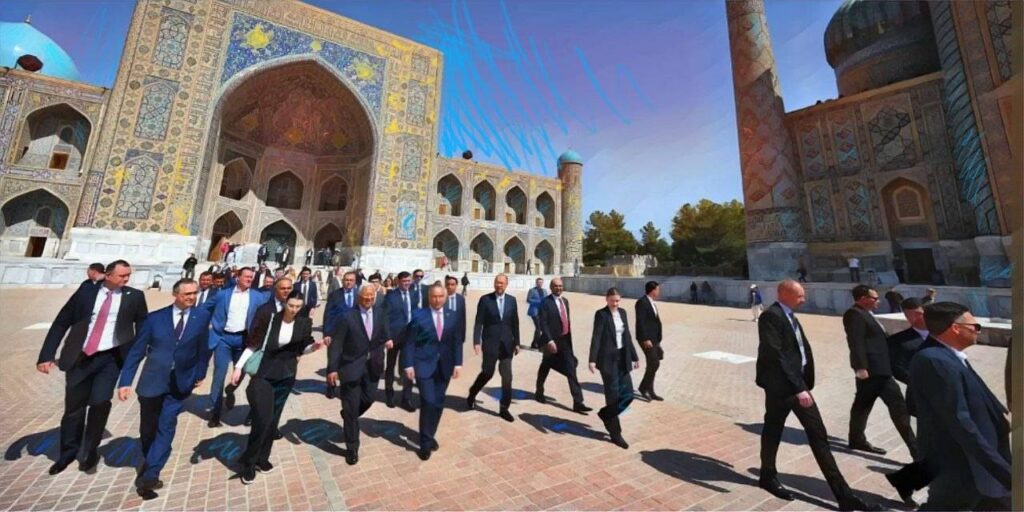
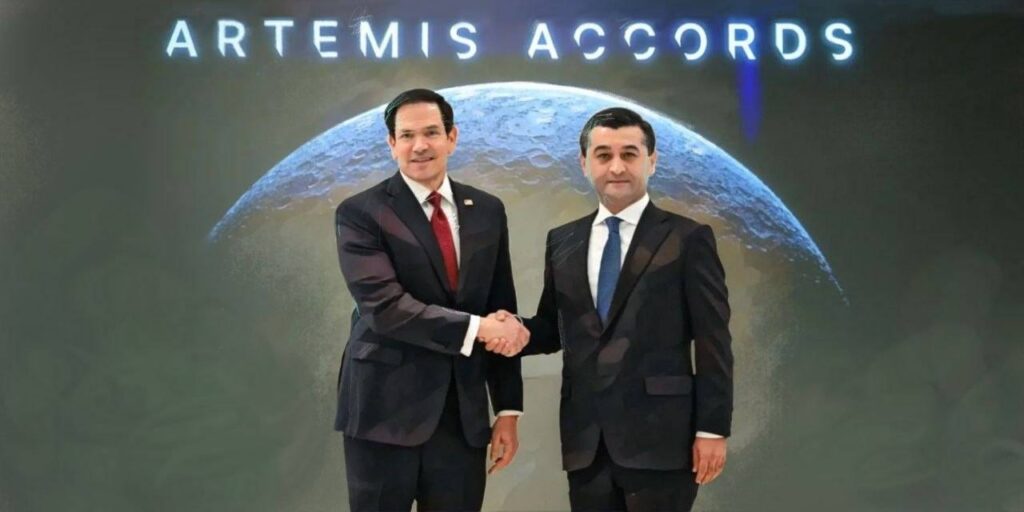
Uzbekistan joined the U.S.-led Artemis Accords on October 19 as Secretary of State Marco Rubio held talks in Samarkand. The signing accompanied the first Enhanced Strategic Partnership Dialogue between the two countries, with critical minerals among the priorities. Foreign Minister Bakhtiyor Saidov announced the signing after bilateral talks with Rubio. He said Uzbekistan had become the 77th country to join the framework for peaceful space exploration. Saidov said accession would support closer cooperation with NASA and other participating space agencies. He identified training for Uzbek specialists and access to space technologies as potential benefits. Established in 2020, the Artemis Accords set out principles for civilian space exploration. Signatories commit to peaceful operations and greater transparency, including sharing scientific data. The framework also addresses interference between missions and the preservation of historic sites in space. NASA describes the accords as nonbinding principles. Posting on X, Rubio confirmed he had met all five Central Asian foreign ministers during the C5+1 gathering. He said cooperation would expand commercial opportunities and strengthen regional security. American businesses also joined the visit as Washington seeks deeper economic ties across Central Asia. The visit follows the November 2025 White House summit, where Trump hosted all five Central Asian presidents. That meeting gave the partnership a stronger commercial focus, with aircraft orders and minerals projects featuring prominently. Samarkand brings ministers and businesses together to advance that agenda. The strategic dialogue focused on implementing agreements reached by the countries’ leaders and expanding economic cooperation. Saidov said the discussions covered energy and advanced technologies, alongside critical minerals. Education and security cooperation were also on the agenda. Rubio said separately that the talks addressed infrastructure and space cooperation, as well as engagement through C5+1, which brings together the United States and Kazakhstan, Kyrgyzstan, Tajikistan, Turkmenistan, and Uzbekistan. In a separate meeting with Kazakh Foreign Minister Mukhtar Tileuberdi, Rubio reaffirmed plans to expand economic and security cooperation. He thanked Kazakhstan for supporting “President Trump’s peace initiatives, including the Abraham Accords.” Speaking to reporters in Samarkand, Rubio said nearly 300 American businesses were represented, and that agreements potentially worth billions of dollars were under discussion. He presented the visit as the start of deeper U.S. economic engagement with Central Asia. “I think we’ll have some concrete deals to announce,” he said, according to Euronews. A final list of agreements and their value had not been circulated at the time of those remarks. Rubio identified critical minerals as a priority, arguing that concentrated supplies created risks for countries dependent on them. "This is not about coming here to say, stop talking to somebody else or stop working with some other country," he said. Days earlier, at the October 15 summit of the Conference on Interaction and Confidence Building Measures in Asia in Baku, Kazakhstan’s President Kassym-Jomart Tokayev proposed a transport strategy spanning several international initiatives. His proposal included China’s Belt and Road and the planned Trump Route for International Peace and Prosperity (TRIPP) through Armenia. It illustrated the region’s pursuit of transport links involving...

Tokayev and UK Trade Minister Discuss Investment, Energy and AI Cooperation

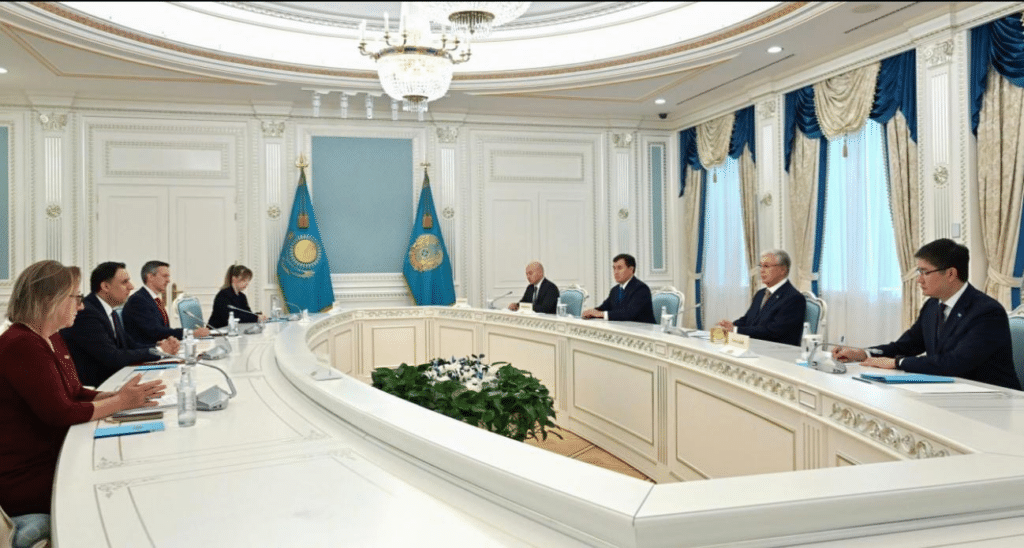
Kazakh President Kassym-Jomart Tokayev met with UK Minister of State for Trade Lord Anas Sarwar in Astana on October 7 to discuss cooperation in energy, transport and logistics, digitalization and artificial intelligence. Tokayev said the United Kingdom remains one of Kazakhstan’s leading trade and investment partners. Bilateral trade rose by 83% in 2025 to more than $1.6 billion, according to the Kazakh presidency. More than 500 British companies operate in the country. The commercial relationship has long been anchored partly in energy. British energy major Shell holds stakes in the Karachaganak and Kashagan projects, and in March signed a new exploration contract in Kazakhstan’s Aktobe region. “Kazakhstan and the United Kingdom are connected by constructive political dialogue and active engagement at various levels,” Tokayev said, adding that there was significant scope to expand cooperation further. The talks come several months after Kazakhstan ratified a Strategic Partnership and Cooperation Agreement with the United Kingdom covering trade, investment, energy, critical minerals, education and other areas. The agreement was originally signed in Astana in 2024. Sarwar welcomed the development of the strategic partnership and thanked Tokayev for supporting British business projects and creating a favorable investment climate. “We are following Kazakhstan’s dynamic development with great interest and highly value the similarity of our approaches to key issues on the international agenda,” Sarwar said. He said Britain wanted its partnership with Kazakhstan to deliver concrete results, citing innovation and free trade as shared priorities. Critical minerals have emerged as one area of more practical cooperation. At the inaugural CA5+UK ministerial meeting in London in February, Kazakhstan and Britain agreed on a critical minerals roadmap through 2027. Existing cooperation includes a rhenium project involving Kazakhstan’s Zhezkazganredmet and British company Maritime House. The October 7 presidential readout did not announce any new agreements or investment commitments. The two sides also discussed academic exchanges and joint educational initiatives. British universities have established a growing presence in Kazakhstan, including Cardiff University’s campus in Astana, which opened in September 2025 as the university’s first overseas branch campus. Tokayev encouraged young Kazakhs to study foreign languages, particularly English. “Developing trade and economic ties requires not only new projects and investment, but also people capable of working confidently in an international environment,” Tokayev said. Tokayev also invited British Prime Minister Andy Burnham to visit Kazakhstan.

Oman Trade Corridor Could Link Kazakhstan to Indian Ocean

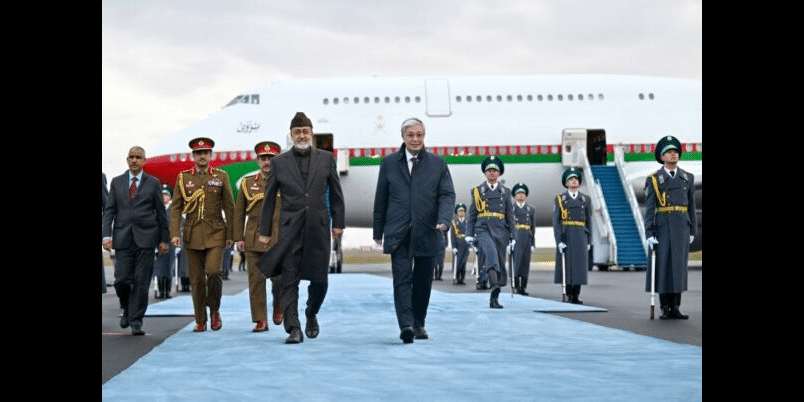
Kazakhstan could gain a new trade route to the Indian Ocean through Oman’s ports, offering an alternative to its traditional northern and Caspian corridors. Haitham bin Tariq Al Said, the sultan of Oman, raised the proposal during talks with President Kassym-Jomart Tokayev in Astana on October 6. He arrived in Astana on October 5, becoming the first Omani sultan to visit Central Asia “We look forward to developing cooperation in transport and logistics, including the development of a trade corridor through Oman’s ports, as well as strengthening air links between our countries,” the Sultan said. For landlocked Kazakhstan, Omani ports would provide another potential route to the Indian Ocean. Kazakhstan is already developing the Middle Corridor across the Caspian Sea and the South Caucasus, while Kazakhstan, Uzbekistan, and the United Arab Emirates are studying the CASA railway project through Afghanistan to Pakistani ports. No route, transit countries, cargo volumes, costs, or launch timetable have yet been announced for the Omani proposal. The talks came immediately after Kazakhstan signed an agreement aimed at settling a long-running dispute over Dunga, an oil field in western Kazakhstan near the Caspian coast. KazMunayGas controls a 60% interest in the project through Dunga Operating GmbH, while Oman Oil Company Limited and Thailand’s PTT Exploration and Production Public Company Limited (PTTEP) each hold 20%. The dispute concerned costs accumulated under the production-sharing agreement that Kazakhstan considered non-recoverable. On October 5, the Energy Ministry and KazMunayGas signed an agreement to resolve the disputed issues. The agreement will now be sent to the foreign partners, Oman Oil Company Limited and PTTEP, for signature. A new development plan for 2026-2039 provides for production of 67.4 million barrels of oil, as well as capital and operating investment. Omani capital is also present in Kazakhstan’s gold industry. Maaden International Investment, an Omani state-owned investment fund, held 31.7% of Solidcore’s voting rights as of March 31, 2026, making it the company’s largest shareholder. Solidcore operates gold-mining assets in Kazakhstan. Kazakhstan and Oman have assembled a portfolio of five major joint projects worth around $3 billion. Two projects totaling approximately $1.1 billion have already been implemented in the energy and railway sectors, while others, including ore-processing projects, are at various stages of development. Oman Investment Authority and Kazakhstan’s sovereign wealth fund Samruk-Kazyna are among the main partners. During the visit, Samruk-Kazyna and the Oman Investment Authority exchanged an implementation agreement on establishing a joint investment fund and a term sheet for a Rixos hotel project at Blue City in Oman. KazMunayGas and OQ Exploration and Production also agreed to cooperate on investment opportunities in oil and gas exploration and production. The package of agreements covered areas including transport, agriculture, technology, healthcare, mining, and renewable energy. Despite a joint investment portfolio measured in billions of dollars, merchandise trade between the two countries remains modest. On October 5, the Chamber of International Commerce of Kazakhstan and the Oman Chamber of Commerce and Industry signed a memorandum of understanding. Kazakhstan proposed expanding exports of grain, meat, and...

C5+1 Meets Again in Samarkand, but Central Asia Has Changed

In mid-October, C5+1 will meet again in Samarkand, where its first ministerial was held in November 2015. The regional actor it was created to engage has, however, changed substantially. Secretary of State Marco Rubio is expected to arrive with representatives of more than 100 American companies for talks focused on regional economic connectivity, energy security, trade, private investment, and economic modernization. John Kerry convened the first C5+1 ministerial in Samarkand on November 1, 2015, after the six governments had met in New York that September and agreed to regular consultations. The initial agenda already treated security, economic connectivity, and environmental problems as fields where regional approaches could add value. The question is what purposes C5+1 serves now. C5+1 itself began with a Kazakhstani initiative. As S. Frederick Starr recently reconstructed the history, Ambassador Kairat Umarov, after consulting Astana, proposed in 2013 that Washington create a regular mechanism for engaging Central Asia collectively rather than only through five bilateral relationships. The State Department subsequently developed the proposal, and the format took institutional shape in 2015. That origin rules out any account in which regional agency appears only later. Kazakhstan helped create the mechanism through which Washington would engage the region collectively; the five states’ own capacity for regional coordination deepened substantially thereafter. The second ministerial in Washington in 2016 launched joint projects in economic connectivity, renewable energy, climate resilience, and security, while explicitly recognizing the value of regional approaches. A secretariat was established in 2022; the format reached presidential level for the first time in New York a year later. That summit also produced plans for a private-sector business platform and a Critical Minerals Dialogue, which held its inaugural meeting in February 2024. Its basic structure has remained the same: the United States engages the five Central Asian states collectively. Alongside C5+1, the five developed their own regional process, independent of any outside partner. President Shavkat Mirziyoyev proposed regular consultations among the Central Asian leaders in 2017, and their first Consultative Meeting took place in Astana in March 2018. Further meetings followed in Tashkent in 2019 and Turkmenistan in 2021 before the process moved to Cholpon-Ata in 2022. Subsequent meetings extended the process into trade, transport, energy, water, security, and cultural cooperation. The process remained intergovernmental and did not require policy uniformity among the five states. It gave them a recurring political process of their own. By 2022, the process had expanded from consultation among the five to coordination in dealing with outside partners. At the fourth Consultative Meeting in Cholpon-Ata, the leaders adopted a regional cooperation roadmap for 2022–2024, a Green Agenda, and a Concept of Interaction of the Central Asian States in Multilateral Formats. A treaty on friendship, good-neighborliness, and cooperation for the development of Central Asia in the twenty-first century was also opened for signature. President Kassym-Jomart Tokayev had proposed regular foreign-minister consultations to develop coordinated approaches to regional and international issues. He specifically connected the multilateral-formats concept to cooperation with non-regional strategic partners. The Concept of Interaction...