• KGS/USD = 0.01144 0%
  • KZT/USD = 0.00215 0%
  • TJS/USD = 0.10718 0.28%
  • UZS/USD = 0.00008 0%
  • TMT/USD = 0.28530 0%
  • KGS/USD = 0.01144 0%
  • KZT/USD = 0.00215 0%
  • TJS/USD = 0.10718 0.28%
  • UZS/USD = 0.00008 0%
  • TMT/USD = 0.28530 0%
  • KGS/USD = 0.01144 0%
  • KZT/USD = 0.00215 0%
  • TJS/USD = 0.10718 0.28%
  • UZS/USD = 0.00008 0%
  • TMT/USD = 0.28530 0%
  • KGS/USD = 0.01144 0%
  • KZT/USD = 0.00215 0%
  • TJS/USD = 0.10718 0.28%
  • UZS/USD = 0.00008 0%
  • TMT/USD = 0.28530 0%
  • KGS/USD = 0.01144 0%
  • KZT/USD = 0.00215 0%
  • TJS/USD = 0.10718 0.28%
  • UZS/USD = 0.00008 0%
  • TMT/USD = 0.28530 0%
  • KGS/USD = 0.01144 0%
  • KZT/USD = 0.00215 0%
  • TJS/USD = 0.10718 0.28%
  • UZS/USD = 0.00008 0%
  • TMT/USD = 0.28530 0%
  • KGS/USD = 0.01144 0%
  • KZT/USD = 0.00215 0%
  • TJS/USD = 0.10718 0.28%
  • UZS/USD = 0.00008 0%
  • TMT/USD = 0.28530 0%
  • KGS/USD = 0.01144 0%
  • KZT/USD = 0.00215 0%
  • TJS/USD = 0.10718 0.28%
  • UZS/USD = 0.00008 0%
  • TMT/USD = 0.28530 0%

Viewing results 1 - 6 of 171

Kazakhstan, Russia and China Create New Transport Hub

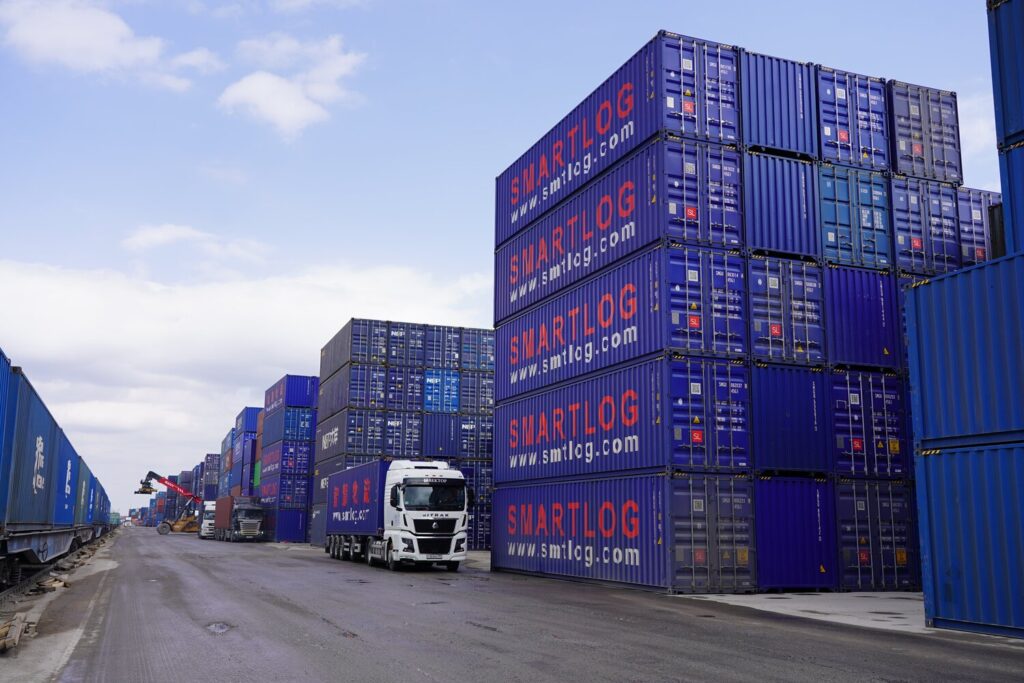
Kazakhstan’s national railways company Kazakhstan Temir Zholy (KTZ), Russia’s Slavtrans-Service JSC, and China’s Xian Free Trade Port Construction and Operation Co., Ltd have begun construction on a new transport and logistics center, CRK Terminal, at Selyatino station in the Moscow region. The new logistics hub is designed to develop direct transport links between the Kazakh-Chinese terminal in Xi'an (China), Russia and other countries. In 2023 the volume of cargo transported by rail between China and Russia through Kazakhstan amounted to 3.8 million tons, an increase of 35% compared to 2022. In the first quarter of 2024, transit traffic along the China-Russia-China route remained at a stable 0.9 million tons.    

What Will Uzbekistan’s Role in Central Asia’s Connectivity Be?

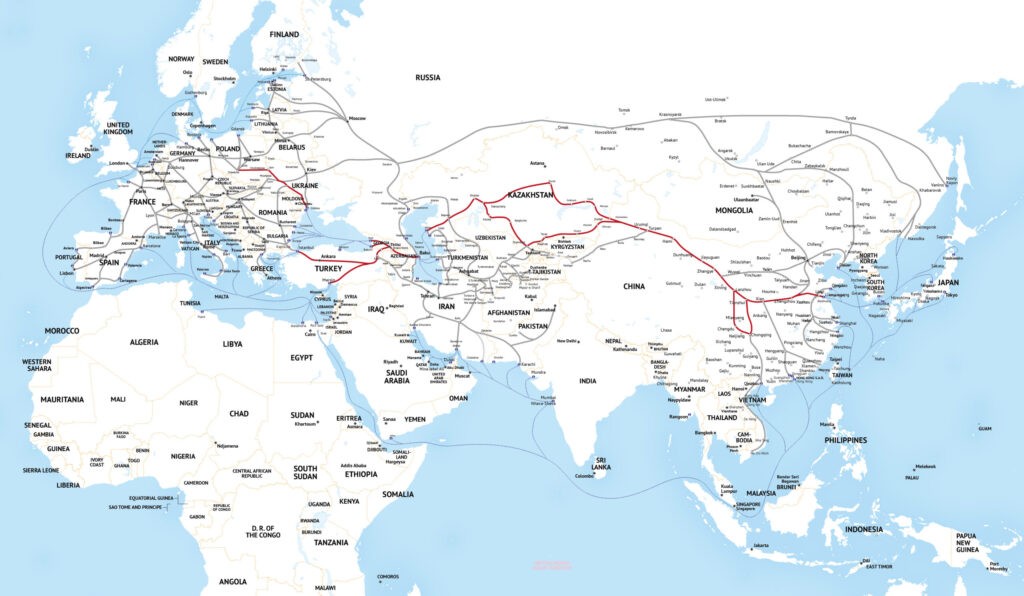
By Robert M. Cutler A new World Bank report on Central Asian connectivity published in April 2024 highlights the importance of the Middle Corridor, a trade route spanning Central Asia, the Caspian Sea, and the Caucasus, connecting China and East Asia with Georgia, Turkey, and Europe. This corridor is seen as a critical alternative to Russian-controlled routes, especially in light of recent geopolitical tensions. The World Bank identifies ten steps to address bottlenecks in the Middle Corridor, aiming to increase trade volumes by tripling them by 2030. This would significantly reduce travel times and increase trade volumes to 11 million tons, with proper investment and efficiency measures in place.   Uzbekistan and the Middle Corridor The report emphasizes the need for a "holistic" approach to improving transport connectivity in Central Asia. By this, it means a comprehensive and integrated strategy that combines improvements in infrastructure and logistics improvements with a reduction in border delays and tariffs, along with the harmonization of standards across countries. This includes improving both physical and digital infrastructure, enhancing governance and efficiency and addressing productivity issues amongst the state-owned enterprises that dominate the transport sectors in the region. The World Bank notes that Uzbekistan would profit from better rail connections with Kazakhstan; yet it does not identify any potentials for such projects. That is likely because a report by the Bank identified the Trans-Caspian International Trade Route (TITR) through southern Kazakhstan as the preferred program for international support.  Uzbekistan's participation in the Middle Corridor is still in a developmental stage. Tashkent has an active interest and a strategic geographic location, but concrete actions and project details are still emerging. There have been no public announcements about specific infrastructure projects or investments that Uzbekistan is undertaking within the Middle Corridor framework. It can be foreseen, however, that railway modernization should be high on the list of programs. There is, however, a new railway project - the Darbaza–Maktaaral line - currently underway in Kazakhstan that could be extended to improve connectivity with Uzbekistan. It is projected for completion in 2025. A second phase including an extension to Kazakhstan's Syrdarya station could then facilitate a further branch line from Syrdarya to Zhetysai, on the border with Uzbekistan. This project would reduce congestion at the existing Saryagash border crossing between the two countries and thus increase the capacity for transporting goods between the two countries by as much as 10 million tons per year.   The Middle Corridor and improvements to digital connectivity At present, the region has only limited connectivity.  The Central Asian countries have heavily invested in infrastructure since the turn of the century, but the region still lags behind middle-income countries in both investment and maintenance. Most areas continue to suffer from insufficient infrastructure and expensive services. These in turn hinder the potential for internal and external trade. The World Bank's report also provides a comprehensive analysis of the challenges and opportunities for enhancing connectivity in Central Asia. For this purpose, it focuses on both physical and...

Turkmenistan Opens New Section of Strategic Highway

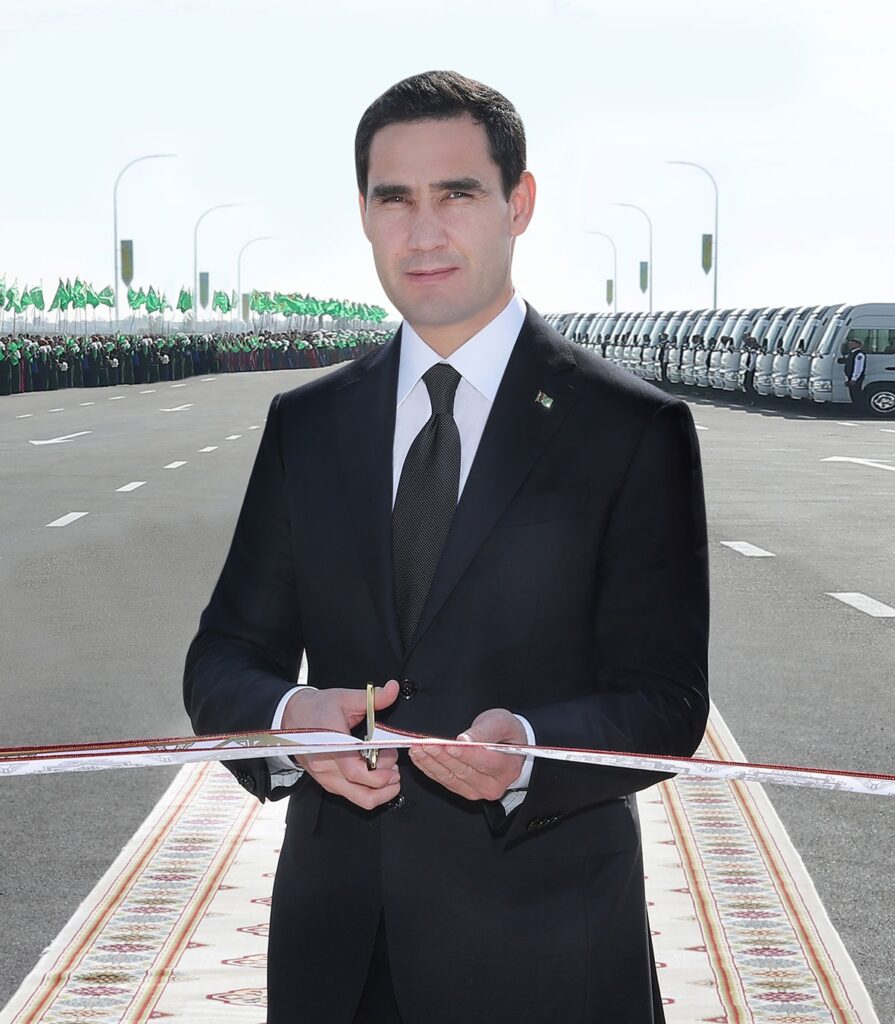
On April 17, Turkmenistan President Serdar Berdimuhamedov attended the launch of a new section of the Ashgabat-Turkmenabat high-speed highway linking the cities of Tejen and Mary. Phased construction of one of the most ambitious transport projects in Turkmenistan began in January 2019. Covering 600 kilometres, it comprises three sections - Ashgabat-Tejen (203 kilometres), Tejen-Mary (109 kilometres), and Mary-Turkmenabat (288 kilometres) – and once completed, will provide a faster and more economical means of transporting goods across the country. Hailing the high-speed Ashgabat-Turkmenabat highway a modern revival of the ancient Silk Road, President Berdimuhamedov reiterated his country’s commitment to the development of transport corridors from East-West and North-South and stated: “Turkmenistan is located at the junction of two continents, and such a favourable location provides a huge advantage in the formation of an international transport and logistics corridor, the integration of the domestic transport sector into the global system and the expansion of trade, economic, cultural and humanitarian ties with partner countries.”

Expansion of Transport Connections between Kazakhstan and Uzbekistan

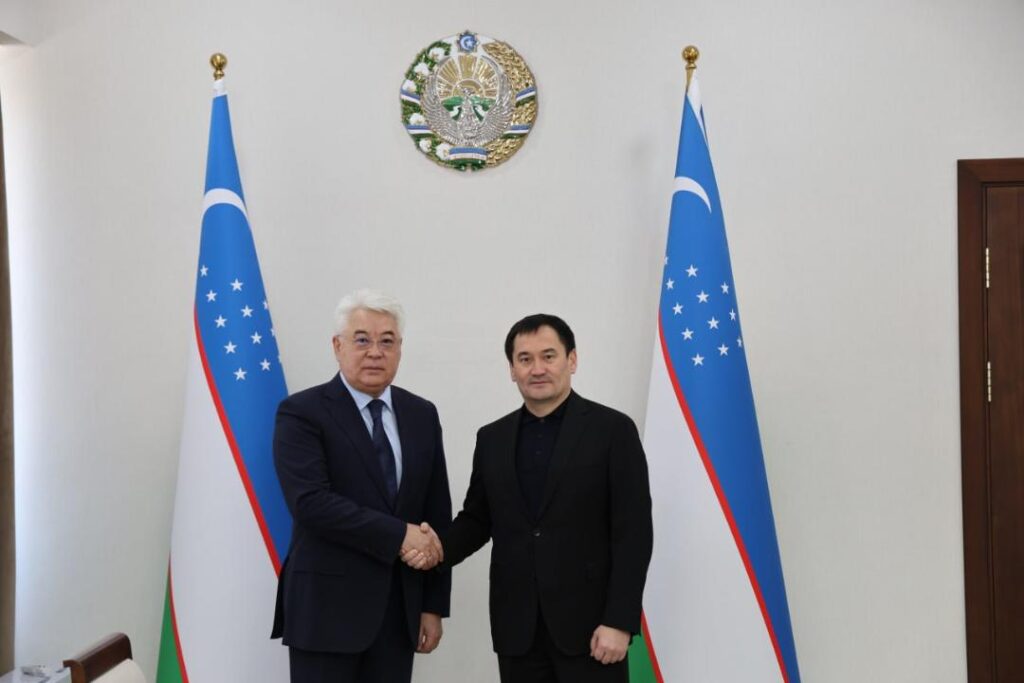
On March 8th, the Ambassador of Kazakhstan to Uzbekistan Beibut Atamkulov and the Minister of Transport of Uzbekistan Ilhom Makhkamov met in Tashkent to discuss the expansion of transit, transport and logistics links between Kazakhstan and Uzbekistan. The implementation of a collaborative project to improve the road and rail infrastructure between the two countries is essential for the realization of a plan to increase bilateral trade to $10 billion per annum. Kazakh-Uzbek rail and road freight is growing. In 2023, the volume of rail freight alone, between Kazakhstan and Uzbekistan, increased by 17.2% to 31.4 million tons, compared to 26.8 million tons in 2022. The resumption of air services between the Kazakh cities of Almaty and Aktobe and Uzbekistan’s Nukus, as well as new connections between the countries’ tourist centres including Turkestan-Samarkand, Turkestan-Bukhara, and Turkestan-Urgench, was also discussed. The current number of weekly flights between cities in Kazakhstan and Uzbekistan is 25; between Astana and Tashkent, 8, and between Almaty and Tashkent, 17.

The Development and Drivers of Transport and Logistics in Kazakhstan

The challenging geopolitical situation in the region, combined with sanctions pressures, has ruptured traditional transport and logistics chains. Finding itself sandwiched, Kazakhstan has had to actively build new routes for transportation and freight, and to diversify its own suppliers. Measures previously taken to develop the transport and logistics industry has made it possible to solve these problems to some extent, though it still faces many challenges ahead. Kazakhstan’s transport and logistics industry plays an important role in the country’s economy and attracts cargo flows. To transform the country into a transport and transit hub – one of the government’s declared strategic objectives – a number of large-scale measures are being taken today, with investments in the industry of about KZT1.8 trillion (U$4 billion), which are already bearing fruit. Last year, about 29 million tons of freight passed through Kazakhstan, up 21% year-on-year, the lion's share of which was transported by rail. Indeed, railways are slated to lead the country’s transit development. To further increase cargo flow, boost efficiency and, most importantly, expand the capacity of railroads, three large-scale projects were launched in Kazakhstan last year: the construction of a railway line bypassing the Almaty station, as well as two other lines – Darbaza-Maktaaral and Bakhty-Ayagoz. Over the next three years, more than 1,300 km of new rail lines will be laid. The projects aim not only at increasing transit traffic through Kazakhstan, but also expanding the country’s export potential and removing existing bottlenecks. Besides modernizing infrastructure, the industry faces many other tasks to spur transit traffic, including updating rolling stock, putting in place modern digital services, establishing competitive tariff rates for the transport of transit freight, etc. To support cargo flows by road, the most used option, the construction and reconstruction of federal and local highways continues. In 2023, over 10,000 km of road was built or repaired. Such large projects as the BAKAD (Almaty ring road) and the Kandyagash-Makat and Usharal-Dostyk highways were completed. In the coming years, several road projects along federal and regional networks are planned, comprising a total length of about 9,000 km. More attention is to be paid to the quality of the roads under construction, which has been known to raise questions among motorists. Kazakhstan’s maritime transport industry has also seen much development. In this regard, in the near future the creation of a container hub is planned at the Aktau seaport, along with the reconstruction of its docks and an upgrade of handling equipment. Dredging work is also to be done. The port of Kuryk is also being developed through the construction of a multi-functional terminal. Taken together, this will boost the throughput capacity of Kazakhstan’s seaports by 10 million tons, with container capacity rising to 300,000 TEUs per year. This is especially important in the context of the active development of alternative trade routes, in particular the Trans-Caspian International Transport Route (TITR) and the International North-South Transport Corridor (INSTC), for which both seaports will be used. The potential of these routes is...

Kyrgyz Re-Exporters of Chinese Cars Will Soon Pay Higher Duties

The Russian authorities have introduced additional customs duties for cars imported from Eurasian Economic Union (EAEU) countries, according to the Ministry of Economy and Commerce of Kyrgyzstan. The ministry says that the Russian government amended the rules of collection, calculation, payment and recovery of the utilization fee for wheeled vehicles and trailers. From April 1st 2024, all citizens importing cars into Russia which were previously customs cleared in the EAEU countries will have to pay an additional utilization fee. This fee is charged for the ecological recycling of the vehicle at the end of its service life. "This approach will avoid situations where citizens and companies importing cars cleared in the EAEU countries receive unjustified advantages compared to car owners doing so in Russia and paying the taxes and fees established by law in full," reads a statement on a Russian government website. The EAEU includes five countries: Russia, Kyrgyzstan, Kazakhstan, Armenia and Belarus. The EAEU guarantees a single customs zone spanning the entire territory of these countries, meaning that import and customs clearance for a car in one of the EAEU countries means one can subsequently operate and sell it in any other EAEU country. Until now, Kyrgyz re-exporters of cars - mainly from China - have been successfully exploiting this loophole, as there is no utilization fee to pay when a car is cleared in Kyrgyzstan. As a result, cars imported from China and other countries cleared customs in Bishkek and were then freely shipped to automobile markets in major Russian cities. These cars imported to Russia from Kyrgyzstan are obviously cheaper than cars imported from other countries, including those imported directly by the manufacturer. The leader among countries importing new cars to Russia in 2023 was China, while Kyrgyzstan ranked second, despite the fact the Kyrgyz Republic does not have its own car manufacturing factories. According to Russian customs data, 13,600 cars were imported from Kyrgyzstan to Russia in December of 2023 alone. In total, Kyrgyzstan exported more than 70,000 cars to Russia last year. The so-called recycling fee was introduced by Russia in 2012, when the country joined the WTO. In August 2023, in order to protect Russian car manufacturers, the utilization fee in Russia was increased roughly nine-fold, forcing buyers to search for cheaper duty-free cars such as those imported via Kyrgyzstan.