• KGS/USD = 0.01144 0%
  • KZT/USD = 0.00213 0%
  • TJS/USD = 0.10456 0%
  • UZS/USD = 0.00008 0%
  • TMT/USD = 0.28490 0%
  • KGS/USD = 0.01144 0%
  • KZT/USD = 0.00213 0%
  • TJS/USD = 0.10456 0%
  • UZS/USD = 0.00008 0%
  • TMT/USD = 0.28490 0%
  • KGS/USD = 0.01144 0%
  • KZT/USD = 0.00213 0%
  • TJS/USD = 0.10456 0%
  • UZS/USD = 0.00008 0%
  • TMT/USD = 0.28490 0%
  • KGS/USD = 0.01144 0%
  • KZT/USD = 0.00213 0%
  • TJS/USD = 0.10456 0%
  • UZS/USD = 0.00008 0%
  • TMT/USD = 0.28490 0%
  • KGS/USD = 0.01144 0%
  • KZT/USD = 0.00213 0%
  • TJS/USD = 0.10456 0%
  • UZS/USD = 0.00008 0%
  • TMT/USD = 0.28490 0%
  • KGS/USD = 0.01144 0%
  • KZT/USD = 0.00213 0%
  • TJS/USD = 0.10456 0%
  • UZS/USD = 0.00008 0%
  • TMT/USD = 0.28490 0%
  • KGS/USD = 0.01144 0%
  • KZT/USD = 0.00213 0%
  • TJS/USD = 0.10456 0%
  • UZS/USD = 0.00008 0%
  • TMT/USD = 0.28490 0%
  • KGS/USD = 0.01144 0%
  • KZT/USD = 0.00213 0%
  • TJS/USD = 0.10456 0%
  • UZS/USD = 0.00008 0%
  • TMT/USD = 0.28490 0%

Viewing results 1 - 6 of 97

Remittances to Central Asia and Europe Down 10%

After significant growth of 18% in 2022, the inflow of remittances to Europe and Central Asia last year decreased by 10%, amounting to about $71 billion, according to an analytical review by the World Bank entitled "Migration and Development". This reduction is due to a slowdown in remittances from Russia to neighboring countries, especially the Central Asian states. Among the reasons cited are the devaluation of the ruble against the dollar (39% in 2023), a decline in the number of remittances from Russia to Ukraine, and a slowdown in the outflow of migrants to Russia from neighboring states, many of whom have decided to return home after facing a wave of xenophobia following the Crocus City Hall attack. Financial institutions in some countries have also restricted transfers from Russia for fear of sanctions, which could divert remittance flows to unofficial channels. According to the World Bank, in 2023, remittances from Russia fell significantly to Uzbekistan (from 87% to 78% of all remittances), Georgia (from 47% to 37%), Azerbaijan (from 82% to 63%), and Kyrgyzstan (from 95% to 94%). Remittances from the U.S. to these countries also declined. "In Armenia, Azerbaijan, and Kazakhstan, remittances fell by at least 29% in 2023. At the same time, remittances to Albania, Bulgaria, Kosovo, and Turkey doubled," the report states. According to the World Bank's forecast, remittance flows to Europe and Central Asia will decline by another 2% in 2024, but grow by about 4% to about $72 billion in 2025. The average cost of sending remittances also increased.

Representatives of World Bank and IFC Speak About Projects in Tajikistan

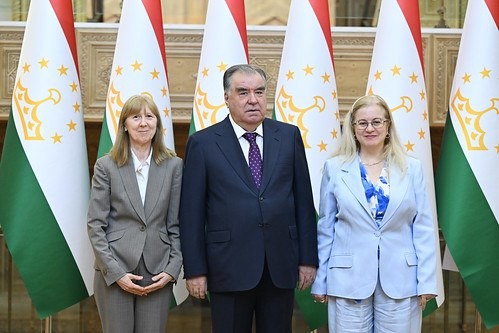
The President of Tajikistan, Emomali Rahmon received Vice President of the World Bank, Antonella Bassani and Vice President of the International Finance Corporation, Hela Cheikhrouhou. The meeting was followed by a press conference wherein joint projects were spoken about, Avesta.tj has reported. According to Bassani, the parties discussed the state of their bilateral partnership and cooperation between Tajikistan and the World Bank. Twenty-five projects worth $1.7 billion are being implemented in Tajikistan under the International Development Association. These projects cover investment development, political reform implementation, energy, water supply, agriculture, education, health, natural resource management, and other sectors. "The meeting also discussed promising areas contributing to deepening and expanding cooperation. We concluded that in the area of drinking water supply, it is necessary to intensify further actions in this direction and improve cooperation," the World Bank Vice President said, noting that the government's efforts to promote reforms are appreciated. Vice-President of the IFC, Hela Cheikhrouhou said that simplifying entrepreneurship for young people and women was also on the agenda. "The International Finance Corporation team decided to introduce global knowledge and experience into the private sector, which can become a source of quality jobs and economic development in Tajikistan," she stated. Cheikhrouhou also noted that she looks forward to cooperating within the framework of the Roadmap to reduce barriers to entrepreneurship and provide opportunities for young people, women, and girls to create successful enterprises in various sectors of Tajikistan's economy. "The International Finance Corporation for Tajikistan has sent $60 million of investments in the last 12 months, and we intend to increase it soon," Cheikhrouhou emphasized.

Central Asian Countries Gather to Share Air Pollution Solutions

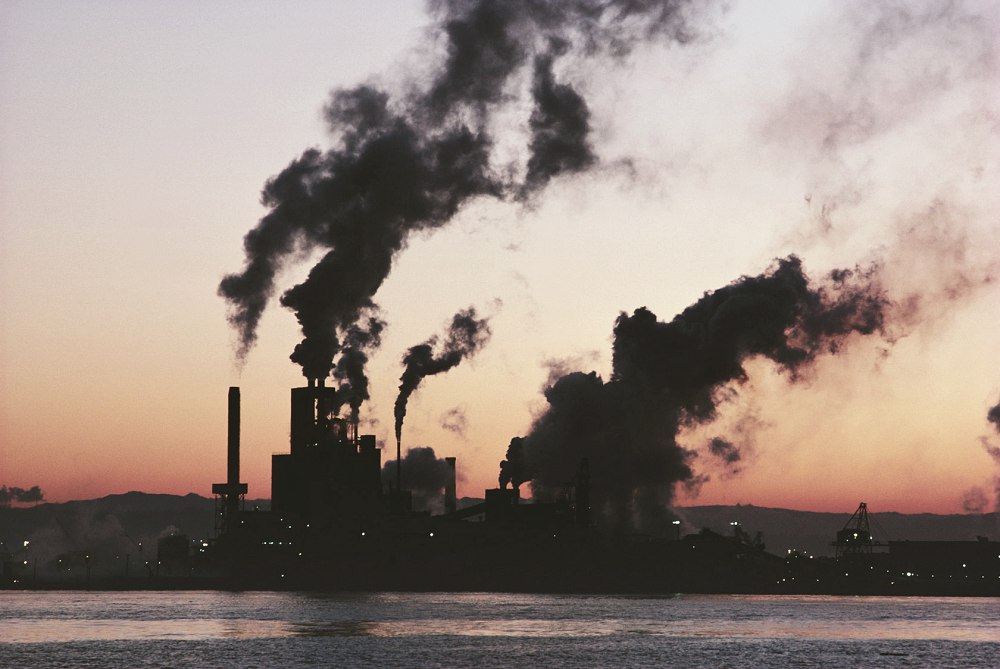
On June 19th a political and regional forum was organized in Tashkent under the slogan “Building a Clean Air Future in Central Asia”. The forum was organized in partnership with the Uzbek Ministry of Ecology, the World Bank, and the United Nations Environment Program (UNEP). Participants included senior officials from the governments of Kazakhstan, Kyrgyzstan, Tajikistan, Turkmenistan, and Uzbekistan. The forum was created to allow the countries of Central Asia to exchange knowledge on how to prevent air pollution. Air quality in both urban and rural areas is affected by transboundary pollution, caused by emissions from burning fossil fuels in industry, the heating sector, and transport. Another source of pollution in cities is sand and dust storms. Most air quality-related illnesses and premature deaths in Central Asia are attributable to delicate particulate matter 2.5 microns or less in diameter (PM2.5). Their concentration in large cities is often several times higher than the permissible air quality parameters recommended by the World Health Organization. This is especially noticeable during winter, when the heating sector uses coal and gas for power. According to the IQAir portal, which monitors global air quality, Central Asian cities are often among the most polluted cities in the world. The participants at “Building a Clean Air Future in Central Asia” studied each other's measures and practices in air quality management. They then defined some priority directions for accelerating regional cooperation on these issues. Valerie Hickey, the World Bank's global director for environment, natural resources and the blue economy, commented: “Air quality management is a complex challenge that requires understanding where the pollution comes from and prioritizing actions in those sectors. This will take better data and stronger regulations harmonized across borders, credible institutions, and clean infrastructure. Working together, the countries can clean the air across Central Asia.” Sylvie Motar, deputy director of the European office of the UNEP, added: “Air pollution knows no borders, so cooperation between Central Asian countries in this area is essential. This dialogue will help increase investments in clean air to protect the health of the people of Central Asia.”

World Bank to Support Kyrgyzstan’s Food Industry

The World Bank's International Development Association will loan Kyrgyzstan $35 million to develop agro-food clusters in the Chui, Jalal-Abad, and Naryn regions. Of that amount, $5 million is a grant, and $30 million is an interest-free loan for 12 years with a six-year grace period. Kyrgyzstan's deputy minister for water resources and agriculture, Kubat Kaseyinov, said the allocated money will be used to develop a dairy cluster in Chui and Jalal-Abad. There are also plans to improve the seed system and breeding farms throughout the country. This includes providing equipment for seed farms, developing infrastructure, improving animal breeding policies and regulations, developing a national meat and dairy farming plan, and supporting selected breeding farms.

Renewable Energy “Key” for Uzbekistan: Interview with IFC Regional Manager

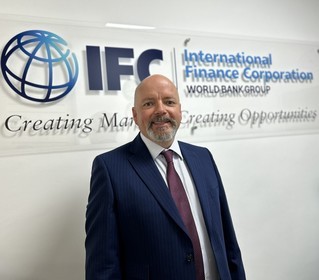
Neil McKain, the IFC regional manager for Uzbekistan and Turkmenistan, says renewable energy sources are helping Uzbekistan reduce natural gas consumption. The country can become a regional leader in renewable energy sources, he told The Times of Central Asia in an interview.   ТСА: To begin, could you give us an overview of the current state of renewable energy in Uzbekistan? Neil McKain: Uzbekistan has significant renewable energy potential — primarily solar and wind — and is well equipped to fulfill its growing energy needs and transition to a clean energy economy. Renewable energy can help diversify the energy mix and reduce the country’s heavy reliance on natural gas. The government is focused on increasing the share of renewables in power production by up to 25 GW, or 40% of the country’s overall electricity consumption, by 2030. These efforts support the country's clean energy transition and address the increasing demand for energy in Uzbekistan’s economy and among its citizens. In this context, the World Bank Group is helping Uzbekistan develop 1,000 MW of solar and 500 MW of wind energy by attracting private sector investments.   ТСА: With these developments, what challenges does Uzbekistan face in transitioning to renewable energy? McKain: Like many countries, Uzbekistan faces many challenges as it transitions. The government has substantial natural gas reserves, and the economy relies heavily on fossil fuels. Transitioning away from these energy sources can be economically and politically challenging. It requires building public support and raising awareness of the many benefits of renewable energy. In addition, building the necessary infrastructure, such as solar farms, wind turbines, and an updated electrical grid, requires significant investment, time, and technical expertise. As renewable energy sources are intermittent, developing efficient energy storage solutions will be vital to ensuring a stable energy supply. Also, securing the required capital can take time, as it often involves enormous upfront costs and long-term investment before seeing returns. Addressing these multifaceted challenges will require coordinated efforts from the government, private sector, and international partners.   ТСА: What is the IFC's involvement in renewable energy projects in Uzbekistan? McKain: The IFC is deeply committed to supporting renewable energy in emerging markets, and Uzbekistan is a key country. We've been involved in several initiatives, including advising on and financing solar power projects. One of our first projects is a solar plant in the Navoi region, which provides electricity to 31,000 homes. This project was established through a public-private partnership (PPP) between the Uzbek government and Masdar, the United Arab Emirates’ flagship renewable energy company. IFC assisted the government as a transaction adviser in designing and tendering the PPP under its Scaling Solar Program. It is now a significant milestone in the country's renewable energy journey. In collaborationwith other lenders, IFC also provided a financing package to support the construction of a 500-megawatt wind farm in the Navoi region, which Masdar is also building. Capable of powering 500,000 homes, it will be the largest facility in Central Asia—and, incidentally, the largest wind farm IFC has ever sponsored. Together with our state and...

World Bank Helps Uzbekistan With Digital Inclusion Project

The World Bank has given Uzbekistan a soft loan of $50 million to grow its digital economy. The loan will help employ about 9,000 young people -- including 4,500 women and 360 persons with disabilities -- in IT-related services. The funds will also be used to create 11 IT service centers, and train 6,200 people in digital skills, communication and foreign languages. The program, which will run until 2029, foresees the creation of a legislative framework in the IT sphere. The IT sector's contribution to Uzbekistan's GDP remains insignificant -- it was just 1.9% in 2022.