• KGS/USD = 0.01144 0%
  • KZT/USD = 0.00215 0%
  • TJS/USD = 0.10599 -0.28%
  • UZS/USD = 0.00008 0%
  • TMT/USD = 0.28571 0%
  • KGS/USD = 0.01144 0%
  • KZT/USD = 0.00215 0%
  • TJS/USD = 0.10599 -0.28%
  • UZS/USD = 0.00008 0%
  • TMT/USD = 0.28571 0%
  • KGS/USD = 0.01144 0%
  • KZT/USD = 0.00215 0%
  • TJS/USD = 0.10599 -0.28%
  • UZS/USD = 0.00008 0%
  • TMT/USD = 0.28571 0%
  • KGS/USD = 0.01144 0%
  • KZT/USD = 0.00215 0%
  • TJS/USD = 0.10599 -0.28%
  • UZS/USD = 0.00008 0%
  • TMT/USD = 0.28571 0%
  • KGS/USD = 0.01144 0%
  • KZT/USD = 0.00215 0%
  • TJS/USD = 0.10599 -0.28%
  • UZS/USD = 0.00008 0%
  • TMT/USD = 0.28571 0%
  • KGS/USD = 0.01144 0%
  • KZT/USD = 0.00215 0%
  • TJS/USD = 0.10599 -0.28%
  • UZS/USD = 0.00008 0%
  • TMT/USD = 0.28571 0%
  • KGS/USD = 0.01144 0%
  • KZT/USD = 0.00215 0%
  • TJS/USD = 0.10599 -0.28%
  • UZS/USD = 0.00008 0%
  • TMT/USD = 0.28571 0%
  • KGS/USD = 0.01144 0%
  • KZT/USD = 0.00215 0%
  • TJS/USD = 0.10599 -0.28%
  • UZS/USD = 0.00008 0%
  • TMT/USD = 0.28571 0%

Viewing results 37 - 42 of 3527

Uzbekistan’s Islamic Civilization Center Enters Guinness World Records as Largest Museum

The Center of Islamic Civilization in Uzbekistan has been officially recognized as the world’s largest museum dedicated to Islamic civilization, receiving a Guinness World Records title on April 13. The recognition was confirmed by Guinness World Records adjudicator Şeyda Subaşı Gemici, who attended the ceremony alongside project architects, designers, and members of the Center’s Scientific Council. The award followed a detailed verification process. The recognition comes as Uzbekistan continues to invest in large-scale cultural infrastructure as part of a broader effort to present its historical narrative and reshape its international image. “As an official Guinness World Records adjudicator, I can state that every corner of the museum and every exhibit possesses its own uniqueness and cultural value,” Gemici said. “The evaluation process strictly followed established procedures… every exhibit was recorded and verified by specialists in Islamic archaeology, art, and science.” She added that the scale and depth of the project left a strong impression, describing it as “an outstanding achievement” and, in Guinness terminology, “Officially Amazing.” The Center is a large-scale scientific, educational, and museum complex initiated in 2017 under the leadership of President Shavkat Mirziyoyev and completed on March 17, 2026. It was conceived as a platform combining research, cultural heritage, and modern technologies, aimed at showcasing the history and contributions of Islamic civilization. The project reflects a wider policy under Mirziyoyev of positioning Uzbekistan not only as a historical center of Islamic scholarship but as a modern platform for its study and interpretation. Chief architect, Abdukakhor Turdiev, said the project reflects Uzbekistan’s historical and cultural legacy. “The uniqueness of the Center lies in the fact that its architecture reflects the rich culture and heritage of Uzbekistan,” he said, adding that the country is increasingly positioning itself as an active participant in global cultural dialogue. Across Central Asia, governments have increasingly used large cultural projects to reinforce national identity and attract international attention, but Uzbekistan has placed particular emphasis on linking heritage with scholarship and global engagement. According to officials, the complex has quickly become one of the most visited cultural sites in the region, receiving up to 5,000 visitors daily, including both locals and international tourists. That scale suggests the Center is intended not only as a museum, but as a flagship institution shaping how both domestic and international audiences understand the region’s intellectual and cultural history. Director Firdavs Abdukhalikov described the award as recognition of years of work by hundreds of specialists. He said the Center’s primary goal is to support scientific and educational projects while preserving and promoting Uzbekistan’s cultural heritage. Beyond its record-setting size, the Center reflects Uzbekistan’s broader effort to reclaim and reinterpret its place in the history of Islamic civilization. By combining scholarship, state backing, and public accessibility, it positions cultural heritage as both a foundation of national identity and a tool of international engagement.

Central Asia’s Climate Risks Could Cost Up to 130% of GDP by 2080

By 2080, climate change is expected to have a profound impact on the economies of Central Asian countries, with potential losses ranging from 20% to 130% of GDP. The most severe effects are projected for mountainous nations. These estimates were presented at a CAREC technology forum by Iskandar Abdullaev, a senior research fellow at the International Water Management Institute in Uzbekistan. According to Abdullaev, climate change is no longer solely an environmental issue but an increasingly significant economic factor. Key risks include droughts and water scarcity, floods, heatwaves, and glacier melt. The projected economic impact varies across the region. Tajikistan could face losses of between 80% and 130% of GDP, Kyrgyzstan 70% to 120%, Kazakhstan 40% to 80%, Uzbekistan 30% to 45%, and Turkmenistan 20% to 60%. Abdullaev emphasized that mountainous countries – Tajikistan and Kyrgyzstan – are particularly vulnerable, as climate change directly affects water resources. Glacier melt reduces river flows, creating challenges for both energy production and water supply. Droughts and extreme heat are already placing pressure on agriculture, with declining crop yields and reduced pasture productivity. Without adaptation measures, the region’s long-term sustainability could be at risk. Experts stress that mitigation and adaptation efforts are essential to reduce these risks. These include modernizing irrigation systems, adopting climate-resilient agricultural technologies, and expanding renewable energy capacity. This is not the only warning. According to the World Bank, natural disasters are already causing significant economic damage in Central Asia.  Losses from extreme events, including floods and earthquakes, can reach up to 6% of GDP, with earthquakes alone accounting for up to $2 billion in damages. At the same time, countries in the region face substantial financing gaps following major disasters. In Tajikistan, this gap could reach up to $1.5 billion. Experts warn that climate change is likely to intensify these risks, further increasing the economic burden on the region.

Kazakhstan Appoints Operator for Karachaganak Gas Processing Plant Construction

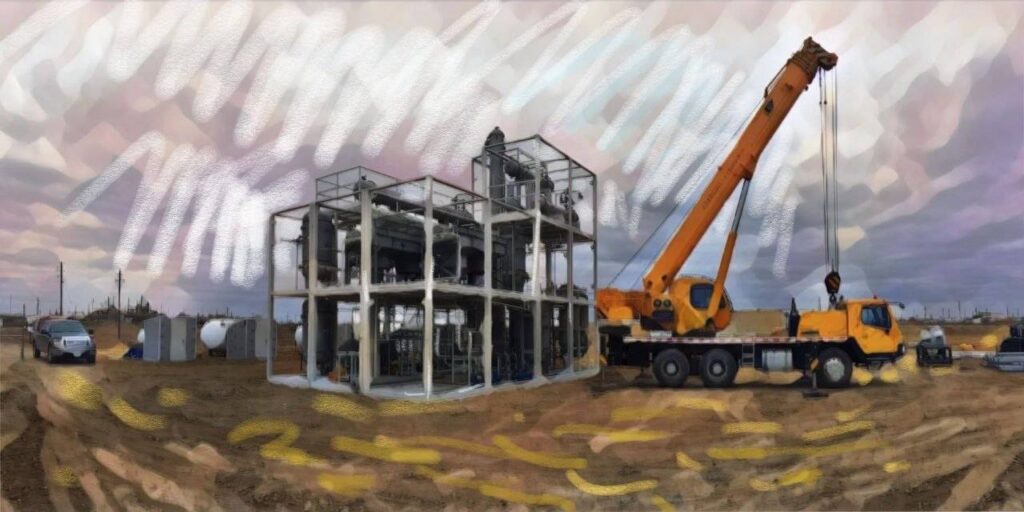
Kazakhstan has identified the participants in a project to construct a new gas processing plant (GPP) at the Karachaganak field, aimed at supplying the domestic market with commercial gas. The national company QazaqGaz will act as the single project operator, while China’s CITIC Construction has expressed readiness to participate. Initially, the launch of the GPP, with a capacity of up to 4 billion cubic meters of gas per year, was scheduled for 2028. Construction was to be carried out by Shell and Eni, both involved in developing the Karachaganak field in the West Kazakhstan region. However, in March 2026, Kazakhstan withdrew from this arrangement due to significant cost overruns and disagreements over implementation terms. At present, gas from Karachaganak is processed at the Orenburg GPP in Russia. Kazakhstan aims to relocate processing to its own territory to strengthen energy security and reduce dependence on external infrastructure, particularly amid periodic disruptions linked to drone attacks. According to current plans, the capacity of the future plant may be increased to 5 billion cubic meters per year. The project is a key element of Kazakhstan’s Comprehensive Gas Industry Development Plan through 2029 and is being implemented on the instructions of President Kassym-Jomart Tokayev. Minister of Energy Yerlan Akkenzhenov confirmed that the selection of QazaqGaz as the single operator is driven by the need to move quickly to the implementation stage and by the company’s experience in managing gas infrastructure. The project’s economic feasibility has been confirmed, and a framework agreement outlining basic principles of cooperation has been signed with CITIC Construction.  Preparations are currently underway for the FEED (Front-End Engineering Design) stage, while issues related to land allocation, infrastructure, and feedstock supply are also being addressed. Particular attention is being paid to negotiations with foreign shareholders in the Karachaganak project. Key issues include guaranteed supplies of raw gas, establishing a pricing mechanism that ensures domestic market viability, integrating the plant with existing field infrastructure (brownfield), and resolving the gas evacuation fee mechanism. “For Kazakhstan, this plant is of critical importance, and indefinitely postponing the project’s start is unacceptable. The state needs results. The project must be implemented dynamically and in strict accordance with our national economic interests,” Akkenzhenov said. The project is unfolding against the backdrop of legal disputes between Kazakhstan and international energy companies.  As previously reported by The Times of Central Asia, Shell and Eni may ultimately be required to pay the Kazakh government between $2 billion and $4 billion following international arbitration proceedings in London. In addition, similar disputes are ongoing over another major project, the Kashagan field, where proceedings are being considered at the International Centre for Settlement of Investment Disputes in Washington.

Hungary’s Political Shift Puts Central Asia Partnerships Under Scrutiny

Hungary’s political transition following the defeat of Viktor Orbán’s party and his resignation as prime minister is drawing attention not only in the EU and the United States, but also in Central Asia, where Budapest has built growing energy and investment ties. The key question is whether the policy of cooperation with Central Asia developed under Orbán will continue under the new leadership. In recent years, under Orbán, Budapest has actively developed its Central Asian foreign policy, primarily driven by the desire to find alternatives to Russian energy supplies. That push reflects Hungary’s long-standing reliance on Russian oil and gas, which has shaped its search for alternative suppliers beyond Europe. Resource-rich Kazakhstan, Uzbekistan, and Turkmenistan became natural partners for diplomatic engagement. Orbán succeeded in building trust-based relationships with the presidents of the Central Asian republics, grounded in what Hungary’s Minister of Foreign Affairs, Péter Szijjártó, described as “sincere friendship” in an interview with Uzbek media. “In Hungary, we have always viewed Central Asia as one of the fastest-growing regions in the world, with enormous potential. Our efforts to build these relations did not begin today, but decades ago,” he said. Hungary became the first Central European country to sign a strategic partnership with Kazakhstan in 2014. Currently, the Kazakhstan-Hungary Business Council is in operation, along with a joint agricultural direct investment fund. In 2024, bilateral trade approached $200 million, and from January to August 2025, it grew by another 22.1%, exceeding $164.6 million. Hungarian investments in Kazakhstan’s economy have surpassed $370 million, while the current investment portfolio includes 16 projects worth about $700 million in engineering, agriculture, and logistics. These links also intersect with wider efforts to expand east–west transport routes through the Caspian region, offering Hungary indirect access to Central Asian energy and trade flows. In May 2025, Uzbekistan’s President Shavkat Mirziyoyev held talks with Orbán in Budapest, where both sides highlighted rising trade volumes and a joint investment portfolio of about $500 million. Hungary’s OTP Bank entered into Uzbekistan’s financial market in 2023, acquiring a 73.71% stake in Ipoteka Bank, becoming its principal owner and the majority shareholder of the country’s fifth-largest bank. As early as 2019, Hungary had intensified cooperation with Turkmenistan. After talks at the Turkmen Foreign Ministry, Szijjártó told the media that Hungary views Turkmenistan as an important country from the perspective of European security. “We very much hope that Turkmenistan’s gas resources will be integrated into the overall energy flow of Central Europe,” he said. However, uncertainty remains over whether this policy direction will continue under Orbán’s successor, Péter Magyar. Oil and gas analyst Oleg Chervinsky has suggested that political changes in Hungary could affect cooperation with Kazakhstan’s national company KazMunayGas (KMG). Chervinsky notes that, having secured a constitutional majority in parliament, Magyar has a mandate to “implement reforms in both foreign and domestic policy [which could] reshape the constitutional structure of the right-wing populist authoritarian system built around Orbán.” The analyst points to Hungary’s oil and gas company MOL Group, which in recent...

The Astana-Tashkent Tandem: A Developing Partnership Based on Mutual Interest

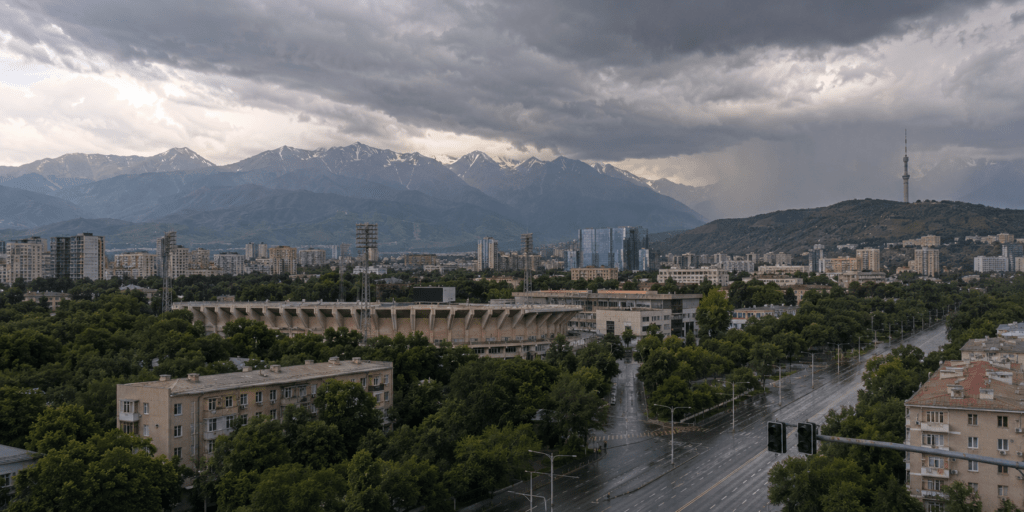
On April 11, Kazakhstan’s President Kassym-Jomart Tokayev paid a working visit to Uzbekistan, where he was hosted in Bukhara by President Shavkat Mirziyoyev. The historic city provided the setting for discussions that increasingly reflect a broader regional agenda. A second informal meeting in just over a year suggests this format may be gaining weight in relations between Central Asia’s two largest economies. “The informal format is of strategic importance, since such meetings make it possible to discuss sensitive issues without protocol constraints, build personal trust between leaders, which plays a key role in Central Asia, and align positions ahead of official negotiations,” said Uzbek political analyst Ravshan Nazarov. He added that such meetings reflect a growing intra-regional focus, reduced dependence on external actors, and the strengthening of the “Tashkent-Astana” tandem. During the talks, Tokayev emphasized the importance of the visit “given the current unstable geopolitical situation.” The two sides reviewed bilateral cooperation across multiple sectors. Trade turnover reached $5 billion last year, with both countries aiming to double this figure to $10 billion in the near term. Joint projects are already underway in automotive manufacturing, infrastructure, logistics, electrical engineering, and construction materials. The discussion also extended to other sectors, including energy and industrial cooperation. Both Presidents stressed the need to modernize border infrastructure, eliminate bottlenecks, and develop efficient transport corridors to external markets. They also discussed accelerating major regional projects, including the construction of the Kambarata hydropower plant and advancing “green” energy exports. Tokayev also voiced his support for Uzbekistan’s “Clean Air” initiative, highlighting environmental challenges in Almaty. “I share your concern regarding the environmental condition of Tashkent. We have a very difficult situation in Almaty. Unfortunately, Almaty has entered the list of the most polluted major cities in the world, and urgent measures must be taken. Therefore, we could propose the joint implementation of the ‘Clean Air’ initiative under presidential patronage,” Tokayev said. The reference to Almaty also recalled the setting of the previous informal meeting on March 29, 2025. During that visit, Mirziyoyev toured the Medeu high-mountain sports complex and visited the National Museum of Arts, where an exhibition featuring works by Abilkhan Kasteev and Ural Tansykbayev was organized. That visit drew attention to the city’s preparedness for high-level events. Tokayev subsequently instructed then-Mayor of Almaty, Yerbolat Dossayev, to improve conditions in the city and report regularly on progress. In May 2025, Dossayev was dismissed as mayor and reassigned to the Presidential Administration. He was later also relieved of that post. In contrast, the Bukhara program was more extensive. Mirziyoyev presented industrial and technological projects, including a cotton-textile cluster, an artificial intelligence hackathon, and several cultural landmarks, including the mausoleum of Bahauddin Naqshbandi, founder of the Naqshbandi Sufi order. The discussions themselves also appeared more substantive, covering areas such as rare earth metals, transport, energy, and information technology. “When discussions include not only trade but also rare earths, transport, energy, and IT, it indicates a shift toward strategic thinking. The focus is no longer just on trade turnover,...

Digital Tenge: Kazakhstan Becomes a Testing Ground for Programmable Money

While developed economies from the Federal Reserve to the European Central Bank, continue to debate the risks of introducing central bank digital currencies (CBDCs), Kazakhstan has already moved into large-scale commercial deployment. By early 2026, the volume of the digital tenge in circulation had reached 336.6 billion KZT (about $700 million), positioning Central Asia as a significant testing ground for programmable money for international investors and the global fintech community. The digital tenge is already being used in tax administration, subsidy distribution, and other state-backed financial operations, extending its role beyond a purely technical innovation. This is not merely a technological upgrade of the financial system, but a fundamental shift in the interaction between the state, business, and capital. Algorithms Instead of Bureaucrats For international businesses and investors, bureaucracy has long been a major barrier in emerging markets, often freezing liquidity for extended periods. The introduction of the digital tenge aims to address this by enabling faster transactions through smart contracts. One of the most notable pilot cases in 2025-2026 was the implementation of a “digital VAT” mechanism. Traditionally, exporters waited up to 90 days for value-added tax refunds, often relying on short-term borrowing to bridge cash flow gaps. With the integration of the digital tenge into tax administration, the VAT refund period has been reduced to five business days. A smart contract analyzes the digital supply chain and, if no discrepancies are identified, initiates payment automatically without the involvement of tax officials. For multinational companies, improved liquidity enhances Kazakhstan’s attractiveness as a manufacturing destination. Similar mechanisms have also been introduced for distributing government business subsidies through development institutions. Financial Bridge: The Digital Silk Road Bypassing SWIFT The current international money transfer system remains relatively slow and costly, as transactions pass through multiple intermediary banks, each charging fees. Under sanctions pressure, such transfers may also carry additional risks. In this context, the role of the digital tenge extends beyond the domestic market. Kazakhstan is positioning its CBDC as a tool that could reshape the architecture of Eurasian trade. Research by the Bank for International Settlements suggests that digital currencies can significantly accelerate cross-border payments. Given Kazakhstan’s substantial trade with China, which is advancing its digital yuan (e-CNY), the creation of direct digital payment corridors between the two countries appears increasingly plausible. For global markets, this could enable near-instant, round-the-clock settlements between Asia and Europe, reducing reliance on traditional systems such as SWIFT. Kazakhstan is thus seeking to position itself as an emerging digital financial hub, with the potential to lower transaction costs and mitigate certain external risks. The Flip Side of the Digital Coin One of the most debated aspects of Kazakhstan’s digital currency initiative is the level of transparency enabled by “coloring” (or marking) technology. This system allows authorities to track how funds are used and ensure they are spent for their intended purpose. If budget funds are allocated for infrastructure or agricultural equipment, their use can be limited accordingly. At the macroeconomic level, this could help reduce Kazakhstan’s...