• KGS/USD = 0.01144 0%
  • KZT/USD = 0.00205 0%
  • TJS/USD = 0.10722 0%
  • UZS/USD = 0.00008 0%
  • TMT/USD = 0.28490 0%
  • KGS/USD = 0.01144 0%
  • KZT/USD = 0.00205 0%
  • TJS/USD = 0.10722 0%
  • UZS/USD = 0.00008 0%
  • TMT/USD = 0.28490 0%
  • KGS/USD = 0.01144 0%
  • KZT/USD = 0.00205 0%
  • TJS/USD = 0.10722 0%
  • UZS/USD = 0.00008 0%
  • TMT/USD = 0.28490 0%
  • KGS/USD = 0.01144 0%
  • KZT/USD = 0.00205 0%
  • TJS/USD = 0.10722 0%
  • UZS/USD = 0.00008 0%
  • TMT/USD = 0.28490 0%
  • KGS/USD = 0.01144 0%
  • KZT/USD = 0.00205 0%
  • TJS/USD = 0.10722 0%
  • UZS/USD = 0.00008 0%
  • TMT/USD = 0.28490 0%
  • KGS/USD = 0.01144 0%
  • KZT/USD = 0.00205 0%
  • TJS/USD = 0.10722 0%
  • UZS/USD = 0.00008 0%
  • TMT/USD = 0.28490 0%
  • KGS/USD = 0.01144 0%
  • KZT/USD = 0.00205 0%
  • TJS/USD = 0.10722 0%
  • UZS/USD = 0.00008 0%
  • TMT/USD = 0.28490 0%
  • KGS/USD = 0.01144 0%
  • KZT/USD = 0.00205 0%
  • TJS/USD = 0.10722 0%
  • UZS/USD = 0.00008 0%
  • TMT/USD = 0.28490 0%

Viewing results 25 - 30 of 2306

As Armenia Looks West, Could Uzbekistan Move Closer to the EAEU?

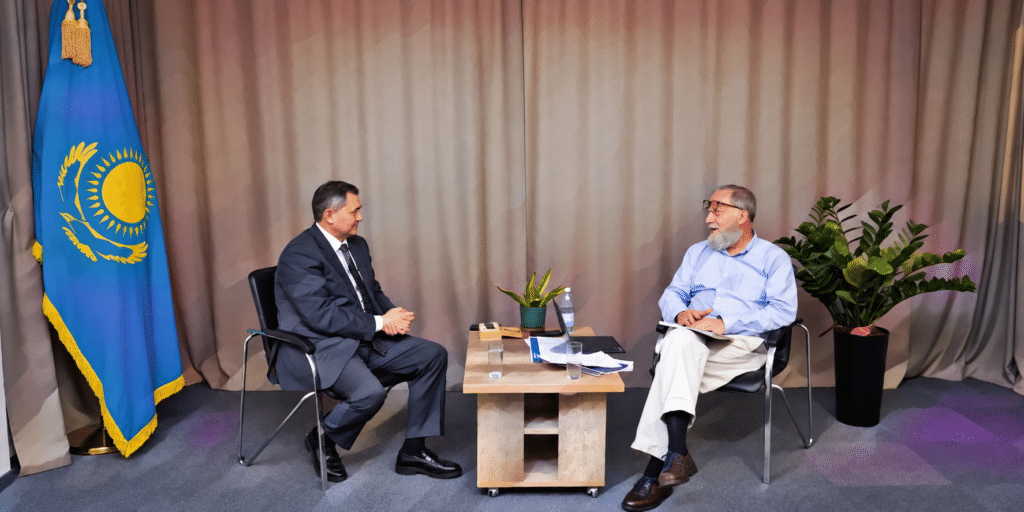
Armenia’s increasingly uncertain future within the Eurasian Economic Union (EAEU) appears to have entered a new phase. On May 29, the presidents of Kazakhstan, Belarus, Russia, and Kyrgyzstan issued a joint statement calling on Yerevan to clarify whether it intends to pursue deeper integration with the European Union or remain committed to the Eurasian bloc. The four leaders announced that members of the Eurasian Intergovernmental Council would present a report at the next meeting of the Supreme Eurasian Economic Council in December 2026 outlining the possible consequences of suspending Armenia’s participation in the EAEU treaty framework. “We share the view that the Republic of Armenia should, within the shortest possible timeframe, hold a nationwide referendum on joining the European Union or continuing its membership in the Eurasian Economic Union,” the statement said. Speaking to journalists after the summit in Astana, Russian President Vladimir Putin drew parallels between Armenia’s current trajectory and the developments that preceded the crisis in Ukraine. “I have mentioned this before: the crisis in Ukraine began with attempts to join the EU,” Putin said. He added that significant differences between European and EAEU standards, particularly in agriculture and industry, make simultaneous participation in both integration projects difficult. “Combining the two is practically impossible,” Putin said. “Therefore, we would be forced to curtail much of our economic integration work with Armenia.” The following day, Russia recalled its ambassador to Armenia for consultations amid Yerevan’s growing engagement with the European Union. According to Russian political analyst Arkady Dubnov, the move was a clear diplomatic signal of Moscow’s dissatisfaction with the pro-European course pursued by Armenian Prime Minister Nikol Pashinyan’s government and indicated a downgrading of bilateral relations. Dubnov also argued that Armenia’s representative at the Astana summit, Deputy Prime Minister Mher Grigoryan, avoided harsher criticism from Putin partly because of the position taken by Kazakhstan’s President Kassym-Jomart Tokayev. “Kazakhstan itself signed an Enhanced Partnership and Cooperation Agreement with the European Union in 2020,” Dubnov noted, suggesting that arguments about Armenia’s European integration harming the EAEU are largely political rather than economic in nature. One recent poll appears to reinforce confidence within Armenia’s ruling camp. A survey conducted ahead of parliamentary elections indicates that Pashinyan’s Civil Contract party could secure nearly 65% of decided voters, positioning it for a convincing victory and a substantial parliamentary majority. Against that backdrop, Moscow’s pressure on Yerevan may be less about influencing the outcome of Armenia’s elections than about preparing for a longer-term strategic realignment. Supporters of Pashinyan increasingly associate his political project with closer ties to Europe, a perception reinforced not only by European leaders but also by U.S. President Donald Trump, who recently expressed support for Pashinyan’s re-election campaign. For his part, Pashinyan appears focused on a broader regional recalibration. Speaking via Facebook Live on May 31, he emphasized the importance of normalizing relations with neighboring states. “I am convinced that we will achieve the goal of normalizing relations with Azerbaijan and Türkiye,” he said. “This means that a balanced and balancing...

Opinion: Eurasia’s New Corridors Are More Than a Transit Race

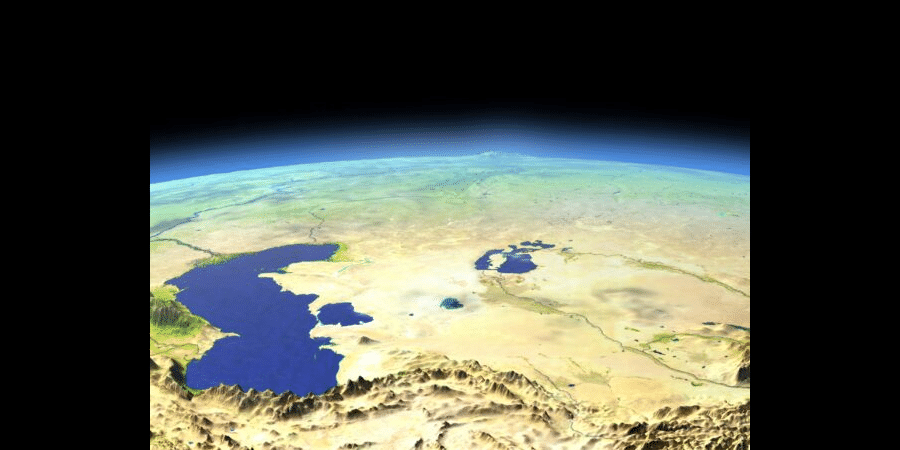
Across Eurasia, new transport corridors are usually described as instruments of rivalry: routes to bypass Russia, ports to outflank competitors, or rail links to shift influence between regions. The conflict around Iran, the rivalry between India and Pakistan, instability in the Afghanistan-Pakistan zone, crises in the Middle East, sanctions, competition over transport routes, and growing struggles for transit influence all reinforce the image of a continent divided by political contradictions. Increasingly, this is the lens through which Eurasia is viewed. The development of transport routes and connectivity is now often explained through the logic of rivalry. Some corridors are described as alternatives to others. Certain ports are positioned against competing ports. Routes are increasingly perceived as tools of competition, circumvention, or geopolitical influence. The continent can also be viewed differently. Alongside political crises, another reality is visible: the continent continues to connect itself through new routes and networks. Railways, ports, energy grids, dry ports, container corridors, digital cables, and trade chains are gradually linking spaces that only recently were seen as separate regions. In many ways, Eurasia has always been a space of movement, exchange, and connectivity. The Silk Road Was a Network, Not a Single Route A recent article by News Central Asia made a simple but important observation: the Silk Road functioned because it belonged to everyone. This idea contains one of the central lessons of Eurasian history. The Silk Road was never a single road. It was not one unified highway built according to a master plan or controlled by a single center. For centuries, the continent was connected by a vast network of caravan routes, maritime pathways, mountain passes, cities, and trade hubs through which goods, people, knowledge, and ideas circulated. Some routes gained importance while others temporarily declined. States, empires, and commercial centers changed. New pathways emerged. Yet the network itself endured. The strength of the Silk Road lay not in one route, but in the multiplicity of connections. When one corridor became unsafe, trade shifted elsewhere. When political conditions changed, commerce adapted to a new geography. The continental network remained flexible and multilayered. This offers an important lesson for today’s Eurasian space as well. Many modern transport corridors did not emerge from nothing. In many respects, they follow historical logic. Railways have replaced caravan paths, dry ports have succeeded old trade hubs, and container routes continue along directions in which goods moved for centuries. Corridors and the Logic of Rivalry Today, most transport and economic corridors are interpreted as competing projects. Nearly every new route is framed through confrontation, alternatives, or attempts to bypass another direction. The Middle Corridor is often described as an alternative to northern routes. The International North-South Transport Corridor is presented as a separate geo-economic axis. Trans-Afghan projects are portrayed as competitors to other links between Central and South Asia. Chabahar and Gwadar are depicted as rival ports. Even the South Caucasus transport hub is increasingly viewed through the prism of struggles over control of routes and flows. Yet historically,...

Kazakhstan Offers the IAEA a Practical Option on Iran

On May 26, President Kassym-Jomart Tokayev received IAEA Director General Rafael Grossi in Astana. The meeting pointed beyond bilateral nuclear cooperation toward Kazakhstan’s possible role in wider nuclear-security problems. Tokayev welcomed a roadmap for deepening Kazakhstan’s cooperation with the International Atomic Energy Agency through 2036, alongside documents on nuclear medicine and science. Grossi’s visit also followed Kazakhstan’s referendum on its first post-independence nuclear power plant, which has widened the civilian side of the country’s nuclear profile. Iran was not the subject around which the meeting was organized, but it is the issue that gives the meeting strategic weight. In particular, Kazakhstan’s established IAEA relationship could help give nuclear diplomacy a practical form if political agreement first creates a need for technical implementation. The potential is real, but it is narrow. Any political resolution of the Iran nuclear issue turns on decisions by Tehran, Washington, Israel, regional states, and the IAEA. The parties must first agree politically on an IAEA-led arrangement for Kazakhstan to enter the scene. Tokayev’s own formulation was appropriately limited: Kazakhstan’s assistance would be a gesture of good faith, and only if appropriate international agreements exist. Its involvement would come after the political bargain, not before it. Kazakhstan’s nuclear profile begins with the Soviet nuclear testing site at Semipalatinsk, which made nuclear policy a shared public memory before it became a diplomatic profile. Between 1949 and 1989, this site became one of the central locations of the Soviet nuclear-weapons program. The Nevada–Semipalatinsk movement, founded in 1989 by Olzhas Suleimenov, turned public opposition to testing into a political force before the site was closed in August 1991. Kazakhstan’s nuclear policy still expresses a public memory of Soviet testing and its public-health consequences. That memory does not make Kazakhstani society simply anti-nuclear, but it means that the country's nuclear policy carries a sensitive history. From the Soviet Union, Kazakhstan inherited on its territory one of the world’s largest nuclear arsenals. That arsenal included strategic nuclear warheads associated with intercontinental missiles and long-range bombers. Kazakhstan did not merely surrender an arsenal; it made renunciation part of its international profile. The country chose non-nuclear status, transferred the weapons to Russia, and joined the Treaty on the Non-Proliferation of Nuclear Weapons as a non-nuclear-weapon state. This renunciation gave political restraint an institutional form and gave Kazakhstan a special status in nuclear affairs. That standing has also appeared in earlier Iran-related diplomacy. Kazakhstan hosted two rounds of P5+1 nuclear talks with Iran in Almaty in 2013, and in 2015 Kazatomprom supplied Iran with 60 metric tons of natural uranium as part of the internationally coordinated implementation of the JCPOA. That standing now operates most clearly through Kazakhstan’s long cooperation with the IAEA. The Tokayev-Grossi meeting and the 2026–2036 cooperation roadmap make Kazakhstan’s nuclear development part of a continuing institutional relationship. Grossi’s visit also included agreements on nuclear science, healthcare delivery, and agricultural applications under IAEA programs. Tokayev and Grossi are not improvising a political solution to Iran; they are strengthening an institutional channel through...

Putin’s Astana Visit Shows What Russia Still Wants From Kazakhstan

The Eurasian Economic Union summit in Astana gave Vladimir Putin's state visit a wider stage. The summit produced technical documents and familiar language about integration. The bilateral Russia-Kazakhstan package around it was more concrete. It showed what Moscow still wants from Kazakhstan, and what Astana expects in return. The detail lies in infrastructure, where contracts can last for decades. The setting echoed history. Belarus, Kazakhstan, and Russia signed the treaty creating the Eurasian Economic Union in Astana on May 29, 2014, with Armenia joining in January 2015, and Kyrgyzstan in August of the same year. In 2026, the bloc returned to Astana for the Supreme Eurasian Economic Council and the V Eurasian Economic Forum. The theme of the forum was artificial intelligence, digital regulation, and the EAEU's place in the global technology race. Its website said 14 integration documents were signed on the sidelines, including memoranda, agreements, protocols, and joint action plans. Those documents gave the visit a regional frame. The larger result came on May 28, when Kassym-Jomart Tokayev and Putin oversaw a broad set of bilateral agreements. Akorda listed nuclear power, Russian export credit, expanded oil-sector cooperation, a tenge-ruble currency swap, education projects, financial monitoring, transport digitalization, and nuclear safety regulation. That package points to the real agenda: energy, transit, payments, industrial production, and public-facing alliance language. For Moscow, Kazakhstan’s primary value is geographic: it sits between Russia and China, and across routes that connect Central Asia to Europe, the Caspian, and South Asia. Russian crude already crosses Kazakhstan on the Priirtyshsk-Atasu-Alashankou route to China. A KazTransOil contract keeps transit at 10 million tons a year until the end of 2033. The tariff is $15 per ton, excluding VAT. The Atasu-Alashankou pipeline has a design capacity of 20 million tons a year and belongs to Kazakhstan-China Pipeline LLP, a 50-50 venture between KazTransOil and China National Oil and Gas Exploration and Development Company. Reuters has reported that Russia and Kazakhstan agreed last year to raise that flow by 2.5 million tons, although the extra volume had not started flowing before Putin’s visit. The new agreement on oil-sector cooperation gives the issue a political push. For Moscow, the route strengthens access to China as Western sanctions keep pressure on Russian exports and payments. For Kazakhstan, it brings fees and gives Astana a useful position in Russia-China energy flows. The nuclear agreement, meanwhile, gives Russia a long-term role in Kazakhstan’s shift to nuclear power. Kazakhstan and Russia signed a $16.5 billion agreement for the Balkhash nuclear power plant at Ulken, near Lake Balkhash. The project covers two VVER-1200 III+ reactors. Kazakhstan held a groundbreaking ceremony for the plant in August 2025, with the active construction phase expected to begin in 2027, and the first reactor expected in early 2034. Russia will provide export credit for the first plant, with Rosatom leading the Balkhash project after competition with China National Nuclear Corporation (CNNC), France’s EDF, and Korea Hydro and Nuclear Power. But Kazakhstan has not handed the wider program to Moscow....

From Golden Treasures to Looted Burial Mounds: How “Black Diggers” Are Destroying Eastern Kazakhstan’s History

Eastern Kazakhstan has gained international recognition for its extraordinary archaeological discoveries, but alongside that fame has come a growing threat: illegal treasure hunters, known locally as “black diggers,” are destroying historical monuments and depriving future generations of access to invaluable artifacts. Eastern Kazakhstan’s Archaeological Treasures In recent years, the Eastern Kazakhstan has become one of the most important archaeological regions in Central Asia. Researchers have uncovered ancient burial complexes belonging to the Saka, nomadic peoples of the early Iron Age whose sophisticated culture has challenged long-standing assumptions about the civilizations of the Eurasian steppe. Excavations at the Shilikty, Eleke Sazy, and Berel burial mounds have revealed thousands of gold ornaments, clothing adornments, and ceremonial decorations noted for their craftsmanship and artistic sophistication. At the Shilikty necropolis, archaeologists uncovered burials containing unique gold jewelry, including earrings, bracelets, fibulae, and miniature decorative elements used on clothing. Each object demonstrates extraordinary craftsmanship, intricate ornamentation, and meticulous attention to detail. [caption id="attachment_49642" align="aligncenter" width="1600"] @Yulia Chernyavskaya[/caption] At Eleke Sazy, archaeologists found an intact burial containing jewelry, clothing adornments, horse harness ornaments, and other decorative objects associated with a teenage archer who was no older than 18. A heavily looted grave of a girl aged 13 or 14, thought to have been his sister, was found nearby. Berel yielded particularly significant discoveries, including gold and bronze ornaments, clothing fragments, and horse trappings that reveal the high artistic culture of the ancient nomads. Artifacts from Berel were later displayed at the Fitzwilliam Museum in Cambridge, England, as part of the exhibition Gold of the Great Steppe, drawing widespread attention from scholars and visitors. The discoveries quickly gained international recognition and confirmed the sophisticated level of Saka civilization. Equally striking finds emerged from the Kurchum district, where archaeologists uncovered horse equipment, including bits, saddles, and straps, crafted from gold and preserved for millennia. These objects demonstrate that the nomadic cultures of Eastern Kazakhstan possessed metallurgical and jewelry-making skills comparable to the great centers of ancient craftsmanship. Every archaeological discovery offers another glimpse into the past, a chance to better understand the daily life, beliefs, and culture of the Saka. Yet these discoveries remain vulnerable to destruction by illegal excavators. The Rise of the Black Diggers Alongside the archaeological boom has come a darker phenomenon: the rapid growth of illegal treasure hunting. Rather than preserving history, black diggers destroy burial mounds and ancient cemeteries in search of gold and valuables, obliterating archaeological layers and artifacts that could provide scientists with invaluable information about the past. In many cases, illegal diggers arrive at excavation sites before archaeologists have even begun clearing the area. In pursuit of treasure, they use shovels and metal detectors, as well as heavy machinery such as bulldozers and excavators, which strip away entire layers of earth and destroy everything in their path. The scale of the destruction has become alarming. [caption id="attachment_49643" align="aligncenter" width="1600"] @Yulia Chernyavskaya[/caption] [caption id="attachment_49644" align="aligncenter" width="1600"] @Yulia Chernyavskaya[/caption] Last year, more than 200 burial mounds in the Zharma district of Kazakhstan’s...

Tashkent Signs $3.5 Billion in China Deals for Infrastructure and Exports

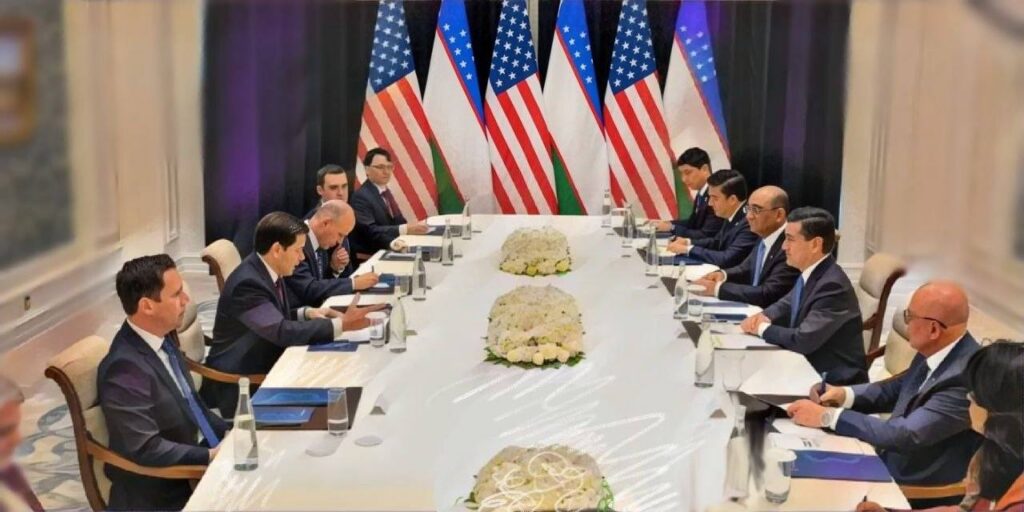
The third Uzbekistan-China Interregional Forum, held in the Chinese city of Xi’an, concluded with Tashkent signing more than $3.5 billion in investment and export agreements with Chinese partners, according to the Tashkent city administration. The agreements include $3.35 billion in investment projects and $156 million in export contracts spanning infrastructure, transport, construction, environmental technology, and industrial production. Officials said the deals are aimed at modernizing the Uzbek capital’s urban infrastructure and improving transport systems, public spaces, environmental services, and industrial capacity. The forum comes as China’s economic role in Uzbekistan continues to expand. According to Uzbekistan’s Dunyo news agency, speakers at the Xi’an forum said bilateral trade reached $18 billion last year, while Chinese investment in Uzbekistan totaled $17 billion. China has become one of Uzbekistan’s most important economic partners, with cooperation expanding from trade and construction into transport, energy, industry, and urban development. Dunyo’s report on the forum also presented the Xi’an meeting as part of a broader push to build direct ties between Uzbek regions and Chinese provinces, rather than limiting cooperation to central government agreements. Among the largest planned projects are a $1 billion initiative to develop Bus Rapid Transit, known as BRT, overpasses, and road infrastructure under the EPC+F financing model, and another $1 billion package focused on transport and social infrastructure projects. Additional agreements include $500 million for modern residential complexes in renovation zones and $400 million for drainage, irrigation, and stormwater systems. The city administration said financing is expected to come from Chinese partners without the direct use of Uzbekistan’s state budget or sovereign guarantees, although repayment would still depend on future municipal revenue streams. The projects are planned under the Engineering, Procurement, Construction, and Financing model, known as EPC+F. The financing structure is significant as many of the largest projects are municipal rather than national in scope. It allows Tashkent to pursue major road, drainage, and transport upgrades while presenting the deals as externally financed. Nevertheless, projects of this type can still create long-term obligations if future city revenues are used to cover repayments. The forum also focused on the development of Tashkent’s Yangi Avlod special industrial zone. Agreements worth $130 million were signed with Chinese companies, including Jwise, Zhongke Honghu, CAS Cloud, and UMGG. The projects are expected to support manufacturing infrastructure, digital management systems, and high-tech industrial production in the capital. Yangi Avlod has been promoted as one of Tashkent’s main industrial expansion sites. According to the zone’s official website, it is located in the Yangihayot district and is planned as a 764.5-hectare industrial area with logistics, warehouse, administrative, and commercial infrastructure. Other agreements include investments in decorative stone manufacturing, ceramic production, and smart waste-sorting equipment. Export contracts signed during the forum included three agreements worth a combined $150 million for jewelry exports, as well as deals covering cotton yarn and silver concentrate supplies. Separately, during the official visit to China, Tashkent Mayor Shavkat Umurzakov met with executives from China Railway Construction Corporation to discuss urban renovation projects, transport infrastructure, and...