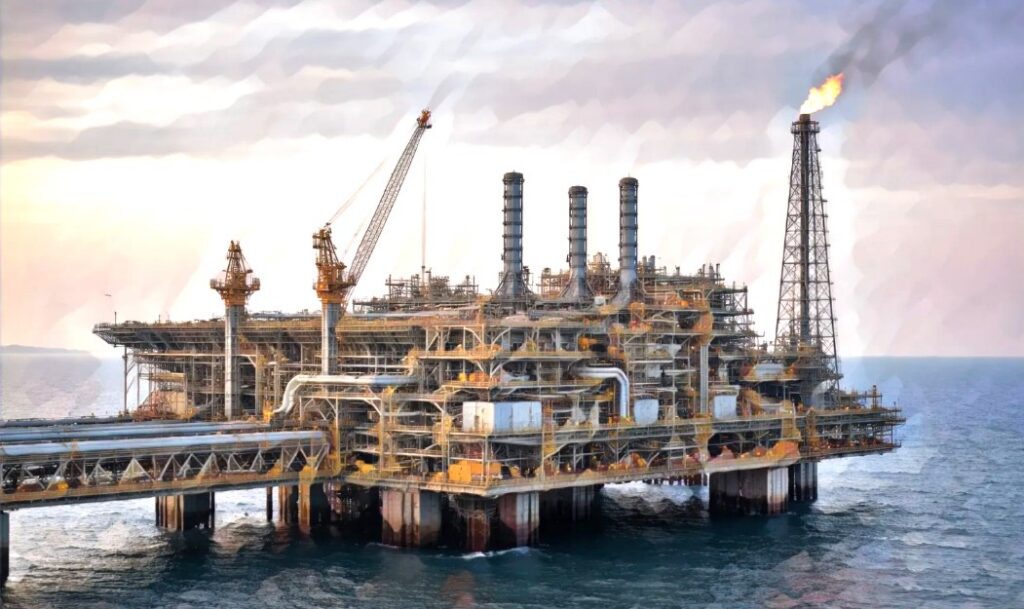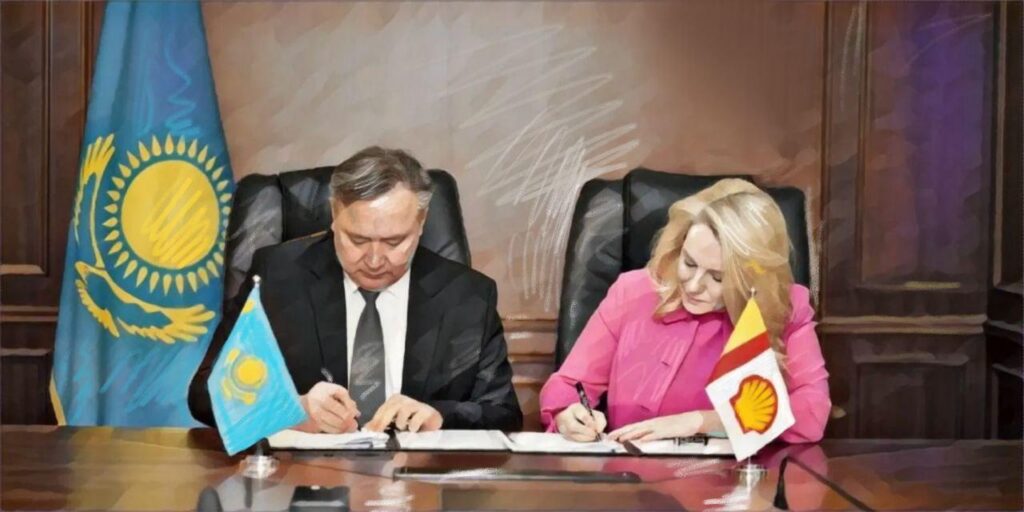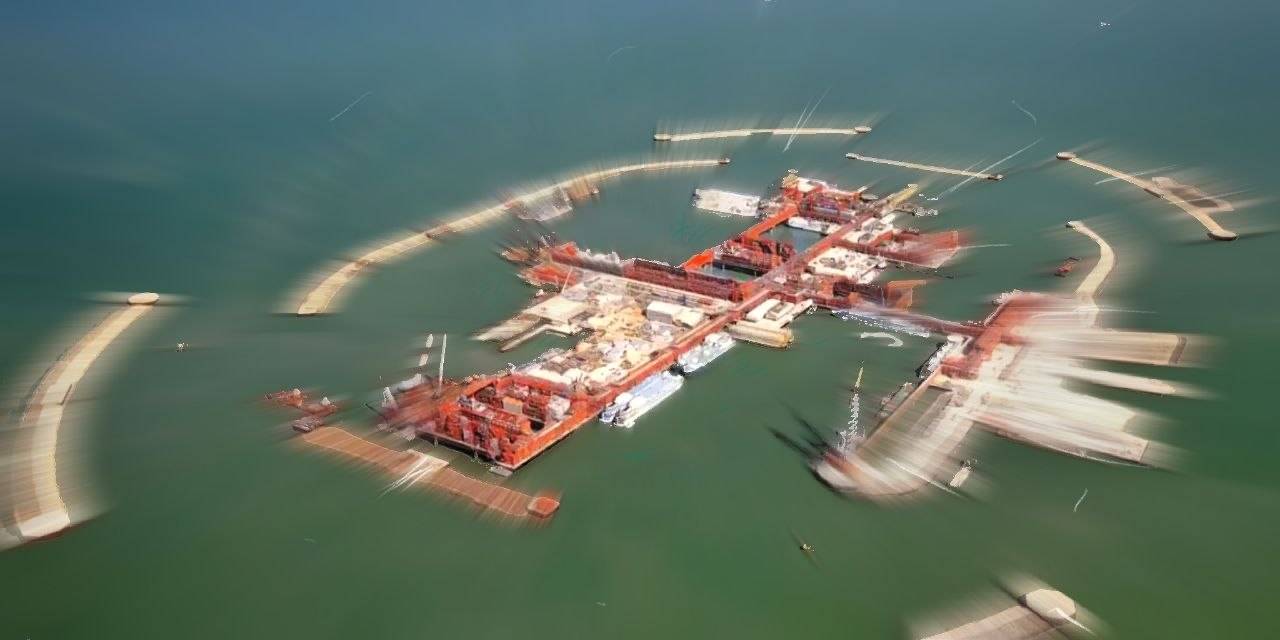
Kazakhstan has escalated its dispute with the foreign investors behind the Kashagan oil field, warning the consortium’s managing director that he could face administrative and criminal liability over its failure to pay an environmental fine of nearly $5 billion.
The warning to Giancarlo Ruiu, managing director of North Caspian Operating Company, was reported by Reuters, which cited two sources and a document it had reviewed.
NCOC’s shareholders include Eni, ExxonMobil, Shell, and TotalEnergies, each with a 16.81% stake; Kazakhstan’s state-owned KazMunayGas, with 16.88%; CNPC, with 8.33%; and Inpex, with 7.56%.
The dispute began after the Department of Ecology for the Atyrau Region inspected the consortium’s production facilities in 2022 and identified about ten alleged violations.
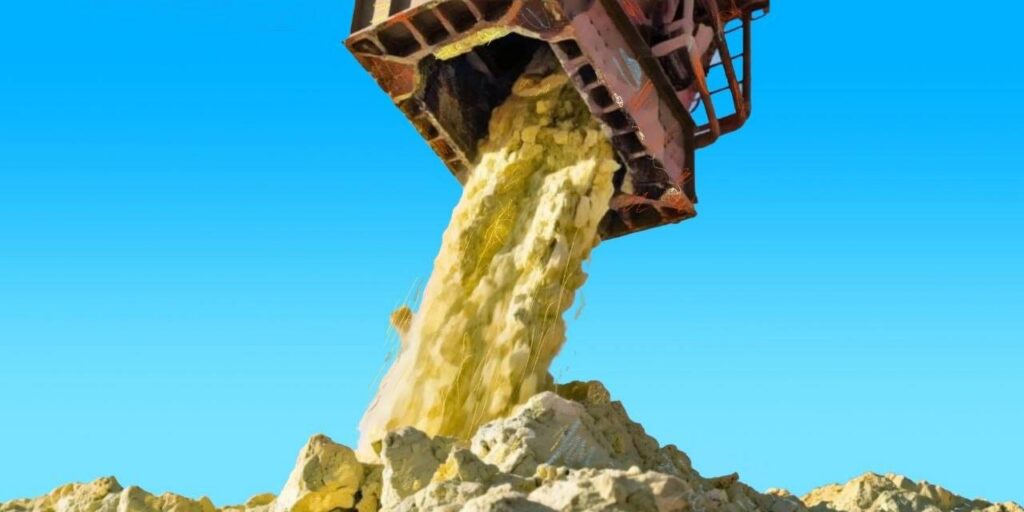
Inspectors said that by November 1, 2022, more than 1.7 million metric tons of sulfur had accumulated at a storage site within the Bolashak oil and gas processing complex. NCOC’s permit allowed it to store no more than 730,000 tons. According to the environmental authorities, the operator had exceeded the permitted limit by more than twofold.
In early 2023, the regional environmental department issued a notification seeking 2.356 trillion tenge in penalties, equivalent to about $5.4 billion at the exchange rate at the time. NCOC rejected the allegations and maintained that its sulfur-handling operations complied with Kazakh law and the permits issued for the project.
The proceedings continued for more than three years. In August 2025, a court set aside the original notification because of procedural deficiencies in the way it had been issued. The ruling did not dismiss the environmental allegations themselves. The authorities subsequently issued a new notification, allowing the case to proceed.
After further domestic proceedings, the Atyrau Regional Court upheld the penalty on June 19, allowing the ruling to enter into force.
It later emerged that members of the consortium had been aware of the risk posed by the growing sulfur stockpiles for years. In 2017, Eni warned that the project was heading towards exceeding the permitted storage capacity. By late 2020, NCOC had also cautioned that Kazakhstan’s new Environmental Code, adopted the following year, would increase the risk of substantial penalties.
According to internal documents reported by Bloomberg, Eni executives proposed processing more of the sulfur for sale on international markets. ExxonMobil, TotalEnergies, CNPC, and Inpex were not planning comparable measures at the time, while KazMunayGas had yet to settle on a position.
On July 14, Kazakhstan’s Ministry of Justice said the domestic court ruling had entered into force and gave NCOC until July 20 to pay voluntarily. The ministry said compulsory enforcement proceedings could begin if the consortium failed to meet the deadline.
NCOC did not pay by July 20. The Justice Ministry subsequently warned Ruiu of possible liability for non-compliance, marking a further escalation in a dispute that had already moved beyond the original question of sulfur storage. The consortium continued to deny wrongdoing and maintained that the penalty could not be enforced while international arbitration proceedings were under way. Its foreign shareholders are separately challenging the fine through treaty arbitration at ICSID.
Separately, on July 16, NCOC said a tribunal in commercial arbitration proceedings conducted under UNCITRAL rules had issued interim measures directing Kazakhstan to refrain from enforcing the penalty while that case remained pending.
“As part of the UNCITRAL arbitration proceedings, the tribunal issued interim measures prohibiting the Republic of Kazakhstan from taking steps to recover the fine until the arbitration process is completed,” NCOC said, adding that it expected the Kazakh authorities to “respect the integrity of the arbitration proceedings.”
Kazakhstan’s Ministry of Justice rejected that interpretation of the tribunal’s order, arguing that the proceedings concerned commercial arbitration and did not limit the state’s sovereign powers.
The ministry said the tribunal’s jurisdiction was confined to resolving the commercial dispute between the parties and did not extend to Kazakhstan’s exercise of public authority, including the enforcement of environmental legislation.
It also argued that interim measures issued by a foreign commercial arbitral tribunal had no automatic legal effect in Kazakhstan, did not override mandatory provisions of domestic law, and did not prevent the enforcement of a final court judgment ordering payment of the environmental penalty.
The ministry’s legal position was criticized by Oleg Chervinsky, a Kazakh journalist specializing in the oil and gas industry. Chervinsky argued that the government’s reasoning could have implications for other international arbitration disputes involving Kazakhstan.
“Has the Ministry of Justice fully assessed the risk that Naftogaz of Ukraine, which is seeking to seize Gazprom’s assets in Kazakhstan, could rely on this legal position and attempt to enforce an ICC arbitration award through Kazakhstan’s courts rather than through the Astana International Financial Centre, as it sought to do previously?” Chervinsky wrote.
Chervinsky also drew parallels with Kazakhstan’s dispute with the Karachaganak consortium nearly two decades ago.
At the time, the authorities presented BG and Eni with tax claims of approximately $136 million and launched a comprehensive tax audit of Karachaganak Petroleum Operating (KPO). Prosecutors, the National Security Committee, the Financial Police and the Energy Ministry also opened investigations into the consortium’s activities. Criminal proceedings alleged that KPO had overstated recoverable costs by $1.25 billion between 2002 and 2007 and generated roughly $700 million in revenue through what investigators described as illegal oil production.
According to Chervinsky, the dispute was ultimately resolved after the consortium agreed to transfer a 10% stake in the Karachaganak project to state-owned KazMunayGas, which also holds a 16.88% interest in Kashagan.
However, the historical parallel only partly explains the current dispute.
According to Bloomberg, KazMunayGas was prepared to pay its share of the environmental penalty despite the position taken by several foreign members of the consortium. Neither KazMunayGas nor Kazakhstan’s Ministry of Energy commented on the report.
The dispute comes as Kazakhstan is taking a tougher line with foreign companies operating its largest oilfields.
Relations between the state and the Kashagan consortium have long been difficult. The project was repeatedly delayed, costs rose far beyond initial estimates, and production began only after years of technical problems and disputes over its terms. Kazakhstan has since sought a larger share of the revenues generated by its major oil projects.
Critics see the environmental case as part of broader pressure on the consortium. The government rejects claims of resource nationalism, saying it is enforcing domestic law and that the agreements protecting the investment do not exempt the consortium from complying with it.
The latest court ruling is therefore unlikely to end the dispute. NCOC has so far refused to pay, arguing that enforcement is prohibited while arbitration continues. Kazakhstan maintains that the interim measures do not override its domestic court ruling.
The outcome could affect further negotiations over Kashagan and other major oil projects in the country. Foreign investors will be watching how Kazakhstan pursues enforcement while the UNCITRAL and ICSID proceedings remain unresolved.
The Times of Central Asia previously reported on the expansion of Kazakhstan’s legal claims against the Kashagan consortium.