• KGS/USD = 0.01144 0%
  • KZT/USD = 0.00208 0%
  • TJS/USD = 0.10442 0.19%
  • UZS/USD = 0.00008 0%
  • TMT/USD = 0.28530 0%
  • KGS/USD = 0.01144 0%
  • KZT/USD = 0.00208 0%
  • TJS/USD = 0.10442 0.19%
  • UZS/USD = 0.00008 0%
  • TMT/USD = 0.28530 0%
  • KGS/USD = 0.01144 0%
  • KZT/USD = 0.00208 0%
  • TJS/USD = 0.10442 0.19%
  • UZS/USD = 0.00008 0%
  • TMT/USD = 0.28530 0%
  • KGS/USD = 0.01144 0%
  • KZT/USD = 0.00208 0%
  • TJS/USD = 0.10442 0.19%
  • UZS/USD = 0.00008 0%
  • TMT/USD = 0.28530 0%
  • KGS/USD = 0.01144 0%
  • KZT/USD = 0.00208 0%
  • TJS/USD = 0.10442 0.19%
  • UZS/USD = 0.00008 0%
  • TMT/USD = 0.28530 0%
  • KGS/USD = 0.01144 0%
  • KZT/USD = 0.00208 0%
  • TJS/USD = 0.10442 0.19%
  • UZS/USD = 0.00008 0%
  • TMT/USD = 0.28530 0%
  • KGS/USD = 0.01144 0%
  • KZT/USD = 0.00208 0%
  • TJS/USD = 0.10442 0.19%
  • UZS/USD = 0.00008 0%
  • TMT/USD = 0.28530 0%
  • KGS/USD = 0.01144 0%
  • KZT/USD = 0.00208 0%
  • TJS/USD = 0.10442 0.19%
  • UZS/USD = 0.00008 0%
  • TMT/USD = 0.28530 0%

Viewing results 319 - 324 of 2306

From Astana to the World: Kazakhstan Expands Academic Frontier

Kazakhstan is rapidly establishing itself as a regional center for higher education, attracting students from around the world. The number of branches of foreign universities operating in the country is steadily increasing, complemented by a growing domestic academic base, especially in fields such as artificial intelligence. Today, Kazakhstan is viewed as a viable regional alternative to Russia, which has long been considered a destination for affordable, high-quality education. Expanding Options for Students In June, the Ministry of Science and Higher Education of the Republic of Kazakhstan unveiled a map of foreign university branches operating in the country. The government is positioning Kazakhstan as a leading academic hub in Central Asia by enhancing international cooperation and expanding opportunities for students. Partnerships have already been established with 39 foreign universities. Currently, 23 branches of institutions from the UK, Italy, China, Russia, the U.S., France, and South Korea operate in Kazakhstan. [caption id="attachment_36320" align="aligncenter" width="1201"] Map of foreign university partnerships; image: Ministry of Science and Higher Education of Kazakhstan.[/caption] Seven more branches are expected to open in the 2025-2026 academic year, namely Coventry University, the Moscow State Institute of International Relations (MGIMO) in Astana, Gazi University in Shymkent, Woosong University in Turkestan, Anhalt University in Almaty, Politecnico della Marche in Taldykorgan, and Dong Eui University in Kostanay. A standout example of this strategy arrived in early September: Notably, on September 3, Cardiff University opened its first campus outside the UK in Astana. It is also the first member of the prestigious Russell Group to begin operations in Kazakhstan. The Russell Group comprises 24 leading UK universities responsible for two-thirds of all research grants and contract funding in the UK, and 56% of doctoral degrees awarded. Cardiff University Kazakhstan is now accepting students for four-year bachelor’s programs in computer science, business management, civil engineering, and geology and mineral exploration. Kazakhstan has witnessed a surge in the establishment of foreign university branches since 2021. These include the Peking University of Languages and Culture at Astana International University, and the National Research Nuclear University MEPhI (Russia) at Al-Farabi Kazakh National University. Additional branches include the University of Lorraine (France) at the Kazakh National Pedagogical University named after Abai, and the University of Anhalt (Germany) at the Almaty University of Power Engineering and Telecommunications named after Gumarbek Daukeev. Other notable branches include the University of Hong Kong at Satpayev University in Almaty, Berlin Technical University in Aktau, De Montfort University (UK) in Almaty, and Queen’s University Belfast (Ireland) at Narxoz University, among others. These branches offer programs in mining, water resource management, and mineral exploration and extraction, along with biotechnology, electrical engineering, energy, mechatronics, logistics, chemical technology, robotics, and related disciplines. In 2023, Korkyt Ata University in Kyzylorda launched an Institute of Artificial Intelligence, in partnership with Seoul National University of Science and Technology. It currently offers programs in computer science, cybersecurity, software development, and information systems. An Ambitious Vision Observers note that Kazakhstan’s education drive is unfolding amid growing global competition for international students. Neighboring Uzbekistan...
Central Asia Deepens Trade Links with India Amid Growing Economic Ties

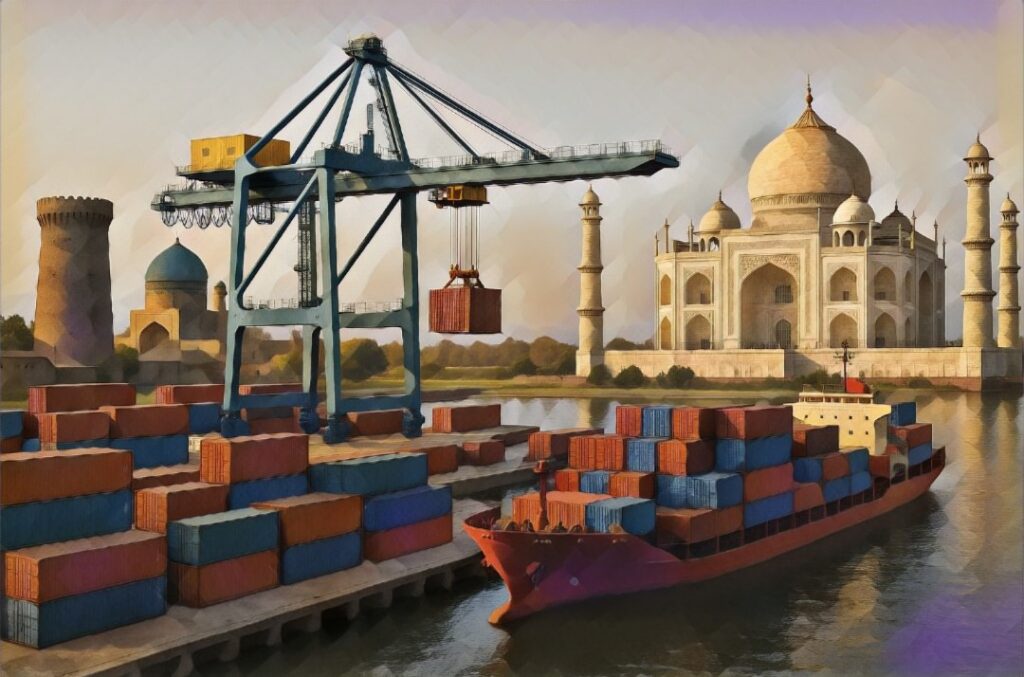
Trade between the countries of Central Asia and India is growing, edging closer to the $2 billion mark and signaling a new phase in cooperation across the Eurasian continent. According to data from the Eurasian Development Bank (EDB), this surge reflects the expanding economic footprint of both regions. Nikolay Podguzov, Chairman of the EDB, emphasized that Central Asia and India are not only continental neighbors but also markets with significant untapped potential. Of the bank’s seven member states, four — Kazakhstan, Kyrgyzstan, Tajikistan, and Uzbekistan — form the heart of Central Asia. Their growing engagement with New Delhi is now setting the tone for broader regional cooperation. Strong Growth as a Foundation The economic fundamentals supporting this trend are healthy. Central Asia has maintained steady growth of around 4.5% annually, while India’s economy continues to expand even faster, at roughly 6% per year. But despite this positive backdrop, there are still logistical hurdles. Trade routes between India and Central Asia must pass through intermediary countries such as Iran, Russia, or Azerbaijan — each adding layers of bureaucracy, customs costs, and delays. Experts argue that overcoming these transit bottlenecks will be crucial if India and Central Asia are to unlock the full potential of their partnership. New initiatives like the International North-South Transport Corridor and discussions on India’s role in developing Chabahar Port in Iran reflect ongoing efforts to make these pathways more efficient. Kazakhstan: The Leading Partner Kazakhstan is India’s largest trading partner in Central Asia, with bilateral trade crossing $1 billion — more than half of the region’s total trade with India. Astana supplies uranium, which is important for India’s civilian nuclear energy program, along with crude oil and steel products. In return, India exports pharmaceuticals, textiles, and consumer goods, with exports valued at around $260 million. The two countries also collaborate in strategic sectors such as energy security and defense. In 2022, India and Kazakhstan conducted joint military drills under the Kazind exercise, which reflects a broadening relationship beyond commerce. Uzbekistan: A Growing Market Trade with Uzbekistan has risen steadily, approaching $500 million in bilateral turnover, while India’s exports to Uzbekistan are valued at around $1.3 billion. Pharmaceuticals, machinery, and agricultural products dominate New Delhi’s exports, while Uzbekistan provides fruits, minerals, and cotton to the Indian market. Uzbekistan and India recently increased engagement through forums like the India-Central Asia Dialogue, where issues of connectivity, counterterrorism, and energy cooperation are regularly discussed. Tajikistan: Small but Strategic Although trade volumes with Tajikistan hover around $100 million, the partnership has strategic importance. Aluminium from Tajikistan’s massive TALCO smelter is a key export, while India provides medicines and consumer goods to Tajikistan. Beyond commerce, Dushanbe is a vital security partner for New Delhi. India operates a military facility in Tajikistan — the Farkhor Air Base, its only such presence abroad. Kyrgyzstan: Modest Trade, Strong Ties Kyrgyzstan’s trade with India is relatively small, at about $50 million, but the relationship is significant in the context of regional institutions like the Eurasian Economic Union...

Opinion: Ex-U.S. Ambassador Warns Washington Has Ceded Information Space in Central Asia

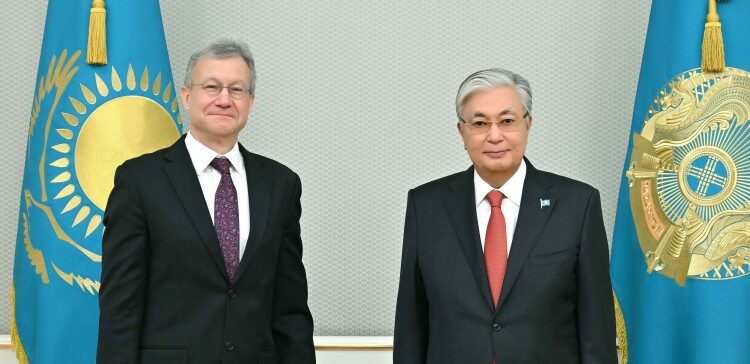
Former U.S. Ambassador to Uzbekistan and Kazakhstan, Daniel Rosenblum, has warned that Washington has “surrendered” its influence in Central Asia’s information sphere, allowing Russia and China to dominate the narrative. His remarks were reported by the Yale Daily News following a lecture at Yale University on September 15. Rosenblum, who served as U.S. ambassador to Uzbekistan from 2019 to 2022 and to Kazakhstan from 2022 to 2025, delivered a speech titled “Battling the Firehose of Falsehood: Confronting Russian Disinformation in Central Asia.” He described how Russian disinformation campaigns frequently portrayed U.S. diplomats as destabilizing actors. In one example from 2023, Russian outlets falsely claimed a NATO base had opened in Kazakhstan. “While it is easy to joke about such an absurd idea,” Rosenblum said, “the intent behind such Russian information operations is deadly serious.” Rosenblum noted that U.S. embassies attempted to counteract these narratives by highlighting tangible achievements, including COVID-19 health initiatives, agricultural partnerships, and academic exchange programs. However, he argued that much of this work has unraveled since 2023, citing the dismissal of over 1,300 State Department personnel, the elimination of USAID programs in the region, and recent cuts to Voice of America and Radio Free Europe/Radio Liberty. “Eight months into the second Trump administration, it seems clear that the information war is over in Central Asia, not because the Russians won. We have simply surrendered,” he said. Rosenblum also emphasized China’s expanding influence through the Belt and Road Initiative, observing that Beijing “was doing a pretty good job of winning friends and influencing people” via infrastructure investment and cultural outreach. In a post-lecture interview, Rosenblum underscored that the challenge is now largely domestic. “The biggest challenge today is ourselves,” he said. “We have to decide as a country, do we want to be engaged in the world or not? If we cut ourselves off from the world, we will ultimately be less secure and less prosperous.” This concern was echoed in earlier analysis for The Times of Central Asia by Arman Amini, a term member of the Council on Foreign Relations and an Atlantic Council Millennium Fellow. “Over the past decade, China has steadily expanded its presence in Central Asia, not through military force, but by building roads, trade corridors, and digital infrastructure,” Amini noted. “As the United States scaled back its regional footprint following its withdrawal from Afghanistan, Beijing moved quickly to fill the void. Today, China has positioned itself as the region’s dominant external power, while the U.S. risks being left on the sidelines.” The lecture was attended by approximately 80 people in person and online. It was organized by the Central Asia Initiative of the MacMillan Center, the Edward J. and Dorothy Clarke Memorial Fund, and Asian Crossroads, a student group dedicated to raising awareness of Central Asia.

Russia’s Crackdown Forces Central Asia to Rethink Labor Migration

The most recent World Bank study on labor migration highlighted the immense scale of the issue, describing it as "an ongoing development challenge in Europe and Central Asia, which is currently home to 100 million migrants," roughly one-third of all migrants globally. Historically, Russia has been the primary destination for Central Asia's mobile labor force. However, since March 2024, Moscow’s increasingly restrictive migration policies have forced Central Asian states to confront a dual challenge: managing displaced workers and rethinking the logistics of cross-border labor flows. As of 2023, more than 80% of labor migrants from Tajikistan and Kyrgyzstan were working in Russia. Migration from Uzbekistan was more diversified, with 57% of migrants heading to Russia, 15% to Kazakhstan, and 10% to Ukraine. For millions across the region, labor migration remains a vital economic lifeline. According to the World Bank report, The Journey Ahead: Supporting Successful Migration in Europe and Central Asia, remittances in 2024 accounted for 45% of Tajikistan’s GDP, the highest ratio globally. In Kyrgyzstan, remittances made up 24% of GDP, while in Uzbekistan the figure was 14%. A 2025 update increased the figure for Tajikistan further still, noting that domestic consumption was "supported by large remittance inflows - peaking at 49% of GDP in 2024." Since the start of the war in Ukraine, rhetoric in the Russian media and among some politicians toward Central Asian migrants has increasingly shifted toward overt hostility. Following the March 2024 terrorist attack at Moscow’s Crocus City Hall, in which Tajik nationals were named among the suspects, Russia began implementing harsher measures. This included widespread street inspections of Kyrgyz, Uzbek, and Tajik citizens, alongside new, more restrictive legal frameworks. While certain steps, such as mandatory biometric data collection, were officially justified by security concerns, other policies have further complicated daily life for foreign nationals. For example, since January 2025, all foreign-owned SIM cards in Russia have been deactivated. Foreign citizens must now register with government agencies to obtain new mobile services, a policy framed as a response to telecom fraud. Another measure, introduced on June 30, requires citizens of visa-free countries to register in the “Gosuslugi RuID” app before entering Russia. They must obtain a digital code to pass border control, effectively instituting a pre-entry surveillance mechanism. Kazakhstan was the first to publicly respond, with Foreign Ministry spokesman Aibek Smadiyarov refusing to rule out reciprocal measures against Russian citizens. “We are studying this issue very carefully. It requires consultations with our government agencies,” Smadiyarov said. Yet, despite these developments, none of the Central Asian countries currently maintains a comprehensive migration strategy equipped to handle these shifting dynamics. In Kazakhstan, the issue came to the fore in 2025 with a noticeable influx of Tajik nationals, the group most affected by Russia’s new rules. At a government meeting in late July, officials noted that Kazakhstan had recorded a positive migration balance for the second consecutive year, as well as a 1.5-fold increase in the number of foreign citizens permanently residing in the country. “The importance...

Russia Opens Criminal Case After Attack on Uzbek Migrants in Vladivostok

Russian authorities have opened a criminal investigation following a violent assault on Uzbek migrants in Vladivostok, carried out by a group of teenagers. The incident, which occurred several days ago, was recorded on video and widely circulated on social media, sparking public outrage. The footage shows the young attackers beating the migrants, mocking them, and shouting insults while one of them filmed and laughed. According to the press service of the Investigative Committee of Russia for Primorsky Krai, the assault took place during the night of September 10 on Khabarovskaya Street. Investigators reported that the 15-year-old suspects, allegedly intoxicated, first damaged a parked car and sprayed an aerosol can inside it before attacking the driver. They later entered a 24-hour store and beat another man in front of staff and customers. The group also assaulted a truck driver, a taxi driver, and his passenger, using stones and other objects as weapons while shouting loudly in the street. The committee confirmed that one suspect has been detained, while two others remain at large. All are described in police records as negatively characterized, and at least one is already on trial in a separate hooliganism case stemming from an incident at a local store. If convicted, the suspects could face up to seven years in prison under Article 213, Part 2, of Russia’s Criminal Code, which addresses aggravated hooliganism. Uzbekistan’s Consul General in Vladivostok, Yusuf Qobiljonov, stated that the victims filed an official complaint with local police. Diplomatic notes have also been sent to Russia’s Foreign Ministry office in Vladivostok and the Primorsky Krai Prosecutor’s Office, urging authorities to take appropriate measures. Qobiljonov emphasized that the case is being closely monitored by both the Uzbek consulate and Russian law enforcement agencies.

Rail, Water, and Helicopters – Uzbekistan’s “Limited Recognition” of the Taliban

Uzbekistan has spent the middle of September embroiled in an increasingly tetchy press battle over an unusual topic: helicopters. The Taliban, who run the de facto government in Kabul, have long claimed that several dozen military aircraft and helicopters currently residing in Uzbekistan are rightfully theirs. On September 11, a Taliban official announced publicly that Uzbekistan had agreed to hand them back. This was reported widely in the regional media, with the Uzbek foreign ministry slow off the mark in denying these claims. The dispute goes back to the fall of Kabul in August 2021, when a total of 57 aircraft were flown from Afghanistan to Uzbekistan and Tajikistan as Ashraf Ghani’s government collapsed. “The helicopters came from the Afghan territory to Uzbek territory illegally, so actually we had the right to confiscate them,” Islomkhon Gafarov, an Afghanistan expert at the Center for Progressive Reform, a Tashkent think tank, told the Times of Central Asia. However, Gafarov adds that the aircraft were the property of the U.S. military loaned to the previous government of Afghanistan, and therefore, Washington will have a say in their return. This has not stopped the Taliban from continuing to demand the helicopters back for use in “humanitarian operations,” in the words of Foreign Minister Amir Khan Muttaqi. Such wrangling is part of the daily diplomatic in-tray for Tashkent when dealing with a neighbor whose government has not been recognized by almost the entire world. “Afghanistan is our neighbor,” said Gafarov. “According to the geopolitical situation, we have to conduct a dialogue with this government. It’s true, Uzbekistan hasn’t recognized the Taliban government, but de facto, we work with them; we’ve had diplomatic relations with them since 2018.” Tashkent certainly has reasons to work with the Taliban. Helicopters are a mere sideshow compared to two far larger issues that will define their relations for years to come: rail and water. Railway On the positive side of the ledger, the Taliban have brought to Afghanistan a reasonable degree of stability - enough to start contemplating large-scale infrastructure projects. In July, an agreement was struck between Pakistan, Afghanistan, and Uzbekistan to conduct a feasibility study for a trans-Afghanistan railway, with 647 kilometers of new track being laid to link Uzbekistan with Pakistan’s Indian Ocean ports. This railway could bring significant benefits to Uzbekistan, one of only two double-landlocked countries in the world. Currently, sea-bound exports must travel via Turkmenistan to Iran. Other routes almost all rely on going via Kazakhstan. The China-Kyrgyzstan-Uzbekistan railway, currently being constructed, should remove some of the need for sea-bound routes, but the Pakistan route would be faster. “The trans-Afghan route is the shortest way to the seaports of Karachi and Gwadar,” Gafarov told TCA. With a line from Termez, Uzbekistan, to Mazar-i-Sharif in Northern Afghanistan already operational, this only leaves two sections unbuilt - from Mazar to Kabul, and then from Kabul to Peshawar in Pakistan. The teams are still only at the feasibility stage right now, and have, with some chutzpah, predicted...