• KGS/USD = 0.01144 0%
  • KZT/USD = 0.00205 0%
  • TJS/USD = 0.10722 0%
  • UZS/USD = 0.00008 0%
  • TMT/USD = 0.28490 0%
  • KGS/USD = 0.01144 0%
  • KZT/USD = 0.00205 0%
  • TJS/USD = 0.10722 0%
  • UZS/USD = 0.00008 0%
  • TMT/USD = 0.28490 0%
  • KGS/USD = 0.01144 0%
  • KZT/USD = 0.00205 0%
  • TJS/USD = 0.10722 0%
  • UZS/USD = 0.00008 0%
  • TMT/USD = 0.28490 0%
  • KGS/USD = 0.01144 0%
  • KZT/USD = 0.00205 0%
  • TJS/USD = 0.10722 0%
  • UZS/USD = 0.00008 0%
  • TMT/USD = 0.28490 0%
  • KGS/USD = 0.01144 0%
  • KZT/USD = 0.00205 0%
  • TJS/USD = 0.10722 0%
  • UZS/USD = 0.00008 0%
  • TMT/USD = 0.28490 0%
  • KGS/USD = 0.01144 0%
  • KZT/USD = 0.00205 0%
  • TJS/USD = 0.10722 0%
  • UZS/USD = 0.00008 0%
  • TMT/USD = 0.28490 0%
  • KGS/USD = 0.01144 0%
  • KZT/USD = 0.00205 0%
  • TJS/USD = 0.10722 0%
  • UZS/USD = 0.00008 0%
  • TMT/USD = 0.28490 0%
  • KGS/USD = 0.01144 0%
  • KZT/USD = 0.00205 0%
  • TJS/USD = 0.10722 0%
  • UZS/USD = 0.00008 0%
  • TMT/USD = 0.28490 0%

Viewing results 19 - 24 of 3597

Tajikistan EBRD Cooperation Targets Telecoms and Border Logistics

Tajikistan is set to attract approximately $43 million in financing to modernize its telecommunications infrastructure, while the government and the European Bank for Reconstruction and Development (EBRD) are also advancing plans for a new logistics hub on the border with Uzbekistan. The initiatives were discussed during the EBRD Annual Meeting and Business Forum and reflect the bank’s broader support for improving digital and transport connectivity in Tajikistan. A memorandum of understanding was signed between Tajikistan’s Ministry of Finance, the Communications Service under the government, and the EBRD to support the modernization and expansion of the country’s telecommunications network. The document was signed by First Deputy Finance Minister Yusuf Majidi, First Deputy Head of the Communications Service Parviz Noriyon, and Holger Münt, EBRD director for telecommunications, media and technology. The project aims to expand digital infrastructure, improve access to modern communications services, enhance service quality and support the country’s ongoing digital transformation. The planned investment of approximately $43 million is expected to strengthen regional connectivity while creating new opportunities for businesses and consumers. Separately, Transport Minister Azim Ibrohim met with EBRD Country Director for Tajikistan Holger Wiefel and other bank representatives to discuss transport infrastructure projects, including plans for a logistics center at the Dusti border crossing in Tursunzade, on the Tajik-Uzbek border. The talks focused on a preliminary feasibility study for the proposed logistics hub, covering legal, technical and economic aspects of the project. Officials said the preparatory work should allow the initiative to move to the next stage of implementation. The parties also reviewed the progress of ongoing transport-sector investment projects and discussed opportunities for further cooperation. The discussions come as Tajikistan seeks to strengthen both its physical and financial links with external partners. Last week, TCA reported that officials from the National Bank of Tajikistan and the Agricultural Bank of China had discussed expanding interbank cooperation, easing trade payments, supporting Chinese-backed investment projects and using digital tools in Tajikistan’s financial sector. The two sides also discussed the possibility of opening branches of Chinese banks in Tajikistan. That push reflects the growing role of external finance in Tajikistan’s infrastructure plans. TCA has previously reported that more than 70% of funding for the country’s state investment projects comes from three institutions: the World Bank, the Asian Development Bank and the EBRD, with China also remaining an important source of trade and investment financing. Tajikistan EBRD cooperation goes back more than three decades. Since beginning operations in the country in 1993, the bank has invested more than €1 billion across 192 projects. Under its 2025-2030 country strategy, the EBRD is focusing on private-sector competitiveness, sustainable energy, transport, municipal infrastructure, financial-sector development and support for small and medium-sized enterprises, with connectivity projects expected to play an increasingly important role in Tajikistan’s economic development and regional integration.

Uzbekistan’s Consulate Urges Citizens to Follow U.S. Law After Cargo Theft Arrests

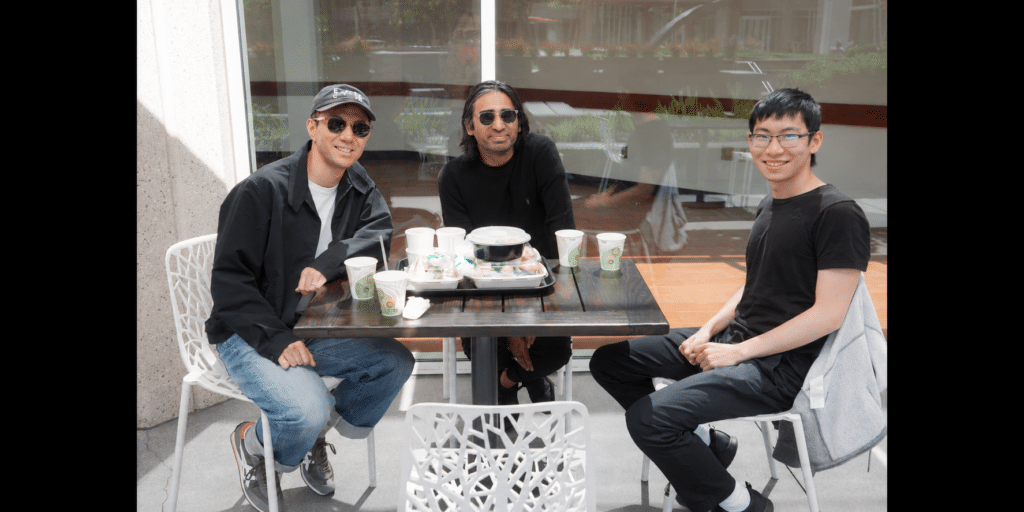
The Consulate General of Uzbekistan in New York has urged citizens of Uzbekistan in the United States to follow local laws after recent media reports linked several citizens of Uzbekistan and people of Uzbek origin to criminal investigations. In a statement posted on Telegram, the consulate said reports about alleged offenses involving citizens of Uzbekistan or people of Uzbek origin had appeared increasingly in the media and on social networks. The statement did not refer to a specific case, but it came shortly after U.S. authorities announced charges against an alleged multi-state cargo theft ring. The consulate called on citizens of Uzbekistan living, studying, working, or doing business in the U.S. to respect local laws, customs, and accepted standards of public behavior. “Any violation of the law carries personal responsibility,” the statement said, adding that unlawful actions by a small number of people can affect perceptions of the broader Uzbek community abroad. The consulate said most members of that community are law-abiding, work honestly, study, run businesses, and represent Uzbekistan with dignity. The diplomatic mission noted that the issue is particularly important during major international events and sports competitions, when public and media attention toward Uzbekistan and its citizens increases. The statement was issued as U.S. law enforcement agencies continued investigating a group accused of stealing nearly $5 million worth of commercial cargo. According to the Manhattan District Attorney’s Office, eight defendants were indicted in connection with a scheme that allegedly targeted shipments in Pennsylvania, Virginia, and New Jersey before the stolen goods were diverted to New York. Prosecutors allege the group operated between October 2025 and April 2026 and impersonated legitimate shipping carriers to obtain cargo from logistics sites. The stolen goods allegedly included lamb, cheese, beef, copper, and cigarettes. According to prosecutors, the defendants used fraudulently obtained shipment information from real carriers and brokers, leased trucks, and used false carrier identities to collect cargo. The stolen goods were then transported into and through New York City for sale on the black market. The Manhattan District Attorney’s Office said the alleged thefts included $165,000 worth of lamb, $432,000 worth of cheese, $295,000 worth of beef, more than $266,000 worth of copper, and more than $3.3 million worth of cigarettes. The New York Post reported that Murodullo “Murad” Khasanov, whom prosecutors identified as the alleged leader of the group, was arrested in New York and pleaded not guilty. The newspaper said prosecutors sought $1.5 million bail. Manhattan District Attorney Alvin Bragg said the alleged theft ring affected businesses and consumers and raised concerns about the use of online hacking in large-scale cargo theft. Prosecutors said the investigation remains ongoing. The consulate said it remains ready, within its authority, to provide citizens with consular and legal assistance. At the same time, it urged citizens to act responsibly and avoid behavior that could lead to legal consequences or harm the reputation of Uzbekistan and its citizens abroad. As previously reported by The Times of Central Asia, Uzbekistan has also sought to expand...

Opinion: Beyond Ornaments – Rethinking Kazakhstan’s Architectural Identity

Walking into the Flower of God Mosque in Astana, I was struck not by its grand domes or elaborate decoration, but by the experience of the space itself. Light filtered through the structure in unexpected ways, the interior unfolded gradually, and the building created a sense of calm. It made me wonder: can architecture express cultural meaning without directly reproducing traditional architectural symbols? This question is becoming increasingly important for Kazakhstan. Over the past two decades, the country has transformed its urban landscape through ambitious construction projects. New airports, museums, universities, financial centers, and religious buildings have reshaped cities, particularly Astana. As Kazakhstan seeks to position itself as a modern state connecting Europe and Asia, architecture has become one of the most visible expressions of national identity. Yet a fundamental challenge remains unresolved: how can architecture be modern while also expressing what it means to be Kazakh? National ornaments appear on glass facades and stylized references to the yurt shape public buildings. While these references are familiar and visually recognizable, they do not necessarily create meaningful architecture. Cultural identity cannot simply be attached to a building like decoration. This approach reflects what architects often describe as direct design: the use of recognizable forms and symbols to communicate meaning. Domes, arches, ornaments, and historical references immediately signal cultural identity because they are easy to recognize. Such architecture can create a strong visual connection to heritage, but relying solely on symbolism risks becoming superficial. An alternative approach focuses not on reproducing historical forms but on interpreting the values behind them. Instead of asking how a building should look, architects ask how it should feel. Meaning emerges through light, space, movement, and human experience. Astana's architectural landscape offers several examples of how national identity has been translated into built form. The Baiterek Monument offers perhaps the clearest example of symbolic architecture in Kazakhstan. Drawing on the legend of the Tree of Life and the Samruk bird, it transforms a national myth into a physical structure that is immediately recognizable. Its meaning is communicated directly through form and narrative, making it one of the country's most powerful architectural symbols. [caption id="attachment_50124" align="aligncenter" width="2560"] Baiterek, Astana; image: TCA[/caption] Yet the monument also raises an important question. While visitors can easily recognize the symbolism, do they experience the myth itself? Does the ascent through the tower evoke the journey up the Tree of Life, or does the golden sphere create the sensation of entering the sacred egg of the Samruk bird? The symbolism is clearly represented, but the extent to which it is translated into a spatial experience remains open to interpretation. Khan Shatyr occupies a unique place in Kazakhstan's architectural landscape. Its tent-like form directly references the nomadic heritage of the steppe, making it one of the country's most recognizable cultural symbols. Yet the project also raises an important question: is reproducing a familiar image enough to convey a cultural experience? [caption id="attachment_50122" align="aligncenter" width="1280"] Khan Shatyr, Astana; image: Bgag[/caption] Despite its obvious reference to...

Kazakhstan Justice Reform Sees Citizens Winning More Cases Against State Bodies

In a boost for proponents of justice reform in Kazakhstan, citizens and businesses are now winning more than half of administrative court cases against government agencies. President Kassym-Jomart Tokayev said, citing what he described as the growing impact of the country’s administrative justice reforms. Speaking at an Astana forum entitled Administrative Justice and Its Role in Ensuring the Rule of Law, Tokayev said the introduction of administrative courts had significantly improved citizens’ ability to challenge government decisions and defend their rights. “It must be acknowledged that in the past it was far more difficult for citizens to challenge the actions of government agencies and protect their rights,” he said. “With the introduction of administrative justice, the situation has changed fundamentally.” In a separate statement, Supreme Court Chairman Aslambek Mergaliyev, noted that the share of cases won by citizens and businesses against state bodies has risen from 15% to nearly 60% over the past five years. “Behind these figures are removed administrative barriers and restored rights for individual citizens, entrepreneurs and investors,” Mergaliyev told participants at the forum. The president noted that under the current system, government bodies are legally required to demonstrate the legality of their decisions and actions, while courts place greater emphasis on evidence gathering and procedural fairness. Tokayev said those changes had helped challenge the longstanding perception that courts usually side with the authorities. “This is a concrete result of administrative justice reforms,” he said. According to Supreme Court Chairman Aslambek Mergaliyev, citizens’ success rate in administrative cases has risen from 15% to nearly 60% over the past five years. Tokayev said Kazakhstan’s next objective is to move beyond resolving disputes after they arise and instead focus on managing legal and administrative risks before conflicts reach the courts. As part of that effort, he highlighted the government’s use of the eOtinish digital platform, which allows citizens and legal entities to submit complaints, appeals, information requests and suggestions to state bodies electronically. According to the president, nearly 16 million submissions have been filed through the platform over the past five years. He said authorities must now ensure greater consistency in administrative decisions at both national and local levels to prevent recurring disputes over the same issues. Tokayev paid particular attention to investor-related disputes, noting that courts rule in favor of investors in up to 80% of such cases. “In meetings with domestic and foreign investors, I consistently stress that the government and business community must engage constructively, openly discuss problems and jointly seek solutions,” he said. At the same time, he added that any compromise reached between officials and investors must remain fully consistent with the law. The remarks come as Kazakhstan seeks to link legal reform more closely to its investment agenda. The government has set a target of attracting $62.7 billion in total investment in 2026, including $25.5 billion in foreign capital, while also transferring the investment ombudsman role to the Prosecutor General and creating a Committee for the Protection of Investors’ Rights. That said, the administrative...

Kazakhstan Central Bank Chief Sees No Pressure on Tenge After Rate Cut

Kazakhstan’s central bank governor has sought to calm concerns over the tenge after the National Bank cut its base rate for the first time since October 2025, saying demand for local-currency assets should remain stable despite lower returns. The National Bank of Kazakhstan lowered its base rate to 17% from 18% on June 5, citing slowing inflation and an improved economic outlook. The decision was based on updated assessments of inflation risks and key macroeconomic indicators, the bank said. Annual inflation slowed to 10.4% in May from a peak of 12.9% recorded in September last year. The central bank also raised its oil price assumption for the remainder of 2026 to $90 per barrel for Brent crude. National Bank Governor Timur Suleimenov said the rate cut would lower returns on tenge-denominated deposits but would not trigger a significant shift into foreign-currency assets. “Interest rates on tenge deposits remain substantially higher than returns on foreign-currency deposits,” Suleimenov told reporters. “A one-percentage-point reduction will not fundamentally change the attractiveness of deposits or other tenge-denominated assets such as corporate bonds and government securities.” Suleimenov said demand for local-currency assets is expected to remain stable, limiting pressure on the exchange rate. He acknowledged that the tenge could face seasonal pressure during the summer because of increased demand for foreign currency linked to overseas travel and dividend payments by Kazakhstani companies listed on international exchanges. However, he said Kazakhstan’s economic fundamentals remain supportive of the national currency. “Oil prices are rising, while metal prices have increased by an average of around 17%, with some commodities gaining as much as 40%,” Suleimenov said. “If there are no major external shocks, I see no reason for any significant weakening of the tenge.” The central bank also revised its inflation forecast for 2026 downward to a range of 9%-11%, compared with a previous estimate of 9.5%-11.5%. Its inflation forecast for 2027 remains unchanged at 5.5%-7.5%. Suleimenov said the bank expects inflation to approach its long-term target of 5% by 2028 as external inflationary pressures ease and government and central bank measures take effect. “The slowdown in inflation during April and May gave us room to lower the base rate,” he said. “But it would be premature to say inflation has been defeated. Future decisions will depend on incoming data and our assessment of risks.” The official exchange rate stood at 487.4 tenge per U.S. dollar on June 7. The outlook remains cautious. As previously reported by The Times of Central Asia, S&P Global Ratings forecast that the tenge would average around 540 per dollar in 2026, reflecting expectations of a weaker currency over the medium term.

From Culture to Critical Minerals: C5+1 Opens Busy U.S. Week in Central Asia

The United States and Central Asia moved another part of the C5+1 agenda into a working-level form on June 5, when culture officials from the five Central Asian states and Washington met in Tashkent. The meeting came just days before a separate C5+1 critical minerals session in Astana, giving the week a wider agenda: cultural heritage, public diplomacy, mining, investment, and supply chains are now moving forward in the same regional format. The Tashkent meeting brought together Uzbekistan's Minister of Culture Ozodbek Nazarbekov, Kazakhstan's Minister of Culture and Information Aida Balayeva, Kyrgyzstan's Minister of Culture, Information and Youth Policy Mirbek Mambetaliev, Tajikistan's Minister of Culture Matluba Sattoriyon, Turkmenistan's Deputy Minister of Culture Gurbanmurad Miradaliev, and Sarah Rogers, the U.S. Under Secretary of State for Public Diplomacy and Public Affairs. The agenda covered cultural and humanitarian cooperation, joint cultural projects, creative exchanges, and the protection and promotion of cultural heritage. Participants discussed a permanent C5+1 Working Group on Culture, a C5+1 Culture and Innovation Forum, closer cooperation in the creative industries, and more places for Central Asian cultural professionals in U.S. education and exchange programs. Uzbekistan also proposed joint English for Culture centers with U.S. partners at cultural education institutions. In practical terms, that could mean joint training for museum staff, touring exhibitions, film and music exchanges, English-language programs for curators and cultural managers, and U.S.-backed workshops for people working in heritage, tourism, and the creative industries. For Uzbekistan, the proposed centers would give the agenda a physical base inside cultural education institutions rather than leaving it at the level of declarations. The meeting ended with a protocol, which reaffirmed the parties' commitment to the cultural heritage agenda adopted after the Washington summit in November 2025. The International Institute for Central Asia said it covered cooperation through joint events and festivals in art, literature, theater, cinema, and music. Kazakhstan's side also tied the discussion to museum partnerships, digitization of heritage, professional exchanges, tourism routes, and digital projects. The Tashkent talks grew out of the C5+1 leaders’ meeting in Washington, where culture joined a wider list of priorities. That summit marked ten years of U.S. engagement with the region through the format, which began in 2015 and has since expanded from foreign-minister meetings to expert groups and presidential-level summits. The Times of Central Asia previously reported that the November 2025 summit shifted the format from broad diplomacy toward deliverable agreements, with critical minerals, aviation, supply chains, and business ties among the main areas of focus. Culture fits into that agenda, as Central Asian governments see heritage, tourism, film, music, museums, and the creative industries as economic sectors as well as identity markers. For the United States, public diplomacy gives Washington a way to stay active in the region outside security and energy talks. It also gives the C5+1 a soft-power layer, using language programs, museum links, heritage projects, and creative exchanges to build influence without framing the relationship only around security or resources. Heritage protection has a security side as well. Trafficking...