• KGS/USD = 0.01144 0%
  • KZT/USD = 0.00211 0%
  • TJS/USD = 0.10501 -0.38%
  • UZS/USD = 0.00008 0%
  • TMT/USD = 0.28530 0%
  • KGS/USD = 0.01144 0%
  • KZT/USD = 0.00211 0%
  • TJS/USD = 0.10501 -0.38%
  • UZS/USD = 0.00008 0%
  • TMT/USD = 0.28530 0%
  • KGS/USD = 0.01144 0%
  • KZT/USD = 0.00211 0%
  • TJS/USD = 0.10501 -0.38%
  • UZS/USD = 0.00008 0%
  • TMT/USD = 0.28530 0%
  • KGS/USD = 0.01144 0%
  • KZT/USD = 0.00211 0%
  • TJS/USD = 0.10501 -0.38%
  • UZS/USD = 0.00008 0%
  • TMT/USD = 0.28530 0%
  • KGS/USD = 0.01144 0%
  • KZT/USD = 0.00211 0%
  • TJS/USD = 0.10501 -0.38%
  • UZS/USD = 0.00008 0%
  • TMT/USD = 0.28530 0%
  • KGS/USD = 0.01144 0%
  • KZT/USD = 0.00211 0%
  • TJS/USD = 0.10501 -0.38%
  • UZS/USD = 0.00008 0%
  • TMT/USD = 0.28530 0%
  • KGS/USD = 0.01144 0%
  • KZT/USD = 0.00211 0%
  • TJS/USD = 0.10501 -0.38%
  • UZS/USD = 0.00008 0%
  • TMT/USD = 0.28530 0%
  • KGS/USD = 0.01144 0%
  • KZT/USD = 0.00211 0%
  • TJS/USD = 0.10501 -0.38%
  • UZS/USD = 0.00008 0%
  • TMT/USD = 0.28530 0%

Viewing results 31 - 36 of 946

Iran Volatility Tests Central Asia’s Overland Corridors

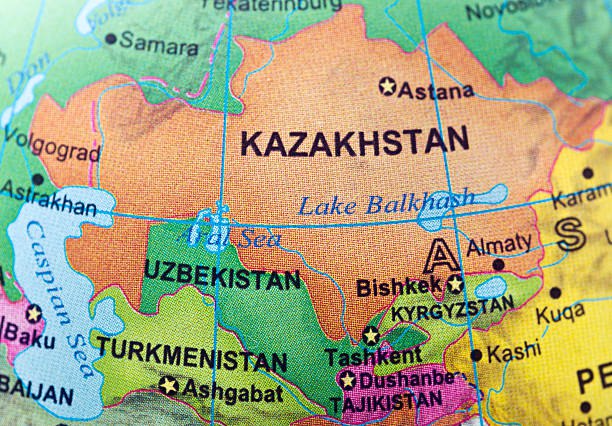
The current escalation around Iran holds the potential for transforming the long-term geopolitical configuration of Eurasia, including Central Asia. In the short and medium term, aside from the security and safety of its citizens, Central Asia's main concern is economic, because it puts stress on overland rail and trucking routes that cross Iranian territory. Central Asian exporters do not ship through the Gulf, so for now the key issue is whether an Iran-crossing land route remains reliable enough, and financeable enough, to serve as a routine outlet for trade. The Iran transit option differs from trans-Caspian reliance on ports and rail interfaces around the Caspian Sea, transiting to onward rail across the South Caucasus and into Europe. The Iran option offers a continuous land arc from Central Asian railheads and road networks into Iran, then onward to Türkiye and connected European rail networks, with the additional possibility of reaching Iran’s southern ports for Indian Ocean-facing trade. Each route has its own chokepoints, paperwork burdens, and exposure to risk premiums. Rail is efficient for bulk and container flows when schedules and documentation are stable. Trucking provides flexibility, short-notice capacity, and last-mile options, but it is more sensitive to security conditions and border clearance delays. Technical capacity at the Iran–Turkmenistan crossings is key. Recent reports of discussions in Sarakhs describe efforts to expand the use of a specialized rail logistics process whereby entire wheel assemblies are replaced on railcars to transition between different track gauges. There is also a need to address customs constraints at Sarakhs and Incheh Borun. Against that operational background, Kazakhstan has signaled diplomatic attention to Gulf partners and Jordan. President Kassym-Jomart Tokayev has sent messages of support to leaders of the United Arab Emirates, Saudi Arabia, Qatar, Bahrain, and Kuwait, followed by a similar message to Jordan, and a phone call with Qatar’s emir. The language emphasized solidarity and diplomacy and, in commercial terms, reads as partner-management. It reassures major investors and energy-market counterparts that Kazakhstan is engaged, attentive, and positioning itself for stability rather than escalation. The trans-Iran rail foundation is over a decade old. On December 3, 2014, the presidents of Kazakhstan, Turkmenistan, and Iran inaugurated the 928-kilometer Uzen–Bereket–Gorgan railway, characterized by RFE/RL (which gave the length as 935 kilometers) as the shortest railway connecting the three states. The International Union of Railways similarly notes the inauguration of the Gorgan–Inche Boroun link on that date as part of the corridor connecting Iran to Turkmenistan and Kazakhstan. Recent reporting suggests renewed efforts to operationalize the Iran option as a westbound channel. Uzbekistan, in cooperation with Türkiye, launched freight rail services along the Uzbekistan–Turkmenistan–Iran–Türkiye route in 2022. The Organization of Turkic States described a December 2022 event in Tashkent as the first freight train organized from Türkiye to Uzbekistan, which anchors the same basic idea: make westbound rail via Iran more regular and more visible to logistics markets. The point is not that Iran becomes the sole answer, but that Central Asian exporters and transit states have been...
Escalation in the Middle East Threatens Kyrgyzstan’s Agricultural Export Potential

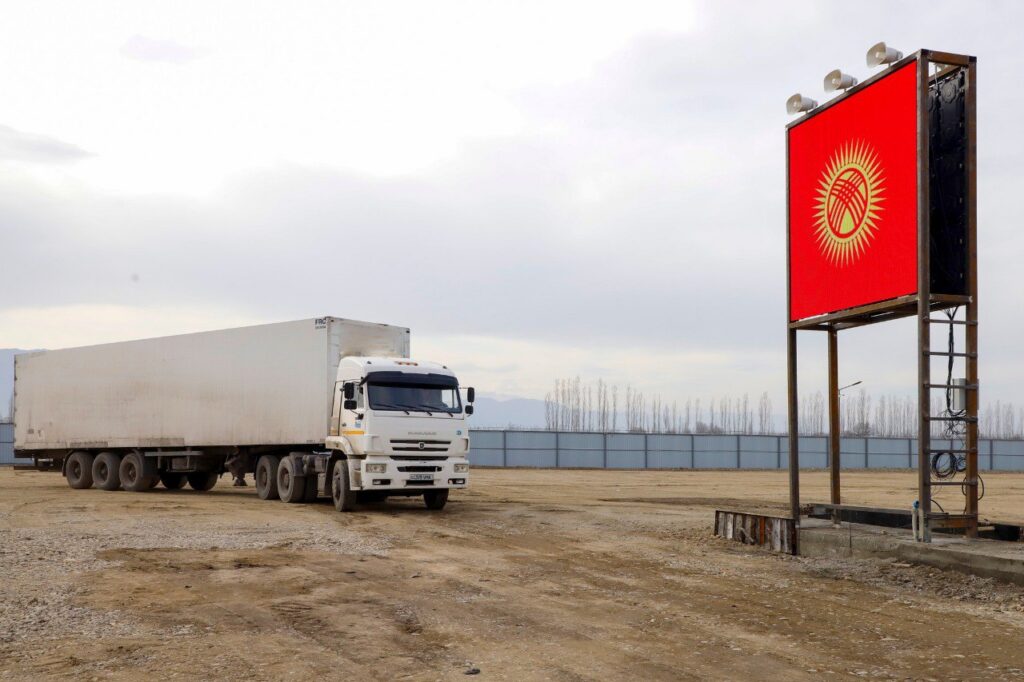
Escalating tensions in the Middle East are putting pressure on Kyrgyzstan’s export routes, a significant portion of which previously transited through Iranian territory. Iranian ports in the Persian Gulf and on the Caspian Sea have provided Kyrgyz producers with access to markets in the Middle East and Europe. According to the National Statistical Committee of Kyrgyzstan, cattle exports from Kyrgyzstan declined fivefold in 2024. In 2025, domestic meat prices rose sharply amid what authorities described as uncontrolled exports of cattle carcasses, primarily to Uzbekistan and Tajikistan. In response, the State Antimonopoly Service introduced maximum retail prices for lamb and beef in the domestic market and imposed a temporary ban on livestock exports to neighboring countries. To stabilize supply, the government approved meat imports from India for processing plants, while domestic production was intended to meet internal demand. Against this backdrop, many farmers shifted their focus to exporting chilled meat to Iran. In 2024, shipments resumed, beginning with an initial 10-ton consignment, after which volumes gradually increased. The Ministry of Agriculture announced plans to raise lamb exports to Iran to 1,000 tons. In addition to meat, Kyrgyz companies exported legumes, grains, and dried vegetables to Middle Eastern markets via Iranian ports. Honey, beans, and nuts were also shipped to Europe using Iranian transit routes. However, in the context of renewed military tensions, Kyrgyz exporters may now need to seek alternative logistics corridors or new destination markets. Any rerouting is likely to increase transportation costs and reduce the price competitiveness of Kyrgyz agricultural products. In 2023, the Eurasian Economic Commission signed a free trade agreement with Iran, which entered into force on May 15, 2024. The agreement provides for the creation of “green customs corridors,” the digitalization of trade procedures, and the introduction of electronic transit mechanisms. According to EEC Minister for Trade Andrey Slepnev, the deal was intended to facilitate accelerated access to the Iranian market for companies from the Eurasian Economic Union. Under the agreement, goods from EAEU member states benefit from tariff preferences, including zero or reduced import duties in Iran. Iranian products receive comparable preferences within the EAEU market. Last year, Tehran also proposed that Bishkek consider establishing its own merchant fleet, using Iranian ports in the Persian Gulf and the Caspian Sea to export Kyrgyz agricultural products and expand transit opportunities.

Central Asia’s Population Could Reach 96 Million by 2040, Raising Infrastructure Pressures

Central Asia’s population could grow to 96 million by 2040, a trend expected to stimulate economic expansion while placing significant strain on infrastructure, energy systems, and water resources across the region, according to Russia’s state news agency TASS. In an interview with TASS, Nikolai Podguzov, Chairman of the Management Board of the Eurasian Development Bank (EDB), said demographic growth would be one of the defining factors shaping Central Asia’s long-term development. “By 2040, according to our estimates, the population of Central Asia may reach 96 million. This should become a driver of economic growth, but at the same time such numbers will create enormous pressure on infrastructure,” he said. As previously reported by The Times of Central Asia, Central Asia’s population exceeded 84 million in 2025, continuing a rapid upward trend after surpassing 80 million in 2024. Projections indicate that the population could exceed 100 million by 2050, underscoring the scale of demographic and economic transformation facing the region in the coming decades. Podguzov added that the region would require significant progress in energy efficiency, modern transport systems, and water management to ensure sustainable development. He described Central Asia as one of the regions of the world most vulnerable to climate change. According to EDB forecasts, water shortages are expected to intensify, with an annual deficit potentially reaching between 5 and 12 cubic kilometers by 2028. A substantial portion of water resources is already lost due to outdated irrigation and distribution systems. Podguzov said the bank is financing projects to modernize irrigation networks, introduce water-saving technologies, and implement digital water accounting mechanisms across the region. To address these challenges, the EDB has proposed a Eurasian Transport Framework, a network of transport corridors aimed at lowering logistics costs and accelerating trade flows. While existing routes predominantly run east to west, Podguzov emphasized the growing importance of north-south connections, including the potential Trans-Afghan corridor, which could provide access to markets in South Asia and the Persian Gulf. The bank projects that the combined economies of Central Asia’s five countries will reach approximately $600 billion in 2026, positioning the region among the fastest-growing globally. However, Podguzov stressed that demographic expansion, transport development, and water security are closely interconnected challenges that require coordinated policy responses.  

PPP Development in Kyrgyzstan Gains Strong Momentum

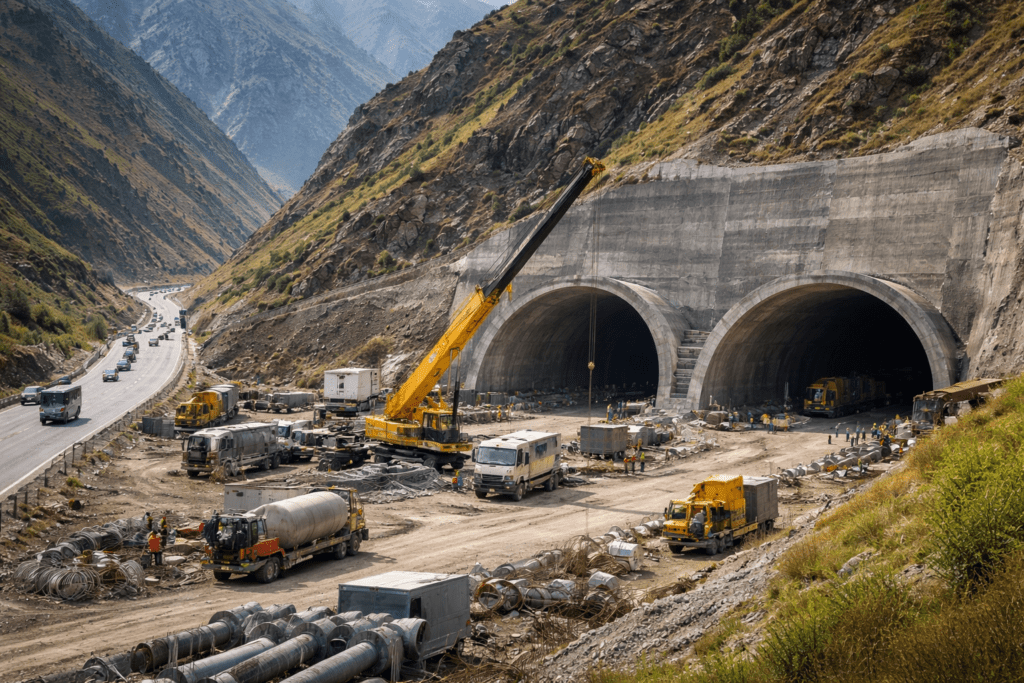
A new FII Institute’s Public-Private Partnerships: Financing The Future Impact Report 2026 reveals that emerging markets are driving the next wave of PPP growth. PPP spending across low-and middle-income countries reached $100.7 billion in 2024, up 16% on-year, with emerging markets now representing around 61% of global PPP activity by GDP share. A key finding is that Kyrgyzstan ranks third in the report’s emerging-market PPP project pipeline, with 80 published or announced projects, behind only the Philippines (230 projects) and Saudi Arabia (98), and ahead of Bangladesh (71) and Peru (54). For Kyrgyzstan, being ranked among the top PPP pipelines signals strong momentum in PPP development. To coordinate and promote PPP projects and attract private investment and private-sector management experience, the government has established the Public-Private Partnership Center of the Kyrgyz Republic. According to the National Investment Agency under the President of the Kyrgyz Republic, the PPP Center's project portfolio now includes over 90 projects with a total private investment volume of 434 billion soms (over $4.9 billion). Currently, 65 PPP projects are in the active implementation phase, and 14 new PPP agreements were signed in 2025 in sectors such as transport, logistics, agriculture, ecology and waste management, tourism, education, and communications, attracting over $3.9 billion in private investment to the Kyrgyz economy. Key PPP agreements signed in 2025 include the construction and operation of the Kelechek alternative toll tunnel through the Too-Ashuu Pass on the Bishkek-Osh highway; the construction and operation of the eastern bypass road around Bishkek; the construction and management of a trade and logistics center in Kara-Suu; and projects to modernize regional healthcare infrastructure, including the Bulak sports and fitness complex in Osh, the U Nexus Hub innovation center at the International University of Kyrgyzstan, and a magnetic resonance imaging (MRI) center at the Osh Interregional Clinical Hospital. An important PPP initiative is the Trans-Eurasian Route railway project. A public-private partnership agreement for the project was signed in Bishkek in February 2025, marking Kyrgyzstan’s first PPP initiative in the railway sector. The agreement was concluded between the National Investment Agency, Kyrgyzstan’s national railway company Kyrgyz Temir Jolu, and the U.S.-based consortium All American Rail Group Global Infrastructure Partner LLC. The project involves the construction of a railway across central Kyrgyzstan, traversing mountainous terrain from east to west and connecting Karakol in the northeastern Issyk-Kul region with Makmal in the southwestern Jalal-Abad region. The railway is expected to play a key role in modernizing the country’s transport infrastructure and enhancing regional connectivity and economic development. The growth in the number of PPP projects was supported by legislative reforms in 2025. Amendments to the PPP Law significantly simplified procedures for investors: a simplified mechanism for launching small projects was introduced, along with provisions allowing the allocation of municipal land and property without a tender at a preferential rental rate. A milestone of 2025 was the establishment of the PPP Academy, a joint initiative of the PPP Center and the Eurasian Development Bank, aimed at training professionals for Kyrgyzstan’s...

The World Bank Backs Kazakhstan’s Rail Shortcut

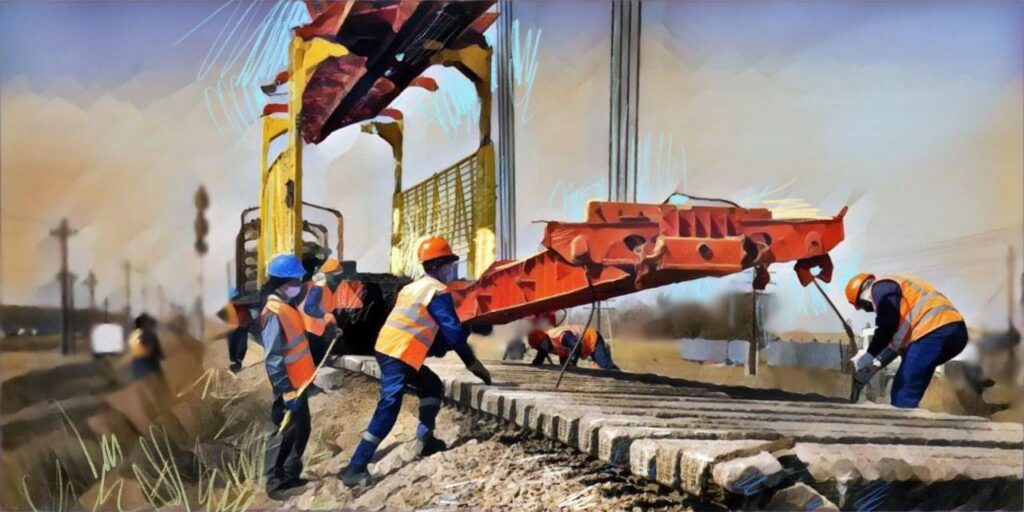
On February 19, 2026, the World Bank Board approved an $846 million IBRD guarantee to help the state-owned railway company Kazakhstan Temir Zholy (KTZ) mobilize $1.41 billion in long-term commercial financing. The financing is linked to a KTZ reform program under the umbrella “Transforming Rail Connectivity in Kazakhstan (Middle Corridor Development)” initiative. The purpose is to expand rail connectivity and upgrade logistics on Kazakhstan’s segment of the Trans-Caspian International Transport Route (TITR, Middle Corridor). The Asian Infrastructure Investment Bank (AIIB) will add a $564 million co-guarantee that shifts the financing away from a classic sovereign-loan model and toward private credit backed by multilateral risk coverage. The Multilateral Investment Guarantee Agency (MIGA) presents this operation as part of a wider World Bank Group approach that pairs corridor capital expenditure with steps to strengthen the operator’s financial sustainability and commercial viability. The operation is structured as a two-part package. First, it finances a new 322.3-kilometer railway on a new segment between Mointy and Kyzylzhar in central Kazakhstan. This segment is meant to remove a major network detour, shorten the TITR route within Kazakhstan by 149 kilometers, ease congestion on heavily used sections, and support double-stack container operations. The line is planned with modern signaling and telecommunications, plus design provisions for later expansion and electrification. Second, it ties the construction to a reform program at KTZ, including tariff reform, exploration of alternative financing mechanisms, stronger financial and environmental management, and preparatory work for a potential initial public offering. The World Bank is structuring delivery through a Multi-Phase Programmatic Approach with the stated aim of tripling freight volumes and halving end-to-end transit times on Kazakhstan’s Middle Corridor segment by 2030. Why This Segment Matters for the Middle Corridor Inside Kazakhstan, the Mointy–Kyzylzhar line is a central connector in the Trans-Kazakhstan east–west trunk carrying traffic from the China-facing gateways at Dostyk and Khorgos toward the Caspian outlets at Aktau and Kuryk. Mointy itself is a pivotal junction where train paths, locomotives, and crews are redistributed across multiple directions; as a result, any congestion there propagates quickly into corridor-wide delays. In early 2025, President Kassym-Jomart Tokayev directed acceleration of the Trans-Kazakhstan corridor. KTZ says the expected benefits include decreased pressure on heavily used central segments, fewer locomotive changeovers at key junction points, and, on some routings, the potential to cut more than a day from transit time between the Chinese border and Aktau. The World Bank’s 2023 Middle Corridor study stressed that the corridor’s most durable growth driver is regional trade among the core corridor economies: China–Europe movements remain important, but they compete with multiple alternatives, above all maritime shipping. An infrastructure upgrade adds economic value only if it reduces variability at the handoff points where delays accumulate, including rail-to-port interfaces, Caspian coordination, and national borders. Relieving the domestic bottleneck in Kazakhstan is economically meaningful only insofar as it stabilizes arrival times to Caspian terminals, creates more room for dispatching, and helps logistics providers offer shippers more predictable end-to-end service along the TITR. The emphasis is...

Kyrgyz Citizens to Be Allowed to Pass On E-Wallet Funds to Heirs

Kyrgyzstan’s parliament, the Jogorku Kenesh, has approved a government initiative to regulate the inheritance of electronic money, with the National Bank also backing the proposal. According to the regulator, the popularity of electronic wallets in the country continues to grow. Their number has exceeded 6.5 million, marking an annual increase of about 20%. In the first six months of last year alone, the volume of electronic wallet transactions reached $3.2 million, while the total number of transactions amounted to 132 million. At the same time, there have been no unified rules governing the inheritance of electronic funds, leading to disputes, including legal conflicts. The National Bank noted that many e-wallets remain unidentified and that legislation has lagged behind the rapid development of digital financial instruments. Following the completion of public consultations, amendments are expected to be introduced to the Civil Code of Kyrgyzstan recognizing electronic money as part of a citizen’s property. This would allow funds held in electronic wallets to be inherited on an equal basis with bank accounts. Previously, commercial banks were required to resolve such matters independently, which often resulted in legal disputes. In some cases, after the death of an e-wallet owner, funds were transferred to only one heir, typically the first to contact the bank. The new law is intended to establish a clear and uniform inheritance procedure. Under the draft amendments, once notified of a customer’s death, a bank will be required to block transactions on the e-wallet account at the request of a notary. After heirs’ rights are verified, the funds will be distributed in accordance with the procedure established by law. Financial institutions will also be required to provide notaries with information not only about the deceased’s bank deposits but also about their electronic wallets and other financial assets. In comments to The Times of Central Asia, representatives of the National Bank said that the sums citizens hold in electronic wallets have become significant, prompting the regulator to support the initiative put forward by the Ministry of Justice. Elizat Zhaparova, head of the banking supervision department, noted that amendments to the law on the protection of bank deposits were adopted last year, and the National Deposit Protection Agency now guarantees the safety of bank deposits. She added that extending similar inheritance provisions to electronic wallets is a logical step. The reform marks a move toward aligning Kyrgyzstan’s digital financial sector with civil law, closing a regulatory gap and reducing the risk of disputes among heirs.