The third Uzbekistan-China Interregional Forum, held in the Chinese city of Xi’an, concluded with Tashkent signing more than $3.5 billion in investment and export agreements with Chinese partners, according to the Tashkent city administration.
The agreements include $3.35 billion in investment projects and $156 million in export contracts spanning infrastructure, transport, construction, environmental technology, and industrial production.
Officials said the deals are aimed at modernizing the Uzbek capital’s urban infrastructure and improving transport systems, public spaces, environmental services, and industrial capacity.
The forum comes as China’s economic role in Uzbekistan continues to expand. According to Uzbekistan’s Dunyo news agency, speakers at the Xi’an forum said bilateral trade reached $18 billion last year, while Chinese investment in Uzbekistan totaled $17 billion.
China has become one of Uzbekistan’s most important economic partners, with cooperation expanding from trade and construction into transport, energy, industry, and urban development. Dunyo’s report on the forum also presented the Xi’an meeting as part of a broader push to build direct ties between Uzbek regions and Chinese provinces, rather than limiting cooperation to central government agreements.
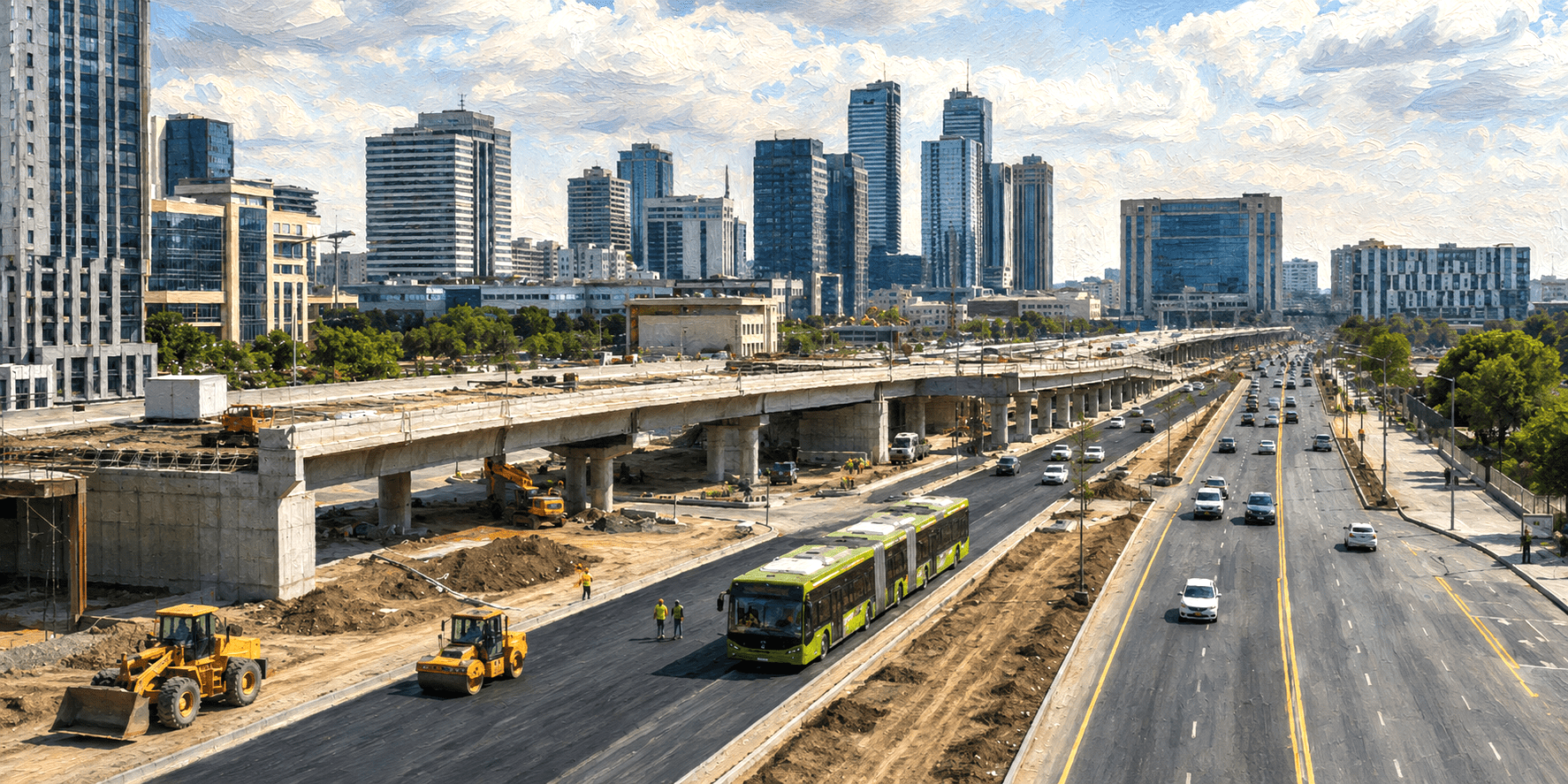
Among the largest planned projects are a $1 billion initiative to develop Bus Rapid Transit, known as BRT, overpasses, and road infrastructure under the EPC+F financing model, and another $1 billion package focused on transport and social infrastructure projects. Additional agreements include $500 million for modern residential complexes in renovation zones and $400 million for drainage, irrigation, and stormwater systems.
The city administration said financing is expected to come from Chinese partners without the direct use of Uzbekistan’s state budget or sovereign guarantees, although repayment would still depend on future municipal revenue streams. The projects are planned under the Engineering, Procurement, Construction, and Financing model, known as EPC+F.
The financing structure is significant as many of the largest projects are municipal rather than national in scope. It allows Tashkent to pursue major road, drainage, and transport upgrades while presenting the deals as externally financed. Nevertheless, projects of this type can still create long-term obligations if future city revenues are used to cover repayments.
The forum also focused on the development of Tashkent’s Yangi Avlod special industrial zone. Agreements worth $130 million were signed with Chinese companies, including Jwise, Zhongke Honghu, CAS Cloud, and UMGG. The projects are expected to support manufacturing infrastructure, digital management systems, and high-tech industrial production in the capital.
Yangi Avlod has been promoted as one of Tashkent’s main industrial expansion sites. According to the zone’s official website, it is located in the Yangihayot district and is planned as a 764.5-hectare industrial area with logistics, warehouse, administrative, and commercial infrastructure.
Other agreements include investments in decorative stone manufacturing, ceramic production, and smart waste-sorting equipment.
Export contracts signed during the forum included three agreements worth a combined $150 million for jewelry exports, as well as deals covering cotton yarn and silver concentrate supplies.
Separately, during the official visit to China, Tashkent Mayor Shavkat Umurzakov met with executives from China Railway Construction Corporation to discuss urban renovation projects, transport infrastructure, and waste-processing facilities.
According to the Tashkent administration, discussions included plans for new toll roads in the capital, including a ring road stretching nearly 100 kilometers and another toll highway connecting central Tashkent with a planned future international airport.
The parties also discussed potential cooperation on schools, kindergartens, hospitals, and other social infrastructure projects using modern environmental and construction standards.
Chinese company representatives said they were interested in studying the proposals and expanding practical cooperation with the Tashkent city government.