• KGS/USD = 0.01144 0%
  • KZT/USD = 0.00206 0%
  • TJS/USD = 0.10699 -0.19%
  • UZS/USD = 0.00008 0%
  • TMT/USD = 0.28571 0%
  • KGS/USD = 0.01144 0%
  • KZT/USD = 0.00206 0%
  • TJS/USD = 0.10699 -0.19%
  • UZS/USD = 0.00008 0%
  • TMT/USD = 0.28571 0%
  • KGS/USD = 0.01144 0%
  • KZT/USD = 0.00206 0%
  • TJS/USD = 0.10699 -0.19%
  • UZS/USD = 0.00008 0%
  • TMT/USD = 0.28571 0%
  • KGS/USD = 0.01144 0%
  • KZT/USD = 0.00206 0%
  • TJS/USD = 0.10699 -0.19%
  • UZS/USD = 0.00008 0%
  • TMT/USD = 0.28571 0%
  • KGS/USD = 0.01144 0%
  • KZT/USD = 0.00206 0%
  • TJS/USD = 0.10699 -0.19%
  • UZS/USD = 0.00008 0%
  • TMT/USD = 0.28571 0%
  • KGS/USD = 0.01144 0%
  • KZT/USD = 0.00206 0%
  • TJS/USD = 0.10699 -0.19%
  • UZS/USD = 0.00008 0%
  • TMT/USD = 0.28571 0%
  • KGS/USD = 0.01144 0%
  • KZT/USD = 0.00206 0%
  • TJS/USD = 0.10699 -0.19%
  • UZS/USD = 0.00008 0%
  • TMT/USD = 0.28571 0%
  • KGS/USD = 0.01144 0%
  • KZT/USD = 0.00206 0%
  • TJS/USD = 0.10699 -0.19%
  • UZS/USD = 0.00008 0%
  • TMT/USD = 0.28571 0%

Viewing results 19 - 24 of 757

Uzbekistan Conducts First Dual IPO in London and Tashkent

Uzbekistan has completed its first international equity offering, as the state-backed National Investment Fund of Uzbekistan (UzNIF) began trading through a dual listing on the London Stock Exchange and the Tashkent Stock Exchange. UzNIF raised $603.6 million by selling a 31% stake to international and domestic investors. The proceeds could rise to about $692 million if an overallotment option is exercised in full, bringing the total stake sold to 35%. At the offer price, the fund was valued at about $1.95 billion. The offering was managed by Franklin Templeton, while cornerstone investors included funds and accounts managed by BlackRock, Franklin Resources, and Redwheel. The shares were sold by Uzbekistan’s Ministry of Economy and Finance, so the proceeds will go to the state rather than directly to the fund. The listing attracted more than $2.8 billion in investor demand. Julia Hoggett, chief executive of the London Stock Exchange, described UzNIF as the first international IPO from Uzbekistan and the largest IPO on the exchange’s markets so far this year. Saida Mirziyoyeva, head of Uzbekistan’s presidential administration, framed the transaction as part of the country’s effort to deepen capital-market reforms and draw long-term foreign investment. Speaking at the London Stock Exchange, she said the IPO was not only about raising capital, but also about building trust in a new generation of Uzbek institutions. “Uzbekistan has become a more open and reliable partner for the global capital market,” Mirziyoyeva wrote on Telegram. Uzbek officials say the country’s economy has nearly tripled in size in recent years, while investor protections and corporate governance standards have been strengthened. The listing comes as Uzbekistan intensifies efforts to position itself as a new investment destination in Central Asia. During a visit to London, Mirziyoyeva held talks with British officials, financial executives, and investors as Tashkent seeks to expand private-sector participation and develop plans linked to a proposed Tashkent International Financial Centre. Official figures show that British businesses have already invested more than $1 billion in Uzbekistan’s economy. Trading in London opened at $25 per global depositary receipt, with shares rising roughly 12% to $28 within the first hours of trading. On the domestic market, a separate tranche was made available through the Tashkent Stock Exchange, giving Uzbek investors access to a vehicle that had primarily been aimed at international institutions. UzNIF holds stakes in 13 state-linked companies in sectors including transport, energy, banking, telecommunications, utilities, and aviation. Its major holdings include Uzbekistan Airways, Uzbektelecom, Uzbekhydroenergo, and other infrastructure and energy operators. The fund was established in 2024 as part of Uzbekistan’s broader privatization and capital-market reform program. By grouping stakes in strategic state-owned enterprises into a single listed vehicle, the government is offering investors exposure to several parts of the Uzbek economy while retaining state control over the underlying assets. For Uzbekistan, the successful dual listing is a significant market-opening moment. It gives the government a benchmark for future privatizations, broadens access to Uzbek equities, and tests whether investor interest in the country’s reform story can be...

Central Asia Steps Out of the Post-Soviet Shadow

Central Asia is rarely presented on its own terms. It is more often viewed through exterior lenses like Russian imperial memory, Chinese reach, Silk Road romance, or great-power rivalry. The result is a region made to look secondary to the forces around it, even as its five countries carry deep histories, distinct languages, and identities that cannot be reduced to a backdrop. That old frame is starting to crack. Central Asia is finding new ways to tell its own story. The shift goes beyond tourism or national branding. It is about who gets to define the region, which is still too often seen through the things done to it or extracted from it. Culture depicts the other side of that narrative, a place that has shaped history, not merely endured it, with traditions and ideas that have long carried influence far beyond its borders. [caption id="attachment_49147" align="aligncenter" width="2048"] Sky above Almaty: Qandy Qantar; image courtesy of Saule Suleimenova[/caption] Kazakhstan offers one visible example. The Almaty Museum of Arts opened on September 12, 2025, adding a major institution for modern and contemporary art. Its arrival builds on a broader shift in which private galleries, international platforms, and artists such as Aigerim Karibayeva and Saule Suleimenova are moving Kazakh art beyond folkloric shorthand toward identity, postcolonial memory, and urban life. The reopening of the Tselinny Center of Contemporary Culture, in a former Soviet-era cinema, adds a sharper symbolic layer. A building once tied to Soviet public culture has become a platform for modern Central Asian voices, reflecting a scene increasingly rethinking nomadism rather than simply reproducing it. [caption id="attachment_49148" align="aligncenter" width="1024"] Image: The Tselinny Center of Contemporary Culture[/caption] Uzbekistan has made culture central to its international reemergence. The inaugural Bukhara Biennial brought contemporary art into a city more often seen through its monuments, turning madrasas and caravanserais into exhibition spaces for Uzbek and world artists. The same push is visible in the Tashkent Centre for Contemporary Art, Uzbekistan’s presence at the Venice Architecture Biennale, and design projects such as When Apricots Blossom, which link heritage, craft, and the environmental disaster of the Aral Sea. Artists such as Oyjon Khayrullaeva show a younger generation reworking Islamic ornament, textiles, and public space into new visual languages. At the same time, the State Museum of Karakalpakstan in Nukus, with its Soviet-era censored works, gives the country’s art history deeper heft. In Tashkent, the Islamic Civilization Center is working on a different scale. Recognized by Guinness World Records in 2026 as the largest museum of Islamic civilization, it gives Uzbekistan a stronger role in shaping how that legacy is understood today. [caption id="attachment_49146" align="aligncenter" width="2048"] Image courtesy of Oyjon Khayrullaeva[/caption] Kyrgyzstan’s confidence rests on different ground. The sixth World Nomad Games are scheduled for August 31 to September 6, 2026, with events in Bishkek and around Issyk-Kul. That gives Kyrgyzstan a stage for living nomadic traditions, not a static museum display of them. Its contemporary art scene adds a more intimate layer, with artists such as...

Opinion: Middle Powers and the “Voice of the Region” – Is Central Asia Becoming a Coordinated Actor?

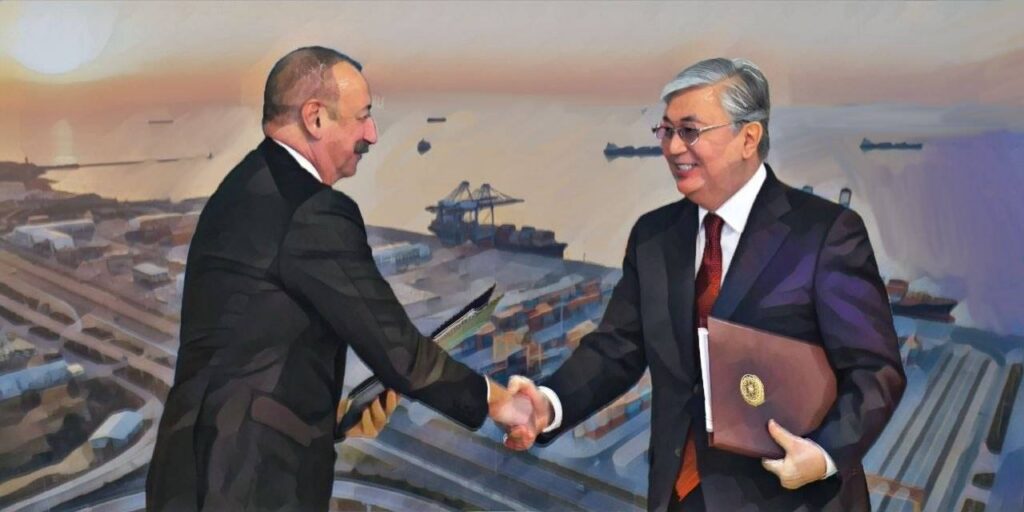
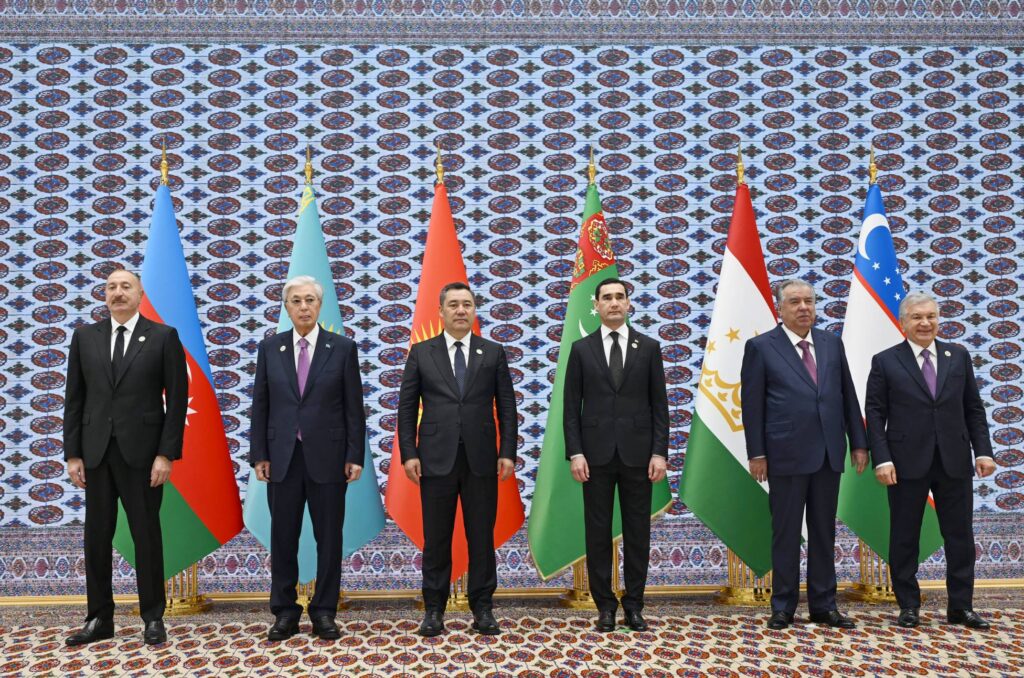
Against the backdrop of growing global fragmentation and the weakening of universal international institutions, the role of so-called middle powers is increasing. These are states able to influence regional agendas without possessing great-power status. In this changing system, Central Asia is gradually moving beyond its long-standing image as a geopolitical periphery and is beginning to act more like a region with shared interests. For decades, the region was viewed mainly as a space where the interests of external powers, including Russia, China, the U.S., and others, intersected. Today, that paradigm is beginning to shift. Central Asia is showing greater signs of agency through what may be described as a cluster effect: individually, the countries have limited influence, but collectively they form an important transit hub between Europe and Asia, a growing market, a significant resource base, and a strategic security zone. This creates the conditions for a more coordinated regional position, even if a single regional voice is still emerging rather than fully formed. C5+Azerbaijan as a Foundation for Regional Architecture The institutional foundation of this process is the Central Asian leaders' consultative format, which is now expanding through Azerbaijan's participation. That is turning what was once a C5 dialogue into a looser C5+Azerbaijan, or C6, framework focused on transport, energy, and practical cooperation. Within this framework, the countries of the region are learning to act in a more coordinated manner without supranational pressure. In practice, this process is developing through three main areas. The first is transport and logistics. Azerbaijan's participation has strengthened efforts to make the Middle Corridor more coherent, though the route still faces bottlenecks in capacity, customs coordination, and Caspian crossings. Through tariff coordination, simplified border procedures, and investment in port and rail infrastructure, Central Asia and the Caucasus are increasingly functioning as parts of a single transport artery. That gives the region a faster option for cargo between China and Europe, even if it remains far smaller than traditional maritime routes. Shipping goods via the Suez Canal or the northern route can take between 35 and 45 days, whereas the Middle Corridor can reduce transit times to around 13-21 days under favorable conditions. According to forecasts cited by BCG, shipping volumes along the route could increase three- to fourfold during the current decade. Beyond logistics, the project is creating a new economic framework for the region. Its status as a crossroads is attracting investment in transport hubs and manufacturing facilities along the route, with the potential to turn transit corridors into zones of economic growth. This gives participating countries not only transit revenue but a stronger basis for long-term strategic resilience. The second major area is energy integration, where historical disputes over water and fuel resources are increasingly being supplemented by models of joint development. The Kambarata HPP-1 hydropower project in Kyrgyzstan, being developed with Kazakhstan and Uzbekistan, has created an important precedent for shared management of water and energy interests. The project is expected to support cleaner electricity generation while helping stabilize irrigation flows...

OTS Summit in Turkistan Reveals Strains Beneath Turkic Unity

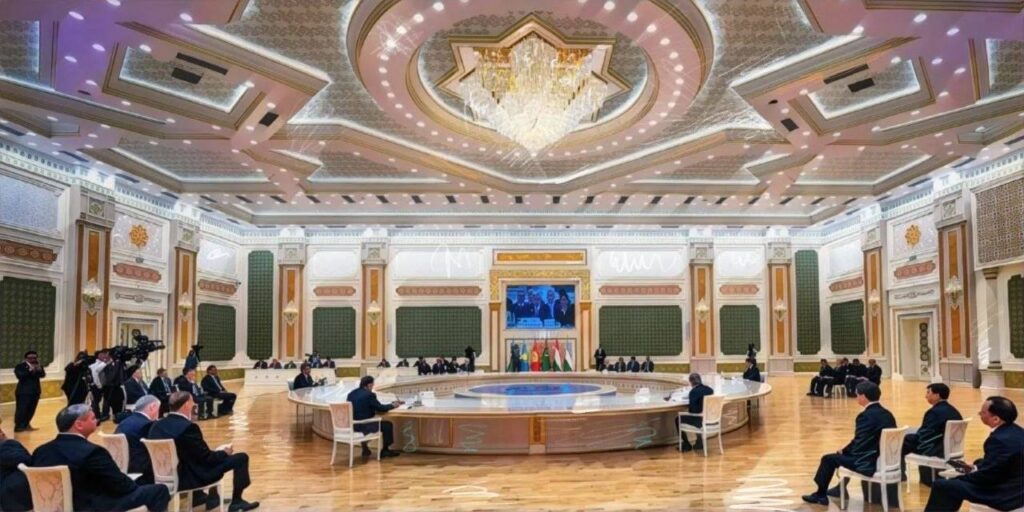
Last Friday, the Kazakh city of Turkistan, officially promoted as the “spiritual capital” of the Turkic world, hosted an informal summit of the Organization of Turkic States (OTS). The official theme was artificial intelligence and digital development, but the meeting also highlighted older questions about the OTS’s political identity, its relationship with Russia, and Ankara’s influence within the Turkic world. Because the gathering was informal, much of what took place remained behind closed doors. Yet public statements, official readouts, and subsequent commentary offered clues about the tensions and competing agendas within the organization. The summit brought together the presidents of Turkey, Azerbaijan, Kyrgyzstan, and Uzbekistan, as well as Tufan Erhurman, president of the Turkish Republic of Northern Cyprus, which is recognized only by Turkey. The meeting followed Turkish President Recep Tayyip Erdoğan’s state visit to Kazakhstan, during which the two countries signed 15 agreements, including a Declaration on Eternal Friendship and an Enhanced Strategic Partnership between Kazakhstan and Turkey. In Turkistan, summit participants visited the mausoleum of Khoja Ahmed Yasawi, where Erdoğan donated a handwritten Quran manuscript to the historic site. Leaders also launched the construction of a Center for Turkic Civilization. The presidents of Kazakhstan and Uzbekistan separately visited a newly built mosque donated to Turkistan by Tashkent. Despite the atmosphere of symbolism and fraternity, however, the summit also exposed clear differences between Ankara’s wide-ranging vision for the OTS and Astana’s insistence that the organization should remain a practical cooperation platform. Those differences became especially visible in President Kassym-Jomart Tokayev’s speech at the summit. “Recently, opinions have been voiced portraying our organization as a military alliance. It is obvious that those spreading such speculation pursue malicious goals and seek to sow discord. Kazakhstan considers it necessary to reject such positions,” Tokayev said. “The Organization of Turkic States is neither a geopolitical project nor a military organization. It is a unique platform aimed at strengthening trade, economic, technological, digital, cultural, and humanitarian cooperation among brotherly nations.” Kazakh political analyst Daniyar Ashimbayev argued that Tokayev’s remarks reflected a growing internal debate within the OTS. “On the one hand, some media interpreted his words as a response to foreign experts warning about the emergence of a ‘Turanic NATO.’ On the other hand, it should be noted that some fellow presidents within the OTS persistently promote the development of military cooperation. Kazakhstan is equally persistent in defining which forms of interaction it considers acceptable within the organization,” Ashimbayev wrote. Another analyst, Andrei Chebotarev, also argued that the core message of Tokayev’s speech was to frame the OTS primarily as a platform for economic, technological, digital, cultural, and humanitarian cooperation. “In this context, he rejected the idea of transforming the organization into a military-political bloc. This sent a signal both to pan-Turkic political forces interested in such a transformation and to political elites in countries that view the organization’s activities with caution,” Chebotarev said. Chebotarev also noted that Tokayev referenced the “OTS+” format launched at the organization’s previous summit in Azerbaijan and voiced support...

Central Asia Seeks More Local Value From Critical Minerals

Rising demand for critical minerals is drawing Central Asia deeper into global supply chains, but the region’s harder test is not whether it has the deposits. It is whether more value can stay at home. Copper, tungsten, graphite, antimony, rare earths and other metals now sit at the center of battery production, power grids, chips, weapons systems, and renewable energy. Governments across the region want the sector to bring capital, jobs, and technology. The risk is another cycle in which raw materials leave the region, and most of the value is created elsewhere. The scale of the region’s reserves explains why outside interest is rising. An OECD review of critical raw materials in Central Asia says the region holds 39% of global manganese ore reserves, 31% of chromium, 20% of lead, 13% of zinc, 9% of titanium, 6% of aluminum, and 5% each of copper, cobalt, and molybdenum. The same review says Kazakhstan can export 21 of the 34 critical raw materials on the EU list, while Kyrgyzstan has the world’s third-largest antimony reserves, and Uzbekistan has the world’s eleventh-largest copper reserves. Uranium widens the picture: Kazakhstan is the world’s largest uranium producer, accounting for 39% of mined uranium supply in 2024, according to the World Nuclear Association. Kazakhstan has moved fastest in turning this base into policy. The prime minister’s office says the country will spend about $500 million over three years on geological exploration and modernizing infrastructure. The plan includes seismic surveys, new data systems, and a geological cluster in Astana. The government wants to raise geological study coverage to 2.2 million square kilometers. President Kassym-Jomart Tokayev has linked the sector to Kazakhstan’s wider industrial plans. In his 2025 state-of-the-nation address, Tokayev said the mining and metallurgical complex still had “significant growth potential, particularly in the production of high-value-added products.” New discoveries have sharpened that push. Kazakhstan’s industry ministry said in 2025 that geologists had identified the Zhana Kazakhstan rare earth site, with estimated resources of more than 20 million metric tons. The site contains neodymium, cerium, lanthanum, and yttrium. Officials have also cited the Kuirektykol site in the Karaganda Region, where confirmed reserves are estimated at 795,800 tons, with total resources estimated at 935,400 tons. Uzbekistan is making its strongest move in copper and processing capacity. In March, President Shavkat Mirziyoyev launched Copper Concentrator No. 3 at the Almalyk Mining and Metallurgical Complex. The $2.7 billion facility is designed to process 60 million tons of ore and produce about 900,000 tons of copper concentrate per year. Once fully operational, it is expected to raise daily concentrate output at Almalyk from 2,400 tons to 5,000 tons. Uzbekistan’s minerals push has also drawn U.S. support. Uzbekistan and the United States signed a memorandum on critical minerals and rare earth supply chains in February, giving Tashkent a clearer place in Washington’s effort to diversify critical minerals supply chains beyond China. The U.S. International Development Finance Corporation later signed a Joint Investment Framework with Uzbekistan, stating that this would “promote cooperation...

Central Asia Enters the Minerals Race

Central Asia is entering the critical minerals race at a time when deposits alone no longer confer strategic advantage. The Astana Mining & Metallurgy Congress, scheduled for June 11–12 at Hilton Astana, gives the issue operational form: supply chains, investment, and commercial projects. U.S. Under Secretary Jacob Helberg will participate there and in the preceding C5+1 Critical Minerals Dialogue on June 10–11. The Astana agenda also puts Central Asia’s role in global supply chains directly into view. The test is how quickly governments, investors, and industrial buyers can finance, process, move, and purchase minerals before they are locked into industrial supply chains. The G7 is moving in the same direction, but through institutional design rather than industrial action. The group is discussing a permanent critical minerals secretariat to maintain continuity across changing G7 presidencies, possibly at either the International Energy Agency or the OECD. The proposal acknowledges a real deficiency in Western coordination, but it also reveals the larger problem: continuity is useful only if it becomes execution. At the same time, reports have circulated about disagreements over stockpiling and leadership, including European resistance to both a single shared stockpile and a U.S.-led structure. For Central Asia, the practical question is not institutional architecture alone, but whether such coordination produces finance, processing capacity, and long-term offtake. The June dialogue in Astana is part of a wider C5+1 movement from diplomacy toward operational cooperation. Its participants are trying to convert the platform from a talk shop into a vehicle for business transactions. As TCA has reported, U.S. engagement in the region is increasingly tied to business mechanisms, export-credit support, and project finance. Kazakhstan has already moved into this framework track. Kazakhstan and the United States signed a memorandum of understanding on critical minerals cooperation during Tokayev’s November 2025 visit to Washington, and the agreement took immediate shape through the Tau-Ken Samruk–Cove Capital tungsten project. Kazakhstan’s Foreign Ministry later described the MOU as the first agreement of its kind in Central Asia, providing for processing capacity in Kazakhstan, technology transfer, and expanded access for Kazakh products to the U.S. market. In February 2026, Uzbekistan followed with its own U.S. critical minerals track: TCA reported that Tashkent signed a critical minerals MOU on February 4, and that DFC heads of terms for a Joint Investment Framework followed on February 19. Central Asian governments are not passive terrain for outside competition. Kazakhstan, with Central Asia’s most developed mining and metallurgical base, and Uzbekistan, with a rapidly expanding minerals program, are using minerals competition to attract capital and build processing capacity. They are seeking to diversify partners and move beyond dependence on raw material exports. The regional objective is industrial upgrading while preserving room for maneuver between China, Russia, the United States, Europe, and other partners. The minerals question cannot be separated from the larger Eurasian setting. Central Asia is trying to widen its own field of choice before its options are narrowed by what Hudson Institute senior fellow Ken Moriyasu called, in comments to...