• KZT/USD = 0.00213
  • TJS/USD = 0.10810
  • UZS/USD = 0.00008
  • TMT/USD = 0.29760
  • KZT/USD = 0.00213
  • TJS/USD = 0.10810
  • UZS/USD = 0.00008
  • TMT/USD = 0.29760
  • KZT/USD = 0.00213
  • TJS/USD = 0.10810
  • UZS/USD = 0.00008
  • TMT/USD = 0.29760
  • KZT/USD = 0.00213
  • TJS/USD = 0.10810
  • UZS/USD = 0.00008
  • TMT/USD = 0.29760
  • KZT/USD = 0.00213
  • TJS/USD = 0.10810
  • UZS/USD = 0.00008
  • TMT/USD = 0.29760
  • KZT/USD = 0.00213
  • TJS/USD = 0.10810
  • UZS/USD = 0.00008
  • TMT/USD = 0.29760
  • KZT/USD = 0.00213
  • TJS/USD = 0.10810
  • UZS/USD = 0.00008
  • TMT/USD = 0.29760
  • KZT/USD = 0.00213
  • TJS/USD = 0.10810
  • UZS/USD = 0.00008
  • TMT/USD = 0.29760

Viewing results 37 - 42 of 97

Insider’s View: Cooperation Between Uzbekistan and the United States in Tourism

In recent years, relations between the Republic of Uzbekistan and the United States of America in the field of tourism have reached a qualitatively new level. The foundation of this cooperation lies in the systematic efforts of the Tourism Committee to implement the provisions of the “Road Maps” aimed at strengthening bilateral ties, expanding tourism exchanges, and attracting American investment into the sector. The period of 2018–2019 became a turning point in enhancing the tourism dialogue between the two countries. Uzbekistan welcomed experts from the International Association of Tourism Professionals, led by H. Luis Lorenzo Gutierrez, representatives of “PBS” and “ABC” television channels, as well as a delegation from the Congress of Bukharian Jews of the USA and Canada. During the same period, the Tourism Committee organized a series of visits by well-known American bloggers Mark Wiens and Sonny Side, thanks to which millions of viewers around the world were introduced to Uzbekistan’s gastronomic and cultural richness. An important step was the introduction of American online booking services — Booking.com, Expedia, Hotels.com, and Tripadvisor. By the end of 2018, 886 hotels across the country had been connected to these platforms, significantly improving Uzbekistan’s accessibility for American travelers. Since 2019, special attention has been paid to promoting Uzbekistan’s tourism potential through U.S. media and digital platforms. Within the framework of the “World Influencers Congress 2019” forum, more than 20 leading American bloggers arrived in Tashkent, including the “Devin Super Tramp” team, which filmed a short movie titled “Aladdin” in Bukhara and Khiva. These projects not only enhanced Uzbekistan’s visibility on global social media but also helped build its image as a safe and welcoming destination. Cooperation in professional training also developed in parallel. Edward Castley, Vice President of the American Hotel & Lodging Association (AHLA), conducted master classes for university and college instructors, sharing U.S. best practices in training tourism industry professionals. During the COVID-19 pandemic in 2020, an online conference was held with the assistance of the Embassy of Uzbekistan in Washington, D.C., bringing together leading American travel companies — ASTA, Intrepid Travel, G Adventures, and others. The participants discussed measures to restore tourist flows and improve traveler safety. In subsequent years, American media outlets such as The New York Times, National Geographic, and Foreign Policy became increasingly active in covering the country’s tourism potential. Joint media collaborations, including Mystery Box’s 2021 production and CNN’s 2023 documentary The Spirit of Samarkand, have been instrumental in highlighting the cultural heritage and contemporary life of Uzbekistan’s historic cities. In recent years, Uzbekistan–U.S. cooperation in tourism has acquired strategic importance. In 2024, Chairman of the Tourism Committee Umid Shadiev met with U.S. Ambassador Jonathan Henick to discuss prospects for developing green tourism and workforce training. The participation of the Uzbek delegation in prestigious exhibitions — Miami World Travel Expo 2024 and New York Travel and Adventure Show 2025 — opened new opportunities for promoting the country’s tourism brand. Notably, Uzbekistan was recognized as the “Best New Exhibitor” at the New York event. The...

Opinion: The Twelfth Summit of the Organization of Turkic States – A Turning Point for Regional Peace and Integration

The Twelfth Summit of the Organization of Turkic States (OTS) was held on October 6–7, 2025, in Gabala, Azerbaijan, under the theme “Regional Peace and Security,” and was hosted by the President of the Republic of Azerbaijan, Ilham Aliyev. Attending the summit were Kassym-Jomart Tokayev, President of the Republic of Kazakhstan; Sadyr Japarov, President of the Kyrgyz Republic; Recep Tayyip Erdoğan, President of the Republic of Turkey; Shavkat Mirziyoyev, President of the Republic of Uzbekistan; and Viktor Orbán, Prime Minister of Hungary, participating as an observer. Turkmenistan, represented by Gurbanguly Berdimuhamedov, and the Turkish Republic of Northern Cyprus, represented by Ersin Tatar, also attended the summit as observer members. Among the central topics discussed was support for the Joint Declaration signed between Azerbaijan and Armenia on August 8, 2025, in Washington, D.C. The OTS member states regard this declaration as an important step toward lasting peace and stability in the South Caucasus. The summit also emphasized the need for a collective Turkic effort to sustain peace in the region. In his address, President Aliyev noted that one of the outcomes of the Washington Summit was progress on the Zangezur Corridor, describing it as a new transportation route of great importance within both the Middle Corridor and the North–South Corridor. Speaking before the 80th session of the United Nations General Assembly, Armenian Prime Minister Nikol Pashinyan had countered the use of the term “Zangezur Corridor,” which does not appear in the signed documents and was never used in negotiations. Despite these objections, however, Aliyev again used the term at the OTS Summit, reaffirming his intention to move forward under that framework. The New York meeting on September 22, 2025, between the foreign ministers of Azerbaijan and Armenia, where both sides agreed to continue dialogue based on the outcomes of the Washington Declaration, has been widely considered a constructive step toward normalization of relations between the two parties. Another highlight of the summit was President Erdoğan’s call to develop the ‘Turkish Large Language Model.’ “To catch up with global developments in artificial intelligence and to preserve our cultural richness, we need to accelerate the development of the Turkish Large Language Model,” Erdoğan said. “[In] Türkiye, we are taking the first step on the common alphabet issue by printing a work about Chingiz Aitmatov and the Oghuznames in the common alphabet. Today, we are also presenting a copy of this to the leaders.” The initiative reflects the vision for greater cultural, scientific, and digital integration among Turkic states, and it was included as part of the broader digital transformation and innovation agenda outlined in the Gabala Declaration, which followed the summit. Kazakh President Tokayev described the Organization of Turkic States as an “authoritative structure uniting friendly Turkic peoples,” capable of addressing shared challenges, and expressed support for establishing an “OTS+” format to expand cooperation and global visibility. President Aliyev, meanwhile, highlighted growing military collaboration between Azerbaijan and Turkey, referencing more than 25 joint exercises held within one year - although this figure has...

Opinion: Uzbekistan’s Winds of Change – A Blueprint for Renewable Energy Transformation in Central Asia

For much of its post-Soviet history, Uzbekistan’s energy system has been defined by natural gas. Its abundant domestic reserves provide a cheap and reliable source of electricity generation, export revenues, and industrial growth. However, this reliance has come at a cost, including vulnerability to fossil fuel volatility, carbon emissions inconsistent with global climate commitments, and an energy profile increasingly at odds with international investment trends. Today, a new landscape is emerging in Uzbekistan’s energy sector. The vast steppes and desert plateaus of the Karakalpakstan and Navoi regions have emerged as some of the most promising areas for wind turbines and energy sector development. This transformation could redefine not only Uzbekistan’s energy security but also the regional energy map of Central Asia. A Decade in the Making: From Pilot to Pioneer This story begins in 2020, when the United Arab Emirates’ renewable energy developer Masdar signed an agreement to construct the Zarafshan Wind Farm in the Navoi region. Initially, this was not a pilot project, as its proposed capacity was about 500 MW, making it the largest wind project among the Central Asian countries at the time. Its symbolism pulsed with an energy no less powerful than the current itself. For Uzbekistan, which had no operating commercial wind capacity, the project marked a significant shift from concept to execution. The Zarafshan Wind Farm reached financial close in 2020, commenced construction in 2022, and was officially inaugurated in December 2024 by Uzbekistan’s President Shavkat Mirziyoyev. Developer reports describe it as one of the largest operational wind farms in Central Asia. It represented a step forward toward sustainability and a message of resolve for energy resilience. In a region where fossil fuels still dominate, Uzbekistan has positioned itself as a regional leader in large-scale wind energy production.. Scaling Beyond Zarafshan: Kungrad and Nukus The breakthrough at the Zarafshan Wind Farm signaled the dawn of a larger journey. Subsequently, Saudi Arabia’s ACWA Power, a giant in renewable energy, agreed to set up the Kungrad Wind IPP. This project includes a transformative complex of three 500 MW wind farms with a total capacity of 1.5 GW of power generation. According to project plans, it will also be accompanied by a 300 MW battery energy storage system (BESS) and roughly 1,450 kilometers of new transmission infrastructure. This single project surpasses Uzbekistan’s earlier renewable efforts and, when completed, will represent one of the most significant clean energy undertakings in the region. Similarly, the Nukus II wind farm-plus-storage project, which secured financing from the Asian Development Bank (ADB) and other partners in mid-2025, seeks to expand renewable energy use, reduce reliance on fossil fuels, cut greenhouse gas emissions, and strengthen energy security. It includes building and operating a 200 MW wind power plant, a 100 MWh battery storage system, a 44 km transmission line, and an upgrade of the 220 kV Beruniy substation. This integration of renewables with flexible storage represents a new phase of Uzbekistan’s energy transition, one where renewables are not simply added to the grid...

Opinion: Bridging Histories, Building Futures – Central Asia, Pakistan, and the Dream of a Railway

On 5 September 2025, the Times of Central Asia published an article titled “Trans-Afghan Railway: Can Uzbekistan Build a Railway Through Afghanistan to Reach the Sea?” Reading it stirred something deep within me. The piece was not just about steel tracks or trade corridors - it was about dreams, history, and the future of a region I have long been passionate about: Central Asia. I am not a political analyst; I am an engineer by training and a student of history by passion. Having worked in Afghanistan and witnessed the landscape of its geography and politics up close, I feel a personal connection to the idea of connectivity between Pakistan and Central Asia by rail. This is not just a policy debate for me - it is a lifelong vision tied to my family history, my professional journey, and my fascination with the region’s rich past. When the Soviet Union withdrew its last troops from Afghanistan on 15 February 1989, ending its long and bloody war, the region entered a new and uncertain chapter. That very moment coincided with the beginning of my own career. Just two months earlier, I had started my first job as a Junior Engineer. For me, the Soviet withdrawal was not only a historical milestone; it was also a symbolic reminder of how deeply Afghanistan and its neighbors were tied to global currents of power, conflict, and change. Standing at the threshold of my professional life, I wondered how this region - so often defined by wars - might instead be remembered for bridges, trade, and railways. My fascination with Central Asia is also deeply personal. From my mother’s side, my family traces its lineage back to Bukhara. This explains why many families in Pakistan carry the name Bukhari, as their ancestors once migrated southward from that historic Central Asian city. History was not abstract for me - it lived in the stories of my elders and in the books I devoured as a student. In my school years, I read the Baburnama twice. These memoirs of Zahīr ud-Dīn Muhammad Bābur, the founder of the Mughal Empire, fascinated me. Born in Andijan in the Ferghana Valley (modern-day Uzbekistan), Babur’s life was a reminder of how Central Asia and South Asia have always been linked - through migration, culture, politics, and ambition. In 1992, I made my first trip to Tashkent. The journey was more than a visit; it was a pilgrimage to the heart of a region I had admired from afar. That first encounter left an indelible mark on me, and more than three decades later, my passion for Central Asia remains unending. Long before modern projects and international agreements, history itself carved the routes of connectivity. The Khyber Pass, lying between present-day Pakistan and Afghanistan, has for centuries served as a gateway between Central and South Asia. Caravans laden with silk, spices, and stories once passed through its rugged cliffs. Empires - from the Mughals to the British - understood its importance. And...

Insider’s View: Uzbekistan–U.S. – A New Era of Environmentally Friendly and Energy-Efficient Investment

Today, environmentally friendly and energy-efficient projects are no longer just a fashionable trend but a factor of global competitiveness. Uzbekistan, once regarded as a country with a resource-based energy system and limited opportunities for the adoption of modern technologies, is now becoming a hub for “green” investment and innovation. A strategic partnership with the United States plays a special role in this process, encompassing key areas ranging from energy and ecology to finance, education, and culture. Clean and innovative projects are becoming the hallmark of Uzbek-American relations, shaping a new model of cooperation in the 21st century. Green Energy and Strategic Partnership Uzbekistan is moving confidently toward a “green” future. While in 2018 renewable energy sources accounted for less than one percent of electricity generation, from January to July 2025, renewables already provided 20.3% of the country’s total electricity. More than 11 billion kWh of “green” energy were produced, including 6.4 billion kWh from solar power plants and 3.6 billion kWh from wind farms. This volume saved 3.6 billion cubic meters of natural gas and prevented over 2.2 million tons of harmful emissions. Every day, renewables now generate about 26.7 million kWh – enough to cover the needs of 7.28 million households for half a year, or 3.64 million homes for an entire year. Currently, 10 solar and 4 wind plants with a combined capacity of more than 4.5 GW operate across 10 regions of the country. A key focus of Uzbek-American cooperation has become “green” energy. In 2025, Allied Green Ammonia (AGA), together with the U.S. company Plug Power, announced a major project for the production of sustainable aviation fuel, green diesel, and urea. The plan includes the supply of electrolyzers with a capacity of up to 2 GW for the future complex. A final investment decision is expected by the end of 2025, and the project has already been recognized as one of the flagship initiatives for Central Asia. Air Products – A Flagship of American Presence Air Products, a global leader in industrial gases and hydrogen energy, occupies a special place in Uzbek-American cooperation. In the Kashkadarya region, the company participates in a large-scale gas-to-liquids (GTL) project worth around $1 billion. The complex is designed to produce about 1.5 million tons of synthetic fuels per year, including diesel, jet kerosene, and naphtha. Its structure includes air separation units, autothermal reformers, and hydrogen production facilities. This project has become a landmark example of how U.S. technologies are transforming Uzbekistan’s energy sector. In addition to GTL, Air Products is actively developing industrial gas production in Uzbekistan. The company participates in oxygen, nitrogen, and hydrogen production projects, introduces the latest PSA units, as well as freezing and storage technologies that reduce food losses and enhance economic resilience. Furthermore, the company has implemented a “green financing” system that links investments to sustainability principles. These projects not only strengthen the country’s industrial potential but also pave the way for positioning Uzbekistan as a regional hub for “green” energy. The company’s future plans...

Opinion: Turning Deserts Into Fields of Hope

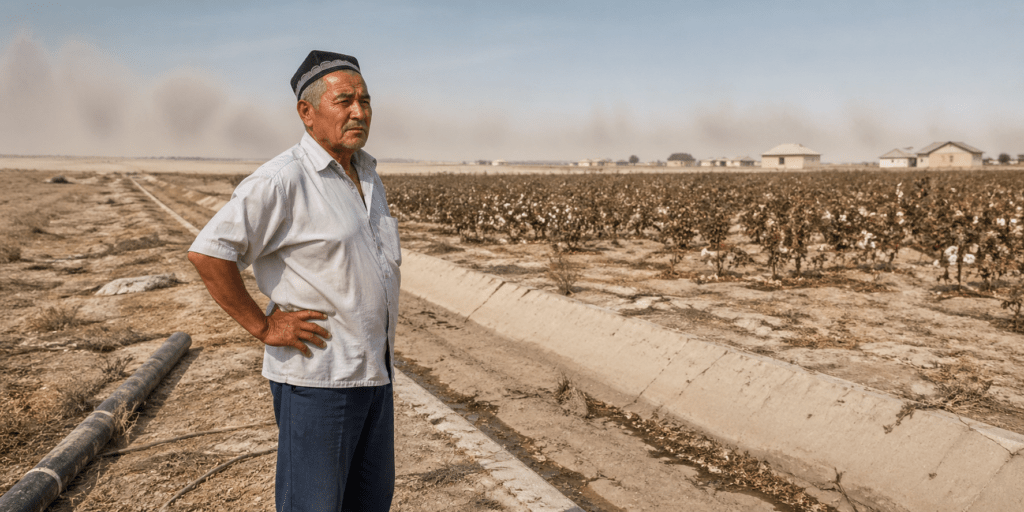
Desertification is a global crisis threatening the livelihoods of 3.2 billion people worldwide. From China’s vast green belt along its largest desert to Central Asia’s unified efforts to halt land degradation on arid plains, the fight against encroaching sand continues. These initiatives offer hopeful examples of human endeavor in restoring degraded lands and safeguarding the future of our planet. In the heart of southern Xinjiang lies the Taklamakan Desert, a vast expanse known as the “sea of death” for its extreme arid and inhospitable conditions. Covering 330,000 square kilometers - an area almost the size of Finland - it is China’s largest desert and the world’s second-largest shifting desert. Here, dunes stretch endlessly, and sandstorm days comprise one-third of the year. For generations, the Taklamakan Desert has threatened surrounding villages, farmlands, and transportation routes, squeezing the living space of those who dwell on its edges. Nearly 80% of the desert sands are in constant motion, while seasonal floods from melting snow on the mountains add further instability, leaving homes and livelihoods at risk. The danger is long-term: at one point, the Taklamakan risked merging with the nearby Kumtag Desert, placing even greater pressure on human settlements. How To Contain The Sands Faced with the challenge, China launched an ambitious initiative: building a shield of vegetation to encircle the Taklamakan Desert, planting desert-tolerant species such as desert poplar, red willow, saxaul, and even roses. This massive project took more than 40 years to complete. By the end of 2023, 2,761 kilometers (about 1,716 miles) of the belt had been established. A year later, the final 285 kilometers - the most challenging section - was closed through the dedicated efforts of 600,000 people. On November 28, 2024, in Yutian County on the desert’s southern edge, the last seedlings were planted into the sands, completing a 3,046-kilometer green belt. This vast ecological barrier stabilizes the Taklamakan Desert’s edge, prevents sandstorms, and protects the fragile ecology. In addition, the green belt provides wild animals in the desert with safe conditions for survival, breeding, and migration. A Bold Green Strategy Against Desertification The Taklamakan Desert control project is a part of China's Three-North Shelterbelt Forest Program, or TSFP, the world's largest afforestation program aimed at curbing desertification. Launched in 1978, this ambitious program seeks to slow the progress of desertification and reduce the frequency of sandstorms by planting vast stretches of trees and resilient plant species across the arid and semi-arid regions in northern China, where sandstorms pose a constant threat to local farmlands and residents. Official data shows that forest coverage in areas covered by the TSFP has risen from 5% in 1977 to 13.8% today. More than 60% of regions prone to soil erosion have been effectively controlled, and roughly 30 million hectares of farmland have been safeguarded from desert expansion. Turning Lands of Despair into Fields of Hope: A Shared Mission The challenges faced in northern China echo across the globe. From the Sahel in Africa to the Middle East and Central...