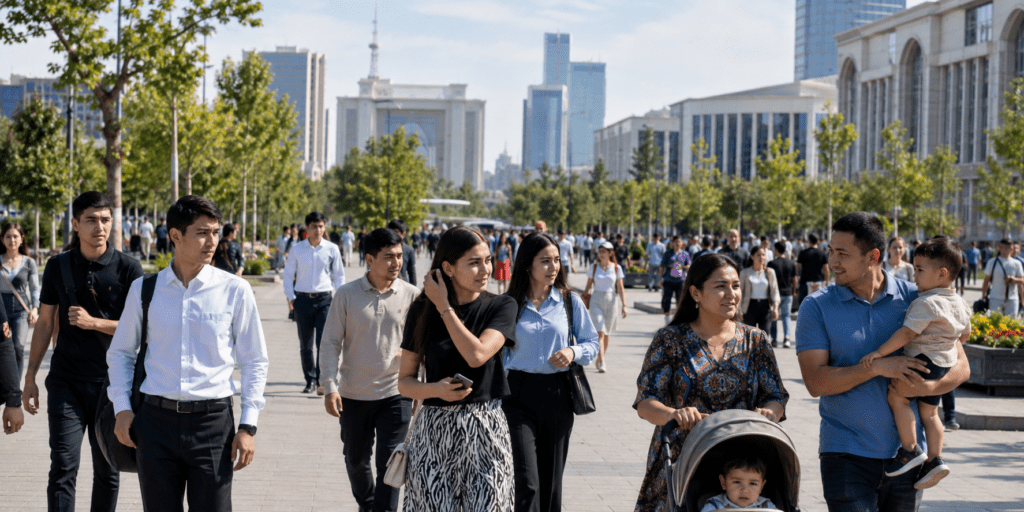
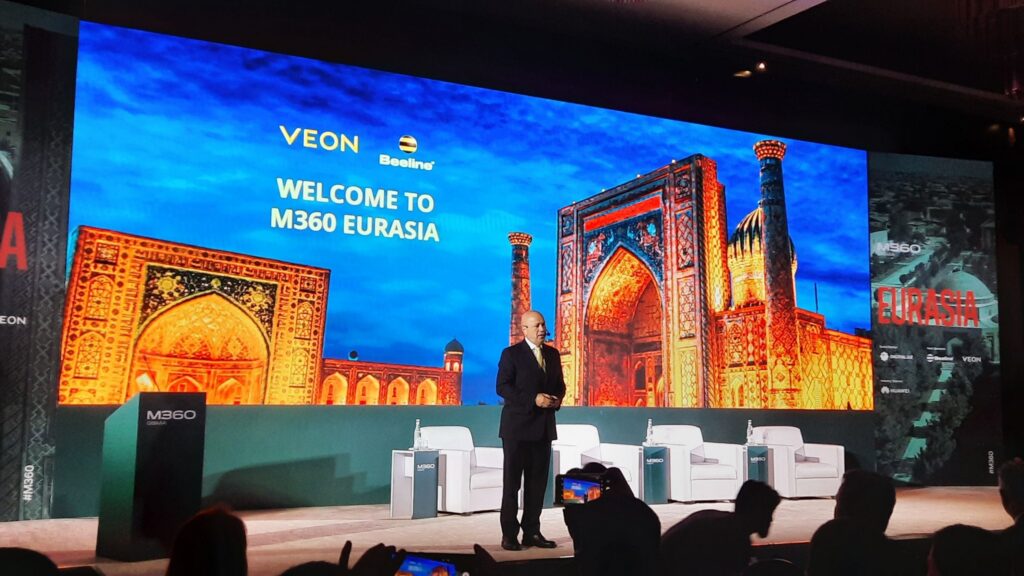
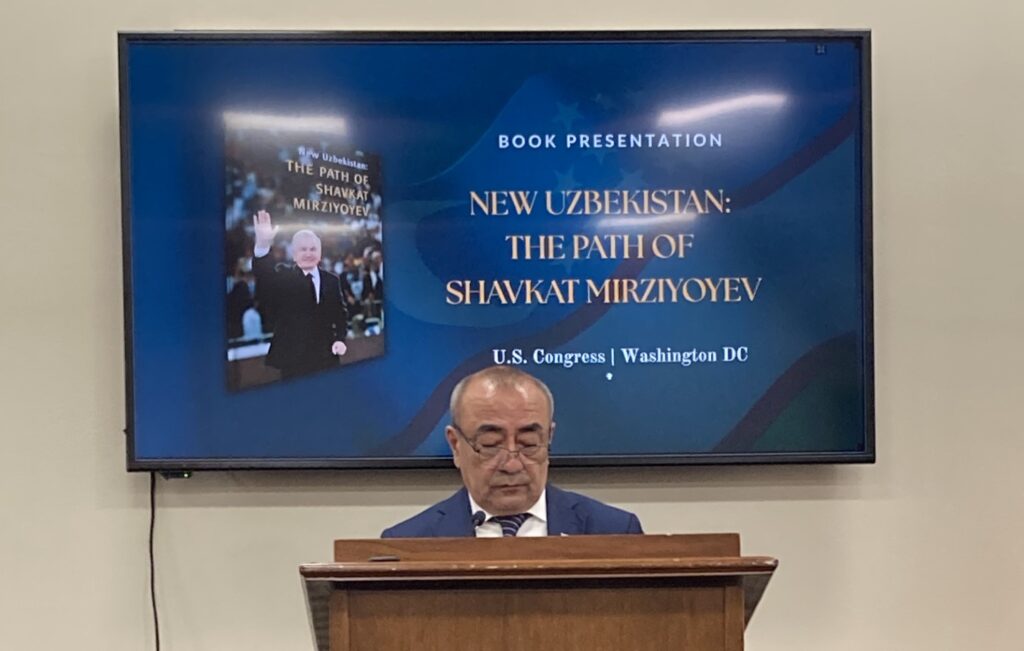
In mid-May, Uzbekistan is preparing to take a major step onto the global financial stage – one that reflects its broader, decade-long push to open its economy to international investors.
The country’s National Investment Fund (UzNIF), a $2.4 billion vehicle holding minority stakes in 13 strategic state-owned enterprises, is preparing to list 30% of its capital on the London and Tashkent stock exchanges — the first time such a state-backed investment vehicle is being listed on international equity markets.
For President Shavkat Mirziyoyev, the move signals that Uzbekistan wants to be seen as an investable, reforming, and globally connected state.
But the planned listing also captures the central paradox of Uzbekistan’s current trajectory: the country is opening economically while remaining politically closed.
Foreign investors are being invited in. State assets are being partially exposed to market discipline. Capital markets are being developed. Yet the political system remains tightly managed, with limited opposition, weak institutional pluralism, and few independent channels for releasing social pressure.
That is why Uzbekistan’s stability should not be read only as a strength. It should also be read as a system test: can controlled modernization keep producing legitimacy without creating political mechanisms for absorbing the expectations it generates?
Mirziyoyev as a Controlled Modernizer
Shavkat Mirziyoyev’s political style is not that of a frontline strongman constantly mobilizing society against enemies. His approach is administrative, developmental, and transactional: reform from above, personnel control, investment attraction, infrastructure, market opening, and the redistribution of economic flows.
In this sense, Mirziyoyev is best understood not as a liberal reformer in the Western sense, but as a controlled modernizer.
The reform agenda is real. Uzbekistan has moved to attract foreign capital, open selected state assets, improve its business image, and position itself as a more predictable investment destination. The UzNIF listing fits this broader effort: it is designed to deepen capital markets, signal openness to international investors, and show that the state is willing to place parts of its economic architecture under market scrutiny.
But the political architecture remains tightly managed. Freedom House continues to rate Uzbekistan as “Not Free” — 12 points out of 100 in its 2026 report — citing the concentration of power in the executive branch, the absence of a genuine parliamentary opposition, and severe restrictions on independent journalists and human rights defenders.
This is the central tension: Uzbekistan is reforming economically, but not politically.
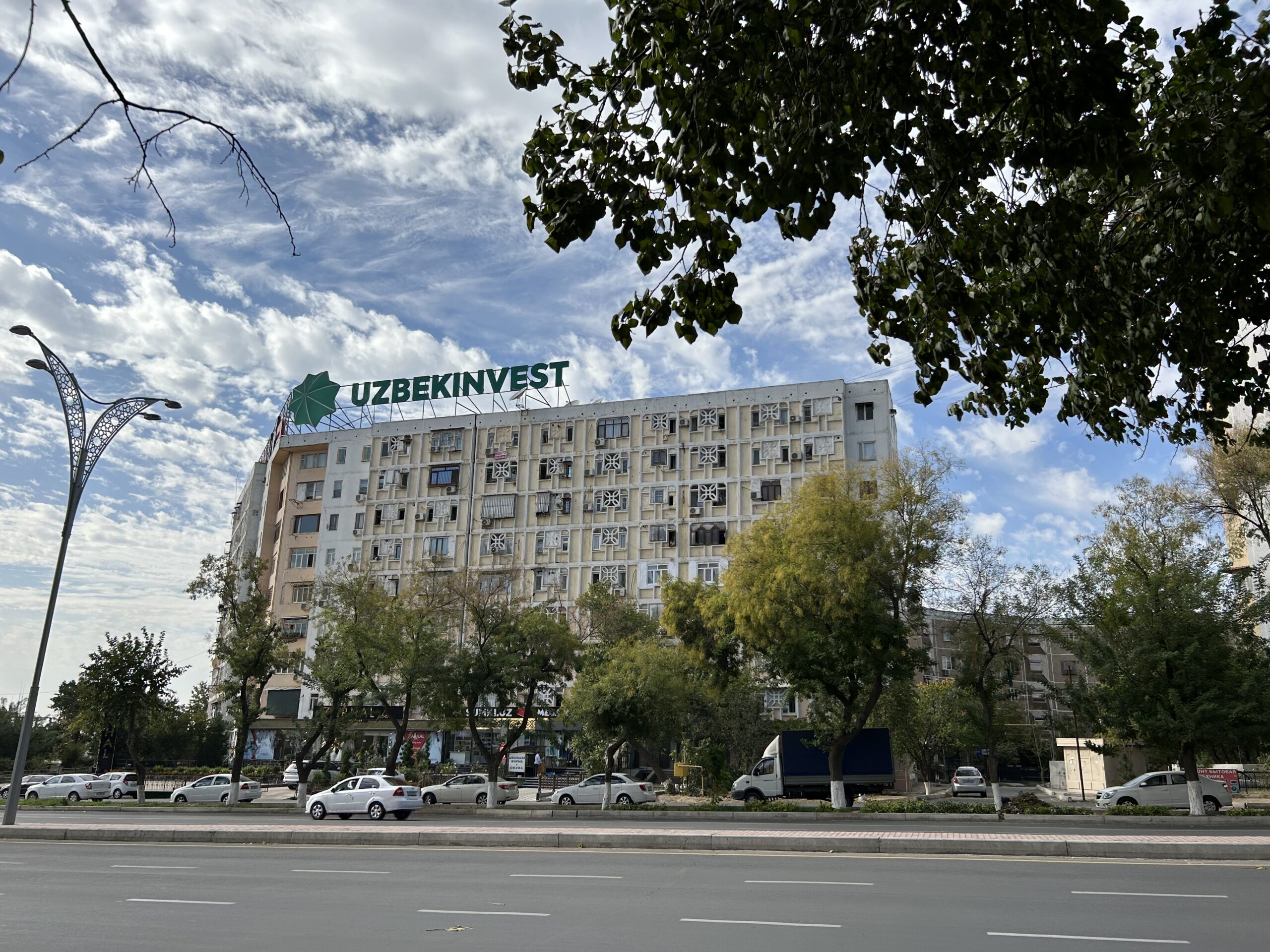
Tashkent has opened up to investment over the past decade. Image: Joe Luc Barnes
Growth as Legitimacy
For now, the model works because growth provides legitimacy.
The World Bank expects Uzbekistan’s economy to grow by around 6.4% in 2026, following 7.7% growth in 2025 – supported by domestic demand, private consumption, and continued investment. Public debt remains comparatively moderate at around 28% of GDP, and the country benefits from the perception that it is one of the more dynamic economies in the region.
This gives the ruling system room to maneuver. The reform narrative allows the leadership to present itself as forward-looking without opening the system to real political competition.
But growth also creates expectations.
A young and expanding population expects jobs, services, mobility, housing, education, and visible improvements in living standards. Urban groups expect modernization to be felt not only in macroeconomic indicators but in everyday life. Investors expect regulatory predictability. Regions expect inclusion in the national development story.
This is where the risk begins.
Uzbekistan’s problem is not mass poverty in a classic crisis sense. It is the stress of rising expectations. When a state promises modernization, society eventually asks whether modernization is being distributed fairly, whether opportunity is real, and whether the political system allows grievances to be expressed before they become explosive.
The Missing Release Valve
Uzbekistan’s political manageability is high. The parliament is not an autonomous center of power. Courts are not independent. Opposition parties do not function as genuine vehicles for alternative government, while civil society and media operate under significant constraints.
This gives the state stability. But it also limits the system’s ability to release pressure.
In more open systems, frustration can move through elections, parties, independent media, courts, protests, and civic bargaining. In Uzbekistan, many of these channels are weak, controlled, or politically risky. That means pressure may remain invisible for long periods, until it suddenly appears in localized form.
The most important lesson remains Karakalpakstan.
The 2022 unrest, triggered by proposed constitutional amendments that would have downgraded the autonomous republic’s status, showed that regional identity and perceived threats to autonomy can generate sudden political shock. The amendments were withdrawn under pressure, but Human Rights Watch and other monitors have continued to document the lack of accountability and ongoing pressure on activists associated with the events.
The lesson is not that Uzbekistan is unstable. It is that the state can look highly stable until a regional or social trigger exposes accumulated pressure.
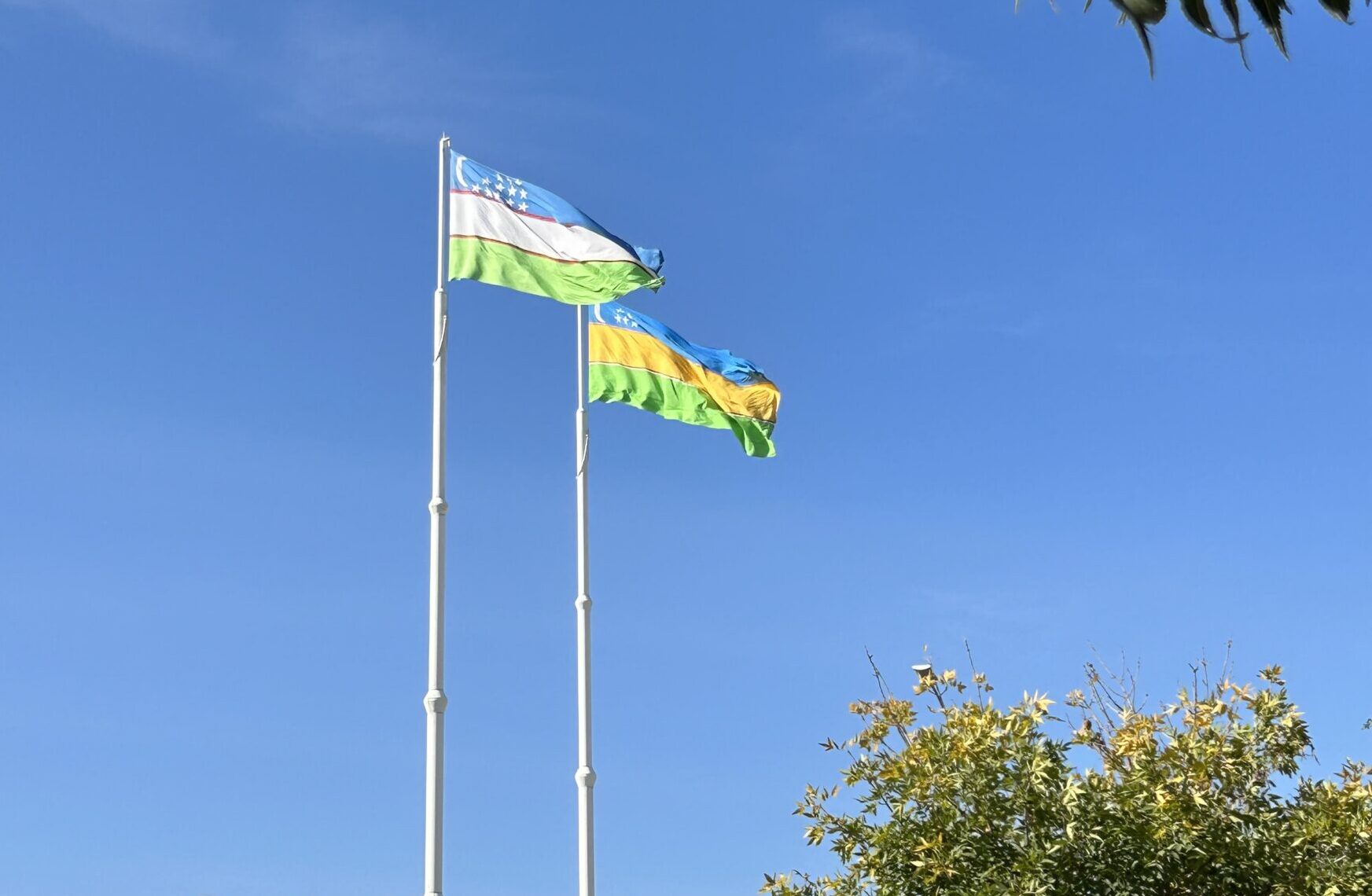
The flags of Uzbekistan and its northwestern autonomous region of Karakalpakstan. Image: Joe Luc Barnes.
No Visible Elite Split – For Now
Unlike some other Central Asian systems, Uzbekistan does not appear to have a clear second center of power capable of challenging the president. The elite system looks centralized and dependent on Mirziyoyev’s role as the manager of reform, patronage, and state direction.
This creates another vulnerability: excessive dependence on the center.
When a system is highly centralized, stability depends heavily on the leader’s ability to keep reforms credible, elites balanced, regions contained, and external partners engaged. If growth slows, if public expectations outrun delivery, or if a regional issue is mishandled, pressure may move quickly because there are few independent institutions capable of absorbing it.
The danger is not a coup or elite split in the near term. The more realistic danger is reform fatigue under authoritarian control.
External Balancing
Uzbekistan’s external position is more comfortable than that of some neighbors, but not simple.
Tashkent is balancing between Russia, China, the United States, the European Union, Turkey, and regional partners. It benefits from being seen as a large, stable, strategically important Central Asian state with a young population and economic potential. The West is increasingly interested in Uzbekistan, especially in critical minerals and supply-chain diversification.
This gives Tashkent leverage. But it also increases the complexity of its balancing act.
Uzbekistan must attract Western investment without provoking excessive suspicion from Russia or China. It must deepen global economic integration while maintaining domestic political control. It must look open enough for investors but closed enough to protect the ruling architecture.
That balance is manageable, until internal or external shocks begin to converge.
The Real Risk: Local Shock, Not National Collapse
Over the next 6–12 months, Uzbekistan’s baseline scenario remains stable, controlled modernization. Growth continues, the reform narrative remains credible, and the center retains control over the state apparatus.
But the key risks are clear.
The first is economic disappointment. If growth remains strong on paper but households do not feel improvement, frustration may rise quietly.
The second is energy and infrastructure stress. Rapid development requires reliable electricity, water management, transport, and urban services. Failures in these areas can quickly become political.
Thirdly is the issue of regional sensitivity: a new dispute involving autonomy or resource distribution could generate a localized crisis faster than national observers expect.
The fourth is information control: a more controlled media environment can delay the visibility of pressure, but it can also make the state slower to recognize the depth of local anger.
Finally there is reform fatigue. If modernization becomes associated with inequality or its opportunities are captured by insiders, the reform narrative could lose moral force.
In such a scenario, Uzbekistan would probably not collapse. The regime’s resilience remains high. More likely, the state would shift into a hard stabilization mode: tighter control, stronger administrative pressure, more restrictive information management, and a slower, more cautious reform agenda.
That would not mean the end of Mirziyoyev’s system. But it would change its character.
Markers to Watch
Five indicators will show whether Uzbekistan remains in controlled modernization or begins moving toward reform fatigue.
First, whether economic growth continues to translate into household-level confidence, employment, and visible improvements in living standards.
Second, whether energy, water, and infrastructure stress become politically sensitive rather than merely technical issues.
Third, whether regional grievances, especially in sensitive areas such as Karakalpakstan, remain contained or begin to re-emerge.
Fourth, whether new restrictions emerge on civil society, online expression, or independent media – particularly any expansion of existing legal frameworks on extremism or “foreign influence.”
Fifth, whether foreign investment and privatization are perceived as national modernization or as elite capture under a reform label.
These markers matter because Uzbekistan’s risk is unlikely to appear first as open national confrontation. It is more likely to appear as pressure accumulation: economic expectations, regional sensitivity, infrastructure strain, and restricted political channels reinforcing one another.
The Real Question
Uzbekistan’s future is often described through the language of reform. That framing is correct, but incomplete.
The deeper question is whether controlled modernization can continue producing legitimacy without creating political mechanisms for releasing pressure.
For now, the answer appears to be yes. The system is stable, the economy is growing, and the leadership retains control.
Uzbekistan’s challenge over the next 6–12 months is not regime survival in the immediate sense. It is whether the state can continue modernizing without allowing accumulated social and regional pressure to harden beneath the surface.
The views expressed in this article are those of the author and do not necessarily reflect the official policy or position of the publication, its affiliates, or any other organizations mentioned.